
In This Article
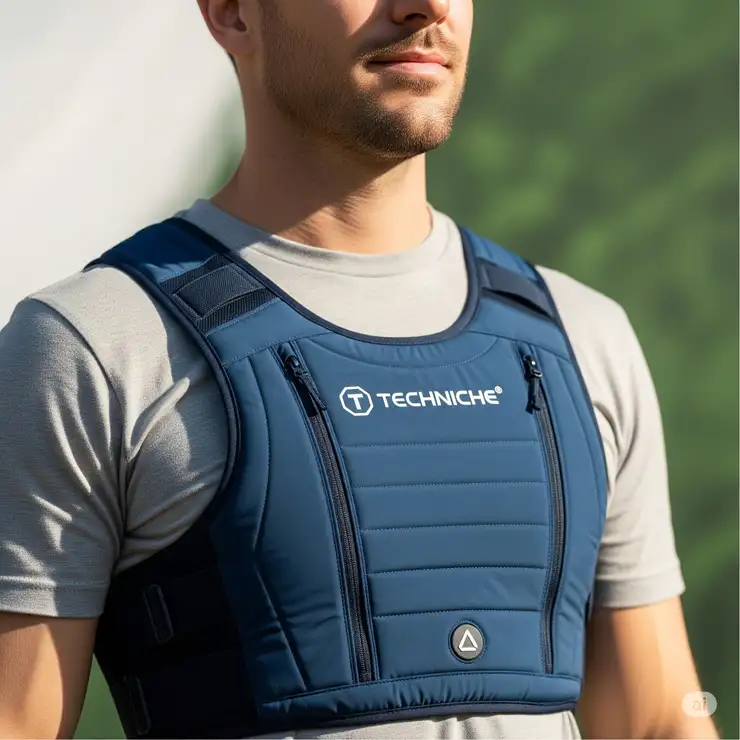
A techniche cooling vest is a wearable cooling garment from TechNiche International that lowers heat stress without batteries or fans. Depending on the model, it uses evaporative HyperKewl fabric you soak in water, TechKewl phase change inserts you chill in a freezer, or a hybrid of both to cool your torso.
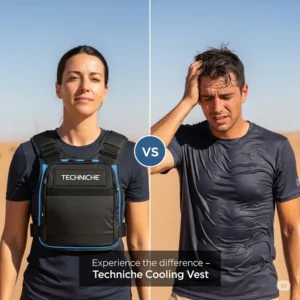
That’s the textbook answer. The real-world answer is more fun. Picture a quilted nylon vest that looks like something a fishing guide would wear, except that after two minutes in a sink it starts pulling heat off your chest like a tiny, silent swamp cooler. No charger. No cord. No fan whirring against your ribs.
Why does the torso matter so much? Your core holds the big blood vessels, so cooling there does more per square inch than cooling a wrist or a forehead. Safety agencies agree that personal cooling is a backup, not a replacement. OSHA’s heat controls guidance says the best fix is making the environment cooler, and that cooling devices step in for the limited situations where other controls aren’t enough.
The catch is that “techniche cooling vests” aren’t one product. The lineup spans $30-ish pullovers and $200-ish hybrid systems, and the right pick depends on your humidity, your workload and how long you’ll be out there. This guide ranks seven real models, explains what each spec actually means, and shows you how to avoid buying the wrong technology for your climate.
Quick Comparison: Techniche Cooling Vest Models at a Glance
Here’s the fast version. Cooling times are manufacturer claims, and prices are ranges only, so check current pricing before you buy.
| Model | Cooling Type | Claimed Cooling Time | Price Range | Best For |
|---|---|---|---|---|
| HyperKewl 6529 Sport Vest | Evaporative | 5-10 hrs per soak | Around $30-$55 | Commuters, riders, first-timers |
| HyperKewl Deluxe 6530 | Evaporative | 5-10 hrs per soak | $50-$85 range | Sun exposure, extra neck coverage |
| HyperKewl Hi-Viz Safety Vest 6529-HV | Evaporative | 5-10 hrs per soak | $45-$60 range | Roadside, jobsite, visibility needs |
| HyperKewl Plus 6550T Pullover | Evaporative | 5-10 hrs per soak | $40-$60 range | Pullover fans, daily wear |
| TechKewl Phase Change Vest | Phase change (PCM) | 2-3 hrs per charge | Check current price | Humid climates |
| Performance Enhancement Vest | Phase change (PCM) | Hours per charge | Around $200+ | Athletes, pre-cooling |
| TechKewl Hybrid 4531 | Evaporative + PCM | 5-10 hrs + 2-3 hrs | $160-$200 range | Heavy heat, long shifts |
The pattern is clear. Evaporative models are cheap and long-lasting, but they depend on dry air. Phase change models cost more and run shorter, but they don’t care about humidity. The TechKewl Hybrid 4531 is the “why not both” option, and you pay for it.
If your budget sits under about $60, the four evaporative models are your whole playground. If you live somewhere swampy, skip straight to the TechKewl Phase Change Vest or the hybrid. Evaporative vests in sticky air are like wet towels with ambitions.
💬 Just one click — help others make better buying decisions too!😊
Top 7 Techniche Cooling Vest Models: Expert Analysis
Each entry below separates what the spec sheet says from what it means for you. Review sentiment is summarized from the public reviews and retailer pages found during research. Several models have small review pools, so I’ve said so where it applies.
1. HyperKewl 6529 Sport Vest — the simple, proven starting point
This is the vest most people mean by a techniche cooling vest, and it earns that role by being almost embarrassingly simple: soak, squeeze, wear.
The construction is a quilted nylon outer over HyperKewl polymer fabric, with a waterproof lining so your base layer stays dry. The maker claims 5-10 hours of cooling per soak and air 15-20°F cooler than ambient. Read those hours as a ceiling, not a promise, because evaporation slows as the vest dries and as humidity climbs. Shipping weight is under a pound, so it tucks under a jacket or riding gear without drama.
Based on the spec comparison, this is the best fit for dry-climate commuters, yard workers and riders. A Cycle World review found it kept two riders comfortable in temperatures above 100°F. Across retailers, buyers repeat the same caveat: it works better in drier regions and isn’t a silver bullet.
Pros:
- ✅ Lightweight and easy to layer under gear
- ✅ No freezer, power or setup needed
- ✅ Wide size range, including XS and 3XL
Cons:
- ❌ Loses punch in humid air
- ❌ Needs re-soaking as it dries
Expect to pay around $30-$55 depending on size and color. For first-timers in dry heat, it’s the best value in the lineup.
2. HyperKewl Deluxe 6530 — high collar for sun and neck relief
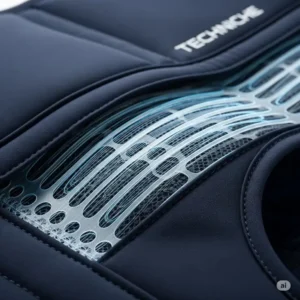
The standout here is the high mandarin-style collar, which adds cooling and sun protection right where the back of the neck gets hammered.
The core cooling system is the same HyperKewl fabric family, quilted nylon outside and polymer inside, with the same 5-10 hour soak claim. What you’re really paying for is coverage. Your neck holds a lot of exposed blood flow, and a wet collar there makes the vest feel cooler than a plain scoop-neck design at the same fabric spec.
On paper this suits people who spend long hours in direct sun, such as landscapers, golfers on cart paths, fishing guides and trail volunteers. Skip it if you’ll wear a helmet with a tight chin strap or a jacket collar that fights the extra fabric.
The review pool is small. One retailer listing showed an average of 4.8 from only eight reviews, which suggests satisfied buyers but not statistical certainty.
Pros:
- ✅ Collar adds neck cooling and sun cover
- ✅ Same long evaporative soak window
- ✅ Durable quilted construction
Cons:
- ❌ Collar can clash with helmets or jackets
- ❌ Still weak in high humidity
Prices run in the $50-$85 range, so shop around. If sun exposure is your main problem, the upcharge makes sense.
3. HyperKewl Hi-Viz Safety Vest 6529-HV — cooling and visibility in one layer
The hook is simple: a cooling vest in hi-viz lime, so you don’t wear two vests and double the trapped heat.
That matters on roadside and jobsite crews. Stacking a cooling vest under a mesh safety vest is clumsy, and a safety vest worn tight can work against you. OSHA-NIOSH guidance notes that reflective clothing worn as loosely as possible can help, and combining roles in one garment keeps your layer count down.
It shares the 6529 evaporative platform, so expect the same 5-10 hour claim and the same humidity limits. Before buying for a crew, confirm the visibility rating your employer or site requires, because a lime color alone isn’t a compliance guarantee.
Review data is thin: a listing showed a single five-star review, which means “promising,” not “proven.” The “wish I knew about this sooner” sentiment mirrors what buyers say about the standard 6529.
Pros:
- ✅ Combines cooling with high-visibility color
- ✅ Fewer layers means less trapped heat
- ✅ Same easy soak-and-wear activation
Cons:
- ❌ Compliance class needs your own verification
- ❌ Limited review history
Typical pricing is around $45-$60. For flaggers, delivery crews and cyclists, it’s a smart single-layer solution.
4. HyperKewl Plus 6550T Pullover — slip-on style with a safety-rated shell
Instead of a zip-front vest, this one pulls on like a sleeveless top, which means no zipper to fuss with and a cleaner fit.
The fabric details are specific. The inner layer is HyperKewl Plus (68% polyester, 32% polymer) with a Taslan water-repellent nylon liner, and the exterior is polyester described as ANSI Class II compliant. That’s the kind of spec that matters in practice: a repellent liner keeps moisture off your base layer, and the polymer fraction determines how much water the vest holds.
Based on the build, it suits people who find zipper vests bulky or who want to wear a cooling layer all day under a work shirt. One review on a retailer page, from a 65-year-old who “overheats easily,” was positive. That’s a single data point, but it fits the profile of someone who wants gentle, all-day relief.
Pros:
- ✅ Pullover design avoids zipper hassles
- ✅ Water-repellent liner protects clothing
- ✅ Safety-rated exterior fabric
Cons:
- ❌ Harder to re-wet quickly than zip styles
- ❌ Very small review pool
Pricing sits around $40-$60. It’s a good choice for steady, moderate heat when you want something low-profile.
5. TechKewl Phase Change Vest — cooling that ignores humidity
Phase change is the humid-climate answer: no water evaporation required.
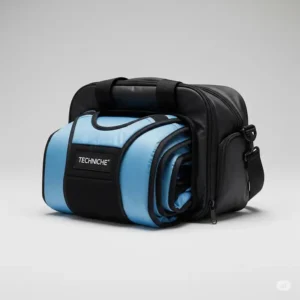
The vest comes with phase change inserts and a cooler bag. You chill the inserts in a refrigerator, freezer or ice water, slide them into pockets, and wear. TechNiche’s CoolPax material is designed to hold around 58°F (14°C) for roughly 2-3 hours. That temperature is the clever part. It’s cold enough to pull heat but warm enough to avoid the “ice burn” feel of raw frozen packs.
What the spec sheet won’t tell you is the workflow tax. You need freezer space and a spare insert set if you want continuous cooling, and you’ll be swapping packs every couple of hours. For humid Gulf Coast summers, greenhouse work or enclosed warehouses, that tradeoff is often worth it.
Review data on this exact vest is limited, so rely on the technology’s track record, which OSHA’s guidance explicitly lists as an option: vests with phase change cooling packs in the pockets.
Pros:
- ✅ Works in humid air
- ✅ Steady, comfortable cooling temperature
- ✅ Inserts are reusable
Cons:
- ❌ Only 2-3 hours per charge
- ❌ Needs a freezer and spare inserts
Pricing sits above the evaporative models, so check current price. It’s the pick when humidity rules out evaporation.
6. Performance Enhancement Vest — pre-cool, perform, recover
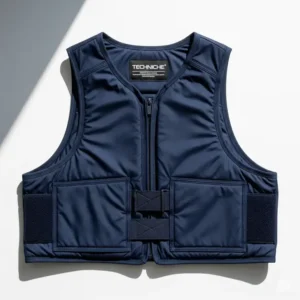
The standout is its athlete focus: a cotton vest built around phase change cooling for pre-cooling, active cooling and post-cooling.
The retailer description describes a zippered 100% cotton vest with an adjustable side gusset to fit different body types, designed to cool athletes “without limiting movement or causing ice burn.” The sales pitch also claims up to 75% of an athlete’s energy can go to temperature regulation. Treat that as marketing framing rather than a physiological law, but the underlying logic is sound: lowering core temperature before and during exertion can conserve effort.
This is the model for competitors, such as cyclists waiting on a start line, motorsport drivers or runners in warm-weather races. It’s overkill for yard work. The review pool was empty on the listing I found, so there’s no buyer sentiment to summarize.
Pros:
- ✅ Adjustable fit via side gusset
- ✅ Built for pre- and post-event cooling
- ✅ Gentler than raw ice
Cons:
- ❌ Premium price for casual use
- ❌ No visible review history
At the time of research, pricing was around $200 and up, so verify current price. Buy it only if performance timing, not just comfort, is your goal.
7. TechKewl Hybrid 4531 — evaporative and phase change in one vest
The headline is flexibility: HyperKewl fabric for long-haul cooling, plus CoolPax inserts for a stronger cold boost.
It combines a quilted nylon exterior, HyperKewl Plus inner fabric and a water-repellent liner, with a front zipper, mesh ventilation and a scoop neck. A set of inserts and a cooler bag are included. The claim is 5-10 hours from the fabric and 2-3 hours from the inserts, so you can run evaporative-only on mild days and add packs when it’s brutal. Weight is the tradeoff: shipping weight is around 4 pounds, and one retailer lists the vest near 5.
Reviewers on retailer pages are sparse but positive. A driver reported lower core temperature, less fatigue and better concentration, a use case that matches the vest’s racing and motorsport roots.
Care guidance varies by listing: one lists machine washable up to 104°F, another says hand wash only, so follow the label that ships with your vest.
Pros:
- ✅ Two cooling methods in one garment
- ✅ Includes inserts and cooler bag
- ✅ Mesh ventilation panels
Cons:
- ❌ Heaviest and priciest in the lineup
- ❌ Packs still need freezer time
Expect roughly $160-$200. For extreme heat or long shifts, it’s the most capable techniche cooling vest.
Evaporative vs Phase Change vs Hybrid: Which Technology Wins?
This is the decision that matters more than color or collar style. Get the technology wrong and no model will rescue you.
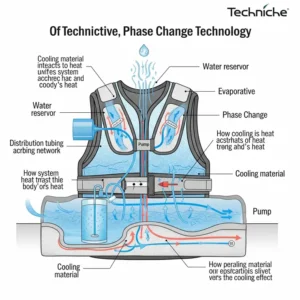
Evaporative vests cool by shedding water into the air, so they need dry air to work. MSC’s industrial guide notes that evaporative PPE performs well on worksites with good airflow and low humidity. Phase change vests work differently: they absorb heat as material shifts from solid to liquid at a set temperature, which is why they keep working in sticky weather.
| Factor | Evaporative (HyperKewl) | Phase Change (CoolPax) | Hybrid |
|---|---|---|---|
| Humidity tolerance | Low | High | High |
| Cooling duration | 5-10 hrs (claimed) | 2-3 hrs | Both |
| Setup | 2-3 min soak | 35-45 min chill | Both |
| Weight | Lightest | Heavier | Heaviest |
| Price tier | Lowest | Middle to high | Highest |
| Best For | HyperKewl 6529 Sport Vest buyers in dry heat | TechKewl Phase Change Vest buyers in humid heat | TechKewl Hybrid 4531 buyers in extreme heat |
The table points to a simple rule. If your local air is dry, an evaporative vest like the HyperKewl 6529 Sport Vest is the best cost per cooling hour. If your summers are damp, a TechKewl Phase Change Vest will outperform it. And if you work long shifts in punishing heat, the TechKewl Hybrid 4531 buys flexibility at a price and weight premium.
How to Choose a Techniche Cooling Vest
Use these steps in order. They’ll narrow seven options to one in about five minutes.
- Check your humidity first. Evaporative cooling falls apart in sticky air. Buyer guides commonly put the practical limit around the mid-70s percent humidity. Above that, lean toward phase change.
- Match the cooling window to your day. A 2-3 hour phase change charge works for a ride or a short shift. A full workday needs evaporative, hybrid, or a stash of spare inserts.
- Decide how much hassle you’ll tolerate. Soaking takes minutes; chilling inserts takes close to an hour. If you won’t plan ahead, you won’t use the vest.
- Consider your outer layers. Under leathers or a jacket, a slim vest like the HyperKewl 6529 Sport Vest layers better than bulky hybrid systems.
- Check visibility and compliance needs. For roadside work, the HyperKewl Hi-Viz Safety Vest 6529-HV saves a layer, but verify the class your site requires.
- Get the size right. One reviewer of a related Techniche vest warned to watch sizing carefully because the side zipper was tight in larger sizes. Use the maker’s size chart.
- Set a realistic budget. Evaporative vests run roughly $30-$85, while hybrids reach $160-$200.
✨ Don’t Miss These Exclusive Deals!
🔍 Take your heat protection to the next level with these carefully selected vests. Click on any highlighted item to check current pricing and availability. A well-chosen vest can help you stay comfortable through the hottest stretch of the year!
Real-World Performance: What a Techniche Cooling Vest Actually Feels Like
Spec sheets say “15-20 degrees cooler.” Your skin says something messier.
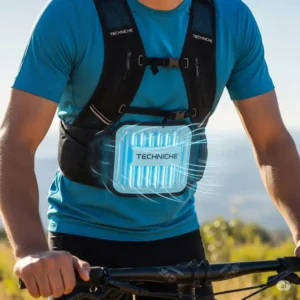
With an evaporative vest, expect a quick chill when you first put it on, then a steady, gentle coolness that fades as the polymer dries. Some dampness is normal, and reviewers of competing evaporative vests say the same. Moving air helps, which is why motorcyclists and cyclists tend to rave about them. Standing still in a stuffy room helps far less.
With phase change inserts, the feeling is steadier but more clinical. The pack holds its temperature, then it stops. You’ll know when. That’s your cue to swap inserts.
Reviewers also temper marketing claims. One buyer of a Techniche evaporative vest said that where the long cooling hours come from “is beyond” them, though in hot weather the vest still helped enormously. The takeaway is to plan for a re-soak every few hours in harsh conditions rather than banking on the full 10.
A good rule of thumb is to think of the vest as shaving the edge off, not turning your shirt into air conditioning. Used that way, it delivers.
Practical Usage Guide: Setup, Maintenance and First-Month Mistakes
This is the transformation content Amazon listings skip.
Activating an evaporative vest: Soak it in clean water for 2-3 minutes, squeeze out the excess gently, and wear it. Don’t wring it like a dishrag. You want the polymer loaded, not stripped.
Activating inserts: Freeze or ice-bath the inserts for roughly 35-45 minutes before use. Keep a second set rotating if your day runs long.
Maintenance schedule:
- After each use, rinse and air-dry the vest fully before storing.
- Weekly during heavy use, rinse in clean water to clear salt and grime.
- Seasonally, check seams, zippers and insert pockets.
- Follow your vest’s care label, since washing guidance varies by model.
Common first-30-day mistakes:
- Wearing evaporative vests in high humidity and blaming the product.
- Skipping the pre-soak because “it feels damp enough.”
- Storing a damp vest in a bag, which invites odor.
- Putting phase change inserts in the vest before they’ve fully chilled.
Treat the vest like a good pair of running shoes: a little care extends its useful life well beyond the first summer.
Real-World Scenarios: Which Vest Fits Which Person?
Seeing yourself in a profile makes the choice easier. These are illustrative scenarios, not testimonials.
The dry-climate commuter. You ride a motorcycle 20 miles each way through desert-style heat in full gear. An evaporative vest like the HyperKewl 6529 Sport Vest is the logical fit: light, cheap and happy with moving air. A review of the Techniche line from a rider community described comfort in full leathers.
The Gulf Coast warehouse worker. You spend eight hours in a humid, poorly ventilated building. Evaporative cooling will disappoint. A TechKewl Phase Change Vest with a spare insert set, rotated at breaks, matches the problem. Budget for a freezer in the break room.
The weekend racer. You compete in hot-weather events and want every advantage. The Performance Enhancement Vest or the TechKewl Hybrid 4531 offers pre-cooling and active cooling. Think of the premium as buying a few extra minutes of focus when the thermometer spikes.
The roadside crew member. Visibility is non-negotiable. The HyperKewl Hi-Viz Safety Vest 6529-HV keeps layers minimal, but confirm required safety classification with your employer.
The pattern: pick for your environment first and your budget second.
Problem and Solution Guide: Fixing Common Cooling Vest Frustrations
Problem: “It stopped cooling after a few hours.” Solution: Re-soak an evaporative vest, or swap in fresh inserts. Long cooling claims are best-case numbers.
Problem: “It feels clammy, not cool.” Solution: Check your humidity. Evaporative vests need airflow and dry air. Move to phase change if conditions stay muggy.
Problem: “It’s too bulky under my gear.” Solution: Choose a slim evaporative model like the HyperKewl Plus 6550T Pullover rather than a hybrid.
Problem: “The zipper or fit is annoying.” Solution: Try a pullover design, or check the size chart. Reviewers note that fit varies by style and size.
Problem: “I forgot to chill my inserts.” Solution: Ice water works faster than a refrigerator for emergency recharges. Keep spare inserts in a cooler bag.
Problem: “My vest smells.” Solution: Rinse after use and dry completely before storage.
Techniche Cooling Vest for Different Audiences
Beginners: Start with the HyperKewl 6529 Sport Vest. It’s cheap, light and forgiving, and it teaches you whether a vest fits your life before you spend more.
Workers and tradespeople: Prioritize durability, visibility and humidity fit. The HyperKewl Hi-Viz Safety Vest 6529-HV suits roadside work, while a phase change vest suits humid indoor heat.
Athletes and racers: Look at the Performance Enhancement Vest and the TechKewl Hybrid 4531, designed for pre-cooling and sustained effort.
Seniors and heat-sensitive wearers: A lightweight pullover like the HyperKewl Plus 6550T Pullover offers gentle relief. Heat sensitivity can be a medical issue, so talk to your doctor before relying on a vest.
Women: The line includes women’s cuts of the Deluxe sport vest, so check the maker’s size chart rather than defaulting to men’s sizing.
Whatever the audience, match the technology to the environment before anything else.
Long-Term Cost and Value: What You Really Pay Per Cooling Hour
Sticker price is only half the story. Cost per use is where the ranking shifts.
| Model | Price Range | Maintenance Cost | Value Verdict |
|---|---|---|---|
| HyperKewl 6529 Sport Vest | Around $30-$55 | Very low | Best entry value |
| HyperKewl Deluxe 6530 | $50-$85 range | Very low | Worth it for sun exposure |
| HyperKewl Hi-Viz Safety Vest 6529-HV | $45-$60 range | Very low | Strong value for crews |
| HyperKewl Plus 6550T Pullover | $40-$60 range | Very low | Good daily wearer |
| TechKewl Phase Change Vest | Check current price | Freezer space, spare inserts | Pays off in humidity |
| Performance Enhancement Vest | Around $200+ | Freezer space | Niche, performance-driven |
| TechKewl Hybrid 4531 | $160-$200 range | Freezer space | Best for extreme heat |
The numbers show a straightforward logic. Spread across a hot season of daily use, a $40 evaporative vest costs pennies per wear. The TechKewl Hybrid 4531 looks expensive, but if it replaces two separate cooling products or keeps a worker productive through a shift, the math shifts. Maintenance is minimal for evaporative models, while phase change systems carry the hidden cost of freezer space and spare packs. Manufacturer warranty on at least the 6529 line is one year against factory defects.
Safety, Regulations and Heat Illness: What a Vest Can and Can’t Do
A cooling vest is a tool, not a cure. The government’s own guidance is blunt about that.
OSHA’s heat controls guidance puts engineering controls and work practices first, such as air conditioning, ventilation, fans, rest breaks and acclimatization. Special cooling devices are positioned for limited situations. The OSHA-NIOSH Protecting Workers from Heat Illness infosheet says cooling vests with pockets for cold packs can be comfortable and effective, and that water-dampened cotton clothing is an inexpensive cooling technique.
A few cautions apply:
- As of the sources reviewed, OSHA had not finalized a specific federal heat standard, though inspectors can cite employers under the General Duty Clause. Check current rules for your state and employer.
- Impermeable clothing and some PPE can raise heat illness risk, so layering matters.
- Hydration, shade and rest remain essential.
- Heat stroke is a medical emergency. A vest is no substitute for emergency care.
Use the vest to support a heat plan, never to excuse skipping one.
FAQ: Techniche Cooling Vest Questions Answered
❓ How long does a techniche hyperkewl cooling vest stay cool?
❓ Does a techniche cooling vest work in humid weather?
❓ How do you activate a techniche phase change cooling vest?
❓ Can you wear a techniche evaporative cooling vest under a jacket?
❓ Is the techniche hybrid cooling vest worth the extra cost?
Conclusion: Picking the Right Techniche Cooling Vest
The best techniche cooling vest isn’t the most expensive one. It’s the one that matches your air. Dry heat and tight budget? The HyperKewl 6529 Sport Vest is the obvious starting point, with the HyperKewl Deluxe 6530 as the sun-exposed upgrade. Need visibility? The HyperKewl Hi-Viz Safety Vest 6529-HV saves a layer. Prefer a slip-on? The HyperKewl Plus 6550T Pullover is your pick.
Humid summers change everything. The TechKewl Phase Change Vest is the straightforward answer, and the Performance Enhancement Vest and TechKewl Hybrid 4531 are for athletes and heavy-duty heat. Treat any vest as one layer in a bigger heat plan with water, rest and shade.
Prices and availability change, so check current listings before you decide. Whatever you choose, match the technology to your climate first, and you’ll skip the most common regret in the category.
✨ Ready to Beat the Heat?
🔍 Compare the models above, check current pricing and availability, and pick the vest that fits your climate. Stay cool out there!
Recommended for You
- Cool Safety Vest: Top 7 Cooling Options for Ultimate Workplace Protection in 2025
- 10 Best Bicycle Cooling Vest Options For Ultimate Comfort While Riding in 2025
- 10 Best Battery Powered Cooling Vest Options For Ultimate Summer Relief in 2025
Disclaimer: This article contains affiliate links. As an Amazon Associate, I earn from qualifying purchases. If you purchase products through these links, we may earn a small commission at no additional cost to you.
✨ Found this helpful? Share it with your friends! 💬🤗
