
In This Article
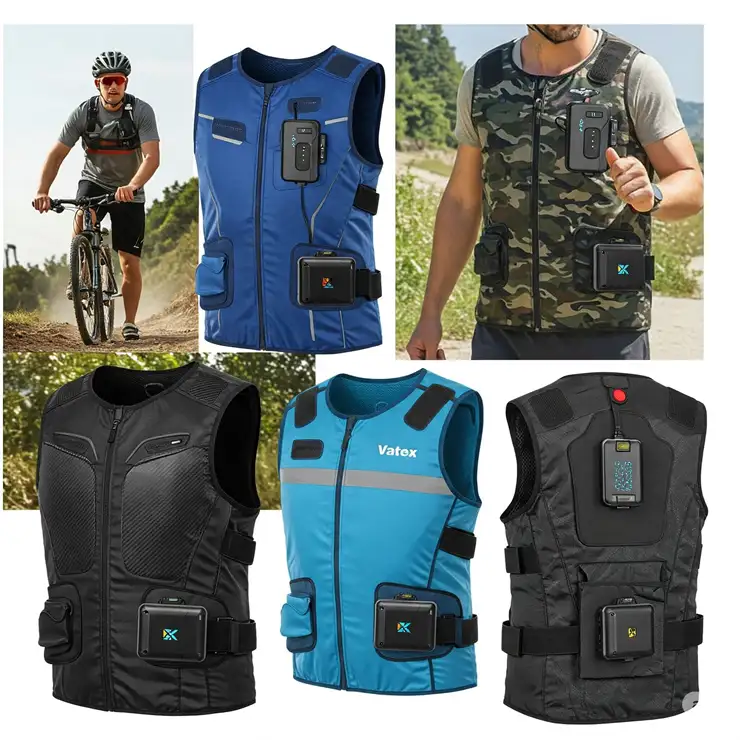
A battery powered cooling vest is a wearable cooling garment that uses a rechargeable battery to run small fans, thermoelectric cooling plates, or a mini water pump. Instead of relying on ice that melts or fabric that dries out, it keeps pulling heat off your torso for as long as the battery lasts, often 6 to 12 hours per charge.

Think of it as a pocket-sized air conditioner you zip into. The concept isn’t new. A cooling vest is clothing designed to lower or stabilize body temperature and make exposure to warm climates more bearable, and cooling vests have been used for decades by workers, riders and patients. What changed is the battery. Lithium packs got cheaper and bigger, so a battery powered cooling vest that once cost industrial-budget money now sits in the $60 to $190 range.
That price drop explains the flood of listings. It also explains the confusion. Some vests move air, some chill a metal plate, and some pump ice water through tubing. They behave very differently in a humid Florida July than in a dry Arizona one.
This guide sorts the noise. I researched specs, manufacturer claims and aggregated customer-review themes for seven real models, and I’ll tell you where the evidence is solid and where it’s just marketing. I haven’t worn any of these vests, so everything here is analysis built on published specs, roundup data and review patterns, not personal testing.
By the end, you’ll know which battery operated cooling vest fits your job, your climate and your budget, and which common traps to avoid.
Quick Comparison Table: 7 Battery Powered Cooling Vests at a Glance
Here’s the lineup side by side. Runtimes are manufacturer or roundup claims, not lab-verified numbers, and prices are approximate ranges that change often.
| Product | Cooling Type | Battery | Claimed Runtime | Approx. Price Range | Best For |
|---|---|---|---|---|---|
| THEKUKU 3-Fan Cooling Vest | Fans + cooling units | 2×30000mAh | 10-12 hrs | $130-$160 | All-day outdoor work |
| DR.HILL Industrial Cooling Vest | Fans + semiconductor plates | 2×30000mAh | 8-10 hrs | $150-$180 | Extreme heat |
| MOSILA 2026 Upgraded | Dual fans | 2×20000mAh (hot-swap) | 10+ hrs | $100-$130 | Long shifts, swapping batteries |
| Foiueyga Electric Cooling Vest | Dual fans | 20000mAh | 6-12 hrs | $60-$80 | Budget buyers |
| Alphacool 5V Touch Button | Water pump + ice packs | 10000mAh | Up to 8 hrs | $120-$150 | Humid, hot jobsites |
| KERHAND Ice Water Circulating Vest | Water pump + 10 ice packs | 5000mAh | ~3 hrs pump | $80-$110 | Short, intense heat |
| SubZero Water Circulating Vest | Ice-water circulation | 20000mAh | 2-5 hrs per ice fill | $160-$190 | Maximum cold sensation |
Looking at the table, the THEKUKU 3-Fan Cooling Vest and MOSILA 2026 Upgraded deliver the most runtime per dollar, while the SubZero Water Circulating Vest trades runtime for the strongest cold sensation. Budget shoppers should note that the Foiueyga Electric Cooling Vest gives up build quality, not airflow, to hit its low price. Anyone working in thick humidity should lean toward the water-based models, because fans struggle when sweat can’t evaporate.
💬 Just one click — help others make better buying decisions too!😊
Top 7 Battery Powered Cooling Vests: Expert Analysis
1. THEKUKU 3-Fan Cooling Vest — dual 30000mAh packs for marathon shifts
The standout here is stamina. Two 30000mAh battery packs (60000mAh combined) feed three fans and two cooling units, and one roundup claims 10-12 hours at 85-95°F thanks to smart power management that adjusts fan speed.
On paper, that means a full outdoor workday without a mid-shift swap, which matters more than any cold-plate spec if your charger is 40 miles away. The three-fan layout also gives 360-degree airflow, so your back doesn’t stay sweaty while your chest cools. Based on the spec comparison, the cooling units are the weak link: one roundup calls them weaker than the semiconductor plates on pricier models, so think “strong breeze plus mild chill” rather than true air conditioning.
Who is it for? Landscapers, warehouse staff, fishing guides and anyone who values runtime over raw cold. Reviewers consistently praise the UPF50+ fabric and fans that stay clear of seat backs when you sit or bend. Recurring complaints include fans needing to be tightened before use, a few reports of early zipper failures, and a proprietary battery connection instead of standard USB charging.
Pros:
- ✅ Enormous 60000mAh battery capacity
- ✅ Tool-free detachable fans for washing
- ✅ Fans stay clear when seated
Cons:
- ❌ Proprietary battery connection, not standard USB
- ❌ Cooling units milder than premium plates
Expect to pay in the $130-$160 range; check current price. For all-day wear, the value is strong.

2. DR.HILL Industrial Cooling Vest — fans plus plates for brutal heat
This is the heavy hitter. Three fans team up with two semiconductor cooling plates, powered by two 30000mAh packs (60000mAh total), and the plates give you an immediate cold-spot sensation that fans alone can’t match.
What the spec sheet won’t tell you is the power trade-off. Plates drink battery. One roundup reports 8-10 hours in normal use, dropping to 6-7 hours with fans and plates both on high, versus 12+ hours for fan-only designs. That’s the honest cost of colder contact cooling.
Who should care? Roofers, welders working outside the arc zone, and anyone regularly above 100°F. The front and back sections detach, and the adjustable shoulder straps reportedly accommodate roughly 100-250 lb frames. Reviewers say the plates stay effective across a shift, and one roundup cites field users in extreme ambient heat. Treat the dramatic “degrees below ambient in seconds” marketing claim with caution, since it isn’t independently verified. Expect more weight than fan-only vests, which matters after hour six.
Pros:
- ✅ Plates deliver instant cold-spot relief
- ✅ Huge 60000mAh combined capacity
- ✅ Front and back sections detach
Cons:
- ❌ Heavier than fan-only vests
- ❌ Runtime shrinks with plates on high
Typical pricing is around $150-$180; check current price. If your work lives above 100°F, it’s worth the premium.
3. MOSILA 2026 Upgraded — hot-swappable batteries kill runtime anxiety
The clever part is the hot-swap design. Two 20000mAh batteries (40000mAh combined) let you change a pack without powering down, and the vest runs on standard 5V USB, so a regular power bank also works.
That flexibility is rare in a rechargeable cooling vest. A roundup reports full 10-hour shifts at 95°F with no speed drop, though the vendor’s 24-hour claim at medium speed deserves skepticism, since heat and higher speeds both drain batteries faster than low-speed ratings suggest.
It suits drivers, delivery crews, and shop workers who can top up at lunch. Reflective strips add visibility, and the adjustable fit earns praise. Sizing is the quirk: the vest runs large and “puffs” for airflow, so one roundup advises ordering a size down. Another reviewer-noted gripe is that fans sit high on the back rather than at the waist, which can feel less natural when leaning against a seat.
Pros:
- ✅ Hot-swap batteries mid-shift
- ✅ Standard 5V USB compatibility
- ✅ Reflective strips for visibility
Cons:
- ❌ Runs large; sizing needs care
- ❌ Fans sit high on the back
Look in the $100-$130 range; check current price. It’s the smartest mid-priced pick for people who hate being tethered to one charger.
4. Foiueyga Electric Cooling Vest — strongest airflow under $100
The hook is price-to-airflow. Dual 19V nine-blade fans with four speed settings, plus a 20000mAh battery, move a surprising amount of air for what this vest costs.
Practically, you get about 12 hours on low and around 6 on high, so the speed dial is your real runtime control. Choose high only when you’re stationary and sweating hard. Roundups call it effective for outdoor work, but the polyester isn’t moisture-wicking, so it feels stickier than premium fabrics once you’re soaked.
This is the “try it before committing” option. Good for gardeners, tailgaters, event staff and anyone testing whether a cooling vest with fan suits them. Reviewers say it feels less durable than premium vests, which tracks with the price. Battery and fans must be removed before washing, and there’s no hot-swap, so a dead battery means a dead vest until it recharges.
Pros:
- ✅ Low price for real airflow
- ✅ Four adjustable fan speeds
- ✅ Standard fit across sizes
Cons:
- ❌ Budget build quality
- ❌ Basic fabric, no moisture wicking
Pricing sits around $60-$80; check current price. Great value for casual use, though heavy daily users should step up.
5. Alphacool 5V Touch Button — water circulation for humid jobsites
Instead of fans, this vest uses a mini pump to circulate chilled water, backed by a 10000mAh battery rated for up to 8 hours of pumping and four refillable ice packs worth roughly 1-3 hours each.
Here’s why that matters: water-based cooling doesn’t need sweat to evaporate, so humidity hurts it far less than it hurts fans. For mail carriers, outdoor installers and riders in sticky climates, that’s the decisive spec. The touch-button controls reportedly work with gloves, and pump noise is described as quiet, though one reviewer mentioned minor pump noise and a motor that warms after several hours.
Honest caveat: ice is part of the system. You need a freezer or cooler, and tubing needs occasional cleaning. Customer ratings on the listing sit in the mid-3-star range from a few dozen reviews, which suggests mixed satisfaction rather than universal praise. Positive comments center on Florida and Arizona heat relief; complaints center on ice logistics.
Pros:
- ✅ Works better in humid heat
- ✅ Gloves-friendly touch controls
- ✅ Quiet pump operation
Cons:
- ❌ Needs ice and cooler access
- ❌ Smaller battery than dual-pack rivals
Prices vary by seller, roughly $120-$150 in roundups, with specialty retailers listing higher; check current price. Fair value if humidity is your enemy.
6. KERHAND Ice Water Circulating Vest — cheapest way into pump cooling
The pitch is cold, fast. A small 5000mAh battery drives a pump for about 3 hours, and ten ice packs let you rotate fresh cold without removing the vest.
In practice, that means intense relief for 2-5 hours, depending on conditions, and a quick top-up from a cooler at lunch. The roughly 59°F cooling sensation is the coldest thing in this price bracket. The tight Velcro fit maximizes skin contact, which helps cooling but can feel snug under a work shirt.
Who is it for? Short, brutal jobs: a three-hour roofing shift, an afternoon of yard demolition, a motorcycle ride in the desert. It’s less ideal for full 10-hour days, since the pump battery is the smallest here and ice becomes the chore. Reviewers praise the efficient cooling and easy mid-shift ice swaps. The flip side is dependence on a freezer or cooler, plus short pump runtime.
Pros:
- ✅ Ten ice packs allow quick rotation
- ✅ Very cold sensation on skin
- ✅ Swap ice without removing vest
Cons:
- ❌ Pump battery lasts only about 3 hours
- ❌ Tight fit, needs freezer access
Pricing runs roughly $80-$110; check current price. Good value for short, intense exposure, not all-day endurance.
7. SubZero Water Circulating Vest — maximum cold, premium price
This is the closest thing to astronaut-style cooling in the group. A 20000mAh battery powers a pump that circulates ice water through tubing embedded in the vest mesh, pulling heat from the torso actively.
The meaning is simple: stronger cooling, shorter intervals. Roundups cite 2-5 hours of cold per ice fill, so you’ll refill several times on a long shift. The wireless design keeps the battery in a rear pocket, so you’re not tethered to a cooler.
Who should buy it? People with serious heat exposure, such as construction crews or outdoor workers in humid regions, where fans disappoint. Some reviewers say it fully eliminated their heat stress symptoms, but refill frequency is the main complaint, along with a tight fit and the highest price in this lineup. As an honest reminder, “eliminated symptoms” is anecdotal, not clinical evidence.
Pros:
- ✅ Strongest cooling sensation here
- ✅ Wireless with rear battery pocket
- ✅ Works regardless of humidity
Cons:
- ❌ Ice refills every 2-5 hours
- ❌ Highest price, tight fit
Expect around $160-$190; check current price. Worth it only if cold intensity beats convenience for you.
Your First 30 Days: Setup, Charging and Maintenance Guide
A battery powered cooling vest rewards a little discipline. Skip these steps and you’ll blame the vest for problems the routine caused.
Week 1: Learn the baseline. Charge everything fully before the first use. Wear the vest over a thin, snug base layer, not a baggy tee, because airflow vests need air channeled across skin. Test each speed setting for ten minutes in the shade so you know how much each one drains.
Week 2: Find your sweet spot. Most fan models run longest on low. Use low to medium until you’re truly overheating, then switch up. Remember that heat itself drains batteries, and one roundup estimates a vest rated for 10 hours at 85°F may last 7-8 hours at 105°F.
Weeks 3-4: Maintain. Remove fans and batteries before washing, hand wash with mild soap, and air-dry fully. Water-circulating models need tubing flushed periodically to prevent buildup.
Common first-30-day mistakes:
- Charging overnight and leaving the battery in a hot car afterward
- Running fans on high all day, then wondering why the battery quit at noon
- Wearing a hi-vis layer so snug that it blocks airflow
- Forgetting that fans must be tightened before use
Treat the battery like a phone: avoid extreme heat storage and keep a spare charged. Your vest will thank you.
Real-World Scenarios: Which Battery Powered Cooling Vest Fits Your Life?
Specs are abstract. Scenarios aren’t. Here are three profiles matched to the vests above, using the published specs and the review themes.
Scenario 1: The roofer in humid Georgia (job: 9 hours, 95°F, high humidity). Fans fight sticky air. The Alphacool 5V Touch Button or SubZero Water Circulating Vest make sense, with a cooler of ice packs on the truck. Budget around $120-$190, and plan for refills every few hours.
Scenario 2: The landscaper in dry Arizona (job: 10 hours, 105°F, low humidity). Dry air helps evaporative airflow, so a fan-driven vest shines. The THEKUKU 3-Fan Cooling Vest or DR.HILL Industrial Cooling Vest delivers all-day battery, and the plates on the DR.HILL Industrial Cooling Vest help when it tops 100°F.
Scenario 3: The weekend yard worker or tailgater (job: 3 hours, 90°F). You don’t need 60000mAh. The Foiueyga Electric Cooling Vest gives plenty of airflow for a casual budget, and the KERHAND Ice Water Circulating Vest works if you want something colder for a short spell.
Notice the pattern. Humidity decides the cooling type, shift length decides the battery, and budget decides how many compromises you accept.
✨ Don’t Miss These Exclusive Deals!
🔍 Take your heat relief to the next level with these carefully selected vests. Click on any highlighted item to check current pricing and availability. These picks will help you stay cooler, safer and more productive all summer long!
Problem → Solution Guide: Fixing the Most Common Cooling Vest Frustrations
Even a good rechargeable cooling vest runs into predictable problems. Here’s how to handle them.
Problem 1: “The battery died before my shift ended.” Lower the fan speed, carry a spare, or choose a hot-swap design like the MOSILA 2026 Upgraded. Remember that conversion losses mean the printed mAh figure overpromises; one roundup estimates 15-25% of rated capacity disappears to voltage regulation.
Problem 2: “I’m still sweating.” Fans cool by speeding up sweat evaporation. That can feel like nothing happening when humidity is extreme. A water-circulating model like the Alphacool 5V Touch Button works differently.
Problem 3: “The vest feels heavy by afternoon.” Plates and big batteries add weight. The DR.HILL Industrial Cooling Vest is heavier than fan-only models, so redistribute loads, adjust straps, and take breaks.
Problem 4: “The fans rattle or loosen.” Re-tighten before each use, as some THEKUKU 3-Fan Cooling Vest reviewers report.
Problem 5: “It smells after a week.” Remove electronics and hand wash regularly. Sweat plus polyester equals funk, vest or no vest.
How to Choose a Battery Powered Cooling Vest: 7 Steps
- Check your humidity first. Fans need dry-ish air. Above roughly 90% relative humidity, one roundup says fan vests lose effectiveness, so lean toward water circulation.
- Match runtime to shift length. Divide claimed runtime by 0.6-0.7 for real-world heat and speed settings. A “10-hour” vest may deliver 6-7 on high.
- Decide on cooling type. Fans are lightweight and cheap, plates feel colder but drain battery, water pumps are strongest but need ice.
- Weigh weight and comfort. NIOSH notes that many wearable personal cooling systems are too heavy or cumbersome to be practical at work, so don’t underestimate comfort.
- Verify battery logistics. Standard USB or proprietary connector? Hot-swap or single pack? This decides whether a power bank can rescue you.
- Consider fit under PPE. Hi-vis layers, harnesses and body armor all change airflow. Sizing quirks, like the MOSILA 2026 Upgraded running large, matter.
- Read the middle reviews. Three-star reviews reveal the real durability and fit complaints, while some generic listings show inflated five-star patterns on review-analysis sites.
Battery Powered Cooling Vest Types Compared: Fan vs Plate vs Water
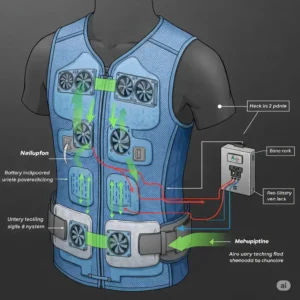
Understanding the physics saves money. A fan vest moves air across your skin to speed up evaporation. A plate vest chills a contact surface using thermoelectric modules. A water vest pumps chilled liquid through tubing against your torso.
Research gives some useful context. A study on fans and heat found that fans can provide a net cooling effect even above commonly recommended limits, but humidity must be considered, because upper relative humidity limits dropped as temperatures rose (80% at 36°C versus 50% at 42°C in resting participants). That’s a polite scientific way of saying: fans help, until it’s both hot and sticky.
In practical terms, fan vests like the Foiueyga Electric Cooling Vest and THEKUKU 3-Fan Cooling Vest shine in dry heat with long runtimes. Plate hybrids like the DR.HILL Industrial Cooling Vest add a cold-spot boost but demand more power. Water circulators like the SubZero Water Circulating Vest and KERHAND Ice Water Circulating Vest hit hardest but require ice upkeep.
Pick the mechanism before you pick the brand.
Battery Powered Cooling Vest vs Traditional Alternatives
How does a battery operated cooling vest stack up against the older options? Here’s the breakdown.
| Feature | Battery Powered Vest | Ice/Gel Pack Vest | Evaporative Vest |
|---|---|---|---|
| Runtime | 6-12 hrs per charge | 1-3 hrs per freeze | 2-10 hrs per soak |
| Humidity tolerance | Fans: moderate; water: high | High | Low |
| Weight | Light to moderate | Heavy when loaded | Very light |
| Setup needs | Charger | Freezer | Water |
| Best For | Long shifts, repeated use | Short bursts | Dry climates, budgets |
The table shows that battery models win on runtime and flexibility, while ice vests win on simplicity and evaporative vests win on price. NIOSH notes that ice vests are cheap but their temperature can’t be controlled and they often don’t stay cool long enough to be practical, which supports the case for powered alternatives. If you work in dry heat on a tight budget, an evaporative vest remains a reasonable choice.
Features That Actually Matter (And Those That Don’t)
Marketing loves big numbers. Here’s how to filter them.
Features that matter:
- Real runtime at your speed setting. Ignore the best-case figure.
- Battery logistics. Hot-swap and USB compatibility beat raw capacity.
- Fit and breathability. A vest that bunches under a harness cools poorly.
- Washability. Detachable electronics make hygiene realistic.
- Reflective elements if you work near traffic.
Features that matter less than advertised:
- Peak “degrees below ambient” claims. These are rarely independently verified.
- Four versus eight speed settings. Most people use two.
- Extra gimmicks. Touch controls help with gloves, but they’re not a deal-breaker.
One more nuance: NIOSH points out that a system that’s too cold actually reduces heat transfer from the body, so “colder” isn’t automatically “better.” Comfort and consistency beat extremes.
Common Mistakes When Buying a Battery Powered Cooling Vest
Mistake 1: Buying by mAh alone. A 60000mAh pack doesn’t help if the system is inefficient. Compare runtime at medium speed, not just capacity.
Mistake 2: Ignoring humidity. This is the number-one regret. A fan vest in a swamp-like climate often disappoints.
Mistake 3: Trusting five-star walls. Review-analysis sites flag some generic cooling vest listings for suspicious review patterns. Read the detailed negative reviews.
Mistake 4: Forgetting the battery’s lifespan. One roundup estimates 20-30% capacity loss after 300-500 charges, so plan for replacement.
Mistake 5: Overbuying. A three-hour weekend job doesn’t need a 60000mAh monster.
Mistake 6: Skipping sizing research. Runs-large and tight-fit complaints show up repeatedly in roundups.
Long-Term Cost and Maintenance: What You’ll Really Spend
Sticker price isn’t the whole story. Consider cost per use. A $150 vest worn 60 days a season costs roughly $2.50 per day in season one, falling sharply by season three if the battery holds. Budget vests like the Foiueyga Electric Cooling Vest cost less up front but may need replacement sooner, based on reviewer durability comments.
Ongoing costs differ by type. Fan vests need only electricity and the occasional spare battery. Water vests like the KERHAND Ice Water Circulating Vest and SubZero Water Circulating Vest add ice costs and tubing upkeep, which are minor in money but real in effort.
Maintenance checklist:
- Store batteries cool and partially charged
- Wash electronics-free fabric by hand
- Flush tubing on circulating models
- Inspect zippers and fan mounts monthly
A realistic ownership horizon is two to four seasons for a well-treated vest. That makes premium picks like the DR.HILL Industrial Cooling Vest easier to justify for daily workers than for occasional users.
Safety, Regulations and Compliance: Heat Illness Basics
A vest is a tool, not a cure. OSHA’s heat resources describe heat illness as a spectrum from cramps and rashes to heat exhaustion and heatstroke, and the agency recommends a layered approach combining engineering controls, work practices and PPE. Per industry coverage, OSHA’s National Emphasis Program on heat targets preventable incidents even without a finalized federal heat standard, so check OSHA’s page for the latest.
Practical safety tips:
- Drink water regularly and take shade breaks, vest or not
- Learn the warning signs: dizziness, nausea, confusion, no sweating
- Treat heatstroke as an emergency and call 911
- Allow new workers time to acclimatize
Battery safety matters too. Lithium packs shouldn’t be punctured, overheated or left in a hot car. If you plan to fly with a large pack, note that many 30000mAh-class power banks approach or exceed typical airline watt-hour limits, so check your airline’s rules before you travel.
Cooling vests may also be useful for people sensitive to heat, but anyone with a medical condition should ask a clinician first.
Battery Powered Cooling Vest FAQs
❓ Can a battery powered cooling vest work in high humidity?
❓ How long does a battery operated cooling vest last on one charge?
❓ Is a cooling vest with fan worth it for outdoor work?
❓ Can I wash a rechargeable cooling vest?
❓ What's the best battery powered cooling vest under $100?
Conclusion: Picking Your Battery Powered Cooling Vest
Here’s the short version. If you want all-day runtime, the THEKUKU 3-Fan Cooling Vest and MOSILA 2026 Upgraded lead the pack. If you face extreme dry heat, the DR.HILL Industrial Cooling Vest adds plates for sharper relief. If humidity is the villain, the Alphacool 5V Touch Button and SubZero Water Circulating Vest are the smarter bets. On a budget, the Foiueyga Electric Cooling Vest is the low-risk entry, and the KERHAND Ice Water Circulating Vest suits short, brutal jobs.
The honest caution: most runtime and cooling figures are manufacturer or roundup claims, not independent lab results. Buy for your climate and shift length, read the middling reviews, and keep expectations realistic. A battery powered cooling vest won’t make 105°F feel like a spa day, but it can turn survivable misery into manageable work.
Recommended for You
- 10 Best Bike Cooling Vest Options for Ultimate Comfort During Summer Rides in 2025
- 15 Stylish Cool Vests for Women That Will Transform Your Wardrobe in 2025
- Cooling Towel with Logo: Guide to Promotional Cooling Towels for Businesses
Disclaimer: This article contains affiliate links. As an Amazon Associate, I earn from qualifying purchases. If you purchase products through these links, we may earn a small commission at no additional cost to you.
✨ Found this helpful? Share it with your friends! 💬🤗
