

In This Article
Type nike cooling vest into a search bar on a sweltering July afternoon and you get a strange stew of results. There’s a sold-out ice-pack vest built for tennis stars, a pile of featherweight running vests that look cool without actually cooling you, and a dozen workwear brands you’ve never heard of. Here’s the plot twist: the Swoosh really did build a true nike cooling vest, but it’s a rare bird. Most Nike vests on shelves are breathable layers, not chillers.
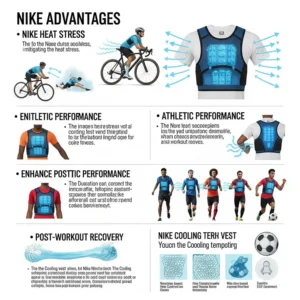
Heat isn’t a vanity problem, either. The NIOSH heat stress guidance explains that some protective clothing can raise the risk of heat illness. It lists cooling vests among the wearable “personal cooling systems” that help manage it. In other words, picking the right vest is part comfort, part common sense.
So this guide does something most roundups skip. It separates Nike’s actual cooling gear from its airflow gear, then fills the gap with real, widely sold cooling vests that do the heavy lifting. Every spec below comes with a plain-English translation, and every product gets an honest read on who it suits. Prices appear as ranges only, because they move constantly.
What Is a Nike Cooling Vest?
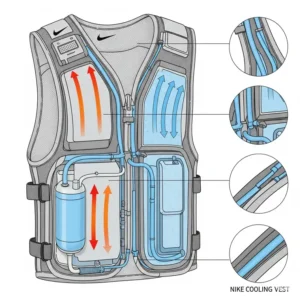
A nike cooling vest is a close-fitting vest, most notably the Nike Precool Vest, with pockets that hold ice packs against your torso to lower body temperature before and during hot-weather activity. Nike also sells Dri-FIT ADV vests that boost airflow, but those ventilate rather than chill.
How This Guide Was Built
Nothing here claims hands-on testing. The analysis comes from published specs, manufacturer claims, retailer review pools, and independent reporting, with the source of each theme made clear. Where a product has no deep pool of verified reviews, the article says so instead of papering over the gap.
Quick Comparison Table: Nike Cooling Vest Options at a Glance
| Product | Cooling Method | Cooling Window | Price Range | Best For |
|---|---|---|---|---|
| Nike Precool Vest | Four refillable ice packs | Short pre-cool bursts | Around $200 (Nike’s listing) | Athletes who want true Nike cooling |
| Nike AeroSwift Dri-FIT ADV Running Vest | Passive airflow (perforated knit) | Whole run, no recharge | Roughly $70-$110 | Racing and speed days |
| Ergodyne Chill-Its 6665 | Evaporative polymer fabric | Up to 4 hours per soak (maker claim) | Roughly $30-$65 | Dry heat on a budget |
| CHILLSWIFT Cooling Vest with 8 Ice Packs | Ice packs | 1-3 hours per set | Roughly $40-$70 | Budget buyers with freezer access |
| FlexiFreeze Professional Series Ice Vest | Pure water ice sheets | About 1-3 hours | Roughly $100-$140 | Intense cold, wide size range |
| Glacier Tek Cool Vest | Phase change packs (59°F) | About 2.5 hours | Premium, commonly $150-$300+ | Humid heat, long shifts |
| TechNiche Elite Hybrid Cooling Vest | Evaporative fabric plus phase change inserts | Fabric 5-10 hours, inserts up to 3 | Roughly $165-$215 | Cyclists and variable conditions |
Looking at the table, the Nike Precool Vest is the only entry built by the brand in your keyword, but it’s also the hardest to find. The Ergodyne Chill-Its 6665 and CHILLSWIFT Cooling Vest with 8 Ice Packs deliver the lowest cost of entry, while the Glacier Tek Cool Vest justifies its premium with steady temperature in humid air. If you can’t decide between technologies, the TechNiche Elite Hybrid Cooling Vest hedges its bets by carrying two.
💬 Just one click — help others make better buying decisions too!😊
Top 7 Nike Cooling Vest Options: Expert Analysis
1. Nike Precool Vest — the only true Swoosh-built chiller
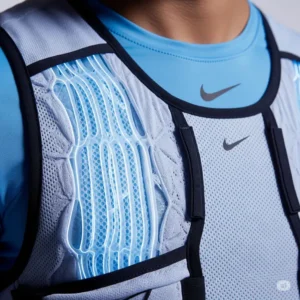
The Nike Precool Vest is the closest thing to a real nike cooling vest the brand has produced. It grew out of Nike’s Sport Research Lab for tennis, where players were facing brutal US Open heat. The body is a stretchy blend of 86% polyester and 14% spandex, with four pouches (two front, two back) that hold refillable ice packs. That close fit matters more than it sounds: ice packs that slide around a loose vest turn from relief into a lumpy nuisance.
Nike has said the vest can cool an athlete in under five minutes, which is a manufacturer claim worth reading as “fast,” not as a lab guarantee. Based on the design, this is a pre-cooling and warm-up tool, since four small packs can’t carry you through a four-hour shift. Remove the packs and it becomes a snug garment for rests between sets or heats.
On customer feedback, I couldn’t find a deep pool of verified reviews. The vest has been sold out on Nike’s listing and appears sporadically on resale channels. Most of the public praise is athlete endorsement rather than crowd data, so weigh it accordingly.
Pros:
- ✅ Built specifically for athletic pre-cooling
- ✅ Snug stretch fit keeps packs pressed on skin
- ✅ Packs come out, leaving a usable warm-up layer
Cons:
- ❌ Scarce and often sold out
- ❌ Small packs mean a short cold window
Price and value: Nike’s own listing sat around the $200 mark, and resale can run higher, so check current price and availability before getting attached.

2. Nike AeroSwift Dri-FIT ADV Running Vest — breathability without the ice
Let’s be clear about what this is. The Nike AeroSwift Dri-FIT ADV Running Vest doesn’t chill you, and it never claims to. It’s an engineered-knit singlet-style vest with perforations in high-sweat zones, bonded seams at the neck and armholes, and reflective details for low-light miles. Depending on the version, it’s made with at least 75% recycled polyester.
The translation: those perforations let air reach the stomach and back, where sweat pools. That helps sweat evaporate faster, which is a passive cousin of what evaporative vests do with water. The slim cut means almost nothing to snag on, so it suits racing and fast tempo days where ice-vest bulk would be a deal-breaker.
Treat it as the airflow half of a nike cooling vest strategy. In a muggy 95°F run it won’t lower your core temperature, but it won’t trap heat the way a cotton tee does. Verified review depth was thin in my research. Retailer pages emphasize breathability and fit, so check size feedback on the specific listing you choose.
Pros:
- ✅ Extremely light and chafe-conscious seams
- ✅ Reflective details for dawn and dusk runs
- ✅ No prep, charging, or freezing required
Cons:
- ❌ No active cooling in extreme heat
- ❌ Slim cut leaves little room for layering
Price and value: expect roughly $70-$110 depending on version and retailer, which is fair for race-day kit and poor value if you wanted a true chiller.
3. Ergodyne Chill-Its 6665 Evaporative Cooling Vest — cheapest way to feel something
The Ergodyne Chill-Its 6665 is the workhorse of budget cooling. It uses polymer-embedded fabric: soak it in cold water for two to five minutes and it holds moisture, then releases it slowly. Ergodyne claims up to four hours of relief per soak and lists hand washing as the care method, so it’s not a toss-in-the-machine garment.
What does that mean in practice? As the water evaporates off your chest and back, it pulls heat away, like artificial sweat. That works beautifully in dry, breezy heat and poorly in thick humidity, where evaporation stalls. It’s also light enough to wear under a hi-vis layer, which is why motorcyclists and landscapers love it.
Reviewer sentiment is mixed but informative. One retailer pool showed roughly 3.4 stars across nine reviews, with praise for hot motorcycle commutes in 100°F-plus weather. Complaints include sizing that runs roomy and one buyer who said the vest stopped holding water after a season.
Pros:
- ✅ Low cost for a full-torso cooling layer
- ✅ Activates in minutes with plain cold water
- ✅ Re-soak mid-shift for fresh cooling
Cons:
- ❌ Weak in humid climates
- ❌ Some reports of reduced water retention over time
Price and value: roughly $30-$65 depending on retailer, which makes it excellent value for dry-climate buyers and a gamble in the Gulf Coast.
4. CHILLSWIFT Cooling Vest with 8 Ice Packs — budget ice with a rotation plan
The CHILLSWIFT Cooling Vest with 8 Ice Packs solves the biggest ice-vest headache: having a backup. It ships with eight packs and an insulated carry bag, so you can freeze one set while wearing the other. The mesh vest itself is famously light, with roundups listing roughly a third of a pound empty and an elastic fit across a wide chest range.
That empty-weight figure is the point. Most of the load is in the packs, so you can leave a few out on easy days and cut the pounds. Packs ride in pouches that can shift when you bend, a recurring theme in feedback.
Aggregated reviewer sentiment hovers near 3.9 to 4.0 stars in roundup summaries, so treat it as a rough guide. Reviewers report that in 100°F-plus heat the packs may barely last an hour, while in mid-80s weather they can last three or four. Some call the materials a little flimsy, and others grumble about overpriced replacement packs.
Pros:
- ✅ Eight packs enable a freeze-and-swap routine
- ✅ Very light vest body with breathable mesh
- ✅ Insulated carry bag included
Cons:
- ❌ Packs can slip when bending or climbing
- ❌ Cooling window shrinks fast in extreme heat
Price and value: usually in the $40-$70 range, which is strong value if you have freezer access and a plan for the swap.
5. FlexiFreeze Professional Series Ice Vest — serious cold, sized for everyone
The FlexiFreeze Professional Series Ice Vest is the brute-force option. It holds 96 pure water ice cubes in refreezable sheets inside a neoprene shell, with sizing from XS up to 6X, which is unusually inclusive. Loaded weight lands around 3.5 pounds, so it feels like carrying a small bag of groceries on your torso.
Why does pure water ice matter? It’s colder than gel, so the cooling is intense rather than gentle. The trade-off is condensation as it melts and a cooling window that varies from about an hour in extreme heat to around three in milder conditions, depending on the source. Extra sheet sets let you swap mid-shift.
Reviewer themes are fairly consistent. Buyers describe cooling that lasts more than an hour in 100°F heat, and some praise it for working in non-air-conditioned spaces. Complaints focus on the Velcro that holds sheets in place, a flimsy zipper on some units, and damp clothing as ice melts.
Pros:
- ✅ Intense cold from pure water ice
- ✅ Huge size range, XS through 6X
- ✅ Swappable sheets for longer days
Cons:
- ❌ Heavier and bulkier than most rivals
- ❌ Condensation can leave clothing damp
Price and value: roughly $100-$140, which is fair for heavy-duty cooling and steep if you only need it for occasional yard work.

6. Glacier Tek Cool Vest — steady 59°F in sticky weather
The Glacier Tek Cool Vest is the answer for people who live where evaporative vests fail. It uses eight phase change packs that hold a steady 59°F while they melt, roughly 2.5 hours per set according to the maker. The vest comes in at under five pounds with packs and has adjustable fit across a broad chest range. Recharging is quoted at around 20-30 minutes in ice water.
Why 59°F? That’s cool enough to feel real relief, but it avoids the shock of frozen ice against skin. Because phase change packs don’t rely on sweat evaporation, they work in humid heat where evaporative vests stall. That makes this the more sensible pick for attic work, kitchens, and Southern summers.
Independent coverage is positive but candid. One hands-on tech review says its effectiveness grows with use and flags the high cost as the main drawback. A roundup site cites about 4.2 stars across roughly 500 Amazon ratings; treat that as indicative, not gospel.
Pros:
- ✅ Steady 59°F cooling, no ice burn
- ✅ Works in humid conditions
- ✅ Fast recharge compared with a deep freeze
Cons:
- ❌ Premium price tier
- ❌ Near five pounds when fully loaded
Price and value: commonly a premium purchase from roughly $150 up past $300 depending on model, so it earns its keep only if you wear it often.
7. TechNiche Elite Hybrid Cooling Vest — two cooling methods, one zipper
The TechNiche Elite Hybrid Cooling Vest stacks two technologies. The inner HyperKewl fabric provides evaporative cooling for a claimed 5-10 hours per soaking, while Cool Pax phase change inserts hold 58°F for up to three hours. It weighs under five pounds, with a front zipper, mesh ventilation panels, and a scoop neck.
The hybrid logic is sound. Soak the fabric on dry days and skip the inserts, or freeze the inserts for sticky ones. It’s marketed heavily to cyclists and motorsport athletes, who care about pre-cooling and active cooling in one garment.
Review pools are small. One reviewer in Arizona praised the cooling for outdoor work. Another in a humid region felt the “phase change” packs behaved much like ordinary ice packs and wished the listing had said so, and some reviewers suggest sizing up.
Pros:
- ✅ Two cooling modes in one garment
- ✅ Long evaporative life between soakings
- ✅ Mesh vents and zip front for airflow
Cons:
- ❌ Expensive, and extra inserts add cost
- ❌ Small review pools make quality harder to judge
Price and value: roughly $165-$215 for the vest, which is reasonable for cyclists and mixed-climate buyers and overkill for casual use.
Spec and Value Snapshot
| Product | Key Spec | Handles Humidity? | Review Signal | Value Tier |
|---|---|---|---|---|
| Nike Precool Vest | 4 refillable ice packs | Yes (ice-based) | Thin, athlete-driven | Premium, scarce |
| Nike AeroSwift Dri-FIT ADV Running Vest | Perforated engineered knit | Passive only | Thin | Mid |
| Ergodyne Chill-Its 6665 | Polymer evaporative, soak 2-5 min | Weak | Mixed, small pools | Budget |
| CHILLSWIFT Cooling Vest with 8 Ice Packs | 8 packs, light vest body | Yes (ice-based) | Roughly 3.9 in roundups | Budget |
| FlexiFreeze Professional Series Ice Vest | 96 ice cubes, XS-6X | Yes (ice-based) | Positive, some zipper complaints | Mid |
| Glacier Tek Cool Vest | 59°F phase change, 8 packs | Yes | Positive, costly | Premium |
| TechNiche Elite Hybrid Cooling Vest | Evaporative plus phase change | Partly | Small pools | Premium |
In plain terms, the Ergodyne Chill-Its 6665 and CHILLSWIFT Cooling Vest with 8 Ice Packs win on cost, but the Glacier Tek Cool Vest wins on consistency in muggy weather. The FlexiFreeze Professional Series Ice Vest sits in the middle: cold, inclusive, and heavy. If humidity is your enemy, skip evaporative-only designs entirely.
How to Use a Nike Cooling Vest: Pre-Cooling, Setup, and Care
A cooling vest rewards a little preparation and punishes improvisation. Here’s the routine that follows from the manufacturers’ instructions and reviewer feedback.
Before you wear it:
- Freeze ice packs flat, spaced so they chill evenly. One reviewer of a hybrid vest noted that piled packs recharge slower, which is simple physics.
- Soak evaporative fabric for two to five minutes, then wring it so it isn’t dripping onto your waistband.
- For phase change inserts, use ice water or the freezer per the label. Glacier Tek quotes a fast recharge, while other brands ask for longer.
While you wear it:
- Put on a thin moisture-wicking layer first, which keeps ice from biting skin and cuts condensation.
- Keep the vest snug. Loose packs shift, and a Nike Precool Vest-style tight fit exists for exactly that reason.
- Pair it with water and shade. The vest lowers the heat load; it doesn’t replace hydration.
After use and over the first 30 days:
- Hand wash polymer vests like the Ergodyne Chill-Its 6665, as the maker advises.
- With the FlexiFreeze Professional Series Ice Vest, remove the ice sheets before washing the shell, and wipe the sheets with mild antimicrobial soap.
- Common early mistakes: ordering the wrong size, freezing one set of packs and expecting an all-day shift, and storing a damp vest in a closed bag.
✨ Ready to Beat the Heat? 🔍 Take your summer to the next level with these carefully chosen picks. Click any highlighted product name to check current pricing and availability, then match the cooling method to your climate!
Real-World Scenarios: Which Nike Cooling Vest Alternative Fits You?
Specs are abstract. Here are three buyer profiles, each matched to a vest with reasoning.
The humid-climate marathoner (Houston, August, 5:30 a.m. long runs). Budget is flexible, and frequency is three runs a week. Evaporative gear is a bad bet in thick air, and heavy ice vests bounce on a long run. The sensible play is pre-cooling with something like the Nike Precool Vest (if you can find one) or a CHILLSWIFT Cooling Vest with 8 Ice Packs before the start, then running in the Nike AeroSwift Dri-FIT ADV Running Vest for breathability.
The dry-heat roofer (Phoenix, 105°F afternoons, five days a week). Dry air makes evaporation work in your favor. A Ergodyne Chill-Its 6665 at a budget price, re-soaked at breaks, is the most cost-efficient answer. If the job involves a harness or hi-vis requirements, check fit and visibility before buying.
The humid-attic HVAC tech (Florida, 4-6 hours in confined heat). Evaporation stalls in damp air, so phase change makes more sense. The Glacier Tek Cool Vest with a second pack set rotated through a cooler covers a full shift. The upfront cost is high, but frequent use spreads it thin.
A fourth, shorter case: the weekend gardener in Georgia with a tight budget should look at the CHILLSWIFT Cooling Vest with 8 Ice Packs and two pack sets. It’s enough for a Saturday of yard work without a premium price tag.
How to Choose a Nike Cooling Vest: 7 Steps
A good decision follows a short checklist. Work through these in order.
- Match the technology to your climate. Evaporative vests thrive in dry air and struggle in humidity, which is why reviewers in humid regions steer toward ice or phase change.
- Decide between pre-cooling and wear-through cooling. The Nike Precool Vest leans toward pre-cooling bursts, while the Glacier Tek Cool Vest is built to be worn for hours.
- Weigh cooling time against weight. Loaded ice vests run around 3.5 to 5 pounds, and every extra pound matters on a run.
- Prioritize fit. Independent coverage in Gear Patrol’s cooling vest explainer stresses that loose packs get more uncomfortable the colder they are.
- Plan the recharge. If you can’t reach a freezer or ice water, pick evaporative or a hybrid like the TechNiche Elite Hybrid Cooling Vest.
- Check job compatibility. Hi-vis needs, harnesses, and jackets change which designs work.
- Count total cost. Replacement packs and extra sets can add real money, so budget for them upfront.
Quick rule of thumb: if you can only choose one question, ask about humidity first. Everything else is fine-tuning.
Nike Cooling Vest vs Other Ways to Beat the Heat
| Option | Cooling Strength | Mobility | Upkeep | Best For |
|---|---|---|---|---|
| Ice-pack vest (FlexiFreeze Professional Series Ice Vest) | High, short window | Moderate, heavy | Refreeze sets | Intense heat bursts |
| Phase change vest (Glacier Tek Cool Vest) | Moderate, steady | Moderate | Recharge in ice water | Long, humid shifts |
| Evaporative vest (Ergodyne Chill-Its 6665) | Light to moderate | High | Re-soak | Dry heat, budget |
| Breathable vest (Nike AeroSwift Dri-FIT ADV Running Vest) | Passive | Very high | Wash only | Racing, light heat |
| Cold towel or water spray | Light, short | High | Constant re-wetting | Emergency relief |
The takeaway is that active vests give real cooling at the cost of weight and upkeep, while breathable vests give freedom at the cost of cooling power. A Nike AeroSwift Dri-FIT ADV Running Vest is not a substitute for a phase change vest in a Florida attic, but it can beat a heavy ice vest on a race day. Match the tool to the job.
It’s also worth knowing what sits beyond the shelf. Nike partnered with Hyperice on a thermoelectric vest that heats and cools without ice, built for athletes and covered by Gear Patrol, but it isn’t a mainstream retail purchase. For a broader primer on vest types, Wikipedia’s cooling vest overview covers ice, phase change, thermoelectric, and water-circulating designs, and notes that Nike supplied cooling vests to some athletes at the 2004 Olympics. The idea has been around a while. The retail availability is what’s changed.
Features That Actually Matter (And Those That Don’t)
Marketing copy loves superlatives. Here’s the filter.
What matters:
- A steady temperature. Phase change packs at 58-59°F avoid the shock and skin risk of frozen ice, which is a real comfort advantage.
- Removable packs. They let a vest double as a regular layer, which is the clever bit about the Nike Precool Vest design.
- Fit range. A model like the FlexiFreeze Professional Series Ice Vest that runs XS through 6X solves a problem most brands ignore.
- Fast, realistic recharge. A vest that needs a long freeze is useless if you don’t have the time.
What doesn’t matter as much:
- Hour claims. Manufacturer cooling windows are best-case numbers. Real-world feedback consistently shows hot, direct sun cuts them.
- Military or “pro” labels. They tell you about marketing, not about performance.
- Fan or battery gimmicks. Gear Patrol’s coverage calls fan-cooled vests mostly gimmicks because they can generate as much heat as they remove.
- Color and logo. Fun, but irrelevant to cooling.
One more nuance: evidence for performance gains is mixed. Independent reporting notes that some studies show lower body temperatures and others show comfort gains without performance improvements. A cooling vest is a comfort and safety tool first.
Long-Term Cost and Maintenance
Cost per use is the honest way to compare. A vest in the roughly $60 range worn about 40 days a summer for three summers works out to around 50 cents a wear. A $150 vest worn the same amount lands closer to $1.25. Both beat heat exhaustion.
Maintenance varies. Evaporative polymer vests like the Ergodyne Chill-Its 6665 can lose water retention, as one reviewer reported, so expect a finite lifespan. Ice and phase change vests last longer but demand storage space and sometimes replacement inserts. Reviewers of hybrid designs complain about the price of extra inserts, so factor that in.
Hidden costs include a second set of packs for all-day use, a small cooler, and ice. For the CHILLSWIFT Cooling Vest with 8 Ice Packs, the included second set is the whole value proposition. For the Glacier Tek Cool Vest, a spare set is worth it if you work long shifts.
A final consideration is condensation. Ice vests like the FlexiFreeze Professional Series Ice Vest leave damp clothes as ice melts, so plan a dry layer and don’t wear leather you care about.
Safety, Regulations, and Heat-Illness Guide
A cooling vest isn’t a license to ignore the sun. The OSHA heat controls page makes the order of operations clear: reduce the hazard or change how the work is done first, and use protective equipment when those steps aren’t enough. It lists jackets or vests with reusable ice packs or phase change packs among the options for extreme heat.
Research is nuanced, too. A small field pilot with 84 Florida agricultural workers found that vest-only wearers had higher odds of exceeding a core temperature threshold than controls, though the confidence intervals were wide and the study used a vest type not matched to the job. The takeaway isn’t that vests fail. It’s that the right vest in the right setting matters, and that a vest alone isn’t a heat plan.
Practical safety habits:
- Drink water regularly and take shaded breaks.
- Know heat illness symptoms: heavy sweating, dizziness, nausea, confusion.
- Stop and seek help if symptoms escalate.
- If you have a medical condition that affects temperature regulation, ask your clinician before relying on a vest.
Common Mistakes When Buying a Nike Cooling Vest
Buyers repeat the same errors, and each one has a fix.
- Buying evaporative for a humid climate. Evaporation stalls in thick air. Choose ice or phase change instead.
- Assuming a Nike running vest is a cooling vest. The Nike AeroSwift Dri-FIT ADV Running Vest moves air; it doesn’t chill.
- Ignoring size charts. Reviewers of various models report both roomy and snug cuts, so measure your chest.
- Expecting one pack set to last all day. Plan a second set, as the CHILLSWIFT Cooling Vest with 8 Ice Packs does by design.
- Paying for hybrid features you won’t use. The TechNiche Elite Hybrid Cooling Vest shines for variable conditions and wastes money for one-note use.
- Forgetting that availability is limited. The Nike Precool Vest can vanish, so have an alternative ready.

FAQ: Nike Cooling Vest Questions Answered
❓ Is a nike cooling vest worth it for running in humid weather?
❓ How long does a cooling vest stay cold?
❓ Can I wear a cooling vest under a jacket or backpack?
❓ How do I clean a cooling vest?
❓ Are there cheaper alternatives to a nike cooling vest?
Conclusion: The Honest Nike Cooling Vest Verdict
Here’s the short version. A true nike cooling vest exists, the Nike Precool Vest, but it’s rare and built for athletic pre-cooling rather than shift work. The Nike AeroSwift Dri-FIT ADV Running Vest gives you breathability for races but no active chill. For real, sustained relief you’ll likely end up with a vest from another brand.
If humidity is your enemy, the Glacier Tek Cool Vest is the steady choice. If you work in dry heat on a budget, the Ergodyne Chill-Its 6665 is hard to beat for the price. If you want intense cold and wide sizing, the FlexiFreeze Professional Series Ice Vest delivers. The CHILLSWIFT Cooling Vest with 8 Ice Packs is the thrifty rotation play, and the TechNiche Elite Hybrid Cooling Vest covers cyclists and changeable conditions.
Remember the safety layer, too. Cooling gear works best alongside shade, water, rest, and common sense, as OSHA’s guidance makes clear. Pick the technology that matches your climate, plan your recharge, and you’ll get far more from your money than any logo can promise.
Recommended for You
- Techniche Cooling Vest: 7 Best Models Ranked for 2026
- Cool Safety Vest: 7 Best Picks to Beat the Heat in 2026
- Bicycle Cooling Vest: 7 Best Picks to Beat the Heat in 2026
Disclaimer: This article contains affiliate links. As an Amazon Associate, I earn from qualifying purchases. If you purchase products through these links, we may earn a small commission at no additional cost to you.
✨ Found this helpful? Share it with your friends! 💬🤗
