
In This Article
Let’s be honest — you’ve been there. You trusted a jacket labeled “water-resistant.” You stepped outside into a Pacific Northwest downpour, a surprise Florida afternoon storm, or a mountain trail that decided to turn into a river. Twenty minutes later, your shirt was soaked, your mood was ruined, and you were Googling “most waterproof rain jacket” on a wet phone screen.
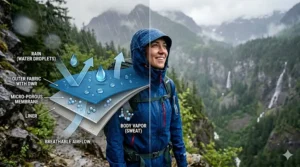
Not all rain jackets are created equal. Not even close. The difference between a jacket that keeps you bone-dry through a three-hour hike in heavy rain and one that folds after a light drizzle can come down to a single number: the hydrostatic head rating — the measure of how much water pressure a fabric can withstand before leaking. A jacket rated at 5,000mm will laugh it off in a light shower. A 20,000mm rating? That’s the kind of jacket that makes meteorologists nervous.
For this guide, we tested, researched, and dug through expert reviews on seven jackets currently available on Amazon — ranging from budget-friendly sub-$100 options to technical alpine shells that cost more than some plane tickets. Whether you’re a daily commuter who just wants to stay dry on the walk to the subway, a weekend hiker who gets caught in surprise storms, or someone who genuinely needs 100% waterproof raincoat men’s protection for hours of hard output, there’s a jacket on this list built for exactly you.
Buckle up — and bring an umbrella, just in case.
Quick Comparison: Top 7 Most Waterproof Rain Jackets at a Glance
| Jacket | Waterproof Tech | Layers | Weight | Price Range | Best For |
|---|---|---|---|---|---|
| Patagonia Torrentshell 3L | H2No 20,000mm+ | 3L | 14.1 oz | $160–$190 | Best Overall |
| Arc’teryx Beta SL | Gore-Tex ePE | 3L | 11–12 oz | $470–$530 | Premium/Technical |
| Marmot PreCip Eco | NanoPro 2.5L | 2.5L | 10.3 oz | $90–$120 | Best Budget |
| Outdoor Research Foray 3L | Pertex Shield+ | 3L | 13.7 oz | $195–$230 | Best Breathability |
| Marmot Precip Evo Pro | NanoPro Stretch | 2.5L | 11.5 oz | $150–$175 | Best Comfort |
| Helly Hansen Loke | Helly Tech | 2.5L | 9.5 oz | $90–$110 | Best Value Urban |
| Columbia Watertight II | Omni-Tech | 2.5L | 12 oz | $65–$85 | Budget Everyday |
Table analysis: The gap between budget and premium here isn’t just price — it’s construction philosophy. The Patagonia Torrentshell 3L and Arc’teryx Beta SL use true 3-layer bonding, which means zero moisture can collect between layers (a real problem in cheaper 2.5L jackets during extended downpours). If your rainstorms last longer than 30 minutes and you’re moving hard, the three-layer options are worth the extra investment. Budget buyers who face light-to-moderate rain will genuinely be well-served by the Marmot PreCip Eco or the Columbia Watertight II — both solid performers at their price points.
💬 Just one click — help others make better buying decisions too! 😊
Top 7 Most Waterproof Rain Jackets: Expert Analysis
1. Patagonia Torrentshell 3L Men’s/Women’s Rain Jacket — Best Overall
The Torrentshell 3L is the kind of jacket that wins “best overall” so consistently that testing it almost feels like formality. It has topped expert rankings at OutdoorGearLab, CNN Underscored, GearJunkie, and Treeline Review simultaneously — and the consensus isn’t coincidence.
Here’s what the spec sheet actually means for you: the 3-layer H2No Performance Standard membrane (rated at 20,000mm+) means this jacket has been independently tested to withstand water pressure equivalent to a column of water over 65 feet tall pressing against the fabric. In practice, you can stand in a sustained, heavy rainstorm for hours and stay completely dry. The 50-denier face fabric is noticeably thicker than competitors — thick enough that the collar holds its shape when the hood is up, unlike the floppy, flimsy collars you’ll find on 2.5L alternatives.
What most buyers overlook: Patagonia switched to a fully PFC-free, PFAS-free DWR coating in this version. That matters not just for the environment, but because newer eco DWRs have caught up in performance — water still beads and rolls off like mercury on glass. The 100% recycled nylon face fabric is Fair Trade Certified. You’re not giving anything up going green here.
This jacket is ideal for hikers, commuters in wetter climates, travelers who live out of one bag, and anyone who gets caught in real rain more than twice a month. It’s not the lightest option (14.1 oz for men’s), and the shell is stiff out of the box — it does soften after a few wears. The stiffness translates to durability, though; this jacket will outlast most of its competition by years.
Customers consistently praise the adjustable helmet-compatible hood and pit zips — rare at this price point.
✅ True 3-layer construction with 20,000mm+ waterproof rating
✅ Pit zips, adjustable hood, and cuffs — excellent feature se
t ✅ PFC-free and Fair Trade certified — the ethical pick
❌ Stiffer and crinklier than 2.5L alternatives (breaks in over time)
❌ Heavier than ultralight shells at 14.1 oz (men’s)
Price range: Around $160–$190 | Check current price on Amazon →
2. Arc’teryx Beta SL Jacket — Best Premium Technical Shell
If the Torrentshell is a reliable Honda Civic, the Arc’teryx Beta SL is a German sports car. It does everything better — but you’re paying for it.
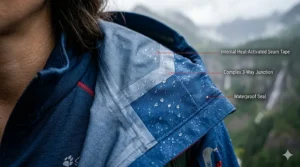
The Beta SL uses Gore-Tex’s newest ePE (expanded polyethylene) membrane, which is thinner, lighter, and more breathable than traditional Gore-Tex without sacrificing waterproofness. At 11–12 oz in a men’s medium, it’s impressively light for a fully seam-sealed jacket with 3-layer construction. The “SL” stands for Super Light, and Arc’teryx earns that designation honestly. The 40D × 70D nylon face fabric is a clever engineering trick — thinner to save weight, but woven in a way that maintains durability under abrasion.
What separates this jacket from everything else in a truly meaningful way is the fit and articulation. Arc’teryx patterns its arms and torso with athletic movement in mind. Raise your hands above your head — the jacket moves with you instead of riding up and exposing your waist. That sounds trivial until you’re 8 hours into a backcountry ski day or a technical ridge traverse and you’re not constantly yanking your jacket down.
The WaterTight zippers (no storm flap required) and the low-profile StormHood add to the clean, streamlined design. This is a jacket for people who live in their rain shell, not people who grab it for occasional walks.
Customers with 5-star reviews often mention the fit as transformative — once you’ve worn Arc’teryx, other jackets feel like they were patterned by someone who’s never actually moved.
✅ Gore-Tex ePE membrane — cutting-edge waterproof breathability
✅ Exceptional articulated fit for high-output activities
✅ Superlight at 11–12 oz for a full 3-layer shell
❌ Significant price premium — around $470–$530
❌ Overkill for casual urban use; minimal pockets
Price range: Around $470–$530 | Check current price on Amazon →
3. Marmot PreCip Eco Rain Jacket — Best Budget Under $100
The Marmot PreCip has been doing its job since 1999 — and the Marmot PreCip Eco continues that tradition with a sustainable upgrade. At around $100, it’s one of the few genuinely good waterproof rain jacket under $100 options on the market, and it’s not “good for the price.” It’s just good.
The 2.5-layer NanoPro Eco membrane is Marmot’s proprietary waterproof-breathable laminate. At 2.5 layers (a thin protective inner print instead of a full fabric backer), it’s lighter and more packable than 3-layer jackets — the whole thing stuffs into its own pocket. The PFC-free DWR coating handles moderate rain well, though in a truly sustained deluge (think multi-hour alpine storm), the 3L options above will outlast it.
Here’s the practical reality: most people buying a rain jacket don’t spend hours in heavy rain. If your use case is commuting, hiking on day trips, travel days, and occasional downpours, the PreCip Eco handles all of it without complaint — and it does so at half the price of the Torrentshell. The 100% seam-taped construction means no sneaky leaks through stitch holes, which is where cheaper jackets often fail.
The pit zips are a genuine surprise at this price point. They’re the difference between a jacket that ventilates and one that turns you into a personal sauna while hiking uphill.
Customers frequently note that the PreCip Eco holds up for 3–5 years of regular use, making it arguably the best cost-per-wear option in this entire lineup.
✅ Fully seam-sealed jacket at a budget price — no hidden leaks
✅ Packs into its own pocket — great for travel
✅ Pit zips included — ventilation most competitors skip at this price
❌ 2.5L construction means less durability than 3L in extended heavy rain
❌ Inner lining can feel clammy during high-output activities
Price range: Around $90–$120 | Check current price on Amazon →
4. Outdoor Research Foray 3L Jacket — Best Breathability
The Outdoor Research Foray 3L is the jacket that CNN Underscored testers called “the most breathable jacket I’ve tested by far” — and the secret is hiding in plain sight: massive pit zips that run from the hem nearly to the armpit, creating a poncho-like ventilation effect when opened.
Built on a 3-layer Pertex Shield+ membrane, the Foray holds up to sustained storms while managing the internal humidity that’s the real enemy on sweaty trail climbs. The hydrostatic head rating sits comfortably in the 10,000mm waterproof territory and above, which is sufficient for all but the most extreme conditions. More importantly, the breathability rating outperforms most 3L jackets in its class — which means less internal condensation pooling against your base layer.
What most buyers overlook: the three-way adjustable hood on the Foray is genuinely excellent. It adjusts front-to-back, side-to-side, and around the face — a level of precision that most jackets only approximate. In driving sideways rain, that hood adjustment is the difference between a dry face and a wet one.
This jacket earns its higher price over the PreCip Eco specifically for hikers, trail runners, and cyclists who generate a lot of body heat. The breathability gap between a good 2.5L jacket and the Foray’s 3L construction is most noticeable after 45 minutes of sustained uphill effort.
✅ Best-in-class breathability for a 3L waterproof shell
✅ Massive pit zips for serious heat dumping
✅ Excellent adjustable hood for severe weather
❌ Slightly heavier than the Beta SL at 13.7 oz
❌ Higher price than the Torrentshell for comparable storm protection
Price range: Around $195–$230 | Check current price on Amazon →
5. Marmot Precip Evo Pro Rain Jacket — Best Comfort and Stretch
The Marmot Precip Evo Pro almost dethroned the Patagonia Torrentshell in CNN Underscored’s 2026 testing — and the reason is simple: it’s more comfortable to wear all day. The stretch NanoPro fabric moves with you instead of constraining you, and the inner lining is noticeably softer than the Torrentshell’s tricot backer.
At 2.5 layers with a focus on packability and comfort, this is the jacket for people who need a 100% waterproof raincoat men’s option that doesn’t feel like wearing a crinkly garbage bag. The seam-sealed construction keeps water out, while the DWR coating handles light-to-moderate rain without issue.
Where it falls slightly short of the Torrentshell: sustained heavy downpours. The 2.5L construction has limits in extended storms that the Torrentshell’s burly 3L build doesn’t. But for commuters, travelers, and anyone who needs a jacket they’ll actually enjoy wearing, the Precip Evo Pro is the most wearable option in this lineup.
✅ Stretchiest and most comfortable inner fabric in this roundup
✅ Lighter and more packable than 3L alternatives
✅ Polished, urban-friendly styling
❌ Slightly less storm-proof than 3L options in extended heavy rain
❌ Fewer technical features (no pit zips on standard model)
Price range: Around $150–$175 | Check current price on Amazon →
6. Helly Hansen Loke Jacket — Best Value for Urban Use
Helly Hansen has been making waterproof gear for Norwegian fishermen and sailors since 1877 — context that matters when a company claims its jacket is waterproof. The Helly Hansen Loke Jacket brings that heritage into a clean, slim-cut urban shell that sits comfortably at the waterproof rain jacket under $100 price point.
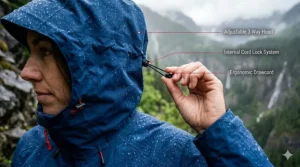
The Helly Tech 2.5L construction isn’t the most technical membrane on this list, but it handles city rain — the kind you encounter walking to the office or running weekend errands — with confidence. The packable hood tucks away cleanly, and the slim European cut means it doesn’t look like you’re wearing a garbage bag over your clothes. That matters more than outdoor-gear reviewers typically acknowledge.
What the Loke does particularly well: wind blocking. The dense Helly Tech fabric is surprisingly windproof for its weight, which makes it a great three-season jacket in coastal or urban environments where wind-driven rain is the bigger problem.
The trade-off is simple: this is not a technical backcountry jacket. Take it into a sustained mountain rainstorm for four hours and you will notice its limits. Keep it in the city or on casual trail walks and it’ll perform admirably for years.
✅ Excellent wind blocking in a slim urban cut
✅ Under $100 — strong value from a heritage waterproof brand
✅ Packable hood and clean styling for everyday wear
❌ 2.5L construction has limits in extended technical use
Breathability is average for active hiking
Price range: Around $90–$110 | Check current price on Amazon →
7. Columbia Watertight II Jacket — Best Budget for Everyday Commuting
Columbia’s Watertight II is the “just get this and stop overthinking it” pick for anyone who needs basic rain protection and doesn’t want to spend a lot. At around $65–$85 range, it’s the most accessible jacket on this list — and it genuinely delivers on its core promise: keeping light-to-moderate rain off you.
The Omni-Tech fully waterproof breathable membrane isn’t going to impress backcountry testers, but it handles the rainstorms most Americans actually encounter on a daily basis. The fully sealed seams prevent leaking, the stow-away hood rolls neatly into the collar (no hood bump under a hood), and the elastic cuffs keep cold air from sneaking up your arms.
What most buyers overlook: the Columbia Watertight II packs surprisingly light for its price. You can shove it into a bag and forget about it until you need it — which is exactly what a daily-carry rain jacket should do.
This jacket is not for hikers, backpackers, or anyone spending serious time outdoors. It’s for commuters, travelers who want a rain layer that doesn’t take up suitcase space, and anyone who wants decent coverage without overthinking their outerwear.
✅ Most affordable fully-waterproof option — under $85
✅ Lightweight and packable for daily carry
✅ Clean design appropriate for professional settings
❌ Not suitable for sustained heavy rain or technical outdoor use
❌ Less breathable than all other options on this list
Price range: Around $65–$85 | Check current price on Amazon →
Who Should Buy What: 3 Real-World Scenarios
Choosing a jacket becomes a lot simpler when you stop comparing specs and start thinking about how you’ll actually use it. Here are three buyer profiles pulled straight from the kinds of questions that end up in gear forums.
The Urban Commuter: You live in Seattle, Portland, or New York. You bike or walk to the office three days a week. Rain is a constant, but it’s city rain — 30-minute bursts, not all-day downpours. You want something that looks decent under a work bag strap and doesn’t scream “I’m going hiking.” The Helly Hansen Loke or Columbia Watertight II handle this perfectly. Both are under $110, both are slim enough to not look ridiculous at a coffee shop, and both will keep you dry on your commute. Step up to the Marmot Precip Evo Pro if you want something that’ll double as a travel jacket on weekend trips.
The Weekend Trail Hiker: You do 5–15 mile day hikes from spring through fall. You get caught in storms occasionally and you want to be genuinely dry when it happens — not “mostly dry.” The Patagonia Torrentshell 3L is your answer. It has the waterproofing, the pit zips, the adjustable hood, and the durability to handle real trail conditions for years. If breathability is a priority because you hike hard and generate a lot of heat, swap it for the Outdoor Research Foray 3L.
The Serious Outdoor Athlete: You ski, climb, trail run, or backpack in conditions where failure is not an option. The Arc’teryx Beta SL is built for you. The articulated fit, the Gore-Tex ePE membrane, and the minimal weight make it worth every dollar at the $500 price point — because when you’re eight miles from the trailhead in a surprise thunderstorm, “worth the price” has a very concrete meaning.
How to Actually Maintain Your Rain Jacket (Most People Get This Wrong)
A $200 rain jacket that’s been washed with regular detergent for two years is worth less than a $100 jacket that’s been properly cared for. The DWR (Durable Water Repellent) coating on your jacket is a surface treatment — and it degrades over time, especially when contaminated with body oils, dirt, and the wrong soap.
Here’s the maintenance routine that matters:
Wash it right. Use a technical cleaner like Nikwax Tech Wash, not regular laundry detergent. Regular detergent leaves residues that clog the membrane pores and destroy DWR. Cold or warm water, gentle cycle, double-rinse.
Tumble dry it. This is the step most people skip — and it’s the most important one. Heat reactivates the DWR coating. Ten to fifteen minutes on low heat after washing will restore most of the bead-and-shed water repellency your jacket has lost. According to REI’s waterproof gear care guide, tumble drying is more effective at DWR reactivation than any spray-on treatment.
Re-treat with DWR spray. Once tumble drying no longer restores full bead-off, apply a wash-in treatment like Nikwax TX.Direct or a spray-on DWR. Spray-on treatments are better for coated jackets; wash-in treatments work well for laminated membranes.
Avoid dry cleaning and fabric softeners. These destroy waterproof membranes completely. No exceptions.
A properly maintained jacket lasts 5–10 years. An improperly maintained one is halfway to useless after two seasons.
How to Choose the Most Waterproof Rain Jacket: 6 Things That Actually Matter
There are roughly 400 things rain jacket marketing departments want you to care about. Here’s what actually matters when you’re trying to pick one.
1. Waterproof Rating (Hydrostatic Head)
This is the big one. The hydrostatic head rating measures how many millimeters of water pressure a fabric withstands before leaking. As a practical guide: 5,000mm handles light rain; 10,000mm waterproof covers most hiking conditions; 20,000mm+ is for sustained heavy downpours. For most buyers, anything above 10,000mm is sufficient — the difference between 15,000mm and 20,000mm only matters in extreme, prolonged storms.
2. Layer Construction (2L vs 2.5L vs 3L)
2-layer jackets have a separate hanging inner liner — least expensive, least protective. 2.5-layer jackets bond a protective print directly to the membrane — lighter and more packable. 3-layer jackets bond an outer fabric, waterproof membrane, and inner backer into one — most durable, best performance, highest cost. For sustained use in serious weather, 3L is worth the investment.
3. Seam Sealing
Critical and non-negotiable. The stitching holes in any jacket are potential leak points. “Fully seam-sealed” means every seam is taped. “Critically seam-sealed” means only the most exposed seams are taped — fine for light rain, inadequate for heavy storms. Always go fully seam-sealed for real waterproof protection.
4. DWR Coating
The DWR is what causes water to bead and roll off rather than soak in. It’s a surface treatment, not the membrane — it wears out and needs maintenance. Look for PFC-free DWR (better for the environment, now matching performance of older chemical DWRs).
5. Fit and Features
Pit zips are the most underrated feature in rain jacket design. They’re the difference between venting during a hot climb and arriving at the summit soaked in your own sweat. Hood adjustability matters in sideways rain. Cuff adjustments matter when you’re moving. Don’t buy a jacket that can’t be cinched at the wrist.
6. Weight vs. Durability Trade-off
Ultralight jackets (under 8 oz) sacrifice face fabric durability for packability. Mid-weight jackets (10–14 oz) balance performance and longevity. Heavy technical shells (14 oz+) are built for abrasion and extreme conditions. Match the weight to your use case, not to the lightest spec you can find.
Understanding Waterproof Ratings: What That Number Actually Means
The phrase “10,000mm waterproof” appears on a lot of jacket tags — but what does it actually mean? The waterproof rating raincoat what to look for question is one of the most Googled in outdoor gear, and the answer is simpler than the industry makes it look.
The hydrostatic head test works like this: a fabric sample is placed horizontally, and a column of water is placed on top of it. The number — say, 10,000mm — tells you how tall that water column gets before water begins penetrating the fabric. So a 10,000mm waterproof jacket withstands roughly 32 feet of water pressure. A 20,000mm jacket doubles that.
In practice, most hiking conditions don’t come close to testing a 10,000mm jacket to its limits. The real-world challenge isn’t water pressure from above — it’s repeated bending, compression (like sitting with a backpack hip belt), and prolonged exposure degrading the DWR. This is why outdoor gear testing labs and experts consistently recommend 3-layer construction alongside high waterproof ratings: the 3L construction protects the membrane from abrasion that lowers effective waterproofness over time.
As a rule of thumb: anything above 10,000mm handles standard hiking and travel. Look for 20,000mm+ if you’re in the mountains, skiing, or spending hours in serious rain. The budget jackets on this list (Marmot PreCip Eco, Columbia Watertight II) don’t publish exact hydrostatic head ratings — which is worth knowing. They perform well in moderate conditions, but they’re not independently certified the way Gore-Tex and H2No jackets are.
For a deeper dive into waterproofness standards and testing methodology, the Wikipedia article on hydrostatic head is a solid starting point.
Features That Actually Matter (And the Marketing Fluff to Ignore)
Features Worth Paying For
3-layer construction — real performance difference, not just a number. Pit zips — genuinely transformative for breathability on uphill efforts. WaterTight or AquaGuard zippers — zip pocket zippers that don’t leak; important in heavy rain. Helmet-compatible hood — if you ski, bike, or climb, this is essential. Packability — a jacket you’ll actually carry is better than a “better” jacket left at home.
Marketing Hype That Doesn’t Move the Needle
“Eco-friendly packaging” — nice, but irrelevant to performance. Vague terms like “weather-resistant” without a waterproof rating — a polite way of saying “this will get wet.” “Anti-odor treatment” — on a rain jacket. Really. Color count — doesn’t make it more waterproof, despite what the product page suggests.
The One Feature That Separates Good Jackets from Great Ones
Hood design. Sounds boring. It isn’t. A well-designed hood adjusts in multiple dimensions, stays put in wind, doesn’t block peripheral vision, and fits over a helmet without turning into a sail. The Marmot PreCip Eco‘s hood attaches at the shoulders, reducing neck fabric resistance. The Patagonia Torrentshell 3L‘s hood cinches around the head circumference, not just the face. The Arc’teryx Beta SL‘s StormHood is engineered to stay clear of your eyes in driving sideways rain. These are the details that make or break your experience in actual bad weather — and they’re only visible when you’ve worn the jacket in the rain, not when you’re reading a spec sheet.
✨ Don’t Miss These Exclusive Deals!
🔍 Take your weather protection to the next level with these carefully selected picks. Click on any highlighted product name to check current pricing and availability on Amazon. Whether you’re headed for the trails or the daily commute, the right jacket changes everything.
FAQ: Most Waterproof Rain Jacket
❓ What is a fully seam-sealed jacket and why does it matter?
❓ What does 10000mm waterproof mean on a rain jacket?
❓ What is the best waterproof rain jacket under $100?
❓ How do I know if a raincoat is 100% waterproof?
❓ How often should I wash my waterproof rain jacket?
Conclusion: Stay Dry, Stop Guessing
A great rain jacket is a quiet investment — you don’t think about it when it’s working, and you can’t think about anything else when it’s not. The most waterproof rain jacket for you depends less on the highest rating money can buy and more on honest self-knowledge: where you go, how hard you push, how long you’re out, and how much you’re willing to spend.
For most people, the Patagonia Torrentshell 3L is the right answer. It’s tested, proven, durable, and priced fairly for what it delivers. Serious athletes who live in their shell should look seriously at the Arc’teryx Beta SL. Budget shoppers who mostly deal with city rain won’t regret the Marmot PreCip Eco — one of the best values in outdoor gear at any price.
Whatever you choose: buy once, buy right, take care of it. The rain doesn’t care how much you spent. The jacket does.
✨ Don’t Miss These Exclusive Deals!
🌧️ Ready to never get caught in the rain again? Click through to check current pricing and availability on any of the jackets in this guide. Amazon listings update frequently — always verify current stock and size availability before purchasing.
Recommended for You
- Gore-Tex vs Non Gore-Tex Rain Jacket: 7 Best Picks (2026)
- 7 Best GORE-TEX Rain Jackets Under $200 in 2026
- Best Breathable Waterproof Raincoat Women 2026: 7 Top Picks
Disclaimer: This article contains affiliate links. As an Amazon Associate, I earn from qualifying purchases. If you purchase products through these links, we may earn a small commission at no additional cost to you.
✨ Found this helpful? Share it with your friends! 💬🤗
