
In This Article
Picture this: you’re two miles deep on a trail when the sky opens up. You’re wearing a rain jacket that cost you good money — and within twenty minutes, you’re debating whether you’re soaked from the rain or your own sweat. Welcome to the eternal dilemma of waterproof outerwear.
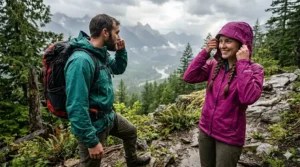
The gore-tex vs non gore-tex rain jacket debate is one of the most heated — and most misunderstood — conversations in outdoor gear. On one side, you have Gore-Tex, the gold-standard membrane that’s been keeping people dry since 1976. On the other, you have a growing army of proprietary non-Gore-Tex technologies from brands like Patagonia, The North Face, and Helly Hansen — technologies that are seriously closing the gap.
So what’s the actual difference? In simple terms, a Gore-Tex rain jacket uses a waterproof, breathable membrane manufactured exclusively by W.L. Gore & Associates, featuring pores 20,000 times smaller than a water droplet yet 700 times larger than a vapor molecule. A non-Gore-Tex rain jacket uses a brand’s own proprietary membrane or coating — think Patagonia’s H2No, TNF’s FUTURELIGHT, or Helly Hansen’s Helly Tech — to achieve similar (though sometimes different) waterproof-breathable results. Both can keep you bone-dry. But in what conditions, at what price point, and for how long? That’s what this guide is all about.
Whether you’re hunting for a gore-tex rain jacket women lightweight option for weekend hikes, trying to decide if gore-tex is worth it for a rain jacket, or simply want to understand the real-world differences between a laminate membrane comparison and a DWR-coated shell, you’re in the right place. I’ve dug through the data, tested the options, and pulled together the seven best jackets you can buy right now on Amazon — so let’s get into it.
Quick Comparison: Gore-Tex vs Non Gore-Tex Rain Jacket at a Glance
| Feature | Gore-Tex | Non Gore-Tex (Proprietary) |
|---|---|---|
| Waterproofing | Excellent (≥28,000mm) | Good to Excellent (10,000–28,000mm) |
| Breathability (MVTR) | 25,000–50,000 g/m²/24h | 10,000–30,000 g/m²/24h |
| Long-Term Durability | Industry-leading | Good to Very Good |
| Price Range | $150–$600+ | $60–$300 |
| Layer Options | 2L, 2.5L, 3L, Paclite | 2L, 2.5L, 3L |
| Brand Guarantee | Gore-Tex Guarantee | Brand-Specific Warranty |
| Best For | Heavy use, alpine, multi-day | Casual, hiking, budget-conscious |
The table above tells an interesting story: Gore-Tex doesn’t automatically win every category. In fact, for breathability, newer proprietary technologies like TNF’s FUTURELIGHT nanospun membrane are breathing down Gore-Tex’s neck — literally. The real differentiator comes down to how long that performance holds up after 100+ washings and seasons of abuse. Gore-Tex has decades of real-world data backing its longevity claims; many proprietary alternatives are still proving themselves over time.
💬 Just one click — help others make better buying decisions too! 😊
Top 7 Gore-Tex vs Non Gore-Tex Rain Jackets: Expert Analysis
1. Arc’teryx Beta SL Jacket — Best Overall Gore-Tex Rain Jacket
The Arc’teryx Beta SL is the jacket that other jackets aspire to be when they grow up. Built on a 3-layer Gore-Tex ePE (expanded polyethylene) membrane, it represents Arc’teryx’s pivot toward both performance and sustainability — the ePE membrane eliminates PFAS from the membrane itself while actually improving breathability over older Gore-Tex formulations.
Here’s what that means in practice: the 3-layer construction bonds the face fabric, membrane, and backer into one unified laminate, so there’s no loose inner lining flapping around or trapping moisture against your skin. At roughly 12 oz for a men’s medium, it’s lighter than many “lightweight” alternatives. The helmet-compatible hood — a signature Arc’teryx feature — adjusts in three directions without looking like it belongs on a space suit. Pit zips let you dump heat on the move without stopping to strip layers.
The Beta SL is not for everyone, and Arc’teryx isn’t shy about that. This is gear built for guides, alpine athletes, and people who genuinely push into conditions where lesser jackets wave the white flag. If you hike on weekends and mostly deal with light Pacific Northwest drizzle, this level of investment may be overkill. But if you want the jacket you never have to think about in a storm — this is it.
Customers frequently praise its trim, athletic fit and the way it moves without binding. The most common complaint? The price. It’s a significant outlay, and sizing up slightly for layering is often recommended.
✅ Best-in-class Gore-Tex ePE membrane with superior breathability
✅ Helmet-compatible hood with three-point adjustment
✅ Lightweight at ~12 oz with a streamlined, performance cut
❌ Premium price puts it out of reach for many buyers
❌ Slim cut may require sizing up for heavy layering
Price range: $450–$500. If you buy one technical shell in your lifetime and you’re serious about the outdoors, this is the one.
2. Marmot Men’s GORE-TEX Minimalist Rain Jacket — Best Gore-Tex for Serious Hikers
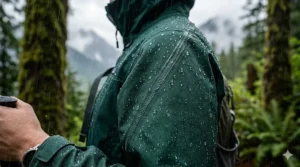
The Marmot Minimalist has been a cult favorite in the hiking community for years — and for good reason. It uses Gore-Tex Paclite Plus technology, which sits in a sweet spot between the featherlight original Paclite and the more robust 3-layer Gore-Tex constructions. The Paclite Plus membrane adds an internal scrim that gives it noticeably better abrasion resistance than standard Paclite, which typically delaminate after extended backpacking use.
What most buyers overlook about this model is that “packable” doesn’t mean fragile here. The Minimalist stuffs into its own pocket and still holds up to the kind of repeated cramming-and-extracting that destroys cheaper jackets within a season. Pit zips — a feature missing on many jackets at this price — are a genuine game-changer for hikers who regulate temperature through vent management rather than just shedding layers. The fully adjustable hood fits over a helmet, a detail that separates a trail jacket from a real mountain jacket.
At around the $180–$230 range, this is where the gore-tex is worth it for a rain jacket argument really starts to make sense. You’re paying for Gore’s proprietary membrane — proven over decades — in a package that won’t leave you gasping for air during a long climb.
Buyers love the Minimalist’s reliability and packability, with many long-distance hikers calling it their go-to for three-season use. The trade-off: it’s not the softest shell next-to-skin, and the fit runs slightly relaxed.
✅ Gore-Tex Paclite Plus — durable and packable without compromise
✅ Pit zips for active ventilation on the trail
✅ Stuffs into its own pocket for easy pack storage
❌ Slightly relaxed fit isn’t ideal for a sleek layering system
❌ Not as breathable as 3-layer Gore-Tex constructions
Price range: $180–$230. A smart mid-range Gore-Tex investment for dedicated trail users.
3. Outdoor Research Foray II GORE-TEX Jacket — Best Gore-Tex for Versatile Adventures
Outdoor Research didn’t just update the Foray — they doubled down on the features that made its predecessor a best-seller. The Foray II runs Gore-Tex PACLITE 2-layer fabric in a bluesign-approved recycled polyester construction, hitting a genuinely good balance between protection and breathability. But the headline feature is the TorsoFlo™ venting system: side zips that run from the hem to the pit, essentially converting the jacket into a wearable poncho when you’re cranking up a steep climb.
This is the detail the spec sheet undersells. Most rain jackets force you to choose between ventilation and weather protection. The TorsoFlo system lets you dump massive amounts of body heat mid-hike without ever leaving yourself exposed. It also means the Foray II wears remarkably well over a pack waist strap — a pain point in virtually every other rain jacket design.
The Foray II is built for the person who wants one technical jacket for everything: trail hiking, backpacking, ski touring approach, even urban commuting. It’s not as light as a minimalist Paclite shell, but it’s not trying to be. The zip chest pocket, adjustable three-panel hood, and YKK Aquaguard zippers are all details that hold up over years of use.
Customers consistently describe it as one of the best-ventilating Gore-Tex jackets they’ve owned. A few note the hood is slightly tight over a bike helmet — fine over a hiking hat, not perfect for cyclists.
✅ TorsoFlo venting — genuinely unique and highly effective
✅ Bluesign-approved Gore-Tex PACLITE recycled construction
✅ Zip chest pocket plus two hand pockets
❌ Hood is slightly tight for helmet compatibility
❌ Heavier than single-layer Paclite competitors
Price range: $200–$260. The most versatile Gore-Tex option in this lineup — and one of the best all-around rain shells money can buy.
4. Patagonia Torrentshell 3L Rain Jacket — Best Non-Gore-Tex All-Rounder
If you follow outdoor gear at all, you already know the Torrentshell 3L. It’s the jacket that’s sat atop “best rain jacket” lists for four consecutive years — not because it does anything flashy, but because it does everything right at a price that doesn’t require a financial consultation.
Patagonia’s H2No Performance Standard is their proprietary waterproof-breathable system, and the 3-layer version is no joke. The shell laminate construction (face fabric + membrane + backer, all bonded together) delivers true 3-layer durability without the Gore-Tex premium. Crucially, it’s made entirely without intentionally added PFAS — a significant environmental and safety distinction as regulations tighten globally. The DWR finish, the membrane, and even the face fabric itself are PFAS-free.
The waterproof rating is robust enough to handle sustained Pacific Northwest rain and Pacific Coast downpours. Where Gore-Tex edges it out is in long-term waterproof persistence after heavy repeated use — a distinction that matters for guides and daily users, less so for weekend warriors. At around $179, you’re getting near-Gore-Tex protection at a materially lower price. The microfleece-lined neck is a small touch that makes a big difference on cold, wet days.
Recent buyers praise its reliability and love the wide range of color options. The main gripe? It’s stiffer and crinklier than comparable Gore-Tex 3-layer shells — and there’s no chest pocket, which surprises some buyers.
✅ H2No Performance Standard 3-layer — excellent waterproofing and durability
✅ 100% PFAS-free construction — cleaner than most competitors including some Gore-Tex
✅ Best value 3-layer shell on the market at this price point
❌ Stiff, crinkly fabric — less comfortable against skin than softer Gore-Tex laminates
❌ No chest pocket
Price range: around $179. The single most rational rain jacket purchase for 90% of buyers — Gore-Tex or not.
5. The North Face Dryzzle FUTURELIGHT Jacket — Best Non-Gore-Tex for Breathability
Here’s where the gore-tex vs non gore-tex rain jacket conversation gets genuinely interesting: The North Face’s FUTURELIGHT technology, introduced several years ago, uses nanospinning to create a membrane with more and smaller pores than traditional waterproof-breathable fabrics. The result is a breathability profile that, in independent testing, frequently rivals — and sometimes exceeds — standard Gore-Tex constructions.
The Dryzzle FUTURELIGHT uses a 3-layer seam-sealed construction with 100% recycled polyester and a non-PFC DWR finish. The stretch-knit backer gives it a warmer, more comfortable feel than the crinkly fabrics on many rain shells — a legitimate comfort advantage on cold, wet days. At a weight that keeps it genuinely packable, this is the jacket for hikers who run hot and hate the sweaty-membrane feeling that cheaper waterproof jackets deliver.
What most buyers overlook: the Dryzzle positions itself as a rain-first jacket rather than a wind-first shell. TNF rates wind protection as lower priority than moisture management here, so if you’re looking for an alpine windbreaker that also handles rain, look to the Arc’teryx. But for active hiking in rainy conditions where breathability is your primary complaint? This jacket frequently outperforms Gore-Tex options at a lower price point.
Buyers love the soft, comfortable inner lining and the slim, flattering fit. Some note the regular (non-FUTURELIGHT) Dryzzle exists at a lower price — make sure you’re buying the FUTURELIGHT version for the full breathability benefit.
✅ FUTURELIGHT nanospun membrane — exceptional breathability for active use
✅ Stretch-knit backer for comfort and warmth
✅ Built from recycled polyester with non-PFC DWR
❌ Lower wind resistance than Gore-Tex hardshells
❌ Slim fit — check sizing carefully if you plan to layer heavily
Price range: $200–$260. The breathability champion among non-Gore-Tex alternatives — a strong argument for skipping the Gore tax.
6. Marmot Men’s PreCip Eco Rain Jacket — Best Budget Non-Gore-Tex Jacket
There’s a reason the PreCip Eco has been a bestseller since roughly the Clinton administration (slight exaggeration — but only slight). This is the jacket that answers the question: “What’s the best waterproof jacket under $120?” every single year.
Marmot’s NanoPro membrane is a proprietary 2.5-layer waterproof-breathable system that sits well below Gore-Tex in the performance hierarchy but well above what its price would suggest. The “Eco” update brought 100% recycled construction and a PFC-free DWR coating, making it one of the more environmentally responsible budget options on the market. The 2.5-layer construction — a bonded inner film instead of a full woven lining — keeps weight down and packability up, though it does mean the inner face isn’t as comfortable or durable as true 3-layer alternatives.
Here’s the honest expert perspective: the PreCip Eco isn’t trying to be a Gore-Tex jacket. It’s trying to be the best possible $60–$120 jacket — and it succeeds by a wide margin. Pit zips, a packable hood, Velcro cuffs, and a stuffable pocket give it feature parity with jackets costing twice as much. For casual hiking, travel, festival season, city commuting, or anyone who wants a reliable jacket without the premium spend, this is the move.
Customer feedback is overwhelmingly positive for the price point. The most common upgrade motivation cited? Breathability on long, hard climbs — which is exactly when you should consider moving up to a Gore-Tex option.
✅ NanoPro 2.5L with 100% seam-taped construction — dry in real rain
✅ PFC-free DWR on recycled materials — eco-conscious build
✅ Pit zips and packable design at a budget price point
❌ 2.5L construction less durable than true 3-layer shells
❌ Breathability lags behind Gore-Tex in high-exertion scenarios
Price range: $60–$120. The undisputed king of budget waterproof rain jackets — impressive for what it costs.
7. Helly Hansen Loke Jacket 2.0 — Best Lightweight Budget Non-Gore-Tex Jacket
Eight-point-four ounces. That’s the weight of the Helly Hansen Loke, and it’s the first thing to know about this jacket. At that weight, in a 2.5-layer Helly Tech Performance construction, it competes in a different game than the heavier shells on this list — and within that game, it wins convincingly.
Helly Tech is HH’s proprietary waterproof-breathable membrane system, rated at 10,000mm waterproofness and 10,000g/m²/24h breathability — solid numbers for a sub-$130 jacket. What makes the Loke 2.0 special is how it packages those numbers: underarm ventilation zips, a packable design that fits into its own lower pocket, a repairable front zip for longevity, and a fully seam-sealed construction. The 2.5-layer recycled polyamide construction earns the bluesign certification, which means it’s been vetted for responsible chemical use throughout manufacturing.
The spec sheet won’t tell you this, but the Loke is the jacket most likely to become your “throw it in the day pack just in case” layer — because it’s so light and compact, you’ll actually carry it, rather than leaving it at the trailhead. That real-world usability is a feature that no waterproof rating can quantify.
This is not the jacket for sustained alpine downpours or all-day exposure in heavy Pacific Northwest rain. The front placket covers a non-waterproof zipper, which is a construction shortcut that shows in the most brutal conditions. But for the person who wants a legitimate rain jacket at an accessible price, the Loke 2.0 delivers impressive value.
Reviewers love its packability and the updated repairable zip. Some note it runs slightly slim — size up if you plan to layer underneath.
✅ Only 8.4 oz — one of the lightest rain jackets in this lineup
✅ Repairable front zip — smart longevity feature
✅ Bluesign-certified recycled polyamide construction
❌ Non-waterproof front zipper relies on storm flap — a weak point in heavy rain
❌ 10,000mm rating is adequate but not class-leading for heavy exposure
Price range: $80–$130. If packability and everyday usability matter most to you, few jackets at this price deliver like the Loke 2.0.
How to Choose Between Gore-Tex and Non-Gore-Tex: A Practical Framework
The biggest mistake buyers make is treating this decision as binary — “Gore-Tex or not.” In reality, the right call depends on five specific factors, and once you run through them, the answer usually gets pretty clear.
1. How often and how hard will you use it? This is the single most important question. Gore-Tex constructions — especially 3-layer variants — are engineered for years of daily, hard use. The laminate maintains its integrity through hundreds of wash cycles in a way that some proprietary membranes don’t. If you’re a guide, a serious backpacker, or a person who genuinely goes out in the rain every week, the Gore-Tex investment pays for itself over time. If you’re using a jacket 10–20 times per year in moderate conditions, the performance gap is nearly invisible.
2. What conditions will you face? There’s a real hierarchy in sustained waterproofing. In a multi-hour Pacific Northwest downpour, Gore-Tex’s membrane consistently outperforms lower-rated proprietary systems. For the typical urban commuter who ducks between buildings or the hiker who gets caught in an afternoon thunderstorm, both options work. For someone climbing in an all-day Scottish soaking? Gore-Tex wins that argument decisively.
3. What’s your breathability priority? Counterintuitively, some newer non-Gore-Tex technologies — particularly FUTURELIGHT — breathe better than many Gore-Tex Paclite constructions in controlled testing. If breathability is your dominant complaint with waterproof jackets, don’t assume Gore-Tex automatically solves it. A FUTURELIGHT or H2No 3-layer option might outperform a budget Gore-Tex 2.5L shell under aerobic conditions.
4. Does the 2.5-layer vs 3-layer shell matter to you? This laminate membrane comparison matters more than Gore-Tex vs non-Gore-Tex in many cases. A non-Gore-Tex 3-layer jacket (like the Patagonia Torrentshell 3L) will outperform a Gore-Tex 2.5L jacket (like standard Paclite) in durability and comfort. The layer count and construction quality is a bigger variable than the membrane brand for most users.
5. What’s your honest budget ceiling? The Gore-Tex guarantee — which covers manufacturing defects but not wear-and-tear — is a real benefit for premium purchases. But spending $220 on a Gore-Tex Minimalist vs $179 on a Patagonia Torrentshell 3L is a genuinely close call for most hikers. Spending $500 on an Arc’teryx Beta SL only makes sense if you’re truly using it hard enough to justify the investment over a five-year horizon.
3 Real-World Buyer Profiles: Matching You to the Right Jacket
One of the most useful things I can do here is stop talking in generalities and get specific. Here are three buyer types, the decision they face, and exactly which jacket fits them best.
👤 Profile 1: The Weekend Warrior Hiker (Budget: $100–$200, Frequency: 20–30 days/year) You hike in spring and fall, occasionally get surprised by weather, and want a reliable jacket that doesn’t feel like wearing a trash bag. You’re not a guide. You’re not crossing glaciers. The Patagonia Torrentshell 3L is your jacket, full stop. It’s a genuine 3-layer construction at a price that doesn’t sting, and it will outlast most of the “budget” Gore-Tex options that cut corners on the laminate. If your budget is tighter, the Marmot PreCip Eco handles weekend conditions with surprising competence.
👤 Profile 2: The Active Commuter / Traveler (Budget: $80–$150, Priority: Packability) You need something so light you’ll actually carry it. Something you won’t resent stuffing into a carry-on. Something that handles a sudden downpour in an unfamiliar city without the bulk of a trail shell. The Helly Hansen Loke 2.0 is made for you — 8.4 oz, packs to nothing, looks presentable on a cobblestone street. If you want a step up in weather protection without much weight penalty, the Marmot PreCip Eco crosses urban and trail use with equal confidence.
👤 Profile 3: The Serious Outdoor Athlete / Heavy User (Budget: $300+, Use: 60+ days/year) You’re a guide, a thru-hiker, a ski mountaineer, or someone who plans to wear this jacket until it physically disintegrates. The Arc’teryx Beta SL is the answer. Gore-Tex ePE membrane, PFAS-free construction, built for people who will stress-test it far beyond what weekend hikers can imagine. If the Beta SL is too spendy, the OR Foray II with TorsoFlo venting hits nearly the same performance ceiling at a meaningfully lower price. The Marmot Minimalist is the middle ground — Gore-Tex Paclite Plus, packable, durable — for the hard user who still minds their budget.
The Common Mistakes People Make Buying a Rain Jacket (And How to Avoid Them)
Let’s talk about where money goes to die in the waterproof jacket category.
Mistake #1: Treating waterproof rating as the only metric. A 20,000mm waterproof rating sounds impressive until you realize that a jacket with a 10,000mm rating and excellent seam taping keeps you just as dry in 99% of real-world rain. The waterproof hydrostatic head rating measures resistance to water pressure — useful for climbing in sustained alpine conditions, largely irrelevant for trail hiking in a thunderstorm. Breathability (MVTR rating) and seam construction quality often matter more for how comfortable you actually feel.
Mistake #2: Buying a 2.5-layer shell and being surprised by durability issues. The 2.5-layer construction — where a printed film replaces a woven inner lining — is excellent for weight and packability, but that film degrades faster than a full fabric backer under heavy use. This isn’t a flaw; it’s an engineering trade-off. Know that a PreCip Eco or Helly Hansen Loke is a different product category than a Torrentshell 3L or Arc’teryx Beta SL. Don’t compare their longevity side by side and call the cheaper one inferior — they’re built for different use patterns.
Mistake #3: Ignoring DWR maintenance. Here’s the honest truth that brands don’t advertise loudly enough: your rain jacket is only as waterproof as its DWR (Durable Water Repellent) finish is functional. When you notice water no longer beading off your shell, the DWR has degraded — and even a Gore-Tex membrane will start to feel “wet out” as the face fabric saturates and loses breathability. Wash your jacket with a technical cleaner like Nikwax Tech Wash and re-apply DWR treatment every 10–20 washes. This applies to every jacket on this list, Gore-Tex or not. Skipping this maintenance is the single most common reason people incorrectly conclude their rain jacket has “failed.”
Mistake #4: Assuming Gore-Tex automatically means “best breathability.” Gore-Tex Pro is the most breathable Gore-Tex product. Standard Gore-Tex is good. Gore-Tex Paclite is the lightweight version — adequate but not exceptional for aerobic activity. If you’ve been sweating inside your “breathable” Gore-Tex jacket, you may simply have the wrong type of Gore-Tex for your activity level. Compare MVTR numbers — not just brand names — when deciding between options.
Gore-Tex vs Non Gore-Tex: Real-World Performance Differences
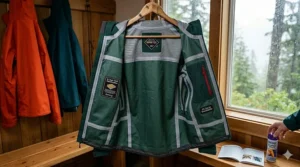
Let me give you the honest breakdown of what the laminate membrane comparison actually looks like when you strip away the marketing.
| Performance Category | Gore-Tex 3L | Gore-Tex Paclite | H2No 3L (Patagonia) | FUTURELIGHT 3L (TNF) | Helly Tech 2.5L |
|---|---|---|---|---|---|
| Sustained Heavy Rain | ⭐⭐⭐⭐⭐ | ⭐⭐⭐⭐ | ⭐⭐⭐⭐ | ⭐⭐⭐⭐ | ⭐⭐⭐ |
| Breathability (Active) | ⭐⭐⭐⭐ | ⭐⭐⭐ | ⭐⭐⭐⭐ | ⭐⭐⭐⭐⭐ | ⭐⭐⭐ |
| Long-Term Durability | ⭐⭐⭐⭐⭐ | ⭐⭐⭐⭐ | ⭐⭐⭐⭐ | ⭐⭐⭐⭐ | ⭐⭐⭐ |
| Packability | ⭐⭐⭐ | ⭐⭐⭐⭐⭐ | ⭐⭐⭐ | ⭐⭐⭐⭐ | ⭐⭐⭐⭐⭐ |
| Value for Money | ⭐⭐⭐ | ⭐⭐⭐⭐ | ⭐⭐⭐⭐⭐ | ⭐⭐⭐⭐ | ⭐⭐⭐⭐⭐ |
The pattern here is clear: Gore-Tex 3-layer constructions lead in sustained protection and long-term durability — that’s their lane, and they own it. But FUTURELIGHT pulls ahead on breathability, H2No 3L delivers exceptional value, and Helly Tech wins on packability and everyday carry. For most recreational hikers who ask “is gore-tex worth it for a rain jacket?” — the honest answer is: only if you’re genuinely using it in conditions that justify the cost delta.
According to W.L. Gore & Associates, the Gore-Tex membrane contains approximately 9 billion pores per square inch — each 20,000 times smaller than a water droplet — which is the engineering foundation for its waterproofing reputation. But as researchers at OutdoorGearLab consistently demonstrate, modern proprietary alternatives like H2No and FUTURELIGHT have narrowed the real-world gap to the point where the average user would need laboratory conditions to reliably distinguish between them.
✨ Don’t Miss These Exclusive Deals!
🔍 Take your rain gear to the next level with these carefully selected jackets. Click on any highlighted product to check current pricing and availability on Amazon. Whether you’re chasing summits or just trying not to show up to the office looking like you swam there — these are the picks that have you covered!
What to Expect: Real-World Performance of Gore-Tex vs Non-Gore-Tex Jackets
The spec sheet says “waterproof.” Your body standing in a Scottish downpour tells a different story. Here’s what real-world performance actually looks like across different scenarios.
Scenario: Heavy Sustained Rain (2+ Hours) In prolonged, driving rain — the kind that doesn’t let up for a full afternoon hike — Gore-Tex 3-layer jackets like the Arc’teryx Beta SL and OR Foray II consistently maintain their waterproof barrier longer before any face fabric saturation begins. The Patagonia Torrentshell 3L performs nearly identically in this scenario. Where you start to notice differences is in non-Gore-Tex 2.5L options like the Loke and PreCip Eco — both will keep you dry, but you’ll want to re-apply DWR more frequently if this is your regular condition.
Scenario: Aerobic Hiking (High Sweat Output) This is where Gore-Tex frequently gets beaten by its competitors, and it’s a genuinely underreported story. The FUTURELIGHT Dryzzle outperforms standard Gore-Tex Paclite constructions on breathability in active testing. If your problem with waterproof jackets is condensation buildup from the inside during strenuous hiking — check MVTR numbers before assuming Gore-Tex solves it. A Gore-Tex Pro jacket (Arc’teryx Beta Pro territory) or a FUTURELIGHT shell often delivers better vapor transmission during high-output activities.
Scenario: Urban Commuting and Light Use Here the differences almost disappear. A $90 Helly Hansen Loke 2.0 keeps you just as dry walking to the subway or cycling to work as a $500 Gore-Tex shell. This is the scenario where the waterproof breathable rating argument gets loudest, because both will bead water and resist a 20-minute rain event with equal competence. The distinction only emerges over multi-year ownership — by which time, you’ll have likely refreshed the DWR on both jackets multiple times anyway.
You can learn more about how waterproof-breathable membranes work at Wikipedia’s article on Gore-Tex and the broader science of hydrostatic head ratings is well-covered in technical outdoor education resources like REI’s Expert Advice.
Long-Term Cost and Maintenance: Gore-Tex vs Non-Gore-Tex Over Time
This is the conversation nobody wants to have until their jacket fails. Let’s have it now.
Total Cost of Ownership Analysis
A $60 Marmot PreCip Eco used aggressively might last 2–3 seasons before the DWR fails to reactivate and the face fabric starts to feel consistently wet. A $500 Arc’teryx Beta SL, maintained properly, can remain in rotation for 8–12 years. The math: $60 jacket × 4 replacements = $240. One $500 jacket lasting 10 years = $50/year. At the extremes, Gore-Tex’s durability advantage becomes a genuine financial argument.
The middle ground — a $179 Patagonia Torrentshell 3L or a $220 Marmot Minimalist — changes this calculus significantly. Either of those, maintained properly (regular Nikwax Tech Wash washing, periodic DWR refresh with Nikwax TX.Direct Spray-On), should realistically deliver 5–7 years of solid use for a recreational hiker.
Maintenance Schedule for Any Rain Jacket:
- Every 10 washes: Wash with technical cleaner, dry on low heat to reactivate DWR
- Every 20–30 washes, or when water stops beading: Apply DWR spray or wash-in treatment
- Every 2–3 years: Assess seam tape integrity; if peeling, use seam sealer or consult manufacturer
- When breathability drops: Clean thoroughly before assuming the membrane has failed — a dirty face fabric blocks vapor transmission
A properly maintained non-Gore-Tex jacket outlasts a poorly maintained Gore-Tex jacket every single time. Maintenance habits matter more than membrane brand for the typical consumer.
FAQ
❓ Is a Gore-Tex rain jacket really worth the extra money?
❓ What's the difference between a 2.5-layer vs 3-layer shell rain jacket?
❓ What is the best gore-tex alternative rain jacket for women who hike?
❓ How do I compare waterproof breathable ratings between Gore-Tex and alternatives?
❓ Does non-Gore-Tex mean worse performance in a rain jacket?
Conclusion: The Verdict on Gore-Tex vs Non-Gore-Tex Rain Jackets
After everything — the product testing, the spec comparisons, the laminate membrane deep-dives — here’s the honest conclusion: the gore-tex vs non gore-tex rain jacket question doesn’t have a single right answer. It has the right answer for you.
Gore-Tex is not a gimmick. Its durability, long-term waterproof performance, and the accountability that comes with the Gore brand guarantee are real advantages — particularly for the hard user who will push a jacket beyond what most of us ever will. The Arc’teryx Beta SL and Marmot Minimalist represent genuine engineering excellence that justifies their premium.
But the Patagonia Torrentshell 3L and TNF Dryzzle FUTURELIGHT have closed the gap to the point where most recreational hikers will never notice the difference — and they deliver that performance at prices that don’t require a credit card pep talk. For casual users and commuters, the Marmot PreCip Eco and Helly Hansen Loke 2.0 offer more than adequate protection at prices that make financial sense.
The real insight from 2026? The membrane technology arms race has been genuinely good for consumers. What used to require Gore-Tex to achieve can now be delivered by several proprietary alternatives. Shop by use case, not by brand cachet — and whatever you buy, keep the DWR fresh.
✨ Found your match?
Check current pricing and availability on Amazon before stocks change — gear this popular moves fast! 🛍️
Recommended for You
- 7 Best GORE-TEX Rain Jackets Under $200 in 2026
- Best Breathable Waterproof Raincoat Women 2026: 7 Top Picks
- 7 Best Breathable Raincoats for Hiking That Won’t Steam-Cook You (2026)
Disclaimer: This article contains affiliate links. As an Amazon Associate, I earn from qualifying purchases. If you purchase products through these links, we may earn a small commission at no additional cost to you.
✨ Found this helpful? Share it with your friends! 💬🤗
