
In This Article
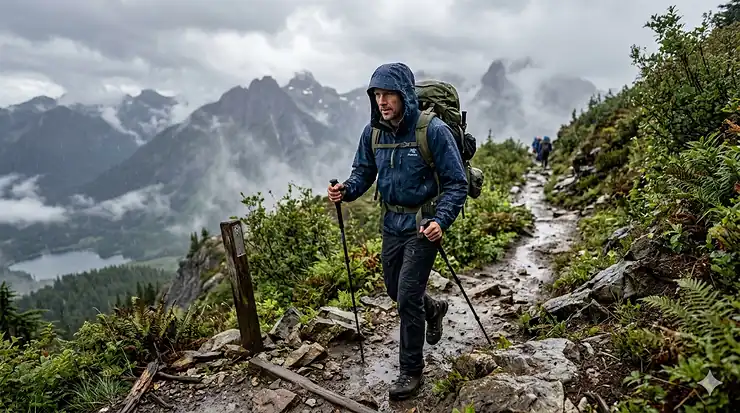
You’ve been there. Rain rolls in, you zip up your rain jacket, and thirty seconds later you’re wetter on the inside than you would’ve been if you’d just stood in the downpour. That clammy, sauna-in-a-bag feeling isn’t a rite of passage — it’s a sign you’re wearing the wrong gear. Finding the right breathable raincoat for hiking changes everything. Not just your comfort, but your safety.
Here’s the thing most gear guides won’t tell you outright: a waterproof jacket and a breathable waterproof jacket are not the same animal. The first keeps rain out. The second also lets your body vapor escape so you don’t simmer in your own sweat. The difference between the two, on a steep switchback in August rain, is the difference between a miserable slog and an actually enjoyable trail day.
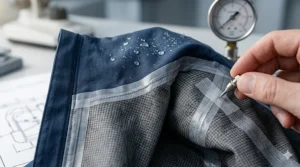
A breathable raincoat for hiking works by using a semi-permeable membrane — a layer of material riddled with microscopic pores too small for raindrops to enter but large enough for water vapor molecules to escape. Brands achieve this through proprietary technologies like GORE-TEX, H2No, DryVent, and AscentShell, each with slightly different performance trade-offs. Understanding those differences is exactly what this guide is built to help you do.
We’ve researched and analyzed the top-performing rain jackets currently available on Amazon, cross-referenced independent gear lab testing, and cut through the marketing noise so you can make a confident decision. Whether you’re a weekend day-hiker who wants a “just in case” layer or a thru-hiker logging 20-mile days in the Pacific Northwest drizzle, there’s a jacket here for you.
Quick Comparison Table: Top 7 Breathable Raincoats for Hiking (2026)
| Product | Construction | Weight | Pit Zips | Best For | Price Range |
|---|---|---|---|---|---|
| Outdoor Research Foray 3L | 3-layer AscentShell | ~14 oz | ✅ Yes (TorsoFlo) | High-output trail hikers | ~$199–$229 |
| Patagonia Torrentshell 3L | 3-layer H2No | ~14.4 oz | ❌ No | Versatile all-weather use | ~$149–$179 |
| Marmot PreCip Eco | 2.5-layer NanoPro | ~10.3 oz | ✅ Yes (PitZips) | Budget-conscious hikers | ~$100–$130 |
| The North Face Antora | 3-layer DryVent | ~15 oz | ❌ No | Trail hikers, casual use | ~$120–$140 |
| The North Face Venture 2 | 2.5-layer DryVent | ~12 oz | ✅ Yes | Entry-level / weekend use | ~$100–$120 |
| Columbia Watertight II | 2-layer Omni-Tech | ~11 oz | ❌ No | Budget everyday protection | ~$70–$100 |
| Helly Hansen Seven J | 2.5-layer Helly Tech | ~13 oz | ❌ No | Urban hiking & light trails | ~$100–$130 |
Reading this table, a few things jump out. The Outdoor Research Foray 3L is the standout performer for active trail use — its TorsoFlo ventilation system is genuinely in a class of its own for on-trail breathability. If budget is the primary concern, the Marmot PreCip Eco and the Columbia Watertight II cover opposite ends of that spectrum, with the Marmot offering notably better breathability for about $30 more. The North Face Venture 2 is the sweet spot for hikers who want pit zips without paying premium prices.
💬 Just one click — help others make better buying decisions too! 😊
Top 7 Breathable Raincoats for Hiking: Expert Analysis
1. Outdoor Research Men’s/Women’s Foray 3L Jacket — Best Overall for Trail Hikers
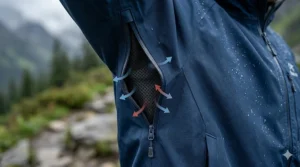
If there’s one jacket in this roundup that earns the word “breathable” without any asterisks, it’s the Outdoor Research Foray 3L. The headline feature is OR’s proprietary TorsoFlo venting system — essentially oversized underarm-to-hip zippers that open up the sides of the jacket like gills. Where most pit zips let you vent a small pocket of air, the TorsoFlo turns the jacket into something closer to a ventilated vest when you need it. On steep, sweaty climbs, that’s transformative.
The 3-layer AscentShell construction uses 100% recycled 40D nylon with mechanical stretch, meaning it moves with you rather than fighting against your arms and shoulders. Seams are fully taped. The DWR coating is PFAS-free (important for both eco-conscious buyers and compliance with newer state-level chemical regulations). The standard fit is roomy enough for a mid-layer underneath without feeling like a garbage bag.
In terms of who this is for: the Foray is the jacket for anyone who hikes hard and sweats hard. If you find yourself constantly overheating in rain gear, this is the first jacket that actually addresses the problem at the design level rather than relying solely on membrane breathability ratings. Amazon marks it “Amazon’s Choice” in its category for good reason.
Customer feedback consistently praises the TorsoFlo vents and the supple, soft feel of the interior — a genuine rarity at this price point.
✅ Exceptional ventilation via TorsoFlo zippers
✅ Sustainable 100% recycled face fabric
✅ 3-layer construction with mechanical stretch
❌ Hood is tight over bike helmets
❌ Higher price than most 3-layer options
Price range: ~$199–$229 | An investment that pays back on every sweaty climb.
2. Patagonia Men’s/Women’s Torrentshell 3L Rain Jacket — Best All-Rounder
The Torrentshell 3L is the jacket gear editors keep recommending because, frankly, it’s really hard to find a meaningful flaw. Patagonia’s 3-layer H2No Performance Standard fabric delivers genuine waterproofing across everything from afternoon squalls to extended downpours — one tester in our research reported it holding up through a multi-hour storm without any moisture penetration. The PFC-free DWR finish is a plus for the environmentally minded.
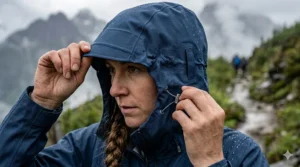
What the spec sheet won’t tell you is that the Torrentshell 3L’s fabric is noticeably stiffer and crinklier than competitors like the OR Foray. On the trail, it’s not uncomfortable, but it does have a more “technical shell” feel. There are no pit zips — a meaningful trade-off for high-aerobic use. What you do get is a two-way adjustable hood with a laminated visor that’s among the best in this price class, plus a full internal storm flap behind the main zipper to prevent cold-air bleedthrough.
This jacket suits the hiker who does a mix of moderate-effort trail walks, camping trips, and rainy-day errands. It’s not the breathability king, but it’s the best balanced option at this price. Available in men’s and women’s cuts, with generous sizing.
Customer reviews consistently praise the waterproofing performance and the packable design (it stuffs into its own handwarmer pocket with a carabiner clip loop).
✅ Outstanding waterproofing across weather types
✅ Packable into its own pocket with clip loop
✅ PFC-free, uses recycled nylon face fabric
❌ No pit zips — can feel warm during high-output hikes
❌ Fabric is stiffer than some competitors
Price range: ~$149–$179 | The Swiss Army knife of breathable rain jackets.
3. Marmot Men’s/Women’s PreCip Eco Rain Jacket — Best Budget Pick with Real Breathability
Twenty-plus years since its debut, the PreCip remains Marmot’s most beloved product — and the PreCip Eco is its best evolution yet. Made from 100% recycled NanoPro nylon ripstop with a PFAS-free DWR finish, it comes in at roughly half the price of the 3-layer options above while still delivering genuine trail-worthy protection.
The breathability comes primarily from the PitZips — Marmot’s term for underarm ventilation zippers — combined with the NanoPro membrane’s inherent moisture-vapor transmission. The 10,000mm waterproof rating is honest: it handles moderate rain well, though extended heavy downpours will eventually expose its limits compared to the Foray or Torrentshell. For most day hikers in most conditions, it’s more than sufficient. The DriClime-lined chin guard is a thoughtful detail that separates this from bargain-basement shells; no cold zipper scraping against your jaw on a wet morning.
The PreCip Eco is ideal for hikers who want solid “just-in-case” rain protection without spending $200+. It stuffs into its own pocket, weighs just over 10 ounces, and comes in sizes from S to XXXL — genuinely inclusive sizing. The adjustable hood rolls neatly into the collar when not needed, which is a more elegant solution than most jackets at this price manage.
Customer reviews are overwhelmingly positive, with many buyers noting it performs well above its price range. The primary complaint: it’s not as breathable as pricier options during truly high-output activities.
✅ Genuinely affordable 3-layer-rivaling performance
✅ PitZips for active ventilation
✅ Inclusive sizing, packable, lightweight
❌ 10,000mm rating is lower than premium options
❌ Can feel warm during steep, intense climbs
Price range: ~$100–$130 | The best first serious rain jacket money can buy.
4. The North Face Men’s/Women’s Antora Waterproof Jacket — Best for Trail Hikers Who Want TNF Reliability
The North Face built its reputation on performance that holds up where it counts, and the Antora is the brand’s approachable, trail-focused entry in the breathable rain jacket category. It uses TNF’s DryVent 3-layer shell with a non-PFC DWR finish, plus four zippered pockets — including two chest pockets that many competitors skip in this tier.
At about 15 ounces, it’s not the lightest option here, but that weight buys you a noticeably more structured feel and better wind resistance than 2.5-layer alternatives. The helmet-compatible hood is a genuine bonus for hikers who wear climbing helmets or bike helmets on mixed-activity days. The fit is trim and active, with articulated patterning that gives good arm mobility on steep terrain. Where the Antora loses points is the absence of pit zips — for moderate hiking pace, the DryVent membrane handles moisture management adequately, but on aerobically demanding routes, you’ll notice the limitation.
This jacket suits hikers who trust the North Face brand, hike moderate to challenging terrain without extremely high aerobic output, and want a feature set that’s a step above budget jackets without approaching premium pricing.
Customer feedback highlights the build quality and the DryVent fabric’s performance in mixed rain-and-wind conditions.
✅ DryVent 3L shell with excellent wind resistance
✅ Helmet-compatible hood
✅ Four zippered pockets including chest pockets
❌ No pit zips — venting is membrane-dependent
❌ Heavier than ultralight alternatives
Price range: ~$120–$140 | Solid trail credibility at an honest price.
5. The North Face Men’s Venture 2 Jacket — Best Mid-Budget Pick with Pit Zips
The Venture 2 is TNF’s entry-level workhorse, and it earns its place on this list by offering pit zips — breathability’s best friend — at a price that doesn’t require a second mortgage. The 2.5-layer DryVent construction is lighter and more packable than the Antora, stuffing into its own chest pocket. The adjustable hood is solid, though it’s not helmet-compatible.
What separates the Venture 2 from the cheaper shells in this category is fit and finish. The seams are fully taped, the zipper baffle is proper and functional, and the pit zips are generously sized enough to actually move meaningful airflow — not the decorative “pit zips” you find on some budget jackets that are roughly the size of a coin slot. At around 12 ounces, it’s trail-packable without demanding ultralight discipline.
The honest trade-off: the 2.5-layer interior has a slightly plasticky feel against bare skin, and it’s not rated for sustained heavy rain the way a true 3-layer shell is. For most three-season day hiking in the US, those limitations are academic.
Customer reviews note excellent value, solid packability, and that the pit zips make a meaningful real-world difference on uphill sections.
✅ Pit zips for active ventilation at budget-friendly price
✅ Fully taped seams, packable design
✅ Available in wide range of sizes and colors
❌ 2.5-layer interior can feel plasticky
❌ Not rated for sustained heavy downpours
Price range: ~$100–$120 | The most breathable budget jacket on this list.
6. Columbia Men’s/Women’s Watertight II Rain Jacket — Best True Budget Option
The Columbia Watertight II has been the “reliable beater shell” of the hiking world for years, and for good reason. At under $100 in most configurations, it delivers honest Omni-Tech waterproof protection in a packable, lightweight format. Columbia’s Omni-Tech is a 2-layer construction: a bonded waterproof/breathable coating rather than a true membrane, which means the breathability is lower than the 3-layer options above but still meaningfully better than cheap non-breathable rain shells.
What most buyers overlook about this model is the fit: it runs large, and sizing down one size is almost universally recommended. The hood is adjustable and stows into the collar, though it’s not helmet-compatible. There are no pit zips — a real limitation for high-output hiking — so this jacket works best for moderate-pace hikers, dog walkers, and anyone who needs “solid rain protection” more than “performance moisture management.”
The Watertight II is the right pick for hikers who are just getting started, need a backup rain layer for the car, or hike infrequent enough that spending $150+ feels hard to justify. It won’t embarrass you on the trail — it just won’t wow you either.
Customer satisfaction is high for the price point, with buyers noting it’s punched above expectations in moderate rain.
✅ Best value waterproof jacket under $100
✅ Packable, lightweight, widely available
✅ Reliable Omni-Tech waterproofing for moderate use
❌ No pit zips — sweaty on climbs
❌ Fit runs large; sizing down recommended
Price range: ~$70–$100 | The no-drama, no-regrets starter shell.
7. Helly Hansen Men’s Seven J Jacket — Best for Urban-to-Trail Transition Hikers
Helly Hansen’s Seven J occupies a fascinating middle zone: it looks sharp enough to wear in the city but performs well enough for light-to-moderate trail use. The 2.5-layer Helly Tech waterproof/breathable membrane handles rain ably, and the jacket’s construction has a noticeably softer hand than most technical shells in this price range — it doesn’t crinkle when you move, which matters more than you’d think after six hours on the trail.
The HH Seven J doesn’t have pit zips, which is a genuine limitation for steep, sweaty hiking. But what it does have is a smart hood design — fully adjustable with a wired brim that actually holds its shape in wind, not just flopping around uselessly. The two-way zipper is a nice quality signal at this price. It’s sized for layering, which means you can run a mid-layer underneath comfortably.
This jacket is ideal for hikers who spend as much time in town as on the trail, who don’t want to carry a separate “town jacket” and “trail jacket,” and who hike at a pace that doesn’t demand extreme ventilation. It’s also a great option for beginner hikers dipping their toes into technical outerwear.
Customer reviews praise the aesthetics and the soft feel, with some noting it performs better in the rain than they expected from something this comfortable-looking.
✅ Premium soft feel, transitions well between trail and town
✅ Wired hood brim holds its shape in wind
✅ Two-way zipper, good layering fit
❌ No pit zips — limits high-output breathability
❌ Helly Tech breathability is lower than GORE-TEX or AscentShell
Price range: ~$100–$130 | The jacket for hikers who hate looking like they’re wearing a tarp.
How to Layer Your Rain Jacket for Maximum Breathability on the Trail
Here’s a transformation that changes how most hikers approach wet-weather performance: the rain jacket is the last layer of a system, not a standalone solution. Understanding this rewires how you manage sweat and temperature — and gets more out of whatever breathable raincoat for hiking you choose.
The base layer is doing most of the moisture work. A merino wool or synthetic moisture-wicking base layer pulls sweat away from your skin and distributes it to its outer surface, where it can evaporate or transfer to the next layer. Never, ever wear cotton as a base layer in rain conditions — once wet, it stays wet and starts pulling heat from your body. This is how hypothermia starts.
Mid-layers trap warmth, and the wrong choice kills breathability. A down mid-layer under a rain jacket is a trap: down loses its insulating properties when damp, and it doesn’t breathe. Synthetic insulation (like Polartec or PrimaLoft) retains warmth when wet and breathes far better in a layered system. Fleece is another smart choice — actively breathable and comfortable.
The common mistake in the first 30 days of owning a rain jacket: most people leave the pit zips closed when they start to feel warm, then suffer. Open the pit zips before you start sweating — proactive venting is dramatically more effective than reactive venting. By the time you feel hot, you’re already building up internal moisture.
Maintenance tip most owners ignore: the DWR coating is what makes water bead off the outer shell. Once it degrades (you’ll know when the shell starts “wetting out” — looking dark and saturated rather than beading), breathability plummets because the outer fabric is now soaked. Restore it with a DWR spray or a low-heat dryer cycle every few outings.
Which Breathable Raincoat Fits Your Hiking Style? Three Real Hiker Profiles
The Weekend Day-Hiker (moderate pace, 5–12 miles, mixed conditions): This person hikes most weekends, does a mix of forested trails and exposed ridges, and doesn’t need ultralight specs. The Patagonia Torrentshell 3L is the call here. The waterproofing is genuinely excellent, the packability is convenient, and the balanced performance covers the full range of day-hiking scenarios without over-engineering for edge cases.
The Aerobically Aggressive Hiker (steep terrain, fast pace, high sweat rate): You’re the person who’s always too hot. You start a climb and you’re shedding layers five minutes in. Standard rain jackets feel like wearing a portable steam room. The Outdoor Research Foray 3L was designed for you. The TorsoFlo venting system is the only design in this category that genuinely solves the heat-build problem rather than just moderating it. Yes, it costs more — but it’s the first rain jacket you’ll actually want to wear when it’s raining hard and you’re working hard.
The Budget-Conscious Beginner (occasional hiking, low-to-moderate intensity, price-sensitive): You’re not hiking 15 miles a week. You want solid protection when the weather turns without spending more than your boots cost. The Marmot PreCip Eco delivers real performance — pit zips, proper DWR, packable design — at a price that doesn’t sting. It’s not the last rain jacket you’ll ever buy, but it’s an excellent first one. The Columbia Watertight II is one tier below if you need to spend even less.
How to Choose a Breathable Raincoat for Hiking: 6 Expert Criteria
1. Match the membrane to your activity level. 2.5-layer construction is fine for moderate hiking. 3-layer is worth the premium if you hike aerobically, in sustained rain, or in cold conditions where layering matters. Don’t pay for 3-layer if you only hike easy trails occasionally.
2. Pit zips are non-negotiable for high-output hiking. The breathability rating on a jacket’s hang tag measures passive vapor transmission. Pit zips provide active ventilation. On a steep climb, the difference is dramatic. Budget accordingly — the Marmot PreCip Eco and North Face Venture 2 both offer pit zips at under $130.
3. Check the waterproof rating in context. A 10,000mm rating handles moderate rain well. 20,000mm+ is for sustained heavy rain. Most US trails require somewhere in between. According to REI’s expert gear advice, 10,000mm is suitable for most recreational hikers; technical alpine use benefits from 20,000mm+.
4. Prioritize a helmet-compatible hood for technical terrain. A hood that cinches down and has a wired or stiffened brim is a genuine safety feature in high wind and driving rain. The Antora, Foray, and Beta SL all nail this. The Columbia Watertight II’s hood, while functional, isn’t designed for technical use.
5. DWR chemistry matters more than it used to. As of 2025, most reputable brands have transitioned to PFAS-free DWR coatings (historically, PFOA-based DWR was highly effective but linked to environmental and health concerns). PFAS-free options have caught up significantly in performance, but they require more frequent reapplication. Per EPA guidelines on PFAS in outdoor gear, this is both an environmental and a consumer health consideration worth understanding.
6. Weight is overrated for most hikers. The ultralight community obsesses over ounces, and for thru-hikers carrying everything for weeks, that’s valid. For most weekend hikers, the difference between 10 oz and 15 oz is inconsequential. Don’t sacrifice breathability or durability features chasing a gram count you don’t actually need.
The Truth About Breathability: What the Numbers Actually Mean
Walk into any outdoor gear section and you’ll see ratings like “20,000g/m²/24h” on hangtags. Most buyers nod politely and have no idea what they’re looking at. Here’s the plain translation.
That number — expressed as grams of water vapor that can pass through one square meter of fabric in 24 hours — is the membrane’s theoretical maximum breathability under laboratory conditions. Real-world breathability is always lower. Why? Because the difference in temperature and humidity between the inside of the jacket and the outside environment drives vapor transmission. On a warm day, when your body temperature isn’t much higher than ambient air temperature, even the best membranes underperform their ratings significantly.
The practical upshot: the breathability number is most useful for comparing jackets to each other, not for predicting your exact comfort. A jacket rated 20,000g performs meaningfully better than one rated 10,000g, but neither will feel like wearing nothing when you’re grinding up a steep trail in July.
This is why pit zips, hood adjustability, and a loose-enough fit to allow air circulation at the cuffs and hem matter as much as the membrane rating. Think of breathability as a triangle: membrane technology + active ventilation design + appropriate fit. According to Outdoor Industry Association research on fabric innovation, no single-metric system fully captures breathability in real field conditions.
2-Layer vs 2.5-Layer vs 3-Layer: What’s Actually Worth It?
This is the construction question that causes the most confusion in outdoor gear shopping — and the marketing doesn’t help.
2-layer: A waterproof membrane laminated to the face fabric, with a separate hanging mesh liner inside. The mesh protects the membrane from abrasion but adds weight, traps heat, and reduces packability. Columbia’s Watertight II uses this construction. It’s the most budget-friendly option but delivers the lowest breathability and comfort. Fine for casual use; limiting for active hiking.
2.5-layer: The membrane is laminated to the face fabric, and a very thin protective print or coating replaces the mesh liner. The result is lighter, more packable, and more breathable than 2-layer — but the interior feels slightly plasticky or slippery against skin, especially over a base layer. The Marmot PreCip Eco and North Face Venture 2 fall here. This is the sweet spot for most recreational hikers.
3-layer: Three fabric layers are laminated together — outer face fabric, waterproof membrane, and a soft inner backer — into a single unified material. No separate liner. The result is the most breathable, most durable, and most comfortable construction, but also the priciest and heaviest per equivalent waterproofing. The OR Foray 3L, Patagonia Torrentshell 3L, and North Face Antora live here.
The verdict: 2.5-layer is sufficient for most hikers. 3-layer earns its premium for anyone who hikes frequently, in sustained rain, or at high aerobic output.
Features That Actually Matter (And Those That Don’t)
Actually matter:
- Pit zips (or equivalent active venting) — more impact on comfort than any membrane rating
- Fully seam-taped construction — the seams are where water enters first; partial taping is a cost cut that matters in real rain
- Adjustable, wired hood — a hood that fails in wind is a safety gap in exposed terrain
- Helmet compatibility — only matters if you wear one, but don’t assume
- DWR freshness — check before each season; a neglected DWR coating tanks breathability
Marketing features that rarely move the needle:
- “Soft-touch” interior finish on budget jackets — usually marketing for “we made it slightly less like wearing a plastic bag”
- Underarm “micro-vents” on some budget shells — these are often purely cosmetic; real pit zips have exposed mesh panels
- Weight claims from brands — always check independently; marketing weights sometimes exclude the hood weight or use size Small as the basis
Legitimately useful but often overlooked:
- Chest pockets that double as stuff sacks — the North Face Antora’s chest pocket design is genuinely smarter than the standard handwarmer-pocket stuffing approach
- Two-way zippers — add ventilation options on long descents
- Internal zippered chest pockets — the most secure place for a phone in driving rain
Common Mistakes When Buying a Breathable Rain Jacket
Buying too small “for a sleek fit.” A rain jacket worn tight is a rain jacket that doesn’t breathe. The air gap between the jacket and your mid-layer is part of the thermal management system. A snug shell traps heat and restricts movement. Size up at least once from your usual size, especially if you plan to wear a mid-layer underneath.
Ignoring DWR maintenance. The single most common reason a “breathable” jacket feels stuffy is a degraded DWR coating. Once the outer shell fabric saturates with water, vapor transmission drops dramatically because the wet fabric blocks the exit pathway. Refresh DWR at least once per season — or whenever you notice the shell absorbing water instead of beading it.
Trusting waterproof ratings without considering seam taping. A jacket advertised as “waterproof” with “critical seam sealing” rather than full seam sealing will leak — eventually. Critical seam sealing means only high-stress seams are taped. On an exposed ridgeline in a real storm, water finds the unsealed seams quickly. Verify “fully seam-taped” is on the spec sheet.
Overlooking fit through the shoulders. Rain jackets need to allow full arm extension without pulling up the hem or restricting movement. Test by reaching both arms fully overhead in-store or check reviews specifically for shoulder mobility, especially if you carry trekking poles.
What to Expect: Real-World Performance vs. the Spec Sheet
The gap between a jacket’s rated performance and its real-world performance on the trail is one of outdoor gear’s most underreported stories. Here’s what the numbers don’t tell you.
In light to moderate rain at cool temperatures: All seven jackets on this list perform well. The membrane is breathing close to rated capacity because the temperature differential between your body and the outside air is significant. You probably won’t notice much difference between the Columbia Watertight II and the Patagonia Torrentshell 3L.
In sustained heavy rain at aerobic hiking pace: This is where the separation happens. The OR Foray 3L and Patagonia Torrentshell 3L pull away from the pack, maintaining dryness from both rain intrusion and sweat build-up more effectively. The 2-layer Columbia will start to wet out if DWR isn’t fresh.
In warm, humid conditions (Southeast US trails in spring/summer): This is the hardest scenario for any rain jacket. When outside air is nearly as warm and humid as the inside of the jacket, vapor transmission grinds to a halt regardless of membrane rating. This is where pit zips become essential rather than optional. In this environment, the OR Foray is the only jacket on this list that consistently keeps hikers comfortable because the TorsoFlo venting creates actual airflow rather than depending on diffusion-driven vapor transmission.
The National Park Service recommends always carrying rain protection on trails regardless of forecast — and specifically notes that damp, cold conditions are a primary cause of hiker distress, underscoring why jacket performance matters beyond comfort.
Long-Term Care and Maintenance: Keeping Your Jacket’s Breathability Alive
A $200 rain jacket treated poorly performs worse than a $100 jacket treated well. Here’s what actually matters.
Wash regularly — with the right detergent. Dirt and body oils clog the membrane pores and DWR, reducing breathability significantly. Use a technical fabric cleaner (Nikwax Tech Wash or Gear Aid Revivex) — never standard detergent, which leaves residue that clogs pores. Wash after every 5–8 uses in demanding conditions.
Restore DWR every season or when beading stops. Apply a spray-on DWR treatment (Nikwax TX.Direct Spray-On is the most widely recommended), or use a wash-in treatment in the same cycle as cleaning. A 15-minute low-heat dryer tumble after washing also reactivates existing DWR chemistry.
Store it hanging or loosely folded — not compressed long-term. Stuffed into its own pocket is fine for active use; for storage across seasons, hanging or flat folding preserves the membrane’s loft and prevents long-term compression damage.
Check pit zips and zipper sliders after each season. Apply a zipper lubricant (a dry wax-based product, not WD-40) to keep zippers running smoothly. A stuck pit zip in the rain is genuinely annoying. A stuck main zipper is a problem.

FAQ About Breathable Raincoats for Hiking
❓ What makes a raincoat breathable for hiking?
❓ Is a 2.5-layer or 3-layer rain jacket worth it for hiking?
❓ What is the most breathable rain jacket that doesn't feel stuffy?
❓ Do I need ventilation zippers (pit zips) in a hiking rain jacket?
❓ How do I restore breathability to my rain jacket after it starts feeling stuffy?
Conclusion
Here’s the honest summary: most hikers are wearing the wrong rain jacket. Either it’s an ancient shell that hasn’t seen a DWR refresh in years, or it’s a $40 compromise that’s waterproof in the way a plastic bag is waterproof. Neither serves you well on the trail.
The breathable raincoat for hiking you need depends on one question more than any other: how hard are you working? If you’re strolling moderate trails at a leisurely pace, the Marmot PreCip Eco or Columbia Watertight II covers you well without overcooling your wallet. If you’re pushing hard on steep terrain, sweating through climbs, and need a jacket that actually keeps pace with your body, the Outdoor Research Foray 3L is the only jacket on this list designed specifically to solve that problem.
The Patagonia Torrentshell 3L sits confidently in the middle — outstanding for the majority of three-season hikers, genuinely hard to fault at its price point, and durable enough to outlast several seasons of regular use.
Whatever you choose, maintain the DWR, size for layering, and remember that the jacket is only one part of a moisture management system. Wear it right, and a rainy trail becomes something to relish rather than endure.
✨ Don’t Miss These Exclusive Deals!
🔍 Click any highlighted product above to check current pricing and availability on Amazon. These are carefully selected options that will genuinely elevate your next rainy trail day!
Recommended for You
- 7 Best Stylish Cooling Caps for Women That Beat the Heat in 2026
- 7 Top Rated Safety Cooling Caps With Brim for Construction 2026
- 7 Best Cooling Caps for Marathon Running 2026
Disclaimer: This article contains affiliate links. As an Amazon Associate, I earn from qualifying purchases. If you purchase products through these links, we may earn a small commission at no additional cost to you.
✨ Found this helpful? Share it with your hiking crew! 💬🤗
