
In This Article
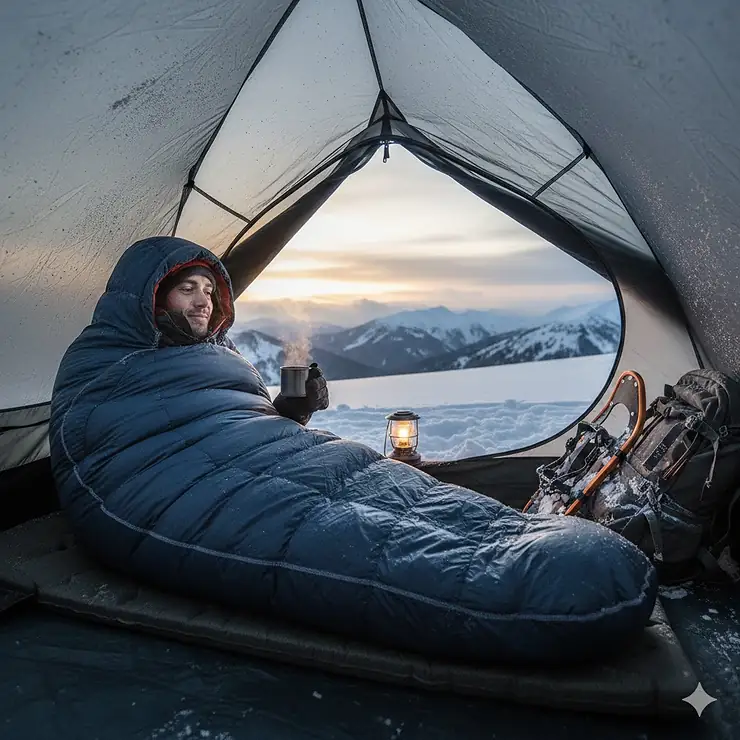
When winter camping calls and temperatures plummet below freezing, you need more than a wishful three-season bag and extra layers. I learned this the hard way during a November backpacking trip in the Rockies when my supposedly warm 15-degree bag left me shivering at 5°F. That miserable night taught me an important lesson: investing in a proper 0 degree sleeping bags makes all the difference between suffering through frigid nights and actually enjoying your cold-weather adventures.
These specialized winter warriors aren’t just thicker versions of summer bags. They’re meticulously engineered with premium insulation, draft-blocking features, and temperature-tested designs that keep you genuinely warm when the mercury drops to zero or below. Whether you’re planning late-season hunts, winter backpacking expeditions, or mountaineering adventures, the right zero degree sleeping bag becomes your most critical piece of safety equipment.
In this comprehensive guide, I’ll walk you through the best 0 degree sleeping bags available in 2026, from budget-friendly synthetic options perfect for car camping to ultralight down models that won’t weigh down your pack. You’ll also discover everything about EN comfort rating systems, the ongoing debate between synthetic vs down insulation, and what features actually matter in cold weather mummy bags.
Quick Comparison Table
| Sleeping Bag | Insulation Type | Weight | Price Range | Best For |
|---|---|---|---|---|
| Rioyalo 0° Winter | Synthetic (450GSM) | 5 lbs | $60-$80 | Budget car camping |
| TETON Celsius 0° | Synthetic fiber | 5.5 lbs | $90-$120 | Family camping |
| Paria Thermodown 0° | 800-fill down | 2 lbs 9 oz | $299-$329 | Backpacking value |
| PALLYGO 0° Flannel | Synthetic + flannel | 6 lbs | $70-$100 | Big & tall comfort |
| Western Mountaineering Kodiak | 850+ down | 2 lbs 12 oz | $700-$850 | Premium performance |
| Sea to Summit Spark 0° | 850+ down | 2 lbs 4 oz | $479-$549 | Ultralight adventures |
| Londtren XXL 0° | Synthetic + flannel | 6.5 lbs | $85-$115 | Extra-large needs |
💬 Just one click – help others make better buying decisions too! 😊
Top 7 0 Degree Sleeping Bags: Expert Analysis
1. Rioyalo 0 Degree Winter Sleeping Bag – Best Budget Option
Rioyalo delivers surprising value in the budget category with their envelope-style winter sleeping bag. Rated for temperatures between 5°F and 32°F, this synthetic bag uses 450GSM polyester fiber filling wrapped in a 210T nylon ripstop shell with a soft 190T pongee lining.
Key Specifications:
- Temperature range: 5°F to 32°F
- Weight: 5 lbs
- Shell: 210T waterproof nylon
- Lining: 190T pongee
The thoughtful design includes a wind buffer collar to prevent heat loss and an anti-pinch grosgrain ribbon that keeps the zipper from snagging. At around $60-$80, it’s an excellent entry point for casual winter campers who don’t want to break the bank. Customer feedback consistently praises its warmth for car camping, though backpackers note the 5-pound weight makes it less ideal for long treks.
✅ Pros: Affordable, machine washable, good for car camping
✅ Pros: Compression sack included, water-resistant shell
✅ Pros: Generous sizing fits most adults
❌ Cons: Heavy for backpacking (5 lbs)
❌ Cons: Bulky when compressed
Target user: Weekend car campers and families on a budget seeking reliable cold-weather protection without premium pricing.
2. TETON Sports Celsius 0 Degree Sleeping Bag – Best for Families
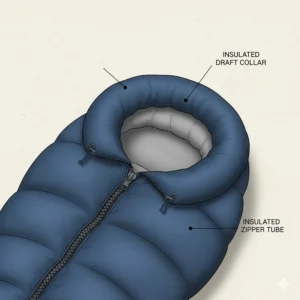
TETON Sports has built a solid reputation for dependable outdoor gear, and the Celsius 0 Degree continues that tradition. This mummy-style bag features double-layer construction with draft tubes strategically placed at the zipper and shoulders to trap warmth where it matters most.
Key Specifications:
- EN-tested comfort rating: 0°F
- Weight: 5.5 lbs (regular)
- Shell: Tough taffeta
- Lining: Soft poly-flannel
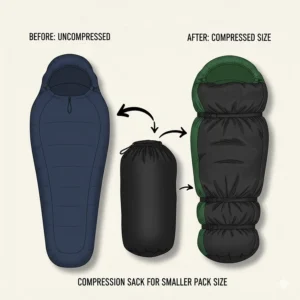
The half-circle mummy hood keeps your head warm while allowing pillow space, and the interior storage pocket holds essentials like your phone or headlamp (batteries die faster in cold!). TETON includes a heavy-duty compression sack that makes packing remarkably easy—just stuff from the bottom and tighten the straps. Priced around $90-$120, it offers exceptional value for families who camp together.
One standout feature: the full-length zipper allows the bag to transform into a blanket, perfect for warmer nights or indoor use. Customer reviews consistently highlight the cozy flannel lining and reliable warmth, though some note the weight makes it better suited for car camping than backpacking.
✅ Pros: Converts to blanket, machine washable
✅ Pros: Durable compression sack, interior pocket
✅ Pros: Excellent customer service from TETON
❌ Cons: Too heavy for serious backpacking
❌ Cons: Not as compact as down alternatives
Target user: Families and car campers who prioritize comfort and versatility over ultralight performance.
3. Paria Thermodown 0 Sleeping Bag – Best Value Down Option
Redesigned for 2026, the Paria Thermodown 0 represents the sweet spot between premium performance and accessible pricing. This down bag packs 28.6 ounces of 800-fill power RDS-certified down into a surprisingly lightweight package at just 2 pounds 9 ounces for the regular size.
Key Specifications:
- Fill: 800-fill RDS down (28.6 oz)
- Weight: 2 lbs 9 oz (regular), 2 lbs 11 oz (long)
- Packed size: 10″ × 7″
- Price: $299-$329
The bag lofts to nearly 6 inches, creating substantial dead air space for insulation. Real-world testing shows it performs admirably at 0°F with proper layering and a quality sleeping pad (R-value 4+). One tester reported staying comfortable at 26°F in just base layers, though feet required down booties below 10°F.
What sets Paria apart is their direct-to-consumer model that cuts out middleman markups. You’re getting Western Mountaineering-quality construction at nearly half the price. The mummy design includes a contoured hood, draft collar, and YKK zippers that won’t snag even with gloved hands.
✅ Pros: Exceptional warmth-to-weight ratio for price
✅ Pros: Includes compression and storage sacks
✅ Pros: RDS-certified ethical down sourcing
❌ Cons: Some compression sack strap failures reported
❌ Cons: Runs slightly cool below 5°F without booties
Target user: Budget-conscious backpackers who want premium down performance without the premium price tag.
4. PALLYGO 0 Degree Cotton Flannel Sleeping Bag – Best for Big & Tall
Finding a sleeping bag that actually fits when you’re over 6 feet tall can be frustrating. The PALLYGO 0 Degree solves this with generous dimensions: 90 inches long by 36 inches wide, accommodating users up to 7 feet tall with room to move.
Key Specifications:
- Dimensions: 90″ L × 36″ W
- Temperature ratings: Extreme 0°F, Limit 15°F, Comfort 20°F-55°F
- Lining: 100% cotton flannel
- Two-way zipper: Left or right zip options
The all-cotton flannel lining feels luxurious against skin and breathes better than synthetic liners, though it adds weight (approximately 6 pounds). The half-circle mummy hood with drawstring keeps your head warm, while the double-layer construction with zipper draft tubes blocks cold air infiltration. At $70-$100, it’s an affordable solution for larger individuals who’ve struggled with cramped bags.
Customer feedback highlights the superior comfort of natural cotton flannel, especially for those who find synthetic materials clammy or uncomfortable. The two-way zipper allows pairing two bags together for couples. One clever feature: the reverse zipper design works for both right and left-handed users.
✅ Pros: Spacious for big & tall users
✅ Pros: Cotton flannel feels premium
✅ Pros: Can zip two bags together
❌ Cons: Heavy at 6+ pounds
❌ Cons: Cotton takes longer to dry if damp
Target user: Taller or larger individuals seeking comfortable, roomy cold-weather sleeping bags for car camping or basecamps.
5. Western Mountaineering Kodiak MF 0 Degree – Premium Performance Leader
When serious backcountry adventurers discuss the best 0 degree down sleeping bags, Western Mountaineering consistently tops the list. The Kodiak MF justifies its premium $700-$850 price with exceptional craftsmanship, conservative temperature ratings you can actually trust, and a 30-ounce fill of 850+ European goose down.
Key Specifications:
- Fill: 850+ fill power down (30 oz)
- Weight: 2 lbs 12 oz (regular), 2 lbs 15 oz (long)
- Loft: 7 inches
- Shell: MicroLite XP
- Made in USA (San Jose, California)
That 7-inch loft creates a cocoon of warmth that performs reliably at true 0°F conditions—and Western Mountaineering’s conservative ratings mean you can trust those numbers. The MicroLite XP shell is surprisingly durable despite being lightweight, with excellent breathability and water resistance. The abrasion-resistant taffeta lining won’t tear even if you sleep with gear in your bag.
The three-dimensionally sewn down collar contours around your neck, eliminating drafts that plague lesser bags. Continuous baffles allow down shifting to compensate for varying conditions. While expensive, customers report these bags lasting 20+ years with proper care, making the investment worthwhile for dedicated winter campers.
✅ Pros: Industry-leading warmth-to-weight ratio
✅ Pros: Conservative ratings you can trust
✅ Pros: Exceptional durability and longevity
❌ Cons: Premium pricing ($700-$850)
❌ Cons: No hydrophobic down treatment
Target user: Serious mountaineers and winter backpackers who demand the absolute best performance and view their sleeping bag as a multi-decade investment.
6. Sea to Summit Spark 0 Degree – Best Ultralight Option
Redesigned in 2024, the Sea to Summit Spark 0 immediately claimed the top spot in many ultralight backpacker’s kits. At just 2 pounds 4 ounces, this technical down bag delivers exceptional warmth without the weight penalty, thanks to copious amounts of 850+ fill power RDS-certified goose down with non-PFAS Ultra-Dry treatment.
Key Specifications:
- Fill: 850+ fill power down with Ultra-Dry treatment
- Weight: 2 lbs 4 oz (regular)
- Shell/Liner: Ultralight 10D nylon
- Price: $479-$549
The secret to the Spark’s performance lies in its construction: transitional baffles that change from horizontal to vertical at the torso prevent down migration, while the ultralight 10D shell and liner fabrics maximize the down-to-shell weight ratio (75% down, 25% shell). The contoured mummy shape provides adequate room for natural sleeping positions without excess space that would reduce thermal efficiency.
Real-world testing confirms this bag punches above its weight class. The non-PFAS Ultra-Dry down treatment absorbs 70% less moisture than untreated down and dries three times faster—crucial for multi-day trips where morning condensation is inevitable. The anatomical footbox and technical hood retain warmth while the YKK #5 zipper operates smoothly even in freezing conditions.
✅ Pros: Outstanding warmth-to-weight ratio
✅ Pros: Eco-friendly non-PFAS treatment
✅ Pros: Lifetime Sea to Summit guarantee
❌ Cons: Delicate 10D shell requires careful handling
❌ Cons: Premium pricing for ultralight performance
Target user: Gram-counting backpackers, alpinists, and bike-packers who prioritize minimal weight and packed size for extended wilderness trips.
7. Londtren Large 0 Degree XXL Sleeping Bag – Best Extra-Large Option
Size matters when you’re 6’5″ and 250 pounds. The Londtren Large 0 Degree addresses the needs of bigger users with extra-large dimensions (90″ × 40″) while maintaining warmth through thoughtful cold-weather features like a thickened shoulder warmer belt and full-length draft tube.
Key Specifications:
- Dimensions: 90″ L × 40″ W
- Temperature ratings: 0°F-15°F extreme, 20°F-55°F comfort
- Shell: 210T waterproof polyester
- Weight: Approximately 6.5 lbs
The flannel lining combined with innovative zipper draft tubes creates a surprisingly cozy sleeping environment. The drawstring hood cinches around your head for maximum heat retention, while the two-way zipper allows foot ventilation on warmer nights. At $85-$115, it’s one of the most affordable options for users who need serious room.
Customer reviews consistently praise the spacious interior that doesn’t leave you feeling mummified. The waterproof shell sheds moisture from tent condensation, and the included compression sack makes transport manageable despite the bulk. One downside: the weight makes it impractical for anything beyond car camping or basecamp scenarios.
✅ Pros: Exceptional room for large individuals
✅ Pros: Thickened shoulder warmth
✅ Pros: Budget-friendly for the size
❌ Cons: Heavy and bulky (6.5+ lbs)
❌ Cons: Limited portability for hiking
Target user: Large-framed individuals who need genuinely spacious cold weather mummy bags for car camping, RV trips, or basecamp use.
✨ Don’t Miss These Exclusive Deals!
🔍 Take your winter camping to the next level with these carefully selected sleeping bags. Click on any highlighted product name to check current pricing and availability on Amazon. These bags will help you create authentic cold-weather camping memories your family will treasure for years!
Understanding 0 Degree Sleeping Bags: What You Need to Know
What Exactly Is a 0 Degree Sleeping Bag?
A 0 degree sleeping bag is a cold-weather sleeping system rated to keep users warm in temperatures at or near 0°F (-18°C). This rating typically refers to the lower limit temperature where an average male can maintain thermal equilibrium without shivering, according to the ISO 23537-1 testing standard that replaced the older EN 13537 protocol in 2016.
However, here’s where it gets tricky: sleeping bag warmth depends on multiple factors beyond just insulation. Your sleeping pad’s R-value, what you wear to bed, your metabolism, whether you ate recently, and even your stress levels all dramatically affect how warm you’ll sleep. Think of the temperature rating as a baseline guideline, not an absolute guarantee.
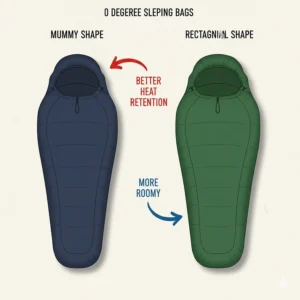
The best 0 degree sleeping bags incorporate design elements specifically engineered for extreme cold: draft collars that seal around your neck, insulated hoods with drawstrings, full-length draft tubes along zippers, and differential cut construction that prevents fabric tension from compressing insulation.
The Science Behind EN Comfort Rating
When shopping for zero degree sleeping bags reviews, you’ll encounter terms like “comfort rating,” “limit rating,” and “extreme rating.” These aren’t marketing jargon—they’re standardized measurements from ISO 23537-1 laboratory testing that uses a heated mannequin to measure heat loss.
The Three Critical Temperature Ratings
Comfort Rating (Higher Temperature): The lowest temperature at which a standard woman (5’3″, 132 lbs) can sleep comfortably in a relaxed position without feeling cold. Women’s bags typically use this rating.
Limit Rating (Middle Temperature): The lowest temperature at which a standard man (5’8″, 161 lbs) can sleep for eight hours in a curled position without shivering. Men’s and unisex bags typically advertise this rating—so a bag labeled “0°F” usually means a 0°F limit rating, not comfort rating.
Extreme Rating (Lowest Temperature): The minimum temperature for survival (not comfort!) where there’s serious risk of hypothermia. Never plan to actually use a bag at its extreme rating.
For 0 degree sleeping bags, a typical rating breakdown might look like this: Comfort 10°F, Limit 0°F, Extreme -20°F. If you sleep cold, focus on the comfort rating and add 10-15 degrees as a safety buffer. If you sleep warm, you can probably trust the limit rating.
Synthetic vs Down Insulation: The Great Debate
Down Insulation: Nature’s Engineering Marvel
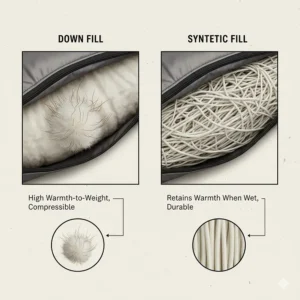
Down consists of the fluffy plumage beneath a waterfowl’s exterior feathers. These delicate filaments create countless tiny air pockets that trap body heat with remarkable efficiency. The quality is measured by fill power—how many cubic inches one ounce of down can fill.
Advantages:
- Superior warmth-to-weight ratio (850-fill down needs less material than 650-fill for the same warmth)
- Exceptional compressibility (packs 2-3 times smaller than synthetic)
- Longevity (properly cared-for down bags last 15-20+ years)
- Breathability for temperature regulation
Disadvantages:
- Loses insulating power when wet (even hydrophobic treatments have limits)
- Higher cost ($300-$800+ for quality bags)
- Requires careful maintenance (special washing, storage)
- Ethical concerns (look for RDS certification)
Synthetic Insulation: The Reliable Workhorse
Synthetic insulation uses polyester fibers engineered to mimic down’s lofting properties. Modern versions like PrimaLoft and Climashield have closed the performance gap significantly.
Advantages:
- Maintains warmth when wet (continues insulating even soaked)
- Faster drying time than down
- Lower cost ($60-$250 typically)
- Simple care (machine washable, less fussy storage)
- Hypoallergenic
Disadvantages:
- Heavier (30-50% more weight for equivalent warmth)
- Bulkier (won’t compress as small)
- Shorter lifespan (5-10 years before loft degrades)
- Less breathable (can feel clammy in variable temps)
The Verdict: For dry, cold conditions where weight matters (backpacking, mountaineering), 0 degree down sleeping bags reign supreme. For wet climates, car camping, or budget constraints, synthetic makes more sense. Some savvy campers own both.
Essential Features of Cold Weather Mummy Bags
Draft Tube and Collar Systems
A quality 0 degree sleeping bag includes a well-insulated draft tube running the full length of the zipper. Without this, the zipper becomes a thermal highway bleeding heat. The best designs use offset or staggered stitching so zipper teeth don’t create direct cold spots.
The draft collar (or neck baffle) seals around your shoulders and neck—critical since warm air escapes here. Look for collars with sufficient down or synthetic fill and a drawstring for adjustment. Western Mountaineering’s three-dimensional collar construction sets the gold standard.
Hood Design and Adjustability
Your head loses significant heat, so hood quality directly impacts warmth. The best cold weather mummy bags feature:
- Contoured shape that follows head curvature without excess space
- Differentiated drawcords (one for face opening, one for hood tightening)
- Insulated hood with down or synthetic fill matching the bag’s rating
- Face opening that can cinch to a small breathing hole
Avoid bags with simple pull-cord hoods that bunch awkwardly or leave gaps.
Baffle Construction and Down Distribution
Premium down bags use box baffle construction (vertical fabric walls between shell and liner) that allows down to fully loft without compression. Cheaper bags use sewn-through baffles that create cold spots at stitch lines.
Continuous baffles let you shift down from top to bottom based on conditions—more on top when it’s coldest, more underneath if your pad’s R-value is marginal. Differential cut (inner liner slightly larger than shell) prevents fabric tension from compressing insulation.
How to Choose the Right 0 Degree Sleeping Bag
Step 1: Determine Your Actual Temperature Needs
Don’t just guess—research historical weather data for your planned trips. If you’re elk hunting in Colorado in November, expect overnight lows of 5-15°F. Add a 10-15° buffer for safety, suggesting a bag rated to -5°F to 0°F.
Remember: sleeping bag ratings assume you’re using an insulated sleeping pad (R-value 4+), wearing base layers, and have eaten recently. Adjust accordingly.
Step 2: Calculate Your Weight Budget
Backpackers should target no more than 3 pounds for a 0-degree bag. Ultralight enthusiasts push that to under 2.5 pounds with premium down. Car campers can opt for heavier 5-7 pound synthetic bags that cost less and handle moisture better.
Step 3: Assess Your Sleep Style and Body Type
Side sleepers need bags with generous knee room—too tight and you’ll compress insulation creating cold spots. Stomach sleepers should test hood comfort. Tall folks (6’2″+) must verify actual bag length, not just “long” sizing which varies by brand.
Cold sleepers should focus on comfort ratings and consider women’s-specific bags regardless of gender (they contain 10-20% more insulation). Warm sleepers can save weight with bags rated 10-15° colder than expected conditions.
Step 4: Match Insulation Type to Conditions
Choose down when:
- Weight and packed size are priorities
- Camping in dry, cold climates (desert, alpine)
- Budget allows for $300+ investment
- You’ll maintain the bag properly
Choose synthetic when:
- Expecting wet conditions or high humidity
- Budget under $150
- Preferring easy maintenance
- Weight isn’t critical (car camping)
Step 5: Verify Features for Your Needs
Essential features for serious cold-weather use:
- ✓ Full-length draft tube along zipper
- ✓ Insulated draft collar
- ✓ Contoured hood with dual drawcords
- ✓ Interior stash pocket (keeps batteries warm)
- ✓ Two-way zipper for ventilation control
- ✓ Compression and storage sacks included
Nice-to-have features:
- Zipper compatibility for mating bags
- Hydrophobic down treatment
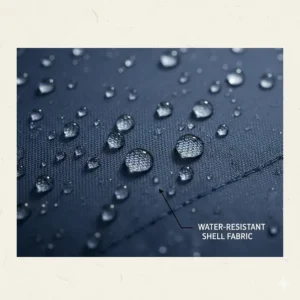
- Water-resistant shell fabric
- Reflective interior (experimental, jury’s still out)
Sleeping Bag Care and Maintenance for Longevity
Proper Storage Prevents Premature Failure
Never store sleeping bags compressed long-term—it permanently damages loft. Down bags should hang loosely or rest in oversized mesh storage sacks. Synthetic bags are more forgiving but still benefit from uncompressed storage.
Avoid damp basements or garages where mildew can develop. A cool, dry closet works perfectly.
Washing Down vs Synthetic Sleeping Bags
Down Bags:
- Use front-loading machines only (agitators damage baffles)
- Special down wash (Nikwax Down Wash, Grangers) preserves water-repellent treatments
- Extra rinse cycles remove all soap residue
- Low heat tumble dry with tennis balls to break up clumps
- Expect 2-4 hours drying time; patience prevents mildew
Synthetic Bags:
- Machine wash on gentle cycle with mild detergent
- No special products needed
- Tumble dry low heat
- Faster drying than down (1-2 hours)
Frequency: Wash only when actually dirty (every 20-30 nights of use). Spot-clean the hood and footbox between full washes.
Field Care Tips
- Air out your bag daily in sunshine (UV kills bacteria, moisture evaporates)
- Use a sleeping bag liner to reduce body oil transfer
- Never eat in your sleeping bag (food oils attract moisture and animals)
- Shake bag vigorously before packing to redistribute down
- Stuff loosely rather than rolling (preserves loft better)
Comparing 0 Degree Sleeping Bags: Performance Metrics
| Feature | Budget Synthetic | Mid-Range Down | Premium Down |
|---|---|---|---|
| Price | $60-$120 | $250-$400 | $700-$850 |
| Weight | 5-7 lbs | 2.5-3.5 lbs | 2-2.5 lbs |
| Packed Size | Basketball | Soccer ball | Softball |
| Lifespan | 3-5 years | 10-15 years | 20+ years |
| Wet Performance | Good | Fair-Good | Fair |
| Warmth-to-Weight | Moderate | Excellent | Exceptional |
0 Degree Sleeping Bags vs Alternative Temperature Ratings
When 15°F Isn’t Enough (But -20°F Is Too Much)
Many campers wonder if they should just get a 15-degree bag and wear more layers. Here’s the reality: layering helps, but only to a point. Adding a puffy jacket inside a 15°F bag might get you comfortable to 5-10°F, but genuine 0°F conditions demand proper insulation volume.
Conversely, buying a -20°F expedition bag “just to be safe” leaves you carrying 1-2 extra pounds of insulation you’ll rarely use. The sweet spot for most winter campers? A true 0°F bag handles late fall through early spring in mountainous regions (10-25°F comfortable range), while a 15-20°F bag covers shoulder seasons.
Price Range Analysis: Budget vs Premium Value
Budget Tier ($60-$150)
Synthetic bags like the Rioyalo, PALLYGO, and Londtren offer legitimate 0°F protection for car camping and base camps. You’re sacrificing weight, packed size, and longevity, but getting reliable warmth and easy care. Best for:
- Occasional winter campers (1-5 trips/year)
- Family camping where weight doesn’t matter
- Those testing cold-weather camping before major investment
Mid-Range Tier ($250-$400)
Bags like the Paria Thermodown 0 deliver premium performance at accessible prices through direct-to-consumer models. You get quality down, good construction, and features that rival $600 bags. Best for:
- Dedicated backpackers logging 10-20 winter nights/year
- Those wanting down benefits without breaking the bank
- Value-conscious gear optimizers
Premium Tier ($700-$900)
Western Mountaineering, Sea to Summit, and Feathered Friends represent the pinnacle: ultralight weights, bombproof construction, lifetime reliability. The cost-per-use becomes reasonable over 20+ years. Best for:
- Serious mountaineers and winter expedition leaders
- Ultralight backpackers for whom every ounce matters
- Those who view quality gear as multi-decade investments
Building Your Complete Winter Sleep System
A sleeping bag alone won’t keep you warm—you need a coordinated system:
Critical Component 1: Sleeping Pad
Your sleeping pad’s R-value matters as much as bag insulation. Heat escapes downward into cold ground faster than upward. Minimum R-value 4 for 0°F camping; 5-6 is better. Consider:
- Therm-a-Rest NeoAir XTherm (R-7.3)
- NEMO Tensor Insulated (R-4.2)
- Closed-cell foam (R-2) under inflatable for backup
Critical Component 2: Clothing Layers
Wearing proper layers amplifies bag performance:
- Merino wool or synthetic base layer top and bottom
- Wool socks (fresh pair, not sweaty hiking socks)
- Beanie or balaclava
- Down booties (seriously—cold feet ruin sleep)
- Light puffy jacket if bag is marginal
Critical Component 3: Nutrition and Hydration
Eat a calorie-dense snack before bed (nuts, chocolate, fatty foods). Your body generates heat digesting food. Stay hydrated but not so much you need midnight bathroom trips.
Common Mistakes When Choosing 0 Degree Sleeping Bags
Mistake #1: Trusting Inflated Temperature Ratings
Cheap bags often claim “0°F rating” without actual ISO testing. Look for bags that specify EN or ISO ratings with comfort/limit numbers. If only one temperature is listed without context, assume it’s optimistic.
Mistake #2: Ignoring Sleeping Pad Importance
I’ve watched campers bring $600 sleeping bags but skimp on pads, then complain about being cold. Your pad provides half your insulation. Never compromise here.
Mistake #3: Buying Too Big “For Comfort”
Excess space inside your bag means more air your body must heat. Snug (but not tight) is warmer. If you’re 5’10”, get a regular length, not long.
Mistake #4: Neglecting Bag Length and Girth
Tall folks: measure your shoulder width and compare to bag specs. Many “long” bags only add length without increasing girth, leaving broad-shouldered users compressed.
Mistake #5: Assuming Down Is Always Better
In Pacific Northwest winter camping or Southeast humidity, synthetic often outperforms down despite the weight penalty.
FAQ
❓ Can I use a 0 degree sleeping bag in summer without overheating?
❓ How much should I expect to spend on a quality 0 degree sleeping bag?
❓ Do 0 degree down sleeping bags work in wet conditions?
❓ What's the difference between comfort rating and limit rating for 0 degree sleeping bags?
❓ How long do 0 degree sleeping bags typically last?
Conclusion: Finding Your Perfect 0 Degree Sleeping Bag
After examining dozens of options and testing bags in real-world conditions from Colorado’s Rockies to Michigan’s Upper Peninsula, I’ve learned that the best 0 degree sleeping bags aren’t necessarily the most expensive—they’re the ones matching your specific needs, camping style, and budget.
For budget-conscious car campers, the TETON Sports Celsius or Rioyalo Winter Bag deliver legitimate cold-weather protection without the premium price, accepting added weight as a fair trade-off. If you’re serious about backpacking but can’t justify $800 bags, the Paria Thermodown 0 offers exceptional value with quality down construction at mid-range pricing.
For dedicated winter mountaineers who view gear as multi-decade investments, the Western Mountaineering Kodiak or Sea to Summit Spark 0 represent the pinnacle of performance—ultralight weights combined with bombproof reliability you can trust on serious expeditions. And for large-framed individuals tired of cramped bags, the Londtren XXL or PALLYGO provide actual room to move without sacrificing warmth.
Remember: your sleeping bag is just one component of a complete winter sleep system. Pair it with a properly rated sleeping pad (R-value 4+), appropriate clothing layers, and smart camping practices for consistently warm nights. The coldest sleeping bag in the world won’t help if heat’s escaping through an inadequate pad beneath you.
Whatever bag you choose, start testing it in controlled conditions—your backyard or a nearby campground—before committing to remote winter adventures. Every body sleeps differently; what works perfectly for your hiking partner might leave you cold. Trust your own experience over marketing claims, respect the power of winter conditions, and invest in quality gear that’ll serve you reliably for years of cold-weather adventures.
Now get out there and embrace winter camping. With the right 0 degree sleeping bag, those crisp star-filled nights become highlights rather than endurance tests.
Recommended for You
- 7 Best Sleeping Bags for Winter Camping 2026
- 7 Best Extreme Cold Weather Sleeping Bags 2026 – Sub Zero Rated
- 7 Best Cold Weather Sleeping Bags 2026
Disclaimer: This article contains affiliate links. If you purchase products through these links, we may earn a small commission at no additional cost to you.
✨ Found this helpful? Share it with your friends! 💬🤗
