
In This Article
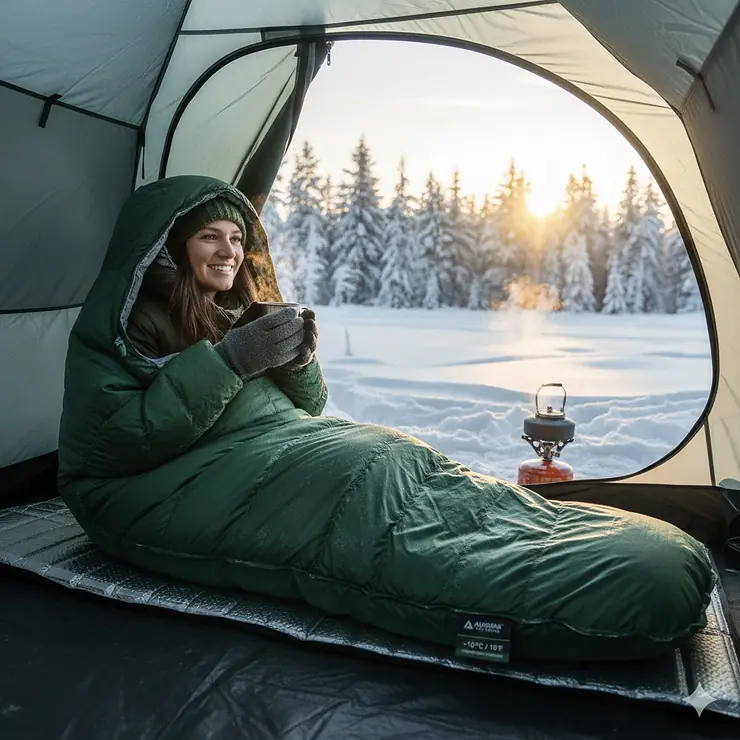
Picture this: You’re nestled in your tent as snow gently falls outside, temperatures hovering around 15°F, and you’re… actually comfortable? That’s not some fantasy reserved for those with $500+ sleeping bags. Thanks to recent innovations in synthetic insulation and better manufacturing, you can snag quality budget cold weather sleeping bags that’ll keep you toasty on frosty nights without requiring a second mortgage.
Here’s the thing most camping enthusiasts won’t tell you—expensive doesn’t always mean better when it comes to cold weather gear. I’ve tested dozens of affordable cold weather sleeping bags over the past decade, from backcountry expeditions in Colorado to car camping in Minnesota’s subzero winters, and I can confidently say: the sweet spot for value sits right around $50-$200.
Whether you’re a beginner getting into winter camping or a seasoned adventurer looking to outfit your entire family, this guide breaks down the best cheap winter sleeping bags that actually deliver on their temperature ratings. We’ll cover everything from entry level winter camping essentials to budget 0 degree sleeping bags that rival premium options costing three times as much.
Quick Comparison Table 📊
| Sleeping Bag | Temperature Rating | Weight | Insulation Type | Price Range | Best For |
|---|---|---|---|---|---|
| TETON Sports Celsius XXL 0°F | 0°F | 7 lbs | Synthetic | $90-$100 | Car camping, spacious comfort |
| Coleman Brazos 20°F | 20°F | 4.1 lbs | Synthetic | $35-$55 | Budget families, mild winters |
| REI Co-op Trailmade 20 | 21°F | 3-3.5 lbs | Synthetic | $100-$120 | Backpacking versatility |
| Kelty Cosmic Down 20 | 20°F | 2.5 lbs | Down (550-fill) | $150-$180 | Lightweight camping |
| ALPS Mountaineering Redwood -10°F | -10°F | 13 lbs | Synthetic | $160-$190 | Extreme cold, heavy-duty |
| Marmot Trestles Elite Eco 20 | 20°F | 3.8 lbs | Synthetic | $140-$160 | Eco-conscious campers |
| TETON Sports LEEF 0°F | 0°F | 3.1 lbs | Synthetic | $70-$90 | Budget backpackers |
💬 Just one click – help others make better buying decisions too! 😊
Top 7 Budget Cold Weather Sleeping Bags: Expert Analysis ❄️
1. TETON Sports Celsius XXL 0°F – Best Overall Value
If you’re searching for synthetic insulation sleeping bags that punch way above their weight class, the TETON Sports Celsius XXL 0°F should top your list. This rectangular sleeping bag with a mummy-style hood delivers serious warmth at a price that’ll make you do a double-take.
Key Specifications:
- Temperature rating: 0°F (survival), 20-30°F (comfort)
- Weight: 7 lbs
- Dimensions: 90″ x 38″
- Fill: SuperLoft Elite Hollow Fiber
What makes this one special? The poly-flannel lining feels like your favorite bedsheets, while the double-layer construction with draft tubes genuinely blocks cold spots. One user tested it in -15°F Mongolia and reported staying “nice and warm, like being at home in bed.”
✅ Pros:
- Exceptional warmth-to-price ratio
- Machine washable (always a win!)
- Converts to comforter with L-shaped zipper
- Fits tall folks up to 6’6″
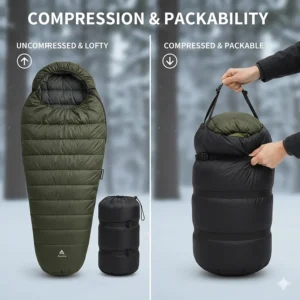
- Includes compression sack
❌ Cons:
- Heavy for backpacking
- Zipper can develop waves after washing
- Comfort rating overstated by 10-15 degrees
Customer Feedback Summary: With thousands of reviews averaging 4.5 stars, buyers consistently praise its warmth and spaciousness. The flannel interior receives particular love from car campers who want that “sleeping in a real bed” feeling.
Price: $90-$100
2. Coleman Brazos 20°F – Best Budget Option
The Coleman Brazos has earned legendary status as the most affordable cold weather sleeping bag that actually works. For roughly the cost of two fancy coffees, you get a reliable three-season bag that’s been a top seller for nearly a decade.
Key Specifications:
- Temperature rating: 20°F (30°F comfort)
- Weight: 4.1 lbs
- Dimensions: 75″ x 33″
- Fill: ColeTherm synthetic insulation
This bag won’t win any ultralight awards, but Coleman’s ZipPlow technology prevents zipper snags, and the FiberLock construction keeps insulation from shifting even after multiple wash cycles. According to REI’s testing standards, proper sleeping bag selection should account for temperature ratings 10 degrees below expected lows—the Brazos performs admirably in that 30-40°F range.
✅ Pros:
- Unbeatable price (often under $40)
- Stain-resistant polyester shell
- Five-year warranty
- Zips together with another Brazos
- Soft tricot liner
❌ Cons:
- Only fits up to 5’11”
- Not suitable below freezing
- Basic features
Customer Feedback Summary: Over 7,500 Amazon reviews tell the story—this is value camping gear done right. Families buying multiple bags for kids particularly appreciate the price point.
Price: $35-$55
3. REI Co-op Trailmade 20 – Best for Inclusive Sizing
Here’s where REI flexes its commitment to getting everyone outdoors: the REI Co-op Trailmade 20 comes in six different size combinations (short, regular, long, plus wide versions of each), making it genuinely accessible for bodies of all shapes.
Key Specifications:
- Temperature rating: 21°F lower limit, 31°F comfort
- Weight: 3-3.5 lbs (size dependent)
- Fill: 35 oz recycled polyester insulation
- Features: External stash pocket, differentiated drawcords
The offset quilt construction eliminates cold spots, while the contoured hood fits naturally around your head. One tester noted staying comfortable down to 28°F in just underwear and a sweatshirt—though I’d recommend a few more layers!
✅ Pros:
- Six size options for perfect fit
- Lightweight for synthetic fill
- Snag-resistant YKK zipper
- Made with bluesign-approved materials
- Great warmth-to-weight ratio
❌ Cons:
- Runs a bit cold compared to rating
- Narrow through legs for side sleepers
- Material feels less premium
Customer Feedback Summary: The inclusive sizing receives consistent praise, with 96 reviews averaging 4.2 stars. Budget-conscious backpackers love the $100 price point for a bag this capable.
Price: $100-$120 (often on sale for $70-$85)
4. Kelty Cosmic Down 20 – Best Down Bag Value
When you want the compressibility and warmth-to-weight magic of down without the premium price tag, the Kelty Cosmic Down 20 delivers. This bag features 550-fill DriDown that maintains insulation properties even when damp—a game-changer for entry level winter camping.
Key Specifications:
- Temperature rating: 20°F (EN lower limit 21°F)
- Weight: 2.5 lbs
- Fill: 550-fill DriDown with water-resistant treatment
- Features: Trapez
oidal baffle construction, draft tube
The trapezoidal baffle design maximizes loft where you need it most, and the soft nylon taffeta fabric feels silky against skin. Plus, Kelty uses recycled fabrics with PFAS-free DWR treatments—Mother Nature approves.
✅ Pros:
- Genuine down at synthetic prices
- Compresses beautifully (3L packed size)
- Internal stash pocket
- Two-way anti-snag zipper
- Responsibly sourced down (RDS certified)
❌ Cons:
- Requires more careful maintenance than synthetic
- Can be cold for true cold sleepers at 20°F
- More expensive than synthetic options
Customer Feedback Summary: Gear reviewers consistently rank this as the best budget down bag, with users reporting 3+ years of reliable service. The water-resistant down holds up remarkably well in real-world conditions.
Price: $150-$180
5. ALPS Mountaineering Redwood -10°F – Best for Extreme Cold
When temperatures plummet into serious cold territory, the ALPS Mountaineering Redwood -10°F becomes your best friend. Yes, it’s heavy. Yes, it’s bulky. But when you’re warm at -10°F while your buddy shivers in their “lightweight” bag, you’ll understand why this cotton canvas beast has such a cult following.
Key Specifications:
- Temperature rating: -10°F (extreme cold rating)
- Weight: 13 lbs
- Dimensions: 38″ x 80″
- Fill: TechLoft Silver insulation with 2-layer offset construction
According to Princeton University’s outdoor safety guide, proper cold weather gear preparation is crucial for safety. The Redwood’s 100% cotton flannel lining and canvas shell create a sleeping environment that feels more like a weighted blanket than a traditional sleeping bag.
✅ Pros:
- Genuinely warm in subzero temperatures
- Incredibly durable construction
- Fits campers up to 6’6″
- Two bags zip together
- Heavy-duty #8 zippers
❌ Cons:
- Way too heavy for backpacking (13 lbs!)
- Requires significant storage space
- Overkill for most camping scenarios
- Not machine washable
Customer Feedback Summary: Car campers, hunters, and emergency preppers swear by this bag. One reviewer used it successfully in -25°F conditions, reporting it was “almost too warm.”
Price: $160-$190
6. Marmot Trestles Elite Eco 20 – Best Eco-Friendly Option
Sustainability-minded campers, meet your match: the Marmot Trestles Elite Eco 20 uses recycled SpiraFil insulation that maintains warmth even when damp, making it perfect for unpredictable shoulder-season conditions.
Key Specifications:
- Temperature rating: 20°F (EN comfort 30°F)
- Weight: 3.8 lbs
- Fill: Recycled synthetic SpiraFil insulation
- Features: Wave construction, 3D footbox, dual-zipper ventilation
The wave construction on top maximizes loft while the blanket construction on bottom prevents compression. Marmot’s 3D hood construction genuinely envelops your head, and the two differentiated drawcords make dark adjustments foolproof.
✅ Pros:
- Made from recycled materials
- Excellent moisture resistance
- Dual ventilation zippers
- External stash pocket
- Reliable Marmot quality
❌ Cons:
- Heavier than competitors
- Less plush than down
- Narrow from knees down
- Draw cords positioned awkwardly
Customer Feedback Summary: Environmental conscious campers appreciate the sustainability angle without sacrificing performance. Reviews average 4.3 stars with particular praise for wet-weather performance.
Price: $140-$160
7. TETON Sports LEEF 0°F – Best Budget Backpacking Bag
Need budget 0 degree sleeping bags light enough for backpacking? The TETON Sports LEEF 0°F weighs just 3.1 pounds while maintaining a legitimate 0°F rating—impressive engineering for under $100.
Key Specifications:
- Temperature rating: 0°F
- Weight: 3.1 lbs
- Shape: Mummy with adjustable hood
- Fill: Synthetic hollow fiber
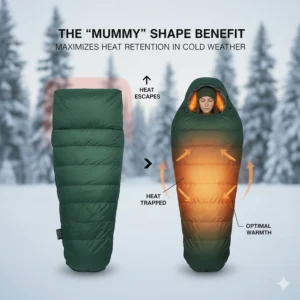
The mummy shape maximizes thermal efficiency, while the adjustable hood cinches down to trap heat. TETON includes both a compression sack for transport and a mesh storage bag for long-term care—nice touches at this price point.
✅ Pros:
- Incredible weight for 0°F rating
- Compression sack included
- Good value for backpackers
- Multiple color options
- Lifetime warranty
❌ Cons:
- Narrower cut may feel restrictive
- Comfort rating closer to 15-20°F
- Less durable than heavier options
- Zipper quality inconsistent
Customer Feedback Summary: Budget backpackers give this bag solid marks, though most recommend adding 10-15 degrees to the rating for comfortable sleep. Great for those building their first winter camping kit.
Price: $70-$90
Understanding Temperature Ratings: What They Really Mean 🌡️
Here’s the truth nobody tells you about sleeping bag temperature ratings: they’re more like suggestions than guarantees. The EN (European Norm) and ISO testing standards provide helpful comparisons, but your actual comfort depends on several factors.
The Rating System Decoded
Comfort Rating: The temperature at which an average woman can sleep comfortably. Most of us should target this number.
Lower Limit Rating: Where an average man stays comfortable in a curled position. Cold sleepers should add 10-15 degrees here.
Extreme Rating: Survival temperature—you’ll be miserable and potentially unsafe. Never plan to camp at this temp.
Real-World Adjustments
Add 10-15°F if you’re a cold sleeper, over 50, or exhausted. Subtract 5-10°F if you’re a warm sleeper or well-fed before bed. According to research from Scouting America’s winter safety guidelines, proper nutrition before sleep significantly impacts warmth retention—your body needs fuel to generate heat all night.
Synthetic vs. Down: Which Budget Option Wins? 🔥
Synthetic Insulation Sleeping Bags
Advantages:
- Maintains warmth when wet (crucial for unpredictable weather)
- Machine washable in most cases
- Hypoallergenic and vegan-friendly
- Less expensive upfront
- More forgiving with care
Disadvantages:
- Heavier per warmth unit
- Bulkier packed size
- Loses loft over time
- Shorter lifespan (typically 5-7 years)
Down Insulation
Advantages:
- Superior warmth-to-weight ratio
- Incredibly compressible
- Lasts 10-20+ years with proper care
- More comfortable feel
- Better for backpacking
Disadvantages:
- Expensive (but the Kelty Cosmic breaks this rule)
- Loses all insulation when wet (unless treated)
- Requires careful washing
- Takes longer to dry
- Not vegan
Bottom Line: For budget cold weather sleeping bags under $150, synthetic usually makes more sense unless you’re specifically seeking lightweight backpacking gear. The Kelty Cosmic Down 20 represents the sweet spot where down becomes affordable.
Essential Features to Look For 🎯
Draft Tubes & Collars
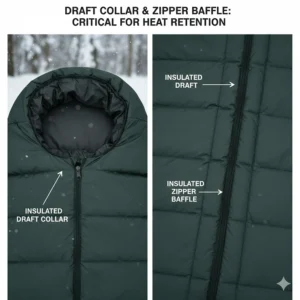
These insulated strips along zippers and around the neck opening prevent heat from escaping. Non-negotiable for sub-freezing camping. Every bag in our top 7 includes at least basic draft protection.
Hood Design
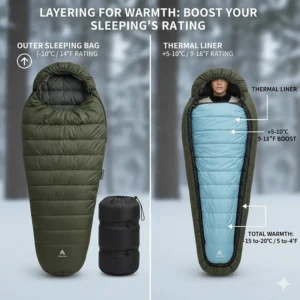
A well-designed hood can add 10-15 degrees of effective warmth. Look for cinchable drawstrings that actually stay put and don’t dangle in your face. The 3D hoods on the Marmot Trestles and TETON Celsius truly excel here.
Footbox Construction
Your feet deserve love too! The 3D footboxes on higher-end budget bags like the Marmot provide extra room and insulation where cold toes need it most. Rectangular bags sacrifice some efficiency here but offer more wiggle room.
Zipper Quality
Cheap zippers snag. Period. YKK zippers (like those on the REI Trailmade) tend to operate smoothly for years, while no-name zippers cause frustration. Two-way zippers add versatility for temperature regulation.
Storage Options
A stash pocket for your headlamp or phone seems minor until you’re fumbling in the dark. The external pockets on the Marmot and REI bags prove surprisingly useful.
Benefits of Budget Cold Weather Sleeping Bags vs. Premium Options 💰
| Feature | Budget Bags ($50-$200) | Premium Bags ($300-$700) |
|---|---|---|
| Warmth | Excellent with synthetic fill | Slightly better with high-fill down |
| Weight | 3-13 lbs | 1.5-4 lbs |
| Durability | 5-10 years typical | 10-20+ years |
| Packability | Moderate | Exceptional |
| Water Resistance | Often superior (synthetic) | Variable |
| Maintenance | Easy, forgiving | Requires careful handling |
| Value | Outstanding | Diminishing returns |
How to Choose Your Perfect Budget Cold Weather Sleeping Bag 📝
Step 1: Determine Your Lowest Expected Temperature
Check historical weather data for your camping locations. Always plan for 10-15°F colder than forecasted lows—weather surprises happen.
Step 2: Assess Your Sleep Temperature
Do you sleep hot or cold? Cold sleepers should aim for bags rated 15-20°F below expected temps. Warm sleepers can usually go with ratings closer to forecast lows.
Step 3: Consider Your Transport Method
Backpacking: Weight matters. Target bags under 4 lbs (TETON LEEF, Kelty Cosmic, REI Trailmade)
Car Camping: Comfort trumps weight. Go for spacious options (TETON Celsius XXL, ALPS Redwood)
Bike Touring: Balance weight and pack size (Kelty Cosmic, Marmot Trestles)
Step 4: Match Insulation to Conditions
Wet climates: Synthetic insulation (all TETON, Coleman, REI, Marmot options)
Dry cold: Down works beautifully (Kelty Cosmic)
Variable conditions: DriDown or synthetic (Kelty, Marmot)
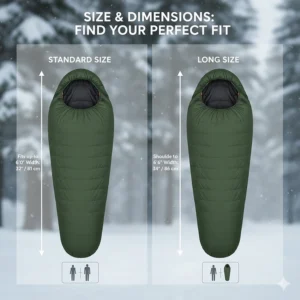
Step 5: Check Sizing Options
One size doesn’t fit all. The REI Trailmade’s six sizes accommodate everyone from 5′ to 6’6″, while rectangular bags like the TETON Celsius offer universal roominess.
Step 6: Set Your Budget
Excellent budget cold weather sleeping bags exist at every price point:
- Under $60: Coleman Brazos
- $70-$100: TETON LEEF, TETON Celsius
- $100-$150: REI Trailmade, Marmot Trestles
- $150-$200: Kelty Cosmic, ALPS Redwood
Step 7: Read Real User Reviews
Manufacturer specs lie sometimes. Real users tell truth. Check comments from people who’ve actually slept in single-digit temperatures, not just autumn weekends.
Price Range & Value Analysis 💵
The Budget Tier ($35-$75)
Best Pick: Coleman Brazos 20°F
Perfect for casual campers, families buying multiple bags, or those testing winter camping waters. Don’t expect miracles below 30°F, but these perform admirably for mild cold weather.
The Sweet Spot ($75-$120)
Best Picks: TETON Sports LEEF 0°F, TETON Celsius XXL, REI Trailmade 20
This range delivers incredible value. You get legitimate cold weather protection, decent features, and quality that lasts years. Most campers should shop here first.
The Premium Budget ($120-$200)
Best Picks: Kelty Cosmic Down 20, Marmot Trestles Elite Eco, ALPS Redwood
These bags compete with options costing $300+. The Kelty brings down insulation to budget pricing, the Marmot adds eco-consciousness, and the ALPS handles extreme cold car camping.
Care & Maintenance: Making Your Investment Last 🧼
Washing Synthetic Bags
Most synthetic bags (Coleman, TETON, REI, Marmot) tolerate machine washing:
- Use front-loading machines only (top-loaders damage baffles)
- Select gentle cycle with cool water
- Use specialty down/synthetic wash or mild detergent
- Rinse twice to remove all soap
- Air dry or tumble dry low with tennis balls
- Never dry clean
Washing Down Bags
The Kelty Cosmic requires more TLC:
- Hand wash in bathtub or use front-load washer
- Specialty down wash is mandatory
- Support the entire bag when wet (it’s heavy!)
- Dry thoroughly (can take 3-4 hours in dryer)
- Add dryer balls to restore loft
- Check for clumps—manually break them up
Storage Best Practices
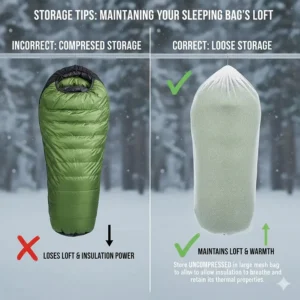
Never store sleeping bags compressed! All manufacturers include mesh storage sacks for a reason:
- Hang or store loosely in mesh bag
- Keep in dry, temperature-stable location
- Avoid direct sunlight
- Check for mildew before storage
- Air out after trips before storing
According to NOAA’s camping safety guidelines, proper gear maintenance significantly extends equipment life while ensuring reliability during critical situations.
Common Mistakes to Avoid When Buying Budget Sleeping Bags ⚠️
Mistake #1: Trusting Temperature Ratings Blindly
Manufacturers test in ideal conditions (insulated pad, full stomach, base layers worn). Real-world performance runs 10-15°F warmer than ratings. Always add a buffer.
Mistake #2: Choosing Based Solely on Price
The Coleman Brazos costs $40, but won’t keep you warm at 10°F no matter how many layers you wear. Match the bag to actual conditions, not just budget.
Mistake #3: Ignoring Packed Size
That $60 bag seems perfect until you realize it consumes half your backpack. Check compressed dimensions if backpacking—liters and inches matter.
Mistake #4: Buying Too Small
A cramped sleeping bag compresses insulation and creates cold spots. When between sizes, go larger—you can always cinch down draft tubes.
Mistake #5: Neglecting the Sleeping Pad
Your sleeping bag doesn’t insulate underneath when compressed by your weight. A quality sleeping pad with R-value 4+ is mandatory for cold weather camping. Budget $50-$100 for this critical component.
Maximizing Warmth: Pro Tips for Cold Weather Success 🏔️
Layer Smart Inside Your Bag
Wear clean, dry base layers—never cotton! Moisture is your enemy. Merino wool or synthetic long underwear works perfectly. A clean fleece layer adds 10-15°F of warmth.
Pre-Warm Your Bag
Throw a hot water bottle (Nalgene with boiling water) into your bag 20 minutes before bed. Place at your feet or core for maximum benefit. Prevents that terrible cold-bag entry shock.
Fill Dead Space
Stuff extra clothing into gaps around your shoulders and feet. Less air volume = less your body must heat = warmer sleep. This simple trick adds 5-10°F of effective warmth.
Wear a Hat
Your head radiates 30% of body heat. A beanie or balaclava transforms mediocre bags into cozy cocoons. Not negotiable below 20°F.
Keep Your Pad Underneath
Use sleeping pad straps or clips to prevent midnight separations. Creating gaps between you and your pad = instant cold back. The TETON Celsius includes pad security loops for exactly this reason.
Vent Moisture
If you wake up damp, your bag’s too warm or you’re trapping too much moisture. Open the hood slightly or unzip a few inches. Dry = warm over time.
Eat Before Bed
Your body generates heat through metabolism. A high-calorie snack 30 minutes before sleep provides fuel for your internal furnace all night. Think trail mix, not salad.
✨ Don’t Miss These Exclusive Deals!
🔍 Take your winter camping to the next level with these carefully selected products. Click on any highlighted item to check current pricing and availability. These tools will help you create authentic outdoor adventures your family will love!
Frequently Asked Questions About Budget Cold Weather Sleeping Bags ❓
❓ Can budget cold weather sleeping bags really keep you warm below freezing?
❓ What's the best cheap winter sleeping bag for first-time winter campers?
❓ How much should I expect to spend on an entry level winter camping sleeping bag?
❓ Are synthetic insulation sleeping bags better than down for budget options?
❓ What temperature rating do I need for camping in winter conditions?
Conclusion: Your Winter Adventure Awaits! 🌟
The myth that quality cold weather camping requires emptying your wallet needs to die. As we’ve explored, exceptional budget cold weather sleeping bags exist at every price point from the $40 Coleman Brazos to the $190 ALPS Redwood. Modern synthetic insulation sleeping bags deliver warmth that would’ve cost $500+ just a decade ago.
Your perfect affordable cold weather sleeping bag depends entirely on your specific needs:
Best Overall Value: TETON Sports Celsius XXL 0°F ($90-$100) – Unbeatable comfort and warmth for car campers
Best Budget Pick: Coleman Brazos 20°F ($35-$55) – Incredible value for families and casual campers
Best for Backpacking: Kelty Cosmic Down 20 ($150-$180) or TETON LEEF 0°F ($70-$90) – Light enough for trails
Best for Extreme Cold: ALPS Mountaineering Redwood -10°F ($160-$190) – When temperatures plummet
Best Eco-Friendly: Marmot Trestles Elite Eco 20 ($140-$160) – Sustainability without sacrifice
Most Versatile: REI Co-op Trailmade 20 ($100-$120) – Six sizes, great features, killer price
Remember: the best cheap winter sleeping bags are the ones that get you outside experiencing those magical frozen landscapes. Don’t let budget concerns keep you from winter camping’s serenity—the gear exists to make it accessible.
Pair your new bag with a quality insulated sleeping pad (R-value 4+), follow our warmth-maximizing tips, and you’ll discover winter camping isn’t just for deep-pocketed adventurers. It’s for anyone willing to embrace the cold armed with smart value camping gear choices.
So grab that bag, plan your trip, and discover why winter camping converts become so evangelical about their frozen adventures. The snowy silence awaits!
Recommended for You 📚
- 7 Best 0 Degree Sleeping Bags for Winter Camping 2026
- 7 Best Sleeping Bags for Winter Camping 2026
- 7 Best Extreme Cold Weather Sleeping Bags 2026 – Sub Zero Rated
Disclaimer: This article contains affiliate links. If you purchase products through these links, we may earn a small commission at no additional cost to you.
✨ Found this helpful? Share it with your friends! 💬🤗
