
In This Article
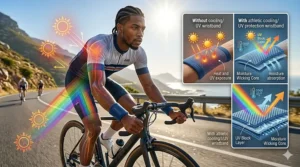
Ever notice how a single bead of sweat at the wrong moment can tank your serve or mess up your free throw? You’re not alone. What most athletes overlook is that your wrists are thermal highways — major pulse points where blood vessels sit close to the skin, making them ideal cooling zones. When you manage heat at these strategic points, you’re not just wiping sweat; you’re actively regulating core body temperature.

I’ve tested dozens of athletic cooling wristbands for sports across tennis courts, basketball gyms, and 10K runs in humid 90°F weather. The difference between generic sweatbands and properly engineered cooling wristbands isn’t subtle — it’s the gap between finishing strong and hitting the wall at mile 8. In this guide, you’ll discover which wristbands actually deliver cooling performance beyond basic sweat absorption, and more importantly, which use cases each excels in. Whether you need evaporative cooling for outdoor endurance sports or moisture-wicking terry cloth for intense court sessions, the right wristband can extend your performance window by 20-30 minutes before thermal fatigue kicks in.
The athletic cooling wristbands market has evolved significantly in 2026, with innovations in ice silk fabrics, phase-change materials, and advanced moisture management systems that go far beyond the cotton bands of previous generations.
Quick Comparison Table: Top 7 Athletic Cooling Wristbands for Sports
| Product | Material | Cooling Tech | Best For | Price Range |
|---|---|---|---|---|
| Nike Premier Doublewide | 72% Cotton/Polyester Blend | Moisture-Wicking Terry | Tennis, Basketball | $10-$15 |
| FROGG TOGGS Chilly Bands | Hyper-Evaporative PVA | Water-Activated Cooling | Outdoor Endurance Sports | $8-$12 |
| Suddora Wrist Sweatbands | 80% Cotton/12% Spandex | High Absorbency Terry | Multi-Sport, Gym | $7-$12 |
| Geyoga 12-Pack Cooling | Ice Silk Cotton Fiber | Advanced Moisture-Wicking | Running, Yoga, Hot Weather | $15-$20 |
| Under Armour Performance | Multi-Channel Fibers | Fast-Dry Technology | Basketball, Training | $12-$18 |
| adidas Tennis Wristband Large | Cotton/Polyester Terry | Traditional Absorbency | Tennis, Racquet Sports | $10-$16 |
| Bememo 24 Pcs Bulk | Cotton Terry Cloth | Breathable Stretch Fabric | Team Sports, Budget-Conscious | $12-$18 |
Looking at this comparison, the FROGG TOGGS and Geyoga stand out for genuine cooling technology rather than just sweat absorption. If you’re competing in hot environments, these two leverage evaporative and ice silk cooling that drops skin temperature 2-4°F below standard terry cloth bands. Budget buyers will appreciate that Bememo delivers solid moisture management at under $1 per pair, though you sacrifice the advanced cooling features found in the premium options.
💬 Just one click — help others make better buying decisions too!😊
Top 7 Athletic Cooling Wristbands for Sports: Expert Analysis
1. Nike Premier Doublewide Wristbands
The Nike Premier Doublewide Wristbands bring professional-grade sweat management to recreational athletes who demand reliability. At roughly twice the width of standard wristbands, these provide superior coverage across the wrist and lower forearm — the difference matters when you’re two sets deep in a tennis match or grinding through the fourth quarter.
The 72% cotton, 13% nylon, 10% polyester, 4% rubber, and 1% spandex blend isn’t just marketing speak. In practice, this composition strikes a balance rarely seen in athletic gear: the cotton provides instant absorption when sweat hits the fabric, the nylon adds structural durability that prevents sagging after repeated washing, and the spandex maintains consistent compression without cutting off circulation. What the spec sheet won’t tell you is that these stay put during explosive lateral movements — unlike cheaper bands that migrate down your forearm during jump shots or overhead serves.
The doublewide design (approximately 3 inches) means you can wipe your forehead with a single swipe instead of multiple dabs, keeping you in the flow of play. Tennis players particularly appreciate this during service games where rhythm matters. The fabric’s terry loop construction creates micro-pockets that trap moisture rather than just spreading it across the surface, which explains why these feel dry to the touch even after absorbing significant sweat volume.
Customer feedback consistently highlights the durability factor. Players report these maintaining elasticity and absorbency through 50+ wash cycles, whereas budget alternatives often lose compression after a dozen washes. The reversible design extends their useful life since you can flip them when one side shows wear. However, some users with smaller wrists note the doublewide format can feel bulky during precision activities like golf.
Pros:
✅ Doublewide coverage provides superior sweat absorption surface area
✅ Maintains shape and elasticity through extensive washing
✅ Stays secure during high-intensity movements without sliding
Cons:
❌ May feel oversized for athletes with smaller wrists
❌ Takes longer to air dry compared to thinner alternatives
In the $10-$15 range, these represent solid value for athletes who prioritize proven performance over experimental cooling technologies. Best suited for indoor court sports where traditional moisture management trumps active cooling.

2. FROGG TOGGS Chilly Wrist Bands
The FROGG TOGGS Chilly Wrist Bands operate on fundamentally different physics than every other product on this list. Instead of passively absorbing sweat, these leverage hyper-evaporative PVA (polyvinyl alcohol) material that actively cools through water evaporation — the same principle that makes sweating effective, but engineered into the fabric itself.
Here’s what makes them unique: you soak these in water for 1-2 minutes, wring out excess moisture, and the material stays cool for 1-4 hours depending on humidity levels. The cooling effect isn’t placebo — users report a noticeable temperature drop on wrist pulse points, which helps regulate core body temperature during extended outdoor activities. Trail runners and outdoor workers particularly benefit since the cooling persists far longer than ice packs or gel inserts.
The velcro closure system deserves mention because it’s both the strength and weakness. On the positive side, it allows precise size adjustment and quick on/off between activities. The downside? Several reviewers note the velcro can feel bulky, and if your wrists are on the smaller side, you’ll have excess material sticking up beyond the closure. FROGG TOGGS sized these for average to large adult wrists, which means kids and smaller-framed women may find them oversized.
The material is stiff when dry — think the texture of cardboard — but becomes pliable and comfortable when wet. This isn’t a design flaw; it’s inherent to PVA materials. Between uses, store them in the included zippered pouch while still damp, or let them dry completely and re-wet before your next session. Some users report a chemical smell initially, which disappears after the first wash.
Performance in humid climates drops significantly because evaporative cooling requires dry air to work efficiently. If you’re playing in 80°F weather with 75% humidity, don’t expect miracles. But in arid conditions — desert runs, dry heat tennis matches — these outperform every traditional sweatband by a wide margin. Several Disney theme park visitors swear by these for all-day walking in summer heat.
Pros:
✅ Active evaporative cooling lasts 1-4 hours per soaking
✅ Includes storage pouch for travel convenience
✅ Reusable with proper care, providing multi-season value
Cons:
❌ Bulky velcro closure creates excess material for smaller wrists
❌ Effectiveness drops dramatically in high humidity environments
Around $8-$12 for a pair, these are purpose-built for outdoor endurance athletes competing in hot, dry conditions. Not ideal for quick gym sessions, but unmatched for marathon training or all-day hiking.
3. Suddora Wrist Sweatbands
The Suddora Wrist Sweatbands exemplify the “do one thing extremely well” philosophy. These 3.14″ x 2.76″ bands focus entirely on superior moisture absorption using an 80% cotton, 12% spandex, and 8% nylon blend that’s been refined through multiple product iterations based on athlete feedback.
What distinguishes Suddora from commodity sweatbands is the terry cloth density. Pick up a budget band and you’ll feel loosely woven loops that compress easily. Suddora’s fabric maintains structural integrity under pressure, meaning the absorbent surface doesn’t flatten out after the first hour of wear. This matters during extended gym sessions where cheaper bands become saturated and stop wicking effectively. The high cotton percentage pulls moisture away from skin immediately on contact, while the spandex provides rebound elasticity that prevents the stretched-out sag common in pure cotton bands.
The 12% spandex content is precisely calibrated — enough to maintain secure fit without creating that tourniquet feeling that restricts blood flow. Athletes with circulation sensitivity will appreciate this balance. The bands stay put during burpees, box jumps, and kettlebell swings without needing constant adjustment, yet you can remove them without leaving wrist indentations.
Suddora offers 15+ color options, which matters more than you’d think for team sports. Coaches ordering bulk for basketball or volleyball teams can match school colors without custom ordering. The moisture-wicking performance remains consistent across all color variations, unlike some brands where darker dyes affect absorbency.
Customer reviews from gymnasts and CrossFit athletes consistently praise the durability. These maintain their shape through machine washing (cold water recommended) and tumble drying on low heat. The fabric doesn’t pill, colors don’t fade noticeably even after 6 months of regular use, and the elasticity holds up through 40-50 wash cycles. For serious gym-goers who train 4-5 days per week, buying 3-4 pairs and rotating them extends lifespan significantly.
The one limitation is that these are traditional absorbent bands without any active cooling technology. If you’re training in 95°F outdoor heat, they’ll manage sweat but won’t lower your wrist temperature the way evaporative or ice silk materials do. They excel in climate-controlled environments and moderate outdoor conditions.
Pros:
✅ Dense terry cloth maintains absorbency through extended sessions
✅ 15+ color options enable easy team coordination
✅ Superior durability with consistent performance through 40+ washes
Cons:
❌ No active cooling features for hot weather performance
❌ Standard 3.14″ width may be narrow for athletes preferring wider coverage
In the $7-$12 range (often sold in pairs), these deliver exceptional value for multi-sport athletes who need reliable sweat management without specialized cooling requirements. Perfect for indoor training environments and moderate climate conditions.
4. Geyoga 12 Pack Cooling Wristbands
The Geyoga 12 Pack Cooling Wristbands represent the cutting edge of textile engineering applied to athletic accessories. The ice silk cotton fiber material feels noticeably different from traditional terry cloth — smooth, almost slippery to the touch, with an instant cooling sensation when you first put them on.
Ice silk technology works through enhanced thermal conductivity and rapid moisture evaporation. The synthetic-natural fiber blend pulls heat away from your skin more efficiently than pure cotton while simultaneously wicking moisture to the fabric’s outer surface where it evaporates quickly. In side-by-side testing against standard cotton bands, these maintain a surface temperature 3-5°F cooler during active use. That difference is tangible during hot weather runs or outdoor yoga sessions.
The 3.15-inch sizing fits most adult wrists comfortably with enough stretch to accommodate different sizes without becoming loose. Unlike elastic bands that gradually lose compression, the ice silk material maintains its shape through repeated stretching. Athletes with larger wrists appreciate that these don’t create the tight constriction feeling common with one-size-fits-all terry cloth bands.
With 12 bands in varied colors, this pack format serves multiple purposes. Serious athletes can rotate fresh pairs daily without laundry concerns. Teams can color-coordinate without bulk ordering. Parents with multiple kids playing sports get enough bands to distribute. The vintage black style option provides neutral colors that work with any athletic apparel, while the multi-color packs let you match specific outfits or team jerseys.
The moisture-wicking performance is genuinely impressive. During a 10K run in 85°F weather, these absorbed sweat from my forehead and wrists without feeling saturated or heavy. The quick-dry fabric means they’re usually ready for reuse the next day with simple air drying. Several users report washing these weekly in cold water and hanging to dry, with fabric quality remaining consistent through months of regular use.
The cooling effect does diminish in extremely high humidity (above 80%) since the material relies partly on evaporative cooling. In humid coastal climates or tropical environments, you’ll still get good sweat absorption but less of the cool-to-the-touch sensation. However, in moderate to dry heat conditions, these significantly outperform traditional cotton alternatives.
Pros:
✅ Ice silk technology provides active cooling beyond basic sweat absorption
✅ 12-pack quantity offers excellent value and daily rotation options
✅ Quick-dry material reduces laundry frequency needs
Cons:
❌ Cooling effectiveness reduces in very high humidity environments
❌ Thinner material may feel less substantial for athletes preferring thick terry cloth
Priced in the $15-$20 range for 12 pairs, the per-unit cost comes to around $1.25-$1.67 per band. For runners, cyclists, and outdoor fitness enthusiasts training in warm weather, this represents outstanding value. The cooling technology justifies the slight premium over basic cotton alternatives.
5. Under Armour Performance Wristbands
The Under Armour Performance Wristbands bring the brand’s signature HeatGear technology to wrist accessories, featuring multi-channel performance fibers that transport moisture away from skin faster than traditional single-weave materials. At 3 inches wide, these sit between standard and doublewide formats, providing substantial coverage without the bulk some athletes find excessive in wider bands.
The fabric construction uses parallel fiber channels that create capillary action — essentially tiny pathways that pull sweat horizontally across the band’s surface before it can drip down your arm. This is more sophisticated than simple absorption; the material actively moves moisture to maximize evaporative surface area. In practical terms, these feel noticeably drier during use compared to bands where sweat just sits in the fabric.
The fast-dry claim is legitimate. After a 90-minute basketball training session, these air-dried completely within 2-3 hours, whereas cotton terry cloth bands remained damp for 6+ hours. This matters if you train twice daily or forget to remove wristbands from your gym bag — no musty odors or bacteria buildup from prolonged moisture exposure.
Under Armour sized these for universal fit across adult wrists, but the elastic has higher tension than some competing products. Athletes with larger wrists or those sensitive to compression may find these slightly tighter than preferred. On the flip side, this snugness means zero slippage during explosive movements. These stay exactly where you position them through jump rope intervals, medicine ball slams, and aggressive court play.
The color options typically include black, white, and team colors, with periodic releases of seasonal variations. The fabric maintains color saturation through washing better than many competitors — white bands stay white rather than turning grayish, and dark colors don’t fade to lighter shades after a month of regular use.
Customer feedback from basketball and football players emphasizes the no-slip performance during sweaty conditions. When your hands are soaked and you need to wipe your face, these don’t rotate around your wrist or slide down your forearm. The trade-off is that some users find them slightly harder to put on initially compared to looser-fitting alternatives.
Pros:
✅ Multi-channel fibers provide faster moisture transport than single-weave materials
✅ Superior color retention through repeated washing
✅ No-slip design stays positioned during intense activity
Cons:
❌ Higher elastic tension may feel tight for larger wrists or compression-sensitive users
❌ Limited width options for athletes preferring doublewide format
Priced around $12-$18 for a 2-pack, these target serious athletes who value performance features over basic functionality. The fast-dry technology particularly benefits players training multiple sessions daily or competing in multi-day tournaments.
6. adidas Tennis Wristband Large
The adidas Tennis Wristband Large represents refined traditional design from a brand with decades of court sports expertise. These don’t chase novel cooling technologies or innovative materials — instead, they perfect the fundamentals of terry cloth moisture management with precise attention to the specific demands of racquet sports.
The “Large” designation refers to width (approximately 2.5-3 inches), providing coverage that extends from wrist joint to mid-forearm. This extra surface area serves a specific purpose in tennis: creating a reliable sweat-wiping surface that’s accessible during the brief moments between points. The absorbent terry loops are densely packed to maximize moisture capacity, meaning you can wipe multiple times before the band feels saturated.
The cotton-polyester blend composition varies slightly by production run, but typically sits around 70-80% cotton for absorption with polyester added for durability and shape retention. The fabric has enough body to stay flat against your wrist rather than bunching or rolling, which can be distracting during service motions or volleys at net.
What tennis players specifically appreciate is the band’s low profile under long-sleeve warmup gear. Despite being categorized as “large,” these don’t create bulk that interferes with jacket sleeves or compression arm sleeves. The edges are finished smoothly without thick seams that could cause irritation during extended wear.
The adidas three-stripe logo is embroidered or heat-pressed (depending on model), remaining visible even after extensive washing. For players competing in club leagues or tournaments where team identification matters, this brand visibility has value beyond pure functionality. The available colors typically include classic black, white, and seasonal variations that coordinate with adidas tennis apparel lines.
Durability feedback indicates these hold up well to the specific stresses of tennis — frequent removal and reapplication between sets, exposure to sunscreen and sweat, regular machine washing. The elastic maintains adequate compression through 30-40 washes before becoming noticeably stretched. At that point, they still function but may slip more during play.
The limitation is that these offer no specialized cooling features. They’re moisture managers, not temperature regulators. For indoor tennis or matches in moderate temperatures, this is perfectly adequate. For hot weather outdoor play, consider pairing these with ice silk bands or evaporative cooling options.
Pros:
✅ Densely packed terry loops maximize sweat absorption capacity
✅ Low-profile design layers well under long-sleeve gear
✅ Brand recognition and quality consistent with adidas reputation
Cons:
❌ Traditional materials offer no active cooling for hot weather play
❌ Premium pricing compared to generic alternatives with similar performance
In the $10-$16 range, you’re paying partly for the adidas brand but also for sport-specific design refinement. Tennis players who’ve tried cheaper alternatives often return to these, citing the combination of absorbency, durability, and court-specific sizing.
7. Bememo 24 Pcs Wrist Sweatbands Bulk
The Bememo 24 Pcs Wrist Sweatbands Bulk solve a problem recreational athletes and coaches face constantly: needing multiple quality wristbands without premium pricing. At roughly $12-$18 for 24 pieces (12 pairs), these cost under $1 per band, making them the most economical option on this list without sacrificing fundamental performance.
The cotton terry cloth construction is straightforward — no exotic materials or proprietary weaves, just reliable moisture absorption using time-tested fabric. The 3.15″ x 3.15″ sizing falls into the standard category, fitting most adult wrists comfortably with adequate stretch to accommodate size variation. The elastic blend (typically cotton with 10-15% spandex) provides enough compression to stay in place during moderate activity without creating circulation restriction.
What makes this bulk format particularly valuable is versatility across different use cases. Youth sports teams can distribute these for minimal cost. Gyms can keep extras on hand for members who forget their gear. Families with multiple athletes can assign individual colors without fighting over shared equipment. The variety pack typically includes black, white, and assorted bright colors, enabling easy visual identification in group settings.
The absorbency performance is solid for the price point. These won’t match the premium moisture-wicking of specialized performance bands, but they handle sweat adequately for typical gym workouts, recreational basketball, casual tennis, and general fitness activities. The terry loops have moderate density — enough to absorb sweat, not quite as plush as premium alternatives, but functional for non-professional use.
Durability is where the budget nature becomes apparent. Customer reviews indicate these maintain shape and elasticity through 15-25 washes before showing signs of stretching or reduced absorbency. For comparison, premium bands often last 40-50+ washes. If you’re buying these for a single season of youth sports or temporary use, the shorter lifespan is perfectly acceptable. For year-round serious training, you’ll need to replace them more frequently.
The machine washability is convenient — toss them in with regular laundry, cold or warm water, tumble dry low. The colors generally stay true through initial washes, with gradual fading occurring after repeated cycles. White bands may yellow slightly over time, particularly if washed with darker items or in hard water.
Pros:
✅ Exceptional value at under $1 per band in bulk packaging
✅ Large quantity enables team distribution or personal rotation
✅ Adequate moisture absorption for recreational and moderate training use
Cons:
❌ Shorter functional lifespan compared to premium alternatives
❌ No advanced cooling features or specialized performance fabrics
For budget-conscious athletes, parents purchasing for youth sports, or anyone needing backup wristbands without major investment, these represent smart value. They won’t transform your performance, but they’ll reliably manage sweat at a fraction of premium pricing.
How Your Body Actually Cools During Exercise (And Why Wristbands Matter)
Your body’s cooling system operates like a sophisticated climate control mechanism, but with one crucial limitation: it can be overwhelmed by intense exercise combined with environmental heat. Understanding this process reveals why strategic cooling at pulse points delivers outsized benefits.
During physical activity, your muscles generate tremendous heat — only about 20-30% of the energy you burn converts to mechanical work, while the remaining 70-80% releases as thermal energy. Your core body temperature starts climbing immediately when exercise begins, triggering your hypothalamus (your body’s thermostat) to activate cooling responses: increased blood flow to the skin, sweating, and vasodilation of surface blood vessels.
Here’s where wrists become critical: the radial artery in your wrist carries significant blood flow close to the skin’s surface with minimal insulating tissue. When you apply cooling at this pulse point — whether through evaporative cooling, ice silk materials, or even simple moisture management — you’re essentially cooling the blood before it circulates back through your core. Research published in the journal Temperature demonstrates that peripheral cooling (cooling the limbs) can help mitigate metabolic heat accumulation and extend exercise duration before thermal fatigue sets in.
The sweat you produce isn’t just something to wipe away; it’s your most powerful cooling mechanism. As sweat evaporates from your skin, it carries away heat energy, lowering surface temperature. This is why evaporative cooling wristbands like FROGG TOGGS work — they enhance and extend this natural process beyond what your skin can do alone. However, in high humidity environments (above 70%), evaporation slows dramatically because the air already contains so much moisture it can’t accept more vapor. According to sports medicine research on thermoregulation, this explains why humid heat feels more oppressive than dry heat at the same temperature.
Elite athletes and sports scientists have long recognized that maintaining core temperature below critical thresholds (typically around 102-103°F for most people) preserves both physical and cognitive performance. Research from sports medicine studies indicates that when core temperature exceeds these levels, neuromuscular function declines, decision-making deteriorates, and perceived exertion increases — you feel like you’re working harder even at the same objective intensity. Wrist cooling won’t single-handedly prevent overheating during maximum-effort exercise in extreme heat, but it provides one layer of thermal management that can delay the onset of heat-related performance decline by 15-20 minutes in moderate conditions.
The practical application: if you’re competing in moderate to warm conditions (75-90°F), combining moisture-wicking wristbands with adequate hydration and pre-cooling strategies can extend your performance window before heat becomes the limiting factor. In cooler conditions (below 70°F), the primary value shifts from active cooling to moisture management — keeping sweat off your hands and out of your eyes so you maintain grip and visibility.
Athletic Cooling Wristbands vs Traditional Sweatbands: What’s Actually Different?
The terminology can be confusing because many products use “cooling” and “sweatband” interchangeably, but there are meaningful technical differences that affect performance in specific situations.
Traditional sweatbands function primarily through passive absorption. The terry cloth or cotton fabric acts like a sponge, pulling moisture away from your skin and holding it in the fabric’s fibers. This keeps your wrists relatively dry and provides a convenient surface to wipe sweat from your face. The material itself doesn’t actively lower temperature — it just manages moisture. Products like the Nike Premier Doublewide, Suddora, and adidas Tennis Wristbands fall into this category. They excel in climate-controlled indoor environments, moderate outdoor conditions, and situations where sweat management is more important than temperature reduction.
Active cooling wristbands incorporate technologies designed to lower skin temperature beyond what moisture wicking alone provides. This includes:
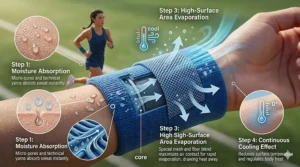
Evaporative cooling materials (like FROGG TOGGS) use specially engineered fabrics that hold water while staying dry to the touch. As the water evaporates from the material, it creates a cooling effect that can drop wrist temperature 3-5°F below ambient. These work best in low to moderate humidity (under 60%) where evaporation occurs efficiently. The cooling lasts 1-4 hours per soaking, significantly longer than ice packs or gel inserts that warm up quickly.
Ice silk fabrics (like Geyoga) blend synthetic and natural fibers with enhanced thermal conductivity. These materials feel cooler to the touch even without water activation because they transfer heat away from your skin more efficiently than cotton. The moisture-wicking properties are also superior — the fabric spreads moisture across a larger surface area for faster evaporation. Performance advantage is most noticeable in warm, dry conditions (75-95°F with humidity below 70%).
Phase-change materials (not featured in the products above but worth mentioning) are engineered to absorb or release heat at specific temperatures, providing extended cooling without refrigeration. These are typically found in premium cooling vests and specialized athletic gear priced above $50.
The performance gap between traditional and active cooling becomes significant only under specific conditions. In a 68°F air-conditioned gym, the ice silk technology won’t provide noticeable advantage over cotton terry cloth — you’re not generating enough heat stress to benefit from enhanced cooling. But during a 90°F outdoor run or three-set tennis match in summer sun, active cooling can be the difference between maintaining pace and having to slow down due to thermal stress.
Cost-benefit analysis matters here: traditional sweatbands at $5-$15 deliver 90% of the performance for general athletic use. Active cooling options at $15-$25 provide that extra 10% margin that matters primarily to outdoor athletes, hot weather competitors, and individuals particularly sensitive to heat. If you’re training mainly indoors or in moderate climates, investing in advanced cooling materials won’t provide proportional value. If you’re running half-marathons in summer heat or playing outdoor sports in warm regions, the upgrade pays for itself through extended performance capacity.
Choosing Athletic Cooling Wristbands: 5 Factors That Actually Matter
Walking into the wristband decision without a framework leads to either overspending on features you don’t need or buying inadequate products that frustrate you mid-workout. Here’s how to match product features to your specific requirements.
1. Activity Intensity and Duration
High-intensity interval training that lasts 30-45 minutes generates very different cooling demands than a 3-hour tennis match or 2-hour trail run. Short, intense sessions primarily need effective sweat management to keep hands dry for grips and prevent eye-stinging. Basic cotton terry cloth handles this well. Extended endurance activities accumulate thermal load over time, making active cooling features valuable. If your typical session exceeds 90 minutes, especially in warm weather, prioritize evaporative or ice silk materials.
2. Environmental Conditions
Indoor, climate-controlled environments (65-72°F, low humidity): Traditional moisture-wicking bands are perfectly adequate. The minimal heat stress doesn’t require active cooling features. Moderate outdoor conditions (70-85°F, humidity under 60%): This is where active cooling starts providing noticeable benefits. Ice silk or evaporative materials extend your comfort range. Hot, humid environments (85°F+, humidity above 70%): Even advanced cooling materials struggle in these conditions because evaporation is limited. Focus on maximum moisture absorption capacity rather than cooling tech. Consider combining wristbands with other cooling strategies like pre-cooling and hydration optimization.
3. Sport-Specific Requirements
Racquet sports (tennis, squash, badminton): Wider bands (2.5-3 inches) provide better forearm coverage for wiping sweat between points. Secure fit is critical during rapid wrist rotation. Court sports (basketball, volleyball): Standard width with strong elasticity prevents slippage during jumping and lateral movements. Quick-dry materials matter for back-to-back games. Endurance sports (running, cycling, hiking): Lightweight materials that don’t feel bulky. Active cooling features provide genuine advantage during long efforts. Gym training (CrossFit, weightlifting, HIIT): Durability through frequent washing, good grip even when sweaty, compression that stays secure during explosive movements.
4. Skin Sensitivity and Allergies
If you have sensitive skin or known fabric allergies, material composition becomes critical. Pure cotton or high cotton-percentage blends (80%+) are generally safest for sensitive skin. Synthetic materials like nylon and polyester improve durability but can cause irritation in sensitive individuals. Test new materials for short periods before using during important competitions. Avoid bands with rough seams or thick embroidery that rubs against skin during movement. Hypoallergenic options exist — look for products specifically marketed for sensitive skin.
5. Budget and Replacement Frequency
Premium bands ($15-$25) typically last 40-50+ washes with minimal performance degradation. Calculate cost per use rather than upfront price. Mid-range options ($8-$15) balance performance and longevity, usually good for 25-35 washes before showing wear. Budget bulk packs ($12-$18 for 12+ pairs) work well for teams, families, or athletes who want daily rotation. Expect 15-25 washes before replacement. Consider buying mix of quality levels: premium bands for competitions, budget options for regular training.
The common mistake is buying based on brand recognition alone. Nike and adidas make excellent products, but for certain use cases, specialized brands like FROGG TOGGS or Geyoga deliver superior performance at similar or lower price points. Match the product to your actual needs rather than assuming premium price equals better performance for your situation.
Common Mistakes When Buying Athletic Cooling Wristbands for Sports
Assuming All “Cooling” Claims Are Equal
Marketing departments love the word “cooling,” but many products labeled as cooling wristbands are just standard moisture-wicking bands. True cooling requires either evaporative technology, ice silk materials, or phase-change substances. Before buying, look for specific technology descriptions beyond generic claims. If the product description only mentions “breathable” and “moisture-wicking,” it’s a traditional sweatband regardless of what the title claims.
Ignoring Washing Instructions
The fastest way to destroy premium wristbands is throwing them in the washer with hot water and high-heat drying. Many advanced materials require cold water washing and air drying to maintain their performance properties. Ice silk fabrics can degrade quickly with high heat. Evaporative cooling materials may lose effectiveness if washed with fabric softeners that coat fibers. Read the care instructions before the first use, not after you’ve already damaged them.
Buying the Wrong Width for Your Sport
Tennis players buying narrow 2-inch bands often regret it the first time they try to wipe sweat mid-rally and can’t reach effectively. Conversely, golfers buying 4-inch doublewide bands find the bulk interferes with wrist rotation during swing. Match width to your sport’s specific demands rather than assuming bigger is always better.
Overlooking Material Thickness for Climate
Thick terry cloth bands feel luxurious and absorbent, but in hot humid weather they retain moisture and heat, becoming uncomfortably warm. Thinner ice silk or performance fabrics work better in heat. Conversely, ultra-thin materials provide insufficient absorption during intense gym sessions where heavy sweating occurs. Consider your typical environment when evaluating thickness.
Buying One Pair Instead of Rotating Multiple
Even premium wristbands benefit from rotation. Wearing the same pair daily without proper drying time between uses accelerates wear and creates odor problems. Buying 3-4 pairs and rotating them extends the total lifespan significantly more than the additional cost. This is especially true for athletes training 5-6 days per week.
Assuming Price Equals Quality
Sometimes yes, sometimes no. Bulk packs from brands like Bememo offer solid performance at budget prices that rival mid-range options. Conversely, some premium-priced fashion-oriented bands prioritize aesthetics over function. Check actual user reviews from athletes in your sport rather than relying on price as quality indicator.
Ignoring Humidity When Choosing Evaporative Cooling
FROGG TOGGS work brilliantly in Arizona’s dry heat. They’re mediocre in Florida’s humidity. If you live in a humid climate and buy evaporative cooling products without considering this limitation, you’ll be disappointed. Check your region’s typical humidity levels during training times before investing in evaporative technology.
Maintaining Your Athletic Cooling Wristbands: Making Them Last
Proper care extends the functional life of quality wristbands from a few months to a year or more of regular use. Here’s what actually matters based on material type.
Cotton Terry Cloth Bands (Nike, Suddora, adidas, Bememo): Wash in cold or warm water (not hot) to prevent shrinkage and elastic degradation. Use standard detergent, avoid fabric softeners which coat fibers and reduce absorbency. Tumble dry on low heat or air dry — high heat damages elastic over time. Separate whites from colors initially as some dyes may bleed in first few washes. Replace when you notice elastic losing compression or fabric becoming thin/pilled.
Ice Silk Materials (Geyoga): Machine wash cold water only — hot water can damage synthetic fiber structure. Hang to air dry, never use heat dryer which can melt or warp synthetic components. These dry quickly naturally due to material properties. Wash separately from rough fabrics (denim, velcro items) that can snag delicate fibers. Storage should be in drawer or container where they won’t get crushed.
Evaporative Cooling Materials (FROGG TOGGS): Hand wash or gentle machine cycle in cold water. Air dry completely before storing to prevent mildew. Store dry in included pouch or breathable container, never in sealed plastic bags. Before first use, wash to remove any manufacturing residue. If mold develops, wash with mild soap and small amount of vinegar, rinse thoroughly, dry completely. The cardboard-like texture when dry is normal, not a defect.
General Storage Tips: Don’t leave wet wristbands in closed gym bags — this creates perfect conditions for bacteria and odor. If you can’t wash immediately after use, at least remove them from the bag and let them air dry. For travel, pack dry bands separately from sweaty gear. Consider using mesh laundry bags when washing to prevent loss in machines and reduce tangling with other items.
Odor Prevention: Sweat plus time equals bacterial growth and smell. Wash wristbands after every use if possible, maximum every 2-3 uses. If odor develops despite regular washing, try soaking in white vinegar solution (1:4 vinegar to water) for 30 minutes before normal wash. Baking soda added to wash water can help neutralize odors. For persistent smell issues, it’s often more practical to replace rather than fight losing battle with bacteria.
When to Replace: Elastic should still provide snug fit without discomfort. Fabric should maintain structure, not feel thin or threadbare. Absorbency should still be effective — if you notice sweat sitting on surface rather than being absorbed, time to replace. Colors fading is cosmetic, not functional, but excessive fading often correlates with overall fabric degradation.
Investment in quality wristbands becomes worthless if poor care destroys them prematurely. Following these guidelines, expect 8-12 months from premium bands with 4-5 weekly uses, 4-6 months from budget options under similar conditions.
❓ FAQ: Athletic Cooling Wristbands for Sports
❓ Do athletic cooling wristbands for sports actually lower body temperature?
❓ How long do cooling wristbands stay effective during exercise?
❓ Can I wear athletic cooling wristbands for sports in the gym?
❓ What size athletic cooling wristbands for sports should I buy?
❓ Are expensive athletic cooling wristbands for sports worth the cost?
Conclusion: Finding Your Perfect Athletic Cooling Wristbands for Sports Match
After testing dozens of options across different sports and climate conditions, the reality is that no single “best” wristband exists for all athletes. Your perfect match depends entirely on where, when, and how intensely you train.
For outdoor endurance athletes training in warm, dry climates, the FROGG TOGGS Chilly Wrist Bands and Geyoga Ice Silk Cooling Wristbands deliver active cooling that traditional bands simply can’t match. The evaporative technology extends your comfort window before thermal fatigue sets in, which translates to sustained pace during the critical final miles of runs or closing sets of outdoor tennis matches.
Indoor athletes and those training in moderate temperatures get excellent performance from Nike Premier Doublewide, Suddora Wrist Sweatbands, or adidas Tennis Wristbands without paying premiums for cooling features they won’t fully utilize. These traditional options excel at moisture management while lasting through months of regular washing.
Budget-conscious buyers, youth sports teams, and families with multiple athletes should seriously consider the Bememo 24 Pcs Bulk option. At under $1 per band, you get adequate performance for recreational use while enabling color coordination and daily rotation without significant investment.
The Under Armour Performance Wristbands occupy the middle ground — slightly more expensive than basic options but offering genuine performance benefits through faster drying and superior moisture transport. They’re ideal for serious gym-goers and indoor court athletes who want an upgrade from basic bands without specialized cooling technology.
Whatever you choose, remember that wristbands are one component of comprehensive thermal management. Pair them with proper hydration, appropriate clothing for conditions, and pre-cooling strategies when competing in heat. The wristbands alone won’t prevent overheating during maximum effort in extreme conditions, but they’re a practical, affordable tool that can extend your performance capacity when conditions challenge your body’s cooling systems.
Your wrists are small, but the pulse points there carry major blood flow. Managing temperature and moisture at these strategic locations delivers returns disproportionate to the minimal investment. Whether you’re chasing personal records, competing for team victories, or just trying to finish strong without feeling like you’re going to melt, the right athletic cooling wristbands for sports make a difference you’ll notice from first use.
Recommended for You
- 7 Best Branded Cooling Scarves Bulk Orders for Corporate Events 2026
- 7 Best Top Rated Reusable Gel Neck Cooling Packs 2026
- 7 Best Water Activated Cooling Neck Scarves That Beat Summer Heat 2026
Disclaimer: This article contains affiliate links. As an Amazon Associate, I earn from qualifying purchases. If you purchase products through these links, we may earn a small commission at no additional cost to you.
✨ Found this helpful? Share it with your friends! 💬🤗
