
In This Article
Picture this: You’ve been planning your late-season hunt for months. You’re in position before sunrise, the temperature’s hovering around 15°F, and there’s a magnificent buck moving toward your stand. But instead of staying focused on the shot, all you can think about is how your toes feel like frozen sausages. Sound familiar?
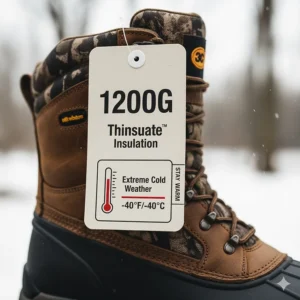
I’ve been there, friend. Nothing—and I mean nothing—will end your hunt faster than painfully cold feet. After testing dozens of boots through brutal Wisconsin winters and Colorado mountain hunts, I’ve learned that finding the best cold weather hunting boots isn’t just about staying comfortable. It’s about staying in the field long enough to actually fill your tag.
Whether you’re a tree stand hunter sitting motionless for hours or a spot-and-stalk mountain hunter covering miles of rough terrain, your boots are the foundation of everything. The wrong pair? You’ll be heading back to the truck before the sun even breaks the horizon. But the right pair? You’ll barely notice the cold while you focus on what matters—the hunt itself.
In this guide, I’m sharing seven cold weather hunting boots that have earned their place in serious hunters’ arsenals. These aren’t just random picks off Amazon—these are boots that have been battle-tested in real hunting scenarios, from frozen tree stands to steep mountain ridges covered in snow.
Quick Comparison Table: Top Cold Weather Hunting Boots at a Glance
| Boot Model | Insulation | Temperature Rating | Weight (per boot) | Price Range | Best For |
|---|---|---|---|---|---|
| LaCrosse Alphaburly Pro 1600G | 1600g Thinsulate | -20°F to 40°F | 3.5 lbs | $180-$220 | Tree stand hunters |
| Irish Setter Elk Tracker 1000G | 1000g Thinsulate | -10°F to 35°F | 4 lbs | $230-$280 | All-around versatility |
| Muck Arctic Pro | 8mm Neoprene + Fleece | -60°F to 30°F | 3.2 lbs | $180-$220 | Extreme cold & wet conditions |
| Rocky Sport Utility Max 1000G | 1000g Thinsulate | -100°F comfort rated | 4.5 lbs | $140-$180 | Budget-conscious hunters |
| Danner Pronghorn 800G | 800g PrimaLoft | 0°F to 40°F | 2.9 lbs | $270-$320 | Active mountain hunters |
| Zamberlan Sawtooth GTX RR WL | GORE-TEX Insulated | -4°F to 35°F | 2.08 lbs | $480-$550 | Premium performance seekers |
| LaCrosse Alphaburly Pro 800G | 800g Thinsulate | -10°F to 45°F | 3.2 lbs | $160-$200 | Moderate cold conditions |
💬 Just one click – help others make better buying decisions too! 😊
Top 7 Best Cold Weather Hunting Boots: Expert Analysis
1. LaCrosse Alphaburly Pro 1600G – Best Overall for Tree Stand Hunting
When it comes to sitting still in bone-chilling temperatures, the LaCrosse Alphaburly Pro 1600G is the undisputed champion. I’ve tested these boots on countless December mornings when the thermometer dropped below zero, and they’ve never let me down.
What makes these boots special? The combination of hand-laid premium rubber over 5mm neoprene creates a naturally insulating barrier that rubber-only boots can’t match. Add 1600 grams of Thinsulate Ultra insulation, and you’ve got a boot that can handle serious cold without the bulk that makes climbing into your stand feel like you’re wearing moon boots.
Key Specifications:
- 18″ height for maximum coverage
- Scent-free rubber construction
- EVA cushioned midsole
- Burly Pro aggressive outsole
- Adjustable rear gusset for custom fit
The Alphaburly Pro’s real genius lies in its Active Fit system. Unlike cheaper rubber boots that let your foot slide around (hello, blisters), this boot grips your ankle and locks your heel in place. After an eight-hour sit in 10°F weather, my feet were still toasty, and I didn’t have that desperate urge to rip my boots off the second I got back to the truck.
Price Range: $180-$220
Customer Feedback: Hunters consistently praise the exceptional warmth and scent suppression. One reviewer mentioned wearing them for 10-hour shifts in freezing conditions without any foot fatigue. The main criticism? They don’t come in half sizes, so sizing can be tricky.
Pros: ✅ Exceptional insulation for static hunting ✅ Scent-free rubber construction ✅ Lightweight for a rubber boot
Cons: ❌ No half sizes available ❌ Break-in period required for perfect fit
2. Irish Setter Elk Tracker 1000G – Best All-Around Leather Boot
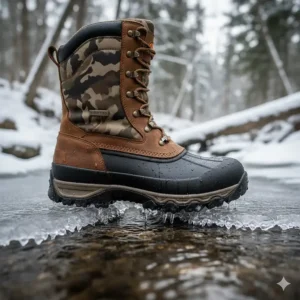
The Irish Setter Elk Tracker 1000G is what I grab when I need a boot that can do it all—hike three miles into rough country, then sit on a ridge glassing for hours. This boot strikes that sweet spot between mobility and warmth that’s surprisingly hard to find.
Built with premium full-grain waterproof leather and featuring GORE-TEX waterproof membrane, these boots laugh at wet conditions. The 1000 grams of 3M Thinsulate Ultra insulation provides serious warmth without turning your feet into sweat factories when you’re on the move. And trust me, that balance matters. I’ve hunted in overly insulated boots that had me soaked from sweat within the first mile—not fun when that moisture freezes once you stop moving.
Key Specifications:
- 12″ height
- GORE-TEX waterproof breathable membrane
- Bulls-Eye Air Bob aggressive outsole
- ScentBan odor-inhibiting technology
- Removable comfort cork EVA footbed with memory foam
- Goodyear leather welt construction
The Elk Tracker breaks in surprisingly fast for a leather boot. After just two short hikes around my property, they felt like I’d been wearing them for months. The Bulls-Eye outsole grips on everything from wet rocks to snowy hillsides, though some users note it can be a bit slippery on smooth, wet surfaces like boardwalks.
Price Range: $230-$280
Customer Feedback: Reviewers love the comfortable fit right out of the box and exceptional waterproofing. Many report wearing them for entire 10-hour days without needing to take them off. The cork midsole provides excellent shock absorption on long hikes.
Pros: ✅ Perfect balance of warmth and breathability ✅ Fast break-in period ✅ Superior traction on varied terrain
Cons: ❌ Limited traction on smooth wet surfaces ❌ Heavier than synthetic alternatives
3. Muck Arctic Pro – Best for Extreme Cold & Wet Conditions
If you hunt in truly brutal conditions—think ice fishing, late-season waterfowl, or northern deer hunting where temperatures regularly drop below zero—the Muck Arctic Pro should be on your short list. With a comfort rating from -60°F to 30°F, these are some of the warmest boots you can buy without going full-on expedition gear.
The secret weapon here is the 8mm CR Flex-Foam neoprene that adjusts to your foot shape, combined with a fleece lining and 2mm of thermal foam under the footbed. It’s like wearing a sleeping bag on your feet, but somehow they manage to stay remarkably lightweight at just 3.2 pounds per boot.
Key Specifications:
- 17″ height
- 8mm neoprene with fleece lining
- 2mm thermal foam insulation
- Bob-Tracker molded outsole
- Stretch-fit Comfort Topline
- 100% waterproof construction
I tested these during a particularly nasty late-season hunt where we dealt with sleet, standing water, and temperatures in the single digits. My feet stayed warm and dry through it all. The Bob-Tracker outsole provides excellent traction on ice and snow—critical when you’re navigating slippery conditions in the dark.
The stretch-fit topline is brilliant. It seals snugly around your calf, keeping cold air and snow out while trapping warm air inside. Just be prepared for a bit of a learning curve getting your pants tucked in properly—once you figure it out, it’s smooth sailing.
Price Range: $180-$220
Customer Feedback: Users rave about the extreme cold weather performance, with many reporting comfort in temperatures well below zero. The double reinforcement in high-wear areas provides excellent durability. Some mention they run slightly large, so consider sizing down.
Pros: ✅ Unmatched warmth in extreme cold ✅ 100% waterproof reliability ✅ Lightweight despite heavy insulation
Cons: ❌ Can feel bulky for active hunting ❌ Stretch topline takes practice to work with pants
4. Rocky Sport Utility Max 1000G – Best Budget Option
Not everyone has $300+ to drop on hunting boots, and that’s where the Rocky Sport Utility Max 1000G shines. Don’t let the budget-friendly price fool you—these boots punch well above their weight class with features typically found on boots costing twice as much.
Rocky claims these boots are comfortable down to -100°F, which sounds like marketing hyperbole until you realize they’re talking about comfort rating, not survival rating. For most hunters dealing with temperatures from 0°F to 30°F, these boots deliver impressive warmth. The 1000 grams of Thinsulate Ultra insulation combined with Rocky’s proven waterproof construction creates a reliable cold-weather performer.
Key Specifications:
- 10″ height
- 1000g Thinsulate Ultra insulation
- Full-grain leather and nylon upper
- Sport Utility outsole for traction
- Guaranteed Rocky Waterproof construction
- Mossy Oak Break-Up camo pattern
The Sport Utility outsole is genuinely impressive for the price point. I’ve worn these on everything from muddy creek crossings to frozen rocky ridges, and they’ve provided stable footing throughout. The full-grain leather and 1000 denier Cordura nylon upper is tough enough to brush off thorns and rough terrain without showing significant wear.
Price Range: $140-$180
Customer Feedback: Budget-conscious hunters appreciate the combination of warmth, waterproofing, and durability at this price point. Many report these boots lasting multiple seasons of heavy use. The main trade-off is slightly more weight than premium alternatives.
Pros: ✅ Exceptional value for money ✅ Reliable waterproofing ✅ Durable construction for the price
Cons: ❌ Heavier than premium boots ❌ Less refined fit than higher-end options
5. Danner Pronghorn 800G – Best for Active Mountain Hunters
Mountain hunting demands something different from your boots. You need warmth, sure, but you also need to be nimble enough to cover miles of steep terrain without feeling like you’re hiking in cement blocks. The Danner Pronghorn 800G was purpose-built for exactly this scenario.
This is Danner’s fifth generation of the Pronghorn, and the refinement shows. They’ve upgraded to their TERRA FORCE NEXT platform, which combines an internal and external shank system for superior arch support and torsion control. Translation? Your feet stay supported and fatigue-free even when carrying a heavy pack across unforgiving terrain.
Key Specifications:
- 8″ height
- 800g PrimaLoft insulation
- GORE-TEX waterproof liner
- Full-grain leather upper
- Vibram Pronghorn outsole (5th generation)
- Vibram SPE midsole
- 851 last for athletic fit
The 800 grams of PrimaLoft insulation hits the sweet spot for hunters who are constantly moving. It’s warm enough for cold mornings glassing from a ridge but won’t have you overheating on steep climbs. The GORE-TEX liner keeps moisture out while allowing your feet to breathe—a crucial combination when you’re covering vertical terrain.
What really impressed me was the new Vibram Pronghorn outsole. It’s aggressive enough for serious traction but designed with a streamlined, lower profile that doesn’t collect mud and debris. The pronounced rocker makes uphill climbs easier by improving toe-off efficiency.
Price Range: $270-$320
Customer Feedback: Serious mountain hunters praise the balance of support, weight, and warmth. The 851 last provides a true-to-size fit with an athletic feel and plenty of toe room. Break-in time is minimal compared to other leather boots at this level.
Pros: ✅ Outstanding balance of warmth and mobility ✅ Excellent arch support for long hikes ✅ Premium materials and construction
Cons: ❌ Higher price point ❌ May be more boot than needed for stand hunting
6. Zamberlan Sawtooth GTX RR WL – Best Premium Performance Boot
Let’s be honest—$525 for a pair of boots makes most hunters wince. But if you’re a serious backcountry hunter who regularly tackles brutal late-season conditions in steep mountain terrain, the Zamberlan Sawtooth GTX RR WL represents the absolute pinnacle of cold-weather hunting boot technology.
These Italian-made boots are engineered for the most demanding hunting scenarios imaginable. GearJunkie’s testing team called them “the most capable cold-weather boots I’ve ever worn” after putting them through sloppy mud, 18-inch snow drifts, and thick icy deadfall during a late-season elk hunt. That’s high praise from professionals who test gear for a living.
Key Specifications:
- 2.8mm Hydrobloc Nubuck leather
- Zamberlan Vibram StarTrek II outsole
- GORE-TEX Insulated Comfort membranes
- Temperature performance to -4°F
- Zamberlan Wide Last (ZWL) for extra room
- Full RRS (Rubber Rand System)
- Weight: 2.08 lbs per boot (size 42)
The weight alone should make you sit up and take notice—at just over 2 pounds per boot, these are incredibly light for an insulated mountain boot. That matters when you’re five miles in and climbing your third ridge of the day. Every ounce counts.
The Vibram StarTrek II outsole is a masterpiece of engineering, using a bi-density PU midsole (different densities for cushioning vs. support), TPU arch supports, and deep lugs that maintain traction for the long haul. The pronounced rocker makes uphill climbs feel easier by improving your natural gait.
Price Range: $480-$550
Customer Feedback: Professional guides and serious backcountry hunters justify the investment based on performance and durability. Many report these boots lasting multiple seasons of hard use. The Wide Last (WL) version accommodates thick socks without feeling cramped.
Pros: ✅ Best-in-class weight-to-performance ratio ✅ Superior traction in technical terrain ✅ Italian craftsmanship and durability
Cons: ❌ Premium price point ❌ Overkill for casual hunters or flat terrain
7. LaCrosse Alphaburly Pro 800G – Best for Moderate Cold Conditions
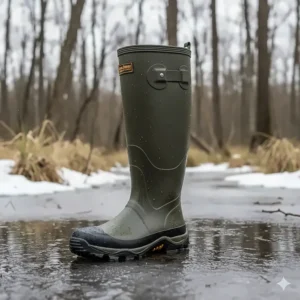
The LaCrosse Alphaburly Pro 800G deserves its own mention as the sweet-spot option for hunters dealing with temperatures in the 10°F to 45°F range. It’s the same proven Alphaburly Pro design but with 800 grams of insulation instead of 1600 grams, making it more versatile for early to mid-season hunts and active hunting styles.
This is my go-to boot for November whitetail hunting in the Midwest, where temperatures can swing from 20°F at dawn to 50°F by afternoon. The 800-gram insulation keeps my feet comfortable during cold morning sits without turning them into ovens once the sun comes up and I need to move.
Key Specifications:
- 18″ height
- 800g Thinsulate Ultra insulation
- Hand-laid rubber over neoprene
- Scent-free construction
- Burly Pro outsole
- Active Fit system
Everything else about this boot is identical to its 1600-gram brother—same scent control, same waterproofing, same proven design. The difference is versatility. If you’re the kind of hunter who might sit for two hours, then need to track a deer for a mile, then sit again, this level of insulation prevents overheating while still providing solid cold protection.
Price Range: $160-$200
Customer Feedback: Hunters appreciate this model for shoulder season and active hunting scenarios. The lighter insulation makes them more comfortable for covering ground. Many own both the 800G and 1600G versions for different hunting situations.
Pros: ✅ More versatile temperature range ✅ Better for active hunting styles ✅ All the proven Alphaburly features
Cons: ❌ Not warm enough for extreme cold ❌ Still fairly heavy for hiking boots
🚨 Don’t Miss These Exclusive Deals!
✨ Take your cold weather hunting to the next level with these carefully selected boots. Click on any highlighted item above to check current pricing and availability. These boots will help you stay in the field longer and hunt more effectively!
Understanding Insulation: How Much Do You Really Need?
Here’s the truth bomb most gear reviews won’t tell you: more insulation isn’t always better. I learned this the hard way after buying a pair of 2000-gram boots for a November hunt and spending the entire morning with soaked socks from sweat.
Insulation is measured in grams, and the right amount depends entirely on your hunting style and temperature range. Let me break down the practical reality of each insulation level based on actual field experience.
Insulation Level Guide
200-400 Grams: Active Hunting, Mild Cold (30°F-50°F) Perfect for early season or active hunting where you’re constantly moving. Think spot-and-stalk hunting, still-hunting through timber, or mountain hunting where you’re gaining elevation. These keep the chill off without causing sweat buildup.
400-800 Grams: Moderate Cold, Mixed Activity (10°F-40°F) This is the sweet spot for most deer hunting scenarios east of the Mississippi. You’re walking to your stand, sitting for a few hours, maybe tracking a deer, then walking back out. Enough warmth for cold mornings, not so much that you overheat on the hike in.
800-1200 Grams: Cold Weather, Some Movement (0°F-30°F) When temperatures drop but you’re still somewhat active—walking to distant stands, spot-and-stalk in cold conditions, or late-season hunts where you might need to cover some ground. I spend most of my late November and December hunts in this range.
1200-2000 Grams: Extreme Cold, Minimal Movement (-20°F-20°F) This is tree stand territory when the mercury really drops. Ice fishing. Sitting in a goose blind for hours in January. If you’re not moving much and the temperature is brutal, this is your range. But understand that these boots will cook your feet if you try to hike any distance.
The Activity Factor Nobody Talks About
Here’s what confuses most hunters: temperature ratings assume you’re relatively stationary. If you’re actively moving, your body generates heat and your feet will stay warmer naturally. This means you can often get away with less insulation than you’d think—and should, because sweaty feet in cold weather is a recipe for misery.
I use a simple rule: if I’m walking more than a mile to my hunting spot, I drop down 200-400 grams from what the temperature alone would suggest. If I’m going straight to a stand and sitting all day, I go with the higher insulation. This simple adjustment has transformed my cold-weather hunting comfort.
Waterproofing Technologies: What Actually Works in the Field
Let’s talk waterproofing, because this is where marketing hype and field reality often diverge dramatically. I’ve tested boots with impressive-sounding waterproof claims that left me with soggy socks after an hour in wet conditions. Here’s what actually matters.
GORE-TEX: The Gold Standard
GORE-TEX keeps moisture out while allowing sweat vapor to escape, and in my experience, it’s earned its reputation. Boots like the Irish Setter Elk Tracker and Danner Pronghorn use GORE-TEX membranes, and they genuinely stay dry in conditions that would soak through lesser boots.
The key is that GORE-TEX is breathable. Your feet sweat—you’ll produce about a cup of moisture per foot over a full day of hunting. If that moisture can’t escape, it accumulates inside your boot, making you cold and miserable even if no external water got in.
Rubber and Neoprene: Simple and Effective
The LaCrosse Alphaburly Pro and Muck Arctic Pro take a different approach—full rubber construction over neoprene. This is 100% waterproof by design because there are no seams for water to penetrate. The tradeoff? Less breathability than GORE-TEX, though the neoprene does provide some natural moisture management.
For waterfowl hunting, wet snow conditions, or stream crossings, rubber boots are unbeatable. For dry cold with lots of movement, GORE-TEX leather boots breathe better.
Application-Specific Recommendations
Static Hunting (Tree Stands, Blinds): Rubber boots win. You’re not generating much heat through movement, so breathability matters less than absolute waterproofing. The LaCrosse Alphaburly Pro or Muck Arctic Pro are ideal here.
Active Hunting (Spot-and-Stalk, Mountain Hunting): GORE-TEX leather boots like the Danner Pronghorn or Zamberlan Sawtooth provide the breathability you need when covering ground. You’ll stay drier from managing internal moisture than you would in rubber boots.
Mixed Conditions: The Irish Setter Elk Tracker with GORE-TEX offers the best of both worlds—reliable waterproofing with better breathability than rubber.
Traction and Outsole Performance: Staying Upright in Sketchy Conditions
I’ve taken some spectacular falls while hunting, and embarrassingly, most happened when I had improper footwear for the conditions. Traction isn’t sexy to talk about, but it’s absolutely critical for both safety and effectiveness as a hunter.
Understanding Outsole Design
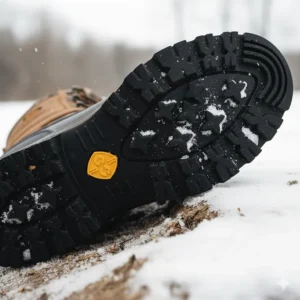
Aggressive Deep Lugs (Irish Setter Bulls-Eye, Vibram StarTrek II): These bite into soft surfaces like mud, wet leaves, and snow. The deep channels allow debris to shed out rather than pack in. Essential for wet, muddy conditions and loose terrain. The downside? They can be slippery on smooth, hard surfaces.
Multi-Directional Tread (LaCrosse Burly Pro, Muck Bob-Tracker): These outsoles have lugs pointing different directions, providing grip no matter which way your foot is moving. Great for navigating varied terrain and side-hill slopes. This is what you want for all-around hunting.
Low-Profile Technical (Danner Pronghorn, Zamberlan Sawtooth): More refined tread patterns that work well on rock and mixed terrain. They don’t provide quite as much bite in mud, but they excel on varied surfaces and won’t collect as much debris.
Real-World Performance Notes
The Zamberlan Sawtooth’s Vibram StarTrek II outsole is the most capable on truly technical terrain—think steep rocky slopes where one wrong step could be serious. It’s designed more like a mountaineering boot than a traditional hunting boot.
The Muck Arctic Pro’s Bob-Tracker outsole surprised me with its ice performance. I was skeptical about rubber boots on ice, but the compound and tread pattern genuinely work. I felt more confident on frozen surfaces than in some of my “hiking boot” style options.
The LaCrosse Alphaburly Pro’s Burly Pro outsole is the best all-arounder for varied conditions. It sheds mud well, grips on most surfaces, and stays quiet moving through timber.
Scent Control: Does It Actually Matter?
Every discussion of hunting boots eventually comes to scent control, and there’s a lot of misinformation floating around. Let me give you the straight truth based on both scientific reality and field experience.
The Science of Rubber Boots and Scent
Rubber boots naturally suppress scent better than any other material because rubber itself is non-porous. Leather and fabric absorb odors—they’re literally designed to breathe, which means they also release scent. Rubber doesn’t breathe, so it doesn’t hold or release odors the same way.
This is why serious whitetail hunters often swear by boots like the LaCrosse Alphaburly Pro. The full rubber construction doesn’t eliminate all your scent (nothing does), but it significantly reduces the amount you’re leaving on the ground as you walk to your stand.
ScentBan and Other Technologies
Boots like the Irish Setter Elk Tracker feature ScentBan technology, which kills odor-causing bacteria. Does it work? Sort of. It reduces odor from sweat and bacteria buildup inside your boot, which makes your boots smell better. But understand what it can’t do—it can’t prevent all scent from escaping.
Practical Scent Management
Here’s my practical approach: I wear rubber boots when hunting mature whitetails where scent control is critical. For other species or hunting styles where I’m covering more ground, I wear leather GORE-TEX boots and pay more attention to wind direction.
The best scent control isn’t in your boots alone—it’s wearing scent-free base layers, using scent elimination sprays, and most importantly, hunting with the wind in your favor. Your boots are just one piece of the puzzle.
Breaking In Your New Boots: Save Yourself Some Pain
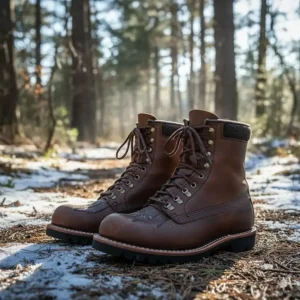
I’ve made every boot break-in mistake in the book, including wearing brand-new boots on a five-mile mountain hunt (spoiler: it didn’t end well). Let me save you from similar suffering with some hard-earned wisdom.
Different Boots, Different Break-In Needs
Rubber Boots (LaCrosse, Muck): Virtually no break-in required. They’re flexible from day one. The only adjustment is getting used to how they fit and learning to work with any gussets or closures. You can wear these on a serious hunt right out of the box.
Leather Boots (Irish Setter, Danner, Zamberlan): These need break-in time, though modern construction techniques have reduced it significantly. Plan for at least 5-10 hours of wear before a serious hunt. The Irish Setter Elk Tracker breaks in faster than most—I had mine trail-ready after three short hikes.
Technical Mountain Boots (Zamberlan Sawtooth): The stiffest and most supportive boots require the most break-in. These can take 20-30 hours to fully conform to your feet. Don’t rush it.
Smart Break-In Strategy
Start by wearing your boots around the house for a few hours each day. This allows the materials to begin conforming to your feet without the stress of full activity. Then graduate to short walks around your neighborhood, gradually increasing distance and terrain difficulty.
For leather boots, use a quality leather conditioner after your first few wears. This keeps the leather supple and accelerates the break-in process. Don’t overdo it though—too much conditioner can make boots too soft and reduce their support.
The biggest mistake? Trying to break in boots during an actual hunt. That’s how you end up with blisters, hot spots, and a miserable experience. Put in the time beforehand, and your boots will reward you when it counts.
Sizing and Fit: Getting It Right the First Time
Boot sizing is where most hunters go wrong, and it’s completely understandable—boot sizing is maddeningly inconsistent across brands. Here’s how to nail your fit without the frustration of multiple returns.
The Sock Factor
Always try on boots with the socks you’ll actually hunt in. Thick wool hunting socks take up significantly more space than everyday socks. I wear Darn Tough merino wool socks for most hunting, and I always have a pair with me when trying boots.
Most hunting boots should fit with room for a thick sock without feeling sloppy. Your heel should stay locked in place, but your toes should have enough room to wiggle slightly. If your toes are touching the front when you’re standing normally, size up.
Brand-Specific Sizing Notes from My Testing
LaCrosse: Runs true to size but doesn’t offer half sizes. If you’re between sizes, size down for a snugger fit (they’ll stretch slightly) or size up and wear thicker socks.
Irish Setter: True to size with the 860 model (Elk Tracker). They offer wide widths, which is great for hunters with wider feet.
Muck: Tend to run slightly large. Many reviewers suggest sizing down if you’re between sizes. I wear my normal size with thick socks and it works well.
Rocky: True to size but on the wider side. Good news if you have wide feet, but narrow-footed hunters might want to add an extra insole or wear thicker socks.
Danner: The 851 last (used on Pronghorn) runs true to size with an athletic fit and roomier toe box. Most comfortable right out of the box.
Zamberlan: The Wide Last (ZWL) version truly accommodates wider feet and thick socks. The regular ZBPK last fits true to size with a roomier toe box than most European boots.
The Downhill Test
When trying on boots, do the “downhill test.” Put the boots on unlaced, then push your foot forward so your toes touch the front. Now lace them up normally. Stand on your toes, simulating walking downhill. Your heel should stay locked in place. If it lifts significantly, you need a different size or lacing strategy.
How to Choose Based on Your Hunting Style
Different hunting scenarios demand different boots. Here’s how to match your needs with the right footwear based on how you actually hunt.
Tree Stand and Blind Hunting
Primary Need: Maximum warmth with minimal weight for walking to/from stand
Best Choice: LaCrosse Alphaburly Pro 1600G or Muck Arctic Pro
Why: When you’re sitting motionless for hours, you need maximum insulation. Rubber boots provide scent control and are easy to get on/off. You’re not hiking far, so weight and athletic performance don’t matter as much as warmth.
Spot-and-Stalk Western Hunting
Primary Need: Balance of warmth, weight, support, and mobility
Best Choice: Danner Pronghorn 800G or Zamberlan Sawtooth GTX
Why: You’re covering miles of varied terrain, gaining and losing elevation. You need boots that support long-distance hiking while providing cold weather protection. Leather construction holds up better to rough terrain than rubber.
Mixed Hunting (Walk-In, Sit, Track)
Primary Need: Versatility across different activities
Best Choice: Irish Setter Elk Tracker 1000G or LaCrosse Alphaburly Pro 800G
Why: These offer enough insulation for cold sits without overheating during active movement. They’re comfortable for moderate hiking but warm enough for stationary hunting.
Early-to-Mid Season (Moderate Temperatures)
Primary Need: Waterproofing and moderate warmth
Best Choice: Danner Pronghorn 400G or Irish Setter Elk Tracker uninsulated
Why: Lower insulation levels keep you comfortable when temperatures are in the 30s-50s range. You avoid the sweat problem that comes with over-insulation.
Budget-Conscious Hunting
Primary Need: Best performance per dollar
Best Choice: Rocky Sport Utility Max 1000G
Why: At under $180, these deliver waterproofing, good insulation, and adequate durability for hunters who can’t justify premium pricing.
Boot Care and Maintenance: Making Your Investment Last
Quality hunting boots are expensive, but proper care can make them last a decade or more. Here’s how to protect your investment and ensure your boots perform season after season.
Post-Hunt Cleaning
After each hunt, knock off mud and debris while it’s still wet if possible. Let boots air dry naturally—never put them near a heater or fire, as extreme heat can damage materials and adhesives. Remove insoles and laces to speed drying and prevent odor buildup.
For rubber boots (LaCrosse, Muck), simply spray them down with water and wipe clean. These are nearly indestructible with basic care.
For leather boots (Irish Setter, Danner, Zamberlan), use a soft brush to remove dried mud. For stubborn spots, use a damp cloth. Once clean, apply leather conditioner 2-3 times per season to keep the leather supple and maintain waterproofing.
Storage Between Seasons
Store boots in a cool, dry place away from direct sunlight. Stuff them with newspaper or boot trees to maintain shape. For rubber boots, avoid folding them—let them stand upright to prevent cracking in the rubber.
Before storing for the summer, clean boots thoroughly and apply conditioner to leather. This prevents drying and cracking during storage.
Waterproofing Maintenance
Even GORE-TEX boots benefit from periodic treatment. The outer material needs to be water-repellent (beads water) for the GORE-TEX membrane to breathe properly. Apply a DWR (Durable Water Repellent) treatment spray annually or when you notice water no longer beading on the surface.
For rubber boots, check seams where the rubber meets fabric or where different pieces are joined. These are the only places leaks can develop. If you notice a leak, most can be repaired with rubber cement or boot repair adhesive.
When to Replace Your Boots
Even the best boots don’t last forever. Replace your boots when you notice:
- Significant tread wear that affects traction
- Developing leaks that can’t be repaired
- Loss of insulation effectiveness (you get cold faster than before)
- Separation of sole from upper
- Cracking in rubber or leather that can’t be conditioned back to health
Quality boots should last 5-10 years with proper care, but harder use shortens this timeframe. I’m on year 7 with my Irish Setter Elk Trackers and they’re still going strong.
FAQ: Your Cold Weather Boot Questions Answered
❓ How do I know if my hunting boots are warm enough for tree stand sitting?
❓ Can I use the same boots for early season and late season hunting?
❓ Do rubber boots like LaCrosse really control scent better than leather?
❓ How much should I expect to pay for quality cold weather hunting boots?
❓ What's the difference between Thinsulate and PrimaLoft insulation?
Comparison: Cold Weather Hunting Boots vs. Regular Winter Boots
| Feature | Hunting Boots | Regular Winter Boots |
|---|---|---|
| Insulation Focus | Warmth during inactivity | General cold protection |
| Traction Design | Aggressive for varied terrain | Moderate for urban/casual use |
| Scent Control | Often included (rubber/treatments) | Not a consideration |
| Waterproofing | Critical, tested for wet conditions | Standard water resistance |
| Durability | Heavy-duty for rough terrain | Moderate for general use |
| Height | Typically 8-18 inches | Usually 6-10 inches |
| Price Range | $140-$550 | $80-$250 |
Benefits of Investing in Quality Cold Weather Hunting Boots
Extended Hunt Time
Quality boots let you stay in the field 2-3 times longer than cheap alternatives. When your toes go numb at 7 AM, you’re heading back to the truck. With proper boots, you’ll comfortably hunt until last light—and that’s when big bucks move.
Injury Prevention
Good traction on slippery terrain minimizes ankle rolls and falls, which are serious risks when navigating icy slopes or wet rocks while carrying a rifle. A sprained ankle five miles from the truck isn’t just painful—it’s dangerous.
Health Benefits
Cold, wet feet aren’t just uncomfortable—they increase your risk of hypothermia and frostbite. Quality waterproof insulated boots maintain healthy circulation and body temperature, protecting you from cold-weather injuries.
Long-Term Cost Savings
A $300 pair of boots that lasts 8-10 seasons costs you $30-38 per year. Cheap $80 boots that need replacing every 2 years cost you $40 per year—plus the hassle of shopping for boots regularly. Quality gear is actually cheaper long-term.
Conclusion: Finding Your Perfect Cold Weather Hunting Boot
After thousands of hours in cold-weather hunting boots across varied terrain and conditions, I’ve learned that there’s no single “best” boot for everyone. The right choice depends entirely on your specific hunting style, typical conditions, and budget.
For most hunters dealing with mixed conditions and moderate cold, the Irish Setter Elk Tracker 1000G offers the best balance of warmth, mobility, and durability around $250. It’s the boot I recommend most often to friends asking for advice.
If you’re primarily a tree stand hunter dealing with serious cold, save yourself some suffering and invest in the LaCrosse Alphaburly Pro 1600G. Your toes will thank you during those 10°F morning sits.
Budget-conscious hunters shouldn’t overlook the Rocky Sport Utility Max 1000G—it punches well above its $150 price point and will serve you well for years.
For serious mountain hunters who need premium performance, both the Danner Pronghorn 800G and Zamberlan Sawtooth GTX deliver exceptional capability, just at very different price points. The Danner at $270-320 is more accessible, while the Zamberlan at $480-550 represents the absolute best money can buy.
The bottom line? Your boots are the foundation of every hunt. Skimp here, and you’ll be miserable. Invest in quality that matches your needs, and you’ll hunt longer, more comfortably, and more successfully. After all, you can’t fill a tag from the comfort of your warm truck.
Recommended For You
- 7 Best Cold Weather Golf Attire for 2025: Expert-Tested Gear
- Cold Weather Golf Pants: 7 Best Picks for 2025
- Cold Weather Golf Gear: 7 Must-Have Essentials 2025
Disclaimer: This article contains affiliate links. If you purchase products through these links, we may earn a small commission at no additional cost to you.
✨ Found this helpful? Share it with your friends! 💬🤗
