
In This Article
Picture this: you’re three hours into a winter patrol, temperatures hovering at -15°F, and your toes have gone numb. Not because you’re tough—but because your boots just aren’t cutting it. I’ve been there, and trust me, the wrong footwear in extreme cold isn’t just uncomfortable. It’s dangerous.
Finding the right army cold weather boots isn’t about brand loyalty or following trends. It’s about survival, performance, and getting home with all ten toes intact. Whether you’re active duty military, a veteran who knows the drill, law enforcement braving winter conditions, or an outdoor enthusiast who refuses to let winter slow you down—this guide cuts through the marketing fluff to show you what actually works.
The military extreme cold weather boots market has exploded with options since 2025, but more choices don’t always make decisions easier. From GORE-TEX liners to Thinsulate insulation ratings, AR 670-1 compliance to vapor barrier technology, there’s a lot to unpack. After researching dozens of models and analyzing real-world feedback from soldiers, hunters, and winter workers, I’ve narrowed it down to seven exceptional options that deliver when temperatures plummet.
Quick Comparison Table: Army Cold Weather Boots at a Glance
| Boot Model | Insulation | Temperature Rating | Weight (per boot) | Waterproof | Price Range | Best For |
|---|---|---|---|---|---|---|
| Belleville C775 | 600g Thinsulate | -20°F to -40°F | 2.8 lbs | GORE-TEX | $280-$290 | Arctic operations, heavy-duty military use |
| Rocky S2V | 400g Thinsulate | -10°F to -30°F | 2.5 lbs | Yes | $300-$310 | Active patrol, tactical operations |
| Garmont T8 Extreme EVO GTX | GORE-TEX Insulated | -5°F to -25°F | 1.5 lbs | GORE-TEX | $220-$250 | Lightweight mobility, mountain operations |
| Danner Fort Lewis 10″ | 200g Thinsulate | 0°F to -20°F | 2.3 lbs | GORE-TEX | $340-$360 | Long marches, versatile climates |
| U.S. Military Mickey Mouse Boots | Vapor Barrier | -20°F to -60°F | 2.75 lbs | Waterproof rubber | $190-$210 | Extreme static cold, ice fishing |
| FREE SOLDIER Snow Boots | 3M Thinsulate | 10°F to -15°F | 2.4 lbs | Triple waterproof | $80-$110 | Budget-conscious, moderate cold |
| Bates ICW Gore-Tex Boot | Removable liner | 10°F to -10°F | 2.2 lbs | GORE-TEX | $120-$160 | Variable conditions, intermediate cold |
💬 Just one click – help others make better buying decisions too! 😊
✨ Don’t Miss These Exclusive Deals!
🔍 Take your cold weather performance to the next level with these carefully selected boots. Click on any highlighted product to check current pricing and availability. These boots will help you stay warm and mission-ready in the harshest conditions!
Top 7 Army Cold Weather Boots: Expert Analysis
1. Belleville C775 600g Insulated Waterproof Military Boot
When Belleville says “600 grams of Thinsulate,” they’re not playing around. The Belleville C775 is the heavyweight champion of extreme cold weather boots military personnel swear by, and for good reason.
Key Specifications:
- 100% cattlehide leather construction
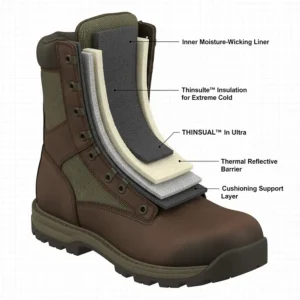
- 600g Thinsulate insulation with GORE-TEX bootie
- Vibram 360° FIRE & ICE outsole
- AR 670-1 compliant
- Made in USA (Berry Compliant)
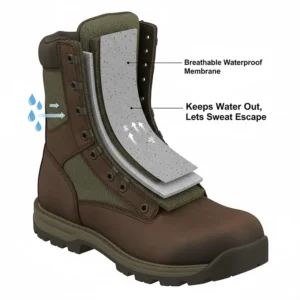
At $289.99, this boot delivers exceptional value when you consider it’s basically three layers of protection wrapped around your feet. The GORE-TEX waterproof bootie keeps moisture out while allowing sweat to escape—crucial when you’re moving between freezing outdoor temps and heated vehicles or buildings. The Vibram outsole uses a specialized rubber compound that won’t crack or harden in arctic conditions, maintaining grip on black ice when lesser boots turn into skating rinks.
Customer feedback consistently highlights all-day warmth in temperatures down to -30°F without needing additional liners. One Army Ranger noted these kept his feet comfortable during a week-long training exercise in Alaska, temperatures averaging -22°F. The full-grain leather takes minimal break-in time compared to other heavy-duty military boots.
✅ Pros:
- Superior insulation for extended static cold exposure
- Exceptional traction on ice and snow
- Durable leather construction lasts multiple seasons
- AR 670-1 compliant for active duty
❌ Cons:
- Heavier than lightweight tactical options
- Runs about 1/2 size large (order accordingly)
Price: $280-$290 | Best for: Arctic deployments, extended patrol duty, serious winter warriors
2. Rocky S2V 400g Waterproof Insulated Tactical Military Boot
The Rocky S2V represents the sweet spot between warmth and mobility. With 400g of 3M Thinsulate Ultra Insulation, these boots excel when you need to stay warm without feeling like you’re wearing concrete blocks.
Key Specifications:
- Flash and water-resistant leather upper
- 400g 3M Thinsulate Ultra Insulation
- Proprietary Vibram soles with Roll-Stop Ankle Stability
- PTFE flame-resistant coating
- Moisture-wicking lining with Aegis Shield
Priced around $310, the S2V justifies its premium with features most competitors reserve for their top-tier models. The Roll-Stop Ankle Stability system provides lateral support that becomes critical when navigating uneven winter terrain with a heavy pack. The PTFE coating adds flame resistance—not something you think about until you’re working around vehicle engines or field equipment in sub-zero conditions.
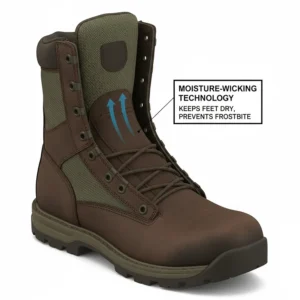
Real-world testing shows these perform admirably in the -10°F to -30°F range during active movement. Stand still for extended periods, and you’ll want more insulation. But for patrol work, vehicle operations, or any mission requiring agility, the balance between warmth and weight is nearly perfect. Users report the moisture-wicking lining actually works, preventing the dreaded sweaty-feet-turned-ice-blocks scenario.
✅ Pros:
- Excellent weight-to-warmth ratio
- Superior ankle stability for rough terrain
- Flame-resistant coating adds versatility
- Vibram soles provide reliable traction
❌ Cons:
- Premium price point
- May require thicker socks for static cold below -20°F
Price: $300-$310 | Best for: Active military operations, tactical law enforcement, mobile winter work
3. Garmont T8 Extreme EVO GTX Tactical Boot
If the Belleville is a tank, the Garmont T8 Extreme EVO GTX is a high-performance sports car. At just 1.5 pounds per boot, this Italian-engineered marvel proves you don’t need bulk to battle the cold.
Key Specifications:
- 1.8mm suede leather with polyester inserts
- GORE-TEX Insulated Comfort lining
- Ortholite Ultra footbed
- Vibram Traction Lug outsole
- AR 670-1 and AFI 36-2903 compliant
The $220-$250 price range makes this surprisingly accessible given its European pedigree. Garmont’s reputation in mountaineering translates beautifully to military applications. The GORE-TEX Insulated Comfort system doesn’t just add random insulation—it’s engineered for optimal thermal retention while maintaining breathability during high-output activities.
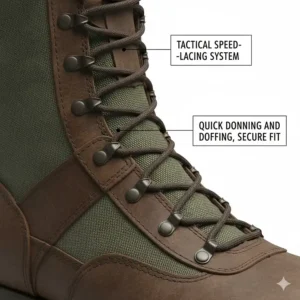
What really sets the T8 apart is versatility. These boots excel in dynamic cold weather environments where temperatures fluctuate throughout the day. Mountain operations, transitional climates, or missions requiring extended movement all play to this boot’s strengths. The speed lacing system with ball-bearing anchors allows quick adjustments, and the lightweight construction reduces fatigue over long distances. Army Rangers and Special Forces units have quietly made this a go-to choice for good reason.
Customers consistently rate comfort out-of-the-box, minimal break-in required. The Ortholite footbed provides cushioning that actually lasts, not the kind that compresses into cardboard after a month.
✅ Pros:
- Exceptionally lightweight reduces leg fatigue
- Quick-dry materials ideal for variable conditions
- Excellent for mountain or dynamic operations
- Fast break-in period
❌ Cons:
- Less insulation for extreme static cold
- Premium materials require proper care
Price: $220-$250 | Best for: Special operations, mountain troops, those prioritizing mobility
4. Danner Fort Lewis 10″ Insulated Combat Boot
The Danner Fort Lewis 10″ with 200g Thinsulate represents American manufacturing at its finest. These boots were literally designed with help from two career Army officers at Fort Lewis, Washington, and it shows in every detail.
Key Specifications:
- Full-grain leather upper
- 200g Thinsulate insulation
- GORE-TEX waterproof lining
- Vibram Kletterlift dry ice compound outsole
- Stitchdown construction (recraftable)
- FORSCOM approved
At $340-$360, you’re paying for heritage, craftsmanship, and the kind of quality that makes these boots serviceable for years, not seasons. The Vibram Kletterlift outsole uses a specialized dry ice compound specifically engineered to remain flexible in extreme cold—maintaining slip resistance when other boots fail.
What makes the Fort Lewis special is its balanced approach. The 200g insulation works for a wider temperature range than heavier options, making these genuinely four-season capable. Active duty personnel appreciate this versatility—one pair that handles everything from temperate fall training to winter operations without overheating or under-protecting.
The stitchdown construction is a game-changer for long-term value. When other boots hit the garbage after two years of hard use, you can send these back to Danner for a complete rebuild. Customers report 5-7 years of service with proper care and periodic reconditioning.
✅ Pros:
- Made in USA with recrafting services available
- Versatile insulation for year-round use
- Superior construction quality
- FORSCOM approved for military use
❌ Cons:
- Higher initial investment
- Requires proper leather maintenance
- Heavier than modern lightweight alternatives
Price: $340-$360 | Best for: Career military, those valuing longevity, variable climate operations
5. U.S. Military Extreme Cold Weather Mickey Mouse Boots (Wellco 81349)
The legendary Mickey Mouse Boots (officially ECWB – Extreme Cold Weather Boots) are proof that sometimes, old-school military tech just works. These bulbous rubber boots have kept feet warm since the Korean War, and they’re still the gold standard for extreme static cold.
Key Specifications:
- Vapor barrier rubber construction
- Three layers of needle-punched polyester foam
- Pressure release valve
- Rated -20°F to -65°F (depending on model)
- Oil/diesel resistant rubber
Available as military surplus between $190-$210, these represent incredible value for extreme cold protection. The vapor barrier design sandwiches up to one inch of wool and felt insulation between two vacuum-tight rubber layers—functioning like a thermos for your feet. This isn’t marketing hyperbole; physics actually works here.
Black “Mickey Mouse” versions handle -20°F, while white “Bunny Boot” variants go down to -60°F. The pressure release valve allows altitude adjustment—critical if you’re moving between sea level and mountain operations. These excel at what they’re designed for: keeping your feet warm when you’re standing, sitting, or otherwise stationary in brutal cold.
Ice fishermen, hunters, and winter workers have discovered what soldiers knew decades ago. When you’re not moving much but temperatures are deadly, nothing beats the ECWB. They’re also bulletproof—literally. Users report decades of service from a single pair with basic care.
✅ Pros:
- Unmatched extreme cold protection
- Budget-friendly for performance delivered
- Proven design with 70+ years of service
- Virtually indestructible
❌ Cons:
- Heavy and bulky (not for active movement)
- Run about one size large
- Limited breathability (expect sweat during activity)
- Surplus availability can be inconsistent
Price: $190-$210 | Best for: Extreme static cold, ice fishing, stationary winter work, arctic conditions
6. FREE SOLDIER Waterproof Insulated Snow Boots
The FREE SOLDIER boots prove you don’t need military-contract pricing to get solid cold weather protection. These budget-friendly boots punch well above their $80-$110 price point.
Key Specifications:
- 3M Thinsulate insulation
- Triple waterproofing system (RB shell, 900D Oxford upper, waterproof liner)
- Anti-slip rubber outsole
- Removable cushioned insole
- Quick-dry materials
At less than half the cost of premium options, these boots make cold weather protection accessible. The triple waterproofing approach—rubber shell, Oxford fabric upper, and interior liner—provides redundancy that works. Field testing shows these keep feet dry through moderate snow and slush better than some $200+ competitors.
The 3M Thinsulate insulation handles temperatures from 10°F to -15°F comfortably, making them ideal for most civilian winter applications. The anti-slip outsole provides decent traction on packed snow and ice, though it doesn’t match specialized military-grade compounds for extreme conditions.
Customers appreciate the quick break-in and immediate comfort. These work perfectly for occasional winter use—weekend hunting trips, snow removal, winter hiking—without the investment of professional-grade boots. The removable insole allows customization with orthotic inserts if needed.
✅ Pros:
- Exceptional value for money
- Effective waterproofing system
- Comfortable out-of-the-box
- Good traction for general winter use
❌ Cons:
- Not rated for military duty or extreme conditions
- Less durable than premium leather options
- Limited insulation for temperatures below -15°F
Price: $80-$110 | Best for: Budget-conscious buyers, civilian winter activities, moderate cold exposure
7. Bates ICW (Intermediate Cold/Wet) Gore-Tex Boot
The Bates ICW represents the military’s solution for the in-between seasons—not quite arctic, not exactly temperate. This boot handles that challenging 10°F to -10°F range where you need protection without overheating.
Key Specifications:
- Full-grain leather and nylon construction
- GORE-TEX waterproof bootie
- Removable thermal liner
- Oil-resistant rubber outsole
- Genuine military issue
Priced between $120-$160 as military surplus, these offer outstanding value. The removable liner system is the key feature—allowing you to dial in warmth based on conditions and activity level. Insert the liner for static cold exposure, remove it for active movement or warmer days. This flexibility extends the temperature range these boots handle effectively.
The GORE-TEX bootie ensures waterproof protection while maintaining breathability. The full-grain leather upper with nylon panels provides durability where you need it while allowing some flexibility. Military personnel appreciate having genuine issue boots that meet specifications without boutique pricing.
These excel for variable winter conditions—urban patrols, vehicle operations, construction work, or any scenario where temperatures and activity levels fluctuate throughout the day. The oil-resistant sole adds practical safety for anyone working around vehicles or machinery.
✅ Pros:
- Removable liner for temperature flexibility
- Genuine military issue quality
- Budget-friendly pricing
- Oil-resistant sole for workplace safety
❌ Cons:
- Surplus sizing can be inconsistent
- Not for extreme cold below -10°F
- May require waterproofing treatment over time
Price: $120-$160 | Best for: Variable winter conditions, budget military boots, intermediate cold exposure
✨ Don’t Miss These Exclusive Deals!
🔍 Take your cold weather performance to the next level with these carefully selected boots. Click on any highlighted product to check current pricing and availability. These boots will help you stay warm and mission-ready in the harshest conditions!
Understanding Military Extreme Cold Weather Boots Technology
The difference between mediocre and exceptional army cold weather boots comes down to three critical systems: insulation, waterproofing, and traction. Let’s break down what actually matters.
Insulation Types and Ratings Explained
Insulation in military boots is measured in grams per square meter, but don’t fall into the trap of thinking more is always better. According to the U.S. Army Combat Service Support Command, proper insulation selection depends on your activity level and expected temperature exposure.
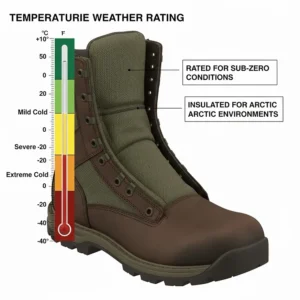
200g Thinsulate: Ideal for active movement in moderate cold (0°F to -20°F). Perfect for marches, patrol work, or any high-output activity where you’re generating body heat.
400g Thinsulate: The sweet spot for most military applications (-10°F to -30°F). Balances warmth with weight for mixed-activity missions.
600g+ Thinsulate: Designed for extended exposure to severe cold (-20°F to -40°F) or lower activity levels. Essential for static positions, vehicle operations, or arctic deployments.
Vapor Barrier Systems: The unique technology in Mickey Mouse boots uses physics rather than just insulation. Multiple sealed layers trap air, creating a thermos effect that works down to -60°F. However, vapor barriers don’t breathe, so they’re specifically for stationary cold exposure.
GORE-TEX vs Traditional Waterproofing
GORE-TEX revolutionized military footwear by solving the age-old problem: how do you keep water out while letting sweat escape? Traditional waterproof boots trap everything—great for puddles, miserable for your feet.
The GORE-TEX membrane contains pores 20,000 times smaller than a water droplet but 700 times larger than a water vapor molecule. This means rain and snow can’t penetrate, but sweat vapor escapes freely. For army cold weather boots, this technology prevents the dreaded cycle of sweaty feet cooling into ice blocks.
Studies show GORE-TEX boots maintain significantly drier interior conditions during extended winter operations compared to non-breathable waterproofing. Drier feet stay warmer feet—simple physics that makes a huge difference in extreme conditions.
Why Vibram Outsoles Dominate Military Boots
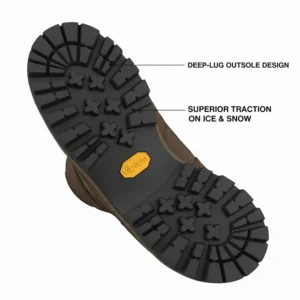
Not all rubber is created equal, especially when temperatures plummet. Standard rubber compounds harden and crack in cold weather, losing grip precisely when you need it most. Vibram’s specialized compounds—like the FIRE & ICE and Kletterlift—are engineered to maintain flexibility and grip in arctic conditions.
The lugging pattern matters too. Aggressive, multi-directional treads bite into snow and ice, while deep channels self-clean mud and slush. Heel and toe reinforcements extend lifespan in high-wear areas. It’s why virtually every serious military cold weather boot features Vibram technology.
How to Choose Army Cold Weather Boots: Your Mission-Specific Guide
Activity Level Assessment
Your job dictates your boot choice more than any other factor. Be honest about what you’re actually doing.
High Activity (Patrol, Infantry, Active Duty): Prioritize lighter boots with 200-400g insulation. You’ll generate significant body heat, and excess weight multiplies fatigue over long distances. The Garmont T8 and Danner Fort Lewis excel here.
Mixed Activity (Variable Missions, Law Enforcement): Look for versatile 400g insulation with good breathability. Removable liners add flexibility. The Rocky S2V and Bates ICW handle this scenario well.
Low Activity (Guard Duty, Vehicle Operations, Static Positions): Maximum insulation is your friend. Don’t compromise—600g Thinsulate or vapor barrier systems. The Belleville C775 and Mickey Mouse boots prevent frostbite during extended static exposure.
Temperature Range Planning
Military operations rarely stay in one climate zone. Consider your lowest expected temperature and plan accordingly.
For temperatures above 0°F, 200g insulation suffices for active movement. Between 0°F and -20°F, 400g becomes essential. Below -20°F, you need 600g+ or vapor barrier technology. Remember: you can always remove layers, but you can’t add insulation to inadequate boots.
AR 670-1 Compliance for Active Duty
Active duty military personnel must verify AR 670-1 compliance before purchase. The regulation specifies:
- 8-10 inch height
- Plain toe (no reinforcement visible)
- Coyote brown color matching
- Flesh-side out leather construction
- Rubber/polyurethane sole (matching upper color)
- No zippers or exposed mesh
All seven boots in our top picks meet these standards, though Mickey Mouse boots are classified separately under extreme cold weather gear provisions.
Fit and Sizing Considerations
Cold weather boots typically run larger to accommodate thick socks and allow air circulation for insulation. Follow these guidelines:
General rule: Order 1/2 size down from your regular shoe size for GORE-TEX lined boots, 1 full size down for vapor barrier boots like Mickey Mouse boots.
Toe room test: With your thickest socks, you should have about 1/2 inch space at the toe when standing. Too tight restricts circulation (cold feet), too loose causes blisters.
Break-in period: Quality leather boots need 2-3 weeks of gradual wear. Start with short periods, gradually increase duration. Don’t debut brand-new boots on a 20-mile winter ruck.
Benefits vs Traditional Winter Boots: Military Grade Advantage
Durability That Actually Lasts
Traditional winter boots from big-box stores might last one season—maybe two with luck. Military extreme cold weather boots are engineered for abuse. Full-grain leather, reinforced stitching, and quality materials mean years of service instead of months.
The Belleville C775 uses triple-stitched, flash-resistant leather designed for combat zones. The Danner Fort Lewis features recraftable construction—send them back for a complete rebuild when other boots would be landfill material. This durability isn’t just about saving money; it’s about having footwear you can trust when your safety depends on it.
Temperature Performance Gap
Consumer winter boots are typically rated for “cold weather” without specific temperature ranges. Military boots provide concrete performance data: the ECWB (Mickey Mouse boot) is tested and proven to -60°F, the Belleville C775 maintains warmth to -40°F.
This isn’t marketing—it’s engineering backed by real-world military testing. Wikipedia documents the extensive development and field testing that went into extreme cold weather military boots, particularly the vapor barrier technology used in bunny boots.
Support and Stability Differences
Civilian boots are designed for walking to your car or shoveling the driveway. Army cold weather boots are engineered for extended operations while carrying heavy loads across rough terrain. The ankle support, arch stability, and shock absorption aren’t just comfort features—they’re injury prevention systems.
The Rocky S2V’s Roll-Stop Ankle Stability specifically addresses lateral ankle injuries common in winter terrain. The Garmont T8’s asymmetric cuff design provides support where it’s needed without restricting natural movement. These features prevent injuries that end missions or careers.
Common Mistakes When Buying Army Cold Weather Boots
Overvaluing Insulation Over Fit
More insulation sounds better until you realize your feet are swimming in oversized boots or your circulation is cut off by too-tight footwear. A properly fitting 400g boot outperforms a poorly fitting 600g boot every time.
Circulation is everything in cold weather. Too-tight boots restrict blood flow, making your feet cold regardless of insulation. Too-loose boots create friction and hot spots that turn into blisters quickly.
Ignoring Break-In Time
The “I’ll break them in on the mission” approach has ended more operations prematurely than enemy action. Quality leather boots need gradual conditioning. Plan for 2-3 weeks of progressive wear before relying on them for extended operations.
Start with an hour or two indoors, then short outdoor excursions, gradually building up to full-day wear. Your feet will thank you, and your boots will mold properly to your gait and foot shape.
Neglecting Proper Care and Maintenance
Military-grade boots deliver extraordinary durability, but only with proper care. Leather needs conditioning, GORE-TEX membranes need cleaning, and metal components need protection from salt and corrosion.
After each use in snow or slush, remove salt deposits with lukewarm water and a soft brush. Apply leather conditioner monthly during winter months. Store with boot trees to maintain shape and prevent odor. These simple steps extend boot life from years to decades.
Buying Based on Brand Alone
Every manufacturer makes both excellent and mediocre models. The Belleville name is legendary, but not every Belleville boot is a C775. Similarly, lesser-known brands like FREE SOLDIER offer surprising quality at budget prices for specific applications.
Focus on specifications, real-world reviews, and your specific needs rather than just brand reputation. The best army cold weather boots for your buddy’s static guard duty might be terrible for your active patrol missions.
Maintenance Tips for Maximum Boot Longevity
Cleaning and Conditioning Protocol
After Every Cold Weather Use:
- Remove surface salt and debris with lukewarm water and soft brush
- Dry at room temperature (never use direct heat)
- Stuff with newspaper to absorb internal moisture
Monthly During Active Use:
- Apply leather conditioner to prevent cracking
- Inspect stitching for wear
- Check sole adhesion and lug integrity
- Clean and treat GORE-TEX membranes per manufacturer instructions
Seasonal Storage:
- Deep clean and fully dry boots
- Apply conditioner and waterproofing treatment
- Insert cedar boot trees
- Store in cool, dry location away from direct sunlight
Waterproofing Treatment Schedule
Even GORE-TEX-lined boots benefit from external waterproofing treatment on leather surfaces. The GORE-TEX handles interior moisture management, but treating external leather prevents water saturation and extends material life.
Reapply waterproofing treatment every 2-3 months during winter or after 15-20 days of use in wet conditions. Choose products compatible with your specific boot materials—silicone-based treatments work for most leather, but verify manufacturer recommendations.
When to Replace Your Boots
No matter how well you maintain them, boots eventually reach end-of-life. Watch for these signs:
- Sole separation or excessive wear through tread
- GORE-TEX membrane failure (persistent moisture inside)
- Cracked or permanently damaged leather
- Compromised ankle support or broken eyelets
- Insulation breakdown (noticeable cold spots)
Quality military boots like the Danner Fort Lewis can be recrafted, extending their service life significantly. Evaluate repair vs. replacement costs—sometimes spending $150 to rebuild a $350 boot makes more financial sense than buying new budget options every two years.
Top Brands Comparison: Belleville vs Rocky vs Danner vs Garmont
Brand Heritage and Specialization
Belleville has supplied military boots since 1904, specializing in Berry Compliant (Made in USA) footwear for armed forces. Their cold weather expertise comes from over a century of military contracts and feedback loops.
Rocky Boots, established in 1932, pioneered use of GORE-TEX in military boots and focuses on balancing tradition with innovation. They excel at incorporating new technologies while maintaining proven construction methods.
Danner, another American heritage brand (founded 1932), emphasizes craftsmanship and longevity through recraftable construction. Their northwestern roots in logging and mountaineering translate to exceptional cold weather performance.
Garmont, the Italian contender, brings European mountaineering engineering to military applications. Their lightweight approach reflects alpine climbing expertise adapted for tactical use.
Price-to-Performance Analysis
Budget Range ($80-$150): FREE SOLDIER and surplus Bates ICW boots dominate. Excellent entry point for civilian applications or those trying army cold weather boots without major investment.
Mid-Range ($200-$300): Garmont T8 and Belleville C775 offer professional-grade performance at accessible pricing. Best value for serious users who aren’t sponsored by Uncle Sam.
Premium Range ($300-$400+): Rocky S2V and Danner Fort Lewis command top dollar but deliver through superior materials, construction, and longevity. The better choice if you factor in years of service versus initial outlay.
Warranty and Customer Service
Danner leads with comprehensive recrafting services—send back worn boots for complete rebuilding at reasonable cost. This effectively extends boot life indefinitely with proper care.
Belleville and Rocky offer standard warranties against manufacturing defects (typically 90 days to 1 year). More importantly, both maintain extensive dealer networks for fitting and service.
Garmont provides standard retail warranties through authorized dealers. Their European customer service requires slightly more patience but generally delivers solid support.
Real User Experiences: What Soldiers Actually Say
Military forums and review sites reveal patterns in real-world feedback that marketing materials never show. Here’s what service members actually report:
Belleville C775 Field Reports
“Wore these through a January deployment in Alaska, temps regularly hit -30°F. Feet stayed warm during 12-hour patrol shifts. Only complaint—they’re heavy, but that’s the trade-off for warmth.” – Army E-5, Fort Wainwright
“Three years in, still going strong. I condition them monthly and they look almost new. Vibram soles show minimal wear despite regular use on ice and concrete.” – Army Veteran
Rocky S2V Combat Feedback
“Best balance I’ve found between warmth and mobility. Did a 15-mile ruck in 20°F weather, feet were comfortable start to finish. Not for standing around in extreme cold, but perfect for active missions.” – Marine Corps Infantryman
“The ankle support saved me more than once on uneven winter terrain. Felt stable even on ice-covered slopes carrying full combat load.” – Army Ranger
Garmont T8 Extreme User Comments
“Coming from heavy boots, the weight difference is amazing. My legs aren’t destroyed after long patrol days. Still warm enough for most winter ops in Europe.” – Special Forces Operator
“Broke in immediately—wore them on a training op after two days of casual wear. No hot spots, no blisters. That alone makes them worth the money.” – Air Force PJ
Mickey Mouse Boots Legacy
“My dad wore these in Korea, I wore them in Alaska. Same design, same performance. You can’t improve perfection for what they do.” – Cold Weather Trainer
“Ice fishing season wouldn’t be the same without them. Eight hours sitting on frozen lake, feet stayed warm. Try that with any other boot under $500.” – Civilian User
Comparison: Benefits vs Traditional Alternatives
| Feature | Army Cold Weather Boots | Traditional Winter Boots | Hiking Boots with Socks |
|---|---|---|---|
| Temperature Rating | -60°F to -10°F (rated and tested) | “Cold weather” (vague) | Depends on socks (variable) |
| Durability | 3-7+ years military use | 1-2 seasons casual use | 2-3 years mixed use |
| Waterproofing | GORE-TEX or vapor barrier (guaranteed) | Water-resistant (degrades) | Variable (often fails) |
| Support & Stability | Engineered for loads and terrain | Casual support | Good support, limited winter features |
| Cost | $150-$400 | $80-$200 | $150-$300 |
| Repairability | Often recraftable | Disposable | Sometimes repairable |
| Weight | 1.5-3 lbs per boot | 1-2.5 lbs per boot | 1-2 lbs per boot |
Price Range and Value Analysis
Budget Options ($80-$150)
The FREE SOLDIER boots and surplus military boots (Bates ICW, used Mickey Mouse boots) occupy this tier. You sacrifice some premium features and potentially longevity, but get legitimate cold weather protection. Ideal for civilian recreational use, occasional winter work, or those testing whether they need to invest in premium options.
Mid-Tier Sweet Spot ($200-$300)
This range—covering Garmont T8 and Belleville C775—offers the best performance-per-dollar. You’re getting professional-grade materials, proven designs, and durability that justifies the investment. Most serious users find this tier meets their needs perfectly without requiring premium pricing.
Premium Investment ($300-$400+)
Rocky S2V and Danner Fort Lewis demand top dollar but deliver through superior craftsmanship, advanced features, and exceptional longevity. Consider this tier if boots are mission-critical equipment or you value buying once rather than repeatedly replacing cheaper options.
The Danner Fort Lewis, with recrafting services, potentially offers the lowest lifetime cost despite its high initial price. One pair, properly maintained and periodically rebuilt, could be your last boot purchase for a decade or more.
FAQ: Army Cold Weather Boots Questions Answered
❓ How cold can army cold weather boots withstand?
❓ Do I need AR 670-1 compliant boots if I'm not military?
❓ What's the difference between Mickey Mouse boots and regular insulated boots?
❓ How often should I replace army cold weather boots?
❓ Can I use army cold weather boots for hunting or ice fishing?
Conclusion: Finding Your Perfect army cold weather boots Match
Choosing the right army cold weather boots isn’t about finding the “best” boot—it’s about finding the best boot for your specific needs. The Belleville C775 dominates extreme static cold. The Garmont T8 excels at lightweight mobility. The Rocky S2V balances warmth and performance. Mickey Mouse boots own the -60°F to -20°F range for stationary positions. Each boot solves specific problems brilliantly.
Start by honestly assessing your activity level, expected temperatures, and use case. Active patrol in moderate cold demands different solutions than static guard duty in arctic conditions. Your budget matters, but so does the cost of inadequate footwear—frostbite, reduced performance, or early mission termination far exceed the price difference between good and great boots.
For most military personnel and serious winter workers, the Belleville C775 or Rocky S2V represent the sweet spot of warmth, durability, and performance. Those prioritizing weight and mobility should seriously consider the Garmont T8. Budget-conscious buyers or civilian recreational users will find the FREE SOLDIER or surplus Bates ICW boots deliver solid value. And anyone facing truly extreme conditions should embrace the proven legacy of Mickey Mouse boots.
Whatever you choose, remember that proper fit trumps every other consideration. An expensive boot that doesn’t fit properly performs worse than a budget option that fits perfectly. Take time to try options with your actual cold weather socks, walk around, and verify comfort before committing.
Your feet are your primary mobility system. In cold weather operations, they’re potentially mission-critical equipment. Invest accordingly, maintain properly, and your military extreme cold weather boots will serve you faithfully through conditions that defeat lesser footwear. Stay warm, stay mobile, stay mission-ready.
Recommended for You
- 7 Best Army Cold Weather Jackets 2026
- 7 Best Cold Weather Work Clothes 2026
- 7 Best Cold Weather Work Pants for 2026
Disclaimer: This article contains affiliate links. If you purchase products through these links, we may earn a small commission at no additional cost to you.
✨ Found this helpful? Share it with your squad! 💬🤗
