
In This Article
✨Was this helpful? Spread the word! 🚀
Beat the Heat with Cooling Towels
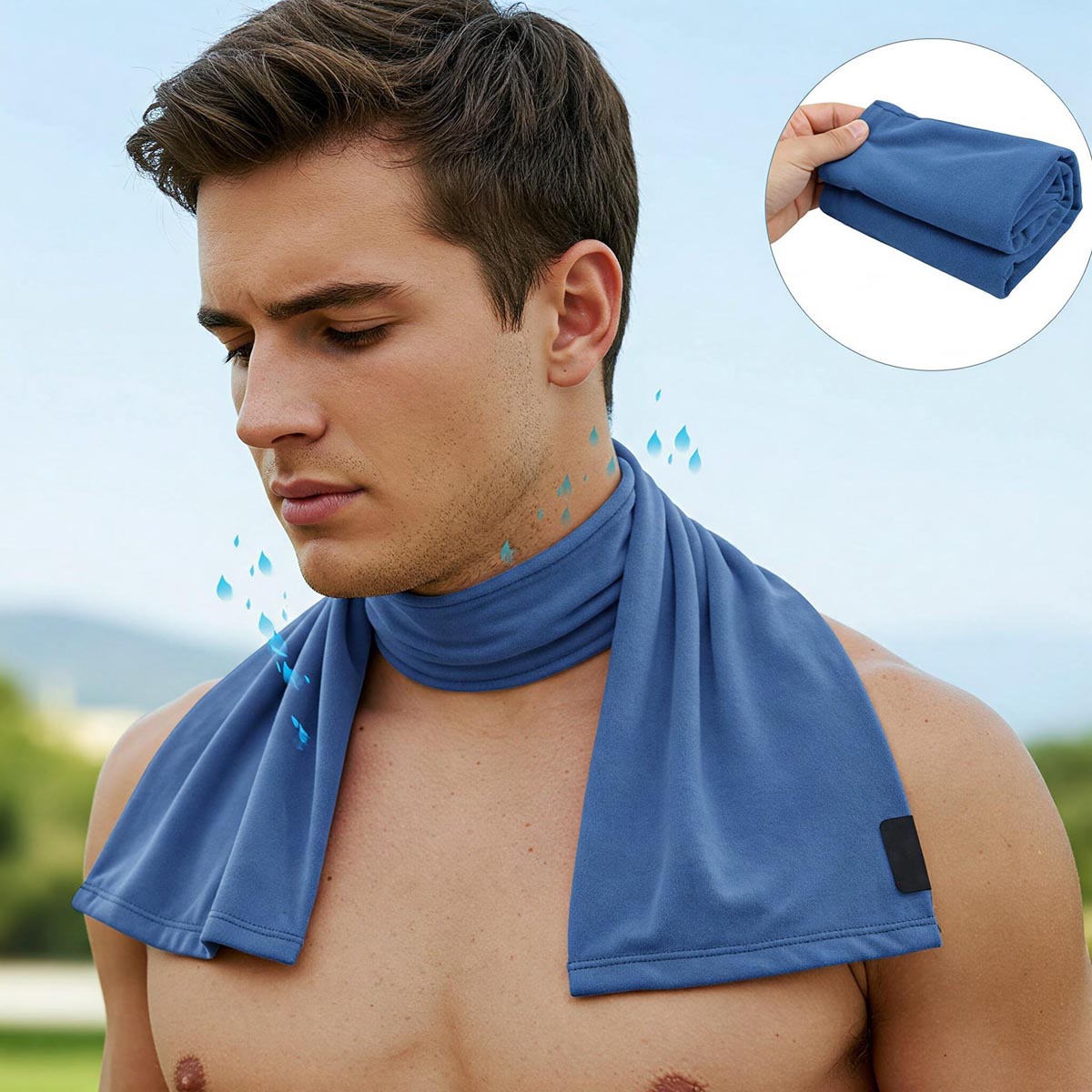
When temperatures soar and sweat starts pouring, knowing how do you use a cooling towel can be a game-changer for your comfort. These remarkable fabric innovations have revolutionized personal cooling, offering relief during workouts, outdoor activities, or simply surviving scorching summer days. Cooling towels utilize evaporative cooling technology to provide instant temperature reduction when you need it most, making them essential companions for athletes, outdoor enthusiasts, and anyone struggling with heat sensitivity.
In this comprehensive guide, I’ll walk you through everything you need to know about cooling towels – from the science behind how they work to detailed instructions on how do you use a cooling towel correctly for maximum effectiveness. Whether you’re a first-time user curious about these innovative products or looking to perfect your technique with an evaporative cooling towel, this article covers all aspects of proper usage, care, and maximizing cooling benefits.
Understanding Cooling Towels: How They Work
Before diving into how do you use a cooling towel, it’s important to understand the science behind these remarkable products. Cooling towels aren’t magical – they rely on basic physical principles to create their refreshing effect.
The Science of Evaporative Cooling
Cooling towels function through evaporative cooling, the same natural process that helps our bodies regulate temperature through sweating. When water evaporates from a surface, it absorbs heat energy from that surface, resulting in a cooling effect.
An evaporative cooling towel is designed with specialized fabric (usually a polyvinyl alcohol or PVA material, microfiber blend, or mesh construction) that:
- Absorbs and retains significant amounts of water
- Maximizes surface area for evaporation
- Allows air to flow through effectively
- Creates a cooling sensation against your skin
When water evaporates from the cooling towel, it pulls heat from both the towel itself and any surface it contacts – including your skin – creating that refreshing cooling sensation that can be up to 30°F cooler than ambient temperature in optimal conditions.
Types of Cooling Towels
Understanding the different types of cooling towels available can help you choose the right one for your needs:
✅ PVA (Polyvinyl Alcohol) Cooling Towels
- Feel like chamois or synthetic leather when wet
- Become stiff when dry
- Generally provide the most intensive cooling effect
- Require complete soaking before use
✅ Microfiber Cooling Towels
- Softer, more fabric-like feel
- Remain flexible even when dry
- Often infused with cooling additives
- Usually require just dampening rather than complete soaking
✅ Mesh or Hybrid Construction Towels
- Combine multiple materials for balanced performance
- Often feature textured surfaces for enhanced evaporation
- May include special cooling technology infusions
- Typically easier to maintain long-term
Now that you understand how cooling towels work, let’s move on to the essential steps of how do you use a cooling towel properly.
How Do You Use a Cooling Towel: Step-by-Step Instructions
Using a cooling towel effectively involves more than simply getting it wet. Follow these detailed steps to maximize your cooling experience:
1. Initial Preparation
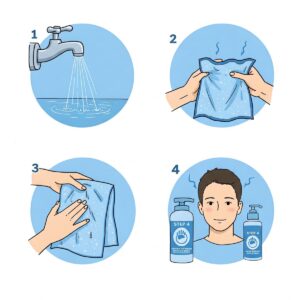
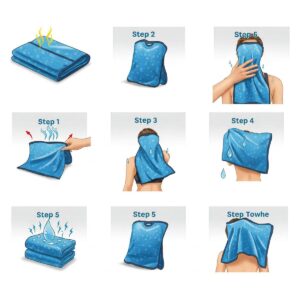
First, remove your cooling towel from its packaging or storage container. If it’s a new towel, you may want to wash it briefly before first use to remove any manufacturing residues (check the specific cooling towel washing instructions that came with your product).
2. Wetting the Towel Properly
The most crucial step in how do you use a cooling towel is getting the moisture level right:
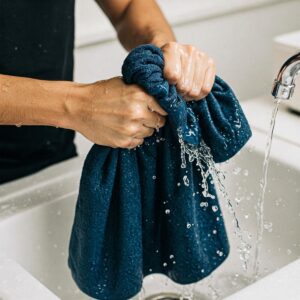
- Run the cooling towel under clean, cool water until completely saturated
- For PVA towels, ensure the entire towel absorbs water evenly
- For microfiber options, thoroughly dampen but don’t oversaturate
- Use cool or cold water for best results (hot water diminishes cooling effect)
3. Activating the Cooling Effect
Once your towel is properly wet, you need to activate its cooling properties:
- Gently wring out excess water – the towel should be damp but not dripping
- For many cooling towels, especially evaporative cooling towel options, you’ll need to “snap” or “whip” the towel several times in the air
- This snapping action helps initiate evaporation and activates the cooling properties
- You should feel the towel become noticeably cooler within seconds
4. Application Techniques
How do you use a cooling towel on your body for maximum effect? Here are the most effective placement options:
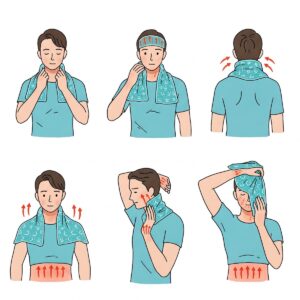
✅ Neck and Shoulders: Drape the activated cooling towel around your neck and shoulders – these pulse points help cool blood flowing to your head and core
✅ Forehead and Face: Gently place across your forehead or dab face (avoid eyes)
✅ Wrists and Inner Arms: Apply to these areas where blood vessels run close to the skin
✅ Back of Neck: One of the most effective cooling spots on the body
✅ Crown of Head: For intense cooling that affects your entire body temperature
5. Reactivating When Needed
As your cooling towel warms up (typically after 1-3 hours depending on conditions):
- Simply re-wet the towel with cool water
- Wring out excess moisture
- Snap or whip again to reactivate
- Continue using as needed
The beauty of knowing how do you use a cooling towel properly is that most can be reactivated hundreds of times!
Best Cooling Towels Worth Your Investment
After testing dozens of cooling towels across various conditions, I’ve identified several standout products that deliver exceptional cooling performance and durability:
Mission Max Cooling Towel
The Mission Max Cooling Towel is my top recommendation for those seeking powerful, long-lasting cooling relief. This premium evaporative cooling towel uses proprietary “Cool Core” technology that activates instantly and stays cool for up to 3 hours in hot conditions. Made from soft, chemical-free fabric that provides UPF 50 sun protection, it’s machine washable and comes in various sizes and colors to suit your preferences.
Frogg Toggs Chilly Pad
The Frogg Toggs Chilly Pad stands out for its extraordinary water retention capabilities and impressive cooling duration. This PVA-based cooling towel remains cool for hours and reactivates easily with just a quick soak and wring. Its hyper-evaporative design makes it particularly effective in low-humidity environments, though it does become somewhat stiff when dry.
Chill Pal PVA Cooling Towel
The Chill Pal PVA Cooling Towel earns high marks for its extra-thick construction that holds moisture longer than many competitors. The dense PVA material provides sustained cooling relief, making it ideal for extended outdoor activities. It’s slightly heavier than other options but delivers impressive cooling power in return.
YQXCC Cooling Towels (3-Pack)
For families or those wanting multiple cooling options, the YQXCC Cooling Towels offer excellent value in a convenient 3-pack. These microfiber mesh towels provide gentle but effective cooling and come with carrying cases for easy transport. While not quite as intense as PVA options, they remain soft when dry and are machine washable for simple maintenance.
Alfamo Cooling Towel
The Alfamo Cooling Towel deserves mention for its versatility, coming in multiple sizes from small (for children or as a handkerchief) to XL (suitable as a full body wrap). It features reinforced edges for durability and comes with a waterproof carrying case with carabiner for easy transport during activities.
Comparison Table: Top Cooling Towels
| Product | Material | Cooling Duration | Reusability | Size Options | Price Range |
|---|---|---|---|---|---|
| Mission Max Cooling Towel | Proprietary blend | Up to 3 hours | 300+ activations | S, M, L | $15-25 |
| Frogg Toggs Chilly Pad | PVA | 2-4 hours | 200+ activations | One size | $12-20 |
| Chill Pal PVA Cooling Towel | Thick PVA | 2-3 hours | 250+ activations | Standard, XL | $12-22 |
| YQXCC Cooling Towels | Microfiber mesh | 1-2 hours | 400+ activations | Standard (3-pack) | $10-15 |
| Alfamo Cooling Towel | Hyper-evaporative mesh | 2-3 hours | 300+ activations | S, M, L, XL | $11-25 |
💬 Just one click – help others make better buying decisions too!😊
How to Choose the Right Cooling Towel
When selecting a cooling towel, consider these factors:
- Activity type: High-intensity activities may require thicker, longer-lasting towels
- Climate conditions: Higher humidity areas need towels with greater evaporative efficiency
- Size preferences: Consider whether you need a small neck wrap or larger full-body option
- Texture sensitivity: Some people prefer soft microfiber over PVA’s leather-like texture
- Maintenance needs: Consider how often you’ll want to wash the towel and storage options
Maximizing Your Cooling Towel’s Effectiveness
Now that you understand the basics of how do you use a cooling towel, let’s explore advanced techniques to get the most cooling relief possible:
Pre-Cool for Maximum Effect
For intense cooling when you really need it:
- Wet your cooling towel according to instructions
- After wringing and snapping, place it in a refrigerator for 10-15 minutes before use
- The pre-cooling combined with evaporative effects creates an extra-powerful cooling sensation
- Avoid freezing most cooling towels as this can damage the specialized fabric structure
Layer Strategically
For extended outdoor activities:
- Use multiple cooling towels on different body parts for comprehensive cooling
- Rotate between towels, keeping one reactivating while using another
- Layer a cooling towel under a sun hat for prolonged head cooling
Hydration Pairing
Combine external and internal cooling:
- Use your cooling towel while simultaneously drinking cold water
- This two-pronged approach cools both your skin surface and your core temperature
- The combination is particularly effective during intense exercise or extreme heat
Environmental Adaptations
Modify your technique based on conditions:
✅ High Humidity Environments
- Wring towel more thoroughly to remove excess water
- Re-activate more frequently
- Choose thinner towels with greater surface area
✅ Dry Heat Environments
- Keep towel wetter with less wringing
- Choose denser towels that retain moisture longer
- Consider misting the towel periodically rather than fully re-wetting
Breathing Technique Enhancement
For specialized cooling during intense activities:
- Place a cooling towel over your face (ensuring you can breathe comfortably)
- Practice slow, deep breathing through the cooling towel
- This cools the air you inhale, providing internal cooling effects
- Particularly effective for runners and athletes during rest breaks
Proper Care and Maintenance: Cooling Towel Washing Instructions
Understanding the correct cooling towel washing instructions is essential for maintaining your product’s effectiveness and extending its lifespan.
Regular Cleaning Protocol
For most cooling towels:
- Rinse thoroughly with clean water after each use
- Use mild soap or detergent if necessary to remove body oils or sunscreen
- Avoid fabric softeners, bleach, or harsh detergents that can damage specialized fabrics
- Most cooling towels are machine washable on gentle cycle (check your specific product’s instructions)
- Air dry completely before storage to prevent mildew or mold growth
Storage Best Practices
Proper storage preserves your cooling towel’s functionality:
✅ Short-term Storage
- Many cooling towels come with storage containers or tubes
- Store slightly damp if using within 24 hours
- Keep away from direct sunlight when not in use
✅ Long-term Storage
- Ensure towel is completely dry before storing for extended periods
- Store in cool, dry place away from direct sunlight
- PVA towels should be stored dry but can become stiff; revitalize with water when needed
Revitalizing Older Cooling Towels
If your cooling towel loses effectiveness over time:
- Soak in a solution of 1 tablespoon white vinegar per cup of water for 30 minutes
- Rinse thoroughly
- Allow to completely dry, then reactivate as normal
- This helps remove mineral buildup from hard water that can reduce evaporative efficiency
When to Replace Your Cooling Towel
Even with proper care, cooling towels don’t last forever:
- Most quality cooling towels last 1-3 years with regular use
- Replace if you notice reduced cooling effect despite proper activation
- Visible deterioration, tears, or permanent stains are signs it’s time for replacement
- Unpleasant odors that persist despite cleaning indicate microbial growth that washing can’t eliminate
Specialized Uses for Cooling Towels
The versatility of cooling towels extends far beyond basic personal cooling. Here are specialized applications for these remarkably versatile products:
Athletic Performance Enhancement
Athletes can use cooling towels strategically:
- Pre-cooling: Research published in the Journal of Sports Sciences shows pre-cooling can improve endurance performance in hot conditions
- Recovery acceleration: Applying cooling towels during rest intervals helps lower core temperature faster
- Heat acclimatization: Gradual reduction in cooling towel usage helps body adapt to heat while preventing overheating
Medical Applications
Cooling towels offer significant benefits for certain medical situations:
✅ Fever Management
- Gently cooling the body during fevers (consult healthcare provider)
- Particularly helpful for children who resist other cooling methods
✅ Hot Flash Relief
- Many women report significant comfort from cooling towels during menopausal hot flashes
- Keeping a cooling towel bedside provides immediate relief for nighttime symptoms
✅ Migraine Support
- Cold therapy using cooling towels may help reduce migraine pain intensity according to the American Migraine Foundation
- Applying to forehead, neck, and temples provides targeted relief
Occupational Cooling Solutions
For those working in hot environments:
- Construction workers: Rotating cooling towels during breaks
- Kitchen staff: Quick neck cooling between cooking tasks
- Outdoor event staff: Discreet cooling under uniforms
- Factory workers: Strategic cooling during authorized breaks
Pet Cooling Applications
Your furry friends can benefit too:
- Lightly drape an activated cooling towel over your pet’s back
- Create a cooling pet bed by placing a towel on their bedding
- Gently wipe paws and belly for targeted cooling
- Never force a cooling towel on a resistant pet
Creative Ways to Use Cooling Towels Beyond the Basics
Innovation with cooling towels can provide surprising benefits in various situations:
Home Comfort Applications
- Sleep enhancement: Place a cooling towel inside your pillowcase on hot nights
- Furniture pre-cooling: Drape over seating areas before use on hot days
- DIY air conditioning: Hang a cooling towel in front of a fan for enhanced cooling effect
- Hot laptop cooling: Place beneath overheating electronics (being careful to avoid water contact)
Travel and Commuting Solutions
✅ Car seat cooling: Place a cooling towel on hot car seats before sitting
✅ Public transit comfort: Discreet cooling during crowded commutes
✅ Airport layover relief: Refresh during long travel days
✅ Hotel room enhancement: Improve comfort in accommodations with inadequate cooling
Outdoor Living Enhancements
- Gardening companion: Drape around neck while working in garden
- Picnic preservation: Keep perishable foods cooler longer
- Outdoor event endurance: Make sporting events, concerts, and festivals more comfortable
- Camping comfort: Improve sleep quality in warm tents

How Do You Use a Cooling Towel in Different Climates?
Environmental conditions significantly impact cooling towel effectiveness. Here’s how to adapt your approach:
Hot and Humid Climates
In high-humidity environments (like Florida or Southeast Asia):
- The already-saturated air slows evaporation, reducing cooling efficiency
- Choose cooling towels specifically designed for high-humidity environments
- Wring more thoroughly to reduce excess moisture
- Re-activate more frequently as effectiveness diminishes faster
- Consider pre-cooling in refrigerator when possible
According to research from the University of Connecticut’s Korey Stringer Institute, which specializes in heat safety, evaporative cooling is less effective above 60% humidity but still provides some benefit.
Hot and Dry Climates
In arid environments (like Arizona or desert regions):
- Rapid evaporation can make cooling towels dry out quickly
- Choose denser, moisture-retaining towels
- Wring less thoroughly to maintain more moisture
- Consider misting rather than full re-soaking to extend use
- Be aware of the extraordinary cooling power in these conditions – it can actually cause cold discomfort if used too aggressively
Temperate and Changing Conditions
For variable environments:
✅ Carry a cooling towel in its container, pre-wet but not activated
✅ Activate only when needed to conserve cooling power
✅ Consider multiple towel types for different conditions
✅ Be mindful of sudden temperature drops when using cooling towels as evening approaches
Common Mistakes When Using Cooling Towels
Avoid these pitfalls to get the most from your cooling experience:
Insufficient Wetting
❌ Mistake: Merely dampening the towel rather than thoroughly soaking it
✅ Solution: Ensure complete saturation, especially for PVA-based cooling towels
Improper Wringing
❌ Mistake: Wringing too much or too little water out
✅ Solution: Aim for damp but not dripping – experiment to find the optimal moisture level
Skipping Activation
❌ Mistake: Not snapping or whipping the towel to activate cooling
✅ Solution: Follow product instructions for activation – the physical action of snapping enhances the evaporative cooling effect
Incorrect Storage
❌ Mistake: Storing wet towels in airtight containers for extended periods
✅ Solution: Either store completely dry or use within 24 hours if storing damp
Overexposure to Chlorine
❌ Mistake: Using in chlorinated pools then storing without rinsing
✅ Solution: Always rinse thoroughly after exposure to pool chemicals
Addressing Health and Safety Considerations
While cooling towels are generally very safe, being informed about potential concerns ensures the best experience:
Skin Sensitivity and Allergies
Some individuals may experience skin reactions:
- Test a small skin area before widespread use if you have sensitive skin
- Some cooling towels contain antimicrobial treatments that could cause reactions in sensitive individuals
- Rinse new towels thoroughly before first use to remove any manufacturing residues
- Discontinue use if you experience persistent skin irritation
Cooling Overexposure
Be aware that excessive cooling can sometimes cause issues:
✅ Cold Urticaria: Some people have cold-induced hives that can be triggered by cooling towels
✅ Vasoconstriction: Extended use on the same body area can cause blood vessel constriction
✅ Temperature Perception: The body can adapt to cooling sensations, making you less aware of actual environmental heat
According to Mayo Clinic research on body temperature regulation, it’s best to alternate cooling locations rather than maintain constant cooling in one spot.
Hygienic Considerations
Maintaining cleanliness prevents problems:
- Regularly wash cooling towels according to manufacturer’s cooling towel washing instructions
- Never share cooling towels without proper cleaning between users
- Allow complete drying periodically to prevent microbial growth
- Replace towels that develop persistent odors despite washing
Sustainable and Eco-Friendly Cooling Alternatives
For environmentally conscious consumers, consider these aspects of cooling towel use:
Environmental Impact Considerations
Standard cooling towels have some environmental considerations:
- Many traditional cooling towels use synthetic materials with considerable carbon footprints
- PVA towels are typically not biodegradable
- Frequent washing consumes water and energy
- Some contain chemical treatments with environmental concerns
Eco-Friendly Cooling Towel Options
Fortunately, greener alternatives are emerging:
✅ Bamboo-based cooling towels: More sustainable material source with natural antimicrobial properties
✅ Organic cotton blends: Reduced environmental impact with moderate cooling properties
✅ Biodegradable options: Newer materials that break down after disposal
✅ Chemical-free treatments: Products using physical structure rather than chemical treatments for cooling
DIY Natural Alternatives
For the most eco-conscious approach:
- Dampened bandanas or lightweight cotton scarves provide modest evaporative cooling
- Reusable ice packs wrapped in thin towels for non-evaporative cooling
- Traditional methods like soaked terra cotta pendants for localized cooling

Expert Tips from Professionals Who Rely on Cooling Towels
I’ve gathered insights from professionals who depend on cooling towels in their daily work:
From Professional Athletes
“I always pre-cool my towel before marathon warm-ups,” says professional runner Melissa Johnson. “The key is strategic placement – neck and wrists during warm-up, then switching to head and neck during recovery intervals.”
From Emergency Medical Technicians
“We keep cooling towels in our ambulances for heat-related emergencies,” explains paramedic James Rodriguez. “The application technique matters – we gently press rather than wipe to maximize skin contact and cooling transfer.”
From Construction Supervisors
“On job sites in summer, cooling rotation is essential,” advises construction supervisor Robert Chen. “We establish cooling stations with fresh towels and require regular breaks. It’s not just comfort – it’s preventing heat illness.”
From Outdoor Event Coordinators
“For multi-day festivals, we recommend the cleaning-and-storage technique,” says event coordinator Sarah Williams. “Each night, quick-wash your cooling towel with gentle soap, then hang dry overnight rather than storing damp.”
How Do You Use a Cooling Towel: Special Considerations for Different Age Groups
Cooling needs vary across the lifespan. Here’s how to adapt cooling towel use accordingly:
For Children
Special considerations for kids:
- Choose smaller, lighter cooling towels specifically designed for children
- Supervise young children to prevent overly aggressive cooling
- Make it fun with colorful towels and “superhero cooling capes”
- Teach proper use as an opportunity to learn about body temperature regulation
- Be extra vigilant about keeping towels clean
For Adults with Active Lifestyles
Tailoring use for maximum performance:
✅ Fitness enthusiasts: Focus on pulse points during high-intensity workouts
✅ Outdoor workers: Rotate between multiple towels throughout the day
✅ Sports participants: Use strategically during breaks for rapid core temperature reduction
For Seniors
Adjustments for older adults:
- Be aware of potentially diminished temperature sensation that comes with aging
- Check cooling comfort more frequently
- Choose lighter, easier-to-handle towels that don’t require strong wringing
- Consider pre-activated options that don’t require snapping
- Pay special attention to neck and wrist cooling for gentler temperature reduction
According to the National Institute on Aging, older adults are more susceptible to heat-related illness, making proper cooling techniques particularly important.
Traveling with Cooling Towels: Tips and Tricks
Maintaining your cooling capability on the go requires some planning:
Air Travel Considerations
Navigate TSA and flight conditions:
- Pack cooling towels dry in carry-on luggage
- Bring the original container or a sealable plastic bag
- Activate after passing through security using airport bathroom facilities
- Consider compression storage techniques to save space
Road Trip Strategies
Maximize comfort during long drives:
✅ Keep a cooler with ice water for reactivation
✅ Store used towels in ventilated containers to prevent mildew
✅ Pack multiple towels for different passengers
✅ Use dashboard cooling storage when parked (place activated towel on dashboard when parked to help pre-cool car interior)
Camping and Backpacking Applications
When weight and space are premium considerations:
- Select ultra-lightweight, packable cooling towels
- Consider dual-purpose options that can serve as both cooling and cleaning towels
- Develop a rotation system using available water sources for reactivation
- Allow periodic complete drying to prevent microbial growth during extended trips
Cooling Towel Hacks: Creative Solutions for Specific Situations
These innovative approaches solve common cooling challenges:
The “Cooling Sandwich” Technique
For intense, targeted cooling:
- Activate two cooling towels
- Place the body part needing cooling between them
- Gently compress for maximum contact
- Especially effective for joint inflammation or localized overheating
The “Cooling Relay” Method
For extended cooling duration:
- Prepare multiple towels in sequence
- Keep unused towels in cooler or refrigerator
- Rotate every 30-60 minutes for continuously fresh cooling
- Particularly useful for outdoor events or yard work
The “Misting Enhancement” Approach
To revitalize without full reactivation:
✅ Carry a small spray bottle with cool water
✅ Mist the cooling towel when effectiveness diminishes
✅ Snap or wave to reactivate evaporation
✅ Extends usage time between full reactivations
The “Layered Cooling” System
For personalized cooling intensity:
- Use multiple cooling towels of different thicknesses
- Layer from lightest to heaviest for customized cooling effect
- Add or remove layers as needed
- Creates a microclimate of graduated temperature reduction
How Do You Use a Cooling Towel with Other Cooling Products?
Maximize relief by creating a comprehensive cooling system:
Complementary Product Pairings
These combinations enhance overall cooling effectiveness:
- Cooling towel + cooling vest: Upper body comprehensive cooling
- Cooling towel + cooling hat: Complete head and neck protection
- Cooling towel + portable fan: Enhanced evaporation rate
- Cooling towel + cooling wristbands: Target multiple pulse points simultaneously
Creating a Portable Cooling Station
For events, sports, or outdoor work:
✅ Cooler with ice water for towel activation
✅ Portable battery-powered fan
✅ Multiple cooling towels in rotation
✅ Shaded rest area for recovery
✅ Spray bottle for misting enhancement
Hydration and Cooling Synergy
Internal and external cooling work best together:
- Use cooling towels while consuming cold beverages
- Alternate between electrolyte drinks and water for sustained hydration
- Consider cooling accessories that can hold beverage bottles
- Remember that hydration enhances your body’s natural cooling abilities
The Future of Cooling Towel Technology
The cooling towel market continues to evolve with exciting innovations:
Emerging Technologies
Watch for these developing trends:
- Phase-change materials: Technology that maintains specific temperature ranges
- Biodegradable synthetic fabrics: Eco-friendly alternatives to traditional PVA
- Extended-duration formulations: Designs promising 5+ hours of cooling without reactivation
- Smart cooling textiles: Fabrics that adjust cooling rates based on body temperature
Research Directions
Scientific studies are exploring:
✅ Optimized cooling patterns: Research into the most effective body mapping for cooling
✅ Athletic performance enhancement: Quantifying the competitive advantages of strategic cooling
✅ Medical applications: Therapeutic uses for chronic conditions with temperature components
✅ Sustainability improvements: Reducing environmental impact while maintaining effectiveness
Conclusion: Mastering the Art of Cooling Towel Use
Understanding how do you use a cooling towel effectively puts remarkable temperature control literally in your hands. These versatile products offer affordable, portable cooling that can transform your experience in hot conditions, whether you’re an athlete pushing your limits, a worker in challenging environments, or simply trying to enjoy outdoor activities comfortably.
By following the techniques outlined in this guide – from proper activation and placement to maintenance and creative applications – you’ll maximize the benefits of your evaporative cooling towel investment. Remember that cooling towels work best as part of a comprehensive approach to heat management that includes proper hydration, appropriate clothing, and awareness of environmental conditions.
As cooling towel technology continues to advance, we can expect even more effective and sustainable options. For now, applying these expert strategies will help you stay cool, comfortable, and performing at your best regardless of the temperature challenges you face.
Don’t Miss These Amazing Cooling Solutions! 🧊❄️
→ Ready to beat the heat like never before? Click on any highlighted cooling towel to check current pricing and availability. These carefully selected products will help you stay cool and comfortable during your most challenging hot-weather activities!
More FAQ:
❓ How long does a cooling towel stay cold?
❓ Can cooling towels help with fever reduction?
❓ What's the best cooling towel for extremely humid climates?
❓ Can I put my cooling towel in the freezer to make it colder?
❓ How do I know when it's time to replace my cooling towel?
Recommended for You:
- 7 Perfect Cooling Towel Features That Will Amaze You During Hot Weather
- How to Stay Cool While Camping: Essential Tips for Summer Adventures
- The Ultimate Guide to Heat Safety for Outdoor Workers
Disclaimer: This article contains affiliate links. If you purchase products through these links, we may earn a small commission at no additional cost to you.
✨ Found this helpful? Share it with your friends! 💬🤗
