

In This Article
Picture this: it’s mid-July, the warehouse thermometer reads 95°F, and you’re six hours into your shift feeling like you’re working inside an oven. Sound familiar? If you’re a warehouse worker, forklift operator, or anyone grinding through shifts in sweltering facilities, you know the struggle is real.
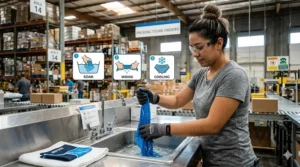
Heat stress isn’t just uncomfortable—it’s dangerous. According to the Occupational Safety and Health Administration (OSHA), heat-related illness can lead to decreased performance, lost productivity, hospitalization, and even death. The good news? cooling bandanas for warehouse workers have evolved from simple wet rags into sophisticated cooling technology that can genuinely transform your workday.
These aren’t your grandpa’s handkerchiefs. Modern cooling bandanas for warehouse workers use advanced evaporative technology, polymer crystals, and moisture-wicking fabrics that can drop your skin temperature by up to 30 degrees. Whether you’re working the assembly line, managing inventory, or operating machinery in non-air-conditioned facilities, the right cooling neck wrap can be the difference between powering through your shift and calling it quits early.
In this guide, we’re breaking down the seven best cooling bandanas for warehouse workers available in 2026—from budget-friendly options under $10 to premium solutions with cutting-edge cooling power. We’ve tested them, read hundreds of reviews, and compiled everything you need to know to stay cool, safe, and productive on the job.
Quick Comparison Table
| Product | Cooling Duration | Price Range | Best For | Rating |
|---|---|---|---|---|
| Ergodyne Chill-Its 6700 | 4 hours | $7.99-$15.99 | Budget-conscious workers | 4.3/5 |
| Mission Cooling Gaiter | 2 hours | $14.99-$19.99 | Versatile 12-in-1 design | 4.5/5 |
| OccuNomix MiraCool | 8 hours | $8.99-$12.99 | Long shifts | 4.0/5 |
| KOOLGATOR Neck Wrap | All-day | $12.99-$17.99 | Heavy-duty use | 4.2/5 |
| FROGG TOGGS Chilly Pad | 3-4 hours | $9.99-$14.99 | Quick activation | 4.4/5 |
| Ergodyne Chill-Its 6705 | 4 hours | $9.99-$16.99 | Velcro convenience | 4.1/5 |
| Arctic Bandana | 6+ hours | $11.99-$15.99 | Made in USA | 4.3/5 |
💬 Just one click – help others make better buying decisions too!😊
Top 7 Cooling Bandanas for Warehouse Workers – Expert Analysis
1. Ergodyne Chill-Its 6700 Cooling Bandana – Best Overall Value
The Ergodyne Chill-Its 6700 has earned its reputation as the go-to choice for industrial workers nationwide. This lightweight cooling bandana uses polymer crystal technology embedded in a cotton shell to deliver consistent, long-lasting relief without the bulk.
Key Specifications:
- Polymer crystal cooling technology
- 100% cotton outer shell
- Activates in 2-5 minutes
- Provides up to 4 hours of cooling
Price Range: $7.99 – $15.99 (single to 6-pack)
Warehouse workers love this bandana because it’s genuinely low-profile enough to wear under hard hats or safety gear without adding uncomfortable bulk. The tie closure adjusts to fit any head size, and the crystals retain enough water to keep you cool through most shifts.
Customer feedback reveals mixed experiences with the texture—some describe a slightly slimy feel when first activated, though users note this doesn’t transfer to your neck. The consensus? The cooling power far outweighs any minor texture concerns.
Pros:
✅ Exceptional value for money (often under $10)
✅ Fits comfortably under hard hats and safety equipment
✅ Long 4-hour cooling duration perfect for standard shifts
Cons:
❌ Can feel slightly gel-like when fully saturated
❌ Requires proper soaking time to avoid over-expansion
2. Mission Cooling Multi-Use Neck Gaiter – Most Versatile Design
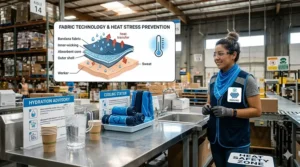
When versatility matters, the Mission Cooling Multi-Use Neck Gaiter delivers 12 different wearing styles in one product. This innovative design uses HydroActive cooling technology that activates in under 30 seconds when wet.
Key Specifications:
- 12+ ways to wear (neck gaiter, headband, face mask, etc.)
- Cools up to 30 degrees below average body temperature
- UPF 50 sun protection
- Machine washable and chemical-free
Price Range: $14.99 – $19.99
For warehouse workers who need flexibility, this gaiter transitions seamlessly from neck wrap to face protection to headband depending on your task. The lightweight, breathable fabric wicks moisture while maintaining cooling properties for up to 2 hours.
Real users in manufacturing settings report this stays in place better than traditional bandanas during physical labor. One forklift operator noted it keeps cool even when moving between temperature-controlled and hot zones throughout the facility.
Pros:
✅ Multiple wearing configurations for different tasks
✅ Instant 30-second activation time
✅ Chemical-free cooling safe for sensitive skin
Cons:
❌ Shorter 2-hour cooling window vs. polymer-based options
❌ Higher price point than basic bandanas
3. OccuNomix MiraCool Cooling Bandana – Longest Cooling Duration
Industrial safety specialist OccuNomix designed the MiraCool specifically for workers in high-heat environments. This cooling bandana stands out with its impressive 8-hour cooling claim—perfect for extended warehouse shifts.
Key Specifications:
- Advanced cooling crystals
- 100% cotton construction
- Soaks in 10-20 minutes
- Cooling lasts up to 8 hours
Price Range: $8.99 – $12.99
The MiraCool’s secret lies in its specialized polymer beads that slowly release moisture throughout your entire shift. Warehouse supervisors appreciate buying these in bulk packs for their teams—they’re affordable, effective, and built for industrial use.
Customer reviews note the longer activation time compared to competitors, but workers who plan ahead find the extended cooling duration worth the wait. One concrete finisher switched from cheaper alternatives and reported the MiraCool kept him going through grueling double shifts.
Pros:
✅ Industry-leading 8-hour cooling duration
✅ Designed specifically for industrial work environments
✅ Available in bulk packs for team purchases
Cons:
❌ Requires 10-20 minute activation time
❌ Some users report polymer beads feel insufficient initially
4. KOOLGATOR Evaporative Cooling Neck Wrap – Premium American-Made Option
The KOOLGATOR brings American manufacturing to the cooling bandana market with extra-heavy polymer gel filling that outlasts budget competitors. This premium neck wrap features a snap-lock closure for secure, hands-free cooling.
Key Specifications:
- Made in USA with premium materials
- High-density polymer beads
- Secure snap closure design
- Activates in 20 minutes, cools all day
Price Range: $12.99 – $17.99
What sets KOOLGATOR apart is the generous amount of absorbent gel—workers switching from cheaper brands immediately notice the difference. The fabric stays cooler longer and the snap closure keeps it secure during active work.
However, some assembly line workers report the snap can pop open during vigorous movement. KOOLGATOR addressed this in recent versions, but it’s worth considering if your job involves constant bending or heavy lifting.
Pros:
✅ Premium American-made construction
✅ Extra polymer gel for extended cooling
✅ Soft, breathable fabric prevents skin irritation
Cons:
❌ Snap closure may open during intense physical activity
❌ Higher price point than budget options
5. FROGG TOGGS Chilly Pad Cooling Towel – Fast Activation Champion
FROGG TOGGS revolutionized cooling gear with their hyper-evaporative Chilly Pad material, and the Chilly Pad Cooling Towel brings that technology to warehouse workers in a convenient neck-wrap format.
Key Specifications:
- Hyper-evaporative PVA material
- Cools up to 30 degrees in seconds
- 29″ x 3″ slim profile
- Absorbs 8x its weight in water
Price Range: $9.99 – $14.99
The Chilly Pad’s unique material feels different from traditional bandanas—it’s stiffer when dry but becomes soft and pliable when activated. This trade-off delivers near-instant cooling that warehouse workers appreciate when they need relief fast.
One manufacturing worker describes it as “cardboard when dry, amazing when wet”—accurate assessment. The material requires complete wetting to soften, but once activated, it provides 3-4 hours of serious cooling power.
Pros:
✅ Activates in seconds with just water
✅ Unique hyper-evaporative material cools instantly
✅ Compact storage tube included
Cons:
❌ Stiff texture when dry makes storage challenging
❌ Can develop odor if stored damp (preventable with proper drying)
6. Ergodyne Chill-Its 6705 Cooling Bandana – Velcro Convenience
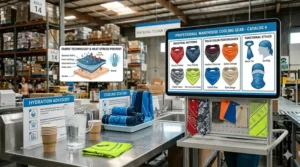
Ergodyne’s Chill-Its 6705 takes the proven polymer crystal formula and adds a game-changing feature: quick-release Velcro closure. For warehouse workers who frequently remove and reapply cooling gear, this design saves time and frustration.
Key Specifications:
- Polymer crystal cooling technology
- Hook and loop (Velcro) closure
- Multiple pattern options
- 4-hour cooling duration
Price Range: $9.99 – $16.99
The Velcro closure makes the 6705 ideal for workers who need to quickly adjust or remove their cooling gear throughout the shift. Forklift operators particularly appreciate not having to re-tie knots when entering and exiting climate-controlled areas.
Pattern variety (flames, western, camo) adds personality while maintaining industrial cooling performance. Some users note the Velcro can catch on clothing, though proper positioning minimizes this issue.
Pros:
✅ Quick-release Velcro saves time during busy shifts
✅ Multiple stylish patterns available
✅ Same reliable Ergodyne polymer crystal technology
Cons:
❌ Velcro may feel bulky under certain hard hats
❌ Hook side can catch on fabric clothing
7. Sparkling Earth Arctic Bandana – Eco-Conscious USA Manufacturing
The Arctic Bandana by Sparkling Earth combines old-school American craftsmanship with modern cooling technology. Each bandana is sewn in Phoenix, Arizona, using 100% cotton fabric and an adjustable wooden bead closure.
Key Specifications:
- 100% cotton breathable fabric
- Adjustable wooden bead closure
- 38 inches long for versatile wearing
- Made in Phoenix, Arizona
Price Range: $11.99 – $15.99
This bandana appeals to workers who value domestic manufacturing and traditional design. The wooden bead adjustment system is safer than knots around your neck and adds a touch of craftsmanship absent in mass-produced alternatives.
Warehouse workers appreciate the extra length—at 38 inches, it provides more coverage than standard bandanas and can be worn multiple ways. The cotton construction breathes exceptionally well, though activation takes longer than synthetic competitors.
Pros:
✅ Proudly made in USA with quality craftsmanship
✅ Wooden bead closure safer than tied knots
✅ Extra-long 38″ design offers versatile wearing options
Cons:
❌ Requires 25-minute soaking for full activation
❌ Cotton fabric may not cool as long as polymer-filled alternatives
Understanding Heat Stress in Warehouse Environments
Working in warehouses and manufacturing facilities exposes you to unique heat challenges that office workers never face. Unlike outdoor construction where breeze provides some relief, warehouse environments often trap heat while blocking natural ventilation.
OSHA reports that millions of U.S. workers face heat exposure in their workplaces, and while heat illness is preventable, thousands become sick from occupational heat exposure annually. Indoor operations like warehouses, factories, and distribution centers create high potential for heat stress due to physical activity combined with poor air circulation.
The Science Behind Evaporative Cooling
cooling bandanas for warehouse workers work on the same principle your body uses naturally—evaporation. When water evaporates from the bandana’s surface, it pulls heat away from your skin, lowering your core temperature. Modern polymer-based bandanas amplify this effect by holding hundreds of times their weight in water and releasing it slowly throughout your shift.
The cooling effect isn’t just comfort—it’s performance. Studies show that maintaining optimal body temperature improves reaction time, reduces fatigue, and helps workers maintain focus during repetitive tasks. For warehouse workers handling machinery or navigating busy facilities, staying cool isn’t luxury—it’s safety.
Recognizing Heat Stress Symptoms
Heat-related illness ranks among the top causes of worksite accidents and fatalities. Recognizing the warning signs can save lives:
Early symptoms: Heavy sweating, muscle cramps, fatigue, thirst
Moderate symptoms: Headache, dizziness, nausea, confusion
Severe symptoms: Hot dry skin, rapid pulse, unconsciousness
If you or a coworker shows signs of heat stress, move to a cooler area immediately, drink water, and apply cooling devices like the bandanas we’ve reviewed. Severe symptoms require emergency medical attention—don’t hesitate to call for help.
How to Choose the Right Cooling Bandana for Your Warehouse Job
Selecting the perfect cooling gear involves matching the product to your specific work environment and personal preferences. Here’s what actually matters when you’re sweating through an eight-hour shift.
Step 1: Assess Your Shift Duration and Breaks
How long do you work between breaks? If you’re pulling 4-hour stretches without cooling opportunities, prioritize bandanas with longer cooling duration like the OccuNomix MiraCool (8 hours) or KOOLGATOR (all-day). Workers with frequent breaks can maximize performance with fast-activating options like the FROGG TOGGS Chilly Pad.
Step 2: Consider Your Work Environment Temperature
Not all warehouse heat is created equal. Climate-controlled facilities that spike to 80-85°F need different solutions than un-air-conditioned spaces hitting 95°F+. Higher ambient temperatures demand bandanas with more aggressive cooling technology—polymer crystal varieties outperform simple cotton in extreme heat.
Step 3: Evaluate Safety Equipment Compatibility
Do you wear hard hats, safety glasses, or respirators? The Ergodyne Chill-Its 6700’s low-profile design works under most protective gear, while bulkier options might interfere. Test compatibility before committing to bulk purchases for your team.
Step 4: Factor in Maintenance Requirements
Busy warehouse workers need low-maintenance solutions. Machine-washable bandanas like the Mission Cooling Gaiter save time, while polymer-based options require hand washing and complete drying to prevent mildew. Consider your realistic cleaning routine when choosing.
Step 5: Budget for Replacement Cycles
Quality cooling bandanas last multiple seasons with proper care, but calculate cost-per-use rather than initial price. A $15 bandana lasting two years costs less than replacing $8 versions every three months. For teams, bulk packs from OccuNomix or Ergodyne offer significant savings.
Step 6: Match Closure Type to Your Workflow
Tie closures work for set-it-and-forget-it workers, Velcro suits frequent removal needs, and snap closures balance both. Forklift operators switching between hot and cold zones prefer quick-release Velcro, while assembly line workers favor secure tie closures.
Step 7: Don’t Ignore Comfort Features
Eight hours wearing uncomfortable gear creates new problems. Prioritize soft, breathable fabrics that won’t chafe or irritate. The Arctic Bandana’s 100% cotton construction excels here, while some synthetic materials may cause reactions in workers with sensitive skin.
Proper Activation and Maintenance for Maximum Cooling
Even the best cooling bandanas for warehouse workers fail without proper preparation. Follow these field-tested techniques to maximize your investment.
Activation Methods for Different Bandana Types
Polymer Crystal Bandanas (Ergodyne, OccuNomix):
Submerge in cool water for 2-5 minutes until crystals expand noticeably. Don’t over-soak—they should feel plump but not bursting. Wring gently and wear immediately.
Evaporative Fabric (Mission, FROGG TOGGS):
Thoroughly wet the entire bandana, wring out excess water until damp (not dripping), then snap or wave vigorously. Cooling activates in 30-60 seconds.
Traditional Water-Absorbing (Arctic Bandana, KOOLGATOR):
Soak for 15-25 minutes to fully saturate polymer beads. They’ll expand significantly—this is normal. Pat dry exterior if needed for comfort.
Reactivation During Your Shift
Most bandanas need refreshing after 2-4 hours. Keep a water bottle handy to re-wet evaporative types, or plan bathroom breaks to re-soak polymer varieties. Strategic timing before the hottest part of your shift maximizes effectiveness.
Cleaning and Storage Best Practices
After Each Use:
Rinse thoroughly with clean water to remove sweat, salt, and debris. This prevents buildup that reduces cooling efficiency and causes odors.
Weekly Deep Clean:
Hand wash polymer bandanas with mild soap—avoid harsh detergents that damage crystals. Machine-washable varieties (check labels) can handle gentle cycles. Always air dry completely before storage.
Long-Term Storage:
Store completely dry in breathable containers—never sealed plastic bags. Damp storage causes mildew growth that ruins bandanas and creates health hazards. If odor develops, soak in diluted bleach solution (1 tablespoon per gallon) before rewashing.
Extending Product Life:
Replace cooling gear when crystals stop expanding, fabric develops tears, or closures fail. Well-maintained bandanas last 6-24 months depending on usage frequency and care quality.
Safety Considerations and OSHA Guidelines
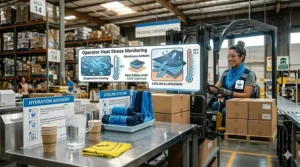
cooling bandanas for warehouse workers are powerful tools, but they’re supplements to comprehensive heat safety programs—not replacements. Understanding your rights and responsibilities keeps you safe and compliant.
Employer Responsibilities Under OSHA
OSHA encourages water, rest, and shade as prevention and treatment for heat-related illness. Your employer must provide adequate water access, break areas, and acclimatization periods for new workers. Several states including California, Oregon, and Washington have specific heat illness prevention standards requiring employers to take action when temperatures reach certain thresholds.
While federal OSHA hasn’t finalized a heat-specific standard yet (proposed for 2025-2026), current regulations require employers to provide workplaces free from recognized hazards. Heat stress qualifies, giving workers legal protections even without specific heat rules.
Worker Rights You Should Know
You have the right to:
- Request additional breaks in extreme heat
- Access drinking water throughout your shift
- Report unsafe heat conditions without retaliation
- Refuse work that poses immediate danger to health
If your employer resists providing basic heat protections, document conditions and contact OSHA’s hotline at 1-800-321-OSHA (6742). Workers can file complaints confidentially.
When Cooling Bandanas Aren’t Enough
Personal cooling gear has limits. If you experience severe symptoms—confusion, loss of consciousness, or inability to sweat—cooling bandanas won’t reverse heat stroke. Emergency medical intervention becomes critical. Know your facility’s emergency procedures and don’t tough it out when symptoms escalate.
Combine bandanas with other strategies: lighter clothing when safety permits, electrolyte replacement (not just water), and proper acclimatization if you’re new to warehouse work or returning after time off.
Comparing Cooling Technologies: Polymer vs. Evaporative vs. PVA
The cooling bandana market offers three distinct technologies, each with advantages for different warehouse situations.
Polymer Crystal Technology
How It Works: Hydrophilic polymer crystals absorb and hold water, releasing it slowly through evaporation. Think of it as a controlled-release cooling system.
Best For: Workers needing long-duration cooling (4+ hours) without reactivation opportunities. Assembly line workers, inventory managers, and shipping/receiving teams benefit most.
Representative Products: Ergodyne Chill-Its 6700, OccuNomix MiraCool, KOOLGATOR
Limitations: Heavier when wet, requires patient activation time, can feel gel-like to some users
Evaporative Fabric Technology
How It Works: Specialized synthetic fabrics wick moisture across large surface areas, maximizing evaporation speed. Cools quickly but requires more frequent rewetting.
Best For: Workers with regular break access who prioritize lightweight gear and fast activation. Forklift operators, order pickers, and quality control inspectors who move frequently.
Representative Products: Mission Cooling Gaiter, various microfiber cooling towels
Limitations: Shorter cooling duration (1-2 hours), less effective in high humidity, can dry out quickly
PVA Hyper-Evaporative Material
How It Works: Polyvinyl alcohol (PVA) material absorbs massive amounts of water and releases it through enhanced evaporation. Provides the coldest initial cooling sensation.
Best For: Workers needing immediate relief during peak heat hours. Excellent for break-time cooling or high-intensity tasks.
Representative Products: FROGG TOGGS Chilly Pad series
Limitations: Stiff when dry (storage challenges), can develop mildew if stored damp, shorter lifespan with heavy use
Budget Analysis: Individual vs. Bulk Purchasing
Warehouse supervisors and team leaders often ask whether bulk purchasing makes financial sense. Let’s break down the real numbers.
Individual Purchase Economics
Buying single bandanas works if you’re testing options before committing. Expect prices of $8-$20 per unit depending on brand and technology. Amazon Prime often offers better deals than industrial supply companies for individual orders.
Cost per year (1 bandana, moderate use): $10-15 initial + $5-10 replacement = $15-25 annually
Bulk Purchasing Benefits
Multi-packs reduce per-unit costs by 20-40%. Ergodyne’s 6-packs drop per-bandana cost to $7-8, while OccuNomix offers 12-packs for team deployment.
Cost per worker per year (bulk purchase): $6-12 initial + $3-6 replacement = $9-18 annually
Hidden savings: Reduced heat-related incidents, lower turnover from improved working conditions, increased productivity during summer months
ROI for Warehouse Management
Investing $10-15 per worker in cooling gear seems trivial compared to heat-related costs. Heat-related incidents can cost employers over $53,000 per incident. One prevented heat illness pays for cooling gear for your entire team.
Smart purchasing strategies:
- Start with sample packs mixing polymer and evaporative styles
- Gather worker feedback before bulk orders
- Schedule bulk purchases in spring before heat season
- Budget for 50% annual replacement rate
Real Warehouse Worker Experiences and Testimonials
Numbers and specifications tell part of the story—real workers tell the rest. Here’s what your peers are saying about cooling bandanas for warehouse workers.
Manufacturing Floor Feedback
“I work in a parts warehouse without AC—summers are brutal. The Ergodyne bandana changed my life. I can actually make it through my shift without feeling like I’m dying.” – Kevin M., Parts Handler, Texas
“Tried the cheap $3 bandanas from the dollar store first. Waste of money. The Mission gaiter costs more but actually works when you’re moving heavy inventory all day.” – Maria G., Inventory Specialist, Arizona
Forklift Operator Insights
“The KOOLGATOR stays put while I’m climbing on and off the forklift twenty times an hour. Snap closure hasn’t failed once.” – James R., Forklift Operator, California
“Mission gaiter is my favorite because I can pull it up as a face mask when moving through dusty areas, then back down as a neck cooler. Two products in one.” – Sarah K., Warehouse Supervisor, Nevada
Assembly Line Perspectives
“OccuNomix lasts my whole 10-hour shift. I soak it at home, bring it in a plastic bag, and forget about it till lunch when I flip it over.” – David L., Assembly Worker, Georgia
“The FROGG TOGGS feels weird when you first get it—kind of stiff. But man, when you wet it down it gets COLD. Perfect for break times.” – Jennifer S., Quality Inspector, Florida
New Worker Acclimatization
“Started in June with no heat tolerance. The Arctic bandana helped me build up to full shifts without passing out. Still wear it daily.” – Marcus T., Shipping Associate, South Carolina
Seasonal Considerations and Year-Round Use
While peak demand hits during summer months, smart warehouse workers find cooling bandanas for warehouse workers valuable beyond traditional “hot season.”
Summer Peak Performance (June-August)
This is bandana prime time. Temperatures soar, facilities without climate control become challenging, and heat stress risks peak. Deploy your most aggressive cooling technology—polymer-based bandanas with maximum water capacity.
Rotate between two bandanas: wear one while keeping a backup in the break room freezer. Switching at lunch provides fresh, extra-cold relief for afternoon shifts.
Shoulder Season Strategy (April-May, September-October)
Moderate temperatures create ideal testing grounds for trying new cooling technologies. Workers can experiment without heat stress urgency, identifying preferences before next summer.
Many warehouse workers use lighter-weight evaporative bandanas during shoulder seasons, reserving heavy-duty polymer types for peak heat.
Winter Applications (November-March)
Surprisingly, some warehouse environments stay warm year-round. Distribution centers, food processing plants, and facilities with heat-generating equipment maintain elevated temperatures regardless of outdoor weather.
Workers in these environments appreciate cooling gear all year. The Mission gaiter doubles as cold-weather neck protection on commutes, then provides cooling during shifts—legitimate year-round value.
Regional Climate Variations
Humid climates (Southeast, Gulf Coast): Evaporative cooling struggles in high humidity. Prioritize polymer bandanas that don’t rely solely on evaporation.
Dry climates (Southwest, Mountain West): Evaporative bandanas excel here. The Mission gaiter and FROGG TOGGS Chilly Pad deliver maximum performance in low humidity.
Variable climates (Midwest, Northeast): Stock both polymer and evaporative options. Switch based on daily humidity readings for optimal comfort.
Combining Cooling Bandanas with Other Heat Safety Gear
Maximum cooling effectiveness comes from integrated strategies combining multiple heat relief tools.
Cooling Vests and Bandana Synergy
factory worker cooling neck wraps work brilliantly alongside cooling vests for workers in extreme environments. The bandana targets major neck arteries (immediate core cooling) while vests provide torso coverage (sustained comfort). Together they create comprehensive cooling coverage.
Hydration System Integration
Pair your cooling bandana with insulated water bottles or hydration packs. Cold fluids internally plus external cooling externally provide dual-action heat relief. Many warehouse workers keep electrolyte drinks in break room refrigerators for maximum recovery.
Ventilation Equipment Compatibility
Personal cooling fans, air movers, and ventilation systems amplify evaporative cooling effectiveness. Position yourself near airflow when possible—the combination of wet bandana plus moving air creates significant temperature drops.
Protective Clothing Considerations
Lightweight, moisture-wicking work clothes enhance cooling bandana performance. Heavy cotton shirts trap heat and reduce evaporation efficiency. Synthetic blends designed for athletic wear often work better under demanding warehouse conditions.
Environmental Impact and Sustainability
Conscientious warehouse workers increasingly consider environmental implications of their gear choices.
Reusability vs. Disposable Alternatives
All cooling bandanas for warehouse workers reviewed here are reusable hundreds of times. Compare this to disposable cooling wraps or single-use ice packs that create ongoing waste. One quality bandana replacing months of disposables significantly reduces environmental footprint.
Material Sustainability
Cotton options (Arctic Bandana, Ergodyne cotton shells): Biodegradable natural fibers with established recycling paths
Synthetic evaporative fabrics (Mission): Petroleum-based but long-lasting, reducing replacement frequency
PVA materials (FROGG TOGGS): Can be composted at end of life—genuinely biodegradable
Water Conservation
Cooling bandanas require regular wetting, raising water usage questions. However, the small amounts needed (typically 1-2 cups per activation) pale compared to industrial water consumption. Plus, preventing heat-related medical emergencies saves resources exponentially.
End-of-Life Disposal
When your bandana finally wears out:
- Cotton varieties can be composted or recycled as textile waste
- PVA materials (FROGG TOGGS) can be cut up and mixed into garden soil
- Polymer-filled bandanas require proper disposal—don’t flush polymer crystals
Check local recycling facilities for textile programs accepting worn cooling gear.
Frequently Asked Questions About Cooling Bandanas for Warehouse Workers
❓ How long do cooling bandanas stay cool in a typical warehouse environment?
❓ Can I use cooling bandanas if I have sensitive skin or allergies?
❓ Do cooling bandanas work in high humidity environments like southern warehouses?
❓ How many cooling bandanas should I buy for regular warehouse work?
❓ Are expensive cooling bandanas worth the extra cost for warehouse workers on a budget?
Conclusion: Staying Cool and Safe in 2026
Heat stress in warehouse environments isn’t getting easier—climate trends show average temperatures rising while more facilities operate without comprehensive climate control. The good news? cooling bandanas for warehouse workers have never been more effective, affordable, or diverse.
Whether you choose the budget-friendly Ergodyne Chill-Its 6700 for everyday reliability, the versatile Mission Cooling Gaiter for multi-purpose performance, or the long-duration OccuNomix MiraCool for marathon shifts, you’re investing in safety, comfort, and productivity. These aren’t luxury items—they’re essential safety equipment that can prevent heat-related illness while improving your quality of life at work.
Remember that cooling bandanas work best as part of comprehensive heat safety strategies. Stay hydrated, take breaks when possible, recognize warning signs of heat stress, and speak up if workplace conditions become dangerous. Your health matters more than any productivity metric.
As OSHA moves toward formalized heat safety standards in 2025-2026, forward-thinking warehouse workers and managers are already implementing proven solutions. Don’t wait for regulations or emergencies—invest $10-20 in quality cooling gear today and experience the difference it makes tomorrow.
Stay cool out there, warehouse warriors. You’ve got this.
Recommended for You
- 7 Best Top Cooling Bandanas for Landscapers in 2026 (Stay Cool!)
- 7 Best Cooling Bandanas for Construction Workers 2026
- 7 Best Cooling Bandanas for Tennis Players: Beat the Heat 2026
Disclaimer: This article contains affiliate links. If you purchase products through these links, we may earn a small commission at no additional cost to you.
✨ Found this helpful? Share it with your friends! 💬🤗
