

In This Article
A down jacket for dog walking in winter is an insulated outer layer filled with duck or goose down, built to trap body heat during slow, stop-and-go outdoor strolls. The best ones pair enough fill weight for sub-freezing pauses with a shell tough enough for leashes, mud, and errands.

Winter dog walks aren’t workouts. The rhythm is stride, sniff, stand, stand some more, and your body makes far less heat than a hiking jacket’s label assumes. That’s where down earns its keep. Its loft traps warm air better, ounce for ounce, than most alternatives. The number that describes that loft, fill power, tells you how much heat-trapping puff each ounce delivers. But fill power is only half the story. The other half, fill weight, is how much down is actually stuffed inside, and marketing loves to skip it.
This guide compares seven real jackets, from budget-friendly to storm-ready. It draws on published specs, independent test notes, and aggregated reviewer sentiment. You’ll also find dedicated advice on a winter coat for morning dog walks, a durable down jacket for outdoor errands, and a warm jacket for cold weather dog walking. “Winter” means something very different at 6 a.m. in Ohio than at 6 p.m. in Oregon. All prices below are ranges, so check current price before you buy.
Quick Comparison: 7 Down Jackets for Dog Walking in Winter at a Glance
| Jacket | Insulation & Shell | Reported Comfort Zone | Price Range | Best For |
|---|---|---|---|---|
| Columbia Lake 22 Down Hooded Jacket | 650-fill down, heat-sealed baffles, water-resistant shell | Around freezing, light frost | Roughly $100-$175 | Budget commuters |
| Orolay Thickened Down Jacket | Duck down/feather blend, hip-length cut, oversized hood | Chilly 30s at walking pace (reviewer reports) | Roughly $140-$200 | Value-first sidewalk walkers |
| Outdoor Research Helium Down Hoodie | 800-fill down, waterproof panels on hood, shoulders, arms | 40s with a fleece; mild winters | Mid-$300s | Drizzly climates |
| Patagonia Down Sweater Hoody | 5.3 oz of 800-fill down, 20D recycled nylon | Roughly 20-35°F (midweight class) | Mid-$300s | One-jacket-does-most buyers |
| Patagonia Durable Down Hoody | 6.9 oz of 700-fill down plus synthetic, 50D shell | High 30s over a T-shirt; colder with layers | Mid-$300s | Muddy, rough-use routines |
| Norrøna Femund Down700 Zip Hood | 6.2 oz of 700-fill down, 22D nylon | Mid-20s, even when standing | Around $430 | All-day winter comfort |
| Rab Neutrino Pro | 7.5 oz of 800-fill hydrophobic down, Pertex Quantum Pro | Single digits Fahrenheit | Around $450 | Brutal cold |
Think of the table as a thermostat that reads left to right by price. The Columbia Lake 22 and Orolay are the cheapest ways into real down. The Rab Neutrino Pro is the only jacket here rated for single-digit temperatures. The Patagonia Durable Down Hoody doesn’t win on warmth at all. It wins because its shell shrugs off what a dog-owner’s life throws at it.
💬 Just one click — help others make better buying decisions too!😊
Top 7 Down Jackets for Dog Walking in Winter: Expert Analysis
1. Columbia Lake 22 Down Hooded Jacket — best budget entry into real down
The Columbia Lake 22 Down Hooded Jacket is what you buy when you want real down without the outdoor-boutique invoice. It uses 650-fill down in heat-sealed, stitch-free baffles. That means fewer needle-hole cold spots than sewn-through quilting. The water-repellent shell handles flurries and light drizzle. In practice, that’s enough loft for a brisk 30-minute loop near freezing. It isn’t enough for the six minutes your beagle spends interrogating a lamppost at 15°F.
Based on the spec comparison, this is a shoulder-season jacket that stretches into real winter once you add a fleece. The cut is trim, so size up if you plan to wear a sweater underneath. Reviewers on retail listings consistently call it warm for its weight and easy to pack. The recurring caveats are that it runs small and isn’t meant for severe cold or heavy snow.
Pros:
- ✅ Heat-sealed baffles reduce cold spots at seams
- ✅ Light enough to wear all day without fatigue
- ✅ Real down at an approachable price
Cons:
- ❌ Trim cut limits bulky layering
- ❌ Modest fill weight fades in deep cold
Price range: roughly $100-$175 depending on version and sales, so check current price. Verdict: the best cost-per-degree for temperate winters.

2. Orolay Thickened Down Jacket — parka-length coverage on a budget
The Orolay Thickened Down Jacket, nicknamed the “Amazon coat,” swaps technical polish for blanket-like coverage. The women’s version is listed with 90% duck down and 10% feather fill. It adds a fleece-lined oversized hood, a hem that runs past the hips, and six pockets. The long hem matters more than it sounds. It covers your thighs every time you crouch to bag a deposit. The big hood blocks side wind, though reviewers note some versions lack drawcords to cinch it.
Here’s what to weigh: this is a stand-and-sniff jacket, not a stride-and-sweat one. Independent testers at OutdoorGearLab found the women’s version kept the core warmer than most competitors, but wind results were mixed and it isn’t technically waterproof. Amazon reviewers echo the warmth while cautioning that long stretches outdoors in Northeast winters may call for more. A few also report tiny sleeve pockets and occasional stitching complaints.
Pros:
- ✅ Hip-length cut protects thighs during pickup stops
- ✅ Oversized hood blocks side wind
- ✅ Six pockets absorb treats, bags, and keys
Cons:
- ❌ Not technically waterproof per testers
- ❌ Baggy hood lacks tightening cords on some versions
Price range: roughly $140-$200, so check current price. Verdict: excellent value for sidewalk walkers who spend more time standing than striding.
3. Outdoor Research Helium Down Hoodie — the puffy that tolerates surprise drizzle
Down’s classic weakness is moisture, and the Outdoor Research Helium Down Hoodie is the rare puffy that addresses it. Better Trail’s testers describe waterproof panels on the hood, shoulders, and upper arms, exactly where drizzle lands. The jacket weighs about 15.4 ounces and uses 800-fill down under a mix of 20D and 15D shells. One tester stayed loft-intact through a 15-minute walk in substantial rain.
Warmth is honest but modest. Testers wore it over a base layer while stationary in mid-50s temperatures and added fleece in the 40s. That makes it a cool-and-damp jacket rather than a January-in-Minnesota jacket. If your winters hover in the 30s and 40s with frequent mist, the trade-off is smart. Testers also found wind protection better than typical down jackets. Independent reports flag that its warmth-to-weight lags rivals and durability slipped from the previous version.
Pros:
- ✅ Waterproof panels where rain actually lands
- ✅ Better wind blocking than typical down
- ✅ Wide size range including plus sizes
Cons:
- ❌ Heavier than rivals of similar warmth
- ❌ Not warm enough for deep winter
Price range: mid-$300s, so check current price. Verdict: pays off for drizzly, mild-to-cold regions.
4. Patagonia Down Sweater Hoody — the one-jacket-does-most all-rounder
The Patagonia Down Sweater Hoody is the reference point other down jackets get measured against. It packs about 5.3 ounces of 800-fill down, more than many lightweight rivals, inside a 20D recycled-nylon shell. Better Trail’s 2026 down jacket guide rated it best overall. It specifically calls the shell sturdy enough for errands and walking the dog, and Patagonia includes repair patches for the inevitable snag.
The horizontal baffles keep it slimmer than a typical winter puffer, and the regular fit layers over a sweater. Testers gave comfort top marks and described a puffy that doesn’t feel like a marshmallow. The catch is moisture: only a DWR finish stands between you and wet weather. Here’s what most buyers overlook: it’s heavier than performance-focused rivals of similar warmth, which matters little for dog walkers who never carry it in a pack.
Pros:
- ✅ Versatile midweight warmth for most winter days
- ✅ Regular fit layers comfortably
- ✅ Repair patches included
Cons:
- ❌ DWR finish is the only moisture protection
- ❌ Thin shell needs mindful handling
Price range: mid-$300s, so check current price. Verdict: the safest single purchase for mixed-conditions winters.
5. Patagonia Durable Down Hoody — shell built to shrug off leashes and gates
If your routine involves brush, fences, and a dog who treats you as a towing service, the Patagonia Durable Down Hoody was built for you. Its 50D Ultra-PE ripstop shell resists abrasion in a way most down jackets can’t. Better Trail’s testers reported it stayed intact after abuse that leaves competitors shedding feathers. Insulation is 6.9 ounces of 700-fill down plus 80 grams of synthetic. It weighs 1 pound 7 ounces, so it’s heavy for its warmth, but weight is irrelevant when nobody’s carrying it up a mountain.
Testers found it kept them warm over a T-shirt in the high 30s. Add a fleece and it becomes a genuine January jacket for moderate cold. The shell also blocks wind and sheds water better than a typical puffy. Reported drawbacks include an awkward hood cinch and no internal pockets. The boxy cut, not voluminous, accommodates layers.
Pros:
- ✅ Exceptionally tough abrasion-resistant shell
- ✅ Wind and moisture resistance beyond typical down
- ✅ Comfortable, layer-friendly fit
Cons:
- ❌ Heavier and bulkier for its warmth
- ❌ No internal pockets; awkward hood cinch
Price range: mid-$300s, so check current price. Verdict: the pick for people who wear a jacket hard, every day.
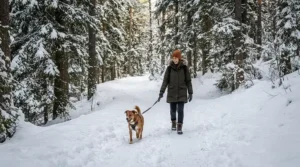
6. Norrøna Femund Down700 Zip Hood — cocoon-warm comfort for all-day winter wear
The Norrøna Femund Down700 Zip Hood is a reminder that winter jackets can be cozy rather than cold-blooded technical gear. It holds 6.2 ounces of 700-fill down under a soft 22D matte shell. Better Trail’s tester wore it for hours in mid-20s temperatures without moving much, which is precisely the dog-walk scenario. The hood is roomy and adjusts one-handed, and the high collar, elastic cuffs, and long hem seal in heat.
The tester phrased its sweet spot as errand duty to walking the dog to the trailhead. On paper, the trade-offs are weight, low packability, and no water-repellent treatment. It’s also too warm above about 45°F, so it’s a true winter jacket, not a year-round one. The fabric is a step tougher than lighter Patagonia shells, which helps for daily use. Reviewers commonly note it feels premium for casual wear but pricey for non-technical use.
Pros:
- ✅ Warm into the mid-20s while standing
- ✅ Excellent hood coverage and adjustability
- ✅ Soft, comfortable fabrics all day
Cons:
- ❌ No water-repellent treatment
- ❌ Bulky and expensive for a casual jacket
Price range: around $430, so check current price. Verdict: worth it for cold-climate daily walkers who value comfort.
7. Rab Neutrino Pro — for when it’s brutally cold and the dog still needs out
The Rab Neutrino Pro is the jacket for those mornings when the thermometer starts with a minus sign. It packs 7.5 ounces of 800-fill hydrophobic down, well above midweight jackets, under a 20D Pertex Quantum Pro shell that Better Trail calls one of the toughest in the category. Testers rate it comfortable well into single-digit temperatures. The below-the-seat cut and two-way center zip make bending and squatting easier.
It’s unapologetically a winter tool. At roughly 1 pound 3.9 ounces and quite bulky, it isn’t the jacket for mild days. The left-hand front zip takes getting used to, and it’s less soft than lower-tier jackets. But as a daily driver in cold climates, testers were surprised at how well it worked, and it won’t look out of place in a city. Independent testers rate it very highly overall.
Pros:
- ✅ Single-digit warmth from generous down fill
- ✅ Windproof, water-resistant shell tougher than most
- ✅ Two-way zip and long cut aid crouching
Cons:
- ❌ Too heavy and bulky for mild days
- ❌ Left-hand zip takes adjustment
Price range: around $450, so check current price. Verdict: the best insurance against truly harsh winters.
Your First 30 Days: Setup, Care, and Leash-Proofing
The first month sets your jacket’s lifespan. Wear it a few times before the deep freeze so you learn its pocket geography. Assign jobs: treats in one, waste bags in another, phone in a zipped pocket. That way you never dig with gloves on.
Care matters because down only insulates when it’s fluffy. Better Trail’s guidance is to keep washing and drying your down jacket periodically so the loft stays lofty. Reapply a DWR treatment as the water-repellent finish fades, and follow the care label. Patch small tears right away with repair tape. Tiny holes become feather escape hatches fast.
Avoid these first-month mistakes:
- Hanging the jacket on a hook with leash clips. Metal snaps snag thin shells.
- Compressing it in a stuff sack for weeks. Down needs room to loft.
- Zipping fully closed at minute one. Vent early, then close up when you stop moving.
- Wearing it over damp layers. Moisture trapped inside works against loft.

Real-World Scenarios: Which Jacket Fits Your Walk?
The college commuter. Six-thirty morning walks, a thin budget, and mostly 30-something temperatures. The Columbia Lake 22 plus a fleece midlayer covers it without a big outlay.
The drizzle dweller. Frequent mist, temperatures in the 40s, and a dog who refuses to stop for weather. The Outdoor Research Helium Down Hoodie is designed for exactly this, because its waterproof panels protect the parts of the jacket most exposed to rain.
The farmhouse owner. Two labs, brush, gates, and daily chores. The Patagonia Durable Down Hoody absorbs abuse that would shred thinner shells.
The frozen-north walker. A senior dog, single-digit mornings, and a lot of standing. The Rab Neutrino Pro or Norrøna Femund Down700 Zip Hood keeps the human warm while the dog takes their time. Those are the situations where short walks are also wise for the dog.
✨ Don’t Miss These Exclusive Deals!
🔍 Take your winter walks to the next level with these carefully selected jackets. Click on any highlighted item to check current pricing and availability. These picks will help you enjoy cozy, confident mornings with your four-legged best friend!
Common Problems and Their Solutions
Problem 1: You’re sweating within five minutes. Unzip the collar and vent your pit zips or front zipper. If you run hot, a lighter jacket like the Columbia Lake 22 beats a heavy parka.
Problem 2: Your hands go numb at the leash. Jacket pockets don’t fix this alone. Pair your jacket with insulated gloves or mittens, and choose a model with fleece-lined hand pockets for the standing stretches.
Problem 3: Down gets damp. Light moisture is manageable with a DWR shell or the Outdoor Research Helium Down Hoodie. In sustained rain or wet snow, reach for a hardshell over your down or switch to synthetic.
Problem 4: Shell snags from leashes and gates. Choose a stronger shell like the Patagonia Durable Down Hoody, or patch quickly.
Problem 5: Your dog struggles in the cold too. Your jacket is only half the equation. Emancipet’s cold-weather walking tips note that temperatures below 45°F can be uncomfortable for some dogs, especially small or short-coated breeds. They recommend shortening walks in cold or wet conditions and scheduling them during the warmest hours when possible.
How to Choose a Down Jacket for Dog Walking in Winter
- Start with your coldest realistic morning. Your coldest walk sets the requirement, not the average day. If it dips to single digits, fill weight around 7 ounces is the ballpark. If it rarely leaves the 30s, 3.5 to 5 ounces is plenty.
- Read fill weight, not just fill power. Fill power measures loft quality. Fill weight measures how much down you get. A jacket with 6 ounces of 700-fill can outwarm one with 3 ounces of 800-fill.
- Pick shell toughness for your lifestyle. Around 20D is standard. If you brush past fences daily, go tougher, as with the 50D shell on the Patagonia Durable Down Hoody.
- Match moisture protection to your climate. Dry cold favors classic down. Damp cold favors jackets like the Outdoor Research Helium Down Hoodie or Rab Neutrino Pro.
- Check the cut for crouching. A hip-length or longer hem, like the Orolay Thickened Down Jacket, protects you while bending to pick up after your dog.
- Make room for layers. Fit matters. If you want a fleece underneath, avoid ultra-trim cuts.
Features That Actually Matter (And Those That Don’t)
What matters: a hood that stays put in wind, elastic cuffs that seal wrists, zippered pockets for phones and keys, and a drawcord hem. A high collar is underrated. It closes the gap where cold air sneaks in.
What doesn’t: extreme ultralight fabrics. Ultra-thin shells around 7D to 10D are delicate and better suited to backpackers counting ounces. Ultra-high fill power is the same story. It saves weight, which you don’t need when your only load is a leash.
What’s surprisingly useful: glove-friendly zipper pulls, a chest pocket for a phone, and a hood you can adjust with one hand while holding a leash in the other. Better Trail’s testers pointed out how much easier a jacket with those details is to operate in gloves, so treat them as practical tiebreakers.
Winter Coat for Morning Dog Walks: What Dawn Really Demands
Morning is the coldest part of most winter days, and it’s also dark. A winter coat for morning dog walks needs to handle both. Warmth comes first because your body starts cold and stays still while your dog investigates. Look for enough fill weight to hold heat during stops, like the roughly 6 ounces in the Norrøna Femund Down700 Zip Hood.
Visibility comes second. Shorter days and dark mornings put you near traffic, and reflective details or a light on your leash help drivers spot you. The trade-off is timing. Emancipet suggests warmer midday hours when possible, but for people with jobs, dawn is non-negotiable, so your jacket has to do the extra work. A hood with a stiff brim that blocks wind and a high collar make pre-dawn stretches noticeably more pleasant.

Durable Down Jacket for Outdoor Errands: The Shell Is the Story
A durable down jacket for outdoor errands lives a double life. It goes from dog walk to grocery store to hardware store, seatbelt to shopping cart. In that life, the shell matters more than the fill.
Better Trail’s ratings show why. Shells around 20D balance weight and durability, and going past 20D is a clear sign of toughness. Casual winter jackets use shells 30D and beyond. Ultralights at 7D to 10D require babying. The Patagonia Durable Down Hoody and the Norrøna Femund Down700 Zip Hood both illustrate the philosophy: sturdier fabric first, lightweight second.
On paper, a heavier jacket is a minor inconvenience for errands. A shell that tears on the first shopping-cart edge is a major one. Add a quick repair patch to your glove box and you’ve extended the life of any of these options.
Warm Jacket for Cold Weather Dog Walking: Reading the Wind Chill
Temperature alone lies. The National Weather Service’s wind chill chart shows how wind steals heat faster. At 0°F with a 15 mph wind, the wind chill is -19°F, and exposed skin can freeze in about 30 minutes. The NWS also notes wind chill describes how cold people and animals feel, and that bright sunshine can offset it by roughly 10 to 18 degrees.
A warm jacket for cold weather dog walking should therefore be wind-resistant, not merely thick. That’s where shells matter. The Rab Neutrino Pro uses a windproof Pertex Quantum Pro face fabric. The Outdoor Research Helium Down Hoodie blocks wind better than typical down. Pair either with a scarf or neck gaiter and mittens, since exposed skin is where frostbite starts. If wind chill drops far below zero, treat it as a day to shorten the walk and move play indoors.
Down vs Synthetic Insulation for Winter Dog Walks
| Option | Warmth When Dry | When Damp | Best For |
|---|---|---|---|
| Down (like the Patagonia Down Sweater Hoody) | Highest warmth per ounce, packs small | Loses loft if soaked | Cold, dry winters |
| Synthetic insulated jackets | Slightly lower warmth per ounce | Keeps insulating when wet | Slushy, wet climates |
| Fleece-lined shells | Modest | Handles rain and mud | Mild winters, muddy trails |
Better Trail’s testers favor down for casual and around-town wear, because its cozy loft is hard for synthetics to match. Synthetics win when moisture is in the forecast, breathe better during activity, and hold up better to heavy use. For slow-paced dog walks in cold, dry weather, down’s warmth per ounce tends to come out ahead. In truly wet regions, consider a synthetic jacket or a hardshell layered over a down piece.
Long-Term Cost and Maintenance
| Tier | Examples | Price Range | Best For |
|---|---|---|---|
| Budget | Columbia Lake 22 Down Hooded Jacket, Orolay Thickened Down Jacket | Roughly $100-$200 | Mild-to-moderate winters, tight budgets |
| Core premium | Outdoor Research Helium Down Hoodie, Patagonia Down Sweater Hoody, Patagonia Durable Down Hoody | Mid-$300s | Daily use across conditions |
| Deep winter | Norrøna Femund Down700 Zip Hood, Rab Neutrino Pro | Around $430-$450 | Harsh climates, long standing walks |
Cost per wear tells the real story. A jacket in the mid-$300s worn roughly 500 times over five winters lands near 70 cents per wear, while a budget option worn half as long isn’t automatically cheaper. Durability also plays in. Better Trail notes that keeping a down jacket going with proper washing, patching, and brand repair services beats replacing it.
Choose the tier that matches your coldest realistic day, not your average one. A budget jacket that leaves you shivering in January will sit in a closet, and the price you didn’t spend becomes the price you wasted.

Frequently Asked Questions
❓ Is a down jacket warm enough for winter dog walks?
❓ Can I wear a down jacket in rain or snow?
❓ How much should I spend on a down jacket for dog walking?
❓ Are budget Amazon down jackets worth it?
❓ What color is best for dark morning walks?
Conclusion
The best down jacket for dog walking in winter isn’t the fanciest. It’s the one that matches your climate, your routine, and how hard you are on your gear. If budget rules, the Columbia Lake 22 Down Hooded Jacket and Orolay Thickened Down Jacket deliver real warmth for moderate winters. If drizzle is your reality, the Outdoor Research Helium Down Hoodie protects where it counts. For a do-it-all jacket, the Patagonia Down Sweater Hoody is the safe pick, and the Patagonia Durable Down Hoody is the one to choose if you’re hard on your gear. When winters bite, the Norrøna Femund Down700 Zip Hood and Rab Neutrino Pro are the heavy hitters.
Remember what you learned along the way. Fill weight matters as much as fill power, shell toughness decides how long a jacket lasts, and wind chill matters more than the number on your phone. Your dog will happily walk in any weather. Your job is to make sure you’re comfortable enough to keep up.
Recommended for You
- Lightweight Down Jacket For Travel: 7 Proven Picks (2026)
- Down Facket For Plus Size Women – 7 Warm Picks For 2026
- Down Jacket For College Students: 7 Best Picks For Winter 2026
Disclaimer: This article contains affiliate links. As an Amazon Associate, I earn from qualifying purchases. If you purchase products through these links, we may earn a small commission at no additional cost to you.
✨ Found this helpful? Share it with your friends! 💬🤗
