
In This Article
A down jacket for extreme cold is a heavily insulated outer layer, typically filled with 550 to 900+ fill power down, engineered to keep your core warm in temperatures well below freezing — often down to -20°F or colder when paired with proper layering. That’s the textbook definition, but if you’ve ever stood at a bus stop while your fingers went numb inside “warm” gloves, you already know the real question isn’t “what is it” — it’s “which one actually works.” Winter doesn’t negotiate. It doesn’t care that your old puffer looked great in October or that the tag said “insulated.” When the mercury drops into the single digits and the wind starts working its way through every seam, you find out fast whether your jacket was built for a light autumn walk or an actual Arctic front.
This guide skips the marketing fluff and goes straight to the specs, the aggregated reviewer sentiment, and the honest trade-offs between seven real, currently available jackets — from a $180 Uniqlo hybrid to a Canada Goose parka engineered for Antarctic research stations. We’ll break down what fill power actually means for your comfort, how wind chill quietly wrecks even a “warm enough” jacket, and how to match a jacket to your actual life instead of an Instagram ad. According to the National Weather Service’s wind chill chart, exposed skin can suffer frostbite in as little as 30 minutes once wind chill drops below -19°F — which is exactly why “how cold is it outside” and “how cold does it feel through my jacket” are two very different questions we’ll answer here.
Quick Comparison Table
Before we go deep on all seven, here’s the short version for readers who want the highlight reel.
| Jacket | Fill Power | Best For | Price Range |
|---|---|---|---|
| Canada Goose Expedition Parka | 625 | Absolute coldest conditions, daily wear | Over $1,300 |
| Feathered Friends Khumbu Parka | 900+ | Mountaineering & expedition use | $700-$800 range |
| Patagonia Fitz Roy Down Parka | 800 | Versatile everyday extreme cold | $400-$500 range |
| Eddie Bauer Boundary Pass Parka | 650 | Best value for serious cold | Under $250 |
| Uniqlo Hybrid Down Parka | 750 (brand-stated) | Budget urban winters | Under $200 |
Looking at this snapshot, the pattern is obvious: fill power and price climb together, but so does how “technical” the jacket feels. The Canada Goose Expedition Parka sits at the top for raw cold-weather pedigree, while the Uniqlo Hybrid Down Parka proves you don’t need a four-figure budget to stay warm in a typical Midwest or Northeast winter — you just need to be honest about what “extreme cold” means for your climate. We’ll unpack all seven models (plus two more in the full lineup below) with real specs and sourced reviewer sentiment, not guesswork.
💬 Bookmark this page now — you’ll want to compare these side-by-side before you check out.😊
Top 7 Down Jackets for Extreme Cold: Expert Analysis
Here’s the full rundown: seven real, currently sold jackets spanning budget, mid-range, and expedition-grade price points. Every spec below comes from manufacturer listings and third-party gear reviews, and every “review sentiment” note reflects aggregated, publicly available reviewer feedback — never invented quotes.
1. Canada Goose Expedition Parka — the Antarctic research station benchmark
The Canada Goose Expedition Parka was originally built for scientists at McMurdo Station, and it still carries that pedigree today. It’s filled with 625 fill power responsibly sourced duck down (80% down, 20% feathers) inside the brand’s proprietary Arctic Tech shell — a cotton-poly blend that trades ultralight weight for serious wind resistance.
The jacket carries a manufacturer temperature rating of -25°C to -30°C and below, which in practice means it’s genuinely overbuilt for anything short of a polar expedition or a brutally exposed daily commute in places like Fargo or Winnipeg. Who should care: anyone who spends real time outdoors in sustained sub-zero cold and values proven warmth over packability — this isn’t a jacket you fold into a backpack, it’s one you wear like armor.
Reviewers and owners consistently describe the Expedition Parka as almost absurdly warm even in wind, though the trade-off is real bulk and a dry-clean-only Arctic Tech fabric that some owners find inconvenient for a daily-wear coat. What most buyers overlook is that the 625 fill power number is actually lower than several jackets on this list — the warmth here comes from sheer fill quantity and a longer, more coverage-focused cut, not from having the “best” down on paper.
Pros:
- ✅ Proven -30°C rating used by real polar researchers
- ✅ Exceptionally wind-resistant Arctic Tech shell fabric
- ✅ Long, protective cut covers hips and upper thighs
Cons:
- ❌ Dry-clean-only care is inconvenient for daily wear
- ❌ Very heavy and bulky compared to expedition alternatives
At well over $1,300 depending on size and color, the Canada Goose Expedition Parka is priced for people who need Antarctic-grade warmth or simply want the category benchmark — it’s a poor value if you only face occasional deep cold.
2. Feathered Friends Khumbu Parka — best for expedition and mountaineering use
If the Canada Goose is the famous name, the Feathered Friends Khumbu Parka is the one serious mountaineers actually pack for 8,000-meter peaks. Named after Everest’s Khumbu Icefall, it’s stuffed with 900+ fill power goose down — among the highest fill power available in any production jacket — with a smart addition of Primaloft Gold synthetic insulation around the collar, an area especially prone to soaking up sweat and breath moisture where wet down would fail.
Independent testing from CleverHiker’s Feathered Friends Khumbu review found the Khumbu Parka comfortable at deeply negative temperatures in Alaskan field conditions, and one mountaineer’s account of a Mount Logan expedition described the jacket holding up through -40°C wind-chill storms. Based on the spec comparison, this is the jacket for people who need warmth-to-weight efficiency, not just raw bulk — at roughly 2 lb 2 oz, it’s dramatically lighter than the Canada Goose despite comparable or superior warmth.
Reviewers rate it extremely high for warmth and build quality, but the consistent knock is that it’s genuinely overkill — and pricey — for casual everyday errands.
Pros:
- ✅ 900+ fill power is among the highest available anywhere
- ✅ Primaloft-lined collar resists moisture where down fails
- ✅ Lightweight relative to its extreme warmth rating
Cons:
- ❌ Premium price puts it out of reach for casual buyers
- ❌ Overbuilt and bulky for mild urban winter days
Priced in the $700-$800 range, the Feathered Friends Khumbu Parka is a genuine investment piece — the right call for backcountry travelers, ice climbers, and anyone who needs verified performance at temperatures where lesser jackets simply give up.
3. Rab Positron Pro Jacket — best zoned warmth-to-weight ratio
The Rab Positron Pro Jacket takes a more surgical approach to insulation. Instead of blanketing the whole jacket in the same thickness of down, it uses zoned “box-wall” construction — thicker baffles over the torso, hood, and upper arms where you lose the most heat, and lighter stitch-through construction under the arms and along the sides where mobility matters more than raw warmth.
It’s filled with 800 fill power RDS-certified European goose down treated with a Nikwax hydrophobic finish, wrapped in a Pertex Quantum Pro shell, and rated by the manufacturer for use between roughly -10°C and -25°C. Here’s what to weigh: this is a genuine alpine climbing jacket first and a streetwear parka a distant second, so the helmet-compatible hood and climbing-oriented cut won’t feel as “everyday” as the Patagonia or Eddie Bauer options on this list.
What most buyers overlook is that hydrophobic down treatment (the Nikwax finish) matters enormously in real winter weather — untreated down loses most of its insulating loft the moment it gets damp from snow or sweat, while treated down keeps performing. Reviewers and outdoor retailers consistently flag the Positron Pro as excellent for high-altitude and expedition use, with the main complaints centering on its higher price relative to more mainstream brands and a fit that runs athletic rather than roomy.
Pros:
- ✅ Zoned construction balances warmth with real mobility
- ✅ Hydrophobic down resists losing loft when damp
- ✅ Helmet-compatible hood built for real mountaineering
Cons:
- ❌ Athletic, technical fit isn’t ideal for casual daily wear
- ❌ Less brand recognition in the U.S. than Patagonia or TNF
Expect to pay somewhere in the $450 to $600 range depending on retailer and region, positioning the Rab Positron Pro Jacket as a strong alternative for buyers who want expedition-level performance without going full Feathered Friends money.
4. Patagonia Fitz Roy Down Parka — best versatile premium pick
The Patagonia Fitz Roy Down Parka splits the difference between technical mountain gear and something you’d actually wear to shovel the driveway. It’s filled with 800 fill power Advanced Global Traceable Down, wrapped in a recycled nylon Pertex Quantum shell, and carries a stated comfort range of roughly -15°C to -25°C.
On paper this means solid, dependable warmth without the extreme bulk of a full expedition parka — the fully baffled construction (including inside the hood) prevents the cold spots and down migration that plague cheaper quilted jackets. Who should care: buyers who want one jacket that handles both a genuinely brutal cold snap and normal daily errands without looking like they’re headed to base camp.
Reviewers consistently praise the Fitz Roy for its warmth-to-weight ratio and for Patagonia’s Fair Trade Certified sewing program, which pays workers a premium — a detail that matters to buyers who care about supply chain ethics as much as warmth. The recurring critique is that it lacks a fur or faux-fur ruff, so face and neck protection in high wind isn’t as strong as parkas designed specifically for that.
Pros:
- ✅ 800 fill power delivers excellent warmth-to-weight
- ✅ Fully baffled hood eliminates common cold-spot complaints
- ✅ Fair Trade Certified sewing and traceable down sourcing
Cons:
- ❌ No fur ruff means less wind protection around the face
- ❌ DWR-treated shell resists snow but isn’t fully waterproof
At an MSRP around $449, though frequently discounted into the $300s during sales, the Patagonia Fitz Roy Down Parka is arguably the most balanced all-rounder on this list for buyers who don’t need Antarctic-grade gear but do need real, dependable cold-weather protection.
5. The North Face McMurdo Parka — best mid-range waterproof option
The The North Face McMurdo Parka — yes, another jacket named after the same Antarctic station as the Canada Goose — takes a different approach: instead of leaning entirely on down, it pairs down insulation (fill power has varied between roughly 550 and 600 across recent production runs) with a fully seam-sealed DryVent 2-layer waterproof, breathable shell and 120g of hydrophobic HeatSeeker synthetic insulation reinforcing the hood and shoulders.
Key spec, real meaning: that DryVent shell makes the McMurdo genuinely waterproof, not just water-resistant, which matters enormously in wet coastal cold or heavy wet snow where a DWR-only shell eventually wets out. Based on the spec comparison, this is the jacket for buyers dealing with wet, sloppy winters (think Seattle, Chicago lakefront, or Boston) rather than dry, high-altitude cold.
Reviewer sentiment is broadly positive on durability and weatherproofing, with recurring notes that the McMurdo runs bulky and heavy for its warmth level compared to the higher-fill-power options above — a fair trade-off for buyers prioritizing waterproofing over pack size.
Pros:
- ✅ Fully waterproof DryVent 2-layer shell, not just DWR
- ✅ Hydrophobic HeatSeeker insulation reinforces wet-prone areas
- ✅ Iconic, widely available with easy-to-find replacement parts
Cons:
- ❌ Heavier and bulkier than similarly warm down-only jackets
- ❌ Lower fill power than premium alternatives at this price
The McMurdo typically retails around $400, occasionally dropping toward $300 during seasonal sales, making the The North Face McMurdo Parka a strong mid-range pick specifically for wet-cold climates rather than dry, high-altitude conditions.
6. Eddie Bauer Boundary Pass Down Parka — best value under $250
The Eddie Bauer Boundary Pass Down Parka is proof that you don’t need expedition pricing to get genuinely useful cold-weather insulation. It’s filled with 650 fill power down, treated with Eddie Bauer’s StormRepel DWR finish, and features hand pockets positioned behind the down insulation layer itself — a small but smart detail that keeps your hands warmer than pockets simply sewn onto the shell’s exterior.
Here’s what to weigh: 650 fill power is respectable, not exceptional, but paired with a reasonably generous fill weight and a longer parka cut, it performs well above what the price tag suggests for anyone dealing with regular sub-freezing days rather than sustained -30°F expeditions. Who should care: budget-conscious buyers in the upper Midwest, New England, or similar regions who need serious warmth for daily life — commuting, school pickup, shoveling — without expedition-level spending.
Reviewer and deal-forum sentiment consistently describes the Boundary Pass as excellent value, particularly when it appears on sale (it’s a frequent Costco and Eddie Bauer clearance staple), with the main complaints being a basic polyester shell that doesn’t feel as premium as the Pertex fabrics used higher up this list.
Pros:
- ✅ 650 fill down at a genuinely accessible price point
- ✅ Hand pockets sit behind insulation for extra warmth
- ✅ Frequently discounted, making it an even stronger deal
Cons:
- ❌ Basic polyester shell lacks the technical feel of Pertex fabrics
- ❌ Removable faux fur trim looks less premium than real options
At an MSRP around $229 — and often available for well under $150 during sales — the Eddie Bauer Boundary Pass Down Parka delivers a genuinely strong value verdict for anyone whose “extreme cold” means a hard Midwestern winter rather than a Himalayan basecamp.
7. Uniqlo Hybrid Down Parka — best budget pick for urban winters
The Uniqlo Hybrid Down Parka rounds out this list as the most affordable entry, and it earns its spot through smart engineering rather than raw materials. “Hybrid” refers to Uniqlo’s construction approach: real down fill (the brand states fill power in the 750 range, though — unlike the expedition brands above — Uniqlo doesn’t publish independent third-party lab verification of that number the way RDS-certified competitors do) concentrated in core warmth zones, with lighter synthetic padding or quilting elsewhere to control cost and weight.
What most buyers overlook is that this approach makes real sense for urban cold: most people don’t need uniform expedition-grade insulation across an entire jacket if most of their “extreme cold” exposure is a short walk between a heated building and a heated car.
Reviewer sentiment across forums and retail reviews is consistently positive on value and styling, less consistent on how it performs in sustained sub-zero, high-wind conditions — the thinner shell fabric isn’t built to the windproof standard of the technical brands above. Who should care: city dwellers and students facing cold winters without extended backcountry exposure, who want real warmth without a four-figure price tag.
Pros:
- ✅ Extremely accessible price for genuine down insulation
- ✅ Lightweight, packable, and easy to layer under a shell
- ✅ Wide size and color range refreshed every season
Cons:
- ❌ Fill power claims lack independent third-party verification
- ❌ Thinner shell underperforms in sustained high-wind cold
At roughly $150 to $180 at full price — and routinely discounted lower during Uniqlo’s seasonal sales — the Uniqlo Hybrid Down Parka is the practical pick for anyone who wants warmth without expedition-level spending, provided their “extreme cold” is urban rather than backcountry.
Full Specs Comparison: All 7 Jackets Side-by-Side
| Jacket | Fill Power | Temp Rating | Shell Type | Price Range | Best For |
|---|---|---|---|---|---|
| Canada Goose Expedition Parka | 625 | -25°C to -30°C+ | Arctic Tech (poly/cotton) | Over $1,300 | Polar-grade daily warmth |
| Feathered Friends Khumbu Parka | 900+ | ~-17°C to -27°C | Pertex Shield XT | $700-$800 | Mountaineering/expedition |
| Rab Positron Pro Jacket | 800 | -10°C to -25°C | Pertex Quantum Pro | $450-$600 | Alpine climbing/expedition |
| Patagonia Fitz Roy Down Parka | 800 | -15°C to -25°C | Pertex Quantum (recycled) | $400-$500 | Versatile daily extreme cold |
| The North Face McMurdo Parka | ~550-600 | Not manufacturer-rated | DryVent 2L (waterproof) | $300-$400 | Wet, coastal cold climates |
| Eddie Bauer Boundary Pass Parka | 650 | Not manufacturer-rated | Polyester with StormRepel DWR | Under $250 | Budget everyday cold |
| Uniqlo Hybrid Down Parka | ~750 (brand-stated) | Not manufacturer-rated | Lightweight nylon blend | Under $200 | Urban winter commuting |
Looking at the full lineup side by side, the value curve isn’t linear — the jump from the Uniqlo Hybrid Down Parka to the Eddie Bauer Boundary Pass Down Parka buys you meaningfully better fill power and construction for a modest price increase, while the jump from Patagonia Fitz Roy Down Parka to Canada Goose Expedition Parka mostly buys you brand pedigree and a longer cut rather than dramatically superior insulation. If you’re deciding between the Rab Positron Pro Jacket and Feathered Friends Khumbu Parka, the real deciding factor is fill power headroom: the Khumbu’s 900+ fill gives it a genuine edge for extended expedition use where every ounce matters.

How to Choose a Down Jacket for Extreme Cold
Picking the right jacket comes down to matching a handful of specific factors to your actual conditions, not just chasing the highest number on the label. Here’s the expert-reasoned process:
- Match fill power to your actual exposure time. If you’re outside for minutes at a time (commuting, errands), 550-650 fill power is often plenty. Extended exposure calls for 800+.
- Check the temperature rating against realistic wind conditions, not just the still-air number on the tag — a jacket rated to -20°F in calm air can feel far colder in a 20 mph wind.
- Decide whether you need waterproof or just water-resistant. Wet, coastal winters favor a sealed shell like the McMurdo’s DryVent; dry, cold climates can get away with DWR-treated down.
- Weigh warmth against weight and bulk based on how much you’re moving — a mountaineering jacket that’s too warm for city walking will make you sweat, and wet down loses loft fast.
- Look for RDS certification if ethical sourcing matters to you — it confirms the down comes from a supply chain that prohibits live-plucking and force-feeding.
- Consider cut and coverage, especially hem length and hood adjustability, since heat loss at the neck, wrists, and hips undermines even excellent core insulation.
- Set a realistic budget band and buy the best fill power and construction within it, rather than overspending on features (fur ruffs, expedition pockets) you won’t use.
Fill Power Explained: The Feature That Actually Matters Most
“Fill power” gets thrown around constantly in product listings, but most buyers never learn what the number actually measures. Fill power is a measurement of loft — specifically, how many cubic inches one ounce of down expands to fill. It is not a direct measurement of warmth by itself; it’s a measurement of insulating efficiency. An 800 fill power down cluster traps more warm air per ounce than a 550 fill power cluster, which is why the Feathered Friends Khumbu Parka can pack in serious warmth at a lighter overall weight than the bulkier Canada Goose Expedition Parka, despite the Canada Goose using a lower fill power number. What the spec sheet won’t tell you, but reviewers note repeatedly, is that fill weight (how much down is actually inside the jacket) matters just as much as fill power — a jacket with high fill power but a thin fill weight can still underperform a jacket with more moderate fill power but generous quantity, which is exactly the strategy Canada Goose leans on.
Ethical sourcing is the other half of the fill power conversation that specs alone don’t cover. Several jackets on this list — including the Patagonia, Rab, and Canada Goose entries — carry Responsible Down Standard (RDS) certification, a third-party program, and Textile Exchange’s Responsible Down Standard glossary entry confirms it verifies down comes from farms prohibiting force-feeding and live-plucking. For buyers who care where their insulation actually comes from, checking for that certification is a more meaningful signal than the fill power number alone.
| Fill Power | Loft Quality | Typical Use Case |
|---|---|---|
| 550-650 | Good | Daily urban winter wear, moderate cold |
| 700-800 | Very good | Extended cold exposure, backcountry day trips |
| 850-900+ | Exceptional | Expedition and high-altitude mountaineering |
The jump from 650 to 800 fill power is where most buyers get real, noticeable benefit for the money; the jump from 800 to 900+ mostly matters if you’re shaving grams for a multi-day expedition rather than walking to work.
Down Jacket vs Insulated Jacket for Extreme Cold Climates (Synthetic)
Down isn’t the only option for an insulated jacket for extreme cold climates, and it’s worth understanding why manufacturers still reach for synthetic fill in specific spots — like the collar of the Feathered Friends Khumbu Parka — even in premium down jackets. Down wins decisively on warmth-to-weight ratio when dry: ounce for ounce, nothing packs more insulating loft than quality goose or duck down. Synthetic insulation (Primaloft, Thinsulate, and similar materials) wins when moisture is a serious risk, because synthetic fibers keep trapping air even when wet, while down clusters collapse and lose most of their loft once soaked.
| Factor | Down | Synthetic |
|---|---|---|
| Warmth-to-weight | Superior | Good, but heavier for equal warmth |
| Performance when wet | Poor unless treated | Retains most insulating power |
| Packability | Excellent | Fair to good |
| Typical cost | Higher | Lower |
Based on this comparison, the honest takeaway is that a down jacket for extreme cold makes the most sense for dry, genuinely frigid climates — think interior Alaska, the Rockies, or the northern Plains — while synthetic or hybrid options deserve serious consideration for wet coastal cold where a soaked down jacket becomes a liability rather than an asset. This is exactly why The North Face pairs down with hydrophobic HeatSeeker synthetic in the McMurdo’s hood and shoulders: those are the areas most likely to get wet from snow contact and breath moisture.
What to Expect: Down Jacket for Subzero Temperatures in Real-World Performance
Specs on a hangtag don’t translate directly into how a jacket feels standing at a bus stop at 6:45 a.m. In genuinely subzero conditions, the first thing most people notice isn’t overall body warmth — it’s peripheral cold at the wrists, neck, and hem, which is why cuff design and hood adjustability matter as much as fill power itself. A down jacket for subzero temperatures that nails the core insulation but skimps on cuff sealing will still leave you shivering. Reviewers consistently flag this as the difference between “technically rated for -20°F” and “actually comfortable at -20°F” — the Feathered Friends Khumbu Parka’s articulated sleeves and insulated draft tube along the zipper exist specifically to solve this problem, which is part of why it earns its premium price.
The second reality check is moisture management. Even in dry cold, body moisture from breathing and light exertion accumulates inside a jacket over hours, which is exactly why brands increasingly reinforce collars and hoods with synthetic insulation rather than pure down in those zones. Expect any down jacket, regardless of price, to perform noticeably worse on day three of a cold snap than day one if you haven’t had a chance to air it out — this isn’t a flaw specific to any single product, it’s inherent to how down insulation works, and it’s the reason expedition users carry a stuff sack and air their gear whenever conditions allow.
Common Mistakes When Buying a Down Jacket for Extreme Cold
Even experienced cold-weather buyers make predictable errors when shopping this category, and most of them come down to mismatched expectations rather than bad products.
- Buying based on temperature rating alone. Manufacturer ratings assume calm wind and layered clothing underneath — they’re a starting point, not a guarantee.
- Ignoring fit for base layers. A jacket that fits perfectly over a t-shirt will feel restrictive and lose insulating loft when compressed over a heavy sweater — size up if you plan to layer heavily.
- Overbuying fill power for the climate. A 900 fill power expedition parka in a mild Pacific Northwest winter often just means an overheated, oversized commute.
- Skipping care instructions. Down loses loft fast when washed incorrectly; dry-clean-only jackets like the Canada Goose need that care followed, not skipped to save money.
- Assuming “water-resistant” means “waterproof.” DWR-treated shells (Patagonia, Rab) shed light snow but eventually wet out in sustained heavy precipitation, unlike a sealed shell like the McMurdo’s DryVent.
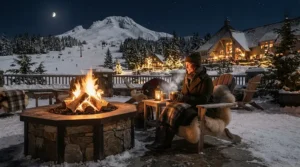
Wind Chill & Safety: Why the Temperature Rating Isn’t the Whole Story
Every temperature rating on every jacket in this guide assumes still air — and still air is the exception, not the rule, during most winter storms. Wind chill measures how much faster your body loses heat when moving air strips away the thin insulating layer your skin naturally holds, and the effect is dramatic: a 0°F day with 15 mph winds produces a wind chill of roughly -19°F, a temperature at which exposed skin can develop frostbite in about 30 minutes according to National Weather Service data. This is precisely why windproofing matters as much as raw fill power — a highly insulated jacket with a porous, non-windproof shell will still let cold air penetrate and strip heat from your body, which is why every jacket on this list uses a tightly woven Pertex, DryVent, or Arctic Tech shell rather than a loosely woven fabric.
Frostbite and hypothermia are real risks in genuinely extreme cold, not abstract marketing terms, and no jacket alone eliminates that risk. The CDC’s cold weather safety guidance recommends layering, covering exposed skin, and limiting time outdoors during dangerous wind chill events, regardless of how well-rated your outerwear is. A genuinely extreme-cold-ready setup pairs a quality jacket like the ones reviewed here with insulated gloves, a hat that covers the ears, and a plan to limit exposure time when wind chill warnings are in effect — the jacket is one layer of a system, not a complete solution by itself.
Long-Term Cost & Maintenance: Getting the Most From Your Investment
A cost-per-wear lens changes how these seven jackets compare. The Canada Goose Expedition Parka costs roughly six times more than the Uniqlo Hybrid Down Parka upfront, but if you wear it daily through five or six winters with proper dry cleaning, the effective cost per wear can end up closer than the sticker prices suggest — provided you actually need that level of warmth. Down jackets in general are a better long-term investment than synthetic-fill alternatives because down retains loft over more wash-and-wear cycles when cared for properly, while synthetic insulation compresses and loses effectiveness faster with repeated compression.
Maintenance costs matter too: dry-clean-only jackets (Canada Goose) carry an ongoing expense that budget buyers should factor into total cost of ownership, while machine-washable options (several Eddie Bauer and Uniqlo models) cost nothing extra to maintain but may need replacement sooner if the down clumps from improper washing. Storing any down jacket loosely rather than compressed for months at a time preserves loft — and therefore warmth — far longer than cramming it into a stuff sack in a closet all summer.
Practical Usage Guide: Layering, Storage & the First 30 Days
Getting real performance out of any down jacket for extreme cold starts before you ever step outside in it. In the first 30 days, resist the urge to wash it — new DWR finishes need a few wears to settle, and premature washing can strip factory-applied water repellency. Layer strategically: a moisture-wicking base layer, a light insulating mid-layer, then your down jacket as the outer shell traps warm air most effectively when it’s not compressing bulky layers underneath. A common early mistake is over-layering to the point of compressing the down itself, which reduces its loft and, ironically, makes you colder despite wearing more clothes.
For maintenance, air out your jacket after every heavy-exposure day rather than immediately storing it — this lets accumulated moisture from breath and perspiration escape before it can degrade the down’s loft. Store it loosely on a wide hanger or in a breathable garment bag during the off-season, never compressed in its stuff sack for months at a time, since sustained compression permanently reduces loft over multiple seasons. When cleaning is genuinely needed, use a down-specific detergent and a low, gentle tumble-dry with clean tennis balls to redistribute clusters — regular detergent strips the natural oils that keep down clusters lofted and water-resistant.
Real-World Scenarios: Matching the Right Jacket to Your Life
Consider three genuinely different buyers. A college student in Minneapolis walking between classes and a bus stop, with maybe 20 minutes of total outdoor exposure daily, doesn’t need expedition-grade insulation — the Uniqlo Hybrid Down Parka or Eddie Bauer Boundary Pass Down Parka covers that use case at a fraction of the cost of premium alternatives, and the money saved is better spent on good boots and gloves. A suburban parent doing school drop-off, dog walks, and driveway shoveling in a genuinely cold climate like Minnesota or upstate New York sits in the middle: the Patagonia Fitz Roy Down Parka or The North Face McMurdo Parka delivers real all-day warmth without the bulk or price of an expedition parka, and the McMurdo’s waterproofing is a real advantage if that climate brings wet snow.
Then there’s the backcountry skier, ice climber, or Arctic researcher — someone spending hours at a time stationary or moving slowly in sustained sub-zero, high-wind conditions. That’s the buyer for whom the Feathered Friends Khumbu Parka, Rab Positron Pro Jacket, or Canada Goose Expedition Parka genuinely earns its price tag; anything less risks real safety consequences, not just discomfort.
Buyer’s Decision Framework: Choosing the Warmest Down Jacket for Winter, By Situation
Use this simple framework rather than defaulting to “buy the warmest one available.” If your daily outdoor exposure is under 30 minutes at a time in a moderately cold climate, choose a 550-650 fill power jacket like the Eddie Bauer or Uniqlo options — you’ll save money without sacrificing real-world comfort. If you’re outdoors for hours at a stretch in a genuinely cold, dry climate, choose 800 fill power with a DWR-treated shell, like the Patagonia Fitz Roy or Rab Positron Pro. If your winters are wet as much as they are cold, prioritize a sealed waterproof shell over raw fill power — the North Face McMurdo’s DryVent construction will outperform a higher-fill-power jacket with only DWR treatment once conditions turn to sleet or wet snow.
For anyone chasing the genuinely warmest down jacket for winter regardless of cost, expedition-grade options like the Feathered Friends Khumbu Parka or Canada Goose Expedition Parka remain the honest top picks — but that warmth ceiling only matters if your actual conditions demand it.

Frequently Asked Questions
❓ What temperature is a down jacket for extreme cold rated for?
❓ Is 800 fill power warm enough for extreme cold?
❓ Can a down jacket get wet in the snow?
❓ How do I know if my down jacket is warm enough for wind chill conditions?
❓ What's the difference between fill power and warmth?
Conclusion
Choosing a down jacket for extreme cold ultimately comes down to matching real specs to your real winter, not chasing the biggest number on a hangtag. The Canada Goose Expedition Parka and Feathered Friends Khumbu Parka earn their premium price tags for genuine expedition and high-altitude use, while the Patagonia Fitz Roy Down Parka and Rab Positron Pro Jacket offer excellent middle-ground performance for serious but not extreme conditions. Buyers watching their budget shouldn’t feel shortchanged by the Eddie Bauer Boundary Pass Down Parka or Uniqlo Hybrid Down Parka — both deliver legitimate warmth for typical winter exposure, and the The North Face McMurdo Parka remains the strongest pick specifically for wet, coastal cold climates where waterproofing matters as much as insulation.
Fill power, wind chill, and shell construction all matter more than brand name alone, and now you have the real numbers to compare rather than marketing copy. Whichever jacket you choose from this list, pair it with proper layering and pay attention to wind chill warnings — the jacket is one part of staying safe in genuinely extreme cold, not a complete solution on its own.
Recommended for You
- Travel Rain Kit Packable: 7 Best Picks To Stay Dry In 2026
- Family Rain Gear Set: 7 Best Picks to Stay Dry in 2026
- Rain Suit Set Jacket Pants: 7 Best Picks for 2026 (Tested)
Disclaimer: This article contains affiliate links. As an Amazon Associate, I earn from qualifying purchases. If you purchase products through these links, we may earn a small commission at no additional cost to you.
✨ Found this helpful? Share it with your friends! 💬🤗
