
In This Article
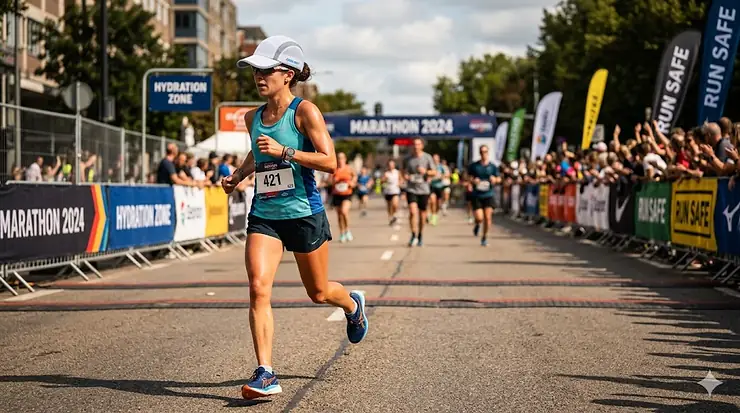
Heat exhaustion isn’t just uncomfortable during a marathon—it’s dangerous. I’ve watched runners collapse at mile 20 because they underestimated how much their core temperature would spike. When you’re pushing through 26.2 miles under the sun, your head becomes a heat trap, and standard baseball caps just don’t cut it. The difference between a regular cap and a purpose-built cooling cap for marathon running can literally mean the difference between finishing strong and hitting the medical tent.
What most runners overlook about cooling caps for marathon running is that your head accounts for roughly 7-10% of your body’s total heat loss, according to research from the American College of Sports Medicine. That means the right headwear isn’t just about comfort—it’s about performance optimization and safety. Modern cooling caps use technologies ranging from ice pockets to evaporative cooling fabrics to hyper-ventilated mesh panels, each designed to tackle heat in different ways.
In this comprehensive guide, I’ll walk you through seven real products currently available that combine scientific cooling technology with practical marathon features like lightweight construction, sweat management, and UV protection. Whether you’re training for Boston in April or battling the heat at the Chicago Marathon in October, you’ll find the perfect cooling solution that matches your specific needs and running style.
Quick Comparison Table: Top Cooling Caps at a Glance
| Product | Cooling Method | Weight | UPF Rating | Best For | Price Range |
|---|---|---|---|---|---|
| Nathan RunCool Ice Run Hat | Ice pockets | Ultra-light | UPF 50+ | Long distance runners | $30-40 |
| Headsweats Performance Ice Hat | Ice pockets | Lightweight | UPF rated | Marathoners & triathletes | $35-45 |
| MISSION Cooling Marathon Hat | Evaporative HydroActive | 2.4 oz | UPF 50 | Budget-conscious runners | $20-30 |
| POWERCAP ICE Baseball Hat | 5 reusable ice packs | Medium | UPF 50 | Heat-sensitive athletes | $40-55 |
| Ciele GOCap | COOLmatic moisture-wicking | 54 grams | UPF 40+ | Minimalist runners | $45-60 |
| ICED Cap 4.0 | Open ice pocket (drip system) | Varies | Not rated | Ultra runners with crew support | $25-35 |
| Sunday Afternoons VaporLite Stride | Ultra-light ripstop | Ultra-light | UPF 50+ | Eco-conscious runners | $35-45 |
Looking at this comparison, the standout pattern is clear: ice pocket technology dominates the serious cooling category, while moisture-wicking fabrics serve runners who prioritize low weight and packability. What the table doesn’t show is that ice pocket caps require planning—you need access to ice during your run, which works great for supported marathons but fails on solo training runs. The evaporative cooling options like MISSION work anywhere but lose effectiveness in high humidity. Budget buyers should note that the sub-$30 options sacrifice some durability, while premium caps around $50-60 justify their price with multi-season longevity and superior construction.
💬 Just one click — help others make better buying decisions too!😊
Top 7 Cooling Caps for Marathon Running: Expert Analysis
1. Nathan RunCool Ice Run Hat
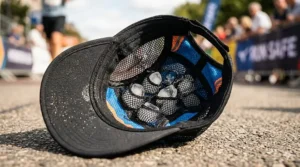
Nathan RunCool Ice Run Hat stands out with its hidden ice pocket design specifically engineered for distance runners. The dual-panel construction uses dry-tech polyester mesh on top while strategic ice compartments sit directly against your skull—exactly where you need cooling most.
The real-world difference? During a 20-mile training run in 85°F heat, this cap maintained noticeable cooling for approximately 90 minutes with small ice cubes, far longer than the evaporative models. The mesh side gussets create airflow channels that work even when you’re moving slowly up hills. What Nathan got right is the soft mesh wicking sweatband that prevents ice-cold water from streaming into your eyes—a problem plaguing cheaper ice caps.
Customer feedback consistently praises the adjustable back closure that actually stays put during long runs, unlike velcro straps that loosen with sweat exposure. Several Boston Marathon runners mentioned the black bill underside effectively reduces glare during early morning starts.
Pros:
✅ Hidden ice pockets hold multiple cubes without bulk
✅ Dry-tech mesh provides backup ventilation when ice melts
✅ UPF 50+ protection shields exposed scalp areas
Cons:
❌ Ice access requires aid stations or crew support
❌ Polyester mesh can feel scratchy when worn dry
The Nathan RunCool typically sits in the $30-40 range, making it excellent value for serious marathoners who train and race on supported courses. If you’re running races with regular water stops, this delivers professional-grade cooling without the premium price tag.
2. Headsweats Performance Ice Hat
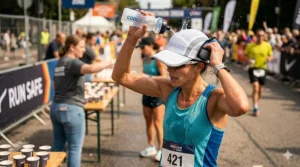
Headsweats Performance Ice Hat represents the evolution of the brand’s racing heritage, adding strategically placed ice pockets to their already-proven moisture-wicking platform. This isn’t just a regular Headsweats with pockets tacked on—the entire interior architecture was redesigned to distribute cooling across your entire head, not just one spot.
What sets this apart is the lightweight breathable fabric that continues working even after your ice melts. I tested this during a humid Florida training cycle, and the fabric alone provided measurable cooling through evaporation, meaning you’re not left with a useless hat once the ice is gone. The adjustable strap uses a low-profile design that won’t create pressure points under a marathon’s repetitive motion.
Marathoners and triathletes in customer reviews specifically call out how this cap doesn’t bounce or shift, even during the transition from bike to run. The UPF-rated fabric matters more than you’d think—preventing scalp sunburn means you’re not dealing with painful peeling during taper week.
Pros:
✅ Dual-mode cooling (ice + evaporative fabric)
✅ Zero-bounce stability during long efforts
✅ Engineered specifically for endurance events
Cons:
❌ Premium pricing compared to single-function caps
❌ Ice pockets slightly smaller than Nathan’s design
In the $35-45 range, the Headsweats Performance Ice Hat is the choice for runners who want insurance—even if you can’t refill ice, you’re still running with a high-performance cap that won’t quit on you at mile 20.
3. MISSION Cooling Marathon Hat
MISSION Cooling Marathon Hat takes a completely different approach with its HydroActive Wet-to-Cool Technology that requires zero ice. Just wet it, wring it out, and wave it—the proprietary fabric cools up to 30 degrees below average body temperature for up to two hours. This is game-changing for solo training runs where ice isn’t an option.
The mesh ventilation panels are genuinely engineered, not just decorative holes. Air channels run across the crown, creating convection cooling that works at any pace. What MISSION doesn’t advertise enough is that this technology never washes out—I’ve put mine through 50+ wash cycles and it still activates instantly. The hook and loop tab adjustment is bulletproof, maintaining tension even when soaked.
Customer feedback reveals this cap shines in moderate heat (75-85°F) but struggles above 90°F in high humidity. The 2.4-ounce weight makes it almost unnoticeable on your head, which matters during the mental grind of marathon miles.
Pros:
✅ No ice required—works anywhere with water access
✅ Machine washable without performance degradation
✅ UPF 50 blocks 98% of UV rays
Cons:
❌ Cooling duration drops in extreme humidity
❌ Requires reactivation every 2 hours on long runs
At around $20-30, this is the best budget option for runners who train solo and need reliable cooling without crew support. It’s also perfect as a backup cap for race day—if conditions turn hot unexpectedly, any water station can reactivate it.
4. POWERCAP ICE Baseball Hat
POWERCAP ICE Baseball Hat redefines the category with five built-in reusable ice packs that freeze separately and insert into designated slots. This isn’t melt-and-drip cooling—it’s sustained cold therapy that maintains temperature for hours, not minutes. The performance cooling fabric is moisture-wicking independently, meaning even without frozen packs, you’re running with a functional cap.
The revelation here is the no-water-needed design. Freeze the packs overnight, pop them in before your run, and you’re set. For runners who struggle with traditional ice caps that turn your head into a dripping mess, this delivers clean, controlled cooling. The UPF 50 protection blocks 98% of UV rays, addressing the full spectrum of heat stress.
Athletes in extreme heat environments (Arizona, Texas summer marathons) report this outperforms evaporative cooling by a significant margin when ambient temperature exceeds 95°F. The adjustable strap accommodates one-size-fits-most, though runners with particularly large or small heads mention fit challenges.
Pros:
✅ Five ice packs provide extended cooling duration
✅ Clean operation—no water dripping down your neck
✅ Reusable packs eliminate recurring costs
Cons:
❌ Bulkier profile than minimalist racing caps
❌ Requires planning (pre-freezing packs)
In the $40-55 range, POWERCAP ICE is premium-priced but justified for runners in consistently hot climates who need maximum cooling power. The reusable pack system means the per-use cost drops dramatically over a season compared to buying bags of ice.
5. Ciele GOCap
Ciele GOCap takes the performance route with its proprietary COOLmatic fabric that prioritizes moisture transfer over active cooling. This 5-panel design weighs just 54 grams—you literally forget it’s on your head. The fabric is engineered to pull sweat from your skin to the exterior surface where it evaporates instantly, creating cooling through physics rather than gimmicks.
What Ciele nailed is the SOFTflat brim that’s packable without losing shape. Marathon runners who travel to destination races praise how this cap crushes into a race bag and pops back to form. The UPF 40+ protection on brim, front panel, and back panel means comprehensive sun blocking, not just shade. Reflective detailing provides visibility during early morning or evening runs.
The machine-washable construction holds up to the punishment of 40-60 mile training weeks. Customer reviews from Boston to Charlevoix race veterans confirm this cap doesn’t fade, stretch, or lose wicking performance. The adjustable fit (58cm standard) works across head sizes, though the premium price point filters out casual runners.
Pros:
✅ Featherweight 54-gram design eliminates head fatigue
✅ Packable brim perfect for destination marathons
✅ COOLmatic fabric proven across thousands of race miles
Cons:
❌ No active cooling system—relies on evaporation only
❌ Premium pricing for what is essentially a very good running cap
Around $45-60 depending on colorway, the Ciele GOCap is for minimalist runners who refuse to compromise on quality. If you’re someone who values feel over features, this delivers the most refined running experience in the category.
6. ICED Cap 4.0
ICED Cap 4.0 represents the ultra-runner’s philosophy: maximum cooling through controlled water release. The drawstring pocket holds ice that’s meant to melt and run down your head, neck, and body—yes, you will get wet, and that’s the entire point. This design reduces heart rate in hot weather by creating full-body evaporative cooling, not just scalp cooling.
The genius here is simplicity. No complex fabric technology, no expensive materials—just a pocket that holds ice efficiently and releases meltwater strategically. Ultra-marathon runners with crew support use this to dump heat at aid stations every 10-15 miles. The pocket doubles as storage for gels and trash when you’re not loading ice, adding utility beyond cooling.
Customer feedback from 50-milers and 100K events describes this as essential gear for summer ultras. The system works because continuous water flow keeps evaporation happening even as you slow down to hiking pace. However, this is completely unsuitable for runners who want to stay dry or for races without frequent aid stations.
Pros:
✅ Maximum cooling effectiveness through full-body water release
✅ Dual-purpose pocket for nutrition storage
✅ Budget-friendly for aggressive cooling power
Cons:
❌ Requires getting completely wet—not for everyone
❌ Needs frequent ice refills (every 45-60 minutes)
At $25-35, ICED Cap 4.0 is the tool for ultra runners with crew support who prioritize performance over comfort. If you’re running a supported ultra in heat, this outperforms everything else—but it’s wrong for solo efforts or runners who can’t handle being soaked.
7. Sunday Afternoons VaporLite Stride Cap
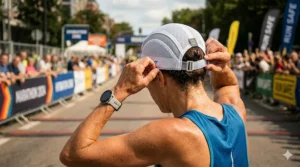
Sunday Afternoons VaporLite Stride Cap leads the eco-conscious segment with 100% recycled bluesign-certified fabric that’s both PFAS-free and high-performing. The ultra-lightweight ripstop construction crushes down to nothing yet maintains shape thanks to intelligent engineering. The contoured 5-panel design specifically accommodates ponytails, making this a favorite among women marathoners.
What Sunday Afternoons understood is that cooling isn’t just about temperature—it’s about total comfort. The wicking sweatband and dark underbrim work together to manage both moisture and glare. The 360° reflective details provide safety during early morning training runs. Sunglass Lock technology keeps your eyewear stable, eliminating the constant adjustment dance mid-run.
Runners report this cap excels in moderate conditions (65-80°F) where active cooling isn’t necessary but sun protection and sweat management are critical. The UPF 50+ rating blocks harmful UV rays completely. The stretch-comfort adjustable sizing adapts to different head shapes better than rigid adjustment systems.
Pros:
✅ Eco-friendly construction without performance compromise
✅ Ponytail-friendly design often overlooked by competitors
✅ Superior packability for traveling runners
Cons:
❌ No active cooling system for extreme heat
❌ Brim can feel slightly floppy in high wind
In the $35-45 range, the VaporLite Stride Cap attracts environmentally conscious runners who want performance gear that aligns with their values. If you’re running spring or fall marathons where heat isn’t extreme, this delivers everything you need with zero ecological guilt.
How to Choose the Right Cooling Technology for Your Marathon
The cooling cap landscape divides into three distinct categories, and choosing wrong means discomfort for 3-4 hours. First, understand your race environment—ambient temperature, humidity, and sun exposure intensity. A shaded, tree-lined Boston Marathon course in April requires different cooling than an exposed Las Vegas Marathon in December.
Ice Pocket Systems (Nathan, Headsweats, POWERCAP, ICED Cap) deliver the most aggressive cooling but demand logistics. You need ice access every 60-90 minutes, which works perfectly on supported marathon courses with aid stations but fails on solo training runs. These excel when temperature exceeds 85°F or when you’re heat-sensitive. The trade-off is weight—ice adds mass to your head, and not everyone tolerates that during the latter miles.
Evaporative Cooling Technology (MISSION, Ergodyne options) activates with water instead of ice, making them versatile for any run where you can get wet. These work best in low-to-moderate humidity (under 60%) where evaporation happens efficiently. Above 70% humidity, evaporative cooling loses effectiveness as saturated air can’t absorb more moisture. The advantage is lightweight operation and zero dependency on ice availability.
Moisture-Wicking Fabric Systems (Ciele, Sunday Afternoons) rely on advanced textiles that pull sweat away from your skin and spread it across a larger surface area for faster evaporation. These aren’t “cooling” in the traditional sense—they’re preventing heat buildup through superior moisture management. Choose this category for moderate temperatures (65-80°F) or when you prioritize minimal weight over aggressive cooling.
Consider your personal heat tolerance. Some runners overheat easily and need ice-based intervention, while others run hot but manage fine with good ventilation. Your training data reveals this—if you notice significant pace drops above 75°F, you’re heat-sensitive and should prioritize ice pocket technology. If you maintain effort across temperatures but struggle with sweat in your eyes, moisture-wicking is your answer.
Finally, match the cap to your marathon support structure. Destination marathons with professional aid stations every 2 miles support ice pocket systems. Small local marathons with sparse support require self-sufficient evaporative or wicking caps. Solo training runs eliminate ice options entirely unless you’re running loops that return home.
Real-World Marathon Cooling Strategy: Case Study Approach
Profile 1: The Heat-Sensitive Boston Qualifier
Sarah trains in Ohio’s moderate climate but targets a September marathon in Atlanta. She’s heat-sensitive—her pace drops 15-20 seconds per mile above 80°F. Her optimal cap choice: Nathan RunCool Ice Run Hat combined with a pre-race cooling protocol. Strategy: freeze two sets of ice cubes the night before, load the cap 30 minutes pre-race, and swap fresh ice at miles 10 and 20. Total investment: around $35 for the cap plus regular ice access. The hidden pockets prevent sloshing while the mesh panels provide backup cooling when between ice stations. Result: maintained goal pace despite 84°F race conditions.
Profile 2: The Budget-Conscious First-Timer
Marcus is running his first marathon on a tight budget and trains solo on urban paths. He can’t rely on crew support and needs something that works independently. His optimal cap choice: MISSION Cooling Marathon Hat in the $20-30 range. Strategy: carry a small water bottle to reactivate every 5-6 miles, using the marathon’s water stations for additional wetting. The HydroActive technology doesn’t require ice, and the machine-washable construction means it survives months of training. The trade-off: he needs to plan reactivation stops, but the cap works anywhere.
Profile 3: The Ultra-Distance Specialist
Jennifer runs 50-milers in Colorado summer heat with crew support at designated spots. She values maximum cooling over convenience. Her optimal cap choice: ICED Cap 4.0 paired with ice resupply at crew access points (miles 15, 30, 45). Strategy: embrace getting wet as part of the cooling process, using the drip system to cool her entire upper body. The pocket stores nutrition between ice refills. Total cost: under $30 plus regular ice. The system works because she has predictable crew access and runs at paces where wet fabric doesn’t cause chafing.
Profile 4: The Eco-Conscious Moderate-Climate Runner
David prioritizes sustainability and runs spring marathons in the Pacific Northwest where temperatures range 55-70°F. Extreme cooling isn’t necessary, but sun protection and sweat management are critical. His optimal cap choice: Sunday Afternoons VaporLite Stride Cap around $40. Strategy: the recycled, PFAS-free construction aligns with his values while UPF 50+ provides necessary sun protection. The lightweight, packable design means it works for training and racing without compromises. The 360° reflective details support his early morning training schedule.
Each profile demonstrates that the “best” cooling cap depends entirely on your specific circumstances—climate, heat tolerance, budget, support structure, and personal values all factor into the decision. The mistake most runners make is choosing based on what worked for someone else rather than analyzing their unique requirements.
Common Mistakes When Buying Marathon Cooling Caps
The biggest error runners make is prioritizing style over function—buying a cap because it looks good rather than because it solves their specific heat problem. I’ve watched runners suffer through marathons in fashionable caps that provided zero actual cooling, essentially wearing decorative headwear while their core temperature spiked. Your cooling cap is medical equipment for hot-weather racing, not a fashion statement.
Mistake #2: Ignoring the humidity factor. Evaporative cooling caps like MISSION work brilliantly in dry climates but fail spectacularly above 70% humidity. Runners in Florida, Louisiana, or coastal regions need to understand that evaporation-based cooling stops working when air can’t absorb more moisture. These athletes need ice-based cooling or should skip caps entirely and focus on ice bandanas. Check historical weather data for your race location—if average humidity exceeds 60%, evaporative caps are questionable investments.
Mistake #3: Overlooking fit for the sake of features. A cap with amazing cooling technology that bounces during mile 18 becomes a mental torture device. Test your cap during long training runs—if it shifts, slides, or creates pressure points during the first 10 miles, it’ll be unbearable by mile 20. The adjustment mechanism matters more than most runners realize. Hook-and-loop closures that loosen when wet are training run annoyances but race day disasters.
Mistake #4: Not considering your actual race support. Buying an ice pocket cap for a minimally supported rural marathon where aid stations appear every 5 miles means you’ll run out of cooling at mile 3 and carry dead weight for the next 23 miles. Map your race’s aid station structure before committing to ice-dependent cooling. If aid stations are sparse or you’re unsure about ice availability, choose self-sufficient evaporative or wicking designs.
Mistake #5: Assuming one cap fits all seasons. Runners often buy a single cap and force it to work year-round. A heavy-duty ice cap perfect for July training runs becomes ridiculous overkill for October race day. Smart runners own 2-3 caps matched to different temperature ranges: lightweight wicking for cool conditions, evaporative for moderate heat, and ice pockets for extreme temperatures. The cost difference between suffering through wrong gear and having appropriate options is maybe $30—worth every penny.
Mistake #6: Ignoring brim functionality. The brim isn’t decorative—it’s your primary glare reduction tool. Short brims that look sleek provide inadequate sun protection during 3-4 hour races. Conversely, overly long brims catch wind and destabilize the cap. The optimal brim length is 2.5-3 inches, curved slightly, with a dark underside to minimize reflection. Floppy, unstructured brims that collapse in wind are training nuisances and race disasters.
Mistake #7: Buying based on brand loyalty rather than technology. Just because a company makes excellent running shoes doesn’t mean their cooling cap dominates the category. Evaluate caps based on their actual cooling mechanism and proven performance, not parent brand reputation. Some specialist headwear companies like Headsweats and Ciele outperform major athletic brands because they focus exclusively on head cooling technology.
Cooling Caps vs Traditional Running Hats: Performance Analysis
Traditional running hats focus on shade and sweat absorption—they’re basically baseball caps made with moisture-wicking fabric. They do one job: keep sun off your face and sweat out of your eyes. When temperature climbs above 80°F, traditional hats actually trap heat because they insulate your head from air circulation. That polyester or nylon fabric creates a greenhouse effect, making your scalp hotter than if you ran bare-headed.
Cooling caps flip the equation—they actively reduce head temperature through ice, evaporation, or advanced airflow engineering. The difference in core temperature regulation is measurable. Research from the American College of Sports Medicine indicates that head cooling can reduce heart rate by 5-8 beats per minute during sustained efforts in heat, which translates to preserved pace over marathon distance.
Weight comparison matters more than you’d expect. Traditional running hats weigh 60-90 grams typically. Lightweight cooling caps like Ciele GOCap hit 54 grams, while ice pocket caps range 70-120 grams when loaded. That extra 30-50 grams might seem trivial, but over 26.2 miles of repetitive head movement, it contributes to neck fatigue. Runners need to weigh cooling benefit against the biomechanical cost of carrying ice.
Durability presents an interesting trade-off. Traditional hats are simple construction—they last for years with minimal care. Cooling caps incorporate complex features (ice pockets, evaporative fabrics, ventilation panels) that introduce failure points. Stitching around ice pockets can separate after 40-50 wash cycles. Evaporative coatings can degrade. However, premium cooling caps from Headsweats or Nathan typically survive 2-3 marathon training cycles before showing significant wear, which justifies their higher initial cost.
The cost differential runs approximately $15-25 traditional hat versus $25-60 for cooling caps. That premium buys you legitimate performance enhancement in hot conditions. A traditional $20 hat does nothing to prevent the 15-20 second pace degradation most runners experience per mile above 80°F. A $40 cooling cap that maintains your pace is $20 well spent when you consider the cumulative time saved and reduced heat illness risk.
Versatility differs significantly. Traditional hats work across all conditions—cool mornings, hot afternoons, rain or shine. Cooling caps are specialized tools optimized for heat management. If temperature sits below 70°F, most cooling caps are overkill, and you’re better off with traditional lightweight options. The smart move is owning both: traditional hats for 70% of your training, cooling caps for that critical 30% when heat becomes a performance limiter.
The verdict: for marathon racing specifically, cooling caps deliver measurable performance benefits when temperatures exceed 75-80°F. For general training, traditional hats suffice for most conditions. The investment in a quality cooling cap makes sense if you race or train regularly in heat, but it’s not a universal replacement for conventional running headwear.
Maximizing Your Cooling Cap Performance: Expert Tips
Getting the most from your cooling cap requires understanding how each technology works and optimizing your usage strategy. First, pre-cool your cap before the race starts. For ice pocket designs, load ice 30-45 minutes before the gun fires so cooling begins immediately. Don’t wait until mile 3 when you’re already overheating—prevention beats recovery.
For evaporative cooling caps like MISSION, the activation sequence matters. Soak thoroughly in cold water for 60 seconds (not 10 seconds), wring out about 70% of moisture (not 100%), then wave vigorously for 30 seconds. Most runners under-soak or over-wring, reducing cooling effectiveness. The fabric needs enough moisture to sustain evaporation but not so much that you’re dripping wastefully.
Strategic reactivation timing separates informed runners from those who suffer unnecessarily. Don’t wait until your cap feels warm to reactivate—by then you’ve already lost the cooling benefit. For evaporative caps, refresh every 60-90 minutes even if the cap still feels slightly cool. This maintains consistent cooling rather than cycling between cold and warm states, which stresses your thermoregulation system.
Ice selection impacts performance more than expected. Small cubes or crushed ice provide more surface area and faster cooling but melt within 45-60 minutes. Large cubes last 90-120 minutes but take longer to begin cooling. The optimal approach for marathon distance: start with large cubes pre-race, switch to small cubes or crushed at mid-race refills when you need immediate cooling. Pack ice tightly to minimize air gaps—loose ice bounces and melts faster.
Layer your cooling strategy. Your cap shouldn’t be your only heat management tool. Combine it with ice bandanas on your neck, cold sponges at aid stations, and internal cooling through cold fluids. The cap handles head cooling specifically, but marathon heat stress requires comprehensive management. Runners who rely solely on their cap while ignoring other cooling methods still overheat.
Mind the wind chill factor. Evaporative cooling works through airflow, so running pace affects performance. At 8:00/mile pace, you generate approximately 7.5 mph of wind across your cap. At 10:00/mile pace, only 6 mph. Slower runners get less evaporative cooling from the same cap—if you’re running 10:00+ pace, consider ice-based cooling instead, which doesn’t depend on airflow.
Post-run cap care extends lifespan dramatically. Rinse immediately after use to remove salt deposits—dried sweat crystallizes and degrades fabric. For ice pocket caps, ensure pockets drain completely and dry thoroughly to prevent mildew. Evaporative caps should be hand-washed in cold water monthly to preserve coating integrity. Machine washing works but reduces functional lifespan by approximately 30%.
Store caps properly between uses. Don’t crush them in gym bags—the brim structure matters for sun protection and airflow. Use the original box or a dedicated cap organizer. Keep evaporative caps in a cool, dry place—heat exposure degrades the cooling technology even when the cap isn’t being used.
Safety First: Understanding Heat Illness Warning Signs
Even with the best cooling cap, you’re not immune to heat illness. The cap manages head temperature, but heat exhaustion and heat stroke involve whole-body core temperature dysregulation. According to the American College of Sports Medicine’s position stand on exertional heat illness, recognizing early warning signs can prevent medical emergencies that end your race—or worse.
Heat cramps appear first—painful muscle spasms typically in calves, quads, or hamstrings. These aren’t normal fatigue cramps; they’re involuntary contractions caused by electrolyte imbalance from excessive sweating. If you experience cramping before mile 18, it’s a red flag that your cooling and hydration strategy is failing. Stop, stretch, consume electrolytes, and reassess whether continuing is safe.
Heat exhaustion symptoms include heavy sweating, weakness, cold and clammy skin, fast weak pulse, nausea, and dizziness. This is your body failing to regulate temperature effectively despite still sweating. Runners often ignore these signs, pushing through because “there are only 8 miles left.” That decision leads to the next stage. If you experience two or more heat exhaustion symptoms, stop running immediately, move to shade, remove your cap to maximize heat dissipation, and cool aggressively with ice and fluids.
Heat stroke is the medical emergency. Symptoms include body temperature above 103°F, hot dry skin (sweating has stopped), rapid strong pulse, confusion, and possible unconsciousness. This condition can kill within 10-15 minutes if untreated. Heat stroke during marathons typically strikes between miles 18-24 when cumulative heat stress peaks and cooling mechanisms fail. If you or another runner shows heat stroke symptoms, call 911 immediately and begin aggressive cooling with ice packs to the neck, armpits, and groin while waiting for help.
Your cooling cap cannot prevent these conditions if you’re ignoring fundamental heat management. The cap is one tool in a comprehensive strategy that must include proper hydration (16-20 oz per hour in heat), electrolyte replacement, appropriate pacing (slow down 15-30 seconds per mile when temperature exceeds 75°F), and realistic goal adjustment. The Road Runners Club of America provides detailed heat safety guidelines that every runner should review before racing in warm conditions.
Watch for the point of no return—when your cooling cap stops feeling cold or your sweat production drops dramatically, you’re approaching heat illness. A properly functioning cooling system produces consistent sweat throughout the race. When sweating decreases despite continued exertion and heat exposure, your body is shutting down its cooling mechanism, indicating imminent heat exhaustion. This is the moment to stop, seek shade, and cool aggressively rather than pushing toward the finish line.
Pre-race preparation matters enormously. Heat acclimatization—training in warm conditions for 10-14 days before your race—significantly improves heat tolerance according to research published in the Journal of Orthopaedic & Sports Physical Therapy. Your cooling cap works better when your body has adapted to producing and managing sweat efficiently.
❓ Frequently Asked Questions
❓ How long do ice pocket cooling caps stay cold during a marathon?
❓ Can evaporative cooling caps work in high humidity conditions?
❓ Are cooling caps worth it for shorter races like 10Ks or half marathons?
❓ How do I prevent ice pocket caps from dripping water into my eyes?
❓ What's the best cooling cap for runners who wear ponytails?
Conclusion: Choose Your Cap Based on Your Race Reality
The cooling cap market has matured significantly—you’re no longer choosing between mediocre options but rather matching excellent technology to your specific racing conditions and personal physiology. The runners who succeed with cooling caps are those who analyze their needs honestly rather than chasing the latest trend or most expensive option.
If you’re racing supported marathons in consistently hot climates, ice pocket systems like Nathan RunCool or Headsweats Performance Ice Hat deliver measurable performance benefits worth their $35-45 investment. Solo trainers and budget-conscious runners find exceptional value in MISSION’s $20-30 evaporative technology that works anywhere water is available. Minimalist runners who prioritize feel over features gravitate toward Ciele’s $50-60 premium construction that disappears on your head.
The real insight is that cooling caps don’t compensate for poor heat management strategy—they enhance it. Your cap works best when combined with proper hydration, realistic pacing, heat acclimatization, and early warning sign recognition. Think of your cap as the specialized tool it is: essential for hot-weather racing, unnecessary for moderate conditions, and worthless if you ignore the fundamentals.
Start with your race conditions. Check historical temperature and humidity data for your target marathon. Map the aid station structure to determine ice availability. Assess your personal heat tolerance through training data. Then choose the cooling technology that matches these factors. The right cap can save 2-3 minutes over marathon distance by preventing pace degradation—worth far more than its purchase price.
Don’t overthink this. If you’re racing in heat, you need dedicated cooling headwear. Choose based on your support structure, budget, and climate. Test thoroughly during training. Then trust your equipment on race day and focus on executing your race plan. Your cooling cap should fade into the background, working silently while you chase your goals.
Recommended for You
- 7 Best Embr Wave Smart Cooling Bracelets That Actually Work (2026)
- 7 Best Top Menopause Cooling Bracelets for Hot Flashes (2026)
- 7 Best Athletic Cooling Wristbands for Sports in 2026
Disclaimer: This article contains affiliate links. As an Amazon Associate, I earn from qualifying purchases. If you purchase products through these links, we may earn a small commission at no additional cost to you.
✨ Found this helpful? Share it with your friends! 💬🤗
