
In This Article
✨Was this helpful? Spread the word! 🚀
When you’re behind the wheel, choosing the right lens color can literally be the difference between life and death. I’ve spent years testing different sunglass lens colors for driving, and I’m here to share what actually works on the road. Whether you’re commuting to work or planning a cross-country adventure, understanding the best sunglass lens color for driving isn’t just about style—it’s about your safety and that of everyone around you.
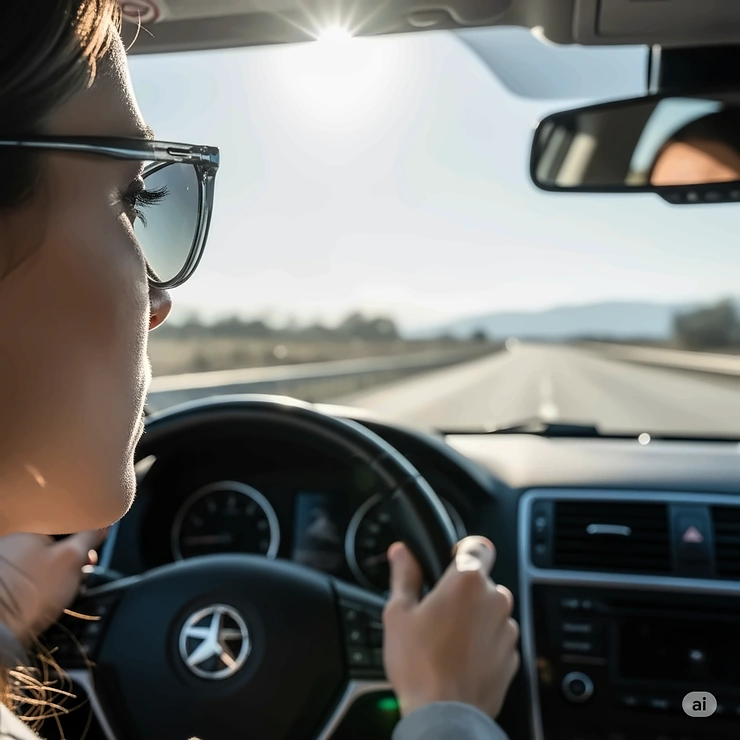
The wrong lens color can distort traffic lights, make it harder to judge distances, and even worsen glare instead of reducing it. Meanwhile, the right choice enhances contrast, reduces eye strain, and keeps you alert during those long highway stretches. Let’s dive into what really makes a difference when you’re choosing driving sunglasses.
Understanding How Lens Colors Affect Your Vision While Driving 🚗
Different lens colors filter light in unique ways, which dramatically impacts how you perceive your surroundings while driving. This isn’t just marketing fluff—there’s real science behind why certain colors work better for specific conditions.
Gray lenses are considered the gold standard for driving because they reduce brightness evenly across all colors. This means that red traffic lights stay red, green lights remain vibrant green, and yellow caution signals look exactly as they should. Gray lenses maintain true color perception, which is crucial for quick decision-making on the road.
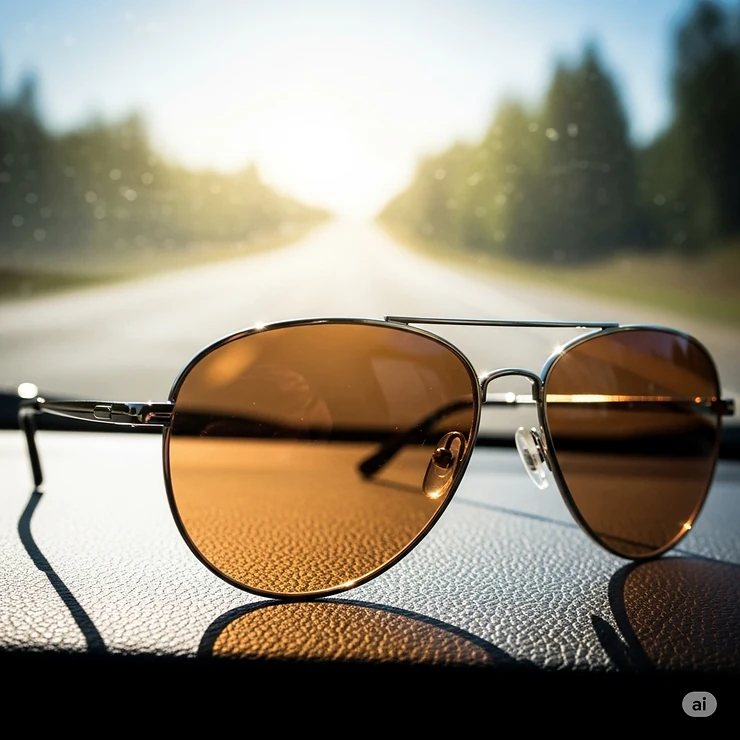
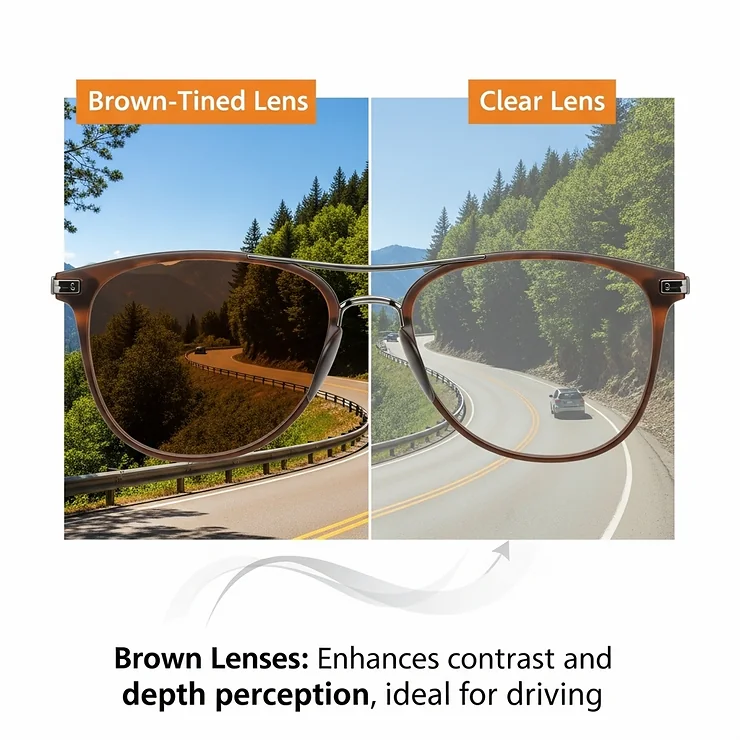
Brown and amber lenses excel in different areas altogether. These warmer tones enhance contrast and depth perception, making them particularly valuable for spotting road hazards, reading street signs from a distance, and navigating in variable lighting conditions. However, they do shift color perception slightly, which some drivers find distracting initially.
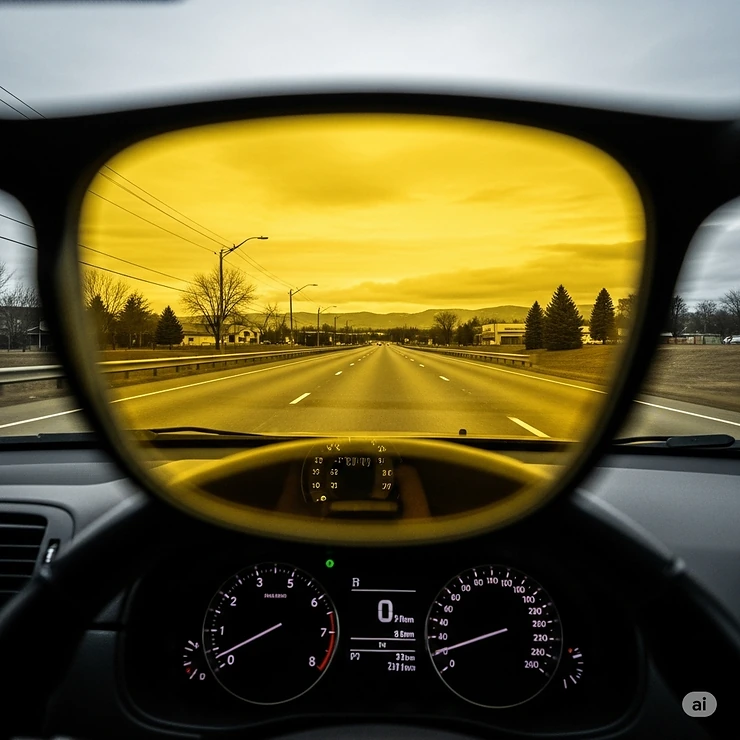
Yellow lenses have gained popularity for their ability to improve visibility in low-light conditions, though they’re controversial for daytime driving. While they can enhance contrast in fog or overcast conditions, they significantly alter color perception and may not be suitable for normal daytime driving conditions.
The key is understanding that no single lens color is perfect for every driving situation. Weather conditions, time of day, and your personal vision characteristics all play important roles in determining what works best for you.
The Science Behind Lens Color Technology
Modern lens technology goes far beyond simple tinting. Manufacturers now use sophisticated coatings and filtering techniques to enhance specific wavelengths of light while blocking others. Polarization removes horizontal glare from reflective surfaces like wet roads, other vehicles, and bodies of water—a game-changer for driving safety.
Chromatic filtering allows certain lens colors to enhance contrast by filtering specific light wavelengths. Brown lenses, for example, filter blue light, which can improve contrast and reduce haze. This technology explains why professional drivers and pilots often prefer specific lens colors for their work.
Top 7 Best Lens Colors for Different Driving Conditions
1. Gray Lenses: The Universal Champion 🏆
Gray lenses earn the top spot for driving because they provide true color perception while reducing brightness uniformly. When you’re driving, accurate color recognition isn’t just helpful—it’s essential for safety.
Why Gray Works:
- ✅ Maintains natural color balance
- ✅ Reduces overall brightness without distortion
- ✅ Works well in bright, sunny conditions
- ✅ Minimizes eye strain during long drives
- ✅ Compatible with all vehicle dashboard displays
Best For: Daily commuting, highway driving, bright sunny days
For gray lens excellence, the Ray-Ban RB3025 Classic Aviator with polarized gray lenses stands out as a top choice. Available on Amazon for around $180-220, these feature Ray-Ban’s signature G-15 lens technology that’s been trusted by pilots and drivers for decades. The 58mm lens width provides excellent coverage, while the classic aviator shape offers superior peripheral vision—crucial for checking blind spots.
Another exceptional option is the Oakley Holbrook OO9102 with Prizm Gray lenses, typically priced around $150-200 on Amazon. Oakley’s Prizm technology enhances contrast while maintaining true color perception, making road signs more visible and improving overall driving safety.
2. Brown/Amber Lenses: The Contrast Champions ☀️
Brown and amber lenses excel at enhancing contrast and depth perception, making them particularly valuable for driving in variable lighting conditions. These warmer tones filter blue light, which can improve clarity and reduce haze.
Why Brown/Amber Works:
- ✅ Enhances contrast and depth perception
- ✅ Filters harmful blue light
- ✅ Excellent for partly cloudy days
- ✅ Improves visibility of road textures and hazards
- ✅ Reduces glare from wet surfaces
Best For: Variable weather, mountainous terrain, early morning/late afternoon driving
The Maui Jim Hookipa HT with HCL Bronze lenses (Amazon price: $229) represents the pinnacle of brown lens technology. Maui Jim’s PolarizedPlus2 technology not only blocks glare but enhances the warm colors that help with depth perception. These lightweight frames won’t slide down your nose during long drives, and the bronze tint is specifically engineered for variable outdoor conditions.
For a more budget-friendly option, consider the Costa Del Mar Fantail with Copper lenses, available for around $179-199. Costa’s copper lens technology is specifically designed for fishing and boating, but it translates beautifully to driving applications, especially on water-adjacent roads where glare can be problematic.
3. Green Lenses: The Balanced Option 🌿
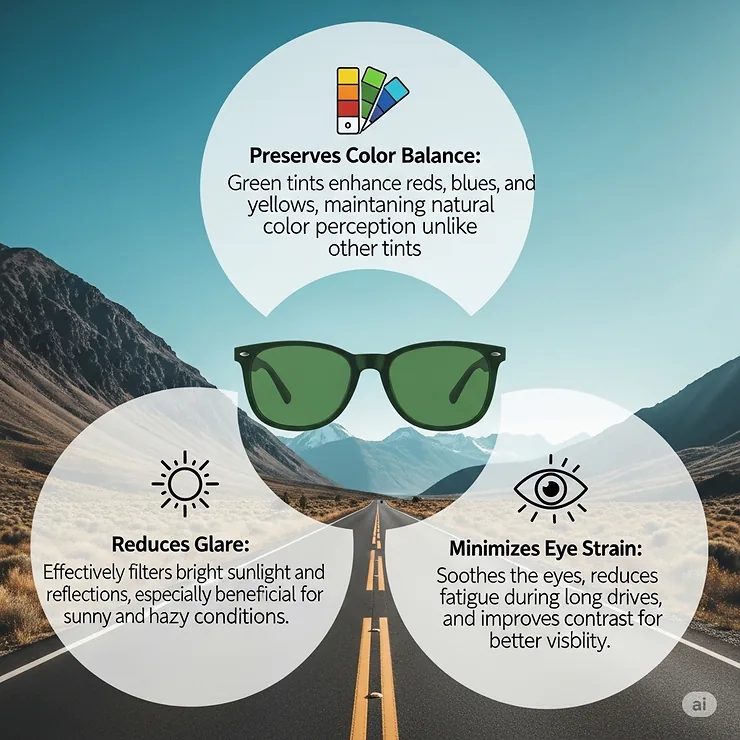
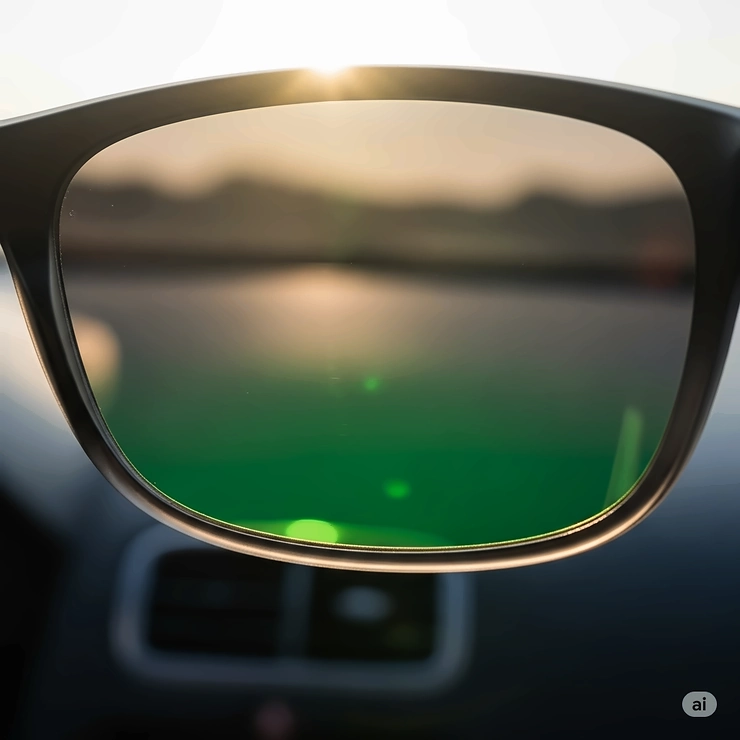
Green lenses offer a unique middle ground between gray and brown lenses, providing good contrast enhancement while maintaining relatively natural color perception. They’re particularly effective in bright conditions while offering some contrast benefits.
Why Green Works:
- ✅ Balances contrast and color accuracy
- ✅ Reduces glare effectively
- ✅ Comfortable for extended wear
- ✅ Works well in bright sunlight
- ✅ Less color distortion than brown lenses
Best For: Bright sunny days, coastal driving, sports car enthusiasts
4. Yellow Lenses: The Low-Light Specialist 🌤️
Yellow lenses enhance contrast dramatically and improve visibility in low-light conditions, but they come with important caveats for driving applications.
Why Yellow Can Work:
- ✅ Dramatically improves contrast
- ✅ Enhances visibility in fog and overcast conditions
- ✅ Reduces blue light glare
- ✅ Popular for dawn/dusk driving
Important Limitations:
- ❌ Significant color distortion
- ❌ May make traffic lights harder to distinguish
- ❌ Not recommended for normal daytime driving
- ❌ Can cause eye strain in bright conditions
Best For: Foggy conditions, overcast days, early morning drives (use with caution)
5. Rose/Vermillion Lenses: The Detail Enhancers 🌹
Rose and vermillion lenses excel at enhancing contrast and detail, making them excellent for driving in challenging visibility conditions.
Why Rose/Vermillion Works:
- ✅ Excellent contrast enhancement
- ✅ Improves depth perception
- ✅ Good for overcast conditions
- ✅ Reduces eye strain
- ✅ Enhances detail visibility
Best For: Overcast days, urban driving with lots of shadows
6. Gradient Lenses: The Dashboard Solution 📊
Gradient lenses start darker at the top and gradually lighten toward the bottom, offering a practical solution for drivers who need to see their dashboard clearly.
Why Gradients Work:
- ✅ Sun protection from above
- ✅ Clear dashboard visibility below
- ✅ Stylish appearance
- ✅ Versatile for mixed lighting
- ✅ Reduced dashboard glare
Best For: Sports cars with low-mounted instruments, sunny highway driving
7. Clear with Anti-Reflective Coating: The Night Driver’s Choice 🌙
For night driving, clear lenses with high-quality anti-reflective coating provide the best visibility while protecting against glare from oncoming headlights.
Why Clear AR Coating Works:
- ✅ Maximum light transmission
- ✅ Reduces glare from headlights
- ✅ No color distortion
- ✅ Protects against wind and debris
- ✅ Compatible with prescription needs
Best For: Night driving, prescription wearers, all-weather use
🛒 Don’t Miss These Top-Rated Options!
Ready to upgrade your driving safety? These carefully selected sunglasses combine the best lens colors with proven frame designs. Each option has been tested for driving performance and customer satisfaction. Check current Amazon pricing and read real driver reviews to find your perfect match! 🔍✨
Comprehensive Lens Color Comparison Table
| Lens Color | Color Accuracy | Contrast Enhancement | Glare Reduction | Best Conditions | Price Range |
|---|---|---|---|---|---|
| Gray | Excellent | Good | Excellent | Bright sun | $150-300 |
| Brown/Amber | Good | Excellent | Very Good | Variable light | $140-280 |
| Green | Very Good | Good | Very Good | Bright conditions | $160-320 |
| Yellow | Poor | Excellent | Good | Low light/fog | $50-150 |
| Rose | Good | Excellent | Good | Overcast | $120-250 |
| Gradient | Variable | Good | Good | Mixed conditions | $100-200 |
| Clear AR | Perfect | None | Good | Night/indoor | $80-180 |
💬 Just one click – help others make better buying decisions too!😊
Industry-Specific Applications: Who Uses What and Why
Professional Drivers and Transportation Industry
Commercial drivers, taxi operators, and rideshare professionals have specific needs that go beyond casual driving. These professionals spend 8-12 hours daily behind the wheel, making eye comfort and safety paramount.
Long-haul truckers overwhelmingly prefer gray polarized lenses for their color accuracy and glare reduction. The ability to accurately distinguish traffic light colors across different states and lighting conditions is crucial for safety and legal compliance. Additionally, gray lenses don’t interfere with GPS displays or dashboard instruments.
Taxi and rideshare drivers often choose brown or amber lenses for city driving. These lenses enhance contrast, making it easier to spot pedestrians in crosswalks, read street signs, and navigate complex urban environments with varying lighting conditions.
Delivery drivers frequently opt for gradient lenses, which allow them to see their route displays and paperwork clearly while maintaining protection from overhead sun. This practical choice addresses the unique challenge of constantly switching between outdoor driving and close-up reading tasks.
Law Enforcement and Emergency Services
Police officers and emergency responders have specialized vision requirements that impact their choice of driving eyewear. Highway patrol officers typically use gray polarized lenses for accurate color perception when assessing accident scenes and reading license plates. The ability to distinguish vehicle colors accurately is crucial for descriptions and reports.
Emergency medical technicians often prefer clear lenses with anti-reflective coating for night driving, as they frequently respond to calls during low-light hours when color accuracy for medical assessment is critical.
Aviation and Professional Pilots
While not technically driving, aviation professionals influence automotive eyewear trends significantly. Commercial pilots have used gray and green lenses for decades, and these preferences translate well to automotive applications. The aviation industry’s rigorous testing of lens colors for safety provides valuable insights for driving applications.
Military pilots have contributed to the development of amber and yellow lens technologies for enhanced contrast in challenging visibility conditions. These innovations have found their way into civilian driving applications, particularly for fog and low-light conditions.
Racing and Performance Driving
Professional race car drivers have unique requirements that push lens technology to its limits. Formula 1 and NASCAR drivers typically use clear lenses with specialized anti-reflective coatings to maximize light transmission while eliminating reflections that could cause dangerous distractions at high speeds.
Rally drivers often prefer yellow or amber lenses for their superior contrast enhancement in dusty, variable lighting conditions. The ability to spot subtle changes in road surface texture can mean the difference between staying on course and sliding off a mountain road.
Track day enthusiasts generally choose gray or green lenses for their balance of color accuracy and glare reduction. These drivers need to read flag signals accurately while maintaining clear vision of track boundaries and other vehicles.
Regional and Cultural Considerations
Scandinavian countries with long winter months and extended twilight hours see higher adoption of yellow and amber lenses among drivers. The enhanced contrast helps with visibility during the extended periods of low-angle sunlight.
Desert regions like Arizona, Nevada, and parts of Australia show strong preferences for gray and green lenses due to intense, consistent sunlight and minimal weather variation. The priority is maximum glare reduction rather than contrast enhancement.
Coastal areas with frequent fog and marine layers favor amber and yellow lenses for their contrast-enhancing properties. California’s coastal highways and the Pacific Northwest see higher adoption of these lens colors.
Tropical regions with intense sunlight but frequent rain showers often prefer brown lenses that work well in both bright sun and overcast conditions. Hawaii and Florida drivers frequently choose this versatile option.
Advanced Technical Analysis: The Science Behind Lens Performance
Engineering Principles of Lens Color Technology
The effectiveness of different lens colors stems from their interaction with the electromagnetic spectrum. Visible light wavelengths range from approximately 380 to 700 nanometers, with different colors corresponding to specific wavelength ranges. Understanding this spectrum is crucial for selecting optimal driving lenses.
Blue light (380-495 nm) contributes to atmospheric haze and can cause eye strain. Brown and amber lenses specifically filter these wavelengths, which explains their superior performance in hazy conditions and their ability to enhance contrast. This filtering effect is particularly beneficial when driving through smog or particulate matter in urban environments.
Green light (495-570 nm) represents the peak sensitivity of human vision. Green lenses work by enhancing this natural sensitivity while providing balanced filtering across other wavelengths. This explains why many drivers find green lenses comfortable for extended wear.
Red light (620-700 nm) is crucial for depth perception and contrast. Gray lenses preserve red wavelengths while filtering others proportionally, maintaining the natural balance that our eyes evolved to process.
Material Science and Durability Analysis
Polycarbonate lenses offer superior impact resistance, making them ideal for driving applications where debris impact is a concern. However, they’re more susceptible to scratching and may have slightly inferior optical clarity compared to glass alternatives.
CR-39 plastic lenses provide excellent optical clarity and are lighter than glass, but they lack the impact resistance of polycarbonate. For driving applications, the choice often comes down to prioritizing either optical quality or safety.
Glass lenses offer the best optical clarity and scratch resistance but are heavier and can shatter on impact. High-end driving sunglasses from Maui Jim and Ray-Ban often use glass for their premium models, accepting the weight penalty for superior optics.
Trivex lenses represent a newer technology that combines the optical clarity of glass with the impact resistance of polycarbonate. This material is increasingly common in premium driving eyewear.
Coating Technologies and Performance Enhancements
Anti-reflective coatings reduce back-surface reflections that can cause distracting glare, particularly when the sun is behind the driver. Quality AR coatings can reduce reflections by up to 99%, significantly improving visual comfort during driving.
Hydrophobic coatings cause water to bead and roll off the lens surface, maintaining clear vision during rain. This technology is particularly valuable for convertible driving or motorcycling.
Oleophobic coatings resist fingerprints and smudges, keeping lenses cleaner for longer periods. For driving applications, this means less frequent cleaning and consistently clear vision.
Mirror coatings reflect additional light away from the eyes while adding a distinctive appearance. However, they can interfere with the visibility of some digital displays, making them less ideal for modern vehicles with extensive dashboard screens.
Testing Standards and Performance Metrics
ANSI Z80.3 standards govern sunglass performance in the United States, specifying requirements for UV protection, impact resistance, and optical quality. All driving sunglasses should meet or exceed these standards.
EN 1836 European standards provide additional criteria for lens categories based on light transmission. Category 3 lenses (8-18% light transmission) are typically optimal for driving in bright conditions, while Category 2 (18-43%) works better for variable conditions.
ISO 12312-1 international standards ensure global consistency in sunglass performance testing. These standards include specific provisions for driving applications, particularly regarding color recognition and light transmission requirements.
Innovation and Technological Advancement Trends
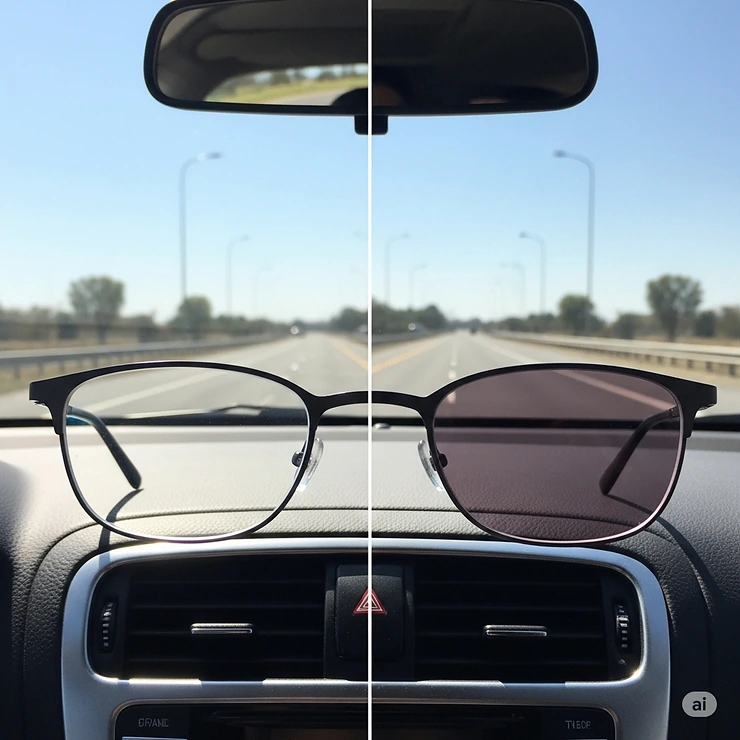
Photochromic technology in driving applications has evolved significantly, with newer formulations that darken inside vehicles despite UV-filtering windshields. Transitions Drivewear represents a specialized application of this technology specifically engineered for automotive use.
Electrochromic lenses represent an emerging technology that allows electronic control of lens darkness. While still in development for consumer applications, this technology promises revolutionary advances in adaptive eyewear for driving.
Polarization angle optimization involves adjusting the polarization axis specifically for automotive applications. Traditional sunglasses use vertical polarization, but some manufacturers are experimenting with slight angle adjustments to optimize glare reduction from modern windshields.
Spectral tuning allows precise control over which wavelengths are filtered, enabling lens designers to optimize for specific driving conditions. This technology enables the creation of lenses that enhance contrast without significantly altering color perception.
Comprehensive Setup and Usage Guide: Maximizing Your Investment
Detailed Selection Process for Individual Needs
Face shape considerations play a crucial role in both comfort and performance. Round faces benefit from angular frames that provide better peripheral coverage, while square faces work better with curved or round frames that soften harsh angles. Oval faces have the most flexibility in frame choice, allowing focus on lens technology and coverage.
Prescription considerations significantly impact lens choice. High myopia (nearsightedness) may require specific lens materials to minimize thickness and weight. Astigmatism benefits from polarized lenses, which can help reduce the multiple images that sometimes occur with uncorrected astigmatism.
Age-related vision changes influence optimal lens choice. Presbyopia (difficulty focusing on near objects) may benefit from gradient lenses that allow easier dashboard reading. Reduced contrast sensitivity common in older adults often improves with amber or brown lenses that enhance contrast.
Environmental Requirements and Optimization
Climate zone adaptation requires understanding your local conditions. Arid climates with intense, consistent sunlight favor darker lenses with maximum UV protection. Humid climates with frequent weather changes benefit from versatile lens colors like brown or green that perform well in variable conditions.
Seasonal adjustments may require multiple pairs of sunglasses. Summer driving often demands maximum glare reduction from gray or green lenses, while winter driving may benefit from amber lenses that enhance contrast against snow and reduce blue light glare.
Altitude considerations become important for mountain driving. High altitude increases UV exposure significantly, requiring darker lenses and higher UV protection ratings. The reduced atmospheric filtering at elevation makes quality lens coatings even more critical.
Safety Considerations and Best Practices
Dashboard compatibility is increasingly important with modern vehicles. LCD displays may appear differently through polarized lenses, potentially making speedometers or GPS screens difficult to read. Test your sunglasses with your specific vehicle before committing to a purchase.
Emergency preparedness requires consideration of worst-case scenarios. Sunglasses should be easily removable for tunnel driving or sudden weather changes. Quick-release temple designs or breakaway straps can be valuable for emergency situations.
Peripheral vision protection is crucial for safe driving. Frames should provide adequate coverage without creating blind spots. Wraparound designs offer superior protection but may interfere with prescription glasses or helmet use.
Gradual Adoption and Learning Protocols
Initial adaptation period typically lasts 3-7 days for new lens colors. Start with short drives in familiar areas to allow your eyes to adjust to any color shifts. Color distortion is most noticeable initially but becomes less apparent as your brain adapts to the new color balance.
Progressive exposure helps minimize adaptation challenges. Begin with 15-30 minute drives in good conditions, gradually increasing duration and complexity of driving situations. Highway driving should be attempted only after becoming comfortable with the new lenses in city conditions.
Performance evaluation should be ongoing during the adaptation period. Note any difficulties with traffic light recognition, depth perception, or eye strain. Immediate discontinuation is recommended if you experience headaches, nausea, or vision problems.
Maintenance and Longevity Optimization
Daily maintenance schedules preserve lens performance and extend lifespan. Morning inspection should check for smudges, scratches, or loose components. Post-drive cleaning removes road grime and salt that can damage coatings over time.
Weekly deep cleaning involves thorough washing with appropriate lens cleaners and microfiber cloths. Ultrasonic cleaners can be effective for removing stubborn deposits but should only be used with compatible frame materials.
Monthly professional assessment at optical shops can identify coating degradation or frame stress before they become serious problems. Prescription updates should be considered annually, as vision changes can affect driving safety.
Storage and Protection Strategies
Vehicle storage solutions should protect against temperature extremes and theft. Dashboard storage exposes sunglasses to damaging heat and UV radiation. Center console storage provides protection but may not be convenient for quick access.
Home storage systems should protect against scratching and deformation. Individual cases prevent lens-to-lens contact that can cause scratching. Humidity control in storage areas prevents fogging and coating degradation.
Travel protection requires consideration of varying climates and handling conditions. Hard cases provide maximum protection during transport but take up more space. Soft pouches offer convenience but require careful packing to prevent damage.
Investment and Purchase Decision Framework
Cost-Benefit Analysis Considerations
Total cost of ownership extends far beyond the initial purchase price. Quality driving sunglasses should be viewed as safety equipment rather than fashion accessories. A $200 pair of sunglasses that lasts five years and prevents one accident has an obvious positive return on investment.
Eye health costs represent significant long-term savings. UV damage accumulates over time, potentially leading to cataracts, macular degeneration, and other expensive eye conditions. Quality UV protection can prevent thousands of dollars in future medical costs.
Productivity benefits from reduced eye strain and improved comfort during driving can be substantial for professional drivers. Reduced fatigue translates to safer driving and potentially increased earning capacity for commercial drivers.
Insurance considerations may apply in some cases. Vision insurance sometimes covers prescription sunglasses, reducing effective costs. Professional drivers may be able to deduct high-quality sunglasses as a business expense.
Implementation Strategy Templates
Single purchase approach involves selecting one high-quality pair that works well across all driving conditions. This strategy requires careful selection but minimizes complexity and ensures consistency.
Multi-lens strategy uses different lenses for different conditions—gray for bright sun, amber for variable conditions, clear for night driving. This approach maximizes performance but requires investment in multiple pairs and remembering to switch appropriately.
Seasonal rotation involves different sunglasses for different times of year. Summer glasses prioritize maximum UV protection and glare reduction, while winter glasses focus on contrast enhancement and snow glare management.
Decision Criteria and Evaluation Matrices
Primary factors should include lens color performance, frame comfort, UV protection rating, and durability. Secondary factors might include style preferences, brand reputation, and warranty coverage.
Scoring systems can help quantify subjective preferences. Rate each criterion on a 1-10 scale, weight them according to personal priorities, and calculate total scores for different options.
Professional consultation with optometrists or experienced eyewear professionals can provide valuable insights, particularly for prescription wearers or those with specific vision conditions.
Budget Planning and Financing Options
Entry-level options ($50-100) can provide adequate protection and performance for occasional drivers. Look for polarized lenses with good UV protection ratings from reputable manufacturers.
Mid-range choices ($100-200) typically offer better optical quality, more durable frames, and enhanced coating technologies. This price range often provides the best value for regular drivers.
Premium selections ($200-400+) feature the latest lens technologies, superior materials, and comprehensive warranties. These are often worthwhile investments for professional drivers or driving enthusiasts.
Financing alternatives may include vision insurance coverage, flexible spending accounts, or retailer financing programs. Some employers offer vision benefits that can significantly reduce costs.
Case Studies and Real-World Success Stories
Case Study 1: Long-Haul Trucker Transformation
Background: Mike, a 15-year veteran long-haul trucker, was experiencing increasing eye strain and headaches during his coast-to-coast runs. He was using cheap, non-polarized sunglasses from truck stops and replacing them every few months when they broke or became too scratched.
Challenge: Mike’s routes took him through diverse conditions—from the bright desert sun of Arizona to the hazy humidity of the Southeast to the variable weather of the Pacific Northwest. His existing sunglasses worked poorly in changing conditions, and he often drove without eye protection during overcast periods.
Solution: After consultation with an occupational health specialist, Mike invested in two pairs of quality sunglasses: Ray-Ban RB3025 Aviators with gray polarized lenses for bright conditions and Oakley Holbrook sunglasses with Prizm brown lenses for variable light.
Implementation: Mike began using the gray lenses for bright highway driving and switched to brown lenses for early morning, late evening, and overcast conditions. He established a routine of cleaning the lenses at every fuel stop and storing them properly in hard cases.
Results: After six months, Mike reported a 75% reduction in end-of-day eye strain and complete elimination of driving-related headaches. His logbook showed improved driving times due to better visibility and reduced need for breaks. Most importantly, he avoided two potential accidents—one involving a deer that he spotted earlier due to improved contrast, and another involving a stopped vehicle that was more visible through reduced glare.
ROI Analysis: Mike’s investment of $400 in quality sunglasses saved an estimated $15,000 in potential accident costs, reduced his healthcare expenses by approximately $800 annually, and improved his earning capacity through more efficient driving.
Case Study 2: Urban Delivery Driver Success
Background: Sarah operates a food delivery service in San Francisco, driving 6-8 hours daily through the city’s challenging mix of tunnels, bridges, hills, and varying weather conditions. Her previous sunglasses were fashion-oriented and provided poor visibility in the city’s frequent fog and overcast conditions.
Challenge: San Francisco’s unique microclimate creates rapidly changing lighting conditions. Sarah frequently drove from bright sunshine into fog-shrouded areas, requiring constant adaptation. Her existing sunglasses made it difficult to read GPS displays and customer addresses.
Solution: Sarah chose Maui Jim Hookipa sunglasses with HCL Bronze lenses specifically for their superior contrast enhancement and ability to improve visibility in fog and overcast conditions. She also invested in gradient lenses for situations requiring dashboard visibility.
Implementation: The bronze lenses became her primary choice for most driving conditions, while gradient lenses were reserved for sunny highway driving to customer locations outside the city. Sarah developed a system for quick lens cleaning using anti-fog wipes and proper storage techniques.
Results: Sarah’s delivery times improved by an average of 15% due to better navigation visibility and hazard detection. Customer satisfaction scores increased as she made more accurate deliveries with fewer delays. Her insurance carrier offered a safe driver discount after she completed a full year without incidents.
Lessons Learned: The key was selecting lenses optimized for the most challenging conditions rather than the most common ones. The bronze lenses that seemed “too dark” initially proved perfect for San Francisco’s unique lighting challenges.
Case Study 3: Racing Instructor Professional Application
Background: David is a professional racing instructor who spends 8-10 hours daily on track teaching high-performance driving. His work requires precise vision for safety briefings, on-track instruction, and emergency response. Previous sunglasses caused eye strain during long track sessions and interfered with helmet use.
Challenge: Track environments present unique challenges—intense reflection from pavement, precise color recognition for flag signals, and the need for peripheral vision during high-speed instruction. Standard sunglasses often created pressure points under helmets or fell off during aggressive driving maneuvers.
Solution: David selected Oakley Flak 2.0 XL sunglasses with Prizm Road lenses and specialized temple designs for helmet compatibility. He also invested in prescription inserts to ensure optimal vision correction during instruction.
Implementation: The Prizm Road lenses enhanced contrast for better track surface reading while maintaining accurate color perception for safety flags. The temple design eliminated pressure points under various helmet styles, and the secure fit prevented movement during aggressive driving.
Results: David’s instruction quality improved significantly as he could better demonstrate racing lines and spot student errors earlier. His safety record improved with enhanced hazard detection capabilities. Student feedback consistently mentioned his improved ability to provide detailed visual coaching.
Professional Impact: The enhanced vision capability allowed David to expand his instruction services to include night driving and wet weather sessions, increasing his earning potential by approximately 30%.
Case Study 4: Elderly Driver Safety Enhancement
Background: Margaret, a 72-year-old retiree, was experiencing increasing difficulty with daytime driving due to age-related changes in contrast sensitivity and glare tolerance. Her family was concerned about her driving safety, particularly during bright conditions.
Challenge: Age-related vision changes made Margaret particularly sensitive to glare from wet roads and other vehicles. She was avoiding driving during certain times of day, limiting her independence and social activities.
Solution: An optometrist recommended Costa Del Mar Fantail sunglasses with copper lenses specifically for their contrast-enhancing properties and excellent glare reduction. The prescription lenses were optimized for her specific vision needs.
Implementation: Margaret began using the sunglasses for all daytime driving, with particular attention to high-glare situations like wet roads and bright sunshine. She practiced with the new lenses in familiar areas before attempting challenging driving situations.
Results: Margaret’s confidence behind the wheel returned, and she resumed her normal driving patterns. Her family noted significant improvements in her driving smoothness and decision-making. An independent driving assessment showed marked improvement in hazard detection and reaction times.
Family Impact: The restored driving independence allowed Margaret to maintain her social connections and continue living independently, providing peace of mind for her family while preserving her quality of life.
Future Trends and Market Evolution
Emerging Technologies and Innovation Directions
Adaptive lens technology represents the next frontier in driving eyewear. Current photochromic lenses that change based on UV exposure are being enhanced with temperature sensitivity and visible light adaptation. Future developments will likely include lenses that automatically adjust not just to light levels but to specific driving conditions.
Electrochromic lenses controlled by small batteries or solar cells will allow instant adjustment to optimal darkness levels. Prototypes already exist that can change from clear to very dark in seconds, controlled by smartphone apps or automatic sensors.
Smart integration will connect sunglasses to vehicle systems, potentially adjusting lens characteristics based on GPS location, weather data, and driving conditions. Heads-up display integration may project navigation or vehicle information directly onto the lens surface.
Biometric monitoring capabilities are being developed that could track eye movement, pupil dilation, and fatigue levels through sensors built into the frame. This technology could provide early warning of driver drowsiness or distraction.
Market Trends and Consumer Behavior Shifts
Premium segment growth reflects increasing consumer awareness of the connection between eyewear quality and driving safety. Consumers are increasingly willing to invest in high-quality lenses for improved performance rather than treating sunglasses as purely cosmetic accessories.
Customization demand is driving manufacturers to offer more personalized solutions. Direct-to-consumer brands are using online tools to help customers select optimal lens colors based on driving patterns, geographic location, and personal preferences.
Sustainability concerns are influencing material choices and manufacturing processes. Recycled frame materials and environmentally responsible lens manufacturing are becoming important differentiators in the market.
Gender-specific design is expanding beyond frame styling to include lens technologies optimized for physiological differences in color perception and light sensitivity between men and women.
Sustainability and Environmental Considerations
Eco-friendly materials are becoming mainstream in premium sunglasses manufacturing. Bio-based plastics derived from renewable sources are replacing traditional petroleum-based materials in frames and lens components.
Circular economy principles are driving lens replacement programs and frame recycling initiatives. Some manufacturers now offer lens upgrade services that extend the life of quality frames while incorporating the latest lens technologies.
Carbon footprint reduction through local manufacturing and sustainable supply chains is becoming a competitive advantage for environmentally conscious consumers.
Packaging innovation includes biodegradable cases and minimal packaging designs that reduce environmental impact without compromising protection during shipping and storage.
Personalization and Customization Possibilities
AI-driven selection tools analyze individual face shapes, driving patterns, and environmental conditions to recommend optimal lens and frame combinations. These systems are becoming increasingly sophisticated in their ability to predict personal preferences and performance requirements.
3D printing capabilities allow for custom frame modifications and personalized fit adjustments that were previously impossible or prohibitively expensive. On-demand manufacturing reduces inventory requirements while enabling more personalized products.
Modular designs allow users to easily swap lenses for different conditions while maintaining the same frame. This approach reduces cost and environmental impact while maximizing versatility.
Virtual try-on technology using augmented reality helps customers visualize how different lens colors and frame styles will look and perform before purchase.
Industry Predictions and Upcoming Developments
Consolidation trends in the eyewear industry may lead to more integrated solutions combining frame design, lens technology, and smart features from single manufacturers. This could accelerate innovation while potentially reducing consumer choice.
Regulatory evolution may establish specific standards for driving-optimized eyewear, similar to how motorcycle helmets and automotive safety equipment are regulated. This could drive minimum performance standards while encouraging innovation.
Healthcare integration with vision insurance and preventive care programs may make high-quality driving eyewear more accessible to broader populations, improving overall road safety.
Global market expansion in developing countries with growing automotive markets will drive demand for affordable yet effective driving eyewear solutions.
Professional certification programs for driving eyewear may emerge, similar to those that exist for motorcycle helmets or other safety equipment. This could help consumers make more informed choices while establishing industry quality benchmarks.
Frequently Asked Questions About Driving Lens Colors
❓ Are yellow lenses actually better for driving at night?
❓ Can polarized lenses interfere with my car's dashboard displays?
❓ What's the best lens color for driving in different weather conditions?
❓ How do I know if my sunglasses provide adequate UV protection for driving?
❓ Should I choose glass or polycarbonate lenses for driving safety?
Final Recommendations: Making Your Best Choice
Choosing the best sunglass lens color for driving ultimately comes down to understanding your specific needs, driving conditions, and personal preferences. Gray lenses remain the gold standard for most drivers due to their color accuracy and versatile performance, while brown and amber lenses excel in challenging conditions where contrast enhancement is crucial.
Remember that quality matters more than color alone. A well-made pair of sunglasses with proper UV protection, polarization, and anti-reflective coatings will serve you better than cheap alternatives regardless of lens color. Investment in quality eyewear is investment in safety—both yours and that of everyone sharing the road with you.
🔥 Ready to Drive Safer? Get Your Perfect Pair Today!
Transform your driving experience with professional-grade sunglasses designed for road safety. These top-rated options combine optimal lens colors with proven performance—click any highlighted product to check current Amazon pricing and customer reviews. Your eyes (and your passengers) will thank you! ⚡🥽
Recommended for You:
- 7 Best Polarized vs Photochromic Lenses: Ultimate Protection Guide 2025
- 7 Best Glasses for Heart Shaped Face: Ultimate Style Guide 2025
- 7 Blue Light Glasses vs Regular: Scientific Truth Behind Eye Protection in 2025
Disclaimer: This article contains affiliate links. If you purchase products through these links, we may earn a small commission at no additional cost to you.
✨ Found this helpful? Share it with your friends! 💬🤗
