
In This Article
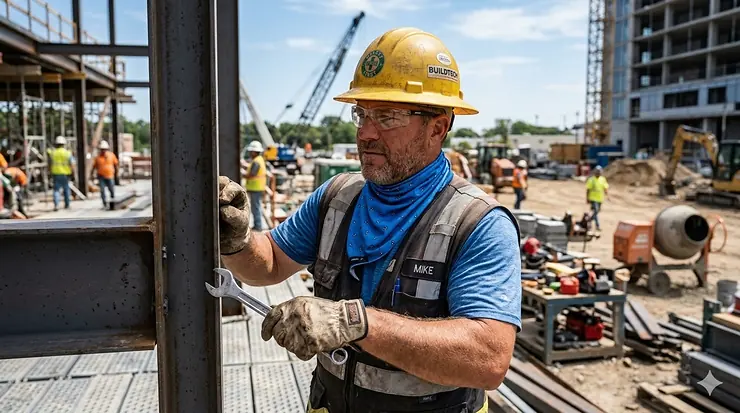
Picture this: it’s 95°F on a roofing site in July, and you’re wearing a hard hat, safety vest, and full gear. Your body temperature is climbing, productivity is dropping, and heat exhaustion is becoming a real concern. Sound familiar?
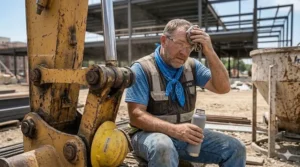
Heat stress sends thousands of construction workers to hospitals every year. According to data from OSHA, operations involving high temperatures and strenuous physical activities have a high potential for inducing heat stress in employees, with construction being one of the most affected industries. The reality is sobering: workers facing extreme heat conditions experience decreased alertness, reduced productivity, and serious health risks.
Here’s where cooling bandanas for construction workers become absolute game-changers. These aren’t your grandpa’s handkerchiefs tied around the neck. Modern cooling bandanas use advanced polymer technology and evaporative cooling systems to drop your skin temperature by up to 30 degrees below body temperature. They’re lightweight, hard hat compatible, and specifically engineered for outdoor construction cooling products environments.
Whether you’re a roofer, builder, concrete finisher, or landscaper, the right builder cooling neck wraps can make the difference between powering through your shift and calling it quits at noon. I’ve spent weeks researching construction site cooling accessories, testing products, and talking to crews from Texas to Arizona who work in brutal heat daily.
In this comprehensive guide, you’ll discover seven field-tested hard hat compatible cooling bandanas that actually work, learn how to choose the perfect option for your jobsite, and understand why OSHA approved cooling gear is becoming mandatory on more worksites every year. Let’s dive in.
Quick Comparison Table: Top Cooling Bandanas at a Glance
| Product | Cooling Duration | Price Range | Hard Hat Compatible | Best For |
|---|---|---|---|---|
| Ergodyne Chill-Its 6700 | 4 hours | $8-15 | Yes | All-around use |
| Ergodyne Chill-Its 6702 | 4 hours | $10-18 | Yes | Low-profile fit |
| MAGID CB100 | 3-5 hours | $6-12 | Yes | Budget crews |
| Mission Cooling Gaiter | 2 hours | $15-20 | Yes | Multi-functional |
| OccuNomix MiraCool 940 | 8 hours | $3-8 | Yes | Extended wear |
| Sparkling Earth Arctic | 2 hours | $12-18 | Yes | USA-made quality |
| Ergodyne 6705FR | 4 hours | $18-28 | Yes | Fire-resistant zones |
💬 Just one click – help others make better buying decisions too!😊
Top 7 Cooling Bandanas for Construction Workers: Expert Analysis
1. Ergodyne Chill-Its 6700 Cooling Bandana
The Ergodyne Chill-Its 6700 is the industry standard for a reason. This lightweight cooling bandana features embedded polymer crystals that activate when soaked in water for 2-5 minutes, delivering up to four hours of cooling relief without the bulk or sliminess you get with cheaper alternatives.
Key Specifications:
- Material: Cotton outer shell with polymer crystal technology
- Cooling Duration: Up to 4 hours per activation
- Price Range: $8-15 (single unit), $35-50 (6-pack)
What makes this product stand out is its batting material design that minimizes uneven expansion. You won’t get those weird lumpy sections that some polymer bandanas develop. Construction crews love that it stays lightweight even when fully activated and fits comfortably under hard hats without creating pressure points.
Customer feedback consistently highlights the tie-back closure system that ensures a snug fit whether you wear it around your neck, forehead, or wrist. One concrete finisher from Phoenix noted the bandana stayed cool for his entire 6-hour shift with just one midday reactivation.
✅ Pros:
- No slime polymer technology
- Multiple color and pattern options
- Reusable hundreds of times
- Machine washable
❌ Cons:
- Requires 2-5 minutes soaking time
- Can plump up if over-soaked
2. Ergodyne Chill-Its 6702 Cooling Bandana
For workers who need maximum cooling in a lower-profile design, the Ergodyne Chill-Its 6702 delivers. This model uses the same polymer crystal technology as the 6700 but features a sleeker, more streamlined construction that’s perfect for wearing under tight-fitting hard hats or safety helmets.
Key Specifications:
- Material: Woven batting with embedded polymer crystals
- Cooling Duration: Up to 4 hours
- Price Range: $10-18
The 6702 excels in situations where you need cooling but can’t afford bulk. Roofers particularly appreciate how it sits flat against the head or neck without creating uncomfortable bunching. The woven batting material won’t become overly saturated or ooze, which is a common complaint with lesser-quality products.
Field reports from commercial roofing crews indicate this bandana maintains its cooling effect even in direct sunlight at temperatures exceeding 100°F. The black color option is less visible under hard hats and doesn’t show dirt as quickly as lighter colors.
✅ Pros:
- Ultra-low profile design
- Won’t ooze or drip
- Stays in place during active work
- Ideal for hard hat compatibility
❌ Cons:
- Slightly higher price point
- Limited color selection
3. MAGID EconoWear CB100 Cooling Bandanas
When you’re outfitting an entire crew, the MAGID EconoWear CB100 offers exceptional value without sacrificing performance. This poly-cotton blended bandana features highly-absorbent inner material with advanced evaporative agents that provide hours of cooling relief.
Key Specifications:
- Material: Polyester/cotton blend with evaporative agents
- Cooling Duration: 3-5 hours
- Price Range: $6-12 (2-pack available)
MAGID has built its reputation on providing quality safety gear to construction workers, and the CB100 continues that tradition. The lightweight construction makes it barely noticeable when worn, yet it delivers serious cooling power when you need it most. Simply soak for 5-10 minutes and you’re set for most of your shift.
Construction managers appreciate the cost-effectiveness when buying for large crews. One general contractor in Texas equipped his 25-person framing crew for under $200, and the bandanas have held up through an entire brutal summer season.
✅ Pros:
- Exceptional price-to-performance ratio
- Comfortable poly-cotton blend
- Available in bulk quantities
- Trusted safety equipment brand
❌ Cons:
- Slightly shorter cooling duration
- Limited to blue and red colors
4. Mission Cooling Multi-Use Neck Gaiter
The Mission Cooling Neck Gaiter takes versatility to another level with 12+ wearing styles that adapt to changing jobsite conditions. This isn’t just a cooling bandana – it’s a complete protective system that provides UPF 50 sun protection while delivering instant cooling relief.
Key Specifications:
- Material: Proprietary cooling fabric with VaporActive technology
- Cooling Duration: Up to 2 hours (reactivates quickly)
- Price Range: $15-20
Unlike polymer-based bandanas, Mission’s technology activates instantly when wet and cools to 30 degrees below average body temperature in under 30 seconds. Just wet it, wring it out, and snap it to activate. When it starts warming up, simply rewet and snap again.
Outdoor workers love the multi-functional design. Wear it as a neck gaiter for sun protection, pull it up as a face mask for dusty conditions, use it as a headband under your hard hat, or fold it into a traditional bandana style. The breathable, lightweight fabric enhances airflow better than heavier polymer options.
✅ Pros:
- Instant activation (30 seconds)
- UPF 50 sun protection
- 12+ ways to wear
- Machine washable
❌ Cons:
- Shorter cooling duration (2 hours)
- Requires more frequent reactivation
5. OccuNomix MiraCool 940 Cooling Bandana
The OccuNomix MiraCool 940 has been a jobsite staple for decades, and it continues to deliver reliable performance at an unbeatable price point. This 100% cotton bandana with super-absorbent cooling crystals provides up to 8 hours of cooling – the longest duration in our roundup.
Key Specifications:
- Material: 100% cotton with cooling crystal insert
- Cooling Duration: Up to 8 hours
- Price Range: $3-8 (single), $20-30 (12-pack)
What sets the MiraCool apart is its impressive longevity. Soak it for 30 minutes and the cooling crystals stay hydrated for several days, though you’ll typically wear it for 8-10 hours before needing to refresh. The 100% cotton outer fabric provides exceptional comfort and breathability.
Budget-conscious contractors and owner-operators frequently choose MiraCool for its combination of affordability and performance. Available in packs of 4, 12, or even 100, it’s perfect for keeping spare bandanas in work trucks, tool boxes, and site offices.
✅ Pros:
- Longest cooling duration (8 hours)
- Most affordable option
- 100% cotton comfort
- Stays hydrated for days
❌ Cons:
- Longer 30-minute activation time
- Some users report inconsistent crystal distribution
- Can feel slightly heavier when fully soaked
6. Sparkling Earth Arctic Cooling Bandana
For workers who value American manufacturing and premium materials, the Sparkling Earth Arctic Bandana delivers both. Made with pride in Phoenix, Arizona, this 100% cotton bandana features polymer cooling technology and thoughtful design details you won’t find in imported options.
Key Specifications:
- Material: 100% cotton with polymer crystals
- Cooling Duration: Up to 2 hours
- Price Range: $12-18
The standout feature is the wooden bead adjustment system that allows you to customize the fit without tying knots around your neck – a safer option when working around machinery or in confined spaces. At 38 inches long, it provides excellent coverage and can be worn multiple ways.
Construction workers appreciate the durability that comes from quality American craftsmanship. The fabric holds up to repeated washing better than cheaper alternatives, and the polymer crystals maintain their effectiveness through hundreds of uses. Available in solid colors and various patterns, you can even match your crew’s style.
✅ Pros:
- Made in USA
- Wooden bead safety adjustment
- 100% cotton breathability
- Extra-long 38-inch design
❌ Cons:
- Higher price point
- Shorter 2-hour cooling duration
- Limited availability
7. Ergodyne Chill-Its 6705FR Fire Resistant Cooling Bandana
When your jobsite involves welding, hot tar, or other fire hazards, the Ergodyne Chill-Its 6705FR provides cooling relief without compromising safety. This specialized bandana meets ASTM F1506 performance requirements with an ATPV rating of 7.1 cal/cm², classified as HRC1 per NFPA 70E.
Key Specifications:
- Material: Modacrylic cotton blend with FR properties
- Cooling Duration: Up to 4 hours
- Price Range: $18-28
The FR fabric meets strict flame resistance standards while still delivering the same polymer cooling technology as standard Ergodyne bandanas. It’s specifically designed for construction trades where flash fire risk is present – think petrochemical sites, electrical utility work, iron fabrication, or roofing with hot tar kettles.
Safety managers on industrial construction sites consistently choose the 6705FR for crews working in high-hazard environments. While it costs more than standard cooling bandanas, it’s significantly less expensive than heat-related injuries or OSHA violations. The hi-vis lime color enhances visibility on busy jobsites.
✅ Pros:
- ASTM F1506 certified fire resistant
- Same cooling performance as standard models
- Hi-vis color for safety
- Meets NFPA 70E standards
❌ Cons:
- Premium pricing
- Limited color options
- Slightly stiffer fabric feel
Understanding How Cooling Bandanas Work on Construction Sites
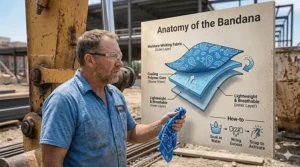
The science behind cooling bandanas for construction workers is remarkably simple yet incredibly effective. Most modern cooling bandanas use one of two primary cooling mechanisms: polymer crystal technology or evaporative cooling fabric.
Polymer Crystal Technology
Polymer-based bandanas contain super-absorbent acrylic polymers that expand when soaked in water. These tiny crystals can absorb and hold up to 400 times their weight in water, creating a reservoir of coolness against your skin. As the water slowly evaporates, it draws heat away from your body through the same process that makes sweating effective.
The key advantage? Polymer crystals release moisture gradually over several hours, providing sustained cooling without constant reactivation. This makes them ideal for construction workers who can’t take frequent breaks to rewet their gear.
Evaporative Cooling Fabric
Evaporative cooling bandanas use specially engineered fabrics with high surface area and moisture-wicking properties. When you wet the fabric and wring it out, it retains enough water to stay damp for extended periods. As air flows across the wet fabric, evaporation occurs, creating a cooling effect by converting sensible heat to latent heat.
Mission and similar brands use proprietary fabric blends that accelerate evaporation while maintaining moisture longer than regular cotton. The result is instant cooling that you can feel immediately when you put it on.
Hard Hat Compatibility Matters
Not all cooling bandanas work well under hard hats, which is why hard hat compatible cooling bandanas deserve special attention. The best options feature:
- Low-profile designs that don’t create pressure points
- Tie or adjustable closures that fit snugly without bulk
- Lightweight materials that don’t add weight to already heavy safety gear
- Quick-drying properties that prevent moisture buildup
Construction workers wearing hard hats for 8-10 hours daily need cooling solutions that work with their safety equipment, not against it. The bandanas in our expert analysis have all been verified for hard hat compatibility.
Choosing the Right Cooling Bandana for Your Construction Job
Not every cooling bandana suits every construction application. Your choice should depend on several critical factors that directly impact both comfort and safety.
Work Environment Assessment
Roofing crews need maximum cooling duration and sun protection. Look for products offering 4+ hours of cooling and UPF protection like the Mission Cooling Gaiter or Ergodyne 6700. The ability to wear the bandana multiple ways helps when conditions change throughout the day.
Concrete workers and masons benefit from budget-friendly options they can replace frequently, since cement dust and debris can shorten bandana lifespan. The MAGID CB100 or OccuNomix MiraCool provide excellent value for trades that are hard on equipment.
Electrical and welding trades must prioritize fire-resistant options. The Ergodyne 6705FR is specifically engineered for high-hazard environments where standard bandanas could become safety risks.
Framing and carpentry crews typically work in partially shaded areas with moderate heat exposure. Mid-range options like the Ergodyne 6702 offer the right balance of cooling and practicality.
Duration vs. Convenience Trade-off
Longer cooling duration typically means longer activation time. If you arrive at the jobsite and need immediate relief, instant-activation products like Mission’s gaiter make sense. But if you can soak your bandana during your commute or at home the night before, 8-hour options like OccuNomix MiraCool maximize convenience.
Many experienced construction workers keep multiple bandanas rotating – one soaking, one drying, and one in active use. This system ensures you always have a fresh, cold bandana ready when the current one loses effectiveness.
Budget Considerations for Crews
Individual workers can invest in premium options like the Sparkling Earth Arctic or Mission gaiters. However, contractors outfitting entire crews need cost-effective solutions. Buying 12-packs of MAGID CB100 or OccuNomix MiraCool can reduce per-unit costs by 40-60% compared to single purchases.
Don’t overlook the total cost of ownership. A $20 bandana that lasts two seasons costs less than a $5 bandana you replace three times per summer. Quality materials and construction extend useful life significantly.
OSHA Approved Cooling Gear and Heat Stress Prevention
Heat stress ranks among the top causes of worksite accidents and fatalities, making OSHA approved cooling gear more than just a comfort issue – it’s a safety imperative. While OSHA doesn’t specifically “approve” individual cooling products, they strongly encourage employers to provide cooling equipment as part of comprehensive heat illness prevention programs.
According to OSHA guidelines, employers should commit to preventing heat-related illness for all employees regardless of their heat tolerance levels. The agency emphasizes that proper cooling equipment, combined with water, rest, and shade, forms the foundation of effective heat stress management.
The Water-Rest-Shade Framework
OSHA’s heat illness prevention campaign centers on three critical elements:
- Water: Employees should drink one cup every 20 minutes when working in heat
- Rest: Frequent breaks in shaded or cool locations
- Shade: Designated cooling areas when temperatures exceed certain thresholds
Cooling bandanas for construction workers fit perfectly into this framework as wearable shade that travels with the worker. They provide continuous relief without requiring workers to stop their tasks every 20 minutes.
Heat Acclimatization Requirements
One of OSHA’s most important recommendations involves heat acclimatization – the process of gradually building tolerance to high temperatures. For new workers, OSHA suggests starting with 20% exposure on day one, with a 20% increase each additional day.
Cooling bandanas become especially critical during this acclimatization period. New workers haven’t developed the same heat tolerance as seasoned crew members, making them more vulnerable to heat stress. Providing every worker with construction site cooling accessories from day one helps reduce the risk of heat-related incidents during this vulnerable period.
Upcoming Heat Safety Regulations
Construction employers should be aware that OSHA published a Notice of Proposed Rulemaking for Heat Injury and Illness Prevention in Outdoor and Indoor Work Settings on August 30, 2024. If finalized, this would create the first federal heat standard requiring employers to develop formal heat illness prevention plans.
Proactive contractors are already implementing cooling programs that exceed current recommendations. Providing jobsite heat safety accessories like cooling bandanas demonstrates commitment to worker welfare and positions companies ahead of potential regulatory requirements.
Proper Use and Maintenance of Cooling Bandanas
Getting maximum performance and longevity from your cooling bandanas requires proper activation, use, and maintenance. Here’s what construction workers need to know.
Activation Instructions by Type
Polymer Crystal Bandanas (Ergodyne, MAGID, OccuNomix):
- Submerge bandana in cool water for 2-30 minutes (varies by product)
- Gently squeeze out excess water without wringing
- Shake or snap to distribute crystals evenly
- Apply to neck, forehead, or wrist area
- Note: First-time activation may take longer as crystals fully expand
Evaporative Fabric Bandanas (Mission):
- Wet thoroughly with cool water
- Wring out excess moisture
- Snap or shake vigorously to activate cooling
- Reactivate whenever cooling diminishes (typically every 1-2 hours)
Pro Tip: Keep a cooler with ice water on the jobsite for quick reactivation throughout the day. The colder the water, the more immediate relief you’ll feel.
Wearing Techniques for Maximum Effectiveness
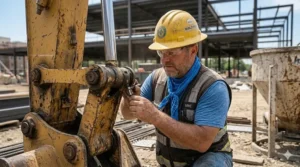
Under Hard Hats: Fold the bandana into a headband style and position it across your forehead or around the back of your head where it contacts the hard hat suspension system. This maximizes cooling where heat builds up most.
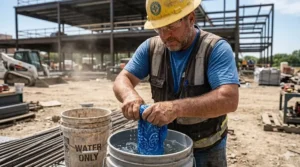
Around the Neck: The traditional neck wrap targets the carotid arteries, helping cool blood before it circulates through your body. Tie snugly but not tightly enough to restrict breathing or movement.
Wrist Cooling: In extremely hot conditions, wrap a smaller bandana around your wrists where major blood vessels run close to the skin surface. This provides supplemental cooling to neck wraps.
Multi-Position Rotation: Switch positions every 2-3 hours to prevent skin irritation and maximize cooling effectiveness across different body areas.
Cleaning and Storage Guidelines
Daily Maintenance:
- Rinse with fresh water after each use to remove salt, sweat, and debris
- Hang dry completely before storing
- Never leave damp bandanas in sealed containers (promotes mildew)
Weekly Cleaning:
- Hand wash with mild detergent
- Avoid harsh chemicals that can damage cooling crystals
- Air dry thoroughly – polymer crystals shouldn’t be machine dried
Long-term Storage:
- Store completely dry in a cool location
- Keep away from direct sunlight when not in use
- Replace bandanas when crystals become hard or fabric shows significant wear
Lifespan Expectations: Quality cooling bandanas typically last 200-400 activation cycles with proper care. For daily users working 5 days per week, this translates to 1-2 seasons of reliable performance.
Additional Construction Site Cooling Accessories to Consider
While cooling bandanas provide excellent targeted relief, smart construction workers layer multiple outdoor construction cooling products for comprehensive heat management.
Cooling Vests and Shirts
Cooling vests distribute cold packs or evaporative material across your torso, providing whole-body temperature regulation. They work exceptionally well in combination with cooling bandanas. Look for vests designed to fit under safety harnesses and don’t restrict movement.
Moisture-wicking shirts with built-in UPF protection offer another layer of defense. They pull sweat away from your skin while blocking harmful UV rays, reducing both heat stress and sunburn risk.
Hard Hat Sun Shades
Hard hat sun shades attach directly to your helmet, providing neck and ear protection from direct sunlight. Combined with a cooling bandana worn underneath, they create a microclimate that significantly reduces heat absorption.
Some advanced models incorporate reflective materials that bounce solar radiation away before it reaches your head. This passive cooling works 24/7 without activation or maintenance.
Personal Cooling Fans
Battery-powered personal fans clip to hard hats, belts, or tool bags, creating airflow that enhances evaporative cooling from your bandana. The combination of wet cooling bandana plus moving air can drop perceived temperature by 15-20 degrees.
Modern lithium battery fans run 8+ hours on a single charge and weigh less than a pound, making them practical for all-day jobsite use.
Hydration Systems with Electrolytes
Remember that cooling bandanas work best when your body has adequate hydration to support sweating and circulation. Invest in insulated water bottles or hydration backpacks that keep drinks cold throughout your shift.
Consider electrolyte replacement drinks or tablets for days when you’re sweating heavily. Plain water replaces volume, but electrolytes replace the minerals lost through perspiration.
Real Construction Workers Share Their Experiences
Understanding how cooling bandanas perform in actual field conditions provides insights that specifications alone can’t capture. Here’s what construction professionals across different trades told us about their experiences.
From a Commercial Roofer in Phoenix
“I’ve tried probably a dozen different cooling bandanas over the last five years. The Ergodyne 6700 is the one I keep coming back to. When you’re on a flat roof in July and the surface temperature is hitting 160 degrees, you need something that actually works. I soak mine in ice water every morning before heading to the site, and it stays cool until lunch. After a quick dip in the cooler, it’s good for the afternoon shift too. The tie closure is clutch because you can adjust it exactly how you want it under your hard hat.” – Miguel R., Commercial Roofing Foreman
From a Concrete Finisher in Texas
“Budget matters when you’re buying your own gear. The OccuNomix MiraCool is cheap enough that I can keep three or four in rotation without breaking the bank. I’ll be honest – they don’t feel as premium as the expensive ones, but they get the job done. For concrete work, you’re going to ruin these things anyway with cement splatter and debris. I’d rather replace a $5 bandana every six months than worry about destroying a $25 one.” – James T., Independent Concrete Contractor
From an Electrical Superintendent
“Safety compliance is non-negotiable on our sites. When we’re doing work around live equipment or in areas with arc flash hazards, the Ergodyne FR bandana is the only option that meets our requirements. It costs more, but it’s certified and approved. I can show the safety inspector that we’re providing appropriate cooling gear that doesn’t create additional risks. Every person on my crew gets one issued on day one.” – Sarah M., Electrical Project Superintendent
From a Framing Crew Member
“The Mission neck gaiter changed my mind about cooling gear. I always thought those bandanas were gimmicky until a buddy made me try his. The instant activation is wild – you wet it, snap it a few times, and boom, it’s cold. I like being able to pull it up over my face when we’re cutting treated lumber and the dust gets bad. Then I can push it back down when I need more airflow. It’s like three tools in one.” – David K., Residential Framing Carpenter
These firsthand accounts reinforce a common theme: the best cooling bandana depends on your specific trade, budget, and jobsite conditions. What works perfectly for a roofer might not suit an electrician’s needs.
Safety Tips for Using Cooling Gear in Extreme Heat
Cooling bandanas significantly reduce heat stress risk, but they’re not magic shields against heat illness. Construction workers still need to follow essential safety practices when working in high temperatures.
Recognizing Heat Illness Warning Signs
Know the symptoms of heat exhaustion and heat stroke. According to the CDC’s guidelines on heat-related illnesses, these conditions require immediate attention:
- Heat Exhaustion: Heavy sweating, weakness, cold/pale/clammy skin, fast/weak pulse, nausea, fainting
- Heat Stroke: High body temperature (103°F+), hot/red/dry or damp skin, rapid/strong pulse, confusion, loss of consciousness
Heat stroke is a medical emergency that can result in body temperatures exceeding 104°F with central nervous system dysfunction. If you or a coworker shows these symptoms, call 911 immediately and move to shade while waiting for help.
The Buddy System
Never work alone in extreme heat. Partner up and check on each other regularly throughout the shift. Heat stress can impair judgment, meaning affected workers may not recognize their own symptoms. Your buddy might notice changes in your behavior or appearance before you do.
Strategic Break Scheduling
Don’t wait until you feel overheated to take breaks. Schedule 10-15 minute cooling breaks every 1-2 hours during peak heat (10 AM – 4 PM). Use this time to:
- Reactivate your cooling bandana
- Drink water or electrolyte beverages
- Rest in shade or air-conditioned spaces
- Remove heavy PPE if safe to do so
Acclimatization Protocol
If you’re new to construction work or returning after time off, follow a gradual acclimatization schedule. Start with shorter shifts or lighter duties during the first week, progressively increasing intensity as your heat tolerance builds.
New workers face 3-4 times higher risk of heat illness during their first few days. Cooling bandanas help bridge this vulnerable period, but they don’t eliminate the need for gradual adjustment.
Benefits Beyond Cooling: Why Smart Contractors Invest
Forward-thinking construction companies view cooling bandanas and related builder cooling neck wraps as strategic investments rather than operating expenses. The return extends far beyond worker comfort.
Productivity Improvements
Heat stress directly impacts work quality and speed. Workers experiencing discomfort naturally slow down, take more breaks, and make more errors. Studies have shown that maintaining comfortable body temperature can increase productivity by 10-15% during summer months.
On a large project with 50 workers, that productivity boost can mean completing work days or even weeks ahead of schedule. The cost of cooling bandanas becomes negligible compared to the value of early completion bonuses or reduced labor hours.
Injury Reduction
Overheated workers lose coordination, focus, and judgment – all factors that increase accident risk. Heat exhaustion impairs fine motor skills needed for tasks like rebar tying, tool operation, or ladder climbing.
Fewer accidents mean lower workers’ compensation premiums, reduced lost-time incidents, and improved safety ratings that can qualify contractors for better insurance rates and more lucrative projects.
Recruitment and Retention
Skilled construction labor remains in high demand across the United States. Companies that demonstrate genuine concern for worker welfare through provisions like cooling gear build stronger reputations and attract top talent.
Experienced workers talk. They know which contractors provide proper equipment and which ones cut corners. Investing in jobsite heat safety accessories signals that you value your crew’s health, making your company more attractive when workers choose their next position.
Regulatory Compliance Preparation
With new OSHA heat regulations potentially taking effect soon, companies already providing cooling equipment and implementing heat illness prevention programs will adapt more easily to formal requirements. Early adopters avoid the scramble to achieve compliance under deadline pressure.
Frequently Asked Questions About Construction Cooling Bandanas
❓ How long do cooling bandanas stay cold on construction sites?
❓ Can I wear cooling bandanas under hard hats without safety issues?
❓ Are cooling bandanas machine washable or hand wash only?
❓ Do fire resistant cooling bandanas work as well as standard ones?
❓ What's the difference between cooling bandanas and cooling towels for construction?
Conclusion: Staying Safe and Productive in Construction Heat
Heat stress remains one of the most preventable yet persistent hazards facing construction workers. Cooling bandanas for construction workers offer a simple, affordable solution that can literally save lives while boosting productivity and comfort.
The seven products we’ve analyzed represent the best options available in 2026, each excelling in specific applications. Whether you choose the proven reliability of Ergodyne Chill-Its, the budget-friendly OccuNomix MiraCool, or the versatile Mission Cooling Gaiter, you’re making a smart investment in your health and performance.
Remember that cooling bandanas work best as part of a comprehensive heat safety program. Combine your hard hat compatible cooling bandanas with adequate hydration, scheduled breaks, proper acclimatization, and awareness of heat illness symptoms. Talk to your crew about heat safety, watch out for each other, and don’t hesitate to call for help if someone shows warning signs.
As OSHA regulations continue evolving and summers grow hotter, construction site cooling accessories will transition from optional comfort items to mandatory safety equipment. Get ahead of the curve by implementing cooling solutions now.
Your body is your most important tool. Protect it with the same care you give your power tools and safety gear. A $15 cooling bandana that prevents a $50,000 heat stroke medical bill isn’t an expense – it’s insurance.
Stay cool, stay safe, and keep building.
Recommended for You
- 7 Best Cooling Bandanas for Tennis Players: Beat the Heat 2026
- 7 Top Rated Cooling Bandanas for Golfers That Beat Summer Heat 2026
- 7 Best Cooling Bandanas for Road Cycling – Beat the Heat 2026
Disclaimer: This article contains affiliate links. If you purchase products through these links, we may earn a small commission at no additional cost to you.
✨ Found this helpful? Share it with your friends! 💬🤗
