
In This Article
An 800 fill down jacket for backpacking is an insulating layer filled with goose or duck down that lofts to about 800 cubic inches per ounce. That loft traps more warm air per gram, so you carry less pack weight for the same warmth, and the jacket squashes down to roughly the size of a water bottle.

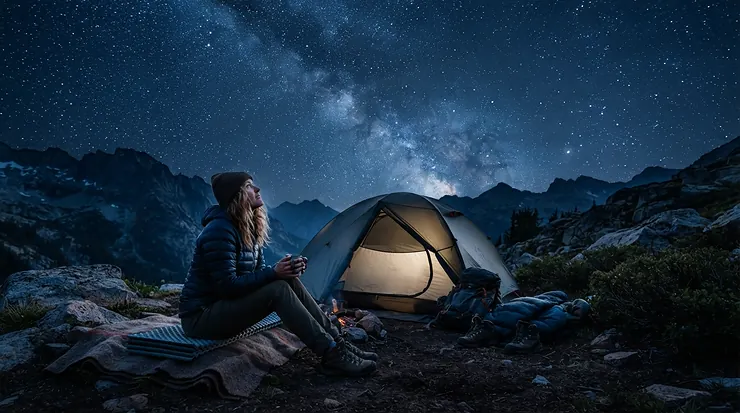
Picture it. It’s 4:45 p.m., you’ve just dropped your pack at a ridge camp, and the sweat on your back is turning into ice water. The next ten minutes are decided by whatever you stuffed in your lid pocket. That is the entire job description of an 800 fill down jacket for backpacking. It does nothing for eight hours. Then it saves your evening.
Here’s what spec sheets rarely tell you: fill power is only half the story. Fill weight (how much down is actually inside), shell fabric, and cut decide how much warmth you get per ounce you carry. A smart choice balances all three against your trail conditions, your budget, and how roughly you treat gear.
This guide compares seven real jackets, from a featherweight lightweight backpacking down jacket to a winter-ready heavyweight. Every pick is analyzed using published specs and aggregated tester and reviewer feedback, with price ranges only, since prices change constantly. Check current pricing before you buy.
Quick Comparison: 7 Top Picks for a Lightweight Backpacking Down Jacket
| Jacket | Approx. Weight | Down Fill | Shell | Price Range | Best For |
|---|---|---|---|---|---|
| Mountain Hardwear Ghost Whisperer Hoody | ~10-11 oz | ~3 oz, 800-fill | 10D recycled ripstop | $300-$400 | Ultralight, fast-and-light trips |
| Patagonia Down Sweater Hoody | ~15 oz | ~5 oz, 800-fill | 20D recycled ripstop | Mid-$300s | One jacket for trail and town |
| Outdoor Research Helium Down Hoodie | ~15-16 oz | 800+ fill | Pertex Quantum hybrid (15D/30D) | $300-$350 | Brush, drizzle, rough use |
| Cotopaxi Fuego Hooded Down Jacket | ~13 oz | 800-fill hydrophobic | 20D recycled ripstop | Around $300 | Value-minded backpackers |
| Rab Neutrino Pro | ~1-1.25 lb | ~6.4-7.5 oz, 800-fill hydrophobic | 20D Pertex Quantum Pro | $400-$450 | Winter and cold-camp trips |
| Patagonia Fitz Roy Down Hoody | ~15-17 oz | ~4.5-6.4 oz, 800-fill | Thin ripstop | Around $400 | Midweight shoulder-season warmth |
| Simond MT100 | ~10-12 oz | ~3.6 oz, 800-fill duck | 15D polyamide | $80-$120 | Budget three-season use |
Read the table sideways and a pattern jumps out: the lightest jackets (Ghost Whisperer, MT100) carry the least down, while the warmest (Neutrino Pro) pay for it in ounces. If pack weight is your obsession, Ghost Whisperer is the standout, but MT100 delivers surprisingly similar weight at a fraction of the cost. Cold sleepers should look at the heavier end of the table instead of chasing grams.
💬 Just one click — help others make better buying decisions too!😊
Top 7 800 Fill Down Jackets for Backpacking: Expert Analysis
A quick honesty note: at the time of research, consistent Amazon star-rating data wasn’t verifiable for every model. The sentiment summaries below reflect aggregated reviewer testing and retailer feedback themes instead, and listed weights and fill weights vary by size, version, and model year. Confirm current specs before buying.
1. Mountain Hardwear Ghost Whisperer Hoody — featherweight champion for fast trips
Lifting this jacket feels like holding a rumor of a jacket, which is exactly why gram-counters whisper its name at trailheads.
The spec sheet reads like a diet plan: a 10-denier recycled ripstop shell wrapped around about 3 ounces of 800-fill RDS-certified down. Reviewer listings put hooded versions around 10-11 ounces (hoodless versions run lighter), so your pack weight barely notices it. That ultra-thin shell is the trade-off: it saves ounces but demands gentle treatment near thorns and granite.
Based on the spec comparison, this is a three-season camp layer, not a winter parka. Three ounces of down works well from the 30s upward when paired with a fleece, which suits ultralight section hikers perfectly. Testers consistently praise its packability and warmth for the weight. Recurring complaints include a very trim cut that layers only over thin fleece, plus a stripped-down feature set of two hand pockets and no hood cinch.
Pros:
- ✅ Exceptional warmth for the pack weight
- ✅ Stuffs down to nearly nothing
- ✅ RDS-certified 800-fill down
Cons:
- ❌ 10D shell snags easily
- ❌ Trim fit limits layering room
Typically in the $300-$400 range depending on version. It’s a strong buy if you shave grams and a questionable one if you bushwhack.
2. Patagonia Down Sweater Hoody — the do-everything puffy that earns its keep
Some jackets are specialists. This one is the Swiss Army knife that also happens to look fine at a brewery.
It packs about 5 ounces of 800-fill down, which is above average compared with many lightweight jackets that use closer to 4, inside a 20-denier recycled ripstop shell. Weight lands around 14.8 ounces for the hooded version. That extra down gives you real margin on a 30°F evening, and the sturdier shell shrugs off pack-strap abrasion that would chew through thinner fabrics.
Here’s what to weigh: you’re paying roughly four to five ounces more than the ultralight crowd for durability and versatility. For a first-time buyer who wants one warm packable jacket for backcountry trips and weekday commutes, that’s a smart deal. Like most stitch-through designs, it can feel slightly cooler along the seams in deep cold.
Reviewers repeatedly call it versatile and tough, and several lists name it the most durable down option in this class. The usual knock is simply weight and price compared with ultralight rivals.
Pros:
- ✅ Generous 5 oz down fill for the weight
- ✅ Durable 20D shell survives years of abuse
- ✅ Styling works on and off the trail
Cons:
- ❌ Heavier than ultralight competitors
- ❌ Not hydrophobic-treated down
Expect the mid-$300s. It’s excellent value if it replaces two jackets.
3. Outdoor Research Helium Down Hoodie — built to take a beating from brush and drizzle
Most down jackets are divas. This one gets muddy and keeps working.
The Helium Down Hoodie pairs 800-plus fill down with a Pertex Quantum hybrid shell: a lighter 15-denier body fabric combined with heavier reinforcement, with weather-resistant material on the hood and shoulders per testers. Reviewers list weights around 15-16 ounces. The shoulders and hood are exactly where pack straps grind and rain drips land, so reinforcing them extends the jacket’s life where it matters.
On paper, that makes it a smart pick for off-trail scrambles, tight forest trails, and drizzly climates where a thin ultralight shell would be a liability. You’re trading a few ounces of pack weight for durability, and many backpackers will happily make that trade.
Aggregated reviews highlight abrasion resistance and weather resilience as its calling cards. The recurring downside is that it’s heavier than the true ultralight options, and the price sits near the top of the mid-range.
Pros:
- ✅ Reinforced hood and shoulders resist wear
- ✅ Weather-resistant shell handles light drizzle
- ✅ 800-plus fill down in a rugged package
Cons:
- ❌ Noticeably heavier than ultralight picks
- ❌ Premium pricing for its warmth level
Plan on $300-$350. It’s good value for rough use and poor value for fair-weather fastpackers.
4. Cotopaxi Fuego Hooded Down Jacket — premium-feeling warmth at a friendlier price
Here’s the jacket that crashes the party where $400 puffies are mingling and quietly holds its own.
The Fuego uses 800-fill hydrophobic goose down in a 20-denier recycled ripstop shell, with a PFAS-free water-repellent finish on current versions. The cut runs slightly longer with an adjustable hem. Listings put it around 13 ounces. Hydrophobic treatment slows moisture absorption, which matters on damp trips, and the longer torso coverage helps seal in heat when you’re sitting still at camp.
One tester wore it on a four-day Enchantments trip, staying warm into the 30s with a base layer and fleece underneath. That fits what the specs suggest: it’s a warm packable jacket for backcountry trips in cool, not frigid, conditions. Reviewers frequently describe its warmth and durability as comparable to jackets costing more.
The drawbacks are modest. It isn’t ultralight, and its shell won’t match the abrasion resistance of the Helium Down Hoodie‘s hybrid fabric.
Pros:
- ✅ Hydrophobic 800-fill down for damp conditions
- ✅ Longer cut with adjustable hem
- ✅ Warmth rivals pricier jackets
Cons:
- ❌ Heavier than ultralight alternatives
- ❌ Less abrasion-proof than hybrid shells
Around $300. It’s the value pick for backpackers who want solid performance without paying brand-premium money.
5. Rab Neutrino Pro — winter-weight warmth that still fits in a pack
Think of it as a sleeping bag with sleeves, and you’ll understand why cold-weather backpackers get misty-eyed about it.
Reviewers list roughly 6.4-7.5 ounces of 800-fill hydrophobic European goose down (the figure varies by version and size) inside a 20-denier Pertex Quantum Pro shell. Weights run about a pound to a pound and a quarter. Down makes up roughly a third of the jacket’s weight, which is outstanding insulation efficiency for a garment this warm. The Quantum Pro shell blocks wind and light moisture, helping the down loft fully.
Based on the spec comparison, this belongs in October-through-March trips, cold-camp mornings, and anyone who sleeps cold. It’s thick enough that it won’t layer well under other pieces, and one CleverHiker-style critique is simply that it’s a bit heavy for casual three-season backpacking.
Testers rank its warmth-for-weight near the top of the category, while complaints focus on bulk and a “packability tax.”
Pros:
- ✅ Serious loft from 800-fill hydrophobic down
- ✅ Wind-resistant Pertex Quantum Pro shell
- ✅ Warm enough for sustained sub-freezing camps
Cons:
- ❌ Bulky for summer or ultralight trips
- ❌ High price for specialized use
Expect $400-$450. It’s worth it for winter backpackers and overkill for July.
6. Patagonia Fitz Roy Down Hoody — cozy midweight warmth between puffy and parka
This is the jacket for people who’ve outgrown the thin puffy but refuse to haul a parka.
Reviewers describe 800-fill goose down (90/10, traceable) with fill weights ranging from about 4.5 to 6.4 ounces across versions, since Patagonia has redesigned it over the years. Weight runs roughly 15-17 ounces, and the hip-length hem keeps bulk in check. One review places its comfort range from below freezing into the 40s Fahrenheit for moderate exertion.
Analytically, it fills the gap between lightweight jackets like the Down Sweater Hoody and winter-weight options like the Neutrino Pro. Check the current spec sheet, because the shell thickness and fill weight differ across model years. One reviewer also noted the down isn’t moisture-resistant, so keep it dry.
Reviewers love the sleeping-bag coziness and roomy layering fit. A minority of buyer comments question whether recent versions match older ones.
Pros:
- ✅ Roomy, cozy midweight warmth
- ✅ Fits over multiple layers comfortably
- ✅ 800-fill traceable goose down
Cons:
- ❌ Down isn’t water-resistant per reviewers
- ❌ Specs shifted across model years
Around $400. It’s good value for cold sleepers, steep for casual use.
7. Simond MT100 — 800-fill warmth at a budget price
Somewhere, a gear snob is quietly furious that this exists.
The MT100 uses 800-fill RDS-certified duck down (90/10 down-to-feather) in a 15-denier polyamide shell. Reviewers list about 10.2 ounces for the women’s version and 12.2 ounces for a men’s XL, with roughly 3.6 ounces of fill. Duck down at 800 fill is just as warm as goose at 800 fill, since fill power is species-independent. The Responsible Down Standard audits farms against live-plucking and force-feeding.
Testers rate its comfort range from about 23°F and up when worn over a fleece, which makes it a solid three-season layer for chilly mornings and camp evenings. It’s sold mainly through Decathlon, so check Amazon availability and sizing before you plan a purchase.
Reviewers frequently crown it the best budget down jacket. The common caveats are a slim cut that feels tight in the shoulders and an oversized hood.
Pros:
- ✅ 800-fill down at a bargain price
- ✅ Packs to roughly Nalgene size
- ✅ RDS-certified duck down
Cons:
- ❌ Slim shoulders restrict some movement
- ❌ Not warm enough for deep winter
Retail typically sits in the $80-$120 range. It’s the best value here for beginners and weekend trips.
Packing, Layering and Care: A Practical Usage Guide for Your Lightweight Backpacking Down Jacket
Buying the jacket is step one. Using it well is where Amazon listings go silent.
Setup and first-use tips. When your jacket arrives, shake it out and let it loft for a day. Down that’s been compressed in shipping looks sad and flat, and it needs a rest. In your pack, stuff it loosely into a waterproof bag at the top where you can grab it without unpacking. Never store it compressed for weeks, since constant squashing slowly wears down loft.
The layering rhythm. Put it on at the start of every break, before you feel cold. Taking it off is just as important: strip it before the next climb so you don’t soak the lining with sweat. Down fails slowly when damp, then suddenly.
Maintenance schedule. Spot-clean small marks. Wash a few times a season at most with a down-specific cleaner, then dry on low with clean tennis balls to break up clumps. Patch snags immediately with repair tape; a tiny tear can leak feathers all season.
Common first-30-days mistakes: wearing it under a hot, tight pack all day, ignoring tiny holes, and storing it damp. Do the opposite and a good 800 fill down jacket for backpacking will outlast several pairs of boots.
Real-World Scenarios: Matching a Warm Packable Jacket for Backcountry Trips to Your Style
Specs mean little until they meet an actual trip. Here are three buyer profiles.
The weekend Sierra hiker. Budget: moderate. Environment: dry, high-altitude, summer nights in the 30s-40s. Frequency: 15 nights a year. A Ghost Whisperer makes sense here because the dry air rewards ultralight fabric and every ounce of pack weight counts across big climbs. If money is tight, the MT100 gets you most of the way there.
The Pacific Northwest drizzle-chaser. Budget: mid-range. Environment: wet forests, off-trail brush, temperatures in the 30s-50s. Frequency: 25 nights a year. The Helium Down Hoodie or Fuego fits best, since reinforced shells and hydrophobic down matter more than saving three ounces.
The shoulder-season cold camper. Budget: higher. Environment: October-to-April alpine camps, temperatures in the 20s. Frequency: 20 nights a year. Choose the Neutrino Pro for maximum warmth or the Fitz Roy for a lighter midweight option. Both feel like wearing a sleeping bag on cold mornings.
This is the same logic behind every smart purchase: match the jacket to your actual trips, not your imagined ones.
✨ Don’t Miss These Top Picks!
🔍 Take your next trip to the next level with these carefully selected jackets. Click on any highlighted item to check current pricing and availability. The right layer will help you create warm, confident camps your whole group will enjoy!
Cold-Camp Problems and Solutions: Staying Warm Without Guesswork
Problem 1: You’re shivering even in your jacket. Fill weight, not just fill power, decides warmth. A 3-ounce jacket like the Ghost Whisperer can’t match the loft of the Neutrino Pro. Solution: add a hat, insulated base layer, and dry socks before upgrading the jacket.
Problem 2: The down got damp. Condensation inside tents and wet snow are sneaky. Hydrophobic down in the Fuego or Neutrino Pro slows absorption, but it’s not waterproof. Solution: shake off moisture, dry it in sun or a warm bag, and keep a rain shell on hand.
Problem 3: You’re overheating on the climb. Down is a rest layer, not a hiking layer. Solution: vent early, stow it dry, and put it back on at the summit.
Problem 4: Hypothermia risk. The National Park Service warns that hypothermia can occur in temperatures between 30 and 60°F, especially with wind or rain. Solution: add warm layers before you’re soaked or chilled, ventilate before you sweat, and eat regularly.
Problem 5: A snag in your shell. Solution: patch it fast with repair tape. The thinner the fabric, the faster feathers escape.
How to Choose an 800 Fill Down Jacket for Backpacking
Short answer: match fill weight, shell durability, and weather protection to your coldest realistic night. Here’s the process.
- Start with your coldest expected temperature. Lightweight jackets with about 3 ounces of down suit the 30s and above; midweight or winter-weight jackets suit below freezing.
- Check fill weight, not just fill power. 800 fill describes quality; fill weight describes quantity. Both determine warmth.
- Weigh pack weight against durability. A 10D shell saves ounces but snags easily; 20D shells last longer.
- Choose hydrophobic down if your trail conditions are damp. It slows moisture absorption but doesn’t replace a rain jacket.
- Confirm the fit. You need room for a base layer and fleece, plus a hood that cinches or at least stays put.
- Look for RDS certification. It signals third-party audits of animal welfare and traceability.
- Calculate cost per night. A jacket you’ll use for years is cheaper than it looks on day one.
Pack Weight and Insulation Efficiency: What 800 Fill Really Buys You
Insulation efficiency is simply warmth delivered per ounce you carry. Higher fill power traps more air per gram, so the same warmth takes less down. But total loft depends on both quality and quantity. Three ounces of 800-fill down occupies about 2,400 cubic inches of loft, while five ounces fills about 4,000. That’s a rough yardstick, not a thermometer, but it explains why the Down Sweater Hoody feels so much toastier than the Ghost Whisperer.
| Jacket | Down (oz) | Total Weight (oz) | Down Share | Best For |
|---|---|---|---|---|
| Ghost Whisperer | ~3 | ~10.7 | ~28% | Minimalists |
| MT100 | ~3.6 | ~12.2 | ~30% | Budget buyers |
| Down Sweater Hoody | ~5 | ~14.8 | ~34% | All-rounders |
| Fitz Roy | ~4.5-6.4 | ~15-17 | ~30-38% | Cold sleepers |
| Neutrino Pro | ~6.4-7.5 | ~16-20 | ~35% | Winter trips |
These figures are approximations drawn from reviewer listings and vary by size and model year. Down share of total weight is a crude but useful proxy for insulation efficiency. By that measure, the Down Sweater Hoody and Neutrino Pro convert the most of their carried ounces into warmth, while the Ghost Whisperer wins by simply carrying less of everything. If you’re shaving pack weight for a thru-hike, that’s the smart trade; if you’re sitting in a camp chair at 25°F, it isn’t.
Trail Conditions: What to Expect From a High Fill Power Jacket for Trail Use
Trail conditions rewrite every spec sheet. Here’s how a high fill power jacket for trail use behaves across the situations you’ll actually meet.
Dry cold. This is down’s home turf. A MT100 keeps comfort around 23°F and up with a fleece, while a Fitz Roy stretches into below-freezing territory for moderate exertion.
Damp or drizzly days. Down loses loft when wet. Hydrophobic treatment on the Fuego and Neutrino Pro helps, and weather-resistant shell panels on the Helium Down Hoodie shed light moisture, but none of them replaces a rain shell.
Wind. Shell fabric matters here. The Neutrino Pro‘s tighter Pertex Quantum Pro blocks gusts better than 10D fabrics.
Altitude. Temperatures drop and wind rises as you climb, so carry more warmth than the valley forecast suggests.
The Washington Trails Association stresses that hydration, nutrition, proper clothing, layering, and rest management all work together to prevent hypothermia. No jacket, however well-filled, replaces that system.
Lightweight Backpacking Down Jacket vs Synthetic Alternatives
| Factor | 800 Fill Down | Synthetic Insulation | 650 Fill Down |
|---|---|---|---|
| Warmth-to-weight | Excellent | Good, usually bulkier | Good, heavier |
| Wet performance | Weak unless treated | Stronger | Weak |
| Compressibility | Excellent | Moderate | Good |
| Lifespan with care | Very long | Moderate | Long |
| Cost | Higher | Moderate | Lower |
| Best For | Dry to damp cold, minimal pack weight | Persistent wet climates | Budget buyers, casual trips |
Synthetic wins when it’s soggy for days, since it keeps insulating when wet. But for most three-season and winter trips, a lightweight backpacking down jacket gives you more warmth per ounce and packs smaller. The MT100 shows how 800 fill can also undercut many 650-fill competitors on price, narrowing the old cost gap. Choose synthetic only if you expect relentless rain and cannot bring a rain shell and a dry bag.
Features That Actually Matter (And Those That Don’t)
Matters: Fill weight, shell durability, hood quality, and fit. Hydrophobic treatment is a nice bonus for damp regions, and RDS or similar traceability is a good ethical benchmark.
Matters a little: Pockets. Two hand pockets suffice for most trips. The Ghost Whisperer proves you can live with fewer.
Doesn’t matter: Brand logos, color palettes, and flashy zipper garages. A bright Fuego isn’t warmer than a dull one.
Overhyped: Extreme fill power for its own sake. Moving from 800 to 900 saves a little weight at a lot of cost, while extra fill weight often delivers more warmth for the money.
The best marketing-proof move is to compare fill weight, shell denier, and listed weight across jackets. If a brand won’t tell you fill weight, assume it’s lighter than you’d hope.
Long-Term Cost and Maintenance: Is an 800 Fill Down Jacket Worth It?
Cost per night tells the true story. A jacket in the mid-$300s used 25 nights a year for five years works out to under $3 per night, which is cheaper than most trail-town coffee. The Down Sweater Hoody earns its price through durability, and the MT100 crushes the math at a lower entry price.
Maintenance is minimal: store it loose, wash it sparingly with down-specific cleaner, repair snags quickly, and keep it dry. Lower-priced jackets may need replacement sooner if the shell is thin. Premium jackets cost more upfront but can last a decade, especially with repairs. If you only backpack three times a year, the MT100 is the rational buy. If you’re out forty nights a year, invest in the best fit and durability you can afford.
Common Mistakes When Buying an 800 Fill Down Jacket for Backpacking
- Buying on fill power alone. A 3-ounce 800-fill jacket isn’t warmer than a 6-ounce 800-fill one.
- Ignoring layering room. Trim jackets like the Ghost Whisperer layer over only thin fleece.
- Overbuying warmth. A Neutrino Pro in July is a sauna with a hood.
- Underbuying durability. Thin shells tear in brush; choose accordingly.
- Forgetting the wet-weather plan. Hydrophobic down is helpful, not magical.
Avoid these, and your 800 fill down jacket for backpacking will feel like a bargain rather than an experiment.
FAQ: 800 Fill Down Jacket for Backpacking
❓ What temperature is an 800 fill down jacket for backpacking good for?
❓ Is duck down as warm as goose down at 800 fill?
❓ How much should a lightweight backpacking down jacket weigh?
❓ Do I need a hood on a backpacking down jacket?
❓ Can a down jacket replace a rain jacket?
Conclusion
The best 800 fill down jacket for backpacking is the one that matches your trips, not the one with the flashiest spec sheet. If pack weight rules your life, the Ghost Whisperer is hard to beat. If you want one jacket for everything, the Down Sweater Hoody is the dependable all-rounder. Rough-and-tumble travelers will love the Helium Down Hoodie, while value hunters should look hard at the Fuego and the budget-friendly MT100. Cold-weather campers will appreciate the extra insulation in the Neutrino Pro or the midweight comfort of the Fitz Roy.
Remember the formula: fill power tells you quality, fill weight tells you quantity, and your trail conditions decide which of those matters most. Pair any of these jackets with smart layering and a rain shell, and you’ll be the happiest person at camp when the temperature drops.
Prices change constantly, so check current pricing and availability before you decide. Pick the jacket that fits your trips, keep it dry, and it will reward you for years.
Recommended for You
- Down Jacket Vs Parka For City Winters: 7 Proven Picks (2026)
- Down Jacket Vs Synthetic Jacket For Winter Hiking: 7 Best Picks 2026
- Down Jacket For Dog Walking in Winter: 7 Best Warm Picks 2026
Disclaimer: This article contains affiliate links. As an Amazon Associate, I earn from qualifying purchases. If you purchase products through these links, we may earn a small commission at no additional cost to you.
✨ Found this helpful? Share it with your friends! 💬🤗
