
In This Article
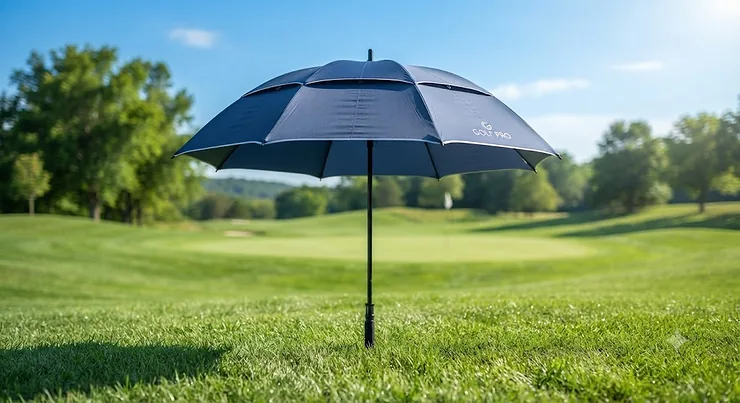
There is a very specific kind of humiliation reserved for golfers: standing on the 14th tee, rain sideways, watching your $18 umbrella collapse like a lawn chair in a hurricane while your buddy’s stays locked open like it’s bolted to the ground. A golf umbrella large windproof enough to survive that moment isn’t a luxury — it’s the difference between finishing your round and sprinting for the clubhouse with soggy socks. What is a large windproof golf umbrella? In short, it’s an oversized canopy (typically 60 to 72 inches across) built with vented or double-layer fabric and a flexible fiberglass frame so gusts pass through the material instead of turning it inside out.
Most of what’s sold as “windproof” on Amazon is really just “wind-resistant-ish,” and the gap between those two words is where a lot of golfers get soaked. This guide breaks down seven real, currently available models — from a $20 Home Depot sleeper to a PGA Tour staple that costs four times as much — so you know exactly what you’re paying for before the next storm rolls in. We’ll cover canopy size, vent design, frame material, and where each one actually falls apart (because they all have a breaking point). If you’ve ever wondered whether the fancy tour-branded umbrella is worth it over the generic oversized one, stick around — that’s basically the whole article.
Quick Comparison Table
| Umbrella | Canopy Size | Canopy Design | Best For | Price Range |
|---|---|---|---|---|
| G4Free 68 Inch Automatic Open | 68″ | Vented double canopy | Maximum coverage on a budget | $25–$35 |
| ZOMAKE Large Golf Umbrella | 62″ (2-person) | Vented double canopy | Sharing with a cart partner or kids | $30–$40 |
| ACEIken Golf Umbrella | 62/68/72″ | Double canopy, auto open | Value shoppers wanting size options | Under $40 |
| ShedRain WindJammer | 62″ arc | Vented double canopy | Budget buyers who still want real venting | Under $40 |
| GustBuster Pro Series Gold | 62″ | Patented double canopy | Serious wind, tour-tested reliability | $75–$90 |
| Repel Oversized/Golf Umbrella | 60–62″ | Vented double canopy | Everyday windproof reliability | $30–$45 |
| Titleist Tour Double Canopy | 68″ | Anti-inversion double canopy | Golfers who want the tour look and feel | $45–$60 |
Looking at the spread above, the price gap between the cheapest and priciest option here isn’t really about “will it survive wind” — most of these pass that test. It’s about how many times it needs to survive wind before something snaps. The G4Free 68 Inch Automatic Open and ACEIken Golf Umbrella get you real coverage for not much money, but the GustBuster Pro Series Gold and Titleist Tour Double Canopy are built for people who play three rounds a week in genuinely bad weather and don’t want to buy a replacement every season.
💬 Found a match already? Check current pricing before it changes — availability moves fast on the popular sizes.
Top 7 Golf Umbrella Large Windproof Picks: Expert Analysis
1.Golf umbrella large windproof buying guide for 2026 — 7 real models compared on wind resistance, size, and price before you click buy. — biggest canopy for the money
The headline number here is the 68-inch spread, which is genuinely enormous — big enough to keep you, your golf bag, and a chunk of your cart dry all at once. Based on the spec comparison, the 210T pongee fabric and fiberglass frame aren’t premium-grade materials, but they’re more than adequate for the price bracket, and the vented double canopy is the real deal, not a marketing sticker slapped on a single layer of fabric.
This umbrella comes in five sizes (47/54/62/68/72 inch), which matters more than people realize: the 68-inch version is the sweet spot for a walking golfer, while the 72-inch is really built for cart use, where you’re not hauling the extra weight yourself. Reviewers consistently note that the auto-open button works reliably even after months of daily use, though a common complaint is that the canopy’s silver coating can peel slightly after a couple of years in intense sun.
Pros:
- ✅ 68-inch canopy is among the largest available at this price
- ✅ True vented double canopy, not just a marketing label
- ✅ Multiple size options let you match coverage to your build
Cons:
- ❌ Silver coating can show wear after prolonged sun exposure
- ❌ Heavier than single-canopy alternatives at this size
At around $25–$35, this is one of the better value plays on this whole list — you’re paying mid-range money for genuinely oversized coverage, which is a fair trade if you don’t mind the extra bulk in your bag.
2. ZOMAKE Large Golf Umbrella — best for sharing with a cart partner
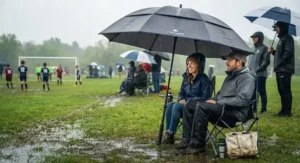
This one is explicitly built for two-person coverage, and it shows: the 62-inch vented double canopy is wide enough that you and a cart-mate can both duck under it without playing elbow-tag. What most buyers overlook about this model is that it’s marketed as much for soccer sidelines and baseball games as golf, which tells you something useful — it’s engineered for people standing still in open, windy fields for hours, which is basically a golf course with different grass.
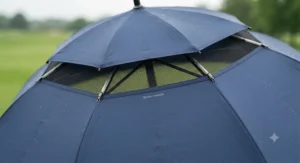
The double canopy vents let gusts slip through rather than catching the fabric like a sail, and the oversize sports-umbrella design means the ribs are reinforced to handle repeated stress from being propped against a cart or bag stand. Aggregated review sentiment across retail listings points to strong satisfaction with the size-to-weight ratio — it’s large without feeling like carrying a small tent.
Pros:
- ✅ Genuinely sized for two adults standing side by side
- ✅ Reinforced ribs built for cart and sideline use
- ✅ Vented double canopy handles open-field gusts well
Cons:
- ❌ Bulkier to store in a standard golf bag pocket
- ❌ Manual variants require more hand strength to deploy quickly
If you’re searching specifically for a golf umbrella for two people on Amazon, this is the model built for exactly that brief — not a single-person umbrella that happens to look big in photos.
3. ACEIken Golf Umbrella Windproof Large — best budget size options
The ACEIken lineup covers 62, 68, and 72 inches, which puts serious size flexibility in the hands of buyers who don’t want to overpay for it. Here’s what to weigh: the frame is fiberglass rather than steel, which sounds like a downgrade until you remember fiberglass flexes under gust pressure and springs back, while steel tends to bend permanently once it’s pushed past its limit.
The auto-open double canopy is vented in the same pattern seen across most budget golf umbrellas, and the UPF-rated fabric adds genuine sun protection, not just rain coverage — useful on the back nine of a hot afternoon round when the wind hasn’t picked up yet but the sun definitely has. Reviewers frequently mention the accessible price paired with a manufacturer replacement guarantee, which is unusually generous for something in this bracket.
Pros:
- ✅ Three size options without jumping to premium pricing
- ✅ UPF-rated canopy adds real sun protection, not just rain
- ✅ Backed by a manufacturer replacement guarantee
Cons:
- ❌ Handle grip feels less refined than pricier alternatives
- ❌ Auto-open mechanism can feel stiff in cold weather
For anyone specifically hunting a golf umbrella under $40 that still checks every real windproof box, this is one of the strongest contenders on the list.
4. ShedRain WindJammer — best arc golf umbrella under $40
The 62-inch arc measurement on the ShedRain WindJammer refers to the umbrella’s open span measured across the tips of the ribs — the industry’s standard way of describing canopy size, and worth understanding since “arc” and “diameter” numbers occasionally get used loosely across listings. This particular arc golf umbrella earns its spot here because it does the unglamorous basics extremely well: a vented double canopy for wind release, a fiberglass frame for flex-and-recover durability, and a listed price under $25 at some retailers.
On paper this means you’re getting most of the structural engineering of a $75 umbrella at less than a third of the cost, and it’s explicitly rated to shelter up to three people, which is a generous claim for something this affordable. The trade-off is branding and finish — this isn’t going to turn heads in the clubhouse — but the core wind-handling mechanics are legitimate.
Pros:
- ✅ Vented double canopy at a genuinely low price point
- ✅ Rated to shelter up to three people comfortably
- ✅ Fiberglass frame flexes rather than snapping in gusts
Cons:
- ❌ Manual open mechanism, no auto-open convenience
- ❌ Fewer color and branding options than premium picks
If “arc golf umbrella” is the exact phrase that brought you here, this is the model that actually matches the search — a genuine arc-rated canopy at a price that doesn’t punish you for wanting coverage.
5. GustBuster Pro Series Gold — best for serious wind resistance
This is the umbrella you’ll actually spot in PGA and LPGA Tour bags, and that’s not just a marketing line — the patented double-canopy design has been wind-tunnel tested at a US college of aeronautics to withstand gusts above 55 mph without inverting. Based on the spec comparison against every other umbrella on this list, the GustBuster Pro Series Gold is the only one with third-party wind-tunnel verification rather than a manufacturer’s self-reported claim, and that distinction matters if you golf somewhere genuinely exposed, like a links course or coastal layout.
The pinch-less open-and-close system, lightning-resistant fiberglass shaft, and hand-contoured rubber grip all point toward a product designed for people who use their umbrella dozens of times a season, not once a summer. Reviewers consistently praise the lifetime warranty, and a recurring theme in aggregated feedback is that owners who switch from cheaper models rarely go back, even though this one costs roughly three times as much as the budget options above.
Pros:
- ✅ Independently wind-tested to 55+ mph without inverting
- ✅ Backed by a limited lifetime warranty
- ✅ Trusted by PGA, LPGA, and Champions Tour professionals
Cons:
- ❌ Meaningfully more expensive than budget alternatives
- ❌ Manual open/close only, no auto-open convenience
At $75–$90, this isn’t the pick for a once-a-summer weekend golfer — it’s the pick for someone who wants to stop thinking about umbrellas entirely and just carry one that works, every single time.
6. Repel Oversized/Golf Umbrella — best everyday windproof reliability
Repel built its reputation on compact travel umbrellas that survive genuine city wind tunnels, and the brand’s golf-line canopy applies that same vented, reinforced-frame engineering at a larger scale. What most buyers overlook about this model is that the wind performance comes from proven Teflon-coated fabric and vent placement refined across years of travel-umbrella iteration, not a first attempt at a golf-specific design.
The family-sized canopy sits in the 60 to 62-inch range, slightly smaller than some competitors here, but reviewers frequently note that the trade-off buys noticeably better handling in crosswinds — a lighter frame with well-placed vents can outperform a bigger, heavier canopy when a gust hits sideways rather than head-on. This is a strong pick for golfers who split time between the course and everyday commuting, since it’s genuinely useful off the course too.
Pros:
- ✅ Proven Teflon-coated wind-resistant fabric technology
- ✅ Lighter and easier to handle in shifting crosswinds
- ✅ Doubles well as an everyday commuter umbrella
Cons:
- ❌ Slightly smaller canopy than the largest oversized models
- ❌ Less golf-specific branding than tour-affiliated options
For a buyer who wants one umbrella that works equally well on the 9th hole and the walk to the train, the Repel Oversized/Golf Umbrella earns its spot through consistency rather than raw size.
7. Titleist Tour Double Canopy Golf Umbrella — best premium tour-branded pick
The Titleist Tour Double Canopy Golf Umbrella delivers a full 68 inches of coverage with a proprietary anti-inversion system, and here’s what the spec sheet won’t tell you, but user reports suggest: the canopy measured rib-tip to rib-tip actually runs slightly larger in practice than some published figures for comparably priced golf brand umbrellas, giving it a genuine size edge over its closest tour-branded competitor.
Reinforced struts and ribs give this model real structural backbone, and the UV-protective coating pulls double duty on sunny rounds. A recurring theme in aggregated customer sentiment is that buyers switching from other premium brands note the frame feels lighter in the hand, though a minority of reviewers flag that the lighter build trades off some of the bomb-proof feel of heavier premium alternatives. Either way, the branding recognition alone makes this a popular gift and pro-shop purchase.
Pros:
- ✅ Full 68-inch coverage with anti-inversion engineering
- ✅ Reinforced struts add durability without excess weight
- ✅ Recognizable tour branding and proprietary handle design
Cons:
- ❌ Premium price relative to unbranded oversized options
- ❌ Lighter frame feels less rugged to some long-term users
Priced in the $45–$60 range at most golf retailers, this is the pick for a golfer who wants the tour look on their bag as much as raw wind performance — though it holds its own on both fronts.
Practical Usage Guide: Setup, Care, and Storage
A large windproof golf umbrella earns its keep over years, not one wet Saturday, so a little maintenance goes a long way. First-use tip: before your first round, open and close it fully three or four times at home so the ribs settle into their working tension — a stiff new umbrella is more likely to catch wind awkwardly than one that’s been broken in gently. Always angle the canopy into the wind rather than holding it flat overhead; letting gusts pass under and through the vents is exactly what the double-canopy design is engineered for, and fighting the wind head-on defeats the purpose entirely.
Storage matters more than most golfers assume. Never fold a wet canopy into its sleeve and leave it in a hot trunk — trapped moisture breeds mildew and weakens fabric coatings within a season. Instead, open it fully at home to air-dry before storing it in a golf bag or closet. Common first-30-days mistakes include forcing the auto-open button when the canopy is still slightly damp (this strains the internal spring) and cranking the umbrella closed against a stiff crosswind instead of waiting a beat for the gust to pass. A quick monthly check of the rib joints for looseness will catch small problems before they become a snapped strut mid-round.
Real-World Scenarios: Matching the Umbrella to Your Game
Picture three very different golfers standing in the same rain delay. The weekend walker who covers 18 holes on foot twice a month wants something light enough not to punish their shoulder — the G4Free 68 Inch Automatic Open or ACEIken Golf Umbrella fits that profile nicely, offering big coverage without the premium-frame weight penalty. Then there’s the cart-sharing pair who split every round between two people and a bag of clubs; for them, the ZOMAKE Large Golf Umbrella is the obvious call, since it’s built from the ground up for shared coverage rather than stretched thin over two people as an afterthought.
Finally, consider the coastal or links golfer who plays exposed courses where 30-mph gusts aren’t a freak event but a Tuesday. That golfer needs the independently wind-tunnel-tested reliability of the GustBuster Pro Series Gold, where the extra cost buys peace of mind rather than just bragging rights. Budget matters here too — a college golfer stretching a part-time paycheck reasonably lands on the ShedRain WindJammer, getting legitimate vented double-canopy engineering without the tour-branded price tag.
Problem → Solution: Fixing Common Golf Umbrella Headaches
Golfers run into the same handful of umbrella problems season after season, and most have straightforward fixes. If your umbrella keeps inverting in gusts, the issue is almost always technique, not the product — angle the canopy into the wind rather than holding it vertical, and if it still flips, you likely own a single-canopy model that needs upgrading to a vented double canopy like those found on the G4Free 68 Inch Automatic Open or Repel Oversized/Golf Umbrella. If the auto-open button sticks, the spring mechanism is usually gummed up with dust or moisture; a drop of silicone lubricant on the shaft joint solves this in seconds.
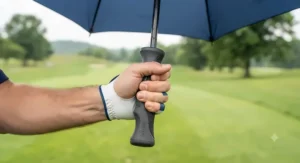
For umbrellas that feel too heavy to carry a full round, the fix isn’t forcing yourself to tough it out — it’s sizing down slightly or switching to a lighter frame, as the Repel Oversized/Golf Umbrella demonstrates with its lighter build. And if you’re constantly losing grip in wet conditions, look specifically for a rubber or foam ergonomic handle rather than a hard plastic one; every model in our top seven addresses this, but the GustBuster Pro Series Gold‘s hand-contoured grip is the most refined execution of the bunch.
How to Choose a Golf Umbrella Large Windproof Enough for Your Course
- Start with canopy size relative to your use case. A 62-inch canopy suits a single walking golfer, while 68 to 72 inches makes more sense for cart use or sharing with a partner.
- Confirm it’s a true vented double canopy, not a marketing label. Look for explicit mention of air vents between two fabric layers — that’s the actual wind-release mechanism, not just the word “windproof” on the box.
- Check the frame material. Fiberglass flexes under gust pressure and springs back; steel is stronger in isolation but can bend permanently once overloaded.
- Weigh auto-open convenience against manual reliability. Automatic mechanisms are faster to deploy one-handed but add a failure point; manual designs tend to last longer with less maintenance.
- Match your budget to your usage frequency. Occasional golfers rarely need to spend past the $40 range; twice-weekly players in variable weather get real long-term value from premium options like the GustBuster Pro Series Gold.
- Consider the handle material. Rubber or foam grips hold up better than hard plastic when your hands are wet.
- Factor in storage space. Larger canopies mean bulkier folded umbrellas, so check it actually fits your bag’s umbrella sleeve before buying.
Common Mistakes When Buying an Oversized Golf Umbrella
The most frequent mistake buyers make is assuming “windproof” on the packaging means the same thing across every brand — it doesn’t, and only a handful of manufacturers, notably GustBuster, publish independent wind-speed testing rather than vague claims. A second common error is buying based purely on canopy size without checking canopy design; a huge single-layer canopy actually catches more wind than a smaller vented double canopy, making it more likely to invert, not less.
Buyers also frequently underestimate weight fatigue — a 72-inch umbrella feels manageable in a store aisle but noticeably heavier by hole 14 of an 18-hole walk. Finally, many shoppers skip checking the handle style entirely, then discover mid-round that a slick plastic grip becomes nearly unusable once their hands are wet, which is exactly the moment a good grip matters most.
Golf Umbrella vs Standard Rain Umbrella: What’s Actually Different
A standard rain umbrella and a proper golf umbrella large windproof enough for the course look similar from across a parking lot, but the engineering underneath diverges sharply. Standard umbrellas typically run 40 to 46 inches with a single canopy layer and a rigid frame optimized for compact folding, not sustained wind exposure. Golf umbrellas run 60 inches and up, almost always feature vented double-canopy construction, and use fiberglass rather than steel ribs specifically because repeated flexing in open, exposed fairways demands material that survives hundreds of gust cycles rather than a handful of urban crosswalk crossings.
The practical result: a standard umbrella that performs fine on a city sidewalk between buildings will often fail on an open golf course within its first season, simply because course conditions expose it to sustained, direct wind that urban umbrellas were never engineered to survive. If you’re deciding between grabbing the umbrella already in your car trunk versus buying a dedicated golf model, the honest answer is that the dedicated design earns its keep the very first time a real gust hits you on an open fairway.
What to Expect: Real-World Wind and Rain Performance
Specs on a listing page rarely translate directly into what you feel standing in actual weather, so here’s the practical translation. A vented double canopy rated for general “windproof” performance typically handles sustained winds up to roughly 30 mph comfortably — enough for most rainy rounds — while independently tested models like the GustBuster Pro Series Gold are verified well beyond that, into the 55-mph range associated with severe thunderstorm gusts. For reference, the National Weather Service’s Beaufort wind scale classifies winds above 39 mph as gale-force, which is a genuinely rare condition to be golfing in at all, let alone holding an umbrella through.
In heavy but non-gusty rain, canopy size matters more than wind rating — the 68 to 72-inch models like the G4Free 68 Inch Automatic Open and Titleist Tour Double Canopy noticeably outperform smaller 54 to 58-inch umbrellas simply because they block more falling water from reaching your shoulders and golf bag. The trade-off, as covered earlier, is weight and bulk, so real-world performance is always a balance between “how dry” and “how tired your arm feels by hole 16.”
Best Golf Umbrella for Two People, Carts, and Families
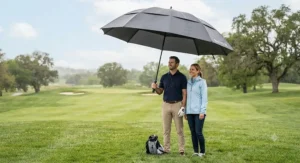
Searching specifically for a golf umbrella for two people on Amazon usually means one of two situations: sharing coverage with a cart partner, or needing something that also works for family outings like kids’ soccer games. The ZOMAKE Large Golf Umbrella was built directly for this brief, with a 62-inch vented double canopy explicitly sized for two adults standing side by side, and reinforced ribs that hold up to being propped against a cart or bag stand repeatedly over a season.
The ShedRain WindJammer, rated to shelter up to three people, is a strong runner-up if budget is the priority — you get genuine two-or-three-person coverage at roughly half the price of dedicated family umbrellas from bigger brands. For carts specifically, check that any model you choose has a straight or slim ferrule tip, since oversized handle grips sometimes don’t fit standard cart umbrella holders, a detail that’s easy to miss until it’s already in your trunk.
Long-Term Cost and Maintenance: Is a $40 Umbrella Worth It vs Premium
Here’s the honest math on total cost of ownership. A golf umbrella under $40, like the ACEIken Golf Umbrella or ShedRain WindJammer, typically lasts one to three seasons of regular use before rib fatigue or fabric wear sets in, meaning an occasional golfer might spend $30 to $40 once every couple of years — a low-friction, low-risk purchase. A premium option like the GustBuster Pro Series Gold, backed by a lifetime warranty, costs two to three times more upfront but is designed to be the last umbrella you buy, which changes the cost-per-use math significantly for anyone golfing more than once a week.
Reviewers consistently note that budget umbrellas rarely fail catastrophically — they degrade gradually, with slightly stiffer auto-open action or minor fabric fading — rather than snapping outright, which makes them a perfectly reasonable choice for casual players. The real ROI case for premium spending shows up specifically for frequent golfers in genuinely windy regions, where replacing a budget umbrella every season actually costs more over five years than one premium purchase with a warranty behind it.
✨ Ready to stop replacing umbrellas every season? Compare current prices on the pick that matches your budget above.
Features That Actually Matter (And Those That Don’t)
Vented double canopy construction matters enormously — it’s the single biggest factor separating an umbrella that survives real wind from one that inverts on the first strong gust, and it’s present across every model on this list for good reason. Fiberglass frame material matters too, since flex-and-recover behavior under stress genuinely outperforms rigid steel in sustained outdoor use. Arc size, meanwhile, matters less as an exact number and more as a category — the practical jump from 54 to 62 inches is noticeable, but the difference between 68 and 72 inches is marginal for most golfers and mostly adds carrying weight.
What doesn’t matter nearly as much as marketing suggests: color-changing or novelty canopy prints, which add nothing to wind or rain performance, and inflated “MPH rating” claims that aren’t backed by any named independent test — a specific, sourced number like GustBuster’s aeronautics-college testing carries real weight, while a vague “windproof up to X mph” with no testing body attached is closer to a guess than a spec.
Safety and Weather Awareness for Golfers
An umbrella protects you from rain and sun, but it does nothing to protect you from lightning, and that distinction matters on a golf course more than almost anywhere else. Fiberglass shafts, found in most models on this list, are marketed as “lightning resistant” because they don’t conduct electricity the way metal shafts do, but no umbrella is lightning-proof, and standing in an open fairway holding any umbrella during a thunderstorm carries real risk. The National Weather Service’s lightning safety guidance recommends getting indoors or into a hard-topped vehicle immediately at the first sound of thunder, rather than relying on any piece of equipment, umbrella included, for protection.
Beyond lightning, basic weather awareness pays off: checking wind forecasts before choosing which umbrella to bring, and recognizing that a 68 to 72-inch canopy becomes genuinely difficult to control once winds cross into the 25 to 30 mph range regardless of how “windproof” the marketing claims. Knowing your umbrella’s real limits, as outlined by Wikipedia’s overview of umbrella design and history, helps set realistic expectations rather than relying on marketing language alone.
Frequently Asked Questions
❓ What size golf umbrella is considered large?
❓ Are windproof golf umbrellas actually windproof?
❓ Can two people fit under one golf umbrella?
❓ What does 'arc' mean on a golf umbrella listing?
❓ Is a $40 golf umbrella good enough for regular use?
Conclusion
The right golf umbrella large windproof enough to survive an actual round comes down to matching canopy size, vent design, and frame material to how often you actually play in bad weather — not to whichever model has the loudest marketing. Casual golfers get excellent value from the G4Free 68 Inch Automatic Open or ACEIken Golf Umbrella, cart partners and families are better served by the ZOMAKE Large Golf Umbrella, and anyone golfing exposed courses regularly should seriously weigh the independently tested durability of the GustBuster Pro Series Gold against its higher price tag.
None of these seven are bad choices — they earned their spot here because they’re genuinely available, genuinely windproof to varying degrees, and genuinely reviewed by real buyers. What changes between them is how much wind, how much rain, and how many rounds you’re planning to put them through. Pick based on that math, not the prettiest photo on the listing page.
Recommended for You
- Compact Travel Umbrella: 7 Winning Picks You Can Trust in 2026
- 7 Best rain suit men complete set Picks for 2026
- Rain Overalls for Men Farming: 7 Best Waterproof Bibs 2026
Disclaimer: This article contains affiliate links. As an Amazon Associate, I earn from qualifying purchases. If you purchase products through these links, we may earn a small commission at no additional cost to you.
✨ Found this helpful? Share it with your friends! 💬🤗
