
In This Article
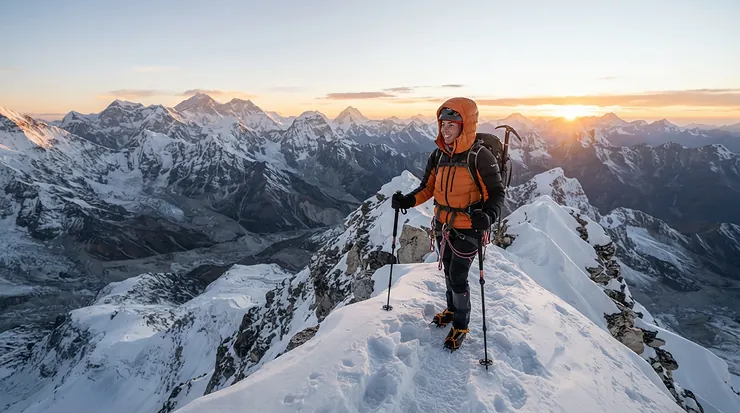
An 800 fill down jacket for women mountaineering is an insulated alpine layer packed with down that lofts to roughly 800 cubic inches per ounce. It pairs a women’s cut with a helmet-friendly hood and a shell tough enough for rock, ice and wind. It delivers serious warmth for very little weight and pack volume.
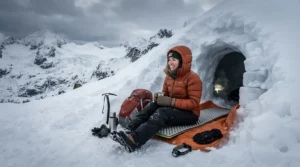
Here’s the scene it was built for. You’re clipped into a belay at a cold stance, the wind is working on your shoulder blades, and the sweat from the approach has turned traitor. You pull a puffy out of the lid of your pack, and ninety seconds later you’re a person again. Choose well, and an 800 fill down jacket for women mountaineering becomes the most-used piece of insulation you own. Choose badly, and you’re hauling a pricey, snug, fragile bundle of regret.
A quick word on how this guide was built. Fill power is a loft measurement, and higher numbers mean more insulating ability per unit of down weight. Everything below comes from manufacturer specs, retailer listings, published 2026 editorial testing and aggregated buyer feedback. There are no invented summit stories and no pretend lab results. I’ll tell you where the evidence is thick and where it’s thin.
You’ll get seven real jackets, honest analysis of what their numbers mean on the mountain, and practical guides for fit, layering, care and cost. Along the way we’ll cover the women’s technical down jacket for climbing question, high altitude down jacket women’s needs, and how high-altitude insulation fits into your wider technical outerwear system.
Quick Comparison Table: 7 Jackets at a Glance
| Jacket | Fill & Weight | Price Range | Best For |
|---|---|---|---|
| Rab Women’s Electron Pro Jacket | 800 goose, ~16.2 oz | Mid-$300s list price | Technical alpine and cold belays |
| Mountain Hardwear Women’s Storm Whisperer | 800, ~16.5–18 oz | $550–$650 | Wet, maritime mountains |
| Patagonia Women’s Durable Down Parka | 800 duck, ~21 oz | $525–$625 | Abrasive rock and long belays |
| Mountain Hardwear Women’s Ghost Whisperer Hoody | 800, ~8.5 oz | $350–$400 | Fast-and-light missions |
| Patagonia Women’s Down Sweater Hoody | 800, ~12–15 oz (listings vary) | $300–$350 | All-round versatility |
| Outdoor Research Women’s Helium Down Hoodie | 800, ~15.4 oz | $275–$325 | Rough terrain, shoulder season |
| Simond Women’s MT100 Hooded Down Puffer | 800, ~10 oz | $100–$150 | Budget-conscious climbers |
The table shows a clear split in this category. The Ghost Whisperer and Simond MT100 chase low weight, the Electron Pro and Durable Down Parka chase real belay warmth, and the Storm Whisperer is the only one built to survive a soaking. The Down Sweater Hoody sits in the comfortable middle. If you can afford only one, the question isn’t “which is best?” It’s “which failure can I live with: cold, wet, heavy or fragile?”
💬 Just one click — help others make better buying decisions too!😊
Top 7 800 Fill Down Jackets for Women Mountaineering: Expert Analysis
Each entry below blends published specs with aggregated review sentiment and editorial testing. Where buyer reviews were thin, I say so rather than guess.
1. Rab Women’s Electron Pro Jacket — the alpine benchmark with a belay-ready hood
Rab designed this jacket for the stop, not the slog. That means the long, wind-scoured belay where your body temperature falls off a cliff. Its standout feature is a helmet-compatible hood with a stiffened peak that keeps its shape in a gust.
On paper, it uses 800-fill European goose down with a Nikwax hydrophobic finish. Listings put the fill at about 170 g in a size 12, and some retailers quote closer to 190 g. It sits under a 20D Pertex Quantum Pro shell, and the claimed weight is around 16.2 ounces. That fill weight is roughly double what a gram-counting ultralight puffy carries, which is why this behaves like a true midweight.
Zoned baffles reduce bulk through the arms, and a two-way front zip opens at the bottom for harness access. Based on the spec comparison, this is the jacket for women who spend real time static at altitude but still need to climb in it.
Buyer feedback on retailer pages skews enthusiastic about warmth for the weight, though it isn’t unanimous, and at least one reviewer was openly unhappy. Fit complaints cluster around a snug chest for fuller busts, so size up if you layer heavily. Some colors and sizes showed as sold out during research.
Pros:
- ✅ Generous fill weight for midweight warmth
- ✅ Helmet-compatible hood with stiffened peak
- ✅ Two-way zip works around a harness
Cons:
- ❌ Chest can feel snug on fuller builds
- ❌ Some sizes and colors sell out
List price sits in the mid-$300s, though street prices vary widely, so check current price. For anyone who belays in the cold, that’s strong value.

2. Mountain Hardwear Women’s Storm Whisperer — down you can actually trust in the wet
The enemy of down is moisture, and this jacket treats moisture like a personal insult. Its standout is a fully waterproof, seam-taped Pertex Shield shell wrapped around 800-fill RDS-certified down.
The spec sheet reads like a hardshell fused to a puffy. Waterproof zippers, pit zips for dumping heat, adjustable cuffs and hem, and a helmet-compatible hood that doesn’t blind you when cinched. Published weights range from about 16.5 to 18.1 ounces, so confirm your size. Pit zips matter more than they sound, since you can vent on the approach without removing the layer.
Editorial testers at GearJunkie praised the articulated waist and drop-tail hem, which make waterproof shells less boxy on women. They reported no wetting out in dripping trees and heavy wet snow. They also noted it’s stiffer, bulkier and not as bombproof as a Gore-Tex shell in prolonged multi-day rain.
Consumer reviews were limited in the sources I could verify, so this verdict leans on expert testing, not crowd consensus.
Pros:
- ✅ Fully waterproof shell protects the down
- ✅ Pit zips allow real ventilation
- ✅ Women-specific waist and drop-tail hem
Cons:
- ❌ Stiffer and bulkier than classic puffies
- ❌ Premium price tag
Expect roughly $550–$650. If you climb in maritime ranges where rain is a forecast rather than a rumor, it’s the one jacket here that earns its cost.
3. Patagonia Women’s Durable Down Parka — a shell built to be abused
Most puffies cringe at granite. This one shrugs. Its standout is a rugged recycled high-tensile nylon shell reinforced with Ultra-PE ripstop, designed for hours of rubbing against rock and haul bags.
Inside is 800-fill duck down, a Pertex Quantum lining and a PFAS-free water-repellent finish. Climbing-specific details include a helmet-compatible hood, a two-way front zip, large internal stash pockets and discontinuous quilting for mobility. At about 21 ounces, it’s the heaviest dry-weather jacket in this guide.
What the spec sheet won’t tell you is the fit story. GearJunkie notes this is not a women’s-specific cut. It’s broad through the shoulders and roomy enough to throw over a fleece or lighter puffy at a belay, but smaller frames may need to size carefully. There are also no cuff or hem adjusters, so wind finds the openings.
Aggregated buyer data was sparse, so the picture comes from a tester who used it over six months of climbing, camping and cold-weather travel.
Pros:
- ✅ Exceptionally tough shell fabric
- ✅ Roomy mobility for overhead reaches
- ✅ Climbing-focused hood, zip and pockets
Cons:
- ❌ Heavy and less compressible
- ❌ No cuff or hem cinches
Expect around $525–$625. It’s expensive, but it’s priced like gear meant to outlast a few seasons of rock.
4. Mountain Hardwear Women’s Ghost Whisperer Hoody — the ounce-counter’s favorite
This jacket weighs about as much as a decent sandwich. Its standout is an editorial-tested weight near 8.5 ounces with 800-fill RDS-certified down, wrapped in a 10-denier recycled ripstop shell.
That 10D fabric is the whole story. It’s why the jacket compresses into its own pocket, and it’s why you must baby it. Synthetic insulation in the cuffs adds durability where wrists meet snow. GearJunkie scored it high for packability and warmth-to-weight, and low for weather resistance and durability.
Here’s the honest analysis. This is a layer for moving fast and standing briefly, not for long static spells in deep cold. Buyer reports compiled by one review site mention snags and small tears from rough rock and harness buckles, so carry repair tape.
For women who need a trim cut that layers under a shell without bunching, it’s hard to beat. It’s also the lightest “emergency warmth” option in this lineup.
Pros:
- ✅ Extremely light and packable
- ✅ Strong warmth-to-weight ratio
- ✅ Trim cut layers cleanly under a shell
Cons:
- ❌ Delicate 10D fabric tears easily
- ❌ Not built for long static cold
Expect roughly $350–$400. For fast-and-light missions it’s justified, but it’s a poor choice as your only insulation on cold, slow days.
5. Patagonia Women’s Down Sweater Hoody — the quiver-killer that does everything decently
Some jackets win by specializing. This one wins by never being the wrong choice. Its standout is 800-fill down inside a 20D recycled NetPlus shell with a PFC-free water-repellent finish.
GearJunkie named it the best overall women’s down jacket of 2026, with strong scores for warmth and durability. The women’s fit has a slightly articulated waist that layers over a substantial fleece. Extra details include interior drop pockets, an internal chest pocket that doubles as a stuff sack, and a 20D face fabric that tolerates pack straps and brush. Listed weight is inconsistent across the same source, from about 12 to 15 ounces, so verify your size before buying.
For mountaineering specifically, the trade-off is the hood. It fits well over a beanie but feels tight over a helmet, which makes it better as a layer than as a dedicated belay parka.
Buyer sentiment, as best I can summarize it, treats this jacket as a reliable everyday favorite rather than a technical specialist.
Pros:
- ✅ Durable 20D shell tolerates abuse
- ✅ Comfortable, layer-friendly women’s fit
- ✅ Useful pocket layout, including interior drops
Cons:
- ❌ Hood is snug over a climbing helmet
- ❌ Heavier than ultralight alternatives
Expect roughly $300–$350. It’s superb value if one jacket must handle approaches, ski tours and town.
6. Outdoor Research Women’s Helium Down Hoodie — a hybrid shell that laughs at brush and rock
Ultralight shells scare people. This one calms them down. Its standout is a hybrid build: a rugged 30D Pertex Diamond Fuse body with Pertex Shield on the hood and shoulders.
It carries 800-fill RDS-certified down and weighs about 15.4 ounces. That’s heavy for a mountaineering puffy, but the heft buys confidence. Testers called the fabric reassuring against rock and branches, and the shoulders shed light snow and drizzle. They also noted it will eventually wet through in steady rain, and it isn’t built for sitting still in deep cold.
Warmth scores were modest and packability was its weakest category, so it’s better understood as a tough shoulder-season mid-layer than a belay parka. The women’s fit is athletic without being tight, layering well under a shell.
Aggregated feedback I could verify was mostly editorial, and it consistently praised durability and storage.
Pros:
- ✅ Abrasion-resistant body fabric
- ✅ Weather-shedding shoulders and hood
- ✅ Generous storage, including a large internal pocket
Cons:
- ❌ Not the warmest option for static cold
- ❌ Does not pack especially small
Expect roughly $275–$325. It’s solid value if you’re hard on gear and climb in changeable conditions.
7. Simond Women’s MT100 Hooded Down Puffer — surprising 800 fill at a budget price
800-fill down at roughly a third of premium prices sounds suspicious. This jacket makes it believable. Its standout is RDS-certified 800-fill down in a 20D shell with narrow baffles, weighing about 10 ounces.
It was previously sold under the Decathlon Forclaz name. Editorial testers reported it kept them comfortable into the mid-20s°F with a decent base layer, and the rated range is roughly 23°F when active and 41°F when static. Fill weight is only about 3 ounces, so this is a lightweight layer, not a belay parka.
The compromises are honest ones: thin zippers that can be finicky in wind, no chest pocket, and an athletic cut that runs small, especially through the hips. If you plan to layer bulky fleece underneath, size up.
Buyers often describe jackets like this as “good enough to leave in the pack,” which is exactly its niche.
Pros:
- ✅ Real 800-fill down at a modest price
- ✅ Packs into its own hand pocket
- ✅ Spacious zippered hand pockets
Cons:
- ❌ Runs small, especially in the hips
- ❌ Thin zippers are less robust
Expect roughly $100–$150. For a first alpine season or a backup layer, the value is hard to argue with.
How to Choose an 800 Fill Down Jacket for Women Mountaineering
Buying this jacket is less about brand and more about answering seven questions honestly.
- Define your coldest realistic day. Think about elevation, season and how long you’ll stand still. A jacket that’s perfect for a brisk approach may be useless at a cold belay.
- Check fill weight, not just fill power. An 800 fill jacket with a low fill weight is a light layer, and one with a high fill weight is a midweight. Brands rarely publish the number, so look for it in specs.
- Match the shell to the abuse. 10D fabric saves grams and invites tears, 20D is the sensible middle, and 30D shrugs off rock.
- Insist on a helmet-compatible hood if you climb. A hood that fits over a beanie can fail over a helmet.
- Look for a two-way zip and cinches. Access to your harness and adjustable cuffs and hem seal out wind.
- Verify down sourcing. Look for the Responsible Down Standard, which prohibits live-plucking and force-feeding of birds.
- Fit-test over your real layers. Bring your midlayer and a harness to the fitting.
Fill Power vs Fill Weight: What 800 Really Buys You
Fill power measures quality. Fill weight measures quantity. Confuse them and you’ll buy the wrong jacket.
Feathered Friends makes the point nicely with an example. A jacket with nine ounces of 850-fill down is substantially warmer than one with nine ounces of 600-fill. Fill power only becomes decisive when comparing equal amounts of down.
Published numbers show how wide the range is at 800 fill. The Simond MT100 carries about three ounces of down, while the Electron Pro carries roughly six. Rab’s 700-fill Valiance carries about 6.7 ounces. The 900-fill Rab Mythic Alpine uses only about 2.1 ounces. So two “800 fill” jackets can differ enormously in warmth.
That’s also why the Arc’teryx Cerium Hoody (850-fill with synthetic insulation in moisture-prone zones) and Rab Mythic Alpine exist as step-ups. They squeeze more loft per ounce, but at about $390–$400 each. Higher fill power buys you lightness, not automatic warmth.
For this reason, 800 fill is a sweet spot for mountaineering. It’s premium enough to keep weight down, yet common enough that you’ll find sensible prices and real fill weights.
Women’s Technical Down Jacket for Climbing: Features That Actually Matter (And Those That Don’t)
A women’s technical down jacket for climbing should be judged on what it does at a belay, not what it does on a hanger.
Features that matter: a helmet-compatible hood, a two-way zip, articulated sleeves, a hem that stays under a harness, and cuffs that seal. The Electron Pro, Durable Down Parka and Storm Whisperer all offer helmet-compatible hoods and two-way zips. The Down Sweater Hoody and Ghost Whisperer don’t prioritize helmet use.
Features that matter less: a flashy color, extra pockets you’ll never reach under a harness, and a stuff-sack brand name. A chest pocket that doubles as a stuff sack is nice, but it won’t decide your safety.
Fit is the hidden spec. Many “women’s” cuts are scaled-down men’s patterns, which creates problems at the chest, shoulders and hips. Women with fuller busts reported snug fits in the Electron Pro, while the Simond MT100 runs small through the hips. Always try layers beneath.
Weight is a trade, not a trophy. The Ghost Whisperer wins grams, but the Durable Down Parka wins resilience. A women’s technical down jacket for climbing that survives three seasons beats an ultralight that tears in one.
High Altitude Down Jacket Women Need: Matching Insulation to Elevation
Here’s an inconvenient truth. Down insulation doesn’t care about altitude. What changes with elevation is temperature, wind exposure and how long you’ll sit still.
So a high altitude down jacket women choose should be sized to the coldest, longest static period of the trip. For moderate alpine objectives with brisk belays, an 800 fill midweight like the Electron Pro or Durable Down Parka makes sense. For cold, short summit pushes where weight dominates, the Ghost Whisperer can serve as a “just in case” layer, though it’s a supplement rather than a primary shield.
For genuinely extreme objectives, expedition parkas are a separate category with far more fill weight. None of these seven are that. Treat them as your high-altitude insulation for a layering system, not a replacement for a dedicated parka.
Moisture is the other altitude problem. Sweat on approach, condensation in a tent and wet snow can all collapse down. That’s why hydrophobic treatments, as on the Electron Pro, and waterproof shells, as on the Storm Whisperer, matter more at altitude than any spec on fill power. Good high-altitude insulation stays lofty because it stays dry.
Finally, remember the wind. A tightly woven shell on any high altitude down jacket women wear can add a surprising amount of effective warmth.
Mountaineering Insulated Layer for Women: Where Down Fits in Your System
A mountaineering insulated layer for women isn’t one jacket. It’s a role in a system, and the role is “the layer I put on when I stop.”
The classic five-part system, as described by guide services, runs base layer, midlayer, softshell, hardshell and insulation. Down belongs at the end, worn over everything when static and under a hardshell only when it’s cold and dry enough.
That’s why a mountaineering insulated layer for women should be easy to put on over a harness, large enough to fit over a shell, and compressible enough to disappear in a pack. The Ghost Whisperer and Simond MT100 stuff into their own pockets, while the Durable Down Parka and Helium want real space.
Consider the interplay with your shell. The Storm Whisperer can double as an insulated shell on wet days, which reduces the number of layers you carry. By contrast, the Down Sweater Hoody is happiest under a hardshell or at camp.
One more tip. Practice your system before the climb. Wear everything together in your living room, and note which sleeves bind and which hems ride up. A mountaineering insulated layer for women that fits only in the store is a liability.
Technical Outerwear Meets Down: Shell Fabrics, Hoods and Zippers
Think of the shell as the jacket’s immune system. It decides how much wind, snow and abuse the down must face.
In technical outerwear, fabric weight tells you most of the story. Ghost Whisperer uses 10D, which is whisper-thin and fragile. The Electron Pro and Down Sweater Hoody use 20D, a good compromise. The Helium uses 30D Diamond Fuse, and the Durable Down Parka adds Ultra-PE ripstop for serious abrasion resistance.
Coatings matter too. Pertex Quantum Pro, used on the Electron Pro, adds a thin water-resistant layer without wrecking breathability. Pertex Shield on the Storm Whisperer goes fully waterproof, with the cost being stiffness and weight. Most others rely on a durable water-repellent finish, which sheds light snow but eventually loses to steady rain.
Zippers and hoods are the underrated half of technical outerwear. A two-way zip lets you vent or reach a harness. A stiffened peak keeps the hood from collapsing across your eyes. Adjustable cuffs and hems seal out drafts.
When you evaluate technical outerwear, ask what failure you can live with. A torn shell can be patched, but a soaked, collapsed jacket at a freezing belay is a safety problem.
| Jacket | Shell | Hood & Zip | Weather Protection | Editorial Score |
|---|---|---|---|---|
| Rab Women’s Electron Pro Jacket | 20D Pertex Quantum Pro | Helmet-compatible hood, two-way zip | Water-resistant, hydrophobic down | Not scored in cited test |
| Mountain Hardwear Storm Whisperer | Pertex Shield, seam-taped | Helmet-compatible hood, pit zips | Fully waterproof | 8.4/10 |
| Patagonia Durable Down Parka | High-tensile nylon, Ultra-PE ripstop | Helmet-compatible hood, two-way zip | PFAS-free DWR | 8/10 |
| Mountain Hardwear Ghost Whisperer Hoody | 10D recycled ripstop | Elasticized hood | DWR | 8.5/10 |
| Patagonia Down Sweater Hoody | 20D recycled NetPlus | Snug hood | PFC-free DWR | 9.3/10 |
| Outdoor Research Helium Down Hoodie | 30D Diamond Fuse, Pertex Shield | Single-pull hood | Waterproof shoulders and hood | 7.4/10 |
| Simond MT100 Hooded Down Puffer | 20D shell | Hood, thin zipper | Water-resistant | 7.0/10 |
The scores reflect GearJunkie’s published editorial verdicts, not a universal standard. Notice that the highest-rated jacket, the Down Sweater Hoody, isn’t the most technical, which shows how much “overall” scores reward versatility. For pure climbing, the hood and zip columns matter more, and there the Electron Pro, Storm Whisperer and Durable Down Parka pull ahead.
800 Fill Down vs Synthetic Insulation for Mountaineering
Down versus synthetic isn’t a religion. It’s a moisture-risk calculation.
Down offers the best warmth for its weight and packs smaller. Synthetic insulation keeps working when wet and dries faster, but it’s heavier and bulkier for the same warmth. Down insulation does poorly when soaked and takes a long time to dry, which is why wet-climate climbers often pick synthetics or waterproof-shelled down.
| Factor | 800 Fill Down | Synthetic |
|---|---|---|
| Warmth for weight | Excellent | Good |
| Packed size | Very small | Larger |
| When wet | Weak unless treated or shielded | Keeps working |
| Drying speed | Slow | Faster |
| Best For | Cold, dry alpine; Electron Pro, Ghost Whisperer | Wet, high-sweat days |
Looking at the table, down wins most categories when conditions stay dry. If your climbing is cold and snowy, 800 fill is hard to beat. If you live in a wet region, the Storm Whisperer addresses the weakness by waterproofing the shell, though at a price.
Practical Usage Guide: Setup, Care and Your First 30 Days
A good jacket still needs good habits. Here’s what I’d do before the first big climb.
Fit-test the whole system. Wear every layer together, as outlined in this layering guide from a mountain guide service, and add your harness and helmet. Check that sleeves reach past your wrists when you reach overhead.
Pack smart. Keep the jacket near the top of your pack or in a lid pocket so you can grab it before you chill. Storing it compressed for months can reduce loft, so hang it or store it loosely.
Protect the shell. Carry repair tape, especially with thin shells like the Ghost Whisperer. Avoid chimneys and rough rock with ultralights.
Wash correctly. Use a front-loading machine, a down-specific cleaner and a gentle cycle. Tumble dry on low with clean tennis balls to restore loft.
First-30-day mistakes: wearing it while sweating hard, sealing it wet in a stuff sack, and ignoring small tears. Patch them immediately, because feathers escaping from tiny holes grow into bigger ones.
Real-World Scenarios: Three Climbers, Three Jackets
Specs only matter when they meet a life. Here are three realistic profiles.
Scenario 1: The first-season alpinist. She has a budget under $200, climbs about ten days a year, and mostly needs warmth at lunch breaks and summit pauses. The Simond MT100 fits the bill, and she can spend the savings on a good shell. She should size up for layers.
Scenario 2: The cold-weather ice climber. She climbs around thirty days a year in dry, cold ranges and spends long stretches belaying. The Electron Pro is the logical choice for its fill weight, hood and two-way zip. If her climbing involves heavy abrasion, the Durable Down Parka is the sturdier alternative.
Scenario 3: The maritime ski mountaineer. She tours in wet, unpredictable weather, where rain and wet snow are routine. The Storm Whisperer is built for her. If weight matters on long approaches, a Ghost Whisperer can supplement it on drier days.
Notice how none of these answers is “the warmest jacket.” Each is the best match for environment, frequency and budget.
✨ Don’t Miss Out on the Right Layer!
🔍 Click on any highlighted jacket to check current pricing and availability. Pick the one that fits your climbing, and head into the cold with confidence.
Buyer’s Decision Framework: If You Climb Like This, Choose That
Use this quick filter when you’re stuck between two jackets.
- If you belay for long periods in cold, dry conditions, choose the Electron Pro, because its fill weight and hood handle static cold.
- If rain and wet snow are common, choose the Storm Whisperer, because the waterproof shell protects the down.
- If you climb rough rock and abuse gear, choose the Durable Down Parka, because its shell resists abrasion.
- If weight is your highest priority, choose the Ghost Whisperer, because it weighs about half as much as the others.
- If you want one jacket for everything, choose the Down Sweater Hoody, because it balances warmth, durability and comfort.
- If you need a rugged mid-layer for changeable weather, choose the Helium, because its hybrid shell handles abrasion and light moisture.
- If budget is the limiting factor, choose the Simond MT100, because it offers real 800-fill down for a modest price.
Still torn? Rank your priorities: warmth, weight, durability, weather protection, price. The jacket that scores best on your top two is almost always the right one.
Common Mistakes When Buying an 800 Fill Down Jacket for Women Mountaineering
Most regrets come from the same few errors.
Worshipping the fill power number. An 800 fill down jacket for women mountaineering with a tiny fill weight is a light layer, not a parka. Check the actual down amount when available.
Buying too snug. A jacket that fits perfectly over a T-shirt will compress insulation and bind over a fleece. When in doubt, try it with real layers.
Ignoring the shell. Ultralight 10D fabric saves weight and invites tears. Match fabric to the terrain.
Skipping the helmet test. A hood that works with a beanie may fail over a climbing helmet. The Down Sweater Hoody is a good example of this trade-off.
Neglecting care. Storing a jacket compressed or washing it wrong can cost you loft. Follow care instructions.
Overbuying warmth. A very warm jacket worn on a sweaty approach will soak with perspiration. Sometimes the smarter purchase is a lighter layer plus a better system.
Long-Term Cost & Maintenance: What Your Jacket Really Costs
Sticker price is only the start. Cost per use tells the real story.
As an illustration, a $350 jacket used about forty days a year for seven years comes to roughly $1.25 per day of use. A $120 jacket used ten days a year for three years costs roughly $4 per day. A durable jacket that lasts longer is often cheaper than a cheap one that tears.
| Tier | Jacket | Price Range | Weight | Value Note |
|---|---|---|---|---|
| Budget | Simond MT100 Hooded Down Puffer | $100–$150 | ~10 oz | Best entry point |
| Mid-range | Outdoor Research Helium Down Hoodie | $275–$325 | ~15.4 oz | Rugged hybrid |
| Mid-range | Patagonia Down Sweater Hoody | $300–$350 | ~12–15 oz | Most versatile |
| Premium | Rab Women’s Electron Pro Jacket | Mid-$300s list | ~16.2 oz | Technical value |
| Premium | Mountain Hardwear Ghost Whisperer Hoody | $350–$400 | ~8.5 oz | Fast-and-light |
| Premium+ | Patagonia Durable Down Parka | $525–$625 | ~21 oz | Built to last |
| Premium+ | Mountain Hardwear Storm Whisperer | $550–$650 | ~16.5–18 oz | Wet-weather specialist |
The table shows a clear price ladder, and weight doesn’t track it neatly. The Ghost Whisperer costs more than the Down Sweater Hoody while weighing less, because you’re paying for the featherweight shell. Maintenance costs are small by comparison: down-specific cleaner, repair tape and occasional professional re-lofting if needed. Treat maintenance as part of the purchase.

Frequently Asked Questions
❓ Is 800 fill power warm enough for serious alpine climbing?
❓ How much should I spend on a women's mountaineering down jacket?
❓ Can I wear a down jacket under a hardshell?
❓ Does hydrophobic down really help?
❓ What's the best way to wash a mountaineering down jacket?
Conclusion
There isn’t a single best 800 fill down jacket for women mountaineering. There’s only the best match for your climbing. The Electron Pro is the technical benchmark for cold belays. The Storm Whisperer is the wet-weather specialist. The Durable Down Parka is the rugged choice for abrasive terrain. The Ghost Whisperer wins on weight, the Down Sweater Hoody on versatility, the Helium on toughness, and the Simond MT100 on price.
What ties them together is a simple idea. The best women’s technical down jacket for climbing is the one that fits your body, your layers and your risks. Judge fill weight as well as fill power, check the hood and zip, and match the shell to your terrain. Used well, your high-altitude insulation becomes the quiet confidence that lets you focus on the climb.
Take the framework above, shortlist two jackets, and test them with your real layers and a harness. Then check current price and availability before you commit, because stock and pricing change.
Recommended for You
- 800 Fill Down Jacket For Men Over 6 Feet: 7 Best Picks That Fit 2026
- 800 Fill Down Jacket For Ultralight Hikers: 7 Proven Picks 2026
- 800 Fill Down Jacket For Subzero Temperatures: 7 Warmest Picks 2026
Disclaimer: This article contains affiliate links. As an Amazon Associate, I earn from qualifying purchases. If you purchase products through these links, we may earn a small commission at no additional cost to you.
✨ Found this helpful? Share it with your friends! 💬🤗
