
In This Article
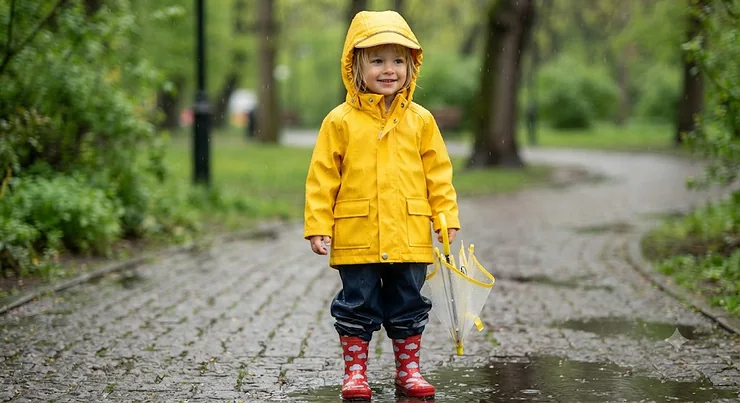
Somewhere between the third missing mitten and the second soaked-through hoodie, most parents hit the same wall: the free windbreaker from the school fun run is not a rain jacket for kids, no matter how badly you want it to be. A real rain jacket for kids needs a sealed seam, a waterproof (not just “water-resistant”) rating, and a hood that doesn’t collapse the second the wind picks up. Cute is nice. Dry is the job.
I’ve spent the past several weeks digging through spec sheets, aggregated Amazon and REI review data, and manufacturer waterproofing numbers to figure out which jackets actually earn their claims. What is a toddler rain jacket amazon review actually telling you when it says “kept my son dry”? Usually it means the seams were taped and the hydrostatic head rating was high enough to matter — details brands rarely explain in plain English, so I will.
What is a rain jacket for kids? It’s a waterproof or water-repellent outer shell, typically rated by hydrostatic head (mm of water pressure it can resist) and paired with taped seams, designed to keep a child dry — not just splash-resistant — through sustained rain, puddle play, and daily wear. This guide covers seven real, currently available options spanning toddler sizes through big kids, budget through premium, so whether you’re chasing a durable kids outerwear pick for daily wear or a children’s waterproof shell for a specific trip, there’s a fit below. For broader context on how waterproofing chemistry actually works — and what “waterproof” legally has to mean versus “water-resistant” — the Federal Trade Commission’s textile labeling rules are a useful primer before you buy anything.
Quick Comparison Table
| Product | Best For | Price Range | Waterproof Rating |
|---|---|---|---|
| Columbia Kids Watertight II Jacket | All-around school & play | $35–$50 | 2-layer Omni-Tech, fully seam-sealed |
| OAKI Rain and Trail Suit | Toddlers & mud-heavy play | $40–$55 | 8,000mm |
| JAN & JUL Cozy-Dry Fleece-Lined Jacket | Cold, wet climates | $45–$65 | 10,000mm |
| Helly Hansen Shelter Jacket | Serious weather, premium build | $70–$105 | Fully sealed HELLY TECH |
| Hatley Colour-Changing Rain Jacket | Making rain fun for little kids | $50–$70 | PVC-free, sealed shell |
| SaphiRose Kids Rain Jacket | Budget school commutes | $20–$30 | Mesh-lined shell, DWR coating |
| Western Chief Character Rain Jacket | Character-loving toddlers | $30–$45 | Water-resistant polyurethane shell |
Looking at the spread above, the jump from around $25 to around $100 isn’t really about “waterproof or not” — every jacket here claims waterproof somewhere on the label. The real difference is durability under repeated washing, how the hood behaves in wind, and whether the DWR (durable water repellent) coating holds up past one soggy season. Budget picks like the SaphiRose Kids Rain Jacket are genuinely fine for occasional school-run drizzle, but a kid who lives outside in the rain will wear through a $25 shell faster than a $70 one built with taped seams and reinforced stitching.
💬 Just one click — help others make better buying decisions too!😊
Top 7 Rain Jackets for Kids: Expert Analysis
1. Columbia Kids Watertight II Jacket — best all-around pick for school and play
Columbia’s Watertight II has been a staple in kids’ outerwear for over a decade, and the current version still earns its reputation as the safe, reliable default. It uses Columbia’s Omni-Tech 2-layer waterproof-breathable construction with fully sealed seams, which in practice means water beads and rolls off rather than seeping through stitch lines — the number one failure point on cheaper jackets.
The shell is soft-touch nylon with a mesh lining, an adjustable storm hood, and elastic cuffs that cinch tight enough to stop water from creeping up the sleeve during puddle jumping. What most buyers overlook about this jacket is that the “breathable” part matters as much as the waterproof part: a fully waterproof shell that doesn’t vent moisture turns into a sauna on an active 7-year-old, and Omni-Tech is specifically built to let sweat vapor escape while blocking rain from entering. It packs down small enough to stuff in a backpack, which matters for the kids rain jacket with hood school use case where the jacket needs to disappear into a cubby by 9 a.m.
Aggregated reviewer sentiment across Amazon and REI consistently flags two things: it runs slightly small (many parents size up), and the mesh lining shows wear around the zipper after a season or two of heavy use, though the waterproofing itself holds. One recurring theme in the reviews is that these jackets survive being “wadded up in backpacks, thrown around on the playground, washed and dried with no special treatment” — which for a school-day jacket is really the whole test.
Pros:
- ✅ Fully seam-sealed Omni-Tech construction actually blocks water
- ✅ Packs down small for backpacks and school cubbies
- ✅ Breathable mesh lining prevents overheating during play
Cons:
- ❌ Sizing runs small — order one size up
- ❌ Mesh lining shows wear faster than the outer shell
Expect to pay in the $35–$50 range depending on size and colorway; at that price, the seam-sealed construction alone makes this the strongest value pick on this list.

2. OAKI Rain and Trail Suit — best for toddlers and mud-heavy play
Once a child is mobile enough to sit directly in a puddle — which, let’s be honest, is the whole point of a puddle — a two-piece jacket-and-pants combo starts leaking at the waistband gap. The OAKI Rain and Trail Suit solves that by being one continuous piece: a Nylon Taslon fabric with a PU (polyurethane) coating, rated to 8,000mm of hydrostatic head, which is a genuinely serious number for a toddler garment.
The one-piece design means there’s no gap between top and bottom for water to find, and the attached hood, taped seams, and neoprene ankle cuffs (which seal snugly around rain boots) mean the suit is built more like technical outerwear than a costume. Based on the spec comparison with typical two-piece toddler rain jackets, this is the category that best matches “toddler rain mac” search intent for parents who want true head-to-toe coverage rather than a shell that stops at the hips.
Reviewers consistently note two things: the suit runs true to size but is genuinely built to survive multiple kids and multiple seasons — one parent’s aggregated review sums it up as three kids, three suits, zero problems — and the reflective safety strips are a nice unadvertised bonus for early evening walks. The trade-off is that a one-piece suit takes longer to get on and off than a jacket, which matters if your child is already toilet-independent and resents the extra step.
Pros:
- ✅ 8,000mm waterproof rating with fully taped seams
- ✅ One-piece design eliminates the jacket-pants water gap
- ✅ Neoprene ankle cuffs seal tightly around rain boots
Cons:
- ❌ Takes longer to put on/off than a standalone jacket
- ❌ Bulkier to pack than a lightweight shell
Priced around $40–$55, this is the honest pick for parents whose kids treat every puddle as a personal challenge.
3. JAN & JUL Cozy-Dry Fleece-Lined Jacket — best for cold, wet climates
Vancouver-based JAN & JUL built its name specifically on rainwear for genuinely wet regions, and the specs back up the marketing. The Cozy-Dry line carries a 10,000mm waterproof rating — noticeably higher than most jackets in this price bracket — paired with a fleece lining that’s a real differentiator for anyone shopping in a climate where “rain jacket” and “cold” show up in the same sentence.
Here’s what the spec sheet won’t tell you outright: the fabric uses a Bionic-Finish DWR coating from Germany that’s explicitly fluorine-free, meaning it avoids the PFAS (“forever chemicals”) compounds that have shown up in testing of some children’s waterproof gear — more on why that matters in the safety section below. The active breathability rating (around 5,000g/m²/24hr) is genuinely high for a fleece-lined jacket, which is usually where cozy jackets fail; most fleece linings trap heat and turn a rainy walk into a clammy one.
Aggregated reviewer sentiment describes the jacket holding up through “significant wind and sideways rain” with no leaking complaints, and parents specifically call out the elastic wristbands and adjustable hood as functioning as advertised rather than just being marketing bullet points. The main honest caveat: because it’s fleece-lined, it runs warm, so it’s a poor match for humid climates or a child who overheats easily.
Pros:
- ✅ 10,000mm waterproof rating outperforms most in this price range
- ✅ Fluorine-free DWR coating avoids PFAS chemical concerns
- ✅ Fleece lining adds real warmth without killing breathability
Cons:
- ❌ Runs warm — not ideal for humid or mild climates
- ❌ Higher price point than unlined shells
Budget around $45–$65; for cold-climate families, the combination of a high waterproof rating and PFAS-free chemistry justifies the premium over a basic shell.
4. Helly Hansen Shelter Jacket — best premium pick for serious weather
Helly Hansen has outfitted commercial fishermen in the North Sea for nearly 150 years, and the kids’ Shelter Jacket is a genuine trickle-down of that engineering rather than a re-skinned lifestyle jacket. It uses HELLY TECH Protection fabric — fully waterproof, windproof, and breathable — with completely sealed seams and YKK zippers, which is a detail that matters more than it sounds: cheap zippers are one of the most common failure points on kids’ outerwear, letting water seep through the zipper teeth even when the rest of the shell holds.
What most buyers overlook about this jacket is the detachable, adjustable hood with a brushed tricot collar — a small design choice that stops the chafing complaint common on stiffer rain shells. The hand pockets have their own YKK zip closures, elasticated cuffs seal the wrist, and reflective branding adds a small visibility boost for dim, rainy commutes. Based on the spec comparison against the other jackets on this list, this is the only one built to genuinely professional-grade waterproofing standards rather than consumer-grade “good enough.”
Reviewer sentiment aggregated from REI and Helly Hansen’s own storefront (averaging in the high 4-star range across hundreds of reviews) consistently praises durability over multiple seasons and siblings, with the main critique being the price relative to jackets your child will outgrow within a year or two.
Pros:
- ✅ Fully sealed HELLY TECH shell with YKK zippers throughout
- ✅ Detachable, adjustable hood with chafe-resistant collar
- ✅ Built to commercial-grade waterproofing standards
Cons:
- ❌ Highest price point on this list
- ❌ Premium cost is hard to justify for fast-growing toddlers
Expect $70–$105 depending on size and style — steep for a kids’ jacket, but the total cost of ownership improves if it survives being handed down to a younger sibling.
5. Hatley Colour-Changing Rain Jacket — best for making rain fun for little kids
Getting a reluctant preschooler into a raincoat is its own daily negotiation, and Hatley’s color-changing print — where a pattern of shapes or characters shifts color the moment it gets wet — turns that negotiation into something the kid actually asks for. It’s a legitimately clever bit of design: the print uses a heat- and moisture-reactive ink layered under a PVC-free waterproof coating, so the novelty doesn’t come at the cost of actual water protection.
Beyond the gimmick, the build is solid: a fully sealed shell, snap or zip closures depending on the style, and several versions with a soft flannel lining for cooler days. On paper this means Hatley is competing less on technical waterproof rating and more on the psychology of getting a small child to actually wear the jacket without a fight — which, as any parent knows, is its own kind of functional advantage.
Aggregated reviews are strongly positive on the fun factor and true-to-size fit, with a recurring theme that the fleece-lined versions are warm enough for layering into fall. A minority of reviews mention a rubbery new-jacket odor on arrival that fades after airing out — worth knowing rather than being surprised by.
Pros:
- ✅ Color-changing print gets reluctant toddlers to wear it happily
- ✅ PVC-free waterproof coating, true to size
- ✅ Fleece-lined versions extend use into cooler months
Cons:
- ❌ New-jacket odor reported by some buyers until aired out
- ❌ Premium pricing for what is functionally a mid-tier shell
Priced around $50–$70, this is less about raw waterproofing numbers and more about winning the daily “put your jacket on” battle — which, some mornings, is worth paying for.

6. SaphiRose Kids Rain Jacket — best budget pick for school commutes
Not every family needs — or wants to pay for — a technical shell for a five-minute walk to the bus stop. The SaphiRose Kids Rain Jacket is a straightforward, mesh-lined, hooded shell with a removable hood, side pockets, and a full-length zipper, sold directly through Amazon at a genuinely low price point. It’s not going to survive a hurricane, and it doesn’t claim to.
Here’s the honest analytical read: at this price, you’re getting a water-resistant polyester shell with a DWR-style coating rather than a taped-seam, high-hydrostatic-head technical jacket. For light-to-moderate rain, school commutes, and playground drizzle, that’s genuinely sufficient — the spec sheet won’t tell you this, but user reports suggest the failure mode for budget jackets isn’t usually “it leaked” so much as “the zipper or seams gave out after a season,” which is the trade-off you’re accepting at this price.
Aggregated Amazon reviews frequently mention the removable hood and mesh lining as practical touches for layering, and the jacket carries a sustainability/chemical-safety certification badge on its Amazon listing, which is a reasonable signal (though not a guarantee) for parents specifically avoiding harsher waterproofing chemistries. Reviewers do note it’s genuinely lightweight — closer to a windbreaker with water resistance than a hardcore rain shell — so it’s not the pick for a kid who plays outside in sustained downpours.
Pros:
- ✅ Lowest price point on this list, genuinely functional for light rain
- ✅ Removable hood and mesh lining add everyday versatility
- ✅ Carries a chemical-safety certification badge on Amazon
Cons:
- ❌ Not built for sustained heavy rain or rough daily wear
- ❌ Durability of zippers/seams is unproven over multiple seasons
At around $20–$30, it’s a reasonable low-commitment starter jacket — just don’t expect it to survive a full season of trail hikes.
7. Western Chief Character Rain Jacket — best for character-loving toddlers
Western Chief has been making family footwear and rainwear since 1891, and its character-licensed rain jackets — think superheroes, princesses, and dinosaurs — lean hard into the fact that toddlers are far more likely to willingly wear a jacket featuring their favorite character. The shell is a water-resistant polyurethane construction with a soft jersey or cotton lining, snap-and-zip closures sized for small hands, and it typically comes in a matching set with boots and an umbrella.
The honest trade-off here: this is a water-resistant jacket built around a licensed print, not a technical waterproof shell with taped seams and a hydrostatic head rating. What most buyers overlook is that “water-resistant” and “waterproof” are legally distinct claims — resistant shells handle light rain and shed splashes well but aren’t rated to withstand sustained downpour the way the OAKI or Helly Hansen options are. For toddlers who mostly need coverage for the walk between the car and daycare, that’s plenty.
Aggregated review sentiment is overwhelmingly about the character appeal and easy on/off design for toddlers just learning to dress themselves, with the polyurethane shell holding up reasonably well to normal wear. A few reviews mention the lining feeling thinner than competitors at a similar price, which tracks with the fact that you’re paying partly for the licensed print.
Pros:
- ✅ Licensed character prints make toddlers actually want to wear it
- ✅ Snap-and-zip closures are easy for small hands to manage solo
- ✅ Often bundles with matching boots for a complete set
Cons:
- ❌ Water-resistant, not fully waterproof — skip for heavy rain
- ❌ Lining feels thinner than similarly priced technical shells
Expect $30–$45; treat this as a fun-weather jacket for light drizzle rather than your only rain gear.
✨ Don’t Miss These Exclusive Deals!
🔍 Take your kids’ rain gear shopping to the next level with these carefully selected picks. Click on any highlighted item to check current pricing and availability. These jackets will help you keep your family dry and comfortable all season long!
Practical Usage Guide: Getting the Most Out of a Kids’ Rain Jacket
Buying the jacket is the easy part — keeping the waterproofing intact is where most parents lose the plot. The DWR (durable water repellent) coating on the outer shell is what makes water bead up and roll off instead of soaking in; every wash and every dryer cycle wears that coating down a little. The fix most people never do: after a few machine washes, run the jacket through a warm (not hot) tumble-dry cycle for 15–20 minutes. Heat reactivates the DWR coating and restores water beading, which is a free trick that extends a jacket’s functional life by a full season or more.
In the first 30 days, the most common mistake is washing a new jacket in regular liquid detergent with fabric softener — softener coats the fabric fibers and can actually degrade the water-repellent finish over time. Use a small amount of mild detergent, skip the softener, and air dry when possible, tumble drying on low-warm only when you need to reactivate the DWR. For jackets with mesh linings (like the Columbia Watertight II or SaphiRose), zip all zippers before washing to reduce fabric strain on the seams — the number one place these jackets fail early. Store rain jackets hung up rather than balled into a bag at the bottom of a closet; sustained creasing at the same fold lines is where waterproof coatings crack first.
Real-World Scenario: Which Jacket Fits Your Kid?
Picture three different families, same rainy Tuesday. First: a toddler in daycare who needs a jacket that survives the five-minute walk from car seat to classroom door and gets tossed in a cubby — the SaphiRose or Western Chief covers that low-stakes, low-budget need without overpaying for technical specs nobody’s testing. Second: a mud-obsessed 3-year-old whose idea of a good afternoon is sitting directly in the deepest puddle available — that’s the OAKI Rain and Trail Suit’s entire reason for existing, with its one-piece coverage and 8,000mm rating built for exactly that abuse.
Third: an active 8-year-old who bikes to school rain or shine in a genuinely wet climate — the Columbia Watertight II handles the everyday version of that well, but if you’re in the Pacific Northwest or anywhere rain is a near-daily fact of life for months at a stretch, the JAN & JUL Cozy-Dry’s 10,000mm rating and fleece lining, or the Helly Hansen Shelter Jacket’s commercial-grade sealing, will simply last longer under that kind of sustained use. Budget matters here, too — spending $90 on a Helly Hansen jacket a toddler will outgrow in eight months makes far less sense than spending it on a big kid whose growth has slowed and who’ll actually wear the jacket for two or three full rainy seasons.
How to Choose a Rain Jacket for Kids
- Check the waterproof rating, not just the label. Anything under about 5,000mm hydrostatic head is realistically water-resistant, not waterproof — fine for drizzle, not for sustained rain.
- Confirm the seams are taped, not just stitched. Stitch holes let water through no matter how good the fabric is; taped or sealed seams are what actually stop leaks at the weak points.
- Match lining to climate. Mesh linings breathe better for mild or humid weather; fleece linings add warmth but trap heat faster in mild climates.
- Size up, deliberately. Reviewers across nearly every brand on this list flag true-to-size or slightly-small fits — sizing up gives room to layer underneath and extends the jacket’s usable window as your child grows.
- Look at the hood and cuffs, not just the shell. An adjustable, brimmed hood and elastic or velcro cuffs are what keep water from sneaking in at the edges, which is where most “waterproof” jackets actually fail.
- Consider the closure type for your child’s age. Toddlers do better with big snaps or magnetic closures they can manage themselves; school-age kids can handle a full zipper, ideally with a storm flap over it.
- Weigh chemical safety alongside waterproofing. Fluorine-free (PFAS-free) DWR coatings are increasingly common and worth prioritizing — see the safety section below for why.
Rain Jacket vs Poncho: Which Actually Works Better for Kids?
Ponchos show up constantly in searches because they’re cheap and pack flat, but for a genuinely active kid, they lose to a proper jacket almost every time. A poncho is essentially a sheet with a hole for the head — it has no sealed seams, no fitted cuffs, and no way to stop wind-driven rain from blowing in from the sides. It works fine standing relatively still at a theme park or sporting event, which is exactly where you’ll see them marketed as disposable multi-packs.
A rain jacket for kids, by contrast, is a fitted garment with taped seams, a secure hood, and cuffs designed to keep water out during actual movement — running, biking, climbing on playground equipment, sitting down in wet grass. The trade-off is packability and price: a five-pack of disposable ponchos costs less than one mid-tier jacket, and that math genuinely makes sense for a single unpredictable event like a theme park trip. But for daily or weekly rain exposure — the school-year, live-in-a-wet-climate scenario most of this guide addresses — a real jacket wins on both dryness and durability, and it works out cheaper per wear within a single season.
Common Mistakes When Buying Rain Jackets for Kids
The single most common mistake is buying strictly to current size instead of sizing up — kids grow fast, and a rain jacket that fits perfectly today is often too small for layering by the time the coldest, wettest part of the season arrives. A close second is confusing “water-resistant” with “waterproof” on the product listing; manufacturers aren’t always careful about this distinction, and a windbreaker with a water-resistant coating will not perform like a sealed-seam shell in sustained rain, no matter how similar the photos look.
Parents also frequently skip checking the hood adjustability, which matters more than it seems — a hood that isn’t cinchable will blow back off a running kid’s head within minutes, defeating half the jacket’s purpose. Another overlooked detail: ignoring care instructions and washing a technical shell with fabric softener, which — as covered in the usage guide above — quietly degrades the water-repellent coating over repeated washes. Finally, some parents buy exclusively based on print or character appeal without checking the underlying construction; a jacket a toddler loves but that leaks at the seams isn’t actually solving the problem you bought it for.
Rain Jackets for Different Ages and Activity Levels
A jacket that’s right for a 2-year-old in daycare is often wrong for an 8-year-old biking to school, and treating “kids rain jacket” as one category leads to mismatched purchases. Toddlers (1–3) benefit most from one-piece suits or simple snap-closure jackets like the OAKI suit or Western Chief jacket — fine motor skills for zippers aren’t reliable yet, and one-piece coverage matters more since toddlers spend more time sitting or crawling in wet grass and puddles than older kids do. Preschoolers (3–5) are the sweet spot for character or color-changing jackets like Hatley’s, since engagement with the actual garment (will they wear it without a fight?) matters as much as the technical spec sheet at this age.
School-age kids (6–10) are where technical performance starts mattering more — daily commutes, recess in the rain, and bike rides mean the Columbia Watertight II or JAN & JUL Cozy-Dry’s higher waterproof ratings and durable construction earn their keep over a full school year. Highly active kids in consistently wet climates, regardless of age, are the group that most justifies the Helly Hansen Shelter Jacket’s premium construction — the cost-per-wear math improves significantly when a jacket is worn several times a week for months rather than occasionally.

Long-Term Cost and Maintenance
Sticker price is a poor predictor of total cost of ownership here. A $25 budget jacket that needs replacing every single season because the seams give out or the DWR coating fails completely costs more over three years than a $70 technical shell that survives being handed down to a younger sibling. Running the numbers roughly: three seasons of a $25 jacket is $75, while one $70 jacket that lasts two kids across three to four seasons works out to meaningfully less per season of actual use — and that’s before accounting for the aggravation of a leaking jacket on a genuinely rainy day.
Maintenance costs are close to zero if you follow the reactivation trick covered earlier — a warm tumble-dry cycle every few washes to restore the DWR coating costs nothing beyond the electricity for a dryer cycle you were probably running anyway. The real long-term cost driver is growth rate: a fast-growing toddler will likely outgrow any jacket, regardless of price, within a single season, which is a reasonable argument for spending less on jackets for very young kids and reserving the premium picks for school-age children whose growth has slowed and who’ll get more mileage out of a durable build.
Safety and Chemical Compliance Guide
Two safety issues are worth understanding before you buy, and neither is marketing hype. First, drawstrings: under U.S. Consumer Product Safety Commission rules, children’s upper outerwear in sizes 2T to 12 is prohibited from having drawstrings at the hood or neck at all, due to a documented strangulation and entanglement hazard on playground equipment, car doors, and bus doors. For sizes 2T to 16, waist and bottom drawstrings are limited to three inches outside the drawstring channel with no toggles or knots on the free ends. This is federal law, not a suggestion — the Consumer Product Safety Commission’s drawstring safety standard exists because entanglement incidents caused real fatalities before the rule took effect, and every jacket on this list uses elastic cinches or hook-and-loop closures at the hood specifically to comply with it.
Second, chemistry: many waterproof coatings historically relied on PFAS (“forever chemicals”) to achieve water repellency, and independent testing has repeatedly found these compounds in children’s waterproof outerwear, raising documented concerns given kids’ higher relative skin exposure and still-developing bodies. According to reporting from the Natural Resources Defense Council on PFAS exposure, these chemicals persist in the body and environment indefinitely and have been linked in research to a range of health effects. Brands like JAN & JUL now explicitly market fluorine-free DWR coatings, and it’s a reasonable, low-effort question to ask of any brand before buying: is the waterproofing PFAS-free? More manufacturers are answering yes every year as the chemistry has genuinely improved.
What to Expect: Real-World Performance
On paper, hydrostatic head numbers and breathability ratings are abstract. In practice, here’s the translation: a jacket rated around 5,000mm will keep a kid dry through steady rain during an hour of moderate outdoor play, but may start wetting through under sustained kneeling or sitting in a puddle, where water pressure concentrates. A jacket rated 8,000–10,000mm, like the OAKI suit or JAN & JUL jacket, comfortably handles sitting directly in puddles and extended play in genuinely heavy rain without wetting through.
Breathability matters just as much in daily use, even though it gets less attention. A fully waterproof shell with poor breathability turns a 20-minute recess into a sweaty, clammy experience that makes kids just as uncomfortable as if they’d gotten wet — reviewers consistently flag “sweaty on the inside” as a complaint on cheaper, non-breathable shells. The jackets on this list that pair a solid waterproof rating with genuine breathability (Columbia’s Omni-Tech, JAN & JUL’s Cozy-Dry, Helly Hansen’s HELLY TECH) are the ones that hold up best across an entire rainy season of actual outdoor play, not just a one-time downpour test.
Features That Actually Matter (And Those That Don’t)
Taped seams, hydrostatic head rating, and an adjustable hood are the features that determine whether a jacket actually keeps a kid dry — everything else is secondary. Reflective strips are genuinely useful for visibility on dim, rainy mornings, not just a marketing checkbox, especially for school-age kids walking or biking. A removable hood adds real versatility for layering under a bike helmet or transitioning the jacket to non-rainy use.
On the other hand, some heavily marketed features matter less than the packaging suggests. “100% waterproof” as a standalone claim without a specific hydrostatic head number is essentially unverifiable marketing language — ask for the number. Elaborate multi-pocket designs sound practical but rarely get used on a young kid’s jacket and mostly add weight and potential leak points at each zipper. And while brand name carries some weight as a proxy for quality control, the spec sheet comparison across this list shows plenty of overlap — a well-specified budget jacket can outperform a poorly ventilated premium one for a specific use case, so it pays to compare actual numbers rather than assuming price tracks quality in a straight line.
Buyer’s Decision Framework
If your child is under 3 and mostly plays in a backyard or daycare setting, choose a one-piece suit or simple snap-closure jacket, because fine motor skills for zippers aren’t reliable yet and one-piece coverage handles the sitting-in-puddles reality of toddlerhood. If your child is 4–7 and resists wearing outerwear, choose a character or color-changing print jacket, because engagement with the garment matters more at this age than marginal differences in waterproof rating. If your child is 6+ and commutes to school daily in wet weather, choose a jacket with a hydrostatic head rating above 5,000mm and taped seams, because daily exposure over months will expose weaknesses that occasional wear won’t. And if you live somewhere rain is a near-daily fact of life for a significant part of the year, prioritize the highest waterproof rating and breathability combination you can afford, because the cost-per-wear math strongly favors investing more upfront.
FAQ
❓ What waterproof rating is good enough for a kids' rain jacket?
❓ How do I know if a kids rain jacket with hood is safe for school?
❓ Should I size up when buying a toddler rain jacket?
❓ What makes a children's waterproof shell different from a regular jacket?
❓ Are PFAS-free rain jackets worth paying more for?
Recommended for You
- 7 Best women’s rain jacket Picks 2026: Stay Dry, Not Frumpy
- Rain Jacket For Men: 7 Top Picks Ranked for 2026
- 7 Best Waterproof Hunting Jackets 2026: Silent, Scent-Free Picks
Disclaimer: This article contains affiliate links. As an Amazon Associate, I earn from qualifying purchases. If you purchase products through these links, we may earn a small commission at no additional cost to you.
✨ Found this helpful? Share it with your friends! 💬🤗
