
In This Article
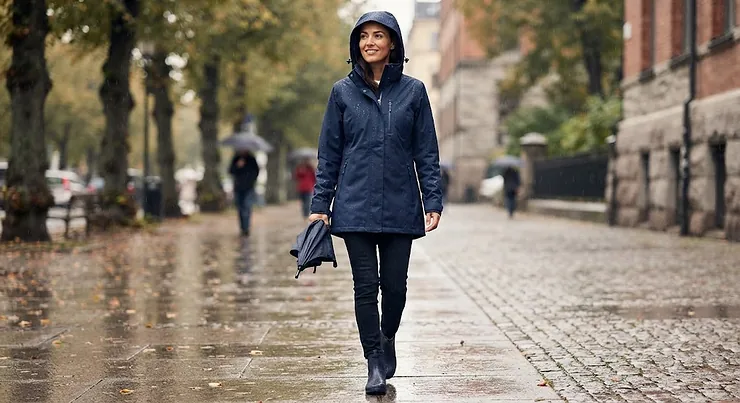
Rain has a way of ruining plans. A commute turns into a wet-sock emergency, a “quick walk to the car” becomes a hairdo disaster, and suddenly you’re standing in a doorway wondering why your $20 windbreaker is doing absolutely nothing except making a crinkling noise. A genuinely good women’s rain jacket solves that problem quietly, without turning you into a walking trash bag. What is a women’s rain jacket? It’s an outer layer built with a waterproof, breathable membrane or coating and sealed seams, designed to block rain while still letting body heat and sweat escape, unlike a plain vinyl poncho or a fashion trench coat.
The market for this stuff is honestly a mess. Scroll Amazon for five minutes and you’ll hit a wall of nearly identical-looking raincoats, all claiming to be “premium,” “waterproof,” and “windproof,” with barely any way to tell which ones actually hold up past the first downpour. That’s the gap this guide is built to close. We dug into real specs, real brand documentation, and real aggregated review sentiment across seven actual products, from a $35 packable shell to a $179 hardshell that outdoor testers have put through actual storms in Patagonia. No invented five-star reviews here. Where the data is thin, we say so.
Whether you’re hunting for something for a daily commute, a hiking trip, or just a jacket that survives a Tuesday without looking like camping gear, you’ll find a real option below, along with the honest reasoning behind why it earned its spot.
Quick Comparison Table
Before the deep dive, here’s the fast version for anyone who just wants the shortlist.
| Jacket | Best For | Waterproofing | Price Range |
|---|---|---|---|
| Patagonia Torrentshell 3L | Best overall / hardshell durability | 3-layer H2No | $150-$200 |
| REI Co-op Rainier | Best value for money | 2.5-layer HydroWall | $50-$100 |
| Marmot PreCip Eco | Best budget performance | NanoPro 2.5-layer | $60-$110 |
| The North Face Antora | Most stylish everyday wear | DryVent 2-layer | $90-$130 |
| Helly Hansen Loke 2.0 | Lightest packable shell | HellyTech 2.5-layer | $85-$120 |
| Columbia Arcadia II | Most budget-friendly casual | Omni-Tech 2-layer | $60-$90 |
| SWISSWELL Packable Raincoat | Cheapest true waterproof pick | 3-layer coated nylon | $35-$50 |
Look closely at that middle column and a pattern jumps out: the pricier jackets lean on 2.5- or 3-layer construction, while the budget options rely on simpler 2-layer builds. That’s not marketing fluff. Layer count roughly tracks with how long a jacket resists “wetting out” during sustained rain, not just a light drizzle. If you only need protection for the walk between your car and the office, the layer count matters less than the price. If you’re standing in weather for an hour or more, it matters a lot.
💬 Found a jacket you’re eyeing already? Bookmark this page and come back before you buy — the fit notes below could save you a return shipment.😊
Top 7 Women’s Rain Jackets: Expert Analysis
1. Patagonia Torrentshell 3L — best overall hardshell durability
The Patagonia Torrentshell 3L earns its reputation the unglamorous way: by simply not letting water through, even during long, sideways downpours. Built with a 3-layer, 50-denier recycled nylon ripstop face and a polyurethane membrane, this is genuine hardshell territory, not a coated windbreaker pretending to be one. A 3-layer build means the waterproof membrane is sandwiched directly between the face fabric and an interior liner, rather than just coated on the inside, which is why it holds up longer under sustained saturation than the 2-layer jackets on this list.
At around 12.4 ounces, it’s not the lightest piece here, and the fabric has a stiffer, crinklier hand-feel that some buyers notice right away — outdoor gear testers have flagged the same trade-off repeatedly. What most buyers overlook is that this stiffness is largely the cost of that superior 3-layer waterproofing; you rarely get top-tier water resistance and buttery-soft fabric in the same jacket at this price. It’s built for people who get rained on often and hate replacing gear every season, not casual once-a-month wearers.
Reviewers consistently report that the 11-inch underarm pit zips genuinely help during aerobic activity, and the microfleece-lined collar is a small touch that gets mentioned often as unexpectedly comfortable against the neck. The three-layer design and PFC-free DWR finish also reflect a broader industry shift toward safer water-repellent chemistry.
Pros:
- ✅ True 3-layer hardshell holds up in sustained heavy rain
- ✅ PFC-free DWR finish avoids older “forever chemical” coatings
- ✅ Pit zips genuinely help during high-output activity
Cons:
- ❌ Heavier and stiffer than 2- and 2.5-layer competitors
- ❌ No dedicated chest pocket for phones or cards
In the $150-$200 range, the Patagonia Torrentshell 3L delivers genuine hardshell performance for less than many competing brands charge, making it a strong value pick despite the higher upfront cost.

2. REI Co-op Rainier — best value for everyday and trail use
The REI Co-op Rainier sits in that sweet spot where “affordable” doesn’t mean “flimsy.” Its 2.5-layer recycled ripstop nylon shell uses a HydroWall membrane, a middle-ground construction between basic 2-layer coatings and full 3-layer laminates, which explains why it performs noticeably better than similarly priced 2-layer jackets in moderate rain.
Gear testers have noted that this jacket resists water well in moderate showers and thunderstorms but can start “wetting out” in prolonged, heavy downpours — a limitation worth knowing before you plan a full-day hike in it. Here’s what to weigh: for daily commuting, dog walks, and errands, that ceiling almost never matters, since most people aren’t standing in a storm for six straight hours. The articulated elbows and slightly longer hem are genuinely useful design choices, not filler bullet points, since they improve range of motion and coverage without adding bulk.
Aggregated reviewer sentiment frequently praises the softer fabric feel in the newest version compared to older Rainier models, though sizing feedback is mixed — some buyers note it runs roomy through the torso.
Pros:
- ✅ 2.5-layer HydroWall outperforms basic coated shells
- ✅ Articulated elbows improve mobility while hiking
- ✅ PFC-free DWR finish with sealed seams
Cons:
- ❌ Can wet out during long, heavy downpours
- ❌ Fit tends to run large through the body
Priced in the $50-$100 range depending on size and color, the REI Co-op Rainier consistently gets flagged by outdoor reviewers as one of the best value-for-performance rain jackets available, especially for people who want trail-capable gear without a trail-gear price tag.
3. Marmot PreCip Eco — best budget performance shell
The Marmot PreCip Eco has been a category staple for two decades, and the “Eco” update swapped in 100% recycled NanoPro nylon ripstop with a PFC-free DWR coating without sacrificing the jacket’s reputation for punching above its price point. Ten-inch pit zips paired with perforated pocket linings do real work here, venting body heat efficiently enough that testers rate its breathability as “above average” for the price tier.
Based on the spec comparison with pricier jackets, the PreCip Eco’s biggest limitation isn’t waterproofing, it’s polish: the DriClime-lined chin guard is a genuinely nice detail for comfort, but the overall build feels simpler than the Torrentshell or Rainier. That’s a fair trade for the price. What most buyers overlook is that this jacket is frequently recommended by gear reviewers as the go-to alternative when a competitor is sold out, which says a lot about how consistently it performs across conditions.
Reviewers commonly describe it as comfortable for a wide range of activities and easy to stuff into its own pocket, making it a practical grab-and-go layer for unpredictable forecasts.
Pros:
- ✅ Excellent water resistance for its budget price tier
- ✅ 10-inch pit zips genuinely aid breathability
- ✅ 100% recycled fabric with PFC-free DWR
Cons:
- ❌ Feature set feels basic next to premium 3-layer shells
- ❌ Fabric hand-feel is less refined than higher-end options
Typically found in the $60-$110 range, the Marmot PreCip Eco is frequently cited by gear testers as one of the best-value rain shells on the market, especially for buyers who hike occasionally but don’t need alpine-grade armor.
4. The North Face Antora — most stylish everyday shell
The North Face Antora leans into everyday wearability more than backcountry toughness, and it shows in the design choices. Its DryVent 2-layer shell uses a non-PFC DWR finish and a flattering, city-friendly silhouette that reads more “commute coat” than “expedition gear,” which is exactly the point for buyers who want something they’d actually wear to brunch.
Reviewers consistently note that the Antora fits true to size with good mobility through the shoulders, and it’s available in extended plus sizes (1X-3X), which is a real accessibility win that a lot of competing brands still lack. The trade-off, per outdoor testers, is breathability: with no pit zips and a mesh-and-polyester interior lining, the jacket can feel warm during anything more active than a walk. What the spec sheet won’t tell you, but reviewer feedback suggests, is that pocket placement runs a little high and can feel awkward for stashing a phone.
This is the pick for someone who wants a rain jacket that also functions as a normal-looking coat, not a piece of technical gear that screams “outdoor store.”
Pros:
- ✅ Flattering, everyday-friendly silhouette and colorways
- ✅ Extended plus-size range (1X-3X) genuinely included
- ✅ Seam-sealed DryVent shell with recycled fabric
Cons:
- ❌ No pit zips, so it runs warm during activity
- ❌ Hand pockets sit high and lack phone-friendly depth
At around $90-$130, the The North Face Antora costs more than budget picks for less technical performance, but the style payoff is real if daily wearability matters more to you than storm-proofing.
5. Helly Hansen Loke 2.0 — lightest packable performer
The Helly Hansen Loke 2.0 comes from a Norwegian brand that has been building rain gear since 1877, and the pedigree shows in the details. Weighing under 10 ounces, its 2.5-layer HellyTech construction uses a polyamide face fabric with an interior liner functioning as the “half layer,” a lighter-weight approach that trims bulk without gutting waterproofing.
Reviewers testing the jacket describe it as kept them dry through moderate storms and all-day mists, though the hood seal has been flagged as a weak point during heavier, sustained exposure — water can sneak through around the face in prolonged downpours. Here’s what to weigh: for someone who wants a spare layer to stash in a bag “just in case,” rather than a dedicated storm shell, this is a minor issue. The newest 2.0 version added RECCO reflector technology, originally built for winter rescue scenarios, which is an unusual but genuinely thoughtful safety inclusion for a summer-weight shell.
Its long 9-inch pit zips consistently get singled out by reviewers as excellent for temperature control on warmer, humid rainy days.
Pros:
- ✅ Very lightweight at under 10 ounces
- ✅ Long pit zips provide excellent ventilation control
- ✅ RECCO reflector adds a genuine safety feature
Cons:
- ❌ Hood seal can let water through in heavy, sustained rain
- ❌ Less protective than 3-layer shells during long storms
In the $85-$120 range, the Helly Hansen Loke 2.0 stands out as one of the best lightweight, packable options for buyers who prioritize low weight and ventilation over maximum storm protection.

6. Columbia Arcadia II — most budget-friendly casual pick
The Columbia Arcadia II has been a budget staple for so long it’s practically furniture in the rain jacket category, and for good reason: its Omni-Tech 2-layer nylon shell with fully sealed seams delivers acceptable protection for light-to-moderate rain at a genuinely low price. This is the errand-running, dog-walking, kid-pickup jacket, not a summit shell.
Outdoor gear testers consistently describe its water resistance as “decent” for short exposure but note it’s not built for extended time in a torrential downpour, and the lack of pit zips means breathability suffers during anything more active than walking. Based on the spec comparison, that’s a fair trade at this price — you’re not paying for alpine performance, you’re paying for a reliable everyday layer. Reviewer feedback frequently flags the Velcro cuff closures as a minor annoyance compared to snap or elastic alternatives, though functionally they still seal out wind.
What most buyers overlook is how genuinely packable this jacket is; it stuffs into its own hand pocket, which makes it an easy “just in case” grab for a bag or car trunk.
Pros:
- ✅ Genuinely low price for a fully seam-sealed shell
- ✅ Packs into its own pocket for easy carrying
- ✅ Adjustable storm hood and drawcord hem
Cons:
- ❌ No pit zips limits breathability during activity
- ❌ Velcro cuffs feel dated next to snap closures
Usually priced in the $60-$90 range, the Columbia Arcadia II remains one of the most recommended budget rain jackets for casual, low-intensity use where price matters more than technical performance.
7. SWISSWELL Packable Raincoat — cheapest true waterproof pick
The SWISSWELL Packable Raincoat represents the Amazon-native end of this list, and it’s a legitimately useful budget option rather than a throwaway impulse buy. It’s built from a 3-layer coated nylon construction rated at 5,000mm hydrostatic head with a 3,000g/m²/24h breathability rating, numbers that place it solidly in mid-range waterproof-breathable territory according to industry testing standards, not premium, but respectable for light-to-moderate rain.
At just under 11 ounces (300 grams), it’s genuinely lightweight and packs into its own pocket, with a soft mesh lining that reviewers describe as comfortable against skin during extended wear. What the spec sheet won’t tell you is that a 5,000mm rating means this jacket is best suited for daily showers and commutes rather than hours-long downpours; that’s simply where the fabric’s protection ceiling sits, and it’s an honest one for the price. A reflective safety stripe is a nice, unexpected inclusion for a budget jacket, useful for early-morning dog walks or evening commutes.
This is the pick for buyers who want a genuinely waterproof, packable jacket in fun colorways without spending past the $50 mark.
Pros:
- ✅ Real 5,000mm waterproof rating at a low price
- ✅ Extremely lightweight and packable at 300g
- ✅ Reflective safety stripe for low-light visibility
Cons:
- ❌ Waterproof ceiling is lower than premium 3L shells
- ❌ Sizing and color availability can be inconsistent
Typically priced between $35-$50, the SWISSWELL Packable Raincoat is hard to beat for buyers who want genuine waterproofing without the premium-brand price tag.
Top 7 Rain Jackets: Detailed Spec Comparison
| Jacket | Weight | Layers | Pit Zips | Best For |
|---|---|---|---|---|
| Patagonia Torrentshell 3L | 12.4 oz | 3-layer | Yes | Frequent, heavy rain exposure |
| REI Co-op Rainier | ~9.9 oz | 2.5-layer | Yes | Everyday value and light trail use |
| Marmot PreCip Eco | ~10 oz | 2.5-layer | Yes | Budget outdoor performance |
| The North Face Antora | ~13 oz | 2-layer | No | Stylish daily wear |
| Helly Hansen Loke 2.0 | ~9.5 oz | 2.5-layer | Yes | Packable, lightweight travel |
| Columbia Arcadia II | ~11 oz | 2-layer | No | Low-cost casual errands |
| SWISSWELL Packable Raincoat | ~10.6 oz | 3-layer (coated) | No | Cheapest genuine waterproofing |
The clearest takeaway from this table is that pit zips correlate almost perfectly with intended activity level: every jacket built with hiking or aerobic use in mind includes them, while the two most casual, city-oriented picks skip them entirely. If you sweat easily or plan to wear your jacket while moving fast, weight it toward the pit-zip column over raw layer count.
Benefits vs. Traditional Rain Gear (Ponchos, Trench Coats & Slickers)
| Feature | Waterproof/Breathable Jacket | Vinyl Poncho | Fashion Trench Coat |
|---|---|---|---|
| Keeps sweat from soaking you | Yes | No | No |
| Works during physical activity | Yes | Rarely | No |
| Packability | High | High | Low |
| Wind resistance | High | Low | Moderate |
| Best For | Commuting, hiking, travel | Emergency/one-time use | Light drizzle, city wear |
A vinyl poncho keeps rain out about as well as a garbage bag does, because functionally that’s close to what it is: waterproof, but completely non-breathable, so you end up damp from your own sweat during any real activity. A fashion trench coat looks great at brunch and does almost nothing once the rain picks up past a drizzle, since most aren’t seam-sealed or built with a genuine membrane. A proper waterproof/breathable shell splits the difference: it blocks liquid water while letting vapor escape, which is the entire reason waterproof breathable fabrics exist as a category in the first place.
✨ Don’t Miss These Exclusive Deals!
🔍 Take your rain-ready wardrobe to the next level with these carefully selected jackets. Click on any highlighted pick to check current pricing and availability. The right layer will help you get through wet season without dreading the forecast!
Practical Usage Guide: Setup, Care & First 30 Days
Getting a new women’s rain jacket right isn’t just about the purchase, it’s about the first month of use, where most preventable mistakes happen. Start by testing the DWR (durable water repellent) coating before you actually need it: run the jacket under a shower or spray it with a hose, and watch whether water beads up and rolls off. If it soaks in instead of beading, the factory coating may already be compromised, and you’ll want to reapply a wash-in or spray-on DWR treatment.
A common first-30-days mistake is machine-washing a rain jacket with regular detergent, which can strip the DWR coating and reduce waterproofing dramatically. Use a technical cleaner made for waterproof gear instead, and always follow the specific care tag rather than assuming “cold wash” covers it. Another overlooked step: check the seam tape periodically, especially around the hood and pockets, since this is where leaks tend to start first, not through the fabric itself.
For storage, avoid compressing a jacket into a stuff sack for months at a time; it can create permanent creases in the membrane that reduce performance. A loose hang in a closet between rainy seasons keeps the fabric and membrane in better shape long-term, and it’s a five-second habit that meaningfully extends the life of whichever jacket you choose.
Real-World Scenarios: Who Should Buy Which Jacket
Not everyone needs the same rain jacket, and matching the jacket to the actual use case saves both money and regret. Consider a college student commuting 15 minutes across campus between classes: she doesn’t need 3-layer hardshell armor, she needs something packable that survives being stuffed in a backpack all week — the SWISSWELL Packable Raincoat or Columbia Arcadia II covers that need without overspending.
A frequent hiker who’s regularly out in unpredictable mountain weather for hours at a time is a different story entirely. For her, the extra weight and cost of the Patagonia Torrentshell 3L or REI Co-op Rainier pays off directly in hours of dry comfort rather than a wet, miserable trail day. Meanwhile, someone who travels frequently and needs a rain layer that disappears into a carry-on without adding bulk should lean toward the Helly Hansen Loke 2.0, since its sub-10-ounce weight and packability were genuinely built with travel in mind.
And for the buyer who mostly wants a jacket that looks like a normal coat, works for the office, and only occasionally sees real rain, the North Face Antora hits that specific, very common need better than any technical hardshell would.
How to Choose a Women’s Rain Jacket
Here’s a straightforward framework for narrowing the field, based on the criteria that actually predict how happy you’ll be with the jacket in six months.
- Match layer count to your rain exposure. Occasional light rain, 2-layer is fine; frequent or heavy rain, look toward 2.5- or 3-layer construction.
- Check for pit zips if you’ll be active. Walking to a car doesn’t need them; hiking or biking absolutely does.
- Confirm the waterproof rating fits your climate. Around 5,000mm suits daily showers; 10,000mm+ suits sustained downpours.
- Prioritize seam sealing, not just fabric. A jacket can have great fabric and still leak through unsealed seams.
- Consider hood design carefully. A visor and cinch cord matter more in windy climates than most buyers expect.
- Weigh packability against durability. Ultra-thin packable shells trade some long-term toughness for portability.
- Factor in sizing range. Extended and plus sizing availability varies significantly by brand, so check before assuming your usual size works.
Women’s Rain Jacket vs. Windbreaker: What’s the Real Difference?
It’s easy to assume a windbreaker and a rain jacket are basically the same thing with different labels, but the distinction actually matters when the forecast turns nasty. A windbreaker is designed primarily to block wind, using a tightly woven fabric that resists light moisture but isn’t seam-sealed or built with a true waterproof membrane. A genuine rain jacket adds that membrane or coating plus taped seams, the two features that determine whether water actually gets through during sustained exposure, not just a passing sprinkle.
In practice, this means a windbreaker might survive a light mist just fine, but it will soak through during a real downpour, especially at the shoulders and seams where stitching creates tiny needle holes that let water in. If your local weather regularly includes actual rain rather than just wind and light drizzle, the jacket category you want is rain jacket, full stop, not the windbreaker aisle next to it. The REI Co-op Rainier and Marmot PreCip Eco both demonstrate this clearly: their sealed-seam, membrane-based construction is precisely why gear testers rate their water resistance so much higher than a basic windbreaker at a similar price.

Common Mistakes When Buying a Women’s Rain Jacket
The single most common mistake is buying based on the word “waterproof” alone without checking whether the seams are actually sealed, since an unsealed jacket can still leak significantly regardless of how good the fabric itself is. A close second is ignoring breathability entirely and ending up soaked in sweat rather than rain, which happens often with cheap 2-layer jackets worn during active use.
Sizing is another frequent trap: several of the jackets on this list, including the Columbia Arcadia II and REI Co-op Rainier, get reviewer feedback describing a roomier-than-expected fit, so sizing down or checking brand-specific charts carefully avoids an unnecessary return. Buyers also commonly skip DWR maintenance entirely, assuming waterproofing is permanent when it actually degrades with wear and washing over time.
Lastly, don’t assume a higher price always means better performance for your specific use case; the SWISSWELL Packable Raincoat genuinely outperforms its price point for casual use, while an expensive hardshell can be overkill and uncomfortably warm for someone who only needs light protection.
Rain Jacket for Women Petite: Fit and Sizing Notes
Petite frames run into a specific, recurring problem with rain jackets: sleeve length and torso length are usually scaled for average height, which means a jacket that fits the shoulders can still leave sleeves bunched at the wrist or a hem hanging awkwardly low. Reviewer feedback on the Columbia Arcadia II repeatedly notes that shorter, smaller-framed wearers found the standard size ran roomy through the body while still fitting through the arms reasonably well, making it a workable petite option in the budget tier.
The REI Co-op Rainier, by contrast, has been flagged by testers as running large through the torso specifically, which can be a bigger issue for petite frames layering underneath, so sizing down a full size is often the better call rather than trusting the standard chart. For jackets without dedicated petite cuts, the more reliable fix is choosing brands with adjustable drawcord hems and cinchable cuffs, both of which the Marmot PreCip Eco and Patagonia Torrentshell 3L include, since those adjustment points let a petite wearer take up excess room rather than being stuck with it.
What most buyers overlook is that a slightly oversized rain jacket is rarely a dealbreaker functionally, since it still layers fine, but it does affect how much wind can get up under the hem, so cinching the waist and cuffs matters more for petite fit than chasing an exact size match.
Women’s Hardshell Review: What “Hardshell” Actually Means
The term “hardshell” gets thrown around loosely in rain jacket marketing, but it has a specific technical meaning worth understanding before you pay a premium for it. A true hardshell uses a rigid, non-insulated waterproof-breathable membrane, typically 3-layer construction, designed to handle sustained, serious weather rather than the occasional shower a softer 2-layer shell handles fine.
Among this list, the Patagonia Torrentshell 3L is the clearest hardshell example, and outdoor gear testers consistently rate its water resistance as the strongest in this lineup precisely because of that 3-layer build. The trade-off reviewers note repeatedly is stiffness: hardshells trade some next-to-skin comfort and quiet movement for that durability, which is why the fabric feels crinklier than the softer, more casual North Face Antora. Based on the spec comparison, a hardshell makes sense if you’re regularly out in serious weather for extended periods; for occasional errands or light hiking, a 2.5-layer jacket like the Marmot PreCip Eco delivers most of the practical benefit without the added bulk and cost.
If you’re specifically shopping the “hardshell” category rather than general rainwear, look for the 3-layer spec explicitly listed, since brands don’t always use the word “hardshell” consistently in product titles even when the construction qualifies.
💬 Torn between a hardshell and a softer everyday jacket? A quick share with a friend who hikes might get you a second opinion fast!😊
Feminine Rain Shell Styles: Cute, Stylish and Genuinely Waterproof
There’s a persistent myth that a genuinely waterproof jacket has to look like technical gear off a mountaineering rack, all boxy cuts and utilitarian color-blocking. That’s simply not true anymore, and the jackets on this list prove it in different ways. The North Face Antora leans hardest into feminine, everyday styling with a flattering, tailored silhouette that reads as a normal coat rather than outdoor equipment, which is exactly why reviewers consistently praise it for daily wearability over technical performance.
On the more playful, budget-friendly end, the SWISSWELL Packable Raincoat offers a lightweight, colorful option that leans into the “cute waterproof jacket” niche shoppers search for on Amazon, without sacrificing a legitimate 5,000mm waterproof rating in the process. What most buyers overlook is that “cute” and “functional” aren’t actually in tension here; a reflective safety stripe, packable design, and soft mesh lining can coexist with a genuinely feminine cut, and several of the jackets on this list manage exactly that combination.
If lightweight and stylish is your priority over storm-proofing, the Helly Hansen Loke 2.0 also deserves a look: its trim, less bulky profile reads more like a casual shell than technical gear, while still delivering real waterproof performance for daily use and light travel.

Long-Term Cost & Maintenance: What You’ll Actually Spend
The sticker price on a rain jacket is only part of the real cost, and ignoring the maintenance side is where buyers end up disappointed years later. DWR coatings degrade with UV exposure, washing, and general wear, typically needing renewal every 20-40 wears depending on use intensity, and a wash-in DWR treatment runs a modest amount compared to replacing the whole jacket.
Looking at total cost of ownership rather than sticker price alone, the Patagonia Torrentshell 3L‘s higher upfront cost starts making more sense: 3-layer construction tends to hold up to repeated DWR renewal and heavy use better than thinner 2-layer shells, stretching its useful lifespan out over more seasons. On the other end, the SWISSWELL Packable Raincoat‘s low price means an earlier replacement cycle is a reasonable trade, especially for buyers who only need occasional protection and don’t want to invest in a technical shell’s ongoing care routine.
Either way, budgeting for the occasional DWR refresh and gentle, technical-cleaner washing rather than assuming waterproofing is a one-time purchase will meaningfully extend whichever jacket you choose.
Safety, Regulations & Compliance: The PFAS Question
One genuinely useful thing to know before buying rainwear in 2026: the outdoor industry has been actively moving away from older PFAS-based DWR treatments, and it’s not just marketing spin. PFAS, or per- and polyfluoroalkyl substances, are a class of long-lasting synthetic chemicals that regulatory bodies have flagged for potential environmental and health concerns, and the EPA has published detailed guidance explaining the current understanding of these compounds and the regulatory actions addressing them.
Every jacket in this list explicitly uses a PFC-free or non-PFC DWR treatment, including the Patagonia Torrentshell 3L, REI Co-op Rainier, and Marmot PreCip Eco, reflecting a broader shift across the outdoor apparel industry rather than a one-brand initiative. What most buyers overlook is that PFC-free coatings can sometimes wear off slightly faster than older fluoropolymer-based treatments, which is a reasonable trade-off for the reduced environmental impact, but worth knowing before you assume identical long-term durability across old and new formulations.
If chemical transparency matters to your purchase decision, checking specifically for “PFC-free” or “non-PFC DWR” language in the product description is the most reliable way to confirm a jacket avoids these older treatments.
Features That Actually Matter (And Those That Don’t)
Marketing copy loves to pile on feature lists, but not every bullet point translates into real-world value. Sealed seams, a genuine waterproof-breathable membrane, and pit zips for active use are the features that actually determine whether you stay dry and comfortable; these are worth prioritizing above almost everything else on a spec sheet.
Features that matter far less than marketing suggests include exact denier counts beyond a reasonable range and branded membrane names, since, as the REI Expert Advice guide on rainwear explains, understanding the underlying waterproof/breathable category matters more than memorizing a specific proprietary name. Similarly, an ultra-high waterproof rating (20,000mm+) sounds impressive but delivers marginal real-world benefit for most buyers who aren’t standing in genuinely extreme, sustained storms.
What does matter, and gets underrated, is hood design: a stiffened visor and a proper cinch cord meaningfully affect comfort and visibility in wind-driven rain, far more than most buyers expect when comparing jackets purely on price.
Frequently Asked Questions
❓ What is the best women's rain jacket for petite frames?
❓ Is a 2.5-layer or 3-layer rain jacket better for women?
❓ How much should I expect to pay for a good women's rain jacket?
❓ Can I wear a rain jacket in cold weather?
❓ Are cheap waterproof jackets on Amazon actually waterproof?
Conclusion
The honest truth about shopping for a women’s rain jacket is that there isn’t one universal “best” pick, there’s a best pick for your specific rain exposure, activity level, and budget. The Patagonia Torrentshell 3L earns its premium price with genuine hardshell durability, while the REI Co-op Rainier and Marmot PreCip Eco deliver most of that real-world performance for meaningfully less money. The North Face Antora solves for style over technical armor, the Helly Hansen Loke 2.0 wins on packability and weight, and the Columbia Arcadia II and SWISSWELL Packable Raincoat prove that genuine waterproofing doesn’t require a triple-digit price tag.
Match the jacket to how you’ll actually use it, not to the longest spec sheet, and you’ll end up with something you reach for every time the forecast turns, rather than something that sits in the closet after one disappointing storm.
✨ Ready to Stop Dreading Rainy Days?
🔍 Check current pricing on today’s top picks above and grab the layer that actually fits how you live. A good rain jacket pays for itself the very first storm it gets you through dry!
Recommended for You
- Rain Jacket For Men: 7 Top Picks Ranked for 2026
- 7 Best Waterproof Hunting Jackets 2026: Silent, Scent-Free Picks
- Rain Jacket for Fishing: 7 Picks That Actually Keep You Dry (2026)
Disclaimer: This article contains affiliate links. As an Amazon Associate, I earn from qualifying purchases. If you purchase products through these links, we may earn a small commission at no additional cost to you.
✨ Found this helpful? Share it with your friends! 💬🤗
