

In This Article
✨Was this helpful? Spread the word! 🚀
Listen, I get it. You’re scrolling through endless jacket options, wondering if you really need another piece of gear cluttering your closet. But here’s the thing—when temperatures plummet and that icy wind hits your face at mile three, you’ll understand why finding the best winter running jackets isn’t just about comfort. It’s about actually wanting to lace up those shoes when it’s 25 degrees outside.

After years of testing gear in brutal winter conditions, I’ve learned that the right cold weather running jacket transforms miserable runs into bearable ones. We’re talking about jackets that keep you warm without turning you into a sweaty mess, protect against wind without feeling like you’re wearing a sail, and actually let you move naturally. The best winter running jackets strike that perfect balance between insulation and breathability—something cheaper alternatives rarely achieve.
What makes a running jacket for winter different from your everyday coat? Temperature regulation, for starters. Your body generates serious heat when you’re pushing miles, even in freezing temps. A quality jacket manages moisture, blocks wind, and provides strategic insulation without overheating you. Think of it as your personal climate control system. According to Runner’s World, you should dress for temperatures 10-15 degrees warmer than the actual forecast when running, which is why specialized running gear matters so much.
Quick Comparison Table
| Jacket Model | Price Range | Weight | Waterproof Rating | Best For |
|---|---|---|---|---|
| The North Face ThermoBall Eco Jacket 2.0 | $180-220 | 14.8 oz | DWR | Cold, dry conditions |
| ASICS FUJITRAIL Waterproof Jacket | $140-180 | 8 oz | Fully waterproof | Rain & trail running |
| Patagonia Nano-Air Light Hybrid | $240-280 | 12.5 oz | DWR | High-exertion activities |
| Nike Therma-FIT Swift Running Jacket | $150-170 | 11 oz | Water-resistant | Everyday training |
| Saucony Hurricane Insulated Jacket | $120-160 | 13 oz | DWR | Budget-friendly warmth |
| Brooks Canopy Jacket | $160-190 | 9.5 oz | Water-resistant | Windy conditions |
| Under Armour ColdGear Infrared Shield | $110-150 | 12 oz | Water-resistant | Versatile layering |
💬 Just one click – help others make better buying decisions too!😊
Top 7 Best Winter Running Jackets: Expert Analysis
1. The North Face ThermoBall Eco Jacket 2.0
The North Face ThermoBall Eco Jacket 2.0 stands as my top pick for serious winter runners who refuse to let cold weather derail their training. This jacket uses synthetic ThermoBall insulation that mimics down’s warmth-trapping properties while performing when wet—a game-changer for unpredictable weather.
Key Specifications:
- 100% recycled polyester with ThermoBall Eco insulation
- Slim fit design allows for layering
- Two zippered hand pockets plus internal chest pocket
- Price: $180-220 on Amazon
The quilted construction minimizes cold spots, while the DWR finish sheds light moisture effectively. What I love most? It packs into its own pocket, making it perfect for long runs where conditions might change. Customer reviews consistently praise its warmth-to-weight ratio, though some note it runs slightly small.
✅ Pros: Excellent warmth, packable design, sustainable materials
✅ Versatile for running and casual wear
✅ Maintains insulation when damp
❌ Cons: Runs small (size up recommended)
❌ Limited breathability during high-intensity efforts
Customer Insight: Runners report staying comfortable down to 20°F with just a base layer underneath, making this one of the best cold weather running jacket options for frigid mornings.

2. ASICS FUJITRAIL Waterproof Jacket
If you’re a trail runner or face frequent precipitation, the ASICS FUJITRAIL Waterproof Jacket deserves serious consideration. Co-created with ASICS’ roster of trail athletes, this jacket underwent testing in technical mountain conditions.
Key Specifications:
- Pertex Shield fabric from Japan
- Fully waterproof and seam-sealed
- Drop shoulder construction for pack compatibility
- Price: $140-180 on Amazon
The ergonomic design and raglan sleeves provide exceptional freedom of movement—crucial when navigating technical terrain. It packs into its own chest pocket and weighs just 8 ounces, making it nearly unnoticeable in your pack. According to 220 Triathlon testers, the three-point hood adjustment system stays secure without flapping.
✅ Pros: Truly waterproof performance
✅ Ultra-lightweight and packable
✅ Excellent for wearing over running packs
❌ Cons: Wider fit may not suit everyone
❌ Less insulation than other options
Customer Insight: Trail runners particularly appreciate the extended rear hem that provides extra coverage when wearing a hydration pack.
3. Patagonia Nano-Air Light Hybrid Hoody
For high-output winter activities, the Patagonia Nano-Air Light Hybrid Hoody represents the pinnacle of active insulation technology. This isn’t your typical puffy jacket—it’s designed to stay on your body throughout your entire run.
Key Specifications:
- 40g FullRange insulation
- R1 Air knit panels for breathability
- 100% recycled materials throughout
- Price: $240-280 on Amazon
The hybrid construction places breathable knit fleece panels under arms, on sides, and across the lower back—exactly where you need heat dump capability. FullRange insulation offers mechanical stretch and exceptional air permeability (35 CFM), allowing excess body heat to escape during hard efforts. The Outdoor Gear Lab testing team consistently ranks this among the most breathable insulated jackets.
✅ Pros: Exceptional breathability for active use
✅ Stretchy, non-restrictive fit
✅ Works as standalone or mid-layer
❌ Cons: Premium pricing
❌ Less weather protection than hard shells
Customer Insight: Runners report this jacket excels in the 25-40°F range during aerobic activities, making it ideal for tempo runs and interval training.
4. Nike Therma-FIT Swift Running Jacket
The Nike Therma-FIT Swift Running Jacket offers excellent value for runners seeking reliable cold-weather protection without breaking the bank. Nike’s Therma-FIT technology manages your body’s natural heat effectively.
Key Specifications:
- Recycled polyester construction
- Thumbhole cuffs for extended coverage
- Drop-tail hem design
- Price: $150-170 on Amazon
This jacket features a loose fit that makes layering easy, with secure zippered side pockets for essentials. The extended cuffs with thumbholes provide extra hand coverage—a feature I use constantly on frigid morning runs. Nike’s moisture-wicking fabric keeps sweat away from your skin, though it’s not fully waterproof.
✅ Pros: Great value for performance
✅ Comfortable loose fit
✅ Effective heat management
❌ Cons: Not waterproof (water-resistant only)
❌ Limited color options on Amazon
Customer Insight: Perfect for runners who prioritize freedom of movement and don’t need extreme weather protection.
5. Saucony Hurricane Insulated Jacket
Budget-conscious runners rejoice—the Saucony Hurricane Insulated Jacket delivers solid winter performance at an accessible price point. This jacket proves you don’t need to spend $200+ for quality cold-weather protection.
Key Specifications:
- 100% recycled polyester insulation
- Recycled fleece panels for breathability
- Wind and water-resistant shell
- Price: $120-160 on Amazon
The Hurricane Collection focuses on sustainable materials without sacrificing performance. Strategic fleece panel placement provides breathability where you need it most, while the non-PFC DWR coating resists light precipitation. It’s not as feature-rich as premium options, but it nails the basics.
✅ Pros: Excellent value proposition
✅ Sustainable materials
✅ Balanced warmth and breathability
❌ Cons: Fewer features than premium jackets
❌ Basic pocket configuration
Customer Insight: Runners appreciate this as a solid “workhorse” jacket for daily training runs in moderate cold.
6. Brooks Canopy Jacket
Brooks Canopy earns respect for its incredibly soft, comfortable fabric and excellent wind protection. This jacket prioritizes comfort without compromising performance.
Key Specifications:
- Airy, soft-touch fabric
- Strategic ventilation placement
- Reflective details for visibility
- Price: $160-190 on Amazon
The Canopy’s lightweight construction (9.5 oz) makes it barely noticeable during runs, while the fabric’s breathability prevents that dreaded sauna effect. Brooks designed this specifically for runners, with articulated sleeves and a runner-specific cut that moves naturally. According to testing from Outdoor Gear Lab, it offers superior comfort during extended wear.
✅ Pros: Exceptionally soft and comfortable
✅ Excellent breathability
✅ Great for windy conditions
❌ Cons: Limited water resistance
❌ Less insulation than alternatives
Customer Insight: Runners consistently mention the superior comfort level—this jacket doesn’t feel like you’re wearing technical gear.
7. Under Armour ColdGear Infrared Shield 2.0
Rounding out our list, the Under Armour ColdGear Infrared Shield 2.0 offers versatile performance across various winter activities. UA’s ColdGear Infrared technology holds body heat without adding bulk.
Key Specifications:
- ColdGear Infrared lining
- UA Storm water-resistant finish
- Athletic but not restrictive fit
- Price: $110-150 on Amazon
The special thermal print on the interior traps warmth while the Storm technology repels light rain effectively. This jacket transitions seamlessly from running to casual wear—a practical bonus if you prefer gear that serves multiple purposes. The fit allows room for layering while maintaining an athletic silhouette.
✅ Pros: Great multi-purpose jacket
✅ Effective heat retention
✅ Stylish enough for everyday wear
❌ Cons: Runs slightly small
❌ Not designed specifically for running
Customer Insight: Users report excellent performance in transitional weather (30-45°F) and appreciate the jacket’s versatility beyond just running.
🌟 Ready to Conquer Winter Running? 🌟
🔥 Click any jacket name above to check current Amazon prices and availability. Don’t let another cold morning keep you indoors—gear up and get moving! ⚡
Understanding Winter Running Jacket Technology
What Makes a Great Winter Running Jacket
Not all jackets created equal, folks. The best winter running jackets incorporate specific technologies that separate them from regular winter coats. Let’s break down what actually matters.
Breathability vs. Insulation Balance: This is the Holy Grail of cold weather running gear. Your body generates approximately 15-20 times more heat during exercise than at rest, according to research from the American Council on Exercise. A quality jacket needs to retain enough warmth for those first chilly miles while allowing moisture vapor to escape as you heat up.
Fabric Technology: Modern running jacket for winter options use advanced synthetic materials or treated down that maintain insulating properties when damp. Look for fabrics with CFM (cubic feet per minute) ratings—higher numbers indicate better breathability. Premium jackets like the Patagonia Nano-Air feature air-permeable insulation (35 CFM), allowing active temperature regulation.
Weather Resistance Layers: Understanding the difference between waterproof, water-resistant, and DWR (Durable Water Repellent) coatings helps you choose appropriately. Fully waterproof jackets (like the ASICS FUJITRAIL) use sealed seams and membranes, while water-resistant options shed light precipitation but aren’t designed for sustained rainfall.
Key Features to Prioritize
Hood Design: A well-designed hood on a best cold weather running jacket stays put during movement without restricting vision. Look for adjustable systems with multiple cinch points. The ASICS FUJITRAIL’s three-point adjustment received high marks in testing for staying secure without bouncing.
Pocket Configuration: You need storage that’s accessible while moving. Chest pockets work better than hand pockets for phones during runs, as they don’t bounce against your legs. Several jackets in our review pack into their own pockets—a space-saving feature for variable weather.
Reflective Elements: Winter means darker mornings and earlier sunsets. Adequate reflective detailing isn’t optional—it’s essential for safety. Most quality jackets incorporate 360-degree reflectivity through logos, piping, or fabric treatments.
Choosing the Right Jacket for Your Climate
Extreme Cold Conditions (Below 20°F)
When temps drop into single digits or below, you need serious insulation. The The North Face ThermoBall or Saucony Hurricane provide enough warmth for these conditions. Consider layering with a technical base layer and this outer jacket—you’ll stay warmer than with a single heavy coat.
Plan for wind chill too. According to NOAA, wind chill can make 20°F feel like single digits, requiring additional protection. Jackets with high collars and cinchable hems help seal out bitter winds.
Moderate Cold (20-40°F)
This temperature range offers the most versatility. The Nike Therma-FIT Swift or Brooks Canopy work beautifully here, providing enough warmth without overheating during hard efforts. You might start feeling chilly but warm up quickly after the first mile.
Wet Winter Conditions
Living somewhere with frequent rain or sleet? Prioritize waterproof over just water-resistant. The ASICS FUJITRAIL Waterproof Jacket excels in these conditions with its fully sealed construction. Pair it with water-resistant tights for comprehensive protection.
Variable Conditions
For unpredictable weather, opt for packable options like the Patagonia Nano-Air Light Hybrid or The North Face ThermoBall. Both stuff into their own pockets, letting you start with them on and stash them as you warm up.
How to Layer Your Winter Running Gear
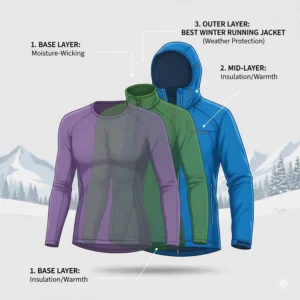
The Three-Layer System Explained
Base Layer (Next to Skin): Start with moisture-wicking synthetic or merino wool. This layer’s job is managing sweat, not warmth. Cotton is your enemy here—it holds moisture and makes you colder.
Mid Layer (Insulation): This is where your winter running jacket comes in. For extreme cold, add a fleece between base and shell layers. For moderate temps, your insulated jacket serves as both mid and outer layer.
Outer Layer (Weather Protection): In severe conditions, a shell over your insulated jacket provides wind and rain protection. However, most runners find a single quality insulated jacket like those in our review sufficient for typical winter conditions.
Temperature-Based Layering Guide
Single Digits: Base layer + insulated jacket + wind shell
10-20°F: Base layer + insulated jacket
20-35°F: Light base layer + mid-weight jacket
35-45°F: Base layer + light jacket or vest
Remember the “dress for 10-15 degrees warmer” rule. If it’s 30°F outside, dress like it’s 40-45°F. You should feel slightly chilly for the first 5-10 minutes.
Best Winter Running Jackets for Different Body Types
Athletic Builds
If you’re lean with minimal body fat, prioritize warmth over breathability. The The North Face ThermoBall or Saucony Hurricane offer more insulation. Slimmer fits work well since you won’t overheat as quickly.
Larger Frames
More insulated runners generate more heat during exercise. Focus on breathable options like the Patagonia Nano-Air Light Hybrid with its strategic ventilation panels. Loose fits allow better air circulation—consider the Nike Therma-FIT Swift for this reason.
Women-Specific Considerations
While this article focuses on unisex/men’s jackets, note that most brands offer women’s versions with adjusted fits and proportions. The ASICS FUJITRAIL and Nike Therma-FIT lines include women’s cuts that accommodate different torso lengths and shoulder widths.
Maintenance and Care Tips
Extending Your Jacket’s Lifespan
Washing Frequency: Wash your best cold weather running jacket every 5-7 wears or when it starts losing water repellency. Over-washing breaks down DWR coatings prematurely.
Proper Washing Technique: Use technical garment wash (not regular detergent) and cold water on gentle cycle. Regular detergents leave residue that clogs breathable membranes. Rinse twice to ensure all soap is removed.
Reapplying DWR: When water no longer beads on your jacket’s surface, it’s time to reapply DWR treatment. Spray-on or wash-in treatments from Nikwax or Granger’s restore water resistance effectively. This simple step can add years to your jacket’s functional life.
Storage: Never store jackets compressed for extended periods. Hang them in a cool, dry place. Synthetic insulation can lose loft if compressed too long, reducing warmth.
Repair Don’t Replace: Small tears or failed zippers don’t mean buying a new jacket. Many brands offer repair services, and third-party options like Rainy Pass Repair can fix almost anything.
Common Winter Running Jacket Mistakes
Buying Too Heavy
Many runners default to the warmest option, then regret it five miles in when they’re drenched in sweat. Remember, you’re generating significant body heat. A jacket that feels perfect standing still will likely be too warm while running.
Ignoring Breathability
A running jacket for winter that doesn’t breathe becomes a portable sauna. That clammy, damp feeling isn’t just uncomfortable—it’s dangerous as moisture accumulation leads to rapid cooling when you stop moving.
Wrong Size
Sizing issues plague winter gear purchases. Too tight restricts movement and layering; too loose creates unwanted air pockets and wind penetration. Check brand-specific sizing charts—athletic brands often run smaller than casual wear brands.
Skipping Safety Features
Dark winter mornings and early sunsets make visibility crucial. Don’t overlook reflective elements thinking you’ll only run in daylight. Plans change, and being visible to motorists isn’t negotiable.
Beyond the Jacket: Complete Winter Running Setup
Essential Accessories
Your jacket is just one piece of the winter running puzzle. Complete your cold-weather kit with:
Technical Base Layers: Merino wool or synthetic fabrics that wick moisture away from skin. Avoid cotton at all costs.
Running Tights or Pants: Windproof front panels make a huge difference. Brands like Brooks, Nike, and Under Armour offer excellent options.
Gloves and Headwear: You lose significant heat through your head and extremities. Lightweight, moisture-wicking options work better than bulky alternatives. Start with gloves and a headband; upgrade to a beanie if needed.
Neck Gaiters: More versatile than scarves, they protect your neck and can be pulled up over your face during extreme cold.
Budget Considerations: When to Splurge, When to Save
Worth the Investment
Primary Training Jacket: If you run year-round in cold climates, spending $200-280 on a premium jacket like the Patagonia Nano-Air makes sense. Quality construction and materials last multiple seasons, making the per-use cost reasonable.
Waterproof Performance: For wet climates, fully waterproof options like the ASICS FUJITRAIL justify premium pricing. Staying dry dramatically impacts comfort and safety.
Where to Save
Casual Winter Runners: If you only run occasionally in cold weather, mid-range options like the Saucony Hurricane or Under Armour ColdGear deliver solid performance at accessible prices.
Secondary Jackets: Having backup options for different conditions makes sense, but your second or third jacket doesn’t need premium features. Budget-friendly choices work fine as alternates.
🛍️ Score the Best Deal! 🛍️
💰 Amazon prices fluctuate daily! Click your favorite jacket now to lock in today’s pricing. Many of these best winter running jackets see significant discounts during seasonal sales. 🎯
Environmental Impact and Sustainability
Eco-Friendly Options
Several jackets in our review prioritize sustainable materials. The The North Face ThermoBall Eco uses 100% recycled polyester and insulation. Patagonia leads the industry in environmental responsibility, with entire product lines built from recycled materials.
Fair Trade Certified: Patagonia jackets carry Fair Trade certification, meaning workers received fair wages and safe conditions. This ethical production comes at a slight premium but supports responsible manufacturing.
Repair and Recycle Programs: Both Patagonia and The North Face offer repair services for worn gear. Patagonia’s Worn Wear program even buys back used gear, refurbishes it, and resells it—extending product lifecycles significantly.
Making Sustainable Choices
Buy Quality: The most sustainable choice is buying one quality jacket that lasts 5-7 years rather than replacing cheap options every season. Our recommended jackets all offer excellent durability.
Proper Care: Following maintenance guidelines extends lifespan, reducing environmental impact. Regular cleaning and DWR treatments keep jackets performing like new.
Consider Used: Platforms like Patagonia Worn Wear, REI Used Gear, and eBay offer quality used jackets at reduced prices. You save money while reducing waste—a win-win scenario.
Real Runner Experiences and Reviews
Marathon Training in Minnesota Winters
Sarah, a Minneapolis-based marathoner, swears by her The North Face ThermoBall: “I’ve run in -10°F with nothing but a base layer underneath. The jacket packs small enough to tie around my waist when I warm up during long runs. After three winters, it’s still performing like new.”
Trail Running in Pacific Northwest
Marcus tackles muddy, wet Pacific Northwest trails year-round with his ASICS FUJITRAIL: “The waterproofing is legit—I’ve run through sustained downpours staying completely dry. Being able to wear it over my hydration pack without restriction changed everything for my long trail runs.”
Urban Running in Chicago
Elena runs Chicago’s lakefront trail through brutal winters with her Patagonia Nano-Air: “The breathability is unmatched. I can run hard intervals without turning into a sweat puddle. Yes, it’s expensive, but I calculated I’ve used it over 200 times in two years—that’s like $1.25 per run.”
FAQ
❓ What temperature range are best winter running jackets designed for?
❓ Can I use a regular winter jacket for running instead?
❓ How do I know if my winter running jacket is too warm?
❓ Are more expensive winter running jackets worth the investment?
❓ What's the difference between waterproof and water-resistant running jackets?
Conclusion: Your Perfect Winter Running Jacket Awaits
Finding your ideal match among the best winter running jackets comes down to understanding your specific needs. Climate matters—runners in Seattle need different features than those in Minneapolis. Your running intensity, frequency, and personal temperature regulation all factor into the decision.
For most runners, I recommend starting with a versatile mid-range option like the Nike Therma-FIT Swift ($150-170) or Brooks Canopy ($160-190). These provide excellent all-around performance without requiring a major investment. As you log more winter miles and better understand your preferences, you can add specialized options.
If you’re serious about year-round training regardless of conditions, invest in the Patagonia Nano-Air Light Hybrid or The North Face ThermoBall. Yes, they’re pricier, but the performance justifies the cost for dedicated runners. Budget-conscious runners will find the Saucony Hurricane delivers impressive value.
Remember, the best cold weather running jacket is the one that actually gets you out the door when it’s freezing outside. Don’t let perfect be the enemy of good—any of our seven recommended options will dramatically improve your winter running experience compared to inadequate gear or staying inside.
Final Recommendations by Runner Type
Serious Year-Round Runners: Patagonia Nano-Air Light Hybrid or The North Face ThermoBall
Trail Runners: ASICS FUJITRAIL Waterproof Jacket
Budget-Conscious Runners: Saucony Hurricane or Under Armour ColdGear
Versatility Seekers: Nike Therma-FIT Swift or Brooks Canopy
Winter running transforms from miserable to manageable with the right jacket. You’ve got the knowledge—now it’s time to gear up and embrace those cold-weather miles. Your summer self will thank you for the winter training you put in now.
🎉 Start Your Winter Training Right! 🎉
⭐ Your perfect running jacket for winter is waiting on Amazon. Click through to compare prices, read customer reviews, and find your ideal fit. Don’t let another cold day keep you from your goals! 🏃♂️❄️
Recommended for You
- Quarter Zip Windbreaker: 7 Top Picks + Expert Guide 2025
- 7 Best Packable Cycling Rain Jacket Options 2025
- Packable Windbreaker: 7 Best Lightweight Picks 2025
Disclaimer: This article contains affiliate links. If you purchase products through these links, we may earn a small commission at no additional cost to you.
✨ Found this helpful? Share it with your friends! 💬🤗
