
In This Article
Your hands go numb around the third cast. Sound familiar? If you’re hunting for fishing gloves waterproof enough to survive an actual morning on the water — not just a rainy walk to the mailbox — you already know the frustration of gloves that promise the world and deliver soggy, cold fingers by 9 a.m. Water finds the gap at the wrist. It seeps through a seam you didn’t know existed. And suddenly you’re fishing one-handed while the other hand rides in your jacket pocket like a wounded animal.
What is a waterproof fishing glove, really? It’s a hand covering built from a sealed material — usually neoprene or a laminated waterproof-breathable membrane — with glued or taped seams that stop liquid water from reaching your skin, while (ideally) still letting you tie a clinch knot without swearing.
This guide skips the marketing fluff and gets into what actually separates a glove that works from one that just says “waterproof” on the tag. We researched real products, real specs, and real aggregated review sentiment — including how cold water genuinely affects your hands, a topic researchers have studied in detail because losing dexterity in cold water isn’t just uncomfortable, it’s a documented safety issue. You’ll get honest pros and cons, price ranges instead of prices that’ll be outdated by next Tuesday, and enough context to pick the right glove for your specific kind of misery — whether that’s an ice auger at dawn or a drizzly bass tournament in April.
Quick Comparison Table
| Glove | Type | Waterproof Rating | Best For | Price Range |
|---|---|---|---|---|
| Glacier Glove Ice Bay | Neoprene, full finger | 100% sealed neoprene | Cold-water dunking | Around $30 |
| KastKing IceRiver | Neoprene, full finger | 100% sealed neoprene | Budget ice fishing | $25-$35 range |
| PACIFIC PPE Waterproof Winter Gloves | Latex/PVC dipped | 100% sealed double-dip | Tightest budget | Under $25 |
| StrikerICE Stealth Glove | Stretch membrane | Waterproof/breathable | Dexterity + touchscreen | $45-$70 range |
| Fish Monkey Hydro-Block | Laminate membrane | 8,000mm rated | All-day breathability | $50-$70 range |
| Palmyth Flexible Gloves | Softshell, 3-cut finger | Water-repellent only | Light splash, knot-tying | Under $25 |
| Fish Monkey Wooly Half Finger | Wool, fingerless | Not waterproof | Full dexterity in wet cold | $25-$35 range |
Looking at the spread above, the Glacier Glove Ice Bay and KastKing IceRiver anchor the true “dunk your hand in and stay dry” category, while the StrikerICE Stealth Glove and Fish Monkey Hydro-Block trade a little bit of that bombproof sealing for dramatically better dexterity and breathability. Meanwhile, the Palmyth Flexible Gloves and Fish Monkey Wooly Half Finger aren’t fully waterproof at all — we’re including them because plenty of anglers searching for “waterproof” actually just need “dry enough” and better grip, and honesty here matters more than a sales pitch.
💬 Found a table like this useful? A quick share helps other anglers find gear that actually works.
Top 7 Waterproof Fishing Gloves: Expert Analysis
1. Glacier Glove Ice Bay — the OG waterproof neoprene classic
The Glacier Glove Ice Bay has been a go-to since the brand’s early days, and its 2mm Techline neoprene with a sharkskin-textured palm is the reason it keeps showing up on “best of” lists nearly every winter season. The blind-stitched, glued seams are what actually make this glove 100% waterproof rather than just water-resistant — cheaper gloves skip this step and leak at the exact seams where your fingers bend most. A 1mm fleece lining adds warmth without turning the glove into a mitten, so you retain enough feel to work a spinning reel.
Based on the spec comparison, this is squarely a cold-water-immersion glove first and a fine-motor-task glove second — you can palm a rod and grip a net handle comfortably, but tying a small fly pattern is a stretch. Reviewers consistently report that the neoprene holds up for one to two full seasons of regular use before the seams start to show wear, which tracks with how most neoprene gloves age. Anglers who reach into livewells, unhook fish in slush, or fish from an ice hole report their hands staying genuinely dry, not just “less wet.”
Pros:
- ✅ Fully sealed neoprene keeps hands dry on full immersion
- ✅ Textured sharkskin palm adds real rod-gripping traction
- ✅ Proven design with decades of angler track record
Cons:
- ❌ Limited finger dexterity for knot-tying or small lures
- ❌ Neoprene wears out faster than laminate-membrane gloves
At around $30, the Glacier Glove Ice Bay is one of the better value plays in this whole roundup if your priority is simply staying dry in cold water.
2. KastKing IceRiver — budget-friendly 2.2mm neoprene seal
The KastKing IceRiver takes the same core idea as the Ice Bay — bound, stitched, and glued neoprene seams — and prices it a notch lower while adding a slightly thicker 2.2mm shell. That extra thickness means a touch more insulation, which matters once wind chill enters the picture, though it also costs you a little more fingertip sensitivity.
What most buyers overlook about this model is the embossed anti-slip palm pattern, which isn’t just a marketing bullet point — it genuinely changes how confidently you can grip a wet rod handle or a slippery fish compared to smooth-palmed neoprene competitors. The polar fleece lining underneath handles the insulation side, and KastKing’s own material claims line up with what independent neoprene glove testing typically shows: flexibility holds up reasonably well even as temperatures drop, though any neoprene glove stiffens somewhat below freezing. Aggregated buyer feedback across major retailers skews positive, with the most common praise being the wetsuit-like seal and the most common complaint being sizing running slightly large.
Pros:
- ✅ 2.2mm neoprene fully seals out water on immersion
- ✅ Embossed palm grip noticeably better than smooth designs
- ✅ Consistently praised for value at this price point
Cons:
- ❌ Sizing runs large according to多 multiple buyer reports
- ❌ Thicker shell reduces dexterity versus thinner options
Priced in the $25-$35 range, the KastKing IceRiver earns its spot as a genuine budget alternative to pricier neoprene competitors without cutting corners on the waterproof seal itself.
3. PACIFIC PPE 100% Waterproof Winter Gloves — cheapest fully sealed option
The PACIFIC PPE 100% Waterproof Winter Gloves aren’t marketed specifically as fishing gear, but the double-dipped latex-and-polyester construction is exactly the kind of fully sealed barrier that cold-water anglers actually need, and the brand explicitly lists ice fishing among its intended uses. EN 388 and EN ISO 21420 certification means the shell has passed standardized abrasion and dexterity testing, which is more third-party verification than most dedicated “fishing” gloves bother to provide.
Here’s what to weigh: this is a work-glove-first design wearing a fishing-glove hat, so the fit runs boxier and the aesthetic is pure utility rather than outdoor-brand styling. On the plus side, that utilitarian build means a thicker, more abrasion-resistant shell than most neoprene competitors at this price, which matters if you’re handling anchor rope, stringers, or dock cleats alongside your rod. What the spec sheet won’t tell you, but buyer feedback suggests, is that the 15-gauge polyester shell with acrylic terry lining runs noticeably warm, sometimes too warm for anything above freezing.
Pros:
- ✅ Double-dipped latex shell is genuinely 100% waterproof
- ✅ Third-party EN certification backs up durability claims
- ✅ Lowest price point of any fully sealed glove here
Cons:
- ❌ Bulkier fit reduces fine tackle-handling dexterity
- ❌ Runs warm, less ideal for mild or wet-only conditions
At under $25, the PACIFIC PPE 100% Waterproof Winter Gloves deliver the cheapest genuinely sealed option in this entire lineup, provided you don’t need finesse.
4. StrikerICE Stealth Glove — most dexterous waterproof-breathable shell
The StrikerICE Stealth Glove ditches thick neoprene entirely in favor of a seamless four-way-stretch waterproof-breathable fabric, and that single material choice is the reason it consistently gets singled out for dexterity in independent gear reviews. A silicone-print palm handles grip duty while tech-touch fingertips let you operate a phone or camera without stripping the glove off — a small feature that matters more than it sounds once you’re trying to photograph a personal-best fish with cold, clumsy hands.
Based on the spec comparison, this glove trades some of neoprene’s brute-force sealing for genuine breathability, meaning your hands are less likely to get clammy on milder days, though field testers note the water-resistant coating handles splashing and light rain far better than full hand submersion. One widely cited field test involved fully submerging a gloved hand in ice water for several seconds; the tester’s hand stayed dry, though the outer shell itself absorbs some moisture and can feel cold to the touch afterward. Reviewers consistently note this isn’t built for extreme sub-zero conditions the way a thick neoprene glove is, but for cool, wet, breezy days it’s repeatedly called a standout.
Pros:
- ✅ Exceptional dexterity for knot-tying and lure changes
- ✅ Touchscreen-compatible fingertips for phone and camera use
- ✅ Breathable shell avoids the clammy feel of thick neoprene
Cons:
- ❌ Less warmth than neoprene in true sub-zero conditions
- ❌ Premium price relative to neoprene alternatives
In the $45-$70 range depending on retailer, the StrikerICE Stealth Glove is the pick for anglers who prioritize actually being able to use their hands over maximum insulation.
5. Fish Monkey Hydro-Block Waterproof Glove — newest 8,000mm membrane tech
Launched for the 2026 cold-weather season, the Fish Monkey Hydro-Block Waterproof Glove uses a fully waterproof, breathable membrane rated to 8,000mm of hydrostatic head with roughly 10,000g of breathability — numbers that, translated into plain English, mean the shell resists a serious amount of water pressure before it fails while still venting sweat vapor outward. That combination is exactly what prevents the “damp from the inside” problem that plagues cheaper waterproof gloves after a couple of hours of exertion.
What most buyers overlook about breathability ratings is that they only matter if the rest of the glove doesn’t trap moisture elsewhere, and Fish Monkey’s three-layer, medium-weight build with a merino wool liner is specifically engineered to manage that balance rather than just block water and call it done. Merino wool’s well-known ability to insulate even when damp gives this glove a safety margin that pure synthetic linings don’t have. Since this is a newly released 2026 line, independent long-term review data is still limited, and we’d rather say that plainly than manufacture sentiment that doesn’t exist yet — early trade coverage and the brand’s own testing claims are promising, but the broader buyer track record is still being written.
Pros:
- ✅ High 8,000mm waterproof rating with real breathability
- ✅ Merino liner insulates even if moisture gets trapped
- ✅ Fish Monkey’s buy-back comfort guarantee reduces risk
Cons:
- ❌ Too new for a deep pool of verified long-term reviews
- ❌ Premium construction puts it at the top of this price range
Expected in the $50-$70 range at launch, the Fish Monkey Hydro-Block Waterproof Glove is the one to watch if you want the newest membrane technology and don’t mind being an early adopter.
6. Palmyth Flexible Fishing Gloves — best convertible 3-cut-finger design
The Palmyth Flexible Fishing Gloves use a water-repellent softshell rather than a fully sealed membrane, and to Palmyth’s credit, the brand is upfront that this glove is built for splash and snow, not full hand submersion. The 3-cut convertible fingertips flip back via magnetic closures, freeing your thumb, index, and middle fingers instantly for knot-tying or handling terminal tackle — a genuinely clever mechanism rather than a gimmick.
Here’s what to weigh: if your search for fishing gloves waterproof enough for the job actually means “keeps rain and snow off my hands while I still have full finger function,” this glove might outperform a fully sealed neoprene option that leaves you struggling to pinch a size 16 hook. The plush fleece backing and reinforced synthetic-leather palm handle insulation and grip respectively, and the adjustable wrist strap keeps wind from sneaking up your sleeve. Reviewers consistently frame this as excellent for temperatures around 36°F and up, with a clear consensus that it’s the wrong pick for a full ice-fishing dunk test.
Pros:
- ✅ Magnetic flip-back fingers restore full dexterity instantly
- ✅ Reinforced palm grip holds up well in wet conditions
- ✅ Genuinely honest marketing about its splash-only limits
Cons:
- ❌ Not rated for hand submersion, only splash and snow
- ❌ Warmth drops off noticeably below the mid-30s°F
At under $25, the Palmyth Flexible Fishing Gloves make the most sense as a rain-and-grip glove rather than a true immersion glove — know the difference before you buy.
7. Fish Monkey Wooly Half Finger Glove — best fingerless option for knot-tying
The Fish Monkey Wooly Half Finger Glove rounds out this list as the honest counterpoint: a 73% natural wool, 27% polyester blend with a synthetic leather palm, and zero waterproof claims to speak of. It’s here because wool retains a genuinely useful property that no waterproof shell replicates — it keeps insulating even when it’s soaked through, which matters enormously for anglers who get their gloves wet constantly and can’t wait for them to dry between casts.
The half-finger cut exposes your thumb, index, and middle finger completely, which is what most buyers overlook when comparing fingerless vs full fishing gloves for rain: full coverage keeps more water off your skin, but fingerless designs let you tie knots, bait hooks, and feel your line without removing anything. Reviewers consistently report multi-season durability even under heavy daily use, including anglers who wear these through long multi-day trips, though a handful note the palm stitching eventually loosens after extended abuse. Aggregated feedback also highlights that this glove genuinely stays functional soaking wet, which is a rare and specific compliment for winter gear.
Pros:
- ✅ Wool insulates effectively even when fully soaked
- ✅ Half-finger cut preserves complete tactile dexterity
- ✅ Reported multi-season durability under heavy use
Cons:
- ❌ No waterproof barrier — hands will get wet
- ❌ Exposed fingertips offer zero wind protection
At $25-$35, the Fish Monkey Wooly Half Finger Glove is best understood as a warmth-and-dexterity tool, not a waterproofing solution — pair it with a dry bag or hand warmers on the coldest days.
Practical Usage Guide: Setup, Care, and the First 30 Days
Getting the fit right matters more than most anglers assume. Measure around your palm (not including the thumb) before ordering any of these gloves, since neoprene models in particular run unforgiving if you size up or down incorrectly. On day one, flex your hands repeatedly in a bucket of cold water before you ever leave the house — this breaks in stiff neoprene seams and reveals leaks while you’re still near a towel, not three hours into a boat trip.
Maintenance is where most waterproof gloves die early. Rinse neoprene and laminate-membrane gloves in fresh water after every saltwater trip; salt crystals work into seams and accelerate seal failure. Air-dry gloves inside-out rather than tossing them in a dryer, which can degrade glued seams and any laminate membrane. A common first-month mistake is storing damp gloves balled up in a tackle bag, where trapped moisture breeds odor-causing bacteria and slowly breaks down neoprene’s cell structure. Every 15-20 uses, apply a thin coat of neoprene-safe conditioner to the outer shell of gloves like the Glacier Glove Ice Bay or KastKing IceRiver to slow cracking. For membrane gloves like the StrikerICE Stealth Glove or Fish Monkey Hydro-Block, avoid any petroleum-based products entirely, since they can compromise the waterproof-breathable laminate.
Real-World Scenarios: Matching Gloves to Anglers
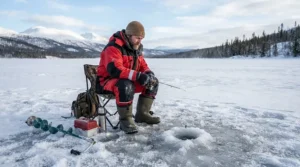
Consider a college student who ice-fishes three weekends a month on a tight budget and mostly jigs for panfish with minimal knot-tying. The KastKing IceRiver or PACIFIC PPE 100% Waterproof Winter Gloves cover that use case well — full immersion protection, low cost, and dexterity demands that are modest since jigging doesn’t require constant re-rigging.
Now picture a guide running six-hour drift-boat trips through spring rain, tying on new flies every twenty minutes. Full neoprene would be miserable here; the StrikerICE Stealth Glove or Palmyth Flexible Fishing Gloves fit better, prioritizing dexterity and breathability over maximum waterproofing since the exposure is drizzle and spray, not submersion.
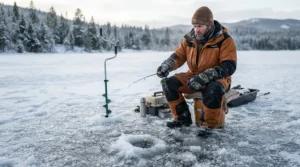
Finally, imagine a dedicated ice angler who’s out before dawn in single-digit temperatures, drilling holes and handling wet fish repeatedly for hours. The Fish Monkey Hydro-Block Waterproof Glove or Glacier Glove Ice Bay, possibly layered with the Fish Monkey Wooly Half Finger Glove underneath for brief dexterity tasks, addresses both the cold and the constant wet-hand exposure this scenario demands.
How to Choose Waterproof Fishing Gloves
- Define your water exposure first. Full submersion (ice fishing, wading) needs sealed neoprene or a rated membrane; splash-only exposure (rain, spray) can get by with water-repellent softshell.
- Match thickness to temperature, not toughness. Thicker neoprene isn’t automatically better — it costs you dexterity you may need for knots and lures.
- Check the seam construction. Blind-stitched and glued seams, like those on the Glacier Glove Ice Bay, are what actually stop leaks; simple stitching alone won’t.
- Weigh grip material honestly. Silicone print, embossed neoprene, and synthetic leather each grip differently when wet — silicone tends to hold an edge on smooth, slick rod handles.
- Decide how much dexterity you actually need. If you rarely re-tie, full-finger waterproof coverage wins; if you’re constantly rigging, consider convertible or fingerless designs.
- Read for verified waterproof ratings, not just the word “waterproof.” A hydrostatic head figure like the Fish Monkey Hydro-Block‘s 8,000mm rating tells you far more than marketing copy alone.
- Budget for replacement, not permanence. Reviewers consistently note neoprene gloves have a realistic one-to-two-season lifespan under regular use — factor that into your price comparison.
Fingerless vs Full-Finger Fishing Gloves for Rain
This is one of the most common points of confusion when shopping for rain gloves for fishing grip, and the honest answer is that neither option is universally better. Full-finger gloves like the Glacier Glove Ice Bay or KastKing IceRiver win decisively on keeping water off your skin and retaining core hand warmth, since covered fingers lose heat far slower than exposed ones. What most buyers overlook is that this warmth advantage comes directly at the cost of fine motor tasks — threading a hook eye through cold, thick neoprene fingertips is genuinely difficult.
Fingerless and half-finger designs, like the Fish Monkey Wooly Half Finger Glove, flip that trade-off entirely. You retain full tactile feedback for knots, split shot, and lure changes, but exposed fingertips take the brunt of rain and wind chill directly. Convertible options such as the Palmyth Flexible Fishing Gloves attempt to split the difference with flip-back fingertip caps, and based on the spec comparison, this hybrid approach genuinely works better for anglers who alternate between casting (fingers covered) and rigging (fingers exposed) throughout a single outing rather than committing to one mode all day.
Grip-Dot Fishing Gloves: Why Palm Texture Matters
The phrase “grip-dot” typically refers to raised silicone or rubber dots printed onto a glove’s palm and fingers, and it’s one of the more underrated specs buyers skim past. What the spec sheet won’t tell you, but reviewers note repeatedly, is that a smooth-palmed glove — wet or dry — loses meaningful traction on a graphite rod blank compared to any textured or dotted surface. The KastKing IceRiver‘s embossed non-slip pattern and the StrikerICE Stealth Glove‘s silicone print palm both function on this same principle, just executed with different materials.
Grip-dot texture matters even more once your hands are wet, since water acts as a lubricant between skin and gear. A glove with strong palm texture, like the sharkskin finish on the Glacier Glove Ice Bay, actively resists that slip in a way smooth neoprene simply can’t. If you fish heavier tackle, handle bigger fish by the jaw or gill plate, or grip anchor rope regularly, prioritizing a grip-dot or textured palm should rank above nearly every other spec on this list — including warmth.
Waterproof Fishing Gloves for Cold Weather
Cold weather introduces a variable that mild-weather gloves never have to solve: material stiffening. Neoprene, rubber, and even some membrane laminates lose flexibility as temperatures drop toward freezing and below, which is exactly why thickness and lining matter more in a true cold-weather glove than in a three-season rain glove. The 2mm-to-2.2mm neoprene range used in the Glacier Glove Ice Bay and KastKing IceRiver represents a deliberate balance — thick enough to insulate through sub-freezing exposure, thin enough to avoid turning into a stiff shell.
Reviewers consistently note that layering solves problems no single glove fully addresses. Pairing a thin liner glove, or a fingerless wool glove like the Fish Monkey Wooly Half Finger Glove, underneath a waterproof outer shell gives you a warmth buffer that survives even if the outer layer eventually wets through at the cuff — a real scenario after hours of repeated hand-to-water contact. This is also where breathability earns its keep: a fully sealed glove that traps sweat can actually leave your hands colder than a breathable one, since damp skin loses heat faster than dry skin, a dynamic documented in cold-exposure physiology research on hand and finger function in low temperatures.
Neoprene Fishing Glove Review: Breaking Down the Material
Neoprene is a synthetic rubber, chemically similar to the material used in wetsuits, and it’s the dominant fabric across this entire category for a specific reason: its closed-cell structure traps air and resists water penetration far better than woven fabrics, even before any coating is applied. That’s the material science behind why the Glacier Glove Ice Bay, KastKing IceRiver, and countless other neoprene-based products across diving, hunting, and fishing gear all lean on the same base compound.
What most buyers overlook in a neoprene fishing glove review is that thickness measured in millimeters directly trades off against dexterity, almost linearly — a 2mm glove flexes noticeably better than a 3mm glove, but insulates less. Reviewers consistently point out that neoprene’s biggest weakness isn’t cold-water performance, it’s longevity: repeated flexing at the same fold points (typically the second knuckle) eventually cracks the material’s cell structure, which is why even premium neoprene gloves rarely last more than two full seasons of hard use. If you want a longer-lived glove, a laminated membrane design like the StrikerICE Stealth Glove or Fish Monkey Hydro-Block typically holds up longer than pure neoprene, though usually at a higher price point.
Common Mistakes When Buying Waterproof Fishing Gloves
Anglers repeatedly make a handful of avoidable errors when shopping this category. The first is assuming “water-resistant” and “waterproof” mean the same thing — they don’t, and gloves like the Palmyth Flexible Fishing Gloves are transparent about being the former, not the latter. The second is buying based on warmth alone and ignoring dexterity entirely, then discovering three trips in that tying a improved clinch knot in thick gloves is nearly impossible.
A third common mistake is skipping the sizing chart and guessing, which is especially costly with neoprene since an oversized glove lets water pool inside at the wrist. Fourth, many buyers overlook seam construction entirely, not realizing that stitched-only seams (without gluing or taping) will eventually leak regardless of how waterproof the base material claims to be. Finally, plenty of anglers buy a single glove for every season, when the honest answer — as this whole roundup demonstrates — is that a mild-weather glove and a true cold-immersion glove are different tools solving different problems.
Long-Term Cost & Maintenance
Running the numbers on cost-per-use tells a more useful story than sticker price alone. A $25 pair of gloves that lasts one season of weekly use works out to roughly the same cost-per-outing as a $60 pair that lasts two and a half seasons — which is the honest math behind why premium membrane gloves like the Fish Monkey Hydro-Block or StrikerICE Stealth Glove aren’t automatically the “expensive” choice once you account for total cost of ownership.
Neoprene gloves like the Glacier Glove Ice Bay or KastKing IceRiver sit in the middle: lower upfront cost, but a firmer one-to-two-season lifespan under regular use, especially once seams start to fatigue from repeated flexing. Rinsing after every trip, air-drying fully between uses, and avoiding balled-up storage in a damp tackle bag are the three habits reviewers most consistently link to extended glove lifespan across every material type covered here. Treat maintenance as part of the purchase price, not an afterthought.
Cold Water Fishing Gear: Safety Beyond the Gloves
Gloves solve dexterity and comfort, but they’re only one piece of staying safe around cold water. Sudden immersion — falling through ice, capsizing, or slipping off a wet dock — triggers an involuntary gasp reflex and a rapid loss of hand and arm function within minutes, a well-documented phenomenon outlined in cold-water safety literature used by search-and-rescue and boating-safety organizations. No glove, however waterproof, prevents that broader physiological response.
Practically, that means pairing your fishing gloves waterproof setup with a properly fitted life jacket any time you’re on open or icy water, carrying ice picks or a throw rope during hard-water season, and telling someone your float plan before you head out. Waterproof gloves keep your hands functional for casting and handling fish; they are not immersion-survival gear on their own, and treating them as such is a mistake worth avoiding entirely.

Frequently Asked Questions
❓ Are neoprene gloves actually 100% waterproof for fishing?
❓ What's the best glove for ice fishing dexterity?
❓ Do fingerless fishing gloves keep hands warm in rain?
❓ How long do waterproof fishing gloves usually last?
❓ What waterproof rating should I look for in fishing gloves?
Conclusion
There’s no single “best” glove in this category — only the best glove for your specific water, your specific cold, and how much dexterity you’re willing to trade for warmth. If you want proven, budget-friendly submersion protection, the Glacier Glove Ice Bay and KastKing IceRiver remain hard to beat. If dexterity and all-day comfort matter more than maximum sealing, the StrikerICE Stealth Glove and Fish Monkey Hydro-Block Waterproof Glove justify their higher price with real functional advantages. And if you’re honest with yourself about needing full finger feel over total waterproofing, the Palmyth Flexible Fishing Gloves or Fish Monkey Wooly Half Finger Glove deserve a serious look instead of being dismissed for lacking a waterproof label they never claimed to have.
Whatever you land on, match the glove to the actual conditions you fish in rather than the most impressive-sounding spec sheet, and your hands — and your knot-tying patience — will thank you all season long.
✨ Ready to gear up? Compare the picks above, check current pricing on your top choice, and get back out on the water with hands that actually work! 🎣🧤
Recommended for You
- 7 Best touchscreen waterproof gloves for Rain & Cold (2026)
- 7 Best Waterproof Work Gloves 2026: Stop Soggy, Numb Hands
- Insulated Rain Boots Winter 2026: 7 Warmest Picks Tested
Disclaimer: This article contains affiliate links. As an Amazon Associate, I earn from qualifying purchases. If you purchase products through these links, we may earn a small commission at no additional cost to you.
✨ Found this helpful? Share it with your friends! 💬🤗
