

In This Article
Cool bandanas for men are square or tube-shaped pieces of headwear and neckwear built to beat the heat, using either breathable cotton that wicks sweat or evaporative fabric you soak in water. The best ones also look good doing it.

It’s a strange little triumph for a square of cloth. The name is widely traced to a Hindi word meaning “to tie.” Its story runs from South Asian textile traditions through Scottish paisley mills to coal-miner marches and hip-hop stages. The Smithsonian’s global history of the bandana is worth a read if you want the full tour. Today that same humble square does three jobs at once: sweat control, sun coverage, and a dash of personality.
That’s why the category is crowded. Market trackers counted well over 100 men’s bandana listings on Amazon in mid-2026. The cheapest price band held the biggest share, and several multi-packs sold in the thousands per month. Crowded means confusing. A six-pack of cotton squares and a water-activated cooling wrap are both called “bandanas,” yet they solve completely different problems.
So here’s the plan. Below are seven real, currently listed products across budget, mid-range, and premium tiers. Each gets honest analysis of what the specs mean in practice, plus aggregated rating signals where we could verify them. After that come practical guides you won’t find on a product page. Prices appear as ranges because they shift constantly, so always check the current price before you buy.
Quick Comparison: Cool Bandanas for Men at a Glance
Think of this table as the menu before the meal. It shows what each option is, what it costs in broad strokes, and who it suits.
| Product | Type | Format | Price Range | Best For |
|---|---|---|---|---|
| APIGANIZ 100% Cotton Bandanas | Cotton 6-pack | About 21 x 21 in | Under $15 | Stocking up cheaply |
| Raylarnia 100% Cotton Large Paisley Bandanas | Cotton paisley | About 22 in | Single digits to low teens | Classic look |
| The Peacock Crew Premium Soft Cotton Bandanas | Soft cotton pack | 22 x 22 in | Low to mid teens | Comfort and style |
| Atzi Hats Men’s Cotton Bandanas | Cotton 3-pack | 22 in | Low teens | Everyday carry |
| Ergodyne Chill-Its 6700CT | Evaporative tie wrap | One size, tie closure | Under $20 | Dry-heat work |
| Ergodyne Chill-Its 6615 | Evaporative do-rag | Helmet-friendly cap | Under $20 | Helmet wearers |
| Buff Multifunctional Headwear | Stretch tube | Pull-on | Roughly $20-$30 | Runners and riders |
Read the table like a menu, not a ranking. The APIGANIZ set wins on cost per bandana. The Raylarnia, Peacock Crew, and Atzi Hats options form the “classic square” camp, where the differences come down to size, softness, and pack count. If you want a real temperature drop rather than a look, the Ergodyne Chill-Its 6700CT and Ergodyne Chill-Its 6615 are the evaporative picks. The Buff is the stay-put stretch choice for anyone who hates retying knots.
💬 Just one click — help others make better buying decisions too!😊
Top 7 Cool Bandanas for Men: Expert Analysis
A quick note on method. These picks rest on published specs, aggregated rating data, and category knowledge, not hands-on lab tests. Where we couldn’t verify something, we say so.
1. APIGANIZ 100% Cotton Bandanas (Set of 6) — best cost per bandana
Quantity is the whole personality here. Six squares for a modest outlay, and mid-2026 tracking data showed this set among the best-selling men’s bandana listings, with a rating around 4.7 stars.
The key spec is the cloth: 100% cotton at roughly 21 x 21 inches. Cotton’s open, absorbent weave pulls sweat off your forehead and breathes well while you move, which is why it still beats plenty of slick synthetics for all-day comfort. The trade-off is drying time. A soaked cotton square stays damp in humid air.
Here’s what to weigh. At 21 inches it’s a hair smaller than the 22-inch crowd, so a big head or thick neck gets a snugger fold. For most guys that’s fine. The six-pack math is the real strategy: one bandana lives in the truck, one in the gym bag, one in the wash, one on your head, and you stop thinking about it. It’s a rotation pack for people who sweat and forget.
The aggregate rating and sales volume are verifiable and strong. We couldn’t confirm a detailed breakdown of written reviews, so skim recent ones for notes on dye bleed and softness before committing.
Pros:
- ✅ Six squares cover a full work-week rotation
- ✅ Breathable 100% cotton for dry-skin comfort
- ✅ Strong aggregate rating among budget multi-packs
Cons:
- ❌ Slightly smaller than 22-inch competitors
- ❌ No cooling tech; you supply the water
Price range: typically under $15 for the set (check current price). Verdict: the lowest cost per bandana in this lineup.
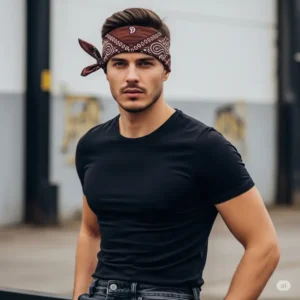
2. Raylarnia 100% Cotton Large Paisley Bandanas — most-reviewed classic paisley
If you picture a bandana when someone says “bandana,” you’re picturing this. The paisley print is the category’s calling card, and Raylarnia serves it in multiple colors at a size that actually covers things. Mid-2026 tracking showed roughly 4.6 stars across about 2,400 ratings, with sales in the thousands per month.
These are 100% cotton squares around 22 inches, offered in single, 3-pack, and larger configurations. That extra inch over a 21-inch square sounds trivial until you try a full triangle fold on a larger head, or wrap a neck with a tail long enough to tuck under a collar. Paisley also hides sweat and grime better than a solid, which is practical, not just stylish.
Based on the spec comparison, this is the “don’t overthink it” pick. You get the classic look, a size that suits most heads, and a price where losing one at a festival is no tragedy. It’s less suited to a man who wants active cooling on a 95-degree job site. Cotton keeps you comfortable; it doesn’t refrigerate you.
A rating count in the thousands with a mid-4s average is a solid sample. We couldn’t verify individual written-review themes, so check recent reviews for color-fastness.
Pros:
- ✅ Authentic paisley look in many colors
- ✅ 22-inch size covers heads and necks easily
- ✅ Large review base with a strong average
Cons:
- ❌ Cotton dries slowly once soaked
- ❌ Pack contents vary by listing, so check what’s included
Price range: single digits for entry listings, low teens for larger packs (check current price). Verdict: the best default choice for most men.
3. The Peacock Crew Premium Soft Cotton Bandanas — softest feel, festival-ready
“Premium soft” is a bold phrase for a bandana. Yet several 2026 buying roundups single this pack out for softness and durability, and tracking data showed about 4.6 stars across more than a thousand ratings.
The pack delivers 22 x 22-inch cotton paisley squares with a colorful assortment. Softness matters more than people admit. A scratchy new bandana irritates the forehead and the back of the neck within an hour. A softer hand-feel is the difference between wearing it all afternoon and ripping it off at lunch.
The pitch is comfort-first style. Roundups lean toward bohemian and festival looks, and the color range backs that up. If you wear bandanas as an accessory, knotted at the neck, folded as a headband, or tied to a bag handle, this is the one that feels good on skin and looks good in photos. If you just want a throwaway sweat rag, you can spend less.
Aggregate rating and rating count are strong for the category. Details on shrinkage and fading can vary by seller and batch, so scan the latest reviews.
Pros:
- ✅ Soft feel that’s kind to forehead and neck
- ✅ Generous 22-inch squares to fold and knot
- ✅ Wide color assortment in the pack
Cons:
- ❌ Costs more than basic cotton six-packs
- ❌ Cotton only, so no active cooling
Price range: typically the low to mid teens (check current price). Verdict: pay a little extra for comfort and style.
4. Atzi Hats Men’s Cotton Bandanas (3-Pack) — simple everyday carry
Not every product needs a story. Atzi Hats sells a plainly named men’s cotton bandana three-pack in a 22-inch square, and it appeared on major retail listings in 2026 in the low-teens range.
At 22 inches of cotton you can fold a head wrap, tie a neckerchief, or carry a pocket square without running short of fabric. Three-packs hit a sweet spot too: enough to rotate, not so many that you stash a drawer of extras you’ll never use.
This is the “glove box” pick, for yard work, riding, fishing, or the back of the truck. What the spec sheet won’t tell you is how it holds up after dozens of washes. That’s where higher-rated alternatives like the Raylarnia or The Peacock Crew pack have a bigger public track record.
An honest caveat: we couldn’t confirm a reliable aggregate Amazon rating for this specific pack at the time of research. Treat it as the less-proven option here and read current reviews first.
Pros:
- ✅ Three-pack is easy to rotate
- ✅ 22-inch cotton square is versatile
- ✅ Simple, no-nonsense styling
Cons:
- ❌ Thinner public review record than rivals
- ❌ No cooling tech built in
Price range: roughly the low teens (check current price). Verdict: fair value, though the APIGANIZ six-pack undercuts it per bandana.
5. Ergodyne Chill-Its 6700CT Cooling Bandana — true evaporative cooling for hot job sites
This is the one that actually tries to lower your temperature rather than just soaking up sweat. The Ergodyne Chill-Its 6700CT is lined with evaporative PVA material and ties closed for an adjustable fit.
The outer fabric is polyester, and the PVA lining holds water and releases it slowly. Soak it, wring it out, tie it on, and evaporation pulls heat from the skin underneath. Because it ties, one size suits heads and necks alike. The physics is reliable but conditional. Evaporative cooling works best in dry heat and fades in heavy humidity, when moisture can’t evaporate quickly.
Think of it as a tool, not an accessory: roofing, landscaping, trail running in a dry climate. In the desert it’s a small miracle. In a Florida August, set your expectations lower and plan on re-wetting through the day.
On one major listing it carries roughly 3.9 stars from around 1,500 ratings. That’s a respectable sample with a middling average, which suggests mixed experiences. Matching the product to your climate is what separates happy buyers from disappointed ones.
Pros:
- ✅ Evaporative PVA lining for a real cooling effect
- ✅ Tie closure adjusts to any head or neck
- ✅ Reusable; just re-wet it
Cons:
- ❌ 3.9-star average signals mixed experiences
- ❌ Weaker in humid conditions
Price range: generally under $20 (check current price). Verdict: great value for outdoor workers in dry climates.
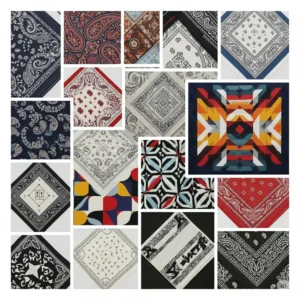
6. Ergodyne Chill-Its 6615 High Performance Bandana Do-Rag — cooling that stays put under a helmet
Squares are brilliant until they slide. The Ergodyne Chill-Its 6615 is built in a do-rag style, meant to sit on the head under a hard hat, motorcycle helmet, or cycling lid instead of flapping around.
The “high performance” label belongs to Ergodyne’s evaporative Chill-Its family. A do-rag shape means fewer folds, less bulk, and no knot pressing into the back of your skull under a helmet. Check the listing for the exact closure and materials, since the lineup varies by model. The format is the point: a low-profile layer you can forget about.
If you wear a helmet, this form factor solves a problem square bandanas can’t. For casual wear it’s overkill and reads very “job site.” Like its sibling, the Chill-Its 6700CT, it works best when you wet it and stay in lower-humidity air.
At one retailer it showed a 4.4 average across about two dozen reviews, and most of the nine people who answered the recommendation question said yes. That’s a small sample, so treat it as a signal, not a verdict.
Pros:
- ✅ Low-profile fit under helmets and hard hats
- ✅ Evaporative cooling design
- ✅ No knots or folds to fuss with
Cons:
- ❌ Small review sample so far
- ❌ Work-gear styling isn’t for everyone
Price range: typically under $20 (check current price). Verdict: niche, but excellent for helmet wearers.
7. Buff Multifunctional Headwear (Solid Black) — premium stretch tube that stays in place
The Buff is the odd one out: no tie, no square, just a seamless stretchy tube you pull on. One retailer listing for the solid black version highlights four-way stretch and a long manufacturer warranty.
Four-way stretch means it conforms to heads, necks, and wrists without a knot to loosen. Seamless construction means no ridge digging into skin. In practice you can wear it as a neck gaiter, headband, skull cap, or face cover in about five seconds, with no tying skills required.
Premium here means convenience and longevity rather than raw cooling. It suits runners, cyclists, hikers, and anyone tired of retying a square every twenty minutes. If you want the classic bandana look, this isn’t it. It’s athletic.
We couldn’t verify a current U.S. aggregate rating or reliable written-review themes for this specific variant. The warranty detail we found came from an international retailer, so confirm the terms on the U.S. listing.
Pros:
- ✅ Four-way stretch fits heads, necks, and wrists
- ✅ No knots to loosen or slip
- ✅ Wears many ways with no tying skills
Cons:
- ❌ Priciest option in this lineup
- ❌ Athletic look rather than classic bandana
Price range: roughly $20-$30 (check current price). Verdict: worth it only if you’ll wear it constantly.
Spec & Rating Snapshot
| Product | Material | Rating Signal (2026) | Cooling Method | Best For |
|---|---|---|---|---|
| APIGANIZ | 100% cotton | About 4.7 | Breathability | Bulk buyers |
| Raylarnia | 100% cotton | About 4.6, ~2,400 ratings | Breathability | Classic paisley fans |
| Peacock Crew | 100% cotton | About 4.6, ~1,200 ratings | Breathability | Comfort and style |
| Atzi Hats | Cotton | Not verified | Breathability | Everyday carry |
| Chill-Its 6700CT | Polyester with PVA lining | About 3.9, ~1,500 ratings | Evaporative | Dry-heat workers |
| Chill-Its 6615 | Evaporative do-rag (check listing) | About 4.4, small sample | Evaporative | Helmet wearers |
| Buff | Stretch fabric | Not verified | Wicking, multi-wear | Athletes |
Notice how the top ratings cluster on cotton, while the cooling products score lower. That doesn’t mean cotton is “better.” It means cotton does one modest job reliably, while evaporative gear does a bigger job only in the right climate. If you live somewhere humid, the cotton cluster is the safer bet. If you work outdoors in dry heat, the Chill-Its 6700CT is worth its rougher average.
How to Choose Cool Bandanas for Men: 7 Steps That Matter
Short answer: match the type to your climate, then match size, fabric, and fit to your use. Here’s the checklist.
- Decide between cotton and evaporative. Cotton is comfort and style; evaporative is an active cooling aid. Pick based on what problem you’re solving.
- Check your humidity. Evaporative cooling thrives in dry air and fades in muggy air, so humid-state buyers should lean cotton or stretch.
- Pick a size. Most squares run 21-22 inches. Go 22 if you have a larger head or want a longer neckerchief tail.
- Choose the form. Square for versatility, tube for convenience, do-rag for helmets.
- Think about pack size. A six-pack beats a single if you sweat daily and rotate.
- Prioritize skin feel. Softer weaves are kinder on the forehead and neck over a long day.
- Pick color with intent. Darker and patterned fabrics hide sweat; lighter ones look cooler but may offer less UV blocking.
Treat step 2 as the tiebreaker. It’s the factor buyers most often ignore, and it’s the one that decides whether a cooling wrap feels like a gift or a gimmick.

Cotton vs. Cooling Bandanas for Men: Which One Wins?
Neither, universally. Cotton wins on comfort, breathability, style, and price. Evaporative wins on raw temperature relief when conditions suit it. The honest framing is a trade-off, not a champion.
Cotton works passively. It absorbs sweat and lets air move through, keeping skin drier. That’s lovely at rest or in light activity, but a soaked cotton square eventually stops helping, especially in humidity. Evaporative products do the opposite: they hold water on purpose and use evaporation to pull heat out of the skin. That’s powerful in dry air and noticeably weaker when the air is already saturated.
There’s also the “look” factor. A paisley square says weekend; a PVA-lined wrap says work site. Stretch tubes like the Buff say trail run.
| Option | Cools By | Strength | Weakness | Best For |
|---|---|---|---|---|
| Cotton squares (e.g., APIGANIZ, Raylarnia) | Wicking and airflow | Comfort, style, low cost | Slow drying when soaked | Everyday wear |
| Evaporative wraps (e.g., Chill-Its 6700CT) | Water evaporation | Real temperature relief | Weak in humidity | Dry-heat labor |
| Stretch tubes (e.g., Buff) | Wicking and coverage | Convenience, no knots | Higher price | Sport and travel |
| Traditional sweatband | Absorption | Cheap, simple | Covers little | Gym sessions |
Looking at the comparison, the right answer is often both. Keep a cotton square for everyday comfort and a Chill-Its wrap for the days the thermometer wins. For fully dry-heat work, the evaporative option justifies its extra effort. For humid commutes and weekends, cotton is simply more pleasant.
Features That Actually Matter (And Those That Don’t)
Marketing loves adjectives. Your neck loves a few specific things.
What matters:
- Fabric weave and softness. It decides comfort on skin for hours.
- Size. Too small and it won’t tie; too large and it bunches under a helmet.
- Wash durability. Colors that bleed or fabric that shrinks defeat the purpose of a multi-pack.
- Sun coverage. A bandana shades your neck and scalp, which is useful. The Skin Cancer Foundation explains that a UPF 50 fabric blocks about 98 percent of UV rays, and that stretched or wet fabric loses some protection. A standard cotton bandana is not UPF-rated, so treat it as partial shade, not a shield.
What doesn’t:
- “Ice” or “arctic” branding. Cooling is about physics, not adjectives. Judge the lining and climate, not the name.
- Dozens of patterns. Variety is fun, but it doesn’t change performance.
- Exaggerated pack counts. Sixteen bandanas are only a bargain if you’d actually use sixteen.
- Novelty prints. They’re a personal choice, not a functional one.
What most buyers overlook is the interplay between wet fabric and sun. A damp bandana feels fantastic, but wet cloth is more transparent to UV, so keep sunscreen on any exposed skin underneath.
Common Mistakes When Buying Cool Bandanas for Men
Even a $10 purchase can go sideways. These are the pitfalls that show up again and again.
- Buying evaporative gear for a humid climate. It can still feel nice, but the dramatic effect fades. Be realistic about your air.
- Assuming “cooling” means “forever cold.” Evaporative lining needs periodic re-wetting. Plan for it.
- Skipping the first wash. New dyed cotton can bleed. Wash new bandanas separately the first time.
- Buying too small. A 21-inch square is fine for many, but larger heads and thicker necks benefit from 22 inches.
- Trusting tiny review samples. A 5.0 from three reviewers means less than a 4.6 from thousands. Look at both the average and the count.
- Assuming any bandana is sun protection. Without a UPF label, treat it as partial shade.
- Overbuying. Twelve bandanas look like a deal until eleven live in a drawer.
Spend two minutes matching climate, size, and use before you buy, and you’ll avoid most of the regret.
How to Use Cool Bandanas for Men: A Practical Setup and Care Guide
Product pages rarely tell you how to get the most from your purchase. Here’s the quick manual.
First use. Wash new cotton bandanas separately in cool water to catch any dye bleed. Check the care label on evaporative products and follow it.
Activating an evaporative wrap. Soak it in cool water for a minute or two, wring out the excess so it’s damp rather than dripping, then tie it on. Placement matters. Across the back of the neck or around the forehead puts the cooling near large blood vessels, which is why people favor those spots.
Tying a cotton square. Fold into a triangle, then roll or fold into a band. For a neckerchief, tie loosely so it doesn’t trap heat. For a head wrap, fold to a headband width and tie at the back so the knot doesn’t press under a cap.
Maintenance schedule:
- After each sweaty use: rinse in cool water and air-dry.
- Weekly: machine-wash cotton on a gentle cycle; hand-wash evaporative gear.
- Monthly: inspect for thinning fabric or fraying.
Common mistakes in the first 30 days: over-wringing evaporative lining until it’s dry, stuffing damp bandanas into a gym bag (hello, mildew), and tying so tightly it gives you a headache. A good fit feels snug but forgettable.

Real-World Scenarios: Which Cool Bandana Fits Your Life?
Specs get real when you attach a life to them. Here are three profiles.
The Arizona landscaper. Eight-hour days, dry heat, a modest budget. The Ergodyne Chill-Its 6700CT is the logical pick, re-wetted at breaks, with a cheap APIGANIZ cotton square as a backup sweatband. In dry air, evaporation does real work, and the budget stays well under $30 for the pair.
The humid-South weekend guy. Barbecues, fishing, the occasional festival, heavy humidity. Here evaporative gear underdelivers, so cotton wins. The Raylarnia or The Peacock Crew pack gives breathable comfort and a good look. Tie it loosely at the neck and rotate squares when one gets damp.
The commuter cyclist. Helmet daily, mixed climate, ten to fifteen miles a day. The Ergodyne Chill-Its 6615 do-rag style sits low under a helmet, and the Buff works as a neck gaiter on cooler mornings. If you only buy one, the Buff covers more situations; if summer heat is your enemy, the Chill-Its 6615 targets it.
Notice what drives each choice: climate, frequency, and gear, not star ratings alone. Match your profile and the right option usually announces itself.
Problem → Solution: Fixing the Most Common Bandana Complaints
Most complaints have simple fixes.
Problem: Dye bleeds onto skin or clothes. Wash new cotton bandanas separately the first time and keep darks and brights together. If it keeps bleeding, retire it to the truck for dirty jobs.
Problem: It slips off or won’t stay tied. Switch to a form that grips. A do-rag style like the Chill-Its 6615 or a stretch tube like the Buff stays put better than a loose square.
Problem: Cotton stays soggy. Wring it out, swap to a dry one from your rotation, or choose an evaporative product designed to manage water on purpose. This is exactly why a multi-pack like the APIGANIZ set earns its keep.
Problem: The cooling effect fades. Re-wet the lining. If it still disappoints, check humidity. In saturated air, evaporative gear naturally underperforms.
Problem: It itches. Choose a softer weave, such as the Peacock Crew pack, and avoid tight knots on sensitive skin.
✨ Don’t Miss These Top Picks for Beating the Heat!
🔍 Take your summer comfort to the next level with these carefully selected cool bandanas for men. Click any highlighted product name to check current pricing and availability. These picks will help you stay comfortable and look sharp, wherever the day takes you!
Long-Term Cost & Maintenance: What You’ll Really Spend
The sticker price is only half the story. Cost per use tells the truth.
| Product | Typical Range | Pieces | Value Tier | Cost Thinking |
|---|---|---|---|---|
| APIGANIZ | Under $15 | 6 | Budget | About $2-$3 per bandana |
| Raylarnia | Single digits to low teens | 1 to multi-pack | Budget | Depends on pack size |
| Peacock Crew | Low to mid teens | Multi-pack | Mid-range | Pay a bit more for softness |
| Atzi Hats | Low teens | 3 | Mid-range | About $4 per bandana |
| Chill-Its 6700CT | Under $20 | 1 | Mid-range | Cheap per use if worn often |
| Chill-Its 6615 | Under $20 | 1 | Mid-range | Niche value for helmet use |
| Buff | Roughly $20-$30 | 1 | Premium | Pays off with daily wear |
Looking at the table, cotton multi-packs dominate on cost per piece, while the Buff only makes sense if you wear it constantly. The Chill-Its wraps sit in a sweet spot: one purchase can cover a whole season of hot workdays.
Maintenance is nearly free. Rinse after sweaty use, air-dry, and wash gently. Cotton squares can last for many seasons with decent care, while evaporative linings may wear sooner if you wring them hard. A reasonable rule: replace anything that has thinned, frayed, or lost its fit. Treat cotton as a consumable and evaporative gear as a seasonal tool, and your total cost of ownership stays remarkably small.
Heat & Sun Safety: What a Bandana Can and Can’t Do
A bandana is a comfort aid, not a safety system. That distinction matters when the heat index climbs.
A CDC analysis of outdoor heat-related illnesses reviewed 25 cases, 14 of them fatal, and found some occurred at heat indexes as low as 83°F. The takeaway is simple: heat illness isn’t reserved for extreme days. NIOSH’s guidance centers on training, acclimatization, hydration, rest, and shade, the “water, rest, shade” trio. A cooling wrap can make you feel better, but it won’t replace those basics.
Sun is a separate concern. Per the Cleveland Clinic, the bottom line is to use both UPF clothing and sunscreen, since clothing still leaves areas like the hands, neck, and face exposed. A standard bandana covers a patch of neck or scalp, but it isn’t a certified UV garment.
Practical rules:
- ⚡ Drink water before you feel thirsty.
- 🌞 Take shade breaks, especially in the first hot days of the season.
- 🧢 Pair your bandana with a hat or sunscreen on exposed skin.
- 🔋 Know the warning signs of heat illness, and stop and seek help if they appear.
Used wisely, a cool bandana is a smart extra layer. Used as a substitute for caution, it’s a false comfort.
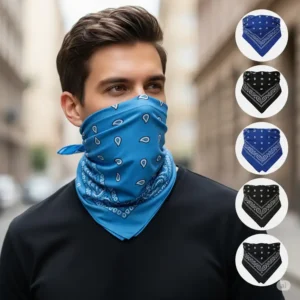
FAQ: Cool Bandanas for Men
❓ Do cooling bandanas actually work in hot weather?
❓ What size should a men's bandana be?
❓ How do I stop a new bandana's dye from running?
❓ Can I wear a bandana under a helmet or hard hat?
❓ How long does a cooling bandana stay cool?
Conclusion: Pick the Bandana That Matches Your Climate
Cool bandanas for men come in two honest flavors: comfortable cotton and genuinely cooling evaporative gear. Which one is “best” depends on where you live and what you do. For most men, a cotton multi-pack like the APIGANIZ set or the classic Raylarnia squares delivers unbeatable value. If softness and style matter, The Peacock Crew pack earns its slightly higher cost. Atzi Hats is a fine, simple three-pack, though less proven in public ratings.
If you work or play in dry heat, the Ergodyne Chill-Its 6700CT brings real evaporative relief, while the Ergodyne Chill-Its 6615 does the same job in a helmet-friendly shape. And if you want convenience above all, the Buff is the premium stretch pick that skips the knots entirely.
A final bit of perspective. Whatever you buy, pair it with the basics: water, shade, rest, and sunscreen where it counts. A bandana is a small tool, but chosen well, it’s one you’ll reach for all season.
Recommended for You
- 7 Best Cooling Bands That Actually Work: Beat Summer Heat in 2025
- Cool Dog Bandanas: Complete Guide to Stylish Pet Accessories in 2025
- 10 Best Nike Cooling Vest Options for Ultimate Performance in 2025
Disclaimer: This article contains affiliate links. As an Amazon Associate, I earn from qualifying purchases. If you purchase products through these links, we may earn a small commission at no additional cost to you.
✨ Found this helpful? Share it with your friends! 💬🤗
