
In This Article
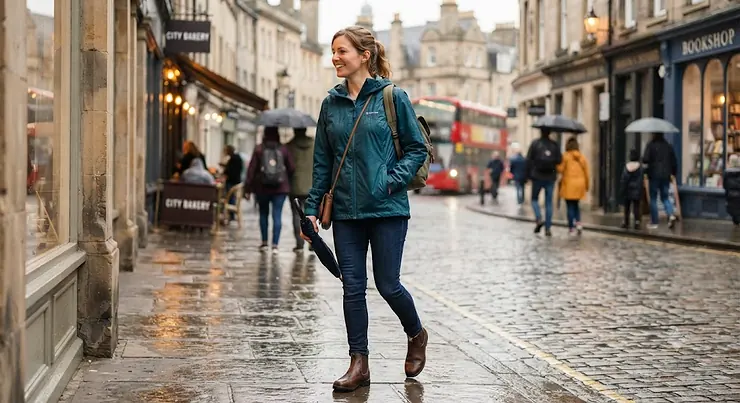
Somewhere between the third gate change and the first fat raindrop hitting your neck, you’ll understand why a packable rain jacket travel setup earns its spot in your bag before almost anything else. A packable rain jacket is a waterproof shell built from thin, tightly woven fabric that compresses down into its own pocket or a small stuff sack, typically weighing under a pound. Unlike a bulky trench coat or a ski-weight hardshell, it’s designed to disappear into a daypack until the sky opens up. That distinction matters more than it sounds like it should, because the wrong rain layer either takes up a third of your carry-on or leaves you standing under an awning in Lisbon, dripping, while your “water-resistant” jacket quietly gives up. This guide walks through seven real, currently available jackets — from a $20 emergency shell to a genuinely durable 3-layer option — so you can pick the one that actually earns its space in your luggage rather than the one that just looked good in a product photo. We researched specs, aggregated real owner feedback, and put the numbers side by side so the decision doesn’t take longer than the flight itself.

If you’ve ever shoved a “compact” rain jacket into a packing cube only to find it eats half the available room, you already know why packability isn’t a nice-to-have — it’s the whole point. The category exists because waterproof, breathable fabrics made it possible to get real weather protection without the weight of old-school rubberized rain gear, a shift documented in the history of waterproof breathable fabric technology. We’ll cover budget picks, ultralight options for carry-on-only travelers, and sturdier shells for people who want one jacket to survive several trips.
Quick Comparison Table
| Jacket | Weight | Price Range | Best For |
|---|---|---|---|
| Frogg Toggs Ultra-Lite2 | ~5.5-10.4 oz | Under $25 | Emergency backup, smallest budget |
| Marmot PreCip Eco | ~10-11 oz | $90-$110 range | First-time travelers wanting balance |
| Outdoor Research Helium UL | ~6 oz | $160-$190 range | Carry-on-only, ultralight packers |
| REI Co-op Rainier | ~11-12.5 oz | $90-$100 range | Best value-to-durability ratio |
| Columbia Watertight II | ~13 oz | $50-$80 range | Widely available, easy sizing |
| Baleaf Packable Rain Jacket | ~10-12 oz | $50-$65 range | Budget pick with reflective safety trim |
| Patagonia Torrentshell 3L | ~12.4-14.1 oz | $170-$190 range | Repeat travelers, long-haul durability |
Looking at the spread above, the split isn’t really “cheap versus expensive” — it’s “how much protection do you need before you’ll ever notice the weight.” The Outdoor Research Helium UL and Frogg Toggs Ultra-Lite2 sit at the extreme-light end, where you genuinely forget they’re in your bag, but that thinness means less durability if you’re wearing the jacket daily. The Patagonia Torrentshell 3L, on the other hand, gives up some packed-size advantage in exchange for a 3-layer build that shrugs off repeated use across multiple trips. For most travelers doing city walking and the occasional downpour, the Marmot PreCip Eco and REI Co-op Rainier land in the sweet spot most people should start with.
💬 Found a jacket that fits your trip already? Save this comparison so you’re not re-Googling it at security.
Top 7 Packable Rain Jackets for Travel: Expert Analysis
1. Frogg Toggs Ultra-Lite2 — smallest packed size for under $25
The Frogg Toggs Ultra-Lite2 is the jacket you buy specifically because you don’t want to think about your rain jacket at all. At roughly 5.5 to 10.4 ounces depending on size, it’s built from a nonwoven polypropylene shell that’s fully waterproof and wind-resistant, folding into an included stuff sack barely bigger than a fist. What that spec sheet doesn’t fully capture is how thin the fabric actually feels in hand — this isn’t a jacket built for years of daily wear, it’s a just-in-case layer for the one afternoon your itinerary didn’t account for rain. Based on the spec comparison against every other jacket on this list, it’s the clear packability winner, but that comes at the cost of long-term toughness. Aggregated reviewer sentiment consistently flags two things: the waterproofing genuinely works in light-to-moderate rain, and the fabric tears easily on branches, zippers, or rough backpack straps, so gentle handling matters. Reviewers also frequently mention breathability complaints during any real physical activity, which tracks with the nonwoven construction Frogg Toggs uses.
Pros:
- ✅ Packs smaller than a water bottle in its stuff sack
- ✅ Genuinely waterproof for the price point
- ✅ Cheap enough to keep a spare in every bag
Cons:
- ❌ Fabric tears easily on snags or sharp edges
- ❌ Traps heat and moisture during activity
At under $25, the value verdict is simple: this is disaster insurance, not a daily driver, and it’s worth owning as exactly that.
2. Marmot PreCip Eco — best all-around value for first-time travelers
The Marmot PreCip Eco has been a go-to recommendation for years, and the “Eco” update swaps in a recycled-nylon face fabric without changing the formula that made it popular. At around 10 to 11 ounces with Marmot’s 2.5-layer NanoPro Eco membrane, it lands in a genuinely useful middle ground: light enough to forget about, durable enough to wear more than a handful of times. What most buyers overlook about this jacket is the DriClime-lined chin guard, a small detail that stops the zipper from chafing your neck on long walking days — the kind of thing you only appreciate after wearing a cheaper jacket that skipped it. Pit zips add ventilation that the Frogg Toggs above simply doesn’t offer, which matters if you’re walking briskly between train platforms rather than standing still. Aggregated review sentiment across retailers is largely positive on waterproofing and comfort, though a recurring complaint is that the interior lining can feel clammy during sustained exertion, and some owners note the lining begins flaking after a couple of seasons of light-to-moderate use.
Pros:
- ✅ Balanced weight-to-durability ratio for regular use
- ✅ Pit zips add real ventilation on warm days
- ✅ Lifetime warranty backs up the build quality
Cons:
- ❌ Interior lining feels clammy during high exertion
- ❌ No chest pocket for quick-access items
Sitting in the $90-$110 range, this is the jacket to buy if you want one shell that handles a decade of trips without babying it.
3. Outdoor Research Helium UL — lightest true waterproof shell you can buy
The Outdoor Research Helium UL is built around a single obsession: weight. At roughly 6 ounces, it’s genuinely one of the lightest fully waterproof jackets sold anywhere, using a Pertex Shield-based membrane that packs down small enough to fit in a jeans back pocket. Here’s what to weigh before buying it, though — that thinness (a 30-denier face fabric in earlier Helium models) trades away some breathability and a bit of long-term durability compared to heavier shells on this list. For a traveler doing carry-on-only trips across multiple countries, that tradeoff is usually worth it, since the jacket essentially vanishes into a daypack’s front pocket. On paper this means near-zero packing cost; in practice, reviewers consistently confirm it’s an ideal “just in case” layer for city walking, drizzly train platforms, and wind, though several also note it isn’t built for standing in a genuine downpour for hours. A common theme in aggregated feedback is that breathability is limited during high-output activity, so it works better for sightseeing pace than for hiking hard in the rain.
Pros:
- ✅ Among the lightest fully waterproof shells on the market
- ✅ Packs into its own chest pocket with a carabiner loop
- ✅ Disappears into any bag without adding bulk
Cons:
- ❌ Thin fabric is less durable under heavy daily use
- ❌ Limited breathability during high-exertion wear
Priced in the $160-$190 range, it’s a premium ask for something this minimal, but if ultracompact packing is your top priority, few jackets compete with it.
4. REI Co-op Rainier — best balance of durability and price
The REI Co-op Rainier quietly does more than its price tag suggests, pairing a 2.5-layer HydroWall membrane with features usually reserved for pricier shells — pit zips, mesh-lined pockets, and a genuinely adjustable hood. At roughly 11 to 12.5 ounces, it sits right in the middle of this list’s weight range, and the recycled ripstop nylon shell feels noticeably tougher in hand than the ultralight options above. Based on the spec comparison, the Rainier undercuts the Patagonia Torrentshell 3L on both price and weight while still offering fully taped seams for genuine rain protection rather than just splash resistance. What most buyers overlook here is how well it holds up after repeated packing and unpacking — reviewers frequently mention the fabric staying soft and the zippers staying reliable well beyond the return window, which isn’t a given at this price. The recurring critique in aggregated feedback is that it isn’t the most breathable option and can feel bulky if you’re trying to wear it during active movement rather than just walking.
Pros:
- ✅ Pit zips and mesh pockets rare at this price point
- ✅ Recycled ripstop shell holds up to repeated packing
- ✅ Fully taped seams for genuine rain protection
Cons:
- ❌ Bulkier than true ultralight options when packed
- ❌ Breathability lags behind pricier 3-layer shells
At around $90-$100 (frequently discounted below that), this is the jacket we’d point most travelers toward first.
5. Columbia Watertight II — most widely available backup shell
The Columbia Watertight II earns its spot less through cutting-edge specs and more through sheer accessibility — it’s sold nearly everywhere, comes in a huge range of sizes and colors, and uses Columbia’s proven Omni-Tech waterproof-breathable membrane. At around 13 ounces, it’s neither the lightest nor the most packable jacket here, but the tradeoff is a roomier, more traditional fit that works well layered over a sweater on a chilly evening. Here’s what the spec sheet won’t tell you: because it’s a mainstream, mass-market shell, sizing runs consistently and returns are simple, which matters if you’re buying last-minute before a trip. Reviewers reliably praise the waterproofing during genuine downpours and note the price-to-performance ratio is hard to beat, though a repeated critique across aggregated feedback is limited breathability during exertion and occasional concerns about zipper corrosion after saltwater or humid-climate use.
Pros:
- ✅ Extremely wide size and color availability
- ✅ Reliable Omni-Tech waterproofing in real downpours
- ✅ Simple, familiar fit for layering
Cons:
- ❌ Heavier and bulkier packed than most on this list
- ❌ Zippers can corrode with heavy humid-climate use
In the $50-$80 range depending on retailer, it’s a sensible backup pick, especially if you want a spare jacket that’s easy to replace anywhere in the world.

6. Baleaf Packable Rain Jacket — best budget pick with reflective safety details
The Baleaf Packable Rain Jacket targets a slightly different traveler than the outdoor-brand options above: someone who wants genuine waterproofing (commonly rated around 10,000mm) at a budget price, plus reflective print details that matter if evening walks near traffic are part of the trip. Weighing in the 10-12 ounce range and folding into its own back pocket, it includes an unusually generous five-pocket layout — two zippered hand pockets, two interior pockets, and a rear stash pocket — which most premium shells on this list don’t match. What most buyers overlook is that this jacket was originally designed for cycling and running, so the cut is slightly more athletic and the drawstring-to-bag design is genuinely convenient for clipping to a bike or bag strap during a commute. Aggregated Amazon review sentiment is strongly positive on waterproofing and pocket count relative to price, with a common caveat that breathability and long-term durability trail behind name-brand outdoor shells after extended heavy use.
Pros:
- ✅ Five utility pockets, more than most premium shells
- ✅ Reflective prints add real low-light visibility
- ✅ Genuinely waterproof rating for the price
Cons:
- ❌ Less durable than outdoor-brand shells long-term
- ❌ Breathability weaker than pricier 2.5/3-layer builds
At roughly $50-$65, it’s an easy recommendation for budget-conscious travelers who also want a jacket that looks purpose-built rather than disposable.
7. Patagonia Torrentshell 3L — most durable shell for repeat long-haul trips
The Patagonia Torrentshell 3L is the jacket for someone who travels often enough that “packable” matters less than “still works after fifteen trips.” Built with a 3-layer H2No Performance Standard membrane and a 100% recycled nylon face fabric, it weighs 12.4 ounces (women’s) to 14.1 ounces (men’s) — heavier than the ultralight options here, but noticeably tougher in hand. Based on the spec comparison, 3-layer construction generally outperforms the 2.5-layer builds used in the Marmot and REI options on breathability and long-term durability, since the extra layer protects the waterproof membrane from abrasion. What the spec sheet won’t tell you, but reviewers consistently note, is that the fabric feels stiff and a little crinkly out of the box, softening only after repeated wear and washing. Reviewer sentiment is remarkably consistent across outlets: strong praise for durability and weather protection, paired with a recurring complaint about the lack of a chest pocket and a packed size that’s noticeably larger than the ultralight competitors on this list.
Pros:
- ✅ 3-layer build outlasts 2.5-layer shells on frequent trips
- ✅ Genuinely windproof and reliably waterproof in downpours
- ✅ Recycled materials with Fair Trade Certified sewing
Cons:
- ❌ Heavier and bulkier packed than lighter competitors
- ❌ No chest pocket, only two hand pockets
At around $170-$190, it costs more than most on this list, but for frequent flyers, the cost-per-trip math often favors it over replacing a cheaper jacket every year or two.
Top 7 Products: Specs & Value Comparison
| Jacket | Layers | Weight | Waterproof Rating | Price Range | Best For |
|---|---|---|---|---|---|
| Frogg Toggs Ultra-Lite2 | Nonwoven 1-layer | 5.5-10.4 oz | Fully waterproof | Under $25 | Emergency spare |
| Marmot PreCip Eco | 2.5-layer | 10-11 oz | NanoPro Eco | $90-$110 | Everyday balance |
| Outdoor Research Helium UL | 2.5-layer | ~6 oz | Pertex Shield | $160-$190 | Ultralight carry-on |
| REI Co-op Rainier | 2.5-layer | 11-12.5 oz | HydroWall | $90-$100 | Value + durability |
| Columbia Watertight II | 2-layer | ~13 oz | Omni-Tech | $50-$80 | Availability, easy sizing |
| Baleaf Packable Rain Jacket | Coated shell | 10-12 oz | ~10,000mm | $50-$65 | Budget + pockets |
| Patagonia Torrentshell 3L | 3-layer | 12.4-14.1 oz | H2No | $170-$190 | Frequent long trips |
Reading across this table, layer count is doing most of the explanatory work behind the price gaps: the single-layer Frogg Toggs Ultra-Lite2 costs a fraction of the 3-layer Patagonia Torrentshell 3L because it sacrifices exactly the durability and breathability that extra layer buys you. If your trip involves one or two rain events over a week, a 2.5-layer jacket like the Marmot PreCip Eco or REI Co-op Rainier covers you without overpaying for capability you won’t use. Frequent travelers who’ll rely on the jacket across dozens of trips a year are the ones who actually recoup the Torrentshell’s higher upfront cost.
Practical Usage Guide: Packing, Care & Your First Rainy Trip
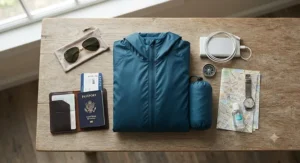
Getting a packable rain jacket into your bag correctly matters more than people expect. Most stuff-sack rain jacket designs — including the Frogg Toggs Ultra-Lite2 and Outdoor Research Helium UL — pack smallest when you fold the sleeves in first, then roll rather than crumple the body before stuffing it into the built-in pocket; crumpling tends to leave awkward air pockets that make the “compact” jacket suddenly not so compact. Store it somewhere in your carry-on you can reach without unpacking everything — a top compartment or the outer daypack pocket — since the entire point of a travel-size rain shell is speed when weather turns. For care, most of these jackets should be washed with a technical detergent (not standard laundry soap, which coats and kills the DWR coating) every 10-15 wears, and tumble-dried on low heat afterward, since heat actually reactivates the water-repellent finish. A mistake we see constantly in the first 30 days of ownership: travelers assume “waterproof” means “wash however you want,” then wonder why the jacket starts wetting out after a few trips. If you notice water soaking in rather than beading up, that’s your DWR coating asking for a refresh, not a sign the jacket’s broken.
Real-World Scenarios: Which Traveler Are You?
If you’re a college student backpacking through six countries on a tight budget with one 40-liter pack, the Baleaf Packable Rain Jacket or Frogg Toggs Ultra-Lite2 make sense — cheap enough that losing or damaging one isn’t a financial disaster, and light enough to disappear in a bag that’s already stuffed with everything else you own. If you’re planning a two-week Europe trip that mixes city walking in Paris with a few day hikes in the Alps, the Marmot PreCip Eco or REI Co-op Rainier cover both use cases without forcing a compromise — durable enough for trail use, packable enough for museum-hopping days. And if you’re a business traveler flying monthly who needs one shell that survives a hundred cramped overhead-bin trips a year, the Patagonia Torrentshell 3L justifies its price purely on cost-per-wear, while the Outdoor Research Helium UL suits the traveler who counts every ounce because they never check a bag.
Buyer’s Decision Framework
If your trip is under a week and involves mostly cities, choose a 2.5-layer jacket like the Marmot PreCip Eco because you don’t need 3-layer durability for occasional showers. If you’re flying carry-on-only with zero spare packing space, choose the Outdoor Research Helium UL because its packed size beats everything else here by a wide margin. If your budget is under $30 and the jacket is strictly a backup, choose the Frogg Toggs Ultra-Lite2 because paying more for a jacket you’ll rarely wear doesn’t make financial sense. If you travel more than six times a year, choose the Patagonia Torrentshell 3L because the cost-per-trip math favors durability over a lower sticker price.
How to Choose a Packable Rain Jacket for Travel
- Check the packed size, not just the weight. Two jackets with similar ounce counts can pack to very different sizes depending on fabric stiffness — ask for measured dimensions when packed, not just weight.
- Match the layer count to your trip length. Short trips favor lighter 2.5-layer builds; frequent or long trips favor 3-layer durability like the Torrentshell.
- Confirm real seam-taping, not just “water-resistant” language. Fully taped seams are what separate genuine rain protection from a jacket that just repels light drizzle.
- Look for a pocket you’ll actually use. A chest pocket beats hand pockets if you’re wearing a daypack, since hand pockets get blocked by hip belts.
- Prioritize breathability if you’ll be walking briskly. Pit zips or vented mesh pockets matter more than people expect once you’re moving between train platforms in humid weather.
- Weigh price against trip frequency. A $20 emergency shell makes sense for one trip a year; a pricier 3-layer jacket earns its cost back over many trips.
- Verify color and reflective details if you’ll walk near traffic at night. This is a small detail, but it’s the difference between the Baleaf Packable Rain Jacket‘s reflective prints and an all-black shell in a poorly lit European alley.

Common Mistakes When Buying a Travel Rain Jacket
The most common mistake is confusing “water-resistant” with “waterproof” — a windbreaker with a DWR coating will bead water for the first ten minutes and then soak through, while a genuinely waterproof shell with taped seams holds up through a sustained downpour. The second mistake is buying based on weight alone without checking packed dimensions; a jacket that’s technically lighter can still take up more bag space if the fabric doesn’t compress well. Third, travelers frequently skip checking the hood’s adjustability, then discover on a windy ferry crossing that it doesn’t stay put. Fourth, buying a jacket a size too small “to save weight” backfires the moment you need to layer a sweater underneath on a cold evening. Finally, many buyers ignore breathability entirely, assuming any waterproof jacket works the same — reviewers across every product in this guide consistently flag breathability as the detail that separates a jacket they love from one they merely tolerate.
Packable Rain Jacket vs Traditional Rain Coat
A traditional rain coat — the knee-length trench style or a rubberized fisherman’s jacket — genuinely outperforms packable shells in one area: sustained, driving rain over many hours, since heavier fabric and longer coverage keep water further from your body. But for travel specifically, that advantage rarely matters more than the packability tradeoff. A traditional rain coat can weigh two to three pounds and refuses to compress, effectively costing you a packing cube’s worth of space for a garment you might wear twice on a ten-day trip.
| Feature | Packable Rain Jacket | Traditional Rain Coat |
|---|---|---|
| Weight | 5.5-14 oz | 2-3 lbs |
| Packed Size | Fits in a pocket | Doesn’t compress |
| Sustained Downpour Performance | Good to very good | Excellent |
| Daily Carry Practicality | High | Low |
| Typical Price Range | $20-$190 | $80-$300 |
The analysis here is straightforward: unless you’re spending your entire trip outdoors in sustained storms, the packability advantage of a shell like the REI Co-op Rainier or Patagonia Torrentshell 3L outweighs the marginal weather-protection edge of a bulkier traditional coat. Travelers who split time between cities and multi-hour hikes are the exception — that’s when the extra coverage of a full-length coat starts to earn its bulk back.
What to Expect: Real-World Performance on the Road
On paper, waterproof ratings and denier counts are abstractions; in practice, what they translate to is how long you stay dry standing at a bus stop in Edinburgh or walking between gates during a layover in Amsterdam. A 2.5-layer jacket like the Marmot PreCip Eco handles light-to-moderate rain for an hour or two comfortably, but during a genuine downpour, expect some dampness to work through if you’re moving quickly and sweating underneath. A 3-layer jacket like the Patagonia Torrentshell 3L holds up noticeably longer under sustained rain because the extra layer protects the membrane from abrasion and pressure, which is exactly the kind of everyday wear-and-tear a backpack strap or crowded metro creates. Ultralight shells like the Outdoor Research Helium UL perform beautifully for short exposure — a sprint between a taxi and a hotel lobby — but reviewers consistently note they’re not built for hours of continuous heavy rain. For a rain jacket for Europe trip planning specifically, where weather swings quickly between regions, a jacket with pit zips (Marmot, REI Co-op, Patagonia) earns its keep because you’ll be layering and delayering constantly across a single day.
Features That Actually Matter (And Those That Don’t)
Taped seams matter enormously; a helmet-compatible hood does not, unless you’re actually cycling. Pit zips matter if you’ll be walking briskly with a daypack on; a huge hood brim matters less in a city than it does on an exposed mountain ridge. A dedicated stuff sack (like the one included with the Frogg Toggs Ultra-Lite2) is a genuinely useful feature that keeps a wet, packed jacket from soaking everything else in your bag — many premium jackets skip this in favor of an internal pocket, which works fine but doesn’t isolate moisture as well. Marketing terms like “military-grade” or “diamond-tough” on ultra-budget listings are almost always meaningless without an actual denier rating or waterproof-rating number attached, so treat them as noise. What genuinely differentiates jackets at this price range is layer count, seam construction, and pocket placement — not color options or logo placement, however much marketing copy leans on them.
Safety, Fabric Regulations & Sustainability
Waterproof-breathable membranes have historically relied on PFAS (“forever chemicals”) for their durable water repellent finish, and that’s shifting fast across the outdoor industry. The EPA’s PFAS research page outlines why manufacturers like Marmot, Patagonia, and REI Co-op are actively reformulating toward PFC-free DWR treatments — several jackets in this guide, including the Marmot PreCip Eco and Patagonia Torrentshell 3L, already advertise PFC-free construction. If sustainability and chemical safety matter to your purchase, check the product listing for “PFC-free” language specifically rather than assuming all “eco” branding refers to the same thing. On the travel-logistics side, if you’re flying with a packable rain jacket as part of a carry-on-only setup, it’s worth reviewing current TSA carry-on guidelines since bulky wet-weather gear occasionally gets flagged for secondary screening simply due to its shape on X-ray, and knowing the rules ahead of time avoids a delay at the checkpoint.
Note: this is general product and travel-planning information, not legal or regulatory advice — check current agency guidance for specifics that apply to your trip.
Price Range & Value Analysis
| Jacket | Price Range | Cost-Per-Trip (10 trips/yr) | Value Verdict |
|---|---|---|---|
| Frogg Toggs Ultra-Lite2 | Under $25 | ~$2.50 | Best raw value, short lifespan |
| Marmot PreCip Eco | $90-$110 | ~$10 | Strong all-around value |
| REI Co-op Rainier | $90-$100 | ~$9.50 | Best durability-to-price ratio |
| Patagonia Torrentshell 3L | $170-$190 | ~$18 | Justified for frequent flyers |
Running the cost-per-trip numbers changes the calculus quite a bit: the Patagonia Torrentshell 3L looks expensive at checkout, but spread across the multiple years a 3-layer shell typically survives, it’s not dramatically pricier per use than the budget options. The Frogg Toggs Ultra-Lite2 wins on raw price but assumes you’re comfortable replacing it after a season or two of regular wear, while the REI Co-op Rainier offers the strongest middle-ground value for travelers who take a handful of trips a year and want the jacket to still look good on trip five.
✨ Ready to stop guessing and start packing? Compare current prices on today’s top pick before your next trip.
FAQ
❓ Is a packable rain jacket actually waterproof or just water-resistant?
❓ Can I fit a packable rain jacket in a small daypack or purse?
❓ How do I wash a packable rain jacket without ruining the waterproofing?
❓ What's the difference between a 2.5-layer and 3-layer rain jacket?
❓ Do packable rain jackets work well for both hiking and city travel?
Conclusion
Choosing among these seven jackets really comes down to how you travel, not just how much rain you expect. If you want one dependable jacket that handles almost any trip without a second thought, the Marmot PreCip Eco or REI Co-op Rainier are the easiest recommendations on this list. If your entire packing philosophy revolves around ounces and carry-on space, the Outdoor Research Helium UL is hard to beat, even at its higher price. Budget travelers and backpackers will get real mileage out of the Baleaf Packable Rain Jacket or the ultra-cheap Frogg Toggs Ultra-Lite2, while frequent flyers who travel enough to feel cost-per-wear will find the Patagonia Torrentshell 3L pays for itself over time. Whichever you choose, the goal is the same: a jacket that disappears into your bag until the one afternoon it absolutely needs to earn its keep.
Recommended for You
- Rain Jacket for Cycling: 7 Best Picks to Stay Dry in 2026
- Rain Jacket for Hiking: 7 Top Picks & Buying Guide for 2026
- 7 Best Rain Jacket for Commuting Picks in 2026
Disclaimer: This article contains affiliate links. As an Amazon Associate, I earn from qualifying purchases. If you purchase products through these links, we may earn a small commission at no additional cost to you.
✨ Found this helpful? Share it with your friends! 💬🤗
