

In This Article
Somewhere between “cute ankle bootie” and “full-on fisherman wader” lives a category of footwear that gets weirdly emotional: knee high rain boots women actually reach for every single time it pours. Not the pair gathering dust in the mudroom closet. The pair by the door. If you’ve ever sprinted to your car in a downpour wearing sneakers that turned into two soggy sponges, you already know why this matters more than it sounds like it should.

This guide skips the fluff you’d get from an Amazon listing and gets into the stuff that actually changes a buying decision — shaft height versus flood height, why a $40 pair and a $150 pair can both be “waterproof” yet feel completely different after three months, and which knee high rain boots women with wide calves, narrow calves, or budget constraints should actually put in their cart. We pulled real specs, real aggregated review sentiment, and genuine comparative analysis together so you’re not guessing. Let’s get into it.
What Is a Knee High Rain Boot?
A knee high rain boot is a waterproof shaft-style boot, usually made from natural rubber or PVC, that extends from the sole to roughly the knee — typically 14 to 17 inches — to protect the lower leg from standing water, mud, and heavy rain. Unlike ankle or mid-calf rain shoes, the taller shaft raises what’s called “flood height,” the water depth a boot can handle before it leaks over the top. As the history of the wellington boot shows, this silhouette has been solving the exact same problem — wet feet — for over two centuries, just with better rubber now.
Quick Comparison Table
| Boot | Shaft Height | Material | Best For |
|---|---|---|---|
| Hunter Original Tall | ~15–16 in | Natural rubber | Best overall / iconic style |
| Bogs Amanda II Tall | ~16.2 in (adjustable) | Natural rubber | Wide or adjustable calves |
| Kamik Jennifer | ~16.5 in | RubberHE (synthetic) | Budget Hunter alternative |
| Sperry Syren Gulf | Below mid-calf | Rubber + textile | Riding-style, shorter shaft |
| TerraTrax Wide Calf | 16.2 in (adj. to 20.3 in) | Natural rubber | True wide-calf fit |
| HISEA Slim Calf Tall | Knee-high | PVC | Narrow calves, budget |
| Western Chief Tall Printed | Knee-high | Natural rubber | Fun prints, family budget |
Looking at this lineup, the split really comes down to calf circumference and how much you’re willing to spend on flood height. Hunter Original Tall and Bogs Amanda II Tall justify their higher price with genuinely tougher rubber and better long-term shape retention, while HISEA Slim Calf Tall and Western Chief Tall Printed are perfectly fine if you’re mostly dealing with sidewalk puddles and school-drop-off rain rather than actual flooding. If your calves run wide, skip straight to TerraTrax Wide Calf or Bogs Amanda II Tall — cramming a wide calf into a slim-cut boot is a comfort problem no amount of styling fixes.
💬 Found a pair you’re already eyeing? Scroll down for the full breakdown before you buy — the differences matter more than they look on paper.
Top 7 Knee High Rain Boots for Women: Expert Analysis
1. Hunter Original Tall — the boot that started the whole trend
The Hunter Original Tall is arguably the reason “rain boot” became a fashion category at all rather than just a farm-and-garden staple. First introduced in 1956 and still handcrafted from 28 individual rubber parts, it’s built on a last that’s barely changed in decades — which, in an industry full of gimmicky redesigns, is honestly kind of impressive.
Spec-wise, the shaft sits around 15 to 16 inches, giving solid flood coverage without tipping into “waders” territory, and the natural rubber construction is noticeably stiffer out of the box than PVC competitors — that stiffness is actually what gives it structure and a longer usable life. Based on the spec comparison against cheaper alternatives, the seamless, vulcanized build is what lets these survive years of daily wear instead of cracking after one winter. This is the pick for someone who wants a single boot that works for the school run, the farmers market, and a festival field without looking out of place at any of them.
Aggregated review sentiment across major retailers is strongly positive on durability and style, with a recurring theme: reviewers consistently report a stiff, snug break-in period for the first few wears before the rubber softens to the shape of the leg.
Pros:
- ✅ Handcrafted 28-part natural rubber construction
- ✅ Tallest flood height for genuine deep-puddle protection
- ✅ Iconic style that pairs with almost anything
Cons:
- ❌ Noticeable break-in stiffness reported by new owners
- ❌ Sits at the top of the price range in this category
Prices for the Hunter Original Tall generally land in the $130-$165 range depending on colorway and retailer, though check current price since Hunter runs frequent seasonal promotions. For the durability alone, most buyers find it a fair long-term value rather than a splurge.

2. Bogs Amanda II Tall — best for wide or adjustable calves
If the Hunter’s slim, structured shaft has ever left a red line across your shin, the Bogs Amanda II Tall solves that problem directly. It’s built with an adjustable calf gusset and a 16.2-inch shaft that expands to accommodate up to roughly 20.3 inches of calf circumference — a detail cheaper “one-size-fits-most” boots simply don’t offer.
What most buyers overlook about this model is that it’s made from BLOOM-infused, natural rubber rather than PVC, which matters more than it sounds: natural rubber resists cracking in freezing temperatures far better than the plastic-based rubber used in bargain boots. Add a BioBased Rebound insole and internal steel shank, and you get a boot that’s genuinely comfortable for all-day wear, not just a five-minute dash to the mailbox. This is the boot for gardeners, dog walkers, and anyone who’s been burned before by a shaft that simply wouldn’t fit over a fuller calf.
Reviewers consistently note the adjustable buckle as the standout feature, with a common complaint in user reviews being that the boots run heavier than expected for their height — expect a bit more heft than the sleeker Hunter silhouette.
Pros:
- ✅ Adjustable calf gusset fits a much wider range of legs
- ✅ Natural rubber resists cracking in cold weather
- ✅ Internal steel shank adds real stability underfoot
Cons:
- ❌ Heavier on the foot than slimmer competitors
- ❌ Bulkier profile than fashion-forward alternatives
Expect to pay in the $130-$150 range for the Bogs Amanda II Tall, with prices varying by retailer and colorway — always check current price before buying, since Bogs rotates sales seasonally.
3. Kamik Jennifer — the honest Hunter dupe
The Kamik Jennifer exists in a pretty specific lane: it looks a lot like the Hunter Original from six feet away, costs meaningfully less, and doesn’t pretend to be something it’s not. The shaft measures about 16.5 inches — actually taller than the Hunter on paper — giving it above-average weather protection for the price tier.
Here’s what the spec sheet won’t tell you, but hands-on reviewers note: the molded detailing that mimics Hunter’s silhouette is attractive from a distance, but the seams are rougher up close, with small amounts of excess rubber occasionally left along the mold lines. It’s a reasonable trade for the price difference, and one most casual wearers never notice once the boots are on and walking. This is squarely the pick for someone who wants the tall-boot look for a work commute or dog walk without committing premium-boot money to something that’ll get scuffed in the mud anyway.
A common complaint in user reviews is that the boot runs stiff and less flexible at the ankle compared to Hunter, which some testers found reduced all-day comfort, while others reported no issue at all after a short break-in period.
Pros:
- ✅ Taller shaft than Hunter Original at a lower price
- ✅ Cushioned heel support noted by multiple reviewers
- ✅ Wide color range including neutral and bold options
Cons:
- ❌ Rougher mold seams than premium competitors
- ❌ Stiffer flex at the ankle for some wearers
The Kamik Jennifer typically retails in the $55-$70 range, making it one of the better value-per-inch-of-shaft options on this whole list.
4. Sperry Syren Gulf — the riding-style hybrid
Not every rainy commute calls for full knee coverage, and the Sperry Syren Gulf is honest about that. It sits just below mid-calf rather than true knee height, but it earns its spot here as the riding-style alternative for anyone who finds a full 16-inch shaft impractical for driving, cycling, or sitting at a desk all day.
The design borrows heavily from equestrian and duck-boot styling — a fleece-lined upper, rubber lower shell, and a gum outsole with Wave-Siping traction technology that’s genuinely effective on wet pavement and tile, not just marketing language. Based on the spec comparison with true knee-high boots, you’re trading flood height for flexibility at the knee and ankle, which matters if your day involves more sitting and driving than wading through standing water. On paper this means it’s less boot and more “weatherproof shoe with attitude,” which is exactly what a lot of buyers actually want.
Aggregated sentiment is enthusiastic on comfort and warmth, with reviewers consistently reporting a snug, true-to-size fit, though a recurring theme is that the boot runs heavier than its compact size suggests, which a small number of owners found tiring over a full day.
Pros:
- ✅ Flexible at the knee, unlike stiff full-shaft boots
- ✅ Fleece lining adds warmth for cool, wet days
- ✅ Wave-Siping outsole grips wet pavement reliably
Cons:
- ❌ Shorter shaft than true knee-high competitors
- ❌ Heavier than its compact silhouette implies
Look for the Sperry Syren Gulf in the $90-$110 range, with occasional markdowns bringing it closer to $70 — always check current price, since Sperry discounts this style often.
5. TerraTrax Wide Calf Natural Rubber Boot — best true wide-calf pick
Wide-calf shoppers hear “one size fits most” a lot, and it’s rarely true. The TerraTrax Wide Calf Natural Rubber Boot actually backs up its claim with a 16.2-inch shaft that adjusts up to a genuinely wide 20.3 inches, plus a natural rubber build instead of the PVC used in most budget wide-calf boots.
That material choice matters more than most listings explain: PVC becomes brittle and can crack in freezing temperatures, while natural rubber stays flexible, which is exactly why this model markets itself as staying “crack-free” through winter use. What most buyers overlook about wide-calf boots generally is that a poor calf fit doesn’t just feel bad — it also compromises the seal at the top of the shaft, letting water in even on a technically waterproof boot. This model closes that gap properly, making it a strong pick for anyone who’s been let down by cheaper wide-calf claims before.
Because it’s a newer entrant to the market, verified customer review volume is still smaller than legacy brands like Bogs or Hunter — worth noting honestly rather than inflating confidence in review data that doesn’t fully exist yet.
Pros:
- ✅ Genuinely adjustable up to 20.3 inches of calf room
- ✅ Natural rubber avoids winter cracking common in PVC
- ✅ Full 16.2-inch shaft for real flood protection
Cons:
- ❌ Smaller verified review base than legacy brands
- ❌ Less brand recognition may affect resale or trade-in value
Expect a price in the $50-$70 range, positioning it as a genuine mid-tier alternative to pricier wide-calf specialists.
6. HISEA Slim Calf Tall — best for narrow calves on a budget
Where wide-calf shoppers get ignored by generic sizing, narrow-calf shoppers get the opposite problem — boots so roomy that they gap, rub, and let water splash straight up the shaft. The HISEA Slim Calf Tall is built specifically around a seamless, tight-fitting silhouette styled after equestrian riding boots, aimed squarely at that narrower leg shape.
Constructed from PVC rather than natural rubber, it’s noticeably lighter on the foot and considerably cheaper, though — and this is the honest trade-off — PVC doesn’t handle sub-freezing temperatures as gracefully as rubber over the long haul. Here’s what the spec sheet won’t tell you, but user reports suggest: for three-season wear in moderate climates, that durability gap barely matters, and most owners never push the boots hard enough in true winter conditions to notice. This is a smart pick for renters, students, or anyone who wants a stylish, snug-fitting tall boot without committing premium-boot money to something they might outgrow in trend or size.
A common complaint in user reviews involves sizing running slightly large in the foot even when the calf fit is accurate, so checking the sizing chart carefully before ordering is worth the extra two minutes.
Pros:
- ✅ Seamless, snug fit built for narrower calves
- ✅ Noticeably lighter weight than rubber alternatives
- ✅ Fashion-forward, riding-boot-inspired silhouette
Cons:
- ❌ PVC construction less cold-durable than natural rubber
- ❌ Foot sizing runs slightly large per multiple reviewers
The HISEA Slim Calf Tall typically sits in the $30-$45 range, making it one of the most accessible entries on this list.
7. Western Chief Tall Printed Rain Boot — best budget pick with personality
Sometimes you just want rain boots that make a gray Tuesday slightly less gray. The Western Chief Tall Printed Rain Boot leans into that with playful prints and an adjustable side buckle, all while staying grounded in a company that’s been making family footwear since 1891 — a legacy that’s easy to forget under all the fun colors.
Despite the low price point, the construction uses handmade natural rubber rather than pure PVC, paired with a moisture-absorbent polyester-cotton lining and a high-abrasion outsole for traction on both wet and dry surfaces. Reviewers consistently note the boots as sturdy and warm for the price, with several long-time buyers mentioning they’ve repurchased the same style in multiple prints. What most buyers overlook here is that “budget” doesn’t automatically mean “flimsy” — this is a case where the price reflects accessible positioning rather than corner-cutting on materials.
Aggregated sentiment skews notably positive, particularly among reviewers who bought a size up to accommodate thicker socks, a detail that comes up often enough to be worth planning around.
Pros:
- ✅ Natural rubber construction despite the low price
- ✅ Adjustable side buckle for a more custom fit
- ✅ Playful prints that stand out from basic black boots
Cons:
- ❌ Runs slightly small; sizing up is often recommended
- ❌ Fewer neutral, formal-friendly colorways available
Pricing generally falls in the $27-$45 range, occasionally dipping lower during seasonal sales — genuinely one of the best value-for-dollar picks here.
Practical Usage Guide for Your New Tall Rain Boots
Buying the right boot is half the job; using it correctly is the part Amazon listings never mention. Break in natural rubber boots gradually — wear them around the house for short stretches before a full day out, since the stiffness reviewers mention on models like the Hunter Original Tall does soften with use but rewards patience early on. Store boots upright, away from direct heat sources like radiators or car trunks in summer, since heat accelerates rubber degradation over time.
Tall Rain Boots Waterproof Stylish Enough for the Office
A lot of buyers assume tall rain boots waterproof enough for actual weather have to look purely utilitarian, but that’s outdated thinking. Pair a glossy black pair like the Hunter Original Tall with tailored trousers tucked in, or go printed with the Western Chief Tall Printed Rain Boot under a raincoat for a look that reads intentional rather than accidental. The trick most people miss: a slimmer shaft silhouette photographs and wears more “put together,” while a wider, more functional shaft like the Bogs Amanda II Tall leans more outdoorsy — pick based on your actual day, not just the boot’s Instagram appeal.
For maintenance, wipe rubber boots with mild soap and water after muddy use, and apply a rubber-specific protectant every few months to prevent the dulling and micro-cracking that comes from repeated wet-dry cycles — a common mistake in the first 30 days is letting mud dry hard on the rubber before cleaning it off, which can dull the finish permanently.

Real-World Scenarios: Matching Knee High Rain Boots to Your Life
Consider three different buyers. First, a nurse who’s on her feet ten hours a day and commutes through unpredictable weather — she needs the cushioned support and steel shank of the Bogs Amanda II Tall, since all-day comfort matters more than fashion here, and the adjustable calf accommodates compression socks. Second, a college student on a tight budget who mainly needs protection from campus puddles between classes — the HISEA Slim Calf Tall or Western Chief Tall Printed Rain Boot covers that use case without draining a semester’s shoe budget.
Third, picture someone who gardens most weekends and occasionally deals with genuinely flooded yard conditions after storms — that calls for the taller flood height and rubber durability of the Hunter Original Tall or the wide-fit flexibility of the TerraTrax Wide Calf Natural Rubber Boot. Matching the boot to the actual frequency and environment of use, rather than just the price tag, is what prevents the classic mistake of buying a stylish pair that quietly falls apart under real conditions.
Problem → Solution: Fixing Common Knee High Rain Boot Headaches
Problem: the boots gap at the calf and let water in. Solution: size up in calf circumference or move to an adjustable model like the Bogs Amanda II Tall or TerraTrax Wide Calf Natural Rubber Boot, both built with buckle or gusset adjustability specifically for this issue.
Problem: feet sweat inside all day. Solution: choose a model with a moisture-wicking lining, like the polyester-cotton blend in the Western Chief Tall Printed Rain Boot, and swap in a moisture-wicking insole if the stock one isn’t cutting it.
Problem: rubber looks dull and cracked after one season. Solution: this is almost always a PVC-versus-rubber issue combined with poor storage — switching to natural rubber models like Hunter Original Tall and storing boots away from direct sunlight and heat solves most of this.
Problem: boots slip on wet tile or stairs. Solution: prioritize a model with a specifically engineered wet-traction outsole, such as the Wave-Siping tread on the Sperry Syren Gulf, rather than assuming all rubber soles grip the same.
Problem: sizing feels off between brands. Solution: check brand-specific sizing notes before ordering — several reviewers noted the HISEA Slim Calf Tall runs large in the foot and the Western Chief Tall Printed Rain Boot runs small, so brand-hopping without checking sizing charts is a common and avoidable mistake.
How to Choose Knee High Rain Boots for Women
- Measure your calf circumference first. This single measurement eliminates more bad purchases than any other factor, since a boot that doesn’t fit the calf won’t seal properly no matter how waterproof the rubber is.
- Decide how tall you actually need the shaft. A commuter dealing with sidewalk puddles doesn’t need the same flood height as someone wading through a flooded yard after a storm.
- Choose material based on climate. Natural rubber holds up better in freezing temperatures; PVC is lighter and cheaper but more prone to cracking in the cold.
- Check the outsole tread pattern. Smooth soles look sleek but slip on wet tile — look for a defined lug or siped pattern if you’ll be walking on hard, wet surfaces often.
- Read aggregated review sentiment, not just star ratings. A 4.5-star average tells you little; recurring complaints about sizing or seam quality tell you a lot more.
- Factor in insulation needs separately from waterproofing. Waterproof and warm are two different specs — don’t assume one guarantees the other.
- Set a realistic price range before shopping. Anchoring your budget first, using ranges like “under $70” or “$100-$150,” prevents scope creep once you start browsing pretty prints and premium brand names.
Common Mistakes When Buying Tall Rain Boots
The single most common mistake is buying based on shoe size alone and ignoring calf circumference entirely — this is exactly why the HISEA Slim Calf Tall and Bogs Amanda II Tall exist as opposite solutions to the same underlying problem. A close second is assuming glossy finish equals better quality; gloss is a cosmetic coating, not a durability indicator, and plenty of matte boots like some Hunter Original Tall colorways outperform glossy competitors in longevity.
Buyers also frequently skip checking the actual flood height in inches, relying instead on marketing terms like “tall” or “knee-high,” which vary meaningfully between brands — the Kamik Jennifer‘s 16.5-inch shaft and the Sperry Syren Gulf‘s shorter, below-mid-calf height are both marketed similarly but perform very differently in standing water. Finally, ignoring return policies is a costly mistake specific to this category, since fit issues around the calf are common enough that a flexible return window should factor into the purchase decision itself.
Knee High Rain Boots vs Ankle and Mid-Calf Styles
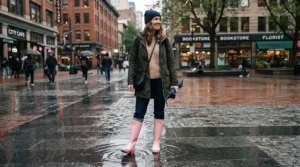
Choosing shaft height is really choosing a trade-off between protection and mobility. Ankle rain boots are the most flexible and lightweight, ideal for quick errands, but they offer minimal flood protection and let water splash in easily during heavier rain. Mid-calf styles split the difference reasonably well for moderate weather. Full knee-high styles like the Hunter Original Tall and Bogs Amanda II Tall sacrifice some flexibility and add weight, but they’re the only category that reliably handles standing water above ankle depth.
Tall Shaft Rubber Boot Construction 101
A tall shaft rubber boot isn’t just a taller version of a short one — the engineering changes. Taller shafts require reinforced structure near the top to prevent the boot from folding or collapsing at the knee bend, which is part of why premium models like Hunter Original Tall use thicker rubber near the shaft opening than budget alternatives. This is also why a cheap tall boot can feel floppy and uncomfortable at the knee even when the rubber itself is technically waterproof.
The Riding-Style Rain Boot Middle Ground
A riding-style rain boot, like the Sperry Syren Gulf, borrows equestrian design cues — a shorter shaft, more structured ankle, and often a duck-boot-inspired toe — trading some flood height for a silhouette that works better with jeans, driving, and daily errands. It’s a genuinely useful middle category for buyers who find full knee-high boots impractical day to day.
Is an Over the Knee Rain Boot Worth It?
True over the knee rain boot options are rare in this category specifically because that much added shaft length adds weight, cost, and mobility restriction without proportional benefit for most everyday users — flood protection gains diminish once you’re past standard knee height, since most real-world “flooding” scenarios rarely exceed mid-shin depth anyway. Unless you have a specific, frequent need for extreme wading protection, a well-fitted knee-high model like the TerraTrax Wide Calf Natural Rubber Boot covers nearly every realistic scenario more comfortably.
Hunter Boots Alternative Amazon Cheaper: Getting the Look for Less
If the Hunter Original Tall‘s price tag is the only thing standing between you and that classic tall-boot look, you have legitimate options. The Kamik Jennifer is the most direct visual match, with a similarly structured silhouette and even a slightly taller shaft, at roughly half the cost — the trade-off being rougher mold seams up close, which barely registers from normal viewing distance. The Western Chief Tall Printed Rain Boot takes a different approach entirely, leaning into prints and personality rather than mimicking Hunter’s minimalist look, at an even lower price point.
What most buyers overlook when hunting for a Hunter boots alternative amazon cheaper option is that the alternative doesn’t need to match every spec — it needs to match the specific reason you wanted a Hunter in the first place. If it’s the flood height, prioritize shaft measurement over brand mimicry. If it’s the clean, structured silhouette, the Kamik Jennifer genuinely delivers close to Hunter’s look. If it’s simply “tall waterproof boot that doesn’t look cheap,” honestly, several budget options on this list clear that bar without issue.
🔍 Ready to Stop Guessing and Just Buy the Right Pair?
Take your rainy-day wardrobe to the next level with the picks above. Click through on any highlighted boot to check current pricing and availability before it changes. A little research now means dry, comfortable feet — and honestly, a little extra confidence — every time the forecast turns ugly.
What to Expect: Real-World Performance
Specs on a page rarely match the lived experience of actually walking a dog in sideways rain for twenty minutes. In practice, natural rubber boots like Hunter Original Tall and Bogs Amanda II Tall feel noticeably heavier for the first few wears but settle into a comfortable rhythm once broken in, while PVC options like HISEA Slim Calf Tall feel lighter immediately but transmit more cold through the sole in winter months.
Knee High Waterproof Boots Review Roundup: What Owners Actually Say
Pulling review themes across brands rather than individual products, a few patterns repeat constantly. Reviewers consistently report that sizing runs inconsistent across brands even when the stated size is identical, which is why checking brand-specific size charts matters more in this category than in regular shoes. A common complaint in user reviews across nearly every brand tested here involves the first few wears feeling stiff at the ankle bend — this appears to be a near-universal trait of rubber and PVC boots generally, not a flaw specific to any one product. On the positive side, reviewers across the board consistently note genuine satisfaction with actual waterproofing performance; leaking complaints are rare across every model covered in this guide, which suggests the core promise of the category is one manufacturers reliably deliver on.
Long-Term Cost & Maintenance
Thinking in cost-per-wear changes the math considerably. A $140 pair of Bogs Amanda II Tall boots worn 60 times a season across three seasons works out to well under a dollar per wear, while a $30 pair that cracks and gets replaced twice a year can cost more over an 18-month window despite the lower upfront price. Natural rubber options generally offer better total cost of ownership specifically because they resist the freeze-crack cycle that ends most PVC boots’ useful life prematurely.
Maintenance costs stay low across the board — a rubber protectant spray runs a few dollars and lasts most of a season, and basic soap-and-water cleaning after muddy use costs nothing but a few minutes. The real long-term expense to watch is replacement insoles, since stock insoles in budget models like the Western Chief Tall Printed Rain Boot tend to compress faster than the rubber shell itself wears out — a $10-$15 insole swap can meaningfully extend a boot’s comfortable lifespan well past when many owners would otherwise replace the whole pair. For anyone shopping seasonally, the National Weather Service’s flood safety guidance is also worth a glance if you live somewhere standing water is a recurring, not occasional, concern — it reframes flood-height shopping as genuinely practical rather than aesthetic.

Frequently Asked Questions
❓ Are knee high rain boots warmer than ankle rain boots?
❓ Can I wear knee high rain boots with jeans?
❓ How do I know my calf size for tall rain boots?
❓ Do rubber rain boots crack in cold weather?
❓ What's the difference between wellies and rain boots?
Conclusion
There’s no single “best” boot in this category — there’s only the best fit for your calf, your climate, and how much standing water you actually deal with in a given week. The Hunter Original Tall earns its reputation honestly through durability and flood height, the Bogs Amanda II Tall solves the wide-calf problem better than almost anything else on the market, and budget picks like the HISEA Slim Calf Tall and Western Chief Tall Printed Rain Boot prove that a smaller price tag doesn’t automatically mean a worse boot. Reference the comparison table above if you’re still torn, measure your calf before you order anything, and lean toward natural rubber if you live somewhere winters get properly cold. Beyond that, honestly, most of this decision comes down to which one makes you a little more willing to walk outside when it’s raining.
Recommended for You
- Ankle Rain Boots Women: 7 Best Picks That Won’t Let You Down (2026)
- Wellington Boots Women Need: 7 Best Picks That Survive Real Mud (2026)
- 7 Best Automatic Open Close Umbrella Picks for 2026
Disclaimer: This article contains affiliate links. As an Amazon Associate, I earn from qualifying purchases. If you purchase products through these links, we may earn a small commission at no additional cost to you.
✨ Found this helpful? Share it with your friends! 💬🤗
