
In This Article
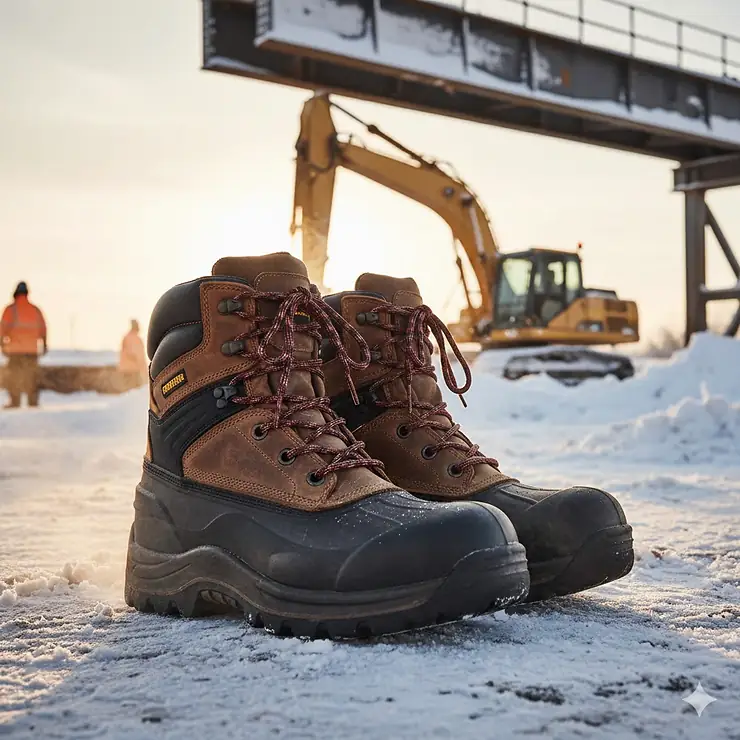
Standing on a frozen jobsite at 6 AM with numb toes isn’t just uncomfortable—it’s dangerous. When temperatures drop below freezing, your feet lose heat 25 times faster if they’re wet, according to the Occupational Safety and Health Administration (OSHA). This can lead to frostbite, hypothermia, and serious cold stress injuries that sideline workers for weeks.
I’ve spent over 15 years working construction in Minnesota winters, and I can tell you firsthand: the right cold weather work boots aren’t optional equipment. They’re the difference between finishing your shift productively and ending up in the ER with cold-related injuries. Whether you’re in construction, utilities, warehousing, or any outdoor trade, proper insulation, waterproofing, and traction can literally save your feet—and potentially your life.
The challenge? Not all “insulated work boots” live up to their promises. Some claim extreme cold protection but leave you shivering after an hour. Others are so bulky you can’t operate equipment safely. Finding boots that balance warmth, protection, mobility, and durability requires understanding insulation ratings, waterproof technology, and safety certifications.
In this comprehensive guide, I’ve researched and analyzed the best cold weather work boots currently available for 2026, focusing on real products with verified performance in subzero conditions. From budget-friendly options around $150 to premium boots exceeding $300, we’ll cover everything you need to make an informed decision.
Quick Comparison Table
| Boot Model | Temp Rating | Insulation | Safety Toe | Price Range | Best For |
|---|---|---|---|---|---|
| Timberland PRO Direct Attach MaxTRAX | -20°F | 400g Thinsulate | Steel Toe | $140-$180 | Construction, General Work |
| Wolverine Hellcat UltraSpring 8″ | -20°F | 600g Thinsulate | CarbonMAX Composite | $160-$200 | Heavy Duty, All-Day Comfort |
| KEEN Davenport 6″ Insulated | -40°F | 400g KEEN.WARM | Composite Toe | $180-$220 | Icy Conditions, Traction |
| Carhartt Yukon Pac 10″ | Extreme Cold | 1000g LiteFire | Composite Toe | $200-$240 | Arctic Conditions |
| Baffin Titan Industrial | -100°F | Multi-Layer System | Steel Toe & Plate | $220-$280 | Extreme Cold, Freezer Work |
| Danner Vicious 8″ Insulated | -20°F | 400g Thinsulate Ultra | Composite Toe | $240-$290 | Premium Quality, Durability |
| RefrigiWear Extreme Pac Boot | -60°F | Premium Insulation | Composite Toe | $250-$320 | Cold Storage, Industrial |
💬 Just one click – help others make better buying decisions too! 😊
Top 7 Cold Weather Work Boots: Expert Analysis
1. Timberland PRO Direct Attach 6″ MaxTRAX Steel Toe Waterproof Insulated Boot
The Timberland PRO Direct Attach represents exceptional value for workers who need reliable cold weather protection without breaking the bank. This boot has earned its reputation through decades of proven performance on construction sites across North America.
Key Specifications:
- 400g Thinsulate insulation rated for -20°F
- Steel safety toe meets ASTM F2413 standards
- Seam-sealed waterproof construction
- MaxTRAX slip-resistant rubber outsole
- Anti-Fatigue Technology footbed
Price Range: $140-$180
Customer Feedback: Workers consistently praise the Direct Attach for its exceptional out-of-the-box comfort and reliable waterproofing. One construction foreman noted, “These are the first work boots I didn’t need to break in painfully.” However, some users mention the steel toe can conduct cold in extreme temperatures below -30°F.
✅ Pros:
- Affordable entry point for quality insulated boots
- Proven durability lasting 1-2 years of heavy use
- Excellent slip resistance on ice and snow
❌ Cons:
- Steel toe conducts cold more than composite
- Slightly heavier than composite toe alternatives
Best For: Budget-conscious workers in moderate to cold climates who prioritize proven reliability and value.
2. Wolverine Hellcat UltraSpring 8″ CarbonMAX Composite Toe Work Boot
The Wolverine Hellcat revolutionizes cold weather work boots by combining traditional durability with innovative comfort technology. The UltraSpring midsole delivers energy return that reduces fatigue during 12-hour shifts.
Key Specifications:
- 600g Thinsulate insulation for enhanced warmth
- CarbonMAX composite safety toe (lighter, non-conductive)
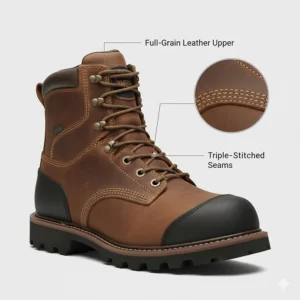
- Waterproof full-grain leather upper
- UltraSpring cushioning for energy return
- Goodyear welt construction
Price Range: $160-$200
Customer Feedback: The Hellcat receives outstanding reviews for all-day comfort. Multiple users report working 10+ hour shifts without foot fatigue. One warehouse worker shared, “After switching from steel toe boots, my feet stay warmer and I’m not exhausted after my shift.” The break-in period is minimal compared to traditional work boots.
✅ Pros:
- Superior comfort with UltraSpring technology
- Composite toe won’t conduct cold
- Excellent for workers who stand/walk constantly
❌ Cons:
- Not rated for extreme sub-zero temperatures
- Premium price point for the features
Best For: Workers who need all-day comfort and moderate cold protection in temperatures down to -20°F.
3. KEEN Davenport 6″ 400g Insulated Waterproof Composite Toe Work Boot
The KEEN Davenport excels where other boots fail: on ice. The KEEN.POLAR TRACTION technology uses micro-glass fibers embedded in the outsole to create a “micro-cleat” effect that grips ice better than traditional rubber compounds.
Key Specifications:
- 400g KEEN.WARM insulation rated to -40°F
- Left/right asymmetrical composite safety toe
- KEEN.DRY waterproof breathable membrane
- KEEN.POLAR TRACTION for ice grip
- 100% non-metallic construction
Price Range: $180-$220
Customer Feedback: Equipment operators and utility workers rave about the traction on icy surfaces. Customers note the boots are particularly excellent for climbing in and out of trucks and equipment in winter conditions. The wider toe box accommodates feet that swell during long shifts.
✅ Pros:
- Exceptional ice traction technology
- Non-metallic (passes through metal detectors)
- Comfortable wider fit for most foot types
❌ Cons:
- Some users find them runs slightly large
- Premium pricing compared to competitors
Best For: Workers who frequently encounter icy conditions and need superior traction for safety.
4. Carhartt Yukon Pac 10″ Waterproof Insulated Composite Toe Boot
The Carhartt Yukon Pac brings serious cold-fighting technology with its 1000g LiteFire insulation system—one of the highest insulation ratings available in a work boot. This boot is engineered specifically for extreme winter conditions.
Key Specifications:
- 1000g LiteFire insulation technology
- Composite toe and heel/ankle reinforcements
- Storm Defender waterproof breathable membrane
- Oil-tanned and PU-coated leathers
- Electrical hazard protection
Price Range: $200-$240
Customer Feedback: Workers in arctic conditions and cold storage facilities consistently report warm, dry feet even in -30°F temperatures. One Alaska pipeline worker commented, “Finally found boots that keep my feet warm during 14-hour outdoor shifts in winter.” The 10-inch height provides excellent snow protection.
✅ Pros:
- Exceptional warmth with 1000g insulation
- Tall shaft keeps snow out
- Built for extreme cold environments
❌ Cons:
- Bulkier than lower insulation boots
- May be too warm for milder winter days
Best For: Workers in extreme cold climates or those working extended shifts in freezing temperatures.
5. Baffin Titan Industrial Waterproof Steel Toe Boot
The Baffin Titan represents the gold standard for extreme cold weather work boots. Polar-tested at both the North and South Poles, these boots are rated for an astounding -100°F comfort level—the coldest rating available in industrial footwear.
Key Specifications:
- Multi-layer inner boot system rated to -100°F
- Steel safety toe and puncture-resistant steel plate
- Fully molded Polar Rubber construction
- Oil and acid-resistant Oarprene upper
- Removable liner for all-season versatility
Price Range: $220-$280
Customer Feedback: Freezer warehouse workers and outdoor professionals in extreme climates report these boots deliver on their extreme cold promise. Users appreciate the removable liner system that allows customization based on conditions. However, the rubber construction takes getting used to compared to leather boots.
✅ Pros:
- Industry-leading cold protection to -100°F
- Polar-tested performance
- Removable liners offer versatility
❌ Cons:
- Heavier and bulkier than leather boots
- Rubber upper feels different than traditional boots
Best For: Cold storage workers, arctic workers, or anyone requiring maximum cold protection in extreme subzero environments.
6. Danner Vicious 8″ Insulated 400G Composite Toe Work Boot
The Danner Vicious combines premium craftsmanship with modern comfort technology. Every hide is rigorously tested before selection, and the GORE-TEX liner ensures waterproof protection without sacrificing breathability.
Key Specifications:
- 400g Thinsulate Ultra insulation
- Non-metallic composite safety toe
- 100% waterproof GORE-TEX lining
- Vibram oil/slip-resistant outsole with 90° heel
- Trailguard TPU shank for support
Price Range: $240-$290
Customer Feedback: Professional tradespeople appreciate the premium quality and no-break-in comfort. One stone mason reported, “These lasted 7 months with daily use, which is exceptional for my line of work.” The GORE-TEX lining keeps feet dry while allowing sweat to escape, preventing that clammy feeling.
✅ Pros:
- Premium materials and construction
- Minimal break-in period required
- Excellent for mixed indoor/outdoor work
❌ Cons:
- Premium price point
- Not rated for extreme subzero temperatures
Best For: Professionals willing to invest in premium quality boots for moderate to cold conditions.
7. RefrigiWear Extreme Pac Boot
The RefrigiWear Extreme Pac Boot was purpose-built for one thing: keeping feet warm and protected in industrial freezers and extreme outdoor cold. With a -60°F comfort rating and BOA Fit System, these boots combine serious cold protection with modern convenience.
Key Specifications:
- Premium insulation rated to -60°F
- BOA Fit System for micro-adjustable fit
- Composite safety toe with puncture-resistant plate
- VitaComfort anti-fatigue system
- Waterproof nylon and leather upper
Price Range: $250-$320
Customer Feedback: Cold storage facility workers and outdoor professionals in extreme climates give these boots exceptional ratings. The BOA system allows quick adjustments without removing gloves—a game-changer in freezing conditions. Users report all-day comfort even during 12+ hour shifts in freezers.
✅ Pros:
- Exceptional -60°F temperature rating
- BOA system for glove-friendly adjustments
- Anti-fatigue technology for long shifts
❌ Cons:
- Higher price point
- BOA system requires occasional maintenance
Best For: Cold storage workers, freezer facility personnel, or outdoor workers in extreme arctic conditions.
✨ Don’t Miss These Exclusive Deals!
🔍 Take your winter safety to the next level with these carefully selected cold weather work boots. Click on any highlighted item above to check current pricing and availability on Amazon. These boots will help you stay safe, warm, and productive all winter long!
Understanding Insulation Ratings: What Do They Mean?
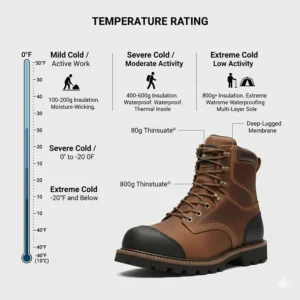
When shopping for cold weather work boots, you’ll encounter various insulation weights measured in grams (g). Here’s what these numbers actually mean for your feet:
Insulation Breakdown
200g Insulation: Light insulation suitable for moderate activity in temperatures down to 30-40°F. Best for early fall or mild winters where you’re moving constantly. Too light for serious cold weather work.
400g Insulation: The sweet spot for most cold weather work boots. Provides warmth in temperatures down to -20°F with moderate activity. This is the minimum insulation level recommended for winter construction and outdoor work in most northern climates.
600g Insulation: Heavy insulation for temperatures ranging from -20°F to -40°F. Ideal for workers who alternate between activity levels or work in severe cold. Some users find this too warm for milder winter days.
800-1000g Insulation: Extreme insulation for arctic conditions or workers with low activity levels (like security guards). Can cause overheating if you’re highly active. Best reserved for temperatures consistently below -30°F.
The key consideration: more insulation isn’t always better. Overinsulated boots cause sweating, which ironically makes your feet colder once moisture builds up. Match your insulation level to your work environment and activity level.
Waterproofing Technologies Explained
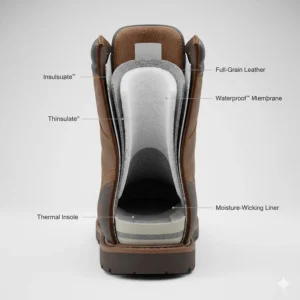
Keeping your feet dry is just as critical as keeping them warm in cold weather. Research shows wet feet lose heat 25 times faster than dry feet, rapidly increasing frostbite and hypothermia risk. Understanding waterproofing technology helps you choose the right protection.
Common Waterproof Technologies
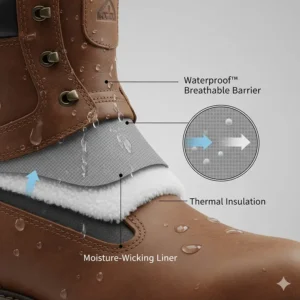
GORE-TEX Membranes: The gold standard in waterproof/breathable technology. GORE-TEX allows water vapor (sweat) to escape while blocking liquid water from entering. Boots with GORE-TEX lining keep feet dry from both external moisture and internal perspiration. However, they command a premium price.
Seam-Sealed Construction: Traditional waterproofing method where boot seams are sealed with special tape or liquid sealant. Effective but requires proper maintenance. Seam-sealed boots may need retreatment every 6-12 months depending on use.
Waterproof Membranes (Proprietary): Brands like Carhartt’s Storm Defender, KEEN.DRY, and Timberland’s waterproof systems offer comparable performance to GORE-TEX at lower price points. While not as proven, many deliver excellent water resistance for most conditions.
Full Rubber Construction: Boots like the Baffin Titan use molded rubber uppers that are inherently 100% waterproof. These excel in extremely wet conditions but don’t breathe as well as membrane systems. Better for short-duration exposure to wet environments.
For maximum cold weather protection, choose boots with waterproof ratings clearly stated and customer reviews confirming water resistance in real-world conditions.
Safety Toe Options: Choosing the Right Protection
Work boots come with different safety toe options, each with distinct advantages for cold weather work:
Steel Toe
Advantages: Proven protection meeting ASTM F2413 standards, typically the most affordable safety toe option, extremely durable under repeated impacts.
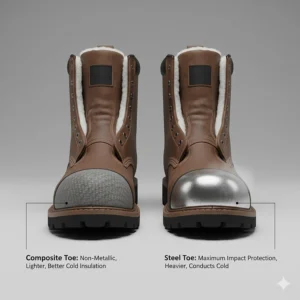
Cold Weather Considerations: Steel conducts cold directly to your feet in freezing temperatures. Below -20°F, steel toe boots feel noticeably colder than composite alternatives. Many workers add insulated toe caps or extra thick socks to compensate.
Composite Toe
Advantages: Non-conductive (won’t transfer cold), 30% lighter than steel, won’t trigger metal detectors, meets the same ASTM F2413 safety standards.
Cold Weather Considerations: Superior choice for cold weather work. The non-metallic construction prevents cold transmission. Workers report significantly warmer toes in composite boots compared to steel toe alternatives.
Alloy Toe
Advantages: Lighter than steel but stronger than composite, still metallic so it conducts some cold but less than steel.
Cold Weather Considerations: Middle-ground option between steel and composite. Provides good protection with moderate cold conductivity.
For cold weather work boots, composite toe is generally the superior choice unless you have specific requirements for steel toe protection. The warmth benefit outweighs the slightly higher cost.
Outsole Technologies for Ice and Snow Traction
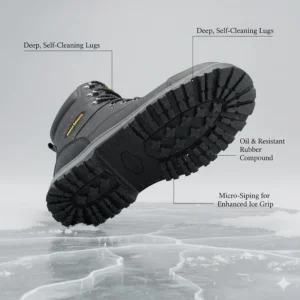
Slips, trips, and falls account for a significant portion of winter workplace injuries. The right outsole technology dramatically improves safety on ice and snow.
Advanced Traction Technologies
Vibram Arctic Grip: Uses proprietary compounds with embedded glass fibers that bite into ice. Laboratory testing shows 3-4x better grip on wet ice compared to traditional rubber. Featured in premium boots like Wolverine and Danner models.
KEEN.POLAR TRACTION: Micro-glass fiber technology creating thousands of tiny contact points on ice. Exceptionally effective on wet ice and black ice conditions. The KEEN Davenport features this technology.
Michelin Ice Control: Automotive-grade rubber compounds designed for icy conditions. Provides excellent wet/dry traction but premium pricing.
Traditional Lug Patterns: Deep, aggressive tread patterns work well in snow but offer limited ice traction. Look for lugs with directional patterns and multiple edges for better snow evacuation.
Specialized Winter Compounds: Rubber formulated to stay flexible in extreme cold. Standard rubber hardens in freezing temperatures, losing grip. Winter-specific compounds maintain flexibility down to -40°F or lower.
For maximum safety in winter conditions, prioritize boots with specialized ice traction technology over simply aggressive tread patterns.
Sizing and Fit Considerations for Cold Weather Boots
Getting the right fit in cold weather work boots differs from standard work boot sizing due to insulation thickness and sock requirements.
Sizing Guidelines
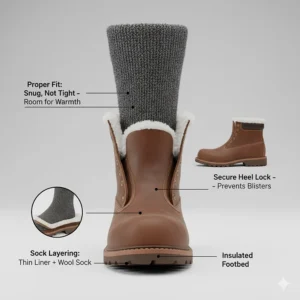
Account for Thick Socks: Winter work requires thermal socks, often significantly thicker than summer options. When trying on cold weather boots, wear the socks you’ll actually use on the job. Many workers find they need a half-size larger than their normal work boot size.
Toe Room is Critical: Your toes need to wiggle freely for proper circulation. Tight-fitting boots restrict blood flow, making feet colder regardless of insulation level. Allow 1/2 inch of space between your longest toe and the boot’s end.
Width Considerations: Insulated boots often feel snugger due to interior lining thickness. If you typically wear standard width, consider trying wide sizes in heavily insulated boots.
Break-In Period: Heavily insulated boots may require 5-10 hours of wear to break in properly. The interior materials compress slightly with use, creating a more custom fit. Don’t judge comfort solely on first wear.
Ankle and Calf Fit: Taller boots need adequate room around the ankle and calf to allow blood circulation. Boots that are too tight around these areas cause cold feet by restricting blood flow.
Try boots on in the afternoon when your feet are slightly swollen from daily activity for the most accurate fit assessment.
Maintenance Tips to Extend Boot Life
Quality cold weather work boots represent a significant investment. Proper maintenance extends their lifespan and maintains performance.
Regular Maintenance Schedule
Daily Care:
- Remove excess mud and snow after each use with a soft brush
- Allow boots to air dry away from direct heat sources
- Never place wet boots near heaters or furnaces (damages adhesives)
- Insert boot dryers or newspaper to absorb interior moisture
Weekly Maintenance:
- Inspect for damage, loose stitching, or sole separation
- Clean leather uppers with damp cloth and mild soap
- Check laces and hardware for wear
- Ensure waterproof membranes show no cracks or damage
Monthly Deep Cleaning:
- Apply leather conditioner to prevent cracking and drying
- Treat seams with waterproofing compound
- Replace worn laces before they break on the job
- Clean outsoles to remove embedded stones and debris
Seasonal Storage:
- Clean thoroughly before summer storage
- Apply conditioner to all leather surfaces
- Store in cool, dry location away from sunlight
- Use boot trees or stuff with newspaper to maintain shape
When to Replace:
- Outsoles worn smooth (no traction remaining)
- Waterproofing fails despite retreatment
- Structural damage to toe caps or heels
- Interior comfort systems compressed beyond recovery
- Any safety feature compromise (damaged toe cap, separated sole)
Most quality cold weather work boots last 1-2 years with proper maintenance and daily use. Premium boots can exceed 3 years with excellent care.
Price vs. Value: Making the Right Investment
Cold weather work boots range from $100 budget options to $350+ premium models. Understanding the price-to-value relationship helps you invest wisely.
Budget Tier ($100-$150)
What You Get: Basic insulation (200-400g), standard waterproofing, steel toe safety, proven but older technologies.
Best For: Workers in moderate climates with occasional cold exposure, those on tight budgets, or situations where boots face extreme wear requiring frequent replacement.
Example: Timberland PRO Direct Attach models offer exceptional value in this range.
Mid-Range ($150-$225)
What You Get: Better insulation (400-600g), composite safety toes, improved waterproofing systems, enhanced comfort features, better outsole technologies.
Best For: Most cold weather workers who need reliable daily protection, good balance of features and affordability.
Examples: Wolverine Hellcat, KEEN Davenport, Carhartt models deliver strong performance in this tier.
Premium Tier ($225-$350)
What You Get: Extreme insulation ratings, premium materials (GORE-TEX, Vibram Arctic Grip), advanced comfort systems, superior durability, extreme cold ratings.
Best For: Professional tradespeople who demand maximum performance, workers in extreme conditions, those who can expense boots through employers.
Examples: Baffin Titan, Danner Vicious, RefrigiWear Extreme series justify premium pricing with exceptional performance.
Value Calculation
Consider total cost of ownership: A $150 boot lasting one winter costs $150 per year. A $300 boot lasting three winters costs $100 per year. Factor in:
- Expected lifespan based on your work environment
- Comfort during 40+ hour work weeks
- Safety features preventing injuries
- Temperature rating matching your climate needs
- Warranty coverage and brand reputation
For most workers, mid-range boots ($150-$225) offer the best overall value, delivering quality features without excessive cost.
Common Mistakes When Buying Cold Weather Work Boots
Avoid these frequent purchasing errors that leave workers disappointed with their boots:
Mistake #1: Choosing Insulation Rating Based Solely on Temperature
The coldest-rated boots aren’t always best. Over-insulated boots cause sweating during active work, making feet colder. Match insulation to your activity level and typical work environment, not just the lowest temperature you might encounter.
Mistake #2: Ignoring Waterproofing Quality
Cheap waterproofing fails after weeks of use. Invest in proven waterproof technologies (GORE-TEX, proprietary membranes) backed by customer reviews. Wet feet negate even the best insulation.
Mistake #3: Buying Online Without Understanding Brand Sizing
Different brands fit differently. Danner runs narrow, KEEN runs wide, Wolverine runs true to size. Read detailed sizing reviews before ordering. When possible, try boots on in-store before purchasing online.
Mistake #4: Prioritizing Price Over Fit
Uncomfortable boots cause blisters, fatigue, and reduced productivity. A $200 boot that fits perfectly outperforms a $300 boot that doesn’t. Never compromise on fit to save money.
Mistake #5: Neglecting Break-In Requirements
Some boots require 10-20 hours of gradual break-in. Wearing brand new boots for a full shift often causes blisters and discomfort. Break in boots gradually with shorter wearing periods first.
Mistake #6: Overlooking Safety Certifications
Ensure boots meet required ASTM safety standards for your industry. Some cheaper imports lack proper certification despite claiming safety features.
Mistake #7: Forgetting About Sock Requirements
Quality thermal socks are as important as the boots themselves. Budget $30-50 for proper winter work socks when calculating total investment.
Best Practices for Extreme Cold Working Conditions
Beyond choosing the right boots, these practices optimize foot warmth and safety in extreme cold:
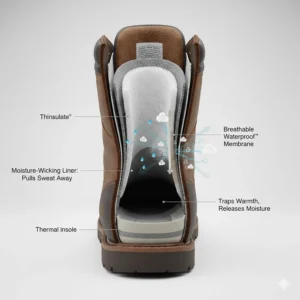
Sock Layering System: Base layer: Thin moisture-wicking liner sock (synthetic or merino wool) Insulation layer: Thick thermal sock (wool blend) Avoid cotton socks which retain moisture
Circulation Techniques:
- Wiggle toes regularly to maintain blood flow
- Take brief breaks to walk around and warm up
- Avoid tight socks that restrict circulation
- Keep overall body warm (cold core = cold extremities)
Moisture Management:
- Change socks mid-shift if they become damp
- Use foot powder to reduce sweating
- Air out boots between shifts
- Never wear the same boots two days consecutively without drying
Recognizing Cold Stress: According to OSHA’s cold stress guidelines, watch for these warning signs:
- Numbness or tingling in toes
- Reddening skin on feet
- Pain or unusual sensations
- Loss of dexterity
Seek warm shelter immediately if experiencing any symptoms. Don’t “tough it out”—cold injuries worsen rapidly.
Emergency Preparedness:
- Keep spare dry socks in your vehicle or job box
- Know the location of heated break areas
- Carry chemical toe warmers for unexpected temperature drops
- Never work alone in extreme cold if possible
Industry-Specific Recommendations
Different industries have unique requirements for cold weather work boots:
Construction & Trades
Priority Features: Composite toe for warmth, 400-600g insulation, slip-resistant outsoles, electrical hazard protection
Recommended Models: Wolverine Hellcat, Timberland PRO Direct Attach, Danner Vicious
Reasoning: Construction requires balance between warmth, safety, and mobility. Composite toes prevent cold transmission during prolonged outdoor work.
Utilities & Linework
Priority Features: Electrical hazard rated, ice traction technology, waterproof, composite or alloy toe
Recommended Models: KEEN Davenport (excellent ice traction), Wolverine models with EH rating
Reasoning: Utility workers frequently climb poles and work on icy surfaces. Superior traction is non-negotiable.
Warehouse & Cold Storage
Priority Features: Extreme cold ratings (-40°F or lower), slip-resistant on freezer floors, anti-fatigue systems
Recommended Models: Baffin Titan, RefrigiWear Extreme Pac, Carhartt Yukon Pac
Reasoning: Cold storage facilities maintain consistent extreme temperatures. Maximum insulation and anti-fatigue features prevent injuries during 8-12 hour shifts.
Transportation & Delivery
Priority Features: Easy on/off design, moderate insulation (prevent overheating in heated vehicles), waterproof
Recommended Models: Mid-range boots with 400g insulation, pull-on styles for convenience
Reasoning: Drivers alternate between heated cabs and outdoor conditions. Moderate insulation prevents excessive temperature fluctuations.
Agriculture & Farming
Priority Features: Waterproof, chemical resistant, tall shafts, aggressive traction
Recommended Models: Baffin Titan (chemical resistant), Carhartt Yukon Pac (tall shaft)
Reasoning: Farm work involves exposure to chemicals, manure, and deep snow. Waterproofing and shaft height are critical.
FAQ
❓ What is the best insulation rating for cold weather work boots?
❓ Are composite toe boots warmer than steel toe in winter?
❓ How do I prevent my feet from sweating in insulated work boots?
❓ Can I wear cold weather work boots in warmer temperatures?
❓ How often should I replace cold weather work boots?
Conclusion: Investing in Your Foot Safety and Comfort
Choosing the right cold weather work boots isn’t just about comfort—it’s about protecting yourself from serious cold-related injuries that can end careers. From my years working Minnesota construction sites to researching hundreds of boot models, one truth remains constant: proper footwear is the foundation of winter work safety.
The seven boots reviewed in this guide represent the best options currently available for 2026, each excelling in specific conditions and price points. Whether you need budget-friendly reliability from the Timberland PRO Direct Attach, all-day comfort from the Wolverine Hellcat, superior ice traction from the KEEN Davenport, extreme cold protection from the Baffin Titan, or premium craftsmanship from the Danner Vicious, there’s an option perfectly suited to your needs.
Remember these key takeaways when making your decision:
- Match insulation rating to your activity level and environment, not just temperature
- Composite toes provide significantly better warmth than steel in cold conditions
- Waterproofing quality matters more than insulation in wet winter conditions
- Proper fit trumps all other features—never compromise on comfort
- Quality boots cost $150-300 but prevent injuries worth thousands in medical bills
Winter jobsites demand respect, preparation, and the right equipment. Your feet carry you through every shift, and protecting them with quality cold weather work boots is an investment that pays dividends in comfort, safety, and productivity. Don’t let cold feet slow you down this winter—choose boots that match your specific needs and work environment.
Stay warm, stay safe, and keep building, no matter what Mother Nature throws at you. Your feet will thank you.
Recommended for You
- 7 Best Cold Weather Fishing Clothes 2026 That Actually Work
- 7 Best Cold Weather Fishing Apparel for 2025
- 7 Best Cold Weather Fishing Gear 2025 (Expert Tested)
Disclaimer: This article contains affiliate links. If you purchase products through these links, we may earn a small commission at no additional cost to you.
✨ Found this helpful? Share it with your friends! 💬🤗
