

In This Article
A women’s hike hat is a lightweight, sun-protective hat built for trail use. It combines a wide brim or neck coverage, a UPF-rated or tightly woven fabric, ventilation for sweaty climbs, and an adjustable fit that stays put in wind. The best women’s hike hat shades your face, ears and neck without cooking your head or flattening your ponytail.

Here’s what nobody mentions at the trailhead: sunscreen sweats off by mile two. Your part line browns, granite throws glare up under your chin, and the back of your neck, that strip between collar and braid, quietly roasts. Fabric doesn’t sweat off. The Skin Cancer Foundation recommends a brim of about three inches all the way around and fabric rated UPF 50 or higher, and that’s the yardstick I used for every pick below.
A fair warning about how this guide was built. I worked from manufacturer spec sheets, independent gear-lab testing notes and aggregated retailer reviews. I haven’t worn these hats on a trail, so you won’t find invented “when I tested it” stories here. Where a data point couldn’t be verified, I say so plainly.
Seven hats made the cut, spanning budget, mid-range and premium, plus one cold-weather pick because it’s late October and the shoulder season is real. Some are women’s-specific, some are unisex hats that happen to suit women hikers well, and every one earns its place on a spec-and-review basis. Let’s get into it.
Quick Comparison: 7 Best Women’s Hike Hats at a Glance
Need the short version? This table is your cheat sheet. Prices are ranges based on what retailers listed at the time of research and will vary, so check current pricing before you buy.
| Hat | Best For | Standout Feature | Price Range |
|---|---|---|---|
| Sunday Afternoons Ultra Adventure Hat | All-day sun, exposed trails | 6-inch neck cape, folding brim | Around $40-$50 |
| Wallaroo Sanitas | Windy ridges, long hair | 3¾-inch brim, chinstrap, ponytail opening | Low-$50s |
| Outdoor Research Sombriolet | Wind, water, rugged use | Foam-stiffened brim that floats | Roughly $45-$70 |
| Columbia Bora Bora Booney II | Budget buyers, larger heads | 3-inch brim, mesh vent | Around $25-$35 |
| Outdoor Research Sun Runner Cap | Trail runners, variable weather | Removable neck cape | Around $40 |
| Sunday Afternoons Sun Seeker Hat | Maximum face shade | 4¼-inch crescent brim, ponytail hole | Mid-$30s to about $40 |
| Smartwool Merino 250 Cuffed Beanie | Cold alpine starts | Double-layer merino | Around $30-$35 |
Look at the spread. If shade is your only priority, the Sun Seeker and Wallaroo Sanitas have the widest brims here. If you want coverage that adapts, the Sun Runner wins on flexibility, though its detachable cape changes the sun-protection math (more on that below). And if the budget is tight, the Bora Bora Booney delivers the SCF-recommended brim width for roughly the price of lunch.
💬 Just one click — help others make better buying decisions too!😊
Top 7 Women’s Hike Hats: Expert Analysis
Every pick below pairs real specs with what those specs mean on a trail. Review sentiment is aggregated from retailer pages and independent testers, never invented.
1. Sunday Afternoons Ultra Adventure Hat — best all-rounder for long, sun-soaked days
The Ultra Adventure wins by doing the unglamorous things well: shade, airflow and packability. Its UPF 50+ fabric pairs a brim of roughly 3¼-3½ inches (sources differ slightly) with a 6-inch neck cape, which is the coverage the Skin Cancer Foundation’s guidance points toward. At about 2.6 ounces, it’s easy to forget you’re wearing it. The “reverse clamshell” brim folds upward, so you can stuff the hat in a pack without a permanent crease.
For women hikers, the cape is the quiet hero. It shades the strip of neck that a ponytail or braid leaves exposed, and it keeps a wide brim from knocking against your pack. Independent testers at OutdoorGearLab gave it top marks in every category except style and singled out its ventilation and durability. The mesh vents aren’t UPF-rated, though, so very short hair or a thin part line is worth a thought.
Reviewers on major outdoor-retailer pages are overwhelmingly positive, and several mention owning multiple Sunday Afternoons hats.
Pros:
- ✅ UPF 50+ fabric with a 6-inch neck cape
- ✅ Folding brim packs without creasing
- ✅ Excellent ventilation at about 2.6 ounces
Cons:
- ❌ Mesh crown vents aren’t UPF-rated
- ❌ Function clearly beats fashion here
Expect to pay around $40-$50, which is strong value for the coverage.

2. Wallaroo Sanitas — Boulder-named wide brim with a hidden ponytail opening
Wallaroo, an Australian hat company, named the Sanitas after a favorite hike in Boulder, Colorado, and the design reads like it was built for trails. The brim runs 3¾ inches, comfortably past the 3-inch guideline. The UPF 50+ fabric is described as blocking about 97.5% of UV, based on rating by the Australian Radiation Protection Agency. A chinstrap keeps it on during gusty ridge walks, and the hat packs flat.
The hidden opening is the feature long-haired hikers will notice. Instead of mashing a ponytail through an adjuster or flattening a bun against the crown, you get a purpose-built exit. The listed crown size is medium (58 cm), so check measurements before ordering, especially if your head runs small or large.
One honest limitation: I couldn’t find enough independent reviews of this specific model to summarize real customer sentiment. Treat it as a spec-led pick and read current reviews before you buy.
Pros:
- ✅ 3¾-inch brim beats the recommended minimum
- ✅ Chinstrap plus ponytail opening
- ✅ Packs flat and dries quickly
Cons:
- ❌ Little independent review data found
- ❌ Listed crown size may not suit every head
It sits in the low-$50s range from the maker, a fair premium for the wind-ready design.
3. Outdoor Research Sombriolet — foam-stiffened brim that floats and shrugs off wind
The Sombriolet is the hat for people whose trails include wind, water or both. It’s UPF 50+, weighs about 88 grams (roughly 3.1 ounces), and uses a foam-stiffened, varied-width brim edged with piping. In practice, that means the brim holds its shape in a gale and floats if it ends up in a creek. A mesh-lined crown, side vents, a wicking headband, a drawcord and a removable chin cord round out the kit.
OutdoorGearLab praised its wind performance and decent sun protection, but noted that its breathability trailed some lighter hats. Fit is the recurring theme: one tester advised sizing up so the brim doesn’t dig in, while a Trailspace reviewer found their usual size too big. Measure your head instead of guessing.
Long-term sentiment is encouraging. One retailer reviewer reports daily wear for years, and others call it a favorite hiking hat. A couple of buyers noted that newer versions look different from older ones.
Pros:
- ✅ Wind-resistant foam brim with piping
- ✅ Floats if dropped in water
- ✅ Drawcord and removable chin cord
Cons:
- ❌ Sizing reports are inconsistent
- ❌ Runs warmer than lighter nylon hats
Roughly $45-$70 depending on retailer. It’s premium money, worth it for windy or paddling days.
4. Columbia Bora Bora Booney II — budget workhorse with a true 3-inch brim
The Bora Bora Booney proves that a good women’s hike hat doesn’t need a three-figure price tag. It has a 3-inch brim all the way around, UPF 50 fabric, a mesh vent panel, a wicking sweatband and a drawcord with a chin strap. That brim width lines up with the Skin Cancer Foundation’s baseline.
The catch is fit. It comes in one size, reportedly up to about 24.5 inches around. OutdoorGearLab found it loose on testers and noted it stretched when wet, so smaller heads may be swimming in it. Trailspace’s reviewer also pointed out that, without a brim wire, the hat packs flat but the brim can flap in wind and sag when soaked. That’s a trade-off worth knowing before a windy summit day.
Retailer reviews run high, with buyers praising its light weight, airflow and washability.
Pros:
- ✅ Meets the 3-inch brim guideline cheaply
- ✅ Lightweight, washable and well ventilated
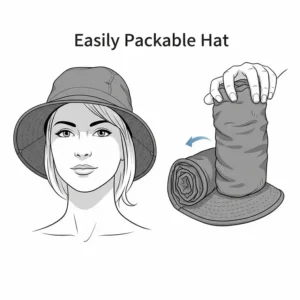
- ✅ Packs easily with no brim wire
Cons:
- ❌ One size can run large
- ❌ Brim flaps in wind and sags when wet
Around $25-$35 makes this the best value on the list for larger heads.
5. Outdoor Research Sun Runner Cap — two hats in one for variable days
The Sun Runner is a baseball cap with a snap-on, 10.75-inch cape. Cape on, it covers your ears and neck on blazing exposed stretches; cape off, it behaves like an ordinary cap on cloudy days or under a bike helmet. It has a 2.75-inch brim, mesh side panels, a wicking headband and a quick-drying nylon build. The cape is listed at UPF 40+, and some listings cite lower numbers for the cap fabric, so check the current spec.
Here’s the nuance most buyers miss. The Skin Cancer Foundation’s guidance calls for a 3-inch brim, or a 3-inch bill with a permanently attached drape. The Sun Runner has a shorter brim and a detachable cape, so it doesn’t strictly meet that standard. OutdoorGearLab also noted it’s significantly less protective without the cape and that the side mesh could expose a thin part line.
Retailer reviews are strong, with buyers calling it excellent in exposed terrain. One independent reviewer flagged stitching and sizing concerns.
Pros:
- ✅ Cape snaps off for flexible coverage
- ✅ Low-profile trail-running look
- ✅ Water-resistant, quick-drying fabric
Cons:
- ❌ Short brim and detachable cape
- ❌ Sizing can be tricky to judge
Around $40; a smart pick if you’ll actually use both modes.
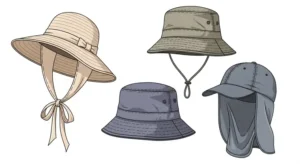
6. Sunday Afternoons Sun Seeker Hat — women-specific crescent brim for maximum face shade
The Sun Seeker is built specifically as a women’s sun hat, and its crescent brim is the widest here at 4¼ inches. The nylon hat is UPF 50+ (mesh not rated), weighs 2.3 ounces, and adds a ponytail hole, crown ventilation, a wicking sweatband and an adjustable chinstrap. It’s water and stain resistant too.
That big brim shades your whole face, which is wonderful on open, shadeless trails and less wonderful in a crosswind. The chinstrap helps, but expect more sail than the compact Ultra Adventure. One retailer page lists about a 4.1 average with 84% of reviewers recommending it across a modest sample, and buyers praise the shade and style. The most specific complaint is that the adjustable tie can only make the hat smaller, so women with larger heads should be careful.
Pros:
- ✅ Widest brim in this lineup
- ✅ Ponytail hole and crown vents
- ✅ Water and stain resistant
Cons:
- ❌ Adjuster only tightens, not loosens
- ❌ Wide brim catches wind on ridges
Expect mid-$30s to about $40, good value for a hat this generous with shade.
7. Smartwool Merino 250 Cuffed Beanie — cold-snap insurance for shoulder-season starts
Not every women’s hike hat is about sun. Alpine mornings in autumn start cold, and the Merino 250 Beanie handles that job with 100% merino wool, a double-layered interlock knit, a roll cuff that covers your ears and a one-size fit of roughly 21.5-23.5 inches. Merino regulates temperature and resists odor, so it works for multi-day trips.
One data quirk: listed weights vary from about 1 ounce to about 2 ounces depending on retailer, so don’t rely on the spec sheet. Review sentiment is strong. It averages around 4.6 stars on both REI and Amazon, with buyers calling it warm, soft and not itchy. A few found the fit quirky or the knit thin, which fits with its lightweight design. It’s a shoulder-season layer, not a deep-winter hat, and it provides no sun protection.
Pros:
- ✅ Soft merino without the itch
- ✅ Breathable warmth that dries quickly
- ✅ Tiny and light in a pocket
Cons:
- ❌ Thin for truly frigid conditions
- ❌ Offers no sun protection
Roughly $30-$35, a dependable layer for cold starts.
For a quick side-by-side of coverage and weight, here are the specs as listed by manufacturers and retailers:
| Hat | Coverage | UPF Claim | Weight |
|---|---|---|---|
| Sunday Afternoons Ultra Adventure Hat | About 3¼-3½” brim, 6″ cape | 50+ (mesh not rated) | 2.6 oz |
| Wallaroo Sanitas | 3¾” brim | 50+ | Not listed |
| Outdoor Research Sombriolet | Varied-width foam brim | 50+ | About 3.1 oz |
| Columbia Bora Bora Booney II | 3″ brim | 50 | Not listed |
| Outdoor Research Sun Runner Cap | 2.75″ brim, 10.75″ cape | 40+ (cape) | About 2.8 oz |
| Sunday Afternoons Sun Seeker Hat | 4¼” crescent brim | 50+ (mesh not rated) | 2.3 oz |
| Smartwool Merino 250 Cuffed Beanie | Ear-covering cuff | Not applicable | About 1-2 oz (varies) |
Read across the rows and a pattern emerges: the lightest options give up either brim width or ventilation coverage. The Ultra Adventure and Sun Seeker balance weight and shade best, while the Sombriolet trades a few ounces for wind stability. If weight matters most to you, the cape-style designs spread coverage across the neck instead of piling it into a heavy brim.
How to Choose a Women’s Hike Hat
Choosing a women’s hike hat comes down to six decisions, in roughly this order:
- Check the UPF rating first. Aim for UPF 50+. UPF is the ratio of sunburn-causing UV without and with the fabric, so a higher number means less UV reaches your skin.
- Measure the brim. Three inches all around is the practical floor for face coverage. Wider is better in open terrain, but wind sensitivity rises with it.
- Decide on neck coverage. A permanent cape or neck flap protects the part a brim misses. A removable one is more flexible but offers less guaranteed protection.
- Prioritize ventilation. Mesh panels and crown vents keep climbs bearable, but remember that mesh is usually not UPF-rated.
- Plan for your hair. Long hair, braids or buns favor a ponytail hole or a cape-style hat. Short hair makes crown mesh matter more.
- Lock in the fit. Look for a chin cord or chinstrap, an adjustable drawcord and a sweatband. Then measure your head, because “one size” often isn’t.
Notice what isn’t on the list: brand names and style. They matter to your enjoyment, but UPF, brim and fit decide whether the hat does its job.
Women’s Hike Hat vs. Baseball Cap vs. Beanie
A women’s hike hat isn’t the only head covering on the trail, and each alternative has a job. The table lays out where each one shines.
| Hat Type | Sun Protection | Breathability | Packability | Best For |
|---|---|---|---|---|
| Wide-brim women’s hike hat | Highest (face, ears, neck) | Good with mesh vents | Good if brim folds | Sunday Afternoons Ultra Adventure Hat, Wallaroo Sanitas |
| Cap with cape | Moderate to high | Good | Excellent | Outdoor Research Sun Runner Cap |
| Plain baseball cap | Low (front only) | Varies | Excellent | Cloudy days, short walks |
| Beanie | None | Moderate | Excellent | Smartwool Merino 250 Cuffed Beanie for cold mornings |
The takeaway: a plain baseball cap leaves ears and neck unprotected, so it’s a poor sole choice for full-day sun. A cape-style cap like the Sun Runner closes some of that gap but still can’t match the shade of a 3¾-inch brim. Beanies like the Merino 250 Beanie solve a completely different problem, so most hikers end up carrying both a sun hat and a warm layer in shoulder season.
Features That Actually Matter (And Those That Don’t)
Marketing copy loves to pile on features, so let’s sort the useful from the decorative.
Features that matter: UPF 50+ fabric, a brim of at least three inches, a chin cord or chinstrap for wind, a wicking sweatband, and genuine fit adjustment. Dark under-brim fabric is a bonus too, since it cuts glare bouncing up from rock and sand. Packability matters if the hat lives in your pack half the day, and the Ultra Adventure‘s folding brim is a good example.
Features that matter less: fancy patterns, built-in sunglass holders (nice, but not essential), and exaggerated UPF claims. Some budget listings advertise UPF 80+, as with certain FURTALK ponytail hats, while others list UPF 50+. Anything past 50+ is marketing gloss, since the practical benefit over 98% blocking is marginal.
One more thing worth ignoring: “waterproof” claims on summer hats. Water-resistant fabric is handy for light showers, but a true rain hat is a different tool, and a wet hat can reduce sun protection.
✨ Ready to gear up? 🔍 Click any highlighted hat above to check current pricing and availability, then pick the one that fits your trails, your hair and your head. Your future sunburn-free self will thank you!
Common Mistakes When Buying a Women’s Hike Hat
Most hat regrets come from the same handful of mistakes.
Buying a beach hat for the trail. Floppy fashion hats look lovely and fly off at the first ridge gust. Hiking-specific designs add chin cords, stiffened or wired brims and ventilation, which is why the Sombriolet and Wallaroo Sanitas both feature wind-focused details.
Trusting “one size fits all.” The Bora Bora Booney is reported to run large, and the Sun Seeker‘s adjuster only tightens. Measure your head and compare it to the listed size.
Ignoring wear and stretch. Stretching and wear-and-tear reduce a fabric’s UPF, so an old, faded, stretched-out hat protects less than the label promised. Replace hats that look thin or sun-bleached.
Forgetting about mesh. Vents that aren’t UPF-rated can let sun through to a thin part or short hair. If that’s you, choose a hat with a solid crown or wear sunscreen along the part.
Choosing style over coverage. A cute hat you leave in the car protects nobody. Pick the one you’ll actually wear for six hours.
Fit, Setup and Care: Your First 30 Days With a New Women’s Hike Hat
A hat is only as good as its fit, so spend ten minutes dialing it in before the first long hike.
Set the fit at home. Tighten the drawcord or sizing band until the hat sits level with a little room for a sweatband to do its work. Then shake your head. If it slips, tighten the chin cord. On a Wallaroo Sanitas or Sun Seeker, make sure the ponytail opening sits where your hair naturally gathers.
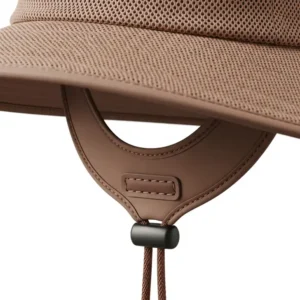
Break in the brim. Foam-stiffened brims like the Sombriolet‘s hold shape, but wired or folding brims need a gentle bend to sit right. Avoid crushing the brim permanently, as some testers reported lasting folds on certain models.
Wash by hand, dry in air. Manufacturer care guidance for similar hats typically calls for cold hand washing and line drying, so check your label. Skip the dryer; heat can warp brims and degrade fabric.
Store it flat or loosely folded. Hang it on a hook to protect the shape.
Watch the first month. If the hat stains from sweat, shifts constantly or digs in, return it while that’s still easy. Fit problems rarely fix themselves.
Real-World Scenarios: Which Women’s Hike Hat Fits Your Trail?
Specs get abstract, so here are three buyer profiles matched to hats, with reasoning.
The weekend day-hiker with a budget. She hikes two or three times a month in mixed sun and shade, spends under $35 and wears a ponytail. The Columbia Bora Bora Booney II gives her the 3-inch brim cheaply. If her head is smaller, she should check fit carefully or consider a ponytail-friendly option like a FURTALK hat, though UPF claims on budget hats deserve a skeptical read.
The ridge-line peak-bagger. She tackles exposed, windy summits most weekends, has long hair and wants maximum coverage. The Wallaroo Sanitas pairs a wide brim with a chinstrap and ponytail opening, while the Ultra Adventure adds that long neck cape. Either one suits open, treeless terrain.
The trail runner who hikes too. She values weight and airflow over brim width and sometimes wears a helmet when biking. The Sun Runner Cap lets her swap between cape-on and cape-off, and its low profile suits fast movement. She should pair it with sunscreen along the part, given the mesh and short brim.
Add a Smartwool Merino 250 Cuffed Beanie to any of these kits for cold starts.
Problem → Solution Guide: Fixing Common Trail Hat Troubles
Even a good hat can misbehave, so here are four fixes.
Problem: the hat blows off. Solution: use the chin cord, tighten the drawcord and choose a stiffened or piped brim like the Sombriolet‘s. Wide, floppy brims like the Sun Seeker‘s benefit most from a snug chinstrap.
Problem: ponytail pressure or hat hair. Solution: pick a hat with a dedicated opening, like the Sun Seeker or Wallaroo Sanitas, or a cape-style design that sits above the hair.
Problem: sweat-soaked forehead. Solution: choose a wicking sweatband and vented crown, and rinse the band regularly so salt doesn’t build up.
Problem: sunburned part or neck. Solution: tightly woven, darker fabrics protect better, and UCSF Health notes that weave, color and stretch all affect UPF. Pair a cape-style hat with sunscreen where mesh or gaps leave skin exposed.
Long-Term Cost & Maintenance: What a Women’s Hike Hat Really Costs
Price per use is where hats get interesting. A $30 hat worn 60 days a year costs pennies per hike, while a $50 hat that lasts twice as long and fits better is often the cheaper option. Durable construction, reliable adjusters and replaceable parts (like a chin cord) extend a hat’s life. Sunday Afternoons says its hiking hats carry a lifetime guarantee, which can improve long-term value, though you should confirm the terms at purchase.
| Hat | Price Range | Value Verdict |
|---|---|---|
| Columbia Bora Bora Booney II | Around $25-$35 | Best budget value |
| Sunday Afternoons Sun Seeker Hat | Mid-$30s to about $40 | Strong value for wide shade |
| Sunday Afternoons Ultra Adventure Hat | Around $40-$50 | Best all-round value |
| Outdoor Research Sun Runner Cap | Around $40 | Good for flexible use |
| Smartwool Merino 250 Cuffed Beanie | Around $30-$35 | Solid seasonal layer |
| Wallaroo Sanitas | Low-$50s | Premium for wind-ready design |
| Outdoor Research Sombriolet | Roughly $45-$70 | Worth it for rough conditions |
Read the table as a ladder. The Bora Bora Booney and Sun Seeker give the most shade per dollar, the Ultra Adventure is the sweet spot between price and features, and the Sombriolet and Sanitas justify their premiums mainly if wind and rough handling are part of your routine. Whichever you pick, treat UPF as perishable: when the fabric thins or fades, retire the hat.
FAQ
❓ What's the best women's hike hat for a small head?
❓ Do I really need a ponytail hole in a women's hike hat?
❓ Can I wash a women's hike hat in the machine?
❓ Are cheap Amazon sun hats good enough for hiking?
❓ Can I wear a women's hike hat in cold weather?
Conclusion
The best women’s hike hat is the one that matches your terrain, your hair and your head. For most hikers, the Sunday Afternoons Ultra Adventure Hat is the safest pick, thanks to its UPF 50+ fabric, neck cape and folding brim. If wind is your enemy, look at the Outdoor Research Sombriolet or Wallaroo Sanitas. If you want the widest face shade, the Sunday Afternoons Sun Seeker Hat delivers. On a tight budget, the Columbia Bora Bora Booney II meets the brim guideline for a modest outlay, and the Outdoor Research Sun Runner Cap suits runners who want flexibility. Pack the Smartwool Merino 250 Cuffed Beanie for cold mornings.
Whatever you choose, remember the basics: UPF 50+, a brim of at least three inches (or a permanent neck drape), real ventilation and a fit that stays put. And replace a hat once it’s worn, stretched or faded.
Recommended for You
- 7 Best Straw Lifeguard Hat Options for Ultimate Sun Protection in 2025
- 10 Best Cooling Golf Hat Options for Ultimate Comfort in Summer 2025
- 7 Best Nylon Hat Options For Ultimate Outdoor Protection in 2025
Disclaimer: This article contains affiliate links. As an Amazon Associate, I earn from qualifying purchases. If you purchase products through these links, we may earn a small commission at no additional cost to you.
✨ Found this helpful? Share it with your friends! 💬🤗
