
In This Article
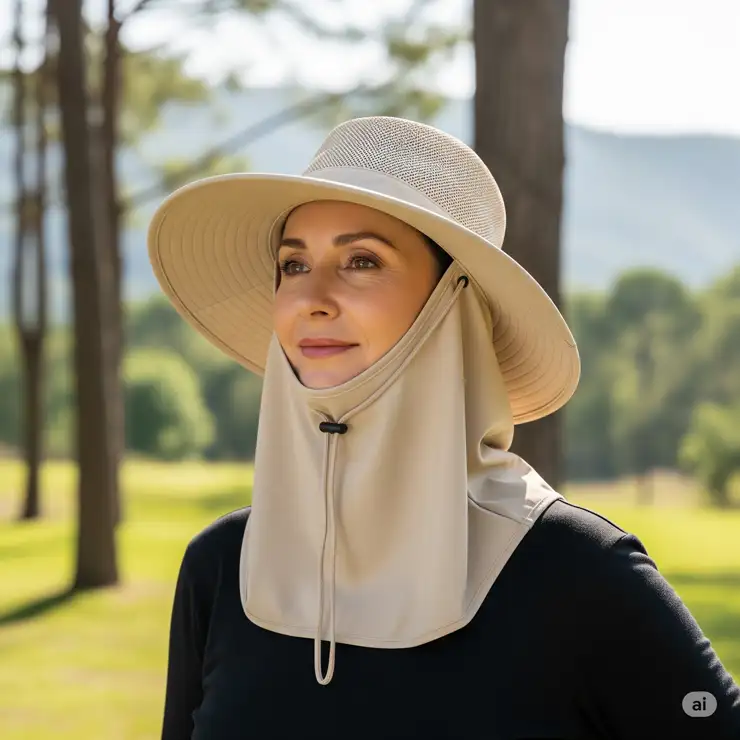
A hat with neck cover is a sun hat that adds a fabric flap, cape, or drape to the back of the brim. It shades your neck and ears, the spots a standard cap leaves exposed. Most pair UPF 50+ fabric with a brim of about three inches or more. They suit hiking, fishing, gardening, and long days outdoors.

Here is the thing about your neck: it never gets a break. It sits behind you, out of sight and out of mind, while you squint at a trail, a fishing line, or a tomato bed. Then the sun finds it. The Skin Cancer Foundation notes that sun-protective clothing blocks UV without the reapplication hassle of sunscreen. That makes a hat with neck cover one of the easiest upgrades in your outdoor kit.
Skeptical? Fair. Neck-flap hats have a reputation. Some look like they were designed by a committee of beekeepers. Some trap heat like a tea cozy. But the category has quietly grown up. Today’s best options have removable capes, mesh vents, and brims that don’t flop into your eyes.
This guide compares seven real, widely available options. It draws on manufacturer specs and aggregated review themes, with no invented testing and no fake quotes. You’ll see what each spec means in practice, who each hat suits, and where each one disappoints. We also cover how to choose, how to avoid expensive mistakes, and how to keep a hat with neck cover working for years. Let’s find you a hat that covers your neck without cooking your head.
Quick Comparison Table: Top Hat With Neck Cover Picks at a Glance
| Hat | Neck Coverage Style | Standout Trait | Price Tier | Best For |
|---|---|---|---|---|
| Sunday Afternoons Adventure Hat | Sewn-in 7.5-inch flap | Wide 4-inch sloping brim | Mid-range | Sunday Afternoons Adventure Hat suits all-day hiking and gardening |
| Outdoor Research Sun Runner Cap | Removable wrap-around cape | Cape wraps to the front | Mid-range (low $40s at retailers) | Outdoor Research Sun Runner Cap suits runners and backpackers |
| Sunday Afternoons Sun Guide Cap | Removable 9.5-inch cape | Folds into a pocket | Mid-range | Sunday Afternoons Sun Guide Cap suits travel and fishing |
| BASSDASH UPF 50+ Hat with Removable Face Cover | Neck flap plus face cover | Near-total coverage | Budget to mid | BASSDASH UPF 50+ Hat with Removable Face Cover suits harsh-sun days |
| TOP-EX Cooling Sun Hat with Neck Flap | Long sewn flap | Oversized sizing options | Budget to mid | TOP-EX Cooling Sun Hat with Neck Flap suits larger heads |
| HOME PREFER Mesh Sun Hat with Neck Flap | Full flap with mesh vents | Ventilation focus | Budget | HOME PREFER Mesh Sun Hat with Neck Flap suits hot, humid work |
| NPQQUAN Sun Hat with Neck Flap | Flap with wide bucket brim | Best-seller popularity | Budget | NPQQUAN Sun Hat with Neck Flap suits first-time buyers |
Read this table as a map of trade-offs, not a ranking. The Sunday Afternoons Adventure Hat and the Outdoor Research Sun Runner Cap cost more because their coverage is better engineered. The budget trio of HOME PREFER, NPQQUAN, and TOP-EX trades refinement for accessibility. The BASSDASH is the outlier: it covers the most skin, but it runs warm.
Price tiers are general categories, not quotes. Always check current price before you buy.
💬 Just one click — help others make better buying decisions too!😊
Top 7 Hat With Neck Cover Options: Expert Analysis
Every hat below gets the same treatment. You get the spec, what it means in real use, who should buy it, and what aggregated reviewers say. Where real review data was thin, I say so instead of filling the gap.
1. Sunday Afternoons Adventure Hat — best all-day coverage for sun-heavy hikes
The Sunday Afternoons Adventure Hat is the closest thing in this list to a complete sun umbrella for your head. It pairs a 4-inch sloping front brim with a 7.5-inch neck flap, and the fabric is UPF 50+ and water-repellent.
On paper, that brim sits above the 3-inch minimum the Skin Cancer Foundation recommends. In practice, it shades your nose, cheeks, and ears, not just your forehead. The flap hangs far enough down to cover the base of your neck, where a shirt collar often fails.
Reviewers consistently describe it as breathable, and several say the neck flap can be worn up or down. Others report good results in intense sun, including Texas heat and long summer hikes. Two recurring complaints are a fit that runs large (one reviewer wished they’d ordered the next size down) and a brim some wish were stiffer.
This hat is for people who live outside: gardeners, hikers, anglers, and anyone with a family history of skin cancer. If you want one hat that handles everything, start here.
Pros:
- ✅ Wide 4-inch brim shades face and ears
- ✅ Flap can be worn up or down
- ✅ UPF 50+ fabric with water-repellent finish
Cons:
- ❌ Runs large; consider sizing down
- ❌ Brim can feel soft without a stiffener
Price tier: mid-range, generally in the $35-$60 range depending on the retailer. For serious sun exposure, the value is strong, so check current price.

2. Outdoor Research Sun Runner Cap — best removable cape for an active lifestyle
The Outdoor Research Sun Runner Cap looks like a baseball cap until you clip on the cape. Then it becomes a neck-and-ear shield. The cap has a 2.75-inch brim, and the cape runs roughly 6 to 7 inches depending on the source and version.
Here’s what the spec sheet won’t tell you: the cape wraps around the front of your neck and snaps shut. That design guards against reflected glare off water or snow, which a plain back flap can’t do. OutdoorGearLab’s review names it the Best Buy among cape-style hats, and also notes that cinching the cape tight restricts airflow and can turn the cap into a heat trap.
Reviewers praise the removable cape, light weight, and easy adjustability. Several are cancer survivors who rely on it. A few found the cape confusing to attach at first. One more complaint: with the cape on, the cap can look a bit goofy.
This is a hat for runners, hikers, and field workers. It also suits anyone who wants a normal-looking cap on cloudy days.
Pros:
- ✅ Cape detaches for a normal cap look
- ✅ Wraps around front for glare protection
- ✅ Lightweight, packs small
Cons:
- ❌ Cinched cape restricts airflow
- ❌ Short 2.75-inch brim without the cape
Price tier: retailers commonly list it in the low $40s. For a dual-purpose cap, that is fair value, though prices vary, so check current price.
3. Sunday Afternoons Sun Guide Cap — best packable cape for travel and fishing
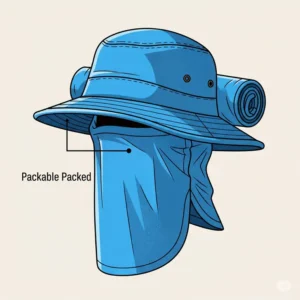
The Sunday Afternoons Sun Guide Cap is the most generous cape in this lineup. It features a removable 9.5-inch cape, lightweight microfiber fabric, and a foldable design that slips into a pocket.
That long cape is the point. With the cap pulled low and the cape buttoned, reviewers describe it as protective from the ears to the collar. For fair-skinned wearers who burn quickly, 9.5 inches is the difference between a pink neck and a normal one. The foldable brim means you can stash the cap in a jacket or day pack instead of crushing it.
One redhead reviewer says it protected her neck, scalp, and face better than any hat she had owned. The counterpoint is durability: one reviewer reported the back stitches failed after three months, so the cape no longer stayed on. Another noted the hat runs a bit large.
This one is for fishing guides, travelers, and daily walkers who want maximum drape without a big floppy brim.
Pros:
- ✅ Long 9.5-inch cape covers neck and ears
- ✅ Folds small for pockets and packs
- ✅ Lightweight microfiber breathes well
Cons:
- ❌ At least one report of cape stitching failing
- ❌ Sizing can run large
Price tier: mid-range, generally in the $30-$50 range. It’s good value if your sample holds up, so check current price.
4. BASSDASH UPF 50+ Hat with Removable Face Cover — most skin covered in one hat
The BASSDASH UPF 50+ Hat with Removable Face Cover is the maximalist option. It combines a wide-brim bucket hat, a descending neck flap, and a removable face cover that wraps from temple to temple.
Think of it as a modular system. With everything on, it covers nearly every inch of skin above your collarbone except your eyes. Strip off the face cover and it becomes a plain neck-flap bucket hat. That flexibility matters because sun intensity changes through the day.
Review roundups flag the trade-off honestly: the face cover adds noticeable warmth in still conditions, and some users still needed sunglasses to complete the eye protection. So this hat shines in wind, on boats, and in strong open-sky glare, not in stagnant humid air.
It’s a great fit for anglers, boaters, and people recovering from procedures who must shield every inch of skin.
Pros:
- ✅ Modular: face cover and flap both removable
- ✅ Covers face, ears, and neck together
- ✅ UPF 50+ fabric claim across panels
Cons:
- ❌ Face cover adds heat in still air
- ❌ Doesn’t replace sunglasses for eyes
Price tier: budget to mid, often under $40. For this much coverage, value is excellent, so check current price.
5. TOP-EX Cooling Sun Hat with Neck Flap — best option for larger heads
The TOP-EX Cooling Sun Hat with Neck Flap earns its place through fit. It offers a long neck flap, UPF 50+ fabric, and oversized XL and XXL options for people who struggle to find hats that fit.
Why does that matter? A hat that squeezes your head sits crooked, rides up, and exposes your neck. A properly sized hat keeps the flap where it belongs. Roundups note the flap drops low enough to cover the cervical spine area and that the wide brim shades the ears and temples without blocking peripheral vision.
The downside is the usual neck-flap one: reviewers note the flap can feel warm in still air with no breeze. Treat it like a windbreaker for the sun. It works best when you’re moving or when there’s airflow.
This hat is for large-headed wearers, gardeners, and anyone who has given up on one-size-fits-all.
Pros:
- ✅ XL and XXL sizing for larger heads
- ✅ Long flap covers lower neck
- ✅ Brim shades ears without blocking vision
Cons:
- ❌ Flap feels warm without a breeze
- ❌ Less packable than a foldable cape cap
Price tier: budget to mid, generally under $40. It’s good value, especially if sizing has frustrated you elsewhere, so check current price.
6. HOME PREFER Mesh Sun Hat with Neck Flap — best ventilation for hot, humid days
The HOME PREFER Mesh Sun Hat with Neck Flap is built around a simple idea: if a neck flap makes your head hot, vent the rest of the hat. It combines a wide brim, mesh vents, and a full neck flap, and the listing advertises UPF 50+ protection.
Mesh is great for airflow but tricky for UV. As the Columbia example later in this guide shows, mesh panels on many sun hats aren’t covered by the UPF rating, so a thin-haired wearer can still burn through them. Check the product’s UPF details before you assume the whole crown is protected.
Roundup reviewers single out the neck protection as a standout. The hat suits people working in humid conditions, like fishing from a dock or weeding a garden in August, where ventilation matters more than fashion. I couldn’t verify a large body of independent reviews for this exact model, so treat the praise as early evidence.
Pros:
- ✅ Mesh vents improve airflow
- ✅ Full neck flap with wide brim
- ✅ Budget-friendly entry into the category
Cons:
- ❌ Mesh areas may lack UPF coverage
- ❌ Limited verified independent reviews
Price tier: budget, usually the lowest in this list. It’s a solid value for casual use, so check current price.
7. NPQQUAN Sun Hat with Neck Flap — best-seller popularity for first-time buyers
The NPQQUAN Sun Hat with Neck Flap is the volume leader. As of July 2026, a market-tracking report on Amazon’s “hat with neck flap” category ranked it at or near the top by estimated monthly sales. It combines UPF 50+ fabric, a wide bucket brim, and a neck flap for hiking, fishing, and safari-style use.
One caution: sales rank measures popularity, not performance. Plenty of mediocre products sell well because of price and placement. What the ranking does tell you is that thousands of buyers found this style of hat appealing, and that it’s a safe place for a first-time buyer to begin.
I couldn’t verify detailed independent review themes for this exact model, so I won’t invent any. Instead, use the spec comparison: a bucket brim plus flap is a proven layout, and the price tier makes it a low-risk experiment.
It’s a good starter hat for casual hikers and beachgoers.
Pros:
- ✅ Popular, proven bucket-and-flap design
- ✅ UPF 50+ fabric claim
- ✅ Low-risk price for first-time buyers
Cons:
- ❌ Limited independent testing available
- ❌ Popularity isn’t proof of durability
Price tier: budget, generally among the lowest in the category. It’s a good value starter, so check current price.
Top 7 Comparison: Specs and Real-World Meaning
| Hat | Neck Coverage | Ventilation | Removable Parts | Best For |
|---|---|---|---|---|
| Sunday Afternoons Adventure Hat | 7.5-inch flap | Good | Flap flips up | Sunday Afternoons Adventure Hat for all-day sun |
| Outdoor Research Sun Runner Cap | 6-7 inch wrap cape | Fair when cinched | Cape and chin cord | Outdoor Research Sun Runner Cap for active use |
| Sunday Afternoons Sun Guide Cap | 9.5-inch cape | Good | Cape | Sunday Afternoons Sun Guide Cap for travel |
| BASSDASH UPF 50+ Hat with Removable Face Cover | Flap plus face cover | Fair; warm | Face cover | BASSDASH UPF 50+ Hat with Removable Face Cover for harsh sun |
| TOP-EX Cooling Sun Hat with Neck Flap | Long flap | Fair; warm when still | None | TOP-EX Cooling Sun Hat with Neck Flap for large heads |
| HOME PREFER Mesh Sun Hat with Neck Flap | Full flap | Excellent (mesh) | None | HOME PREFER Mesh Sun Hat with Neck Flap for humid days |
| NPQQUAN Sun Hat with Neck Flap | Standard flap | Moderate | None | NPQQUAN Sun Hat with Neck Flap for first-timers |
Notice that “removable” correlates with versatility. The Outdoor Research Sun Runner Cap, Sunday Afternoons Sun Guide Cap, and BASSDASH let you tune coverage to conditions, which matters if your day runs from cool morning to blazing afternoon. The fixed-flap hats are simpler and more durable, but you commit to the warmth all day. If ventilation is your top concern, the HOME PREFER wins on airflow, but verify what its mesh panels actually block.
How to Choose a Hat With Neck Cover
The best hat with neck cover is the one you’ll actually wear. Use these six steps to narrow your choices.
- Check the UPF rating first. UPF 50+ is the target. The Skin Cancer Foundation explains that UPF 50 fabric blocks about 98 percent of the sun’s rays, and a UPF of 30 to 49 still offers very good protection.
- Measure the brim and flap. NBC News summarizes the Skin Cancer Foundation’s guidance: at least a 3-inch brim all around, or a 3-inch bill with a permanently attached drape covering neck and ears.
- Decide fixed or removable. A removable cape suits variable weather. A fixed flap suits people who want one simple, sturdy hat.
- Match ventilation to your climate. Humid regions favor mesh vents and breathable microfiber. Dry heat tolerates denser weaves.
- Confirm the fit and the retention system. A chin cord or drawstring prevents the hat from lifting in wind and exposing your neck.
- Think about packability. If you travel or hike, a foldable brim and a cape that stows flat can decide whether you actually bring it.
Features That Actually Matter (And Those That Don’t)
Marketing copy loves to shout. Most of it is noise. Here’s the filter.
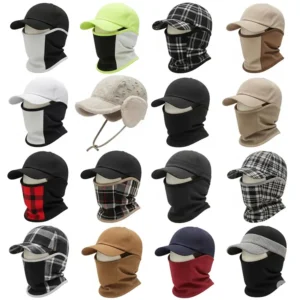
Features that matter: a real UPF rating, flap length, brim width, secure retention, and breathable fabric. Those five features decide whether your skin stays protected and whether you keep wearing the hat. A short flap on a hat with a huge brim can still leave your lower neck bare, so check both.
Features that matter less than they claim: “cooling” labels without any stated mechanism, heavy branding, and an excessive number of colors. A “cooling” claim usually means a lighter fabric or a vent, so ask what the actual mechanism is.
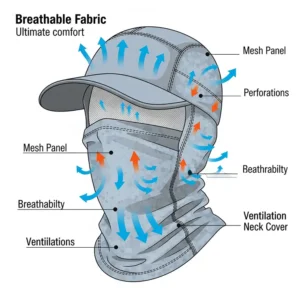
Features to treat cautiously: mesh panels. Mesh helps your head breathe, but many sun hats note that the mesh isn’t covered by the UPF rating. Columbia states this plainly for its Columbia Bora Bora Booney II (a brim-only hat, not a flap hat). If you have thin hair or a shaved head, mesh can become a sunburn window. The practical fix is to look for vents positioned where they’re least exposed, or to wear a thin cap liner underneath.
One more filter: don’t pay extra for features you won’t use. If you’ll never remove a cape, a fixed flap is simpler, lighter, and often cheaper.
Hat With Neck Cover vs. Regular Wide-Brim Hat vs. Baseball Cap
These three styles do different jobs, and the differences are bigger than they look.
A baseball cap shades your forehead and eyes. It leaves ears and neck wide open, which is a real problem: the CDC advises wearing a hat with a brim all the way around, and says baseball-cap wearers should protect ears and neck some other way. A regular wide-brim hat covers more ground but still leaves the back of the neck partly exposed when you look down. A hat with neck cover closes that gap by design.
| Feature | Baseball Cap | Wide-Brim Hat | Hat With Neck Cover |
|---|---|---|---|
| Face shade | Partial | Good | Good |
| Ear coverage | None | Good | Good |
| Neck coverage | None | Partial | Full |
| Heat buildup | Low | Low to moderate | Moderate to high |
| Best For | Casual errands | Strolls, beaches | Hiking, fishing, gardening |
The trade-off is warmth. A neck cover blocks airflow around the back of your head and neck, so it pays for protection with heat. The analysis is simple: if your day is short and cool, a cap with sunscreen on the neck can work. If you’ll spend hours in strong sun, the neck cover wins because you don’t have to reapply anything.
Among the hats reviewed here, the Outdoor Research Sun Runner Cap sits in the middle: it’s a cap that converts to a neck-cover hat. The Sunday Afternoons Adventure Hat is the full-commitment version.
Hat With Neck Cover for Specific Audiences
Different people need different features. Here’s how to match them.
Hikers and runners benefit most from lightweight, removable designs. The Outdoor Research Sun Runner Cap is built for this, with a wrap cape you can flip, remove, or cinch as the day changes.
Anglers and boaters face glare from the water, so they need wide coverage. The BASSDASH UPF 50+ Hat with Removable Face Cover and the Sunday Afternoons Sun Guide Cap both fit.
Gardeners spend hours bent over, which exposes the neck more than any other posture. A long fixed flap like the Sunday Afternoons Adventure Hat or TOP-EX stays in place while you bend.
People with a skin cancer history should treat the highest-coverage options as medical-adjacent gear. Several reviewers of the Outdoor Research Sun Runner Cap and the Sunday Afternoons Sun Tripper Cap line describe using these hats after skin cancer treatment. Talk to your dermatologist, though, because a hat doesn’t replace professional guidance.
Larger-headed wearers should start with TOP-EX for its oversized options.
Budget shoppers and first-timers can try NPQQUAN or HOME PREFER without a big financial commitment.
Practical Usage Guide: Setup, Fit, and Your First 30 Days
Buying the hat is step one. Getting the benefit takes a few habits.
Day one: fit it properly. Put the hat on, tighten the drawstring or chin cord, and look down. The flap should still cover your neck when your chin drops. If it rides up, adjust the cord or consider a smaller size.
Practice the cape. For caps with removable capes, such as the Outdoor Research Sun Runner Cap, practice attaching and removing it at home. Reviewers note it feels confusing at first, then becomes second nature. Feed your head between the chin strap and the back fabric, then snap the front closed.
Week one: test it in the heat. Wear it on a moderate-temperature walk before committing to a hot hike. If it feels too warm, flip the flap up, use a lighter fabric, or switch to a vented option.
Weeks two to four: build the habit. Keep one hat in your car and one by the door so it’s never “back at home.” The best hat is the one within reach.
Common first-month mistakes: buying a size too large (several reviewers mention this), forgetting to wash sweat out of the band, and letting the hat get stretched or soaked, which can reduce UV protection. The Skin Cancer Foundation warns that stretched or wet clothing loses some protective ability.
Real-World Scenarios: Which Hat Fits Which Life
Three quick profiles show how the decision plays out.
Scenario one: the weekend hiker. She hikes six to eight miles every Saturday, mostly in full sun, and hates sweating. Her best match is the Outdoor Research Sun Runner Cap: lightweight, packable, and flexible. She wears the cape in open stretches and removes it in shade. Budget tier: mid-range.
Scenario two: the retiree gardener. He spends three hours a morning weeding and pruning, mostly bent over. He needs a long, secure flap and a wide brim. The Sunday Afternoons Adventure Hat fits, with its 4-inch brim and 7.5-inch flap. If budget is tight, TOP-EX works too, especially if sizing has been a struggle.
Scenario three: the weekend angler. He fishes from a boat, where water glare doubles the exposure. The BASSDASH UPF 50+ Hat with Removable Face Cover gives him the full wrap, and a breezy boat deck reduces the heat penalty. He still needs polarized sunglasses.
The pattern is consistent: match the hat to your posture, climate, and how long you’ll be outside. A hat that suits your life gets worn, and a hat you wear protects you.
Problem → Solution Guide: Fixing Common Hat With Neck Cover Headaches
Problem: “My neck gets too hot.”
Solution: flip the flap up when you’re stationary, choose a vented option like the HOME PREFER Mesh Sun Hat with Neck Flap, or use a removable cape like the Sunday Afternoons Sun Guide Cap and take it off during breaks.
Problem: “The hat blows off in wind.”
Solution: use the chin cord or drawstring every time. The Outdoor Research Sun Runner Cap includes a removable chin cord, and reviewers say it stays put in wind.
Problem: “I still get burned on my cheeks or nose.”
Solution: add a face cover such as the BASSDASH UPF 50+ Hat with Removable Face Cover, or apply sunscreen to uncovered skin. Remember that no hat covers everything.
Problem: “The hat looks silly.”
Solution: choose a removable-cape style. Reviewers of the Outdoor Research Sun Runner Cap note that without the cape it looks like a normal ball cap.
Problem: “The stitching failed.”
Solution: inspect the seams on arrival, keep your receipt, and contact the brand. Reviewers report that Sunday Afternoons has replaced defective hats, though outcomes vary.
Common Mistakes When Buying a Hat With Neck Cover
Most regrets come from the same handful of errors.
Mistake one: ignoring the UPF rating. A flap alone doesn’t guarantee protection. Thin, loosely woven fabric can let UV through. Look for a stated UPF 50+.
Mistake two: buying by looks. A stylish hat that sits crooked or flaps open is a bad hat. Fit and retention matter more than color.
Mistake three: forgetting about the mesh. As noted earlier, mesh vents may not be covered by the UPF rating. If your scalp is exposed, you can still burn.
Mistake four: sizing wrong. Several Sunday Afternoons reviewers say the hats run large. When in doubt, read size charts and sizing notes in recent reviews.
Mistake five: trusting popularity as proof. A best-seller like NPQQUAN is a reasonable choice, but sales volume isn’t a durability test. Compare specs and read recent reviews.
Mistake six: skipping sunscreen and sunglasses. A hat is one layer in a system. The CDC and FDA both recommend combining shade, protective clothing, sunglasses, and sunscreen.
Mistake seven: buying cheap, then replacing repeatedly. A $15 hat that dies after one season costs more than a $40 hat that lasts four.
Long-Term Cost and Maintenance
Hats are cheap compared with dermatology bills, but cost per use still matters.
| Tier | Typical Examples | Expected Trade-Off | Best For |
|---|---|---|---|
| Budget | HOME PREFER, NPQQUAN | Lower build refinement, limited independent reviews | First-time buyers |
| Budget to mid | TOP-EX, BASSDASH | Good coverage, some warmth | Large heads, harsh sun |
| Mid-range | Sunday Afternoons Adventure Hat, Outdoor Research Sun Runner Cap, Sunday Afternoons Sun Guide Cap | Better engineering and longer track records | Frequent outdoor users |
Notice the cost-per-use logic. A mid-range hat worn 60 days a year for four years is 240 wears, which brings the per-use cost to pennies. A budget hat that lasts one season is 60 wears. The mid-range option often wins on long-term value, though budget hats are fine for occasional use.
Maintenance basics: hand-wash in cool water with mild soap, air-dry away from direct heat, and don’t crush the brim in storage. Rinse sweat out regularly, because salt can degrade fabric and stain light colors (one Sunday Afternoons Sun Tripper Cap reviewer reported persistent sweat stains). Avoid stretching or soaking the hat, since both reduce UV protection. Replace it when fabric thins, seams fray, or the brim loses shape.
Safety Guide: Why a Hat With Neck Cover Is Worth It
The statistics are sobering. A CDC sun-safety brochure states that up to 80 percent of skin cancers occur on the head and neck, which is why a wide-brimmed hat that shades your face, ears, scalp, and neck is a smart move. The CDC’s skin cancer resources recommend layering protection: shade, clothing, hats, sunglasses, and sunscreen.
Hat choice matters too. The CDC recommends tightly woven fabric and advises avoiding straw hats that let UV through. Darker colors may add protection. And the Skin Cancer Foundation states that wet or stretched fabric loses some of its UV-blocking power, so a drenched hat is a weaker hat.
A neck cover addresses the exact area many hats miss. But it isn’t magic. Your face, hands, and any exposed skin still need protection, and UV can reflect off water, sand, and snow. Think of the hat as your foundation layer, then add sunglasses and broad-spectrum sunscreen on what’s left.
✨ Ready to Protect Your Neck?
🔍 Take your next outdoor adventure to the next level with one of these carefully chosen hats. Click on any highlighted product name to check current pricing and availability. A good hat with neck cover pays you back every sunny day!
FAQ: Hat With Neck Cover Questions Answered
❓ Does a hat with neck cover really prevent sunburn?
❓ Are removable neck covers better than fixed ones?
❓ Can I wear a hat with neck cover in hot weather?
❓ How do I wash a hat with neck cover?
❓ What UPF rating should I look for?
Conclusion: Pick the Hat You’ll Actually Wear
The neck is the forgotten frontier of sun protection, and a good hat with neck cover fixes that without sunscreen reapplication or fuss. The seven hats here cover a range of needs. The Sunday Afternoons Adventure Hat is the all-rounder for serious sun. The Outdoor Research Sun Runner Cap is the flexible choice for active days. The Sunday Afternoons Sun Guide Cap offers the longest cape in a packable form. The BASSDASH UPF 50+ Hat with Removable Face Cover gives maximum coverage, the TOP-EX Cooling Sun Hat with Neck Flap helps larger heads, the HOME PREFER Mesh Sun Hat with Neck Flap emphasizes airflow, and the NPQQUAN Sun Hat with Neck Flap is a popular, low-risk starter.
Remember the essentials: UPF 50+, a brim of at least three inches, a flap long enough for your posture, and a fit that stays put. Treat the hat as one layer in a larger system that includes sunglasses and sunscreen. And be honest about how you’ll use it, because the best hat is the one that goes on your head every sunny day.
✨ Your neck has been working hard for you. Give it the shade it deserves, and check current prices on your favorite pick today! 🧢☀️
Recommended for You
- 7 Best Women’s Hike Hat Options For Ultimate Sun Protection in 2025
- 7 Best Straw Lifeguard Hat Options for Ultimate Sun Protection in 2025
- 10 Best Cooling Golf Hat Options for Ultimate Comfort in Summer 2025
Disclaimer: This article contains affiliate links. As an Amazon Associate, I earn from qualifying purchases. If you purchase products through these links, we may earn a small commission at no additional cost to you.
✨ Found this helpful? Share it with your friends! 💬🤗
