
In This Article
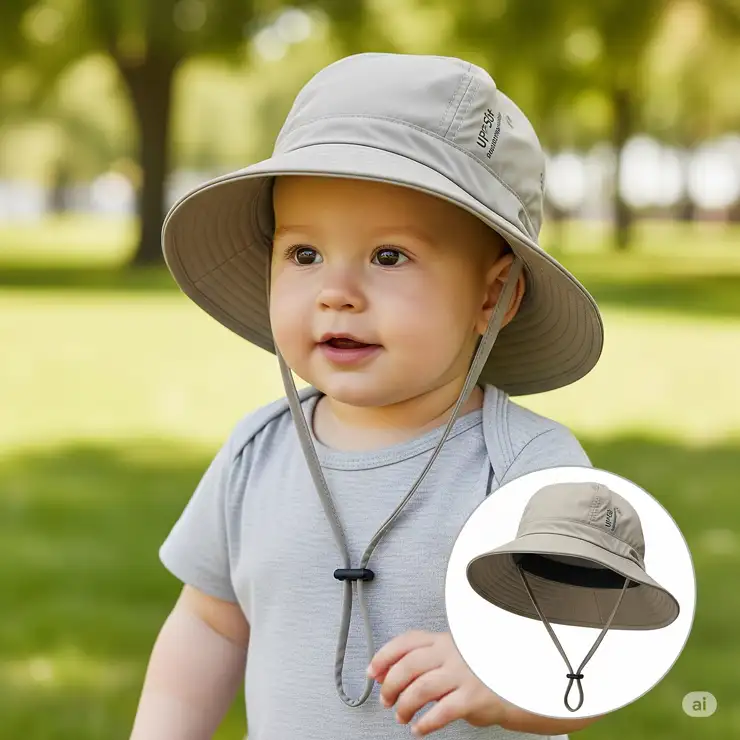
Babies don’t negotiate. They don’t apologize for yanking off a hat at the exact moment the sun hits peak intensity, and they certainly don’t understand why a floppy piece of fabric matters. That’s why choosing the right baby sun hat is less about cuteness and more about engineering: brim depth, fabric rating, strap design and fit.
What is a baby sun hat? A baby sun hat is a brimmed head covering made for infants and toddlers, ideally from UPF 50+ rated fabric, that shades the face, ears and neck from ultraviolet rays. The best designs add a secure chin strap, breathable ventilation and a neck flap or veil. A hat only protects the skin it covers.
The stakes are genuinely worth a few minutes of your time. The FDA and the American Academy of Pediatrics recommend keeping babies under 6 months out of direct sunlight, with a hat that shades the face, neck and ears. They specifically say baseball caps don’t count, because they leave the neck and ears exposed.
So here’s what you’ll get below: seven real, well-reviewed options from budget to premium, honest analysis of what each spec means in practice, and a decision framework for your family. Everything is drawn from published specs and aggregated reviewer sentiment, not invented testing. Consider it the friend who read all the fine print so you don’t have to.
Quick Comparison: Best Baby Sun Hat Options at a Glance
Here’s the snapshot before we get into the details. Prices are approximate ranges at the time of research and may vary, so check current price before buying.
| Product | Standout Feature | Approx. Price Range | Best For |
|---|---|---|---|
| SwimZip Wide Brim Sun Hat | Floats, UPF 50+ certified | $20s | Pool and beach days |
| Sunday Afternoons Kids Play Hat | Neck veil, breakaway strap | $30-$40 | All-day outdoor play |
| Sunday Afternoons Baby SunSprout Hat | Made for 0-6 months | $30s | Newborns and young infants |
| Jan & Jul GRO-with-Me Cotton Adventure Hat | Adjusts as baby grows | $20s | Longevity and cotton lovers |
| SimpliKids Wide Brim Baby Sun Hat | Full neck coverage | Under $20 | Budget buyers |
| Primary Baby Sun Hat | Swimsuit-grade fabric | Around $15-$20 | Soft, itch-free daily wear |
| Patagonia Baby Sun Bucket Hat | Two-in-one design | Premium range | Brand-loyal, eco-minded parents |
Looking at the table, the SimpliKids Wide Brim Baby Sun Hat and Primary Baby Sun Hat offer the strongest protection per dollar. If your baby is under 6 months, the Sunday Afternoons Baby SunSprout Hat is the only pick here sized specifically for that stage. Premium buyers pay extra mainly for fit refinement, durability and brand ethos rather than a higher UPF number.
💬 Just one click — help others make better buying decisions too!😊
Top 7 Baby Sun Hat Picks: Expert Analysis
A quick note on method. Each entry below blends published specifications with the general sentiment found in real reviews and editorial roundups. Where individual reviews couldn’t be verified, I say so rather than guess.
1. SwimZip Wide Brim Sun Hat — floats and stays put in water
Water is where most baby sun hats fail. They get soggy, slip down and stop shading anything. The SwimZip Wide Brim Sun Hat is built around that problem, with UPF 50+ certified fabric, a structured wide brim, venting and a design that floats if it ends up in the pool.
On paper, the structured brim matters more than it sounds. A brim that holds its shape keeps shade over the cheeks and nose instead of collapsing onto your baby’s eyes. The venting helps release heat, which counts because infants don’t regulate temperature as well as adults do. Several roundups name this hat as their top pick for babies, which tells you it’s a consensus favorite rather than a one-site opinion.
It suits families who live near water, whether that’s a backyard splash pad or a vacation beach. Reviewers generally praise how well it stays on during active play. I couldn’t verify a large pool of individual reviews, so treat that as general sentiment rather than a guarantee.
Pros:
- ✅ UPF 50+ certified fabric with wide brim
- ✅ Floats and handles water well
- ✅ Venting keeps the head cooler
Cons:
- ❌ Structured brim is bulkier to pack
- ❌ Fewer fun prints than some competitors
Price: roughly in the $20s. For a water-ready hat, that’s solid value.
2. Sunday Afternoons Kids Play Hat — the neck veil that earns its keep
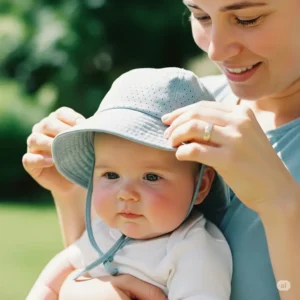
If baby sun hats had a legacy brand, Sunday Afternoons Kids Play Hat would be it. The spec sheet reads like a parent’s wish list: UPF 50+ certified fabric (mesh vents aren’t rated), a down-sloping brim with a floatable foam core, a neck veil, a breakaway chin strap and an external sizing band.
Here’s what those specs mean. The neck veil covers the back of the neck, and it also lets the hat sit comfortably against a stroller or car seat back instead of tipping forward. The breakaway SmartStrap is a safety feature: it releases under pressure, so a snagged hat won’t choke a curious toddler. The external sizing band lets you fine-tune fit as head circumference grows. The baby size covers roughly 6 to 24 months.
A pediatrician-led review site praised the face and neck coverage and the breathable mesh panels. Its one caution was not to fold the brim, because that ruins the shape. It also reminds parents that a hat doesn’t replace sunscreen where sunscreen is appropriate.
Pros:
- ✅ Neck veil shades the back of the neck
- ✅ Breakaway chin strap adds safety
- ✅ External sizing band extends wear
Cons:
- ❌ Brim shouldn’t be folded for storage
- ❌ Pricier than generic alternatives
Price: around the $30-$40 range. The longer lifespan across sizes helps justify it.
3. Sunday Afternoons Baby SunSprout Hat — made for the tiniest heads
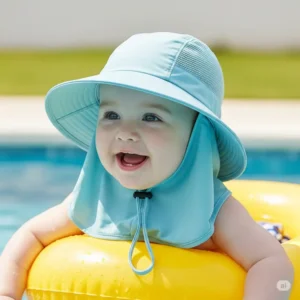
Most hats on the market start at 6 months. That leaves a gap during the stage when sun protection matters most. The Sunday Afternoons Baby SunSprout Hat fills it: it’s sized for infants roughly 0-6 months, with a 2-inch brim, a 4-inch neck flap, UPF 50+ polyester and a quick-release hook-and-loop chin strap.
At about 0.8 ounces, it’s a featherweight, and that’s a feature rather than a footnote. A heavy hat on a newborn’s wobbly neck is a recipe for flopping and fussing. The neck flap addresses exactly what the AAP advises: brimmed hats that shade the neck. Being packable and crushable makes it easy to tuck into a diaper bag.
The 2-inch brim is below the 2½ inches the Skin Cancer Foundation recommends for baby hats, so pair it with stroller shade or an umbrella. That’s the honest trade-off: the neck flap adds coverage, but the brim alone isn’t the whole shield. Reviewer coverage of this specific model was thin in my research, so rely on the specs here.
Pros:
- ✅ Sized specifically for 0-6 months
- ✅ Ultralight, packable fabric
- ✅ Neck flap and quick-release strap
Cons:
- ❌ Brim is shorter than ideal
- ❌ Outgrown in just a few months
Price: around the $30s. Because it’s outgrown quickly, buy it only if you need newborn-specific coverage.
4. Jan & Jul GRO-with-Me Cotton Adventure Hat — grows with your baby
Cotton versus synthetic is a real debate for hot-weather hats, and the Jan & Jul GRO-with-Me Cotton Adventure Hat lands firmly on the cotton side. It combines UPF 50+ rated breathable cotton with an adjustable toggle system, so the same hat fits across multiple stages.
The “grow-with-me” toggle isn’t a gimmick. Babies’ heads change size fast, and a hat that’s snug at 9 months can be a headband at 14. Cotton also tends to feel soft against skin, which helps if your baby has strong opinions about scratchy fabrics. The tradeoff is drying time: cotton stays wet longer than polyester or nylon, so it’s better for dry-land adventures than for water play.
Multiple editorial roundups name this hat their pick for best overall or best toddler option. That’s encouraging, though I couldn’t confirm a large volume of individual customer reviews for this specific model, so check recent buyer feedback before ordering.
Pros:
- ✅ Breathable UPF 50+ rated cotton
- ✅ Adjustable toggle for growing heads
- ✅ Soft feel for sensitive skin
Cons:
- ❌ Slower drying than synthetic hats
- ❌ Less suited to swim use
Price: around the $20s. For parents who want one hat to last a year or more, that’s good value.
5. SimpliKids Wide Brim Baby Sun Hat — best budget baby sun hat
Not every family wants to spend premium money on something a baby might lose at the park. The SimpliKids Wide Brim Baby Sun Hat delivers UPF 50+ fabric at a budget-friendly price, with a wide brim, full neck coverage and an adjustable drawstring.
The full neck coverage is the headline. Plenty of cheap hats skimp on the back of the neck, which is where babies in strollers and carriers get burned. The adjustable drawstring also gives the hat a longer useful life, and the lightweight, quick-drying, breathable fabric keeps comfort up on warm days.
Roundups consistently list it as a budget-friendly, well-reviewed option, which suggests broad satisfaction at the price. As with any budget item, expect fewer refinements, like less structured brims and simpler straps. That’s a fair trade for a hat you won’t panic about losing.
Pros:
- ✅ UPF 50+ fabric at a low cost
- ✅ Full neck coverage included
- ✅ Adjustable drawstring fit
Cons:
- ❌ Brim is less structured
- ❌ Simpler construction overall
Price: under $20. This is the value leader if protection per dollar is your priority.
6. Primary Baby Sun Hat — swimsuit-grade softness
Some hats feel like a compromise. The Primary Baby Sun Hat is made from the same UPF 50+ fabric as the brand’s swimsuits, and one parenting roundup says it holds up to salt water, chlorine and sunscreen without feeling itchy.
That fabric choice has practical implications. Swimwear fabric is designed to survive repeated wet-dry cycles, so the hat shouldn’t degrade quickly through summer. Primary also uses simple, solid colorways that coordinate with almost any outfit, which matters more than you’d think when you’re dressing a squirmy baby in the dark. The roundup highlights chin straps across the brand’s styles.
Honest limitation: Primary’s hats are fairly simple. There’s no breakaway strap feature or foam-core brim called out in my sources, so check the product page for brim depth and strap details before buying.
Pros:
- ✅ Swimsuit-grade UPF 50+ fabric
- ✅ Soft and non-itchy per reviewers
- ✅ Handles salt water and chlorine
Cons:
- ❌ Fewer technical features listed
- ❌ Limited print variety
Price: around the $15-$20 range. It’s affordable, soft and practical.
7. Patagonia Baby Sun Bucket Hat — the two-in-one premium option
Brand loyalty is real, and the Patagonia Baby Sun Bucket Hat speaks to parents who like their gear built to last. One roundup describes it as two hats in one, which points to a reversible or multi-use design.
Premium makers tend to invest in details like stitching, stretch and fit, which show up after months of washing rather than on day one. A bucket silhouette sits closer to the head than a floppy wide-brim style, so it’s less likely to flip up in wind. The compromise is brim depth: bucket brims are typically shorter than wide-brim designs. Confirm the UPF rating and brim measurement on the product page, because my sources didn’t list them clearly.
Verified customer-review data on this model was limited in my research, so lean on the brand’s general reputation for durability rather than on specific review claims.
Pros:
- ✅ Reversible two-in-one versatility
- ✅ Brand known for durable construction
- ✅ Close-fitting bucket shape
Cons:
- ❌ Premium price tag
- ❌ Brim may be shorter than wide-brim picks
Price: sits at the premium end of this group. Check current price before deciding.
Top 7 Baby Sun Hat Comparison: Specs and Value
| Product | Brim/Coverage | Water-Ready | Best For |
|---|---|---|---|
| SwimZip Wide Brim Sun Hat | Wide structured brim, venting | Yes, floats | Beach and pool families |
| Sunday Afternoons Kids Play Hat | Sloped brim plus neck veil | Floatable brim | Active toddlers |
| Sunday Afternoons Baby SunSprout Hat | 2″ brim, 4″ neck flap | Limited | Newborns |
| Jan & Jul GRO-with-Me Cotton Adventure Hat | Wide cotton brim | Not ideal | Dry-day outings |
| SimpliKids Wide Brim Baby Sun Hat | Wide brim, neck coverage | Quick-dry fabric | Budget buyers |
| Primary Baby Sun Hat | Standard brim | Handles salt and chlorine | Everyday wear |
| Patagonia Baby Sun Bucket Hat | Bucket brim | Check product page | Gear loyalists |
Reading across the table, the water-friendly hats cluster around SwimZip Wide Brim Sun Hat, Sunday Afternoons Kids Play Hat and SimpliKids Wide Brim Baby Sun Hat. The real divider is the neck: hats with veils or flaps give noticeably more coverage than plain bucket shapes. If budget matters most, SimpliKids Wide Brim Baby Sun Hat is the practical pick, while Sunday Afternoons Kids Play Hat rewards parents who’ll use it across several seasons.
How to Choose a Baby Sun Hat
Choosing well comes down to a handful of criteria. Work through them in order.
- Check the UPF rating first. Aim for UPF 50+. A UPF 50 fabric allows only about 1/50th of UV rays through, which is why it’s widely described as excellent protection. According to NBC Select’s expert-sourced guide, the Skin Cancer Foundation’s seal requires a minimum of UPF 30, but 50+ is optimal.
- Measure the brim. The Skin Cancer Foundation recommends about a 2½-inch brim for baby and toddler hats and 3 inches for older children. Shallower brims leave the cheeks exposed.
- Demand neck coverage. A flap, veil or cape handles the back of the neck, which is where strollers and carriers expose babies most.
- Insist on a chin strap. A baby sun hat that won’t stay on protects nothing. Breakaway straps add a safety margin.
- Match fabric to activity. Choose quick-dry synthetics for water and breathable cotton for dry days.
- Pick a darker or more saturated color when possible. The Skin Cancer Foundation notes more intense hues absorb more UV than pastels and whites.
- Plan for growth. Adjustable toggles, drawstrings or sizing bands stretch your investment.
Each step filters out weak options quickly. Skip a step and you’ll usually feel it by midsummer.

Features That Actually Matter (And Those That Don’t)
The marketing around a baby sun hat can get noisy. Let’s sort signal from sparkle.
What matters: a verified UPF 50+ rating, a brim of at least about 2½ inches, neck coverage and a chin strap. These four decide whether sun actually reaches your baby’s skin.
What helps but isn’t essential: floatable brims, mesh vents and external sizing bands. They’re quality-of-life features that make the hat easier to live with. One caveat on mesh: manufacturers like Sunday Afternoons note that the vents aren’t UPF-rated, so a mesh panel is a small trade of protection for airflow.
What mostly doesn’t matter: cute ears, pom-poms and decorative bows. They look adorable in photos but add bulk and snag points. Even worse, tiny decorations can be a hazard if they detach. Prints are fine, but treat them as the cherry rather than the sundae.
Does “UPF 50+” always mean the same thing? Not quite. Higher-quality UPF clothing gets its protection from fabric weave and construction, while cheaper garments may rely on chemical treatments that fade with washing. If longevity matters, favor brands that describe the fabric itself as UPF-rated.
Baby Sun Hat vs Other Sun Protection Options
A baby sun hat is one tool among several. Understanding how they compare helps you build a layered plan.
| Option | What It Protects | Limitation | Best For |
|---|---|---|---|
| Baby sun hat | Face, ears, neck, scalp | Only covers what it covers | Every outing |
| Stroller canopy | Whole body, partly | Shifts with sun angle | Walks and errands |
| Beach umbrella or pop-up tent | Whole body | Reflected UV still reaches skin | Beach and park days |
| Sunscreen (6+ months) | Exposed skin | Needs reapplying | Hands, feet, uncovered areas |
| Baseball cap | Forehead only | Leaves neck and ears bare | Not recommended for babies |
The takeaway from the comparison: no single item is enough. A baby sun hat covers the highest-risk zone, while shade covers everything else. For babies under 6 months, shade and clothing are the main strategy, and sunscreen is a limited backup. Reflected UV from sand and water also means shade under an umbrella isn’t a force field, so combine layers.
✨ Don’t Miss These Exclusive Deals!
🔍 Ready to upgrade your sun routine? Click on any highlighted baby sun hat above to check current pricing and availability. A well-chosen hat is the simplest, most effective piece of gear you’ll buy this summer, and your little one will thank you with fewer cranky afternoons!
Common Mistakes When Buying a Baby Sun Hat
Even careful parents make these errors. Here’s what to avoid.
Buying for size next year. A hat that slides over the eyes blocks vision and invites hat-pulling. Choose adjustable styles instead of oversized ones.
Ignoring the neck. A beautiful wide brim means little if the back of the neck is bare in a stroller seat. Neck veils exist for a reason.
Trusting “UV protection” without a rating. Vague claims aren’t the same as a certified UPF rating. If the listing doesn’t state UPF 50+ clearly, move on.
Choosing light colors only. Whites and pastels are less protective than saturated colors, so if you love pale shades, prioritize UPF-rated fabric.
Skipping the strap. A hat without a secure strap becomes a tossed hat within minutes. Breakaway versions balance security with safety.
Treating the hat as a full shield. A hat only protects the skin it covers. Cheeks, arms and legs still need shade, clothing or sunscreen where appropriate.
Washing carelessly. Harsh detergents and heat can wear fabric down and shorten useful life.
Baby Sun Hat Advice by Age: Newborn, Infant and Toddler
Needs shift dramatically across the first two years.
Newborns and infants under 6 months. This group should be kept out of direct sun per AAP guidance. The hat’s job is to shade the face and neck while you stay in shade. Choose lightweight designs with a flap, like the Sunday Afternoons Baby SunSprout Hat, and avoid heavy fabrics that overheat.
Babies 6-12 months. Now sunscreen enters the picture, and more activity does too. A secure chin strap becomes essential because hands become grabbers. The Primary Baby Sun Hat and SimpliKids Wide Brim Baby Sun Hat fit this stage well.
Toddlers 1-3 years. Expect hat rebellion. Fun prints, a hat they can pull on themselves and a comfortable fit help. The Jan & Jul GRO-with-Me Cotton Adventure Hat and Sunday Afternoons Kids Play Hat are built for this stage.
The through-line is simple: smaller babies need more shade from the environment, while mobile toddlers need hats designed to survive abuse.
What to Expect: Real-World Performance
Specs on a page look tidy. Real life is messier.
Expect a baby sun hat to get tugged, chewed, dropped in sand and sat on. That’s why washable, stain-resistant fabrics and packable designs earn their keep. A hat that crushes flat into a diaper bag gets used. One that needs careful handling often stays home.
Heat matters too. Dark, heavy fabrics can make a baby warm, so breathable materials and venting aren’t luxuries. Watch your baby for signs of overheating: flushed skin, fussiness, or unusual sleepiness. Hat or not, babies don’t sweat like adults, which is why shade and fluids matter.
Wind is another variable. Wide, floppy brims catch gusts like sails, which is why chin straps and sizing bands exist. If you’ll be somewhere breezy, favor a snug, secure fit over maximum brim width.
Finally, expect to rotate. Many parents end up with a waterproof-friendly hat for splash days and a softer cotton option for strolls. That’s not excess, just matching the tool to the job.
Sun Safety Guidelines Every Parent Should Know
Health and government sources share consistent advice, and it’s worth knowing the essentials.
- Babies under 6 months should stay out of direct sunlight. Seek natural shade, or create it with an umbrella, pop-up tent or stroller canopy.
- Peak hours: the FDA specifically flags 10 a.m. to 2 p.m. as the time of strongest UV intensity.
- Clothing and hats: lightweight long sleeves, long pants and a brimmed hat that shades the neck.
- Sunscreen: for babies under 6 months, check with your pediatrician first. The AAP notes that when adequate shade and clothing aren’t available, a minimal amount of SPF 15+ on small areas like the face and backs of hands may be used.
- Hydration and heat: young babies rely on breast milk or formula, so offer feeds if you’re out for more than a few minutes.
- Sunburn response: move out of the sun and apply cool compresses.
None of this is complicated, but it works best as a habit. Put the hat on before you leave the house, not once you’re squinting at the sun.
Long-Term Cost & Maintenance
Let’s talk total cost of ownership. A baby sun hat is a small purchase, but the math still matters.
A budget hat in the under-$20 range costs pennies per wear if it lasts a summer. A $30-$40 hat with adjustable sizing might last two seasons or more across growth stages, so the per-use cost can end up lower. Cost-per-use is what counts, not sticker price.
Maintenance extends life. Hand wash when manufacturers recommend it (Sunday Afternoons notes hand-washing for its Play Hat), air dry and avoid high heat. Don’t fold structured brims.
UPF clothing doesn’t last forever. One health-system source notes UPF garments typically last two to three years, and that protection can drop when fabric is wet or worn. Retire any hat that’s stretched out, thinned or faded.
| Tier | Approx. Range | Typical Lifespan | Value Verdict |
|---|---|---|---|
| Budget | Under $20 | 1 season | Great for backups |
| Mid-range | $20s | 1-2 seasons | Best balance |
| Premium | $30-$40+ | 2+ seasons | Pays off with sizing range |
The table makes the strategy clear: mid-range hats like the Jan & Jul GRO-with-Me Cotton Adventure Hat offer the best balance for most families. Budget hats such as the SimpliKids Wide Brim Baby Sun Hat work as spares, while premium options like the Sunday Afternoons Kids Play Hat reward long-term use.
Practical Usage Guide: Your First 30 Days
Buying the hat is step one. Making it work is step two.
Week 1: Build the habit. Introduce the hat indoors for a few minutes at a time, ideally during a happy moment. Pair it with something fun, like a walk or a song. Many babies reject hats mainly because they feel strange.
Week 2: Dial in the fit. The hat should sit snugly without leaving marks. Adjust the chin strap so you can slip a finger underneath. If it rides up, tighten the sizing band or toggle.
Week 3: Make it routine. Keep the hat by the door or in the stroller so it’s always there. Pack a spare if you can, since hats vanish at an impressive rate.
Week 4: Evaluate and maintain. Check for stretched elastic, faded color or thinning fabric. Rinse after salt water or chlorine and let it air dry.
Common first-month mistakes: tightening the strap too much, using the hat only on “obviously sunny” days (UV penetrates clouds), and forgetting that sand and water reflect UV upward. The CDC’s sun safety resources are a useful companion for building year-round habits.
Real-World Scenarios: Which Baby Sun Hat Fits Your Family?
Specs get clearer when you attach them to actual families.
Scenario 1: The beach-vacation family. Two parents and a 10-month-old spending a week near the ocean, with daily water time. The best match is the SwimZip Wide Brim Sun Hat for its floating design and wide brim. Budget: the $20s. A Primary Baby Sun Hat works as a dry-day backup.
Scenario 2: The newborn summer. A first-time parent with a 2-month-old and a stroller, taking short walks. The Sunday Afternoons Baby SunSprout Hat suits this stage, with an ultralight build and a neck flap. Pair it with a stroller canopy, since shade is the main strategy at this age.
Scenario 3: The budget-conscious daycare parent. A toddler who loses a hat a week. The SimpliKids Wide Brim Baby Sun Hat is ideal: cheap enough to buy two, protective enough to trust.
Notice what changes across these: environment, frequency of use and age. The “best” hat shifts with each, which is why a single winner rarely exists.
Problem → Solution: When Baby Keeps Pulling the Hat Off
This is the number one complaint, and it’s fixable.
Problem: the hat won’t stay on. Solution: check the strap first. A loose chin strap is the usual culprit. Hats with external sizing bands, like the Sunday Afternoons Kids Play Hat, let you tighten fit without making it uncomfortable.
Problem: the hat feels itchy or hot. Solution: switch to softer, breathable fabric. The Primary Baby Sun Hat and the Jan & Jul GRO-with-Me Cotton Adventure Hat are better bets than stiff synthetics.
Problem: the brim blocks baby’s view. Solution: look for hats with a shorter or angled brim, or tilt the hat back slightly. A hat that obstructs vision is a hat that gets removed.
Problem: the hat gets soaked. Solution: choose a quick-dry, water-ready option like the SwimZip Wide Brim Sun Hat and carry a dry backup.
Problem: baby simply hates hats. Solution: let baby wear it during fun activities, model it yourself and stay consistent. Toddlers often accept hats faster when they see a parent wearing one too.
Buyer’s Decision Framework: Which Baby Sun Hat Should You Choose?
Still undecided? Run through these quick “if/then” rules.
- If your baby is under 6 months, choose the Sunday Afternoons Baby SunSprout Hat because it’s sized for that stage.
- If you spend time in or near water, choose the SwimZip Wide Brim Sun Hat because it floats and dries well.
- If you want one hat to last, choose the Sunday Afternoons Kids Play Hat or the Jan & Jul GRO-with-Me Cotton Adventure Hat because adjustable sizing extends use.
- If budget is tight, choose the SimpliKids Wide Brim Baby Sun Hat because it delivers UPF 50+ for under $20.
- If softness is the priority, choose the Primary Baby Sun Hat because swimsuit-grade fabric tends to feel gentle.
- If you value brand durability, consider the Patagonia Baby Sun Bucket Hat after confirming brim and UPF details.
A simple priority checklist: UPF 50+ first, secure strap second, neck coverage third, price last. Meet the first three and the fourth becomes a preference, not a safety issue.
FAQ: Baby Sun Hat Questions Answered
❓ How snug should a baby sun hat fit?
❓ Can a newborn wear a baby sun hat?
❓ Does a baby sun hat replace sunscreen?
❓ What is the best baby sun hat for beach days?
❓ How often should I replace a baby sun hat?
Conclusion: Choosing Your Baby Sun Hat with Confidence
Sun protection for a baby isn’t complicated, but it does reward a little attention. The right baby sun hat checks a few key boxes: UPF 50+ fabric, a brim of roughly 2½ inches or more, real neck coverage and a strap that holds. Everything else is a bonus.
From the seven options we’ve covered, the SwimZip Wide Brim Sun Hat leads for water, the Sunday Afternoons Kids Play Hat for all-around durability and the Sunday Afternoons Baby SunSprout Hat for the youngest babies. The Jan & Jul GRO-with-Me Cotton Adventure Hat brings growth-friendly cotton comfort, while the SimpliKids Wide Brim Baby Sun Hat and Primary Baby Sun Hat cover budget and softness. The Patagonia Baby Sun Bucket Hat rounds out the list for brand-loyal parents. Always check current price and confirm sizing details before you buy.
Remember the larger picture, too. A hat is one layer in a system that includes shade, clothing, timing and, for older babies, sunscreen. Get the layers right, and sunny days become something you enjoy instead of something you manage.
🌞 Ready to protect your little one? Click any highlighted baby sun hat above to check current pricing and availability, and make this summer a safe, happy one!
Recommended for You
- 12 Best Snap On Cooling Neck Scarf Options For Ultimate Summer Relief in 2025
- 15 Cool Bandanas for Men That’ll Transform Your Style Game in 2025
- 7 Best Cooling Bands That Actually Work: Beat Summer Heat in 2025
Disclaimer: This article contains affiliate links. As an Amazon Associate, I earn from qualifying purchases. If you purchase products through these links, we may earn a small commission at no additional cost to you.
✨ Found this helpful? Share it with your friends! 💬🤗
