

In This Article
A packable 800 fill down jacket for travel is a lightweight insulated jacket filled with goose or duck down rated at 800 cubic inches of loft per ounce. It squeezes into a stuff sack or its own pocket, then springs back to life when you need it. You get serious warmth for very little weight and bulk, which is exactly what airlines reward.
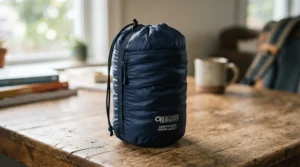
Anyone who has shivered through a 5 a.m. gate wait, then sweated through a tropical connection, knows the packing dilemma. Bring a bulky coat and it eats your bag. Leave it behind and you pay for it in goosebumps. This is the problem a packable 800 fill down jacket for travel solves. Fill power is a standardized loft test: one ounce of down is measured by the volume it fills. Higher numbers mean more trapped air per ounce, so you can carry less down for the same warmth.
Not every jacket wearing an “800” badge is built for the road, though. Some are ultralight but delicate. Others are tough but chunky. A few are stylish enough for dinner and light enough for a carry-on. This guide compares seven real, well-reviewed options using their published specs and the recurring themes in reviews.
Along the way you’ll find help with the compressibility ratio, stuff sack habits, carry-on space math and when a premium packable puffer for flights is worth the money. Prices below are ranges, so check current pricing before you buy.
Quick Comparison: 7 Travel-Ready Down Jackets at a Glance
Weights vary by size, version and whose scale you trust, so treat these as ballpark figures.
| Jacket | Fill Power | Approx. Weight | Price Range | Best For |
|---|---|---|---|---|
| Patagonia Down Sweater Hoody | 800 | ~15 oz | $300–$350 | Durable all-rounder |
| Arc’teryx Cerium Hoody | 850 | ~12 oz | Around $400 | Small packed size with damp-zone backup |
| Mountain Hardwear Ghost Whisperer Hooded | 800 | ~8–9 oz | $350–$400 | Gram-counting carry-on minimalists |
| Outdoor Research Helium Down Hoodie | 800+ | ~15 oz | Around $300 | Rugged trips and drizzly cities |
| Rab Neutrino Pro | 800 | ~1 lb | $425–$450 | Truly cold destinations |
| Cotopaxi Fuego Hooded | 800 | ~13–14 oz | $275–$300 | Style-forward city travel |
| REI Co-op Magma 850 Down Hoodie | 850 | ~12–13 oz | Mid-$200s | Best value |
Looking at the table, the Mountain Hardwear Ghost Whisperer Hooded wins on pure weight, while the REI Co-op Magma 850 Down Hoodie wins on price. Buyers who want one jacket for both airports and alpine trails should look at the Patagonia Down Sweater Hoody or the Outdoor Research Helium Down Hoodie. The Rab Neutrino Pro sits alone as the heavy hitter for real winter.
💬 Just one click — help others make better buying decisions too!😊
Top 7 Packable Down Jackets for Travel: Expert Analysis
Each pick below is judged on what the specs mean in an airport, a rental car or a rain-soaked street. The review sentiment comes from published expert reviews and retailer customer reviews. It is aggregated, not hands-on testing.
1. Patagonia Down Sweater Hoody — most durable all-rounder
The tougher-than-average shell is what separates this jacket from flimsier travel puffies. It carries 800-fill goose down, roughly 5.3 ounces in the men’s hoody according to CleverHiker’s specs, in a ripstop shell with a light water-repellent finish. Reviewers’ scales put total weight around 15 ounces, a bit heavier than ultralight rivals.
What that means in practice: more down and a sturdier face fabric make it comfortable at a chilly gate, but it packs larger than a featherweight. The down itself isn’t hydrophobic, so expect protection from light drizzle, not a downpour.
Based on the spec comparison, this is the jacket for travelers who want one puffy for the plane, the commute and weekend hikes. Reviewers consistently praise its warmth, comfort and everyday durability. Recurring complaints in retailer reviews include fit changes between versions and occasional down leakage.
Pros:
- ✅ Tough shell survives bags, seatbacks and buses
- ✅ Generous 800-fill down for real warmth
- ✅ Classic look works in cities and on trails
Cons:
- ❌ Heavier and bulkier than ultralight rivals
- ❌ Down isn’t hydrophobic for sustained wet weather
Price range: roughly $300–$350 at the time of research. Check current price. It’s a fair deal for a one-jacket travel strategy.

2. Arc’teryx Cerium Hoody — smallest footprint with damp-zone backup
This is the jacket that gives up a few ounces of down in exactly the places sweat and rain attack. It uses 850-fill European goose down in the torso and sleeves. Synthetic Coreloft insulation sits in moisture-prone zones like the underarms, shoulders and cuffs, a layout Arc’teryx calls Down Composite Mapping.
CleverHiker lists the men’s version at about 11.9 ounces, with a women’s small closer to 10 ounces in other reviews. That is light enough for most travelers without being flimsy. A 15-denier recycled nylon shell keeps weight down, and the jacket stuffs into an included sack.
Reviewers describe it as surprisingly warm for its weight and highly compressible. They also note the down isn’t hydrophobic, so it shouldn’t be trusted in real rain. Retailer reviews mention zipper quality and fit consistency as the sore spots.
If your plan is a premium packable puffer for flights that doubles as a mountain layer, this is the benchmark. Be ready to pay for the badge.
Pros:
- ✅ Excellent warmth for roughly twelve ounces
- ✅ Synthetic patches protect sweat-prone areas
- ✅ Compresses neatly into its included stuff sack
Cons:
- ❌ Premium price tag stings
- ❌ Some buyers report zipper and fit frustrations
Price range: around $400 in retailer listings, which is premium territory. The value is strongest for frequent flyers who’ll wear it constantly.
3. Mountain Hardwear Ghost Whisperer Hooded — featherweight for carry-on minimalists
If grams are your religion, this is the cathedral. Its 800-fill hydrophobic goose down sits inside an ultralight 10-denier shell. Depending on size and whose scale you believe, the hooded version weighs roughly 7 to 9 ounces. Reviewers put the fill weight between about 2.5 and 2.8 ounces.
That tiny fill weight is the point and the compromise. It makes this one of the most packable options on the market. It also means the warmth is closer to a thick fleece upgrade than a winter coat. One reviewer notes it starts showing its limits on cool mountain nights.
The thin shell is the other trade. Retail and expert reviews consistently flag lower durability, so keep it away from rough zippers and sharp gear. For frequent flyers who treat carry-on space like gold, it’s a smart layer for shoulder-season trips, tropical-to-cool transitions and rail journeys.
Pros:
- ✅ Among the lightest hooded down jackets available
- ✅ Hydrophobic 800-fill down resists dampness
- ✅ Disappears into a corner of your bag
Cons:
- ❌ Delicate shell needs careful handling
- ❌ Limited warmth for truly cold weather
Price range: roughly $350–$400, depending on version. The value is excellent for weight-obsessed travelers and weak for anyone who needs real cold-weather insulation.
4. Outdoor Research Helium Down Hoodie — rugged shell for drizzly cities
The Helium’s party trick is its Pertex Quantum shell with Diamond Fuse reinforcement, a fabric built to shrug off abrasion. Retailer specs add waterproof fabric on the hood, shoulders and upper arms, which is a rare touch in a down jacket. Inside is 800+ fill RDS-certified down.
Published weights land around 15 ounces for a women’s medium, with fill weight listed near 2.9 ounces (women’s) and 3.9 ounces (men’s). That makes it a few ounces heavier than the average lightweight puffy. The trade is toughness: reviewers call it one of the most durable jackets in its weight class.
It packs into its own pocket and has a carabiner loop. Expert reviewers still note that some rivals squeeze in more down at a similar weight, and one retailer reviewer observed light showing through the fill. Think of it as the pick for travelers who toss jackets into overstuffed bags.
Pros:
- ✅ Very durable shell fabric
- ✅ Water-resistant hood and shoulders for drizzle
- ✅ Packs into its own pocket
Cons:
- ❌ Heavier than many lightweight rivals
- ❌ Warmth for the weight isn’t class-leading
Price range: around $300 at the time of research; prices may vary. The value is good for durability-first travelers.
5. Rab Neutrino Pro — heavyweight warmth that still compresses
Think of this as a sleeping bag with sleeves. It packs about 7.5 ounces of 800-fill European goose down, Nikwax-treated to resist moisture, inside a 20-denier Pertex Quantum Pro shell. Total weight is around a pound, which is hefty compared with the featherweights above.
Here is the surprise: reviewers note it compresses better than its warmth suggests, thanks to high-quality down and a supple shell. OutdoorGearLab names it the warmest jacket in its lineup. Other reviewers describe it as comfortable and generously insulated, but say it’s too much for mild weather.
Where it loses points is storage: pocket space is minimal, and breathability isn’t its priority. One retailer reviewer felt it wasn’t warm enough in a 29°F wind, a reminder that conditions and layering vary.
Based on the specs, this is for Iceland in January, Alpine winter trips or anyone who runs cold. It’s overkill for a Lisbon weekend.
Pros:
- ✅ Seriously warm 7.5 oz fill of 800-fill down
- ✅ Hydrophobic down and weather-resistant shell
- ✅ Compresses better than its warmth implies
Cons:
- ❌ Heavy and bulky for mild-climate trips
- ❌ Minimal pocket storage
Price range: roughly $425–$450 across listings. The value is excellent for real winter and poor for warm destinations.
6. Cotopaxi Fuego Hooded — style-forward city jacket
This is the down jacket you can wear to dinner after the flight. It uses 800-fill hydrophobic, RDS-certified down in a ripstop shell. Listed weight is around 13 to 14 ounces, though testers’ scales came in lower, between roughly 11 and 13 ounces.
Its internal zippered pocket doubles as a built-in stuff sack, handy for tossing in a bag without hunting for a separate sack. Reviewers describe the warmth as moderate. One notes it’s comfortable near freezing only with layers, so it’s best for cool, not truly cold, weather.
The common critique is bulk: one expert says it’s bulkier than other down jackets and harder to fit under a trim shell. Some retailer buyers report down leaking through the fabric, which Cotopaxi’s reply attributes to the early settling of fresh down.
If your trip is a city break with restaurants and rail platforms, the colorways and cut are the draw.
Pros:
- ✅ Eye-catching colors and relaxed fit
- ✅ Built-in internal pocket stuff sack
- ✅ Hydrophobic, RDS-certified 800-fill down
Cons:
- ❌ Bulkier than comparable jackets
- ❌ Some buyers report down leakage
Price range: roughly $275–$300. The value is decent for style-driven city travel and less compelling for gram-counters.
7. REI Co-op Magma 850 Down Hoodie — best value for 850-fill
This one proves that premium loft doesn’t need a premium price. It uses 850-fill goose down with a DWR treatment, a down-filled hood and a draft collar. It’s built from recycled nylon with a Pertex-type ripstop shell, and weights land around 12 to 13 ounces.
Expert reviewers describe the warmth-to-weight ratio as good by modern standards and the value as strong. OutdoorGearLab says it isn’t the warmest, lightest or most compressible, but it’s a great bang for the buck. A retailer reviewer says it punches above its weight, while another feels it falls short of top-tier brands.
REI doesn’t publish a fill weight, which makes direct warmth comparisons a guess. Still, 850-fill down at this price is rare. For a travel jacket you won’t panic about losing, it’s compelling.
Pros:
- ✅ 850-fill down at a modest price
- ✅ DWR-treated down dries faster than untreated down
- ✅ Adjustable hood and draft collar
Cons:
- ❌ Fill weight isn’t disclosed
- ❌ Not the lightest or most compact option
Price range: mid-$200s. The value is the best on this list for budget-conscious travelers.
Compressibility Ratio Explained: How a Compressible High Fill Down Jacket Really Works
“Compressibility ratio” isn’t an official industry spec, so here is a practical way to think about it. Fill power tells you how much loft one ounce of down can create. Fill weight tells you how many ounces are in the jacket. Multiply them and you get a rough measure of total loft, in cubic inches.
The big insight: a compressible high fill down jacket packs small because of how much total down it holds, not just fill power. Less fill means a smaller packed bundle but less warmth. More fill means more warmth but a larger bundle.
Here is the back-of-envelope math using published fill weights and reported jacket weights. These are rough estimates, not lab data.
| Jacket | Fill Power × Fill Weight | Approx. Jacket Weight | Rough Loft per Jacket Ounce |
|---|---|---|---|
| Rab Neutrino Pro | 800 × 7.5 oz ≈ 6,000 in³ | ~16 oz | ~375 |
| Patagonia Down Sweater Hoody | 800 × 5.3 oz ≈ 4,240 in³ | ~15 oz | ~285 |
| Arc’teryx Cerium Hoody | 850 × ~4 oz ≈ 3,400 in³ | ~12 oz | ~285 |
| Cotopaxi Fuego Hooded | 800 × 4.2 oz ≈ 3,360 in³ | ~13.5 oz | ~250 |
| REI Co-op Magma 850 Down Hoodie | Fill weight undisclosed (third-party estimate ≈ 2,975 in³) | ~12.3 oz | ~240 |
| Mountain Hardwear Ghost Whisperer Hooded | 800 × ~2.5 oz ≈ 2,000 in³ | ~8–9 oz | ~230–280 |
| Outdoor Research Helium Down Hoodie | 800 × ~3–4 oz ≈ 2,300–3,100 in³ | ~15–16 oz | ~150–200 |
The Rab Neutrino Pro leads in loft per ounce because it’s loaded with down. The Mountain Hardwear Ghost Whisperer Hooded looks modest on this ratio, yet it packs smallest because its total down volume is tiny. The Outdoor Research Helium Down Hoodie trades loft density for shell toughness. Read the ratio as a warmth-versus-bulk tradeoff, and let your trip’s temperature decide which end you need.

How to Choose a Travel Down Jacket That Packs Small
A travel down jacket that packs small isn’t just the lightest one on the list. Walk through these steps to match the jacket to the trip:
- Set your coldest realistic temperature. A jacket for 45°F evenings needs far less down than one for freezing wind. Overbuying warmth costs you bulk.
- Check fill weight, not just fill power. Fill power is quality, while fill weight is quantity. Two 800-fill jackets can feel completely different.
- Weigh the shell denier. Ultralight 10D fabrics save ounces but tear more easily, while 20D and up handle bags and seatbacks better.
- Decide on hydrophobic down. Treated down resists dampness longer, which matters for rainy destinations. Untreated down needs a shell over it.
- Prioritize a hood if you fly often. Cold cabins and wet curbs make a down hood useful, though hoods add a few ounces.
- Test the pocket-or-sack system. An internal pocket stuff sack is convenient, but a separate sack can compress tighter.
- Budget for the long term. A durable jacket worn constantly beats a cheaper one that sits in a closet.
Features That Actually Matter (And Those That Don’t)
Marketing loves buzzwords, but travel use narrows the list. A good hood, durable zippers and sensible pocket placement matter far more than exotic fabric names. Water-resistant down is useful if you expect drizzle, but it doesn’t make a jacket waterproof, so treat a shell as essential for real rain.
Ethical sourcing matters too, and one label to know is the Responsible Down Standard, a voluntary certification from Textile Exchange covering animal welfare and chain of custody. It prohibits live-plucking and force-feeding. It does not regulate fill power or warmth, so a jacket can be certified and still be low-loft. Look for both labels together.
Features worth skipping for travel: oversized chest pockets you’ll never use, complex adjustable hems and gimmicky linings. Every added feature adds ounces, and ounces eat your carry-on space and your patience.
Is a Premium Packable Puffer for Flights Worth the Money?
A premium packable puffer for flights is worth paying for when you wear it often. It’s hard to justify if it lives in a closet. The price gap between tiers buys lighter fabric, better down quality and sometimes better construction.
| Tier | Jackets | Price Range | Value Logic |
|---|---|---|---|
| Value | REI Co-op Magma 850 Down Hoodie | Mid-$200s | Strong loft per dollar, fewer extras |
| Style/Mid | Cotopaxi Fuego Hooded, Outdoor Research Helium Down Hoodie | $275–$300 | Style or durability over weight savings |
| All-rounder | Patagonia Down Sweater Hoody | $300–$350 | Durable, versatile, heavier |
| Premium | Arc’teryx Cerium Hoody, Mountain Hardwear Ghost Whisperer Hooded | $350–$400+ | Lighter, more compressed, more delicate |
| Specialist | Rab Neutrino Pro | $425–$450 | Real winter warmth |
The pattern is clear: you pay more to carry less. If you take four or more trips a year, the Arc’teryx Cerium Hoody or Mountain Hardwear Ghost Whisperer Hooded can justify their cost through constant use. For casual travelers, the REI Co-op Magma 850 Down Hoodie delivers most of the benefit at a much friendlier price.
✨ Don’t Miss These Exclusive Deals!
🔍 Take your travel packing to the next level with these carefully selected jackets. Click on any highlighted item to check current pricing and availability. These layers will help you stay warm, light and ready for any gate change!
Carry-On Space: How Much Room Does a Down Jacket Really Take?
Carry-on space is the real currency of modern flying. Airlines, not the TSA, set bag size and weight limits, so always check your carrier’s policy. TSA’s own What Can I Bring? guidance notes that officers may ask travelers to pull items out of bags, and uncluttered bags move through screening faster.
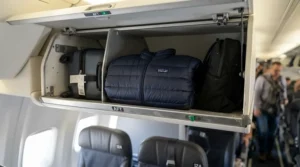
A compressed 800-fill jacket typically takes up a fraction of the room a bulky coat does. The Mountain Hardwear Ghost Whisperer Hooded can shrink to something roughly the size of a small water bottle in a stuff sack, according to the way reviewers describe it. A heavier jacket like the Rab Neutrino Pro takes noticeably more room, though reviewers still call its packability impressive for the warmth.
A smart habit: wear your puffy through the airport and onto the plane. It frees carry-on space entirely and doubles as a cabin blanket. Stuff it into a bag only when you’re sweating through a hot arrival.
Stuff Sack Strategy: Packing and Pulling Out Your Jacket Like a Pro
A stuff sack is a travel tool, not a storage container. Compress the jacket for the flight, then let it breathe once you land.
Practical steps:
- Zip and fold smartly. Zip the jacket, fold the arms in and roll from the hem upward, squeezing air out as you go.
- Use the pocket-sack option when offered. The Cotopaxi Fuego Hooded and Outdoor Research Helium Down Hoodie pack into their own pockets, which keeps the sack from getting lost.
- Choose a separate stuff sack for tighter packs. The Arc’teryx Cerium Hoody comes with its own sack.
- Don’t store it compressed. Retail care guidance advises hanging down garments or keeping them loosely in a breathable bag to preserve loft.
- Fluff on arrival. Shake the jacket out and give it a minute to recover its loft before wearing it.
Common mistakes in the first 30 days: leaving the jacket crushed in a bag for weeks, over-stuffing the sack until it strains zippers and ignoring small snags in thin shells like the Mountain Hardwear Ghost Whisperer Hooded.

Down vs Synthetic for Travel
Synthetic insulation has real advantages, but for most travelers the weight and packability difference decides it.
| Option | Warmth per Ounce | Packs Down | Wet Performance | Best For |
|---|---|---|---|---|
| 800-fill down | Excellent | Very small | Weak if soaked, better if hydrophobic | Dry or cold-dry trips, weight-conscious travelers |
| Synthetic insulation | Good | Bulkier | Keeps insulating when damp | Wet climates and rough use |
| Fleece | Moderate | Bulky | Handles damp well | Cheap layering, casual use |
Down wins when carry-on space and weight matter most. Manufacturers’ own explainers note that down loses performance when wet, which is why hydrophobic down and shell layers matter. Synthetic wins for persistent drizzle and rough handling. If you can only pack one, pick down for dry or cold climates and synthetic for damp ones, or pack a thin shell and enjoy both.
Real-World Scenarios: Which Jacket Fits Which Traveler
Here are four traveler profiles matched to the best fit, with reasoning:
The weekend city flyer takes four short trips a year with one carry-on and a modest budget. The Cotopaxi Fuego Hooded works for style-forward city days, while the REI Co-op Magma 850 Down Hoodie suits someone who prioritizes price over polish.
The gram-counting rail traveler is hopping between European cities with a small pack and mild weather. The Mountain Hardwear Ghost Whisperer Hooded is the obvious fit, since every ounce counts and the warmth need is modest.
The winter adventurer is heading to Iceland or the Alps in January and runs cold. The Rab Neutrino Pro delivers real insulation, paired with a shell for wind and wet.
The all-purpose commuter-traveler needs one jacket for daily wear and occasional trips. The Patagonia Down Sweater Hoody or Outdoor Research Helium Down Hoodie balance durability and warmth, accepting a little extra weight for toughness.
Problem to Solution: Fixing Common Travel-Down Headaches
Problem: the jacket loses loft after weeks in a stuff sack. Solution: unpack it on arrival, shake it out and hang it. Care guidance consistently recommends loose or hanging storage.
Problem: overheating on the plane. Solution: wear a base layer you can shed, and use the jacket as a blanket. The Mountain Hardwear Ghost Whisperer Hooded is the least likely to feel stifling.
Problem: unexpected rain. Solution: pack a thin shell. Hydrophobic down in the Rab Neutrino Pro or Outdoor Research Helium Down Hoodie buys time but doesn’t replace rain protection.
Problem: feathers leaking out. Solution: pluck protruding quills back inward rather than pulling them out, and avoid sharp snags. Some buyers of the Cotopaxi Fuego Hooded and Patagonia Down Sweater Hoody mention leakage, and the maker says some settling is normal early on.
Problem: the jacket is too bulky under a shell. Solution: pick a trimmer fit. The Arc’teryx Cerium Hoody is cut to layer cleanly under a shell, while bulkier cuts like the Cotopaxi Fuego Hooded are harder to layer.
Long-Term Cost and Care: Making Premium Down Last
Treat a premium jacket like a long-term investment. A jacket in the mid-$300s worn 60 days a year for five years works out to roughly $1.15 per wear, which reframes the sticker shock.
Expert care guidance, such as Field Mag’s down washing guide, is consistent on a few points:
- Wash infrequently, only when the jacket is truly dirty or has lost loft.
- Use a down-specific cleaner rather than regular detergent.
- Dry on low heat with clean tennis balls or dryer balls, and expect multiple cycles.
- Never iron or dry-clean it.
Store the jacket on a hanger or loosely in a breathable bag, and re-proof the shell’s water-repellent finish when beading fades. Done right, a premium jacket like the Arc’teryx Cerium Hoody or Patagonia Down Sweater Hoody can last for many seasons, which is why durability beats a low sticker price.

FAQ
❓ Is an 800 fill down jacket warm enough for winter travel?
❓ Does a down jacket count toward my carry-on space?
❓ How long can I keep a down jacket in its stuff sack?
❓ Is hydrophobic down worth it for rainy trips?
❓ Are 800 fill jackets worth it over 650 fill for flights?
Conclusion
The best packable 800 fill down jacket for travel is the one that matches your trips, not the one with the flashiest tag. Weight-obsessed travelers will love the Mountain Hardwear Ghost Whisperer Hooded. Budget-minded flyers get strong value from the REI Co-op Magma 850 Down Hoodie. The Patagonia Down Sweater Hoody and Outdoor Research Helium Down Hoodie suit travelers who want toughness, while the Arc’teryx Cerium Hoody is the polished premium pick. The Cotopaxi Fuego Hooded brings color and city style, and the Rab Neutrino Pro is the one to grab when real winter is on the itinerary.
Remember what the numbers actually say. Fill power measures quality, fill weight measures quantity, and the compressibility ratio you care about is a tradeoff between warmth and bulk. A good stuff sack habit, smart carry-on space planning and sensible care will protect the jacket and your sanity.
Every spec here comes from published reviews and manufacturer information, and prices vary, so check current pricing before you buy. Pick the jacket that fits your coldest realistic trip, and let the rest of your packing breathe.
✨ Ready to travel lighter and warmer?
🔍 Compare your favorites, check current pricing and availability, and pick the packable down jacket that earns its spot in your bag. Your next flight will thank you! ✈️
Recommended for You
- 800 Fill Down Jacket For Women Mountaineering: 7 Proven Picks 2026
- 800 Fill Down Jacket For Men Over 6 Feet: 7 Best Picks That Fit 2026
- 800 Fill Down Jacket For Ultralight Hikers: 7 Proven Picks 2026
Disclaimer: This article contains affiliate links. As an Amazon Associate, I earn from qualifying purchases. If you purchase products through these links, we may earn a small commission at no additional cost to you.
✨ Found this helpful? Share it with your friends! 💬🤗
