

In This Article
An 800 fill down jacket is a jacket insulated with goose or duck down that expands to roughly 800 cubic inches per ounce in lab testing, a rating the industry calls fill power. Higher loft traps more warm air per ounce, so the jacket feels lighter, packs smaller, and holds heat better than a lower-fill jacket of equal weight.
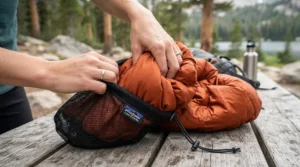
Here’s the catch. Browse any outdoor retailer and “800 fill” usually arrives stapled to a price tag north of $300. Ouch. But a quieter corner of the market has been pushing the affordable high fill power down jacket into the $100-$300 neighborhood, and smart shopping can shave off even more.
This guide sorts that corner into seven real jackets, from a budget 800 fill puffer coat that regularly dips into the low hundreds to a winter-weight benchmark that costs real money. Along the way you’ll get a straight look at price-to-warmth ratio, the sale timing that genuinely saves cash, and the warranty coverage fine print that brands tuck behind a friendly logo.
One honest note before we dive in. Everything below comes from published specs, aggregated reviewer reports, and brand policy pages as of October 2026. Nobody here has hauled these jackets up a mountain, and pretending otherwise would be silly. What you get instead is careful reasoning about what the numbers mean for your actual days, which, frankly, is the part spec sheets never bother to explain.
800 Fill Down Jacket Quick Comparison Table
Here’s the whole lineup at a glance before we pick it apart one jacket at a time.
| Jacket | Down Fill | Price Range (check current price) | Best For |
|---|---|---|---|
| Eddie Bauer Downlight StormDown Hooded Jacket | 800 | Roughly $100-$200 | Bargain hunters who want treated down |
| Cotopaxi Fuego Down Jacket | 800 | Roughly $200-$275 | Daily wear with repair backing |
| REI Co-op Magma 850 Down Hoodie | 850 | Mid-$200s | Value seekers wanting extra loft |
| Outdoor Research Helium Down Jacket | 800+ | Roughly $150-$300 | Rough-use durability |
| Stio Pinion Down Hooded Jacket | 800 | Around $300 | Trail-to-town comfort |
| Patagonia Down Sweater Hoody | 800 | Mid-$300s | Brand-proof all-rounder |
| Rab Neutrino Pro | 800 | $400 and up | Real winter cold |
Looking at the comparison above, the Eddie Bauer Downlight StormDown Hooded Jacket delivers the lowest entry cost, but if you want a repair program and louder style, the Cotopaxi Fuego Down Jacket justifies the extra spend. Budget buyers should note that the REI Co-op Magma 850 Down Hoodie gives up nothing on loft yet draws some durability complaints. And if January is your real target, only the Rab Neutrino Pro carries enough down to matter.
💬 Just one click — help others make better buying decisions too!😊
Top 7 800 Fill Down Jackets: Expert Analysis
Seven jackets, ordered roughly from cheapest to priciest. Every one carries real down, real specs, and real reviewer feedback behind it.
1. Eddie Bauer Downlight StormDown Hooded Jacket — water-resistant down at a bargain ceiling
The headline is the StormDown treatment: a water-resistant finish on the 800-fill goose down that helps loft survive damp air instead of collapsing like a soufflé in a draft. On a budget 800 fill puffer coat, that’s a rare perk. Based on the spec sheet, you get a light ripstop shell, a classic fit, and a body that stuffs into its own pocket; one reviewer compared the packed size to a softball. In practice that makes it a three-season layer for crisp commutes, fall camping, and sliding under a rain shell, not a January parka. Eddie Bauer keeps fill weight quiet, so treat warmth as light-to-midweight.
Reviewers on Trailspace consistently praise the Downlight family for loft retention and compressibility, and several mention catching it during steep markdowns. One long-term owner reported six years of skiing and backpacking without visible wear on an earlier version, while a vest reviewer wished the collar carried a touch more fill.
Pros:
- ✅ Genuine 800 fill at an entry-level price
- ✅ Water-resistant StormDown treatment on the fill
- ✅ Packs into its own pocket
Cons:
- ❌ Fill weight isn’t published, so warmth is a guess
- ❌ Brand has retired its old lifetime guarantee
Expect roughly $100-$200 depending on sales; check current price. Value verdict: the cheapest sensible ticket into the 800 fill club.

2. Cotopaxi Fuego Down Jacket — retro colors backed by lifetime repairs
The standout is the promise behind the stitching: Cotopaxi advertises a lifetime warranty plus repairs, which is generous for a jacket in this bracket. Inside sits 800-fill responsibly sourced goose down, wrapped in DWR-finished ripstop nylon with an adjustable hem drawcord, elastic cuffs, and an inner zippered pocket that doubles as the stuff sack. What does that mean outside? The DWR sheds light drizzle, and the sewn baffles give it the classic “down sweater” silhouette that disappears under a coat. One outdoor publication judged the warmth comparable to a Patagonia hoody holding roughly five ounces of similar down, though Cotopaxi doesn’t publish its own fill weight.
Reviewers repeatedly praise stitching, colorways, and the value 800 fill jacket pricing, while recurring complaints include stray feathers working through the shell and one buyer who found it sized larger than the chart suggested.
Pros:
- ✅ Eye-catching colors that don’t scream “technical”
- ✅ Lifetime warranty and repair program
- ✅ 800 fill with a DWR-finished shell
Cons:
- ❌ Fill weight isn’t disclosed
- ❌ Occasional feather leakage reported
Typically $200-$275; check current price. Value verdict: the best everyday-style pick if warranty coverage matters to you.
3. REI Co-op Magma 850 Down Hoodie — 850 loft at a mid-$200s sticker
Technically this one is 850 fill, a notch above the rest, which is why it earns a spot as the value 800 fill jacket’s overachieving cousin. The down is goose, bluesign approved, and the hoodie lands around 12 ounces with a down-filled hood and a left-hand pocket that swallows the whole jacket. Better Trail judged it a dependable three-season piece, not a stand-alone winter coat, and one reviewer estimated about 3.5 ounces of fill since REI doesn’t publish a number. That’s an honest clue: expect cool-weather layering, not Arctic duty.
Reviewers on REI’s site are split in an instructive way. Many call it a great jacket for the price and report comfort down to around 20°F with a merino base layer, while critics flag down shifting around the front pocket area and durability that falls short of pricier shells.
Pros:
- ✅ Higher-loft 850 down at a modest price
- ✅ Down-filled hood for real neck warmth
- ✅ Packs into its own pocket
Cons:
- ❌ Reports of down migrating near the pocket
- ❌ Durability complaints from some owners
Mid-$200s; check current price. Value verdict: strong price-to-warmth ratio for casual hikers, weaker for hard use.
4. Outdoor Research Helium Down Jacket — tough shell, big markdown potential
The Helium’s calling card is its Diamond Fuse shell, woven from heavier and lighter yarns so abrasion resistance rises without a big weight penalty. Insulation is 800+ fill RDS-certified goose down, around 3.9 ounces in the men’s version, with a listed weight near 12.6 ounces. Translation: it’s a bit heavier than the featherweight crowd but far less likely to shred on a pack strap or a rock scramble. One test summary found the warmth comparable to other standard lightweight puffies, so think shoulder season and summit layering rather than deep winter.
Retailer reviewers describe it as warm, packable, and a standout at sale prices, while others say it runs small, and one buyer noticed the label listed a 90/10 goose down-to-feather blend, a common ratio but worth knowing before you buy.
Pros:
- ✅ Durable Diamond Fuse shell fabric
- ✅ 800+ fill RDS-certified goose down
- ✅ Often discounted below list at major retailers
Cons:
- ❌ Heavier than ultralight rivals
- ❌ Several owners say it runs small
List prices sit around $250-$300, while some retailer listings showed markdowns into the roughly $150-$210 range at the time of research; check current price. Value verdict: the best sale-timing play in the group.
5. Stio Pinion Down Hooded Jacket — trail-to-town comfort with recycled shell
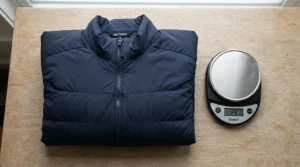
Comfort is the pitch. The Pinion pairs 800-fill HyperDRY goose down (a 90/10 blend, RDS-certified) with a 20-denier, 100% recycled Pertex Quantum shell and narrow baffles that keep the down evenly spread. At 12 ounces, it’s genuinely light, but with about 3.3 ounces of fill it’s less insulated than the Patagonia Down Sweater Hoody, which carries roughly five. So the jacket suits cool mornings, bike commutes, and layering far better than standing around in the cold.
OutdoorGearLab reviewers called it one of the most comfortable and versatile jackets they evaluated, while Better Trail concluded it isn’t a class leader in any single metric. Reviewer consensus: well built, flattering, merely average warmth for the weight.
Pros:
- ✅ Comfortable stretch cuffs and flattering cut
- ✅ Recycled Pertex Quantum shell
- ✅ Reliable zippers and build quality
Cons:
- ❌ Less down than many direct rivals
- ❌ Priciest per ounce of fill in this guide
Around $300; check current price. Value verdict: pay for comfort and style, not for peak price-to-warmth ratio.
6. Patagonia Down Sweater Hoody — the benchmark with a famous guarantee
This is the jacket every other jacket on the list gets measured against, and the standout is how little drama it creates. The hoody carries roughly five ounces of 800-fill traceable goose down, enough for real cold when layered, plus a recycled shell and a hood that actually fits. Better Trail named it the best overall pick of 2026 and the most sustainable. Patagonia’s Ironclad Guarantee covers defects and performance failures, and wear-and-tear repairs happen at a reasonable charge, so ownership cost tapers over the years.
User reports on forums like Mountain Project are generally positive about warranty outcomes, with some saying they had to push for results, and that staff can decline claims tied to ordinary wear.
Pros:
- ✅ About five ounces of 800 fill down
- ✅ Ironclad Guarantee backs defects
- ✅ Strong resale and repair ecosystem
Cons:
- ❌ Mid-$300s pricing stings
- ❌ Repair turnaround can stretch for weeks
Mid-$300s; check current price. Value verdict: the safe, long-haul investment rather than a bargain.
7. Rab Neutrino Pro — winter-weight warmth with 7.5 ounces of fill
Here’s the big one. The Neutrino Pro packs about 7.5 ounces of 800-fill hydrophobic goose down into baffles fat enough to double as a sleeping bag with sleeves. The Pertex Quantum Pro shell resists wind and light moisture, though it isn’t waterproof. What that means practically: serious cold, stationary belays, and frozen-nose mornings are all fair game, and the bulk is the price of warmth.
Reviewers describe it as one of the comfiest winter jackets they’ve worn, noting only that the hood is large and floppy without a helmet and that the whole package is more technical than casual.
Pros:
- ✅ Class-leading fill weight for the price
- ✅ Hydrophobic 800 fill down
- ✅ Tough, wind-resistant Pertex shell
Cons:
- ❌ Roughly $400 and up
- ❌ Bulky for casual or city use
Around $400 and up; check current price. Value verdict: the best price-to-warmth ratio here, but only if you genuinely need winter warmth.
How to Choose an 800 Fill Down Jacket
Choosing well takes about six decisions, not sixty. Work through them in order.
- Check fill weight, not just fill power. More ounces of 800 fill can out-warm fewer ounces of 850 fill. Brands love to flaunt the first number and bury the second.
- Match fill weight to your use. Roughly three to four ounces suits three-season hiking and layering, while seven-plus ounces belongs to winter.
- Inspect the shell. A 15-denier shell saves weight; a 20-denier or Diamond Fuse shell survives brush and pack straps.
- Look for treated down. Water-resistant down and a DWR shell buy time in drizzle, though neither makes a down jacket waterproof.
- Confirm responsible sourcing. The Responsible Down Standard prohibits live-plucking and force-feeding and tracks chain of custody.
- Read the warranty coverage before the color. A jacket that gets repaired for a decade beats a cheaper one that gets replaced every three seasons.

Price-to-Warmth Ratio: Which 800 Fill Down Jacket Gives You the Most Heat per Dollar?
Fill power is a quality rating. Warmth is quality multiplied by quantity, and quantity is fill weight. That’s why price-to-warmth ratio is the number I’d actually shop by, and why one outdoor-gear roundup lists fill weight right beside fill power. Dividing price by published ounces of down gives a rough dollars-per-ounce score.
| Jacket | Published Down Weight | Price Range | Rough Cost per Ounce of Down | Best For |
|---|---|---|---|---|
| Rab Neutrino Pro | About 7.5 oz | $400 and up | Mid-$50s | Deep cold |
| Patagonia Down Sweater Hoody | About 5 oz | Mid-$300s | Mid-to-high $60s | Long-term owners |
| Outdoor Research Helium Down Jacket | About 3.9 oz (men’s) | $250-$300 list | $60s-$70s at list, lower on markdown | Rough use |
| Stio Pinion Down Hooded Jacket | About 3.3 oz | Around $300 | High $80s | Everyday comfort |
| REI Co-op Magma 850 Down Hoodie | Not published | Mid-$200s | Can’t be calculated honestly | Casual hikers |
| Cotopaxi Fuego Down Jacket | Not published | $200-$275 | Can’t be calculated honestly | Style-first buyers |
| Eddie Bauer Downlight StormDown Hooded Jacket | Not published | $100-$200 | Can’t be calculated honestly | Budget layering |
Looking at the numbers, the Rab Neutrino Pro delivers the most down for each dollar, but that’s the warmest and bulkiest jacket here, so it only wins if you need that warmth. The Outdoor Research Helium Down Jacket becomes a genuine value 800 fill jacket whenever retailers mark it toward the low end of its range. The Stio Pinion Down Hooded Jacket costs the most per ounce, which tells you that you’re paying for comfort and polish.
The hidden catch with cheap jackets
Brands that skip fill weight aren’t necessarily hiding something, but you can’t verify a price-to-warmth ratio you can’t calculate. For an affordable high fill power down jacket, that’s the tradeoff: you save money and accept some mystery. Reviews and temperature reports then become your tiebreaker.
Sale Timing: When to Buy a Budget 800 Fill Puffer Coat
Good sale timing can move a jacket one full price tier, which matters more than any spec difference between neighbors. A few patterns repeat across retailers and shopping guides.
The windows worth watching
- Late winter through spring (roughly March to May). Shopping guides consistently describe the deepest clearance on last season’s coats, often 50% or more, but sizes and colors vanish quickly.
- Early fall, like right now. Retailers run pre-season events, and one roundup this season found lightweight down jackets discounted by up to 60% at major outdoor sellers. Selection is better than spring, even if discounts are smaller.
- Holiday weekends. Memorial Day, the Fourth of July, Labor Day, and Black Friday regularly bring outdoor promotions.
- Outlet and resale sections. REI’s outlet, Backcountry’s sale pages, and Patagonia’s Worn Wear all offer second paths to a lower price.
How to play it
Shortlist two jackets, note your size, and ignore inflated “was” prices; judge by the lowest price you’ve seen. A lightweight 800 fill down jacket is a three-season piece, so spring clearance fits perfectly. Buyers who need one this week should check early-fall events. And one reminder: links in this article never change what you pay.
✨ Don’t Miss These Standout Picks!
🔍 Take your cold-weather layering to the next level with these carefully selected jackets. Click on any highlighted item to check current pricing and availability. These picks will help you build a warm, packable layer you’ll actually reach for!
Warranty Coverage: What Actually Stands Behind Your 800 Fill Down Jacket
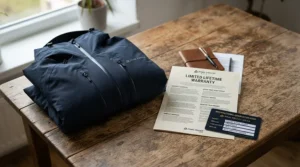
Warranty coverage is the invisible half of a jacket’s price. A brand that repairs a broken zipper for free is quietly lowering your cost of ownership, which is why it belongs in any honest price-to-warmth ratio conversation. Policies also change, so confirm current terms with the seller.
| Jacket | What the Published Policy Says | Fine Print to Watch | Best For |
|---|---|---|---|
| Patagonia Down Sweater Hoody | Ironclad Guarantee covers defects and performance failures; wear repaired at reasonable charge | Staff assess wear; repairs can take weeks | Repair-minded owners |
| Cotopaxi Fuego Down Jacket | Lifetime warranty plus repairs per brand page | Contact warranty team for seam repairs | Daily wearers |
| Outdoor Research Helium Down Jacket | Infinite Guarantee for the product’s lifetime | Excludes wear and tear, user damage, and unauthorized dealers; no repairs offered | Authorized-dealer shoppers |
| Stio Pinion Down Hooded Jacket | Retailer lists a “limited practical lifetime” warranty | Check Stio’s current terms | Buyers who read the policy |
| Eddie Bauer Downlight StormDown Hooded Jacket | Old lifetime guarantee retired; third-party guides cite roughly one year for defects | Policy varies by store | Sale hunters |
| Rab Neutrino Pro and REI Co-op Magma 850 Down Hoodie | Not verified during research | Confirm before buying | Anyone paying premium |
Looking at the table, the strongest warranty coverage lives with Patagonia Down Sweater Hoody, Cotopaxi Fuego Down Jacket, and Outdoor Research Helium Down Jacket, though each has caveats. The big surprise is Eddie Bauer Downlight StormDown Hooded Jacket: that famous lifetime guarantee is gone, so the low sticker price partly reflects shorter protection.
Buy from an authorized seller
Outdoor Research’s own terms exclude products purchased from non-authorized dealers. If you’re shopping marketplaces, confirm the seller is the brand or an authorized retailer before you click, or your warranty coverage could evaporate. Also keep your receipt; every policy here assumes you can prove when you bought it.
800 Fill Down Jacket vs 650 Fill and Synthetic Alternatives
Is 800 fill really worth the premium? The numbers say yes for weight and packability, and maybe for your wallet if you buy at the right time.
| Option | Warmth for Weight | Wet-Weather Behavior | Price Range | Best For |
|---|---|---|---|---|
| 800 fill down jacket (e.g., Stio Pinion Down Hooded Jacket, about 12 oz) | Excellent | Needs treated down; loses loft when soaked | $100-$400 | Light, packable warmth |
| 650 fill down jacket (e.g., REI Co-op 650 Down Jacket 2.0, about 15.4 oz) | Good, but heavier | Similar to other down | Around $130 | Casual, budget wearers |
| Synthetic insulation | Roughly 550-600 fill down equivalent | Keeps insulating when damp | Varies widely | Wet climates, rough use |
Looking at the table, the REI Co-op 650 Down Jacket 2.0 weighs about three and a half ounces more than the Stio Pinion Down Hooded Jacket while delivering comparable casual warmth, which is the real argument for 800 fill. If you hike in persistent rain, synthetic still earns its keep. For everyone else, a well-chosen 800 fill down jacket wins on weight, packed size, and long-term loft.
What to Expect: Real-World Performance
Down numbers sound abstract until you convert them to weather. Reviewer reports provide rough anchors. One REI reviewer reported comfort near 20°F in the REI Co-op Magma 850 Down Hoodie with a merino base layer, while a Better Trail tester wore the Outdoor Research Helium Down Jacket over a light midlayer on a summit day in the high 20s Fahrenheit. A windless 40°F day is the comfortable zone for most lightweight jackets, as one older review of the Magma noted.
Wind, activity level, and humidity swing those numbers wildly. The honest takeaway: a 3-to-4-ounce 800 fill down jacket handles fall and early spring, while winter standing-around cold demands the Rab Neutrino Pro or layering. Your mileage will vary, and so will your circulation.
Common Mistakes When Buying an 800 Fill Down Jacket
- Chasing the number. Fill power without fill weight is half a story.
- Skipping sizing research. Reviewers say the Cotopaxi Fuego Down Jacket ran larger than its chart while the Outdoor Research Helium Down Jacket ran small.
- Ignoring seller authorization. Unauthorized purchases can void warranty coverage.
- Expecting waterproofing. Treated down resists, but it doesn’t defeat, soaking rain.
- Paying peak-season prices. Ignoring sale timing is the most expensive mistake on this list, especially for a budget 800 fill puffer coat.
Practical Usage Guide: Setup, Care, and Your First 30 Days
A jacket that’s cared for outlasts one that isn’t. Start simple.
Week one: Shake the jacket out and let it loft fully before first wear. If it arrived compressed in a box, it may need a day to fluff.
Storage: Store it uncompressed in a cool, dry place; a closet hanger beats the stuff sack. Rab’s care guidance explicitly recommends storing down jackets uncompressed.
Washing: Use a down-specific wash such as Nikwax Down Wash Direct or Grangers rather than regular detergent, and skip fabric softener, bleach, and dry cleaning. Gear Patrol’s walkthrough explains that dry cleaning strips the natural oils that keep down lofty. Outdoor Research suggests roughly monthly washing under heavy weekly use; most owners wash far less often, perhaps once a season.
Drying: Tumble dry on low with a few dryer balls or clean tennis balls, pausing to fluff by hand. Damp down clumps and can smell, so patience here pays.
First-month mistakes to avoid: zipping a wet jacket into a stuff sack, sitting on sharp rocks without a barrier, and ignoring a tiny snag until it becomes a feather fountain.
Real-World Scenarios: Which 800 Fill Down Jacket Fits Your Life?
Specs mean little without a life attached. Here are three profiles with reasoning.
The college student commuting eight miles daily. Budget around $150, dry-to-damp weather, wearing it five days a week. The Eddie Bauer Downlight StormDown Hooded Jacket fits: treated down, light, cheap enough to replace if a pack strap wins. Wait for an early-fall or holiday sale.
The weekend hiker in shoulder season. Budget $250-$300, frequent but short trips. The Outdoor Research Helium Down Jacket or Stio Pinion Down Hooded Jacket make sense, with the Helium preferred if brush and rock are involved and the Pinion if comfort and looks lead. Either gives an affordable high fill power down jacket feel at sale prices.
The winter alpine climber or cold-weather camper. Budget $400-plus, sub-freezing temperatures. The Rab Neutrino Pro carries enough down for stationary cold, while a lighter jacket would simply underperform.
The city commuter who wants style. The Cotopaxi Fuego Down Jacket or Patagonia Down Sweater Hoody blend into an office or a trailhead, with warranty coverage that makes a longer-term case.

FAQ
❓ Is an 800 fill down jacket worth the money?
❓ How warm is an 800 fill down jacket in freezing weather?
❓ What is the best month to buy a budget 800 fill puffer coat?
❓ Does warranty coverage apply if I buy from a third-party seller?
❓ Can I find an affordable high fill power down jacket under $200?
Conclusion
An 800 fill down jacket doesn’t have to cost a month’s rent. The right pick depends on how you shop and where you wear it. For a budget 800 fill puffer coat, the Eddie Bauer Downlight StormDown Hooded Jacket and Cotopaxi Fuego Down Jacket lead on entry price. For value 800 fill jacket seekers who can handle some durability tradeoffs, the REI Co-op Magma 850 Down Hoodie is hard to ignore. The Outdoor Research Helium Down Jacket becomes a bargain with good sale timing, the Stio Pinion Down Hooded Jacket wins on comfort, the Patagonia Down Sweater Hoody on staying power, and the Rab Neutrino Pro on pure winter warmth.
Whatever you choose, judge the price-to-warmth ratio, check fill weight when it’s published, and read the warranty coverage like a contract. Buy from authorized sellers, wash with care, and let sale timing do some of the heavy lifting.
✨ Ready to Warm Up Without Overspending?
🔍 Compare these seven options, check current pricing and availability, and pick the jacket that fits your budget and your winters. A great affordable high fill power down jacket is closer than you think!
Recommended for You
- 800 Fill Down Jacket For Backpacking: 7 Proven Picks (2026)
- Down Jacket Vs Parka For City Winters: 7 Proven Picks (2026)
- Down Jacket Vs Synthetic Jacket For Winter Hiking: 7 Best Picks 2026
Disclaimer: This article contains affiliate links. As an Amazon Associate, I earn from qualifying purchases. If you purchase products through these links, we may earn a small commission at no additional cost to you.
✨ Found this helpful? Share it with your friends! 💬🤗
