
In This Article
Somewhere between “light drizzle” and “the sky opened up like a busted zipper,” most guys realize their jeans are not a raincoat. Water finds every seam, every fold, every place you didn’t think to check, and suddenly your commute or your trail day turns into a squelchy slog back to the car. That’s the whole reason waterproof rain pants men actually rely on exist in the first place — not as some niche hiking accessory, but as the one piece of gear that keeps a rainy Tuesday from ruining your whole afternoon.

This guide skips the fluff and gets straight into what matters: seven real, currently available pairs of waterproof rain pants men can buy right now, pulled from budget-friendly workhorses to Gore-Tex-backed technical shells. We looked at fabric construction, hydrostatic head ratings, breathability, and — just as importantly — what real reviewers say holds up after a season of actual weather, not just a showroom demo.
Whether you need something to throw on over jeans for a soggy dog walk, a packable layer for backcountry trips, or a genuinely under-$60 option that won’t embarrass your wallet, there’s a pair below built for it. We’ll also walk through how hydrostatic head numbers actually translate to real-world dryness (a concept explained well by Wikipedia’s overview of hydrostatic head), how to avoid the sizing mistakes that ruin an otherwise great pair of pants, and how to think about the PFAS chemistry debate that’s reshaping this entire category. Let’s get into it.
Quick Comparison Table
For readers in a hurry, here’s the fast version before we go deep on each pick.
| Product | Best For | Weight | Price Range |
|---|---|---|---|
| Frogg Toggs Pro Action Rain Pant | Best under $60 | ~10 oz | Under $40 |
| REI Co-op Trailmade Rain Pants | Best overall value | ~10.5 oz | $60-$75 |
| Marmot PreCip Eco Pant | Most packable | ~8 oz | $70-$90 |
| Outdoor Research Foray Pant | Best over jeans | ~12 oz | $100-$130 |
| Mountain Hardwear Stretch Ozonic Pant | Most comfortable stretch fit | ~9.5 oz | $130-$160 |
| REI Co-op XeroDry GTX Pant | Best Gore-Tex durability | ~10 oz | $150-$175 |
| Patagonia Torrentshell 3L Pants | Most durable, PFAS-free build | ~11 oz | $150-$180 |
Looking at the spread, there’s a clear pattern: price climbs with fabric layers, not just brand name. The Frogg Toggs Pro Action Rain Pant and REI Co-op Trailmade Rain Pants use 2 to 2.5-layer construction to hit accessible price points, while the REI Co-op XeroDry GTX Pant and Patagonia Torrentshell 3L Pants justify their higher cost with genuine 3-layer or Gore-Tex builds that survive years of abuse. If you only need occasional rain coverage, don’t overspend on a technical shell built for week-long backpacking trips.
💬 Found a pair that fits your needs already? Scroll down to see it in action — or keep reading for the full breakdown.
What Are Waterproof Rain Pants for Men, Exactly?
Waterproof rain pants for men are outer-layer trousers built from coated or laminated fabric — typically rated by hydrostatic head, a pressure test measuring how much water a fabric resists before it leaks through. Most quality pairs land between 10,000mm and 28,000mm HH, paired with taped seams and an outer layer designed to be worn over regular clothing in wet conditions.
That last part matters more than people expect. Unlike a rain jacket, which mostly needs to shed water off your shoulders, rain pants have to survive kneeling, hiking, sitting on wet benches, and brushing against soaked underbrush — all while staying breathable enough that you’re not swimming in your own sweat by the time you reach the car. That tension between waterproofing and breathability is basically the entire story of this product category, and it’s why the seven picks below range so widely in fabric, weight, and price.
Top 7 Waterproof Rain Pants for Men: Expert Analysis
We dug into specs, aggregated review sentiment across major retailers and outdoor gear review sites, and current availability to land on this lineup. Every pair below is real, purchasable, and represents a distinct price tier or use case — so whichever budget or activity you’re shopping for, there’s a legitimate option here rather than a rewritten spec sheet.
1. Frogg Toggs Pro Action Rain Pant — best all-purpose pick under $60
The standout here is simple: full rain protection without spending real money, which is exactly why this pair anchors our under-$60 category below. Built from Frogg Toggs’ nonwoven, breathable polypropylene shell, the Pro Action pant uses an adjustable elastic waist and an expanded 4-inch back rise specifically engineered to fit under a rain jacket or layer easily over jeans and work pants — a detail that matters a lot more than it sounds like on paper.
Based on the spec comparison against pricier options, this pant sacrifices long-term durability and breathability for pure affordability — it’s a 2-layer nonwoven fabric, not a true 3-layer laminate, so expect it to feel more like a “disposable-but-reusable” shell than a decade-long investment. That trade-off makes total sense for anyone who needs rain coverage a few times a season rather than daily. Reviewers consistently report that the oversized leg openings with hook-and-loop closures make it genuinely easy to pull on over boots, and multiple buyers note it holds up surprisingly well for hunting, fishing, and yard work despite the low price tag.
Pros:
- ✅ One of the lowest-cost fully waterproof options available
- ✅ Oversized leg openings slide easily over boots
- ✅ Extended back rise designed to layer over other clothing
Cons:
- ❌ Nonwoven fabric feels less durable than laminated shells
- ❌ Limited breathability during high-output activity
At around $25-$35 depending on size and colorway, the Frogg Toggs Pro Action Rain Pant delivers a strong value verdict for anyone who wants emergency-grade rain protection without committing to a $150 shell.
2. REI Co-op Trailmade Rain Pants — best overall value for regular hikers
The standout feature here is balance: the Trailmade pairs genuinely reliable 2.5-layer waterproof-breathable fabric with a price that doesn’t punish casual hikers for wanting quality gear. Full-length side zips running from ankle to waist mean you can pull them on or off without removing boots — a small feature that saves real frustration mid-hike.
What most buyers overlook about this model is that the articulated knees and highly adjustable waistband do more for comfort than the fabric rating alone; a stiff, non-articulated pant can feel worse in the field than a lower-HH pair that actually moves with your body. Based on the spec comparison, the 2.5-layer build sits comfortably between disposable budget shells and premium 3-layer hardshells, offering solid airflow for moderate-intensity hikes without the bulk of technical mountaineering gear. Reviewers consistently note this as one of the best price-to-performance ratios in the entire rain pant category, specifically praising the easy on/off zips and the durable, tear-resistant feel of the fabric during day hikes.
Pros:
- ✅ Full-length zips allow on/off without removing boots
- ✅ Articulated knees improve comfort on the move
- ✅ Strong price-to-performance ratio among 2.5-layer pants
Cons:
- ❌ Less breathable than premium 3-layer alternatives
- ❌ Bulkier packed size than ultralight competitors
Priced in the $60-$75 range, the REI Co-op Trailmade Rain Pants earn their spot as the pick most hikers should default to unless they have a specific reason not to.
3. Marmot PreCip Eco Pant — most packable option for backpackers
The standout advantage is weight: at roughly 8 ounces, this is one of the lightest full-coverage rain pants on the market, built around Marmot’s NanoPro 2.5-layer fabric. It compresses down small enough to live permanently in a backpack’s side pocket without anyone noticing the extra bulk.
Here’s what the spec sheet won’t tell you, but reviewers note directly: that low weight comes from a thinner face fabric, which trades some long-term abrasion resistance for pack-ability and price. That’s a completely reasonable trade for backpackers who mainly want an “just in case” layer rather than a primary rain shell for daily heavy-duty wear. On paper this means the PreCip Eco is best suited to three-season hiking and backpacking rather than bushwhacking through thorny brush or scrambling over rock. Aggregated review sentiment across major retailers consistently flags this pant as a go-to “toss it in the pack and forget about it” option, with multiple long-distance hikers specifically calling out how little space it takes up in a stuff sack.
Pros:
- ✅ Among the lightest full-coverage rain pants available
- ✅ Packs down small enough for daily-carry backpacking
- ✅ NanoPro fabric uses PFC-free waterproofing
Cons:
- ❌ Thinner fabric is less abrasion-resistant than heavier shells
- ❌ Can feel clammy during high-humidity, high-output hikes
At around $70-$90, the Marmot PreCip Eco Pant is the clear value verdict winner for anyone whose priority is minimizing pack weight over maximizing durability.
4. Outdoor Research Foray Pant — best for wearing over jeans and daily layers
The standout feature is fit: a genuinely relaxed cut specifically designed to slide on over jeans, softshell pants, or whatever you’re already wearing, which is exactly why this pick anchors our “over jeans” section further down this guide. Independent gear-testing outlets have repeatedly ranked the Foray among the top overall performers for weather resistance and longevity in its category, and that reputation is backed by a genuine 3-layer AscentShell or similar laminate construction rather than a budget 2-layer coating.
Based on the spec comparison, the zippered leg design here does double duty — it lets you vent heat on a warm, damp day and makes it dramatically easier to pull the pants on and off over hiking boots without crouching in the mud to untie laces first. What most buyers overlook about this model is how much the roomy cut actually matters in practice: a snug-fitting rain pant that won’t slide over your existing pants defeats the entire purpose of an “over-layer” garment. Reviewers consistently describe the Foray as dependable across constantly shifting weather, praising the balance of waterproofing and breathability more than any single standout spec.
Pros:
- ✅ Relaxed fit slides easily over jeans and other layers
- ✅ Zippered legs simplify on/off over boots
- ✅ Genuine 3-layer construction built for long-term durability
Cons:
- ❌ Heavier and bulkier than ultralight packable options
- ❌ Priced above budget-tier competitors
Sitting in the $100-$130 range, the Outdoor Research Foray Pant offers strong value for anyone who specifically needs an over-layer rather than a form-fitting technical shell.
5. Mountain Hardwear Stretch Ozonic Pant — most comfortable stretch fit
The standout here is movement: genuine 4-way stretch fabric paired with thigh-length side zips, making this one of the more physically comfortable rain pants in this lineup rather than the stiff, crinkly shell experience most people associate with rain gear. That stretch also translates into a quieter fabric — no swishy nylon noise with every step, which matters more than people expect on a quiet trail.
Here’s what most buyers overlook: comfort features like stretch and reduced fabric noise often get treated as minor extras, but based on the spec comparison against stiffer competitors, they directly affect whether you’ll actually wear the pants when weather turns rather than toughing it out and getting soaked. On paper, the thigh-length zips also mean better ventilation control than ankle-only zips offer, letting you dump heat quickly on a muggy hike. Reviewers consistently point to comfort and quiet fabric as the two things that set this pant apart from harder-shell competitors at a similar price.
Pros:
- ✅ 4-way stretch fabric moves naturally with the body
- ✅ Thigh-length zips improve ventilation control
- ✅ Noticeably quieter fabric than typical hardshells
Cons:
- ❌ Heavier than ultralight-focused competitors
- ❌ Premium pricing relative to basic 2.5-layer pants
At roughly $130-$160, the Mountain Hardwear Stretch Ozonic Pant is the value pick for anyone who prioritizes all-day comfort over sheer minimalism.
6. REI Co-op XeroDry GTX Pant — best Gore-Tex durability for the price
The standout feature is the fabric itself: genuine 2-layer Gore-Tex PacLite construction with a hydrostatic head rating around 28,000mm and an MVTR near 25,000 g/m²/24h, numbers that put this pant firmly in technical-shell territory. That’s a serious level of protection — for context on what these ratings mean in practice, outdoor gear testing site OutdoorGearLab’s rain pants review breaks down how weather resistance scores translate to real trail performance across dozens of tested products.
Based on the spec comparison, the 50-denier face fabric on this pant makes it noticeably more rip- and abrasion-resistant than lighter 20D or 30D competitors, which matters if you’re regularly bushwhacking or scrambling over rock rather than sticking to groomed trails. What most buyers overlook about Gore-Tex specifically is that the brand licensing adds real cost, but it also comes with a track record of consistent quality control that off-brand laminates don’t always match. Reviewers consistently flag this pair as heavier than ultralight alternatives, but call that trade-off worthwhile given how much rip-resistance and durability it buys.
Pros:
- ✅ Genuine Gore-Tex PacLite laminate with high HH rating
- ✅ 50-denier fabric resists rips and abrasion well
- ✅ Gore-Tex branding backs consistent quality control
Cons:
- ❌ Heavier than lightweight 2.5-layer competitors
- ❌ Quarter-length zips are less convenient than full-length options
Priced around $150-$175, the REI Co-op XeroDry GTX Pant delivers genuine technical-shell performance at a price meaningfully below many competing Gore-Tex products.
7. Patagonia Torrentshell 3L Pants — most durable, PFAS-free premium pick
The standout feature is longevity: built with Patagonia’s PFAS-free H2No 3-layer fabric, this is the pair designed to last years of regular use rather than a single rainy season. Independent outdoor gear reviewers have specifically called this pant out as the one they’d hand someone who wants a single pair to last, citing both the fabric durability and genuinely useful pocket design.
Based on the spec comparison, the 3-layer construction here trades some pack-ability for real toughness — this isn’t the pant you stuff into a hip pocket, it’s the one that survives repeated seasons of trail use, commuting, and general daily abuse. What the spec sheet won’t tell you, but reviewers note directly, is that going PFAS-free doesn’t come at the cost of waterproof performance the way some early PFAS-free alternatives did a few years back; the H2No treatment holds up well against sustained rain. Aggregated review sentiment consistently praises the pockets and overall build quality, while noting the pant runs stiffer and heavier than the packable options earlier in this list.
Pros:
- ✅ PFAS-free 3-layer H2No fabric built for years of use
- ✅ Genuinely useful pocket design missing on lighter pants
- ✅ Strong reputation for long-term durability
Cons:
- ❌ Heavier and stiffer than packable ultralight pants
- ❌ Highest price point in this lineup
At around $150-$180, the Patagonia Torrentshell 3L Pants represent the premium, buy-it-for-life option in this roundup — a real investment rather than an impulse buy.
✨ Don’t Miss These Exclusive Deals!
🔍 Take your rainy-day gear to the next level with the picks above. Click through on any highlighted product to check current pricing and availability before you head out — these seven pairs will help you stay genuinely dry through whatever the forecast throws at you! ☔🥾
Practical Usage Guide: Getting the Most From Your Rain Pants
Buying the right pair is only half the equation — how you use and maintain them determines whether they last two seasons or ten. Start with sizing: rain pants are meant to be worn as an outer layer, so size up if you plan to wear them over jeans or insulated pants, not just your base layer. A pair that fits snugly over shorts will feel unusable once you add winter layers underneath.
For first-use setup, always treat the seams and zippers with a quick check before your first big trip — factory taping occasionally has minor gaps that show up under sustained pressure, not casual drizzle. Reapply a DWR (durable water repellent) treatment every 15-20 wears or whenever you notice water soaking into the fabric instead of beading up and rolling off; this “wetting out” is normal and doesn’t mean the waterproof membrane has failed, just that the surface coating needs refreshing.
The most common first-30-days mistake is machine-drying rain gear on high heat, which can damage taped seams and degrade waterproof coatings faster than years of normal wear. Wash on cold, skip the fabric softener (it clogs the pores that let moisture escape), and either air dry or tumble on low. For maintenance, store rain pants loosely rather than permanently compressed in a stuff sack — constant compression can eventually crease and weaken laminate layers at the fold lines over time.
Real-World Scenarios: Which Pair Actually Fits Your Life
The daily commuter biking through unpredictable weather: If you’re a college student or office worker biking 5-8 miles daily through unpredictable weather, the REI Co-op Trailmade Rain Pants or Frogg Toggs Pro Action Rain Pant make more sense than a premium technical shell — you need reliable, affordable protection you can throw on quickly, not a pant optimized for alpine conditions you’ll never encounter.
The weekend backpacker counting every ounce: If you’re planning multi-day trips where pack weight directly affects your mileage and energy, the Marmot PreCip Eco Pant earns its spot in your kit specifically because it disappears into a side pocket and only comes out when actually needed.
The all-weather dog walker layering over jeans: If your main use case is walking the dog in whatever the sky throws at you, usually over jeans or sweatpants, the Outdoor Research Foray Pant‘s relaxed cut and quick on/off zips solve the exact problem a snug technical shell would create — struggling to pull tight-fitting pants over your existing clothes in the rain.
Problem → Solution: Fixing Common Rain Pants Issues
Problem: Water soaking through despite a “waterproof” label. This is almost always DWR breakdown, not membrane failure — reapply a wash-in or spray-on DWR treatment and the beading effect should return within one application.
Problem: Overheating and sweating inside the pants. Look for pairs with side zips like the Mountain Hardwear Stretch Ozonic Pant or the Outdoor Research Foray Pant, and actually use them; most people leave vents closed the entire hike, which defeats the purpose of a breathable-rated fabric.
Problem: Pants too tight to pull on over boots. This points to sizing or design mismatch — pairs with full-length or thigh-length zips, like the REI Co-op Trailmade Rain Pants, solve this entirely by letting you step in without removing footwear at all.
Problem: Rain pants tearing on brush or rocks. Lightweight 20D-30D fabrics like the Marmot PreCip Eco Pant simply aren’t built for bushwhacking; a heavier 50-denier option like the REI Co-op XeroDry GTX Pant resists punctures far better.
Problem: Rain pants feel disposable after one season. Budget 2-layer options wear out faster by design — stepping up to a genuine 3-layer build like the Patagonia Torrentshell 3L Pants trades some upfront cost for years of added lifespan.
How to Choose Waterproof Rain Pants for Men
Choosing the right pair of waterproof rain pants men actually keep using — instead of leaving in a drawer — comes down to matching a handful of specific factors to your real activity level, not chasing the highest spec number on the tag.
- Match hydrostatic head to your actual conditions. Casual, occasional rain doesn’t require the 28,000mm rating found on the REI Co-op XeroDry GTX Pant — a 10,000-15,000mm rating handles most day-to-day weather just fine.
- Prioritize fit over fabric rating for over-layer use. If you’re wearing these over jeans or existing pants, a relaxed cut like the Outdoor Research Foray Pant matters more than a marginally higher waterproof number.
- Weigh pack-ability against durability honestly. Ultralight fabrics like those on the Marmot PreCip Eco Pant save weight but sacrifice long-term toughness — decide which one actually affects your use case.
- Check zipper length and placement. Full or thigh-length zips make on/off dramatically easier over boots; ankle-only zips are the most common source of frustration reported in reviews.
- Factor in breathability, not just waterproofing. A pant that keeps rain out but traps sweat in still leaves you wet — look at MVTR ratings and vent design, not just the HH number.
- Set a realistic budget tier. Occasional use rarely justifies premium pricing; frequent, demanding use often makes cheaper pants a false economy that need replacing every season.
- Consider the PFAS question if it matters to you. PFAS-free options like the Patagonia Torrentshell 3L Pants exist without a significant performance penalty — more on that in the safety section below.
Lightweight Waterproof Pants Hiking: When Ounces Matter More Than Armor
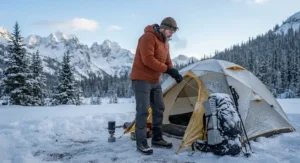
For backpackers and thru-hikers, lightweight waterproof pants hiking demands are a genuinely different category from general rain gear. Every extra ounce compounds over miles, which is why ultralight options like the Marmot PreCip Eco Pant trade some fabric thickness for a pack weight under 8 ounces — light enough that most hikers forget it’s even in their bag until the sky opens up.
What most buyers overlook about this trade-off is that lightweight doesn’t automatically mean fragile in the way it used to. Reviewers consistently note that modern 2.5-layer fabrics hold up fine for typical trail conditions; the durability gap only really shows up during sustained bushwhacking or scrambling over sharp rock, where a heavier fabric like the one on the REI Co-op XeroDry GTX Pant clearly earns its extra weight. The honest advice: if your trips stay on maintained trails, go light. If you’re regularly off-trail, budget for the extra ounces.
Waterproof Pants Over Jeans & Over-Pants Rain Protection
This is a genuinely different use case from technical hiking gear, and it deserves its own section because the buying criteria flip almost entirely. When shopping for waterproof pants over jeans, the fabric’s hydrostatic head rating matters far less than the cut, the leg opening size, and how easily the waist adjusts to accommodate bulkier layers underneath.
The Frogg Toggs Pro Action Rain Pant was specifically engineered with this in mind — its extended 4-inch back rise and oversized leg openings exist purely to solve the “getting these on over what I’m already wearing” problem. Similarly, over-pants rain protection for commuters, motorcyclists, and outdoor workers benefits from full-length or near-full-length side zips, since stepping into a narrow pant leg while already wearing boots or work pants rarely goes smoothly. The Outdoor Research Foray Pant takes the same idea upmarket, adding genuine 3-layer durability to that same over-layer-friendly relaxed fit. If this is your primary use case, don’t let a slim-fit technical shell tempt you on looks alone — you’ll fight it every single time you try to put it on.
Rain Pants Under $60: What You Actually Get at Each Price Tier
Budget matters, and searching specifically for rain pants under $60 doesn’t mean settling for garbage — it means understanding exactly what trade-offs come with that price point so you’re not disappointed later. At under $40, the Frogg Toggs Pro Action Rain Pant delivers genuine waterproof protection through a 2-layer nonwoven polypropylene shell; it won’t out-breathe a $175 Gore-Tex pant, but it will keep you dry.
Based on the spec comparison, the gap between a $35 pair and a $150 pair isn’t really about “does it keep water out” — both do that job. The difference shows up in breathability during high-output activity, long-term abrasion resistance, and how the fabric holds up to repeated washing and storage over multiple seasons. For someone who needs rain pants three or four times a year for yard work, dog walks, or the occasional soggy commute, that gap simply doesn’t matter enough to justify the extra cost. For daily trail use, it does.
Packable Rain Trousers vs Bulky Hardshells: Pack-Down Size Compared
Packable rain trousers exist for one specific reason: minimizing the space and weight penalty of carrying “just in case” gear. The Marmot PreCip Eco Pant compresses down small enough to disappear into a jacket pocket, which is exactly why it’s the go-to recommendation for hikers who want rain coverage without dedicating a quarter of their pack to it.
Compare that against the Patagonia Torrentshell 3L Pants or REI Co-op XeroDry GTX Pant, both of which use heavier, stiffer fabrics that simply don’t compress to the same degree. That’s not a flaw — it’s a design decision that prioritizes durability over pack-ability, and it’s the right call for anyone using rain pants as a primary layer rather than an emergency backup. The honest framework here: if you’ll wear rain pants only occasionally, prioritize pack-down size. If you’ll wear them regularly as expected gear, prioritize the fabric weight and durability instead.
Common Mistakes When Buying Waterproof Hiking Pants
Even experienced hikers make avoidable errors shopping for waterproof hiking pants. The most frequent mistake is buying based on hydrostatic head number alone, ignoring breathability entirely — a 30,000mm pant with poor MVTR can leave you just as wet from trapped sweat as a leaky pair would from rain.
A close second: sizing for a snug fit instead of sizing to layer. Rain pants are outerwear, and a pair that fits perfectly over bare legs becomes useless the moment you need to add a base layer in cold weather. Another common misstep is skipping the zipper length entirely when comparing pants — ankle-only zips look identical to full-length zips in a product photo but create a dramatically different real-world experience when you’re trying to pull pants on over hiking boots at a trailhead in the rain. Finally, plenty of buyers assume all “2.5-layer” fabrics perform identically; in practice, the coating quality and denier rating between brands varies enough that reading actual reviews matters more than the marketing spec sheet.
Safety, PFAS Regulations & What “Waterproof” Really Means
The waterproofing chemistry inside your rain pants has become a genuine regulatory issue, not just an environmental talking point. Multiple states have begun restricting PFAS (“forever chemicals”) in outdoor apparel — for instance, New York’s PFAS-in-apparel law now requires compliance certifications for outdoor gear marketed for severe wet conditions, reflecting a broader trend toward phasing these chemicals out of consumer products nationwide.
That regulatory shift connects directly to genuine health research. Investigative reporting on the topic has documented how PFAS chemicals, historically used in DWR coatings and membranes, have been linked to a range of health concerns and persist in the environment for extremely long periods — a pattern documented in depth by NRDC’s reporting on forever chemicals. The practical upshot for buyers: PFAS-free options like the Marmot PreCip Eco Pant and Patagonia Torrentshell 3L Pants now perform competitively with traditional PFAS-treated fabrics, so choosing one no longer means a meaningful waterproofing sacrifice the way it might have several years ago.

Frequently Asked Questions
❓ Are waterproof rain pants actually breathable enough for hiking?
❓ Can I wear rain pants over jeans comfortably?
❓ How long do waterproof rain pants typically last?
❓ What hydrostatic head rating do I actually need?
❓ Are PFAS-free rain pants as waterproof as traditional ones?
Conclusion
There’s no single “best” pair of waterproof rain pants men should buy — there’s only the best pair for what you’re actually doing outside. Casual, occasional use points toward the budget-friendly Frogg Toggs Pro Action Rain Pant or the well-rounded REI Co-op Trailmade Rain Pants. Serious backpackers chasing minimal pack weight should look hard at the Marmot PreCip Eco Pant, while anyone who regularly needs to pull rain gear on over jeans or work pants will get far more genuine use out of the relaxed-fit Outdoor Research Foray Pant.
For buyers who want the most technical, long-lasting protection money can reasonably buy, the REI Co-op XeroDry GTX Pant and Patagonia Torrentshell 3L Pants both earn their higher price tags through genuine 3-layer or Gore-Tex construction, while the Mountain Hardwear Stretch Ozonic Pant splits the difference with best-in-class comfort. Match the pick to your actual use case rather than the highest spec sheet, and whichever pair you land on, that next unexpected downpour won’t ruin your day.
✨ Ready to Stay Dry This Season?
🔍 Check current pricing and availability on any of the seven picks above before your next rainy outing. A reliable pair of rain pants is one of the cheapest upgrades you can make to how much you actually enjoy being outside in bad weather! 🌧️🥾
Recommended for You
- Cheap Rain Jacket That Actually Works: 7 Picks for 2026
- How Should a Rain Jacket Fit? 7 Tested Picks & Sizing Tips (2026)
- Raincoat Material Comparison 2026: 7 Fabrics Ranked & Tested
Disclaimer: This article contains affiliate links. As an Amazon Associate, I earn from qualifying purchases. If you purchase products through these links, we may earn a small commission at no additional cost to you.
✨ Found this helpful? Share it with your friends! 💬🤗
