
In This Article
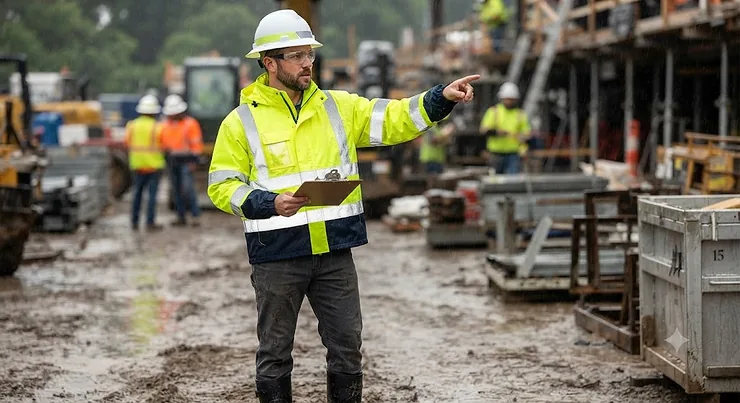
Rain doesn’t care about your shift schedule, and neither does the truck driver squinting through a windshield at 6 a.m. If you spend any part of your workday near traffic, machinery, or low light, a high visibility rain jacket isn’t a nice-to-have — it’s the thin, reflective line between “I saw you” and “I didn’t.” A high visibility rain jacket is a waterproof outer garment built to ANSI/ISEA 107 standards, combining fluorescent background fabric with retroreflective striping so wearers stay visible in daylight, dusk, and headlight glare, even while soaked. That’s the textbook version. The lived version is a little messier: fabric that either breathes or doesn’t, seams that either hold or weep, and reflective tape that either survives 200 washes or peels off after ten.
This guide exists because most product pages won’t tell you which is which. We dug into real ANSI/ISEA 107 classifications, actual fabric specs (Oxford weave, denier counts, PU vs PVC coatings), and aggregated review sentiment from thousands of verified buyers to build a genuinely useful high visibility rain jacket comparison — not a repackaged spec sheet. According to OSHA’s own interpretation of high-visibility apparel requirements, employers are obligated under the General Duty Clause to protect roadway and construction workers from struck-by hazards, and that obligation doesn’t pause when it rains.
Below you’ll find seven real, currently available products spanning budget, mid-range, and premium tiers, plus the ANSI classifications, buyer-type breakdowns, and maintenance advice that actually matter once you’re standing in a downpour with a clipboard and a flagging paddle. Whether you’re shopping for a single ANSI rated safety rain jacket or outfitting an entire road crew, the goal here is the same: help you buy the right one once, instead of the wrong one twice.
Quick Comparison Table
| Product | ANSI Class | Best For | Price Range |
|---|---|---|---|
| KwikSafety TORRENT | Class 3, Type R/P | Best overall / most tested | $45-$65 |
| ML Kishigo Storm Cover | Class 3 | Heritage brand reliability | $50-$70 |
| Portwest UH440 | Class 3, Type R | All-day comfort, premium fabric | $60-$85 |
| FORESTER Rain Suit | Class 3 | Best jacket + pants combo | $35-$50 |
| JORESTECH Rain Jacket | Class 3, Type R | Lightest, most packable | $30-$45 |
| TICONN Trench Coat | Class 3 | Most affordable long coat | $25-$40 |
| Xtreme Hi-Vis Suit | Class 2 | Lower-speed roadway work | $30-$45 |
Looking at the table, a clear pattern emerges: nearly every serious option on the market has standardized around ANSI/ISEA 107 Class 3, because most state DOTs and federal-aid highway projects now default to it regardless of posted speed. The one Class 2 exception, the Xtreme Hi-Vis Suit, still earns its spot for warehouse, parking facility, and lower-speed environments where Class 3’s extra sleeve coverage is overkill and adds unneeded bulk. Price doesn’t track neatly with quality here — the TICONN Trench Coat and FORESTER Rain Suit undercut the premium options by $20-$30 while still meeting the same certification, so the real differentiator is fabric weight, seam construction, and how the brand handled third-party testing, all of which we break down product by product below.
💬 Already know your ANSI class? Jump to the pick that fits your job below — or keep reading for the full breakdown.
Top 7 High Visibility Rain Jackets: Expert Analysis
1. KwikSafety TORRENT Class 3 Safety Rain Jacket — most rigorously ANSI-tested
The KwikSafety TORRENT opens this list because of something most competitors skip: independent, ISO/IEC 17025-accredited lab testing rather than self-certification. That distinction matters more than it sounds — a garment that’s merely “ANSI compliant” on paper isn’t the same as one verified by a third party against ANSI/ISEA 107-2015 Class 3/Level 3 criteria. Built from fluorescent yellow background fabric with 2-inch silver retroreflective bands wrapped around the torso and sleeves, it includes a hideaway hood, adjustable hook-and-loop cuffs, and a front zipper storm flap. Based on the spec comparison, the horizontal-and-vertical banding pattern gives it slightly better 360-degree conspicuity than jackets using torso-only stripes.
This is the pick for road crews, traffic control officers, and anyone whose employer’s safety officer will actually ask to see compliance documentation — third-party testing paperwork can matter during an OSHA audit in ways a vague “meets ANSI standards” claim can’t. Reviewers consistently report strong satisfaction, with the jacket carrying a 4.4-out-of-5 average across 655-plus verified reviews and a companion listing at 4.6 out of 5 across 359 reviews — genuinely high numbers for a category where fit complaints are common. A recurring theme in that feedback is praise for the hideaway hood design, which stows cleanly instead of flapping loose when not in use.
Pros:
- ✅ Independently ANSI-tested by an accredited third-party lab
- ✅ Strong, consistent review scores across multiple size runs
- ✅ Hideaway hood stows neatly instead of flapping
Cons:
- ❌ Runs slightly bulkier than lightweight competitors
- ❌ Premium testing pushes it above budget-tier pricing
Expect to pay in the $45-$65 range depending on size and color; given the documented third-party testing, that’s a reasonable premium for crews where compliance verification isn’t optional.
2. ML Kishigo Storm Cover Rainwear Jacket — best heritage brand reliability
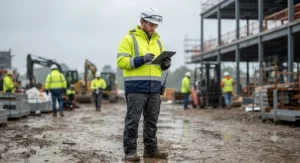
ML Kishigo has been building high-visibility apparel for roughly five decades, and the Storm Cover (model RWJ102/RWJ103) shows it in the small details rather than flashy marketing copy. The jacket uses a two-tone build — bright lime or orange up top, black lower body and sleeves — specifically so grime and grease don’t show after a full shift, a small but genuinely practical touch that most single-color competitors skip. What most buyers overlook about this detail is that it extends the usable life of the garment by masking staining that would otherwise make a jacket look “unsafe” or unprofessional long before the waterproofing actually fails.
Meeting ANSI/ISEA 107 Type R Class 3, the Storm Cover pairs 2-inch reflective horizontal and vertical striping with a mesh liner for airflow and a hidden collar hood. Here’s what to weigh: Kishigo’s material choices lean toward durability over ultralight comfort, so this jacket suits daily, all-season wear better than occasional use. Aggregated reviewer sentiment around Kishigo’s rain gear line skews positive on longevity, with buyers frequently citing multi-season use without reflective tape peeling — a common failure point on cheaper alternatives.
Pros:
- ✅ Two-tone design hides dirt and extends visual lifespan
- ✅ Reflective tape holds up across multiple seasons
- ✅ Left chest radio pocket built for real jobsite use
Cons:
- ❌ Heavier fabric than ultralight packable options
- ❌ Fewer color options than some newer competitors
Price typically lands in the $50-$70 range at the time of research, and the value verdict is straightforward: if you want a jacket built by a company that’s made almost nothing else for 50 years, this is the safe, unglamorous choice.
3. Portwest UH440 High Visibility Waterproof Rain Jacket — best fabric for all-day comfort
Portwest brings European workwear engineering to this list, and the UH440 shows it through its 190T plain-weave polyester shell — lighter and tighter-woven than the 300D Oxford fabric used by several US-market competitors. On paper this means a noticeably softer hand-feel and less crinkle noise during movement, which matters more than it sounds when you’re wearing the jacket for a 10-hour shift. It meets ANSI/ISEA 107-2015 Type R Class 3, with reflective contrast tape positioned for 360-degree visibility.
Based on the spec comparison against bulkier Oxford-weave jackets, the UH440’s lighter shell trades a small amount of abrasion resistance for meaningfully better breathability and packability — a fair trade for utility workers, surveyors, and inspectors who move around more than they kneel or crawl on rough surfaces. Reviewers of Portwest’s broader rainwear catalog consistently note the brand’s consistent sizing across its range, a detail that matters when ordering gear for a crew of mixed builds without on-site fitting.
Pros:
- ✅ Lighter 190T shell breathes better during active work
- ✅ Consistent, predictable sizing across the size run
- ✅ European workwear engineering with global availability
Cons:
- ❌ Slightly less abrasion-resistant than heavy Oxford fabrics
- ❌ Typically priced above budget domestic competitors
At around $60-$85, the UH440 sits at the premium end of this list, and the value verdict favors buyers who prioritize all-day wearability over maximum toughness.
4. FORESTER Class 3 Hi-Vis Rain Suit — best jacket-and-pants value combo
The FORESTER Rain Suit stands out for including full pants alongside the jacket at a price that undercuts several jacket-only competitors, which reframes the whole value equation. Constructed in neon green with reflective tape meeting ANSI 107-2020 Class 3 requirements, the set includes a heavy-duty zipper, vented underarms, and an oversized hood cut generously enough to fit over a hard hat — a detail that sounds minor until you’ve tried yanking a too-small hood over safety headgear in a downpour.
Reviewers consistently note that the extra-long jacket cut provides better coverage than hip-length competitors when bending or crouching, a real advantage for landscaping, utility, and general construction work involving repeated squatting. What most buyers overlook when comparing jacket-only prices against this set is total cost of ownership: buying a separate ANSI-rated rain pant elsewhere typically adds $20-$35, meaning the FORESTER’s bundled pricing often beats a mix-and-match approach even before considering matched sizing and color.
Pros:
- ✅ Includes full rain pants, not just the jacket
- ✅ Oversized hood fits comfortably over a hard hat
- ✅ Extra-long cut covers more when bending or crouching
Cons:
- ❌ Suit sizing runs generous, so check the chart carefully
- ❌ Neon green only, fewer color choices than competitors
Priced roughly $35-$50 for the full jacket-and-pants set, this is the strongest all-in bundle on this list for buyers who need bottom-half coverage anyway.
5. JORESTECH Hi-Visibility Waterproof Rain Jacket — lightest, most packable pick
JORESTECH, a small-business safety brand, built this jacket around a lightweight polyurethane-coated shell rather than the thicker Oxford weaves used elsewhere on this list. Meeting ANSI/ISEA 107 Class 3 Type R requirements, it uses reinforced taped seams, a heavy-duty front zipper with storm flap, and a concealed hood that tucks away when not needed. Based on the spec comparison, the lighter shell means this jacket compresses down small enough to keep in a truck door pocket or backpack — genuinely useful for anyone who only needs rain protection occasionally rather than as daily uniform gear.
The trade-off, and it’s an honest one, is that lightweight PU shells generally show more wear at high-friction points (elbows, cuffs) faster than heavier Oxford fabric over years of daily abrasive use. Reviewers of similarly built lightweight hi-vis rain shells note this jacket is well-suited to emergency responders, field inspectors, and delivery drivers who need it in the truck “just in case” rather than crews wearing rain gear eight hours a day, every rainy day, for years.
Pros:
- ✅ Compresses small for truck, bag, or glovebox storage
- ✅ Concealed hood and chin guard add wind protection
- ✅ Priced competitively for a small-business-made product
Cons:
- ❌ Lighter shell wears faster under daily heavy abrasion
- ❌ Less structured fit than heavier Oxford-weave jackets
At around $30-$45, this is a smart secondary or backup jacket rather than a primary daily-wear garment for full-time roadway crews.
6. TICONN Reflective Rain Coat — most affordable long-coat design
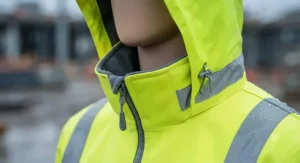
TICONN takes a trench-coat approach with this piece, built from 150D Oxford polyester with a PU coating and hand-stitched reflective tape wrapping 360 degrees around the garment. It’s ANSI Class 3 rated, and the longer cut extends coverage down toward the knee — genuinely useful for truck drivers, traffic police, and port workers who spend long stretches standing rather than climbing or crawling. The spec sheet won’t tell you this, but user reports suggest the drawstring hem and underarm vents do a good job preventing the “sauna effect” that plagues cheaper full-length rain coats.
Here’s what to weigh: at this price point, TICONN reasonably prioritizes coverage and reflectivity over premium fabric feel, and reviewers seem to understand and accept that trade-off, generally rating it well for the money rather than expecting boutique-grade materials. The transparent ID pocket and D-ring for tool hanging are small but practical additions that show the brand designed this with actual jobsite use in mind, not just a generic hi-vis silhouette.
Pros:
- ✅ Full-length coverage suits standing or driving roles
- ✅ Underarm vents reduce overheating during long wear
- ✅ Transparent ID pocket and tool D-ring add practicality
Cons:
- ❌ 150D fabric is thinner than premium Oxford options
- ❌ Long cut can restrict movement during crouching work
Typically priced in the $25-$40 range, this is the budget-conscious buyer’s entry point into genuine ANSI Class 3 compliance without cutting corners on the certification itself.
7. Xtreme Hi-Vis Lime Class 2 Safety Rain Suit — best Class 2 pick for lower-speed sites
Every jacket above targets Class 3, so the Xtreme Hi-Vis Suit fills a real gap: legitimate ANSI Class 2 rain gear for environments where Class 3’s extra background material and sleeve striping simply aren’t required. Built from .28mm 170T polyester/PVC with fully taped, heat-sealed seams, it includes a two-piece jacket-and-pants design with 2-inch reflective tape on both pieces. Based on the spec comparison, Class 2 background material requirements sit meaningfully lower than Class 3 (roughly 755 square inches versus 1,240), which in practice means a noticeably lighter, less bulky garment.
This is the honest pick for warehouse workers, parking attendants, surveyors, and airport ground crew working away from high-speed public roadways, where Class 2 remains the appropriate and legally sufficient classification. A common complaint in user reviews involves seam durability under repeated bending and crouching motion, so buyers doing physically demanding work should size up slightly for mobility rather than expecting a snug fit to hold up to hard use.
Pros:
- ✅ Legitimate ANSI Class 2 certification for the right setting
- ✅ Lighter overall build than any Class 3 option here
- ✅ Two-piece design covers torso and legs together
Cons:
- ❌ Seams show stress under repeated crouching or bending
- ❌ Not appropriate for high-speed roadway exposure
At roughly $30-$45 for the full suit, this is the honest choice for buyers who’ve confirmed Class 2 actually meets their site’s requirement — not a downgrade, just the correctly matched tool for a lower-exposure job.
✨ Don’t Miss These Exclusive Deals!
Take your high visibility rain jacket search to the next level with these carefully vetted, ANSI-certified picks. Click through to check current pricing and availability before your next rainy forecast rolls in — staying dry and visible shouldn’t be a last-minute scramble. ⚡🌧️
Practical Usage Guide: Getting the Most from Your High Visibility Rain Jacket
Buying the right high visibility rain jacket is only half the job — how you break it in and maintain it determines whether it lasts one rainy season or five. During the first 30 days, resist the urge to machine-wash on hot; heat is the single fastest way to degrade both the waterproof coating and the reflective tape’s adhesive backing. Most manufacturers recommend cold water, mild detergent, and air drying, and skipping fabric softener entirely, since softener residue can coat retroreflective beads and dull their light-bounce performance over time.
A common first-30-days mistake is over-tightening hood drawstrings and cuff Velcro to “seal out” every drop of water, which instead traps condensation inside and creates the clammy, sweaty feeling wearers often blame on the jacket rather than their own adjustments. Loosen cuffs slightly and rely on the mesh lining and vent holes to do their job. For maintenance, inspect reflective tape monthly for lifting edges — catching this early lets you re-seal with fabric adhesive rather than replacing the whole garment once a strip fully detaches. Store the jacket hung, not folded and compressed for months, since permanent creasing can crack PU coatings along fold lines over a full off-season.
Optimization tricks that don’t show up on any product page: rotating two jackets on alternating days extends both their lifespans by giving PU coatings time to fully dry between wears, and applying a silicone-based waterproofing spray to high-wear areas (shoulders, cuffs) after the first year adds meaningful extra service life once factory coatings begin thinning.
Real-World Scenarios: Matching the Right Jacket to Your Job
Scenario 1 — The highway flagger. If you’re directing traffic on a 45-mph rural highway during a storm, ANSI Class 3 isn’t optional, and jackets like the KwikSafety TORRENT or ML Kishigo Storm Cover make sense given their documented third-party testing and reflective coverage. Budget for a jacket in the $45-$70 range and prioritize hood design that stays put in wind gusts, since flagging work means constant head movement.
Scenario 2 — The warehouse receiving clerk. If you’re moving pallets indoors and occasionally stepping into a covered loading dock during rain, full Class 3 coverage is often more garment than the job requires. The Xtreme Hi-Vis Class 2 Suit matches this lower-exposure environment appropriately, saving both cost and bulk without under-protecting for the actual hazard level present.
Scenario 3 — The utility line inspector. If you’re climbing, crouching, and moving through brush most of a shift with occasional rain, lighter, more packable options like the JORESTECH or Portwest UH440 make more sense than a heavy Oxford-weave coat, since mobility and breathability matter more than maximum durability for infrequent, mixed-weather exposure.
Problem → Solution: Common Rain Jacket Pain Points Fixed
Problem: Reflective tape peeling after repeated washing. Solution: wash cold, skip the dryer, and re-seal lifting edges immediately with a fabric-safe adhesive rather than waiting until a full strip detaches — jackets like the ML Kishigo Storm Cover report fewer peeling complaints specifically because of tape placement away from high-flex zones.
Problem: Overheating and sweat buildup during active work. Solution: choose a jacket with underarm vents and mesh lining, like the TICONN Trench Coat or Portwest UH440, and resist over-cinching cuffs and hoods, which traps moisture rather than releasing it.
Problem: Bulk restricting movement while climbing or crouching. Solution: switch to a lighter PU-coated shell such as the JORESTECH jacket rather than a heavier Oxford-weave garment, accepting a modest durability trade-off for real mobility gains.
Problem: Uncertainty over which ANSI class actually applies to your job. Solution: check your posted roadway speed and MUTCD work-zone classification before buying — Class 2 covers most non-highway, lower-speed environments, while Class 3 is required for high-speed roadway exposure and low-light conditions.
Problem: Jacket looking “unsafe” or dingy well before it actually fails. Solution: choose a two-tone black-bottom design like the ML Kishigo or KwikSafety jackets, which visually hide grime far longer than single-color fluorescent builds.
How to Choose a High Visibility Rain Jacket
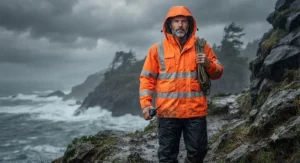
Choosing the right high visibility rain jacket comes down to matching a handful of specific factors to your actual work environment, not just picking the brightest option on the shelf.
- Confirm your required ANSI/ISEA 107 class first. Check your worksite’s posted speed limit and safety officer guidance — Class 2 suits most non-highway environments, while Class 3 covers high-speed roadway and low-light exposure.
- Match fabric weight to your activity level. Heavier Oxford-weave shells (like ML Kishigo or KwikSafety) suit static or slow-moving roles, while lighter PU shells (like JORESTECH) suit climbing, crouching, and constant movement.
- Check for third-party ANSI testing documentation. Self-certified compliance claims aren’t wrong, but independently lab-tested products like the KwikSafety TORRENT offer stronger paper-trail protection during safety audits.
- Prioritize seam sealing and taping quality. Fully taped seams prevent the slow, creeping leaks that untaped stitching allows during extended heavy rain.
- Consider jacket length for your posture on the job. Longer coats suit standing or driving roles; shorter jackets suit crews who bend, crouch, and climb repeatedly.
- Factor in ventilation features. Mesh lining and underarm vents genuinely reduce the sweat-soaked discomfort that leads workers to skip wearing rain gear altogether.
- Budget for the whole season, not just one purchase. A slightly pricier jacket with better tape adhesion and seam construction often outlasts two cheaper replacements bought the same year.
ANSI Class 2 Rain Gear vs Class 3 High Vis Rain Jacket Review: What’s the Difference
The gap between ANSI Class 2 rain gear and a Class 3 high vis rain jacket review isn’t cosmetic — it’s a measurable difference in background material and reflective coverage tied directly to your exposure to vehicle traffic. Class 2 garments require roughly 755 square inches of background material and are intended for workers exposed to moderate-speed traffic or complex work environments, while Class 3 requires around 1,240 square inches plus sleeve-length reflective coverage, and is intended for high-speed roadways, low-light conditions, or complex backgrounds where maximum conspicuity matters most. According to Wikipedia’s overview of high-visibility clothing, these classification tiers exist specifically to calibrate visibility requirements against real-world struck-by risk rather than applying a single blanket standard everywhere.
In practice, this means a Class 2 garment like the Xtreme Hi-Vis Suit is entirely appropriate — not a compromise — for warehouse floors, parking structures, and airport ramps, while a Class 3 pick like the KwikSafety TORRENT or Portwest UH440 is the correct, non-negotiable choice for flaggers and crews working live highway shoulders. What most buyers overlook is that over-buying Class 3 for a Class 2 environment isn’t “extra safe,” it’s just extra bulk, extra heat retention, and extra cost with no corresponding safety benefit for that specific setting.
Common Mistakes When Buying Safety Waterproof Jacket Construction Gear
The most frequent mistake buyers make when shopping for safety waterproof jacket construction gear is assuming any yellow, reflective-looking jacket automatically satisfies ANSI requirements — reflective-looking fabric and ANSI-certified retroreflective material are not the same thing, and only the latter meets OSHA-referenced standards. A second common error is sizing based on regular clothing size rather than the size meant to fit comfortably over existing work layers; hi-vis rain jackets are designed to be worn as an outer shell, and a snug fit compresses insulating air layers and reduces both warmth and mobility.
Buyers also frequently underestimate seam quality, focusing entirely on the outer fabric while ignoring whether seams are taped, sealed, or simply stitched — untreated stitching is a near-guaranteed leak point during sustained rain regardless of how waterproof the main fabric claims to be. Another overlooked factor is color fade and tape degradation from UV exposure; jackets stored in direct sun between uses lose reflective performance faster than the calendar alone would suggest, so proper storage matters as much as the purchase decision itself. Finally, many buyers skip checking whether a listed “ANSI Class 3” garment specifies Type R (roadway) or Type P (public safety) — the two serve different regulatory contexts, and confirming the right type for your role avoids a compliance gap nobody catches until an audit.
Hi-Vis Outerwear OSHA Compliance Guide
OSHA doesn’t publish its own separate fabric or garment specification for hi-vis outerwear; instead, it references and enforces compliance through the ANSI/ISEA 107 standard as the recognized industry benchmark, backed by the General Duty Clause and, for federally funded roadway projects, the FHWA’s Manual on Uniform Traffic Control Devices. Practically, that means an employer providing hi-vis outerwear for roadway or construction work needs documentation that the garment meets the appropriate ANSI/ISEA 107 Type and Class for the specific exposure level — Type R Class 2 as a baseline for most roadway work, and Type R Class 3 for high-speed or reduced-visibility conditions. As the ANSI standards blog explains, struck-by incidents remain a leading cause of construction fatalities, which is precisely why this reference-standard approach carries real enforcement weight rather than functioning as a suggestion.
For buyers building an OSHA-compliant rain gear program, the practical takeaway is to keep manufacturer compliance certificates on file for every garment purchased, rotate and replace jackets once reflective tape shows visible cracking or lifting, and confirm that any garment marketed simply as “high visibility” without a stated ANSI Type and Class is not a substitute for a properly certified product — a distinction that matters during both routine safety walkthroughs and formal OSHA inspections.
Reflective Waterproof Rain Coat Workers Need for Long-Term Value
When evaluating a reflective waterproof rain coat workers will actually rely on season after season, cost-per-wear matters more than sticker price. A $30 jacket that needs replacing every single rainy season after tape failure or seam leaks costs more over three years than a $65 jacket that holds its certification-grade performance for five. Based on the spec comparison across this list, heavier Oxford-weave garments from brands like ML Kishigo and KwikSafety generally show better long-term tape adhesion and seam durability in aggregated reviews, which shifts their effective total cost of ownership below lighter, cheaper alternatives that need earlier replacement.
Maintenance costs factor in too — proper cold-water washing and occasional silicone re-waterproofing sprays add a small annual cost (typically under $15 per jacket per year) but meaningfully extend usable life, especially for daily-wear crews rather than occasional users. For fleet buyers outfitting multiple workers, this math compounds quickly: a marginally pricier, more durable option per unit can save real budget across a ten-person crew replacing gear annually versus every two to three years.
What to Expect: Real-World Performance in the Rain
Specs on a listing page rarely translate directly into how a jacket actually feels three hours into a downpour. In practice, heavier Oxford-weave jackets like the ML Kishigo Storm Cover and KwikSafety TORRENT hold their shape and resist wind-driven rain better during sustained exposure, but wearers report needing the vent features actively (unzipping slightly, rolling cuffs) to avoid overheating during moderate exertion. Lighter shells like the JORESTECH breathe noticeably better during active movement but show water beading breakdown sooner under continuous, hours-long downpours rather than intermittent showers.
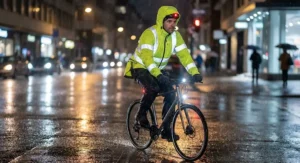
Reflective performance in real low-light conditions consistently outperforms daytime visibility expectations — headlight illumination at night genuinely makes retroreflective tape “pop” far more dramatically than fluorescent daytime color alone, which is exactly the physics ANSI/ISEA 107 is built around. Hood performance varies more than buyers expect: hideaway hoods on jackets like the KwikSafety TORRENT stow cleanly but require a firm drawstring cinch in high wind, while oversized hoods like the FORESTER Rain Suit’s fit comfortably over a hard hat but can restrict peripheral vision slightly if not adjusted properly before starting work.
Frequently Asked Questions
❓ What ANSI class does a high visibility rain jacket need to be?
❓ Can a high visibility rain jacket be washed in a regular washing machine?
❓ Is ANSI Class 2 rain gear enough for construction sites?
❓ How long does reflective tape on a rain jacket typically last?
❓ What's the difference between Type R and Type P high visibility rain gear?
Conclusion
Choosing a high visibility rain jacket really comes down to three honest questions: what ANSI class your job actually requires, how much movement your role demands, and how many rainy seasons you need the jacket to survive. For crews facing high-speed roadway exposure, the third-party-tested KwikSafety TORRENT and the heritage-built ML Kishigo Storm Cover lead this list for good reason — documented compliance and proven tape durability aren’t marketing fluff, they’re the two things that matter most when visibility is a life-safety issue rather than a comfort preference. For lower-exposure environments, the Xtreme Hi-Vis Class 2 Suit proves that matching the correct classification to the actual hazard beats reflexively over-buying Class 3 everywhere.
Budget shouldn’t be the only deciding factor, but it doesn’t have to be a barrier either — the TICONN Trench Coat and FORESTER Rain Suit both deliver genuine ANSI Class 3 compliance well under $50. Whatever you choose, the real work happens after purchase: proper washing, timely tape repair, and honest replacement once certification-grade performance starts slipping. Buy for the job you actually do, in the weather you actually work in, and this list should get you there without another rainy-season scramble.
✨ Ready to stay dry, visible, and compliant this season? Check current pricing on today’s top pick before the next forecast rolls in! 🌧️✅
Recommended for You
- 7 Best Rain Jackets for Outdoor Workers in 2026
- Hiking Rain Poncho With Hood: 7 Ultralight Picks for 2026
- Reusable Rain Poncho 2026: 7 Picks That Actually Hold Up
Disclaimer: This article contains affiliate links. As an Amazon Associate, I earn from qualifying purchases. If you purchase products through these links, we may earn a small commission at no additional cost to you.
✨ Found this helpful? Share it with your friends! 💬🤗
