
In This Article
Picture this: it’s a crisp winter morning, the lake is glassy smooth, and you know the fish are biting. But there’s one problem—the temperature is hovering around 25°F, and you’re not sure your gear can handle it. I’ve been there too many times, shivering through what should’ve been epic fishing trips because I underestimated the cold.
Here’s the reality: cold weather fishing apparel isn’t just about comfort anymore—it’s about safety. According to the National Weather Service, cold water drains body heat up to 25 times faster than cold air, making proper insulation absolutely critical for anyone spending time near water in winter conditions. Whether you’re ice fishing on a frozen lake, casting from a boat in early spring, or wading through frigid rivers, the right gear makes all the difference between an enjoyable day and a dangerous situation.
The good news? Modern cold weather fishing apparel has evolved dramatically. We’re not talking about bulky, restrictive layers that make you feel like the Michelin Man. Today’s fishing gear combines advanced insulation technologies, waterproof membranes, and breathable fabrics that keep you warm without sacrificing mobility. From insulated bibs with buoyancy features to merino wool base layers that wick moisture like magic, there’s never been a better time to upgrade your winter fishing wardrobe.
In this comprehensive guide, I’ll walk you through everything you need to know about cold weather fishing apparel. We’ll cover the top products available on Amazon right now, break down the science behind layering systems, and share insider tips that’ll transform your cold-weather fishing experience. Whether you’re a seasoned ice angler or just starting to explore winter fishing, this guide has you covered.
Quick Comparison Table
| Product | Type | Key Feature | Price Range | Rating |
|---|---|---|---|---|
| BASSDASH Splice Insulated Bibs | Insulated Bibs | 3M Thinsulate 100g insulation | $80-$120 | ⭐⭐⭐⭐ 4.3/5 |
| Striker Climate Jacket | 3-in-1 Ice Fishing Jacket | Removable liner, Sureflote flotation | $280-$350 | ⭐⭐⭐⭐⭐ 4.8/5 |
| Palmyth Flexible Fishing Gloves | Convertible Gloves | 3-cut finger design, fleece lined | $18-$28 | ⭐⭐⭐⭐ 4.4/5 |
| Grundéns Weather Watch Jacket | Waterproof Fishing Jacket | 10K/5K waterproof rating, DWR finish | $120-$160 | ⭐⭐⭐⭐½ 4.5/5 |
| Merino.tech Base Layer Set | Thermal Base Layer | 100% Merino wool, 250g weight | $70-$110 | ⭐⭐⭐⭐½ 4.6/5 |
| FWG Waterproof Fishing Bibs | Rain Bibs | 90% Nylon with PU coating | $40-$60 | ⭐⭐⭐⭐ 4.2/5 |
| KastKing HydroSense Gloves | Waterproof Fishing Gloves | 100% waterproof, fleece lined | $35-$50 | ⭐⭐⭐⭐ 4.3/5 |
💬 Just one click – help others make better buying decisions too! 😊
Top 7 Cold Weather Fishing Apparel: Expert Analysis
1. BASSDASH Splice Men’s Insulated Waterproof Fishing Bibs
When it comes to versatile cold weather fishing apparel that won’t drain your wallet, the BASSDASH Splice Insulated Bibs deserve serious attention. These bibs have become something of a cult favorite among budget-conscious anglers who refuse to compromise on quality.
Key Specifications:
- 3M Thinsulate Insulation: 100g in legs, 80g in upper body
- Waterproof Rating: 5,000mm H2O
- Breathability: 5,000g/m²/24hrs
- Temperature Range: Effective down to 20°F
What makes these bibs stand out is their intelligent thermal mapping. Rather than using the same insulation thickness throughout, BASSDASH strategically places heavier insulation where you need it most—your legs—while keeping the upper body lighter to prevent overheating when you’re active. The ripstop outer layer resists snags from hooks and brush, while heat-sealed seams ensure complete waterproofing.
Customer feedback consistently praises the seven-pocket design, with anglers appreciating the YKK waterproof chest zippers and fleece-lined hand warmers. The full-leg zips with dual zippers make getting these on over boots incredibly easy, and they’re perfect for adjusting ventilation when you’re hole-hopping across the ice.
✅ Pros:
- Excellent value for the quality and features
- Thermal-mapped insulation prevents bulk
- Machine washable for easy maintenance
❌ Cons:
- May run slightly large—check sizing chart carefully
- Not rated for extreme sub-zero temperatures
Price: $80-$120 depending on size and color
2. Striker Climate Jacket with Removable Adapt Liner
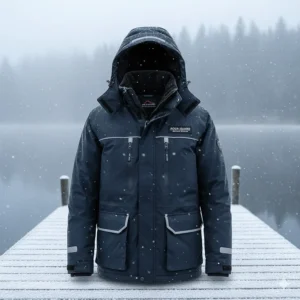
The Striker Climate Jacket represents the pinnacle of modern ice fishing outerwear. This isn’t just a jacket—it’s a complete 3-in-1 system that adapts to changing weather conditions throughout the entire cold-water fishing season.
Key Specifications:
- Hydrapore waterproof rating: 5,000mm
- Breathability: 5,000g/m²/24hrs
- Sureflote perforated flotation technology
- PrimaLoft insulated removable liner
What sets the Climate Jacket apart is its versatility. The removable Adapt Insulated Jacket can be worn as a standalone piece during milder days or zipped into the shell for maximum warmth in brutal conditions. The perforated Sureflote flotation provides crucial safety without the bulk and moisture retention issues of traditional foam flotation.
Anglers rave about the magnetic storm flap that makes suiting up quick and easy, even with cold fingers. The integrated Line Cutterz zipper pull is a brilliant touch that eliminates fumbling for tools when you need to cut line. Pit zips provide ventilation control, and the fleece-lined collar adds next-to-skin comfort that matters on long days outdoors.
✅ Pros:
- Unmatched versatility with 3-season adaptability
- Flotation technology enhances safety on ice
- Premium construction lasts multiple seasons
❌ Cons:
- Higher price point may deter casual anglers
- Sized to fit over multiple layers—may feel large initially
Price: $280-$350
3. Palmyth Flexible Fishing Gloves with 3-Cut Finger Design
Finding gloves that keep your hands warm while maintaining dexterity is the holy grail of cold weather fishing apparel. The Palmyth Flexible Fishing Gloves hit that sweet spot better than most options twice their price.
Key Specifications:
- Water-repellent windproof softshell construction
- Fleece-backed thermal insulation
- Synthetic leather reinforced palm
- Flip-back caps with metal button closures
- Temperature recommendation: 36°F and warmer
The convertible design is pure genius. Flip back the thumb, index, and middle finger caps when you need to tie knots or handle delicate tackle, then flip them back over when it’s time to warm up. The partial synthetic leather on the palm provides excellent grip even when wet, and the plush fleece backing traps heat effectively without creating bulk.
Users particularly appreciate the adjustable wrist velcro strap that seals out cold air and the elastic neoprene cuffs that keep gloves securely in place. While they’re not designed for extreme cold or heavy snow, they excel in the shoulder seasons and milder winter days that make up most fishing opportunities.
✅ Pros:
- Exceptional value under $30
- Perfect balance of warmth and dexterity
- Machine washable
❌ Cons:
- Not suitable for extreme cold below 30°F
- Water resistance limited to splashes, not submersion
Price: $18-$28
4. Grundéns Weather Watch Hooded Fishing Jacket
For anglers who demand commercial-grade performance without the commercial price tag, the Grundéns Weather Watch Jacket delivers exceptional protection. This jacket has been field-tested by professional fishermen from Bristol Bay to the Great Lakes, earning its reputation for reliability.
Key Specifications:
- 10K/5K waterproof/breathable PU film lamination
- DWR (Durable Water Repellent) finish
- Fully taped seams
- Available in sizes XS to 5XL
Grundéns has been manufacturing fishing gear since 1911, and that century-plus of experience shows in every detail. The 320D nylon construction strikes the perfect balance between durability and comfort—tough enough for commercial use but not stiff or restrictive. The adjustable hood, hem, and cuffs allow you to customize the fit and seal out wind and spray.
Customer reviews consistently mention the jacket’s ability to handle everything from light drizzle to driving rain while remaining breathable enough to prevent internal moisture buildup. The high-visibility color options are a safety feature often overlooked by recreational anglers but appreciated by anyone fishing in low-light conditions.
✅ Pros:
- Commercial-grade durability at sportfishing prices
- Excellent size range including tall options
- DWR coating extends waterproof lifespan
❌ Cons:
- Sleeves may run long—adjust cuffs accordingly
- Not insulated, requires layering in cold conditions
Price: $120-$160
5. Merino.tech Merino Wool Base Layer Set (250g Weight)
The foundation of any effective cold weather fishing apparel system is quality base layers, and Merino.tech’s 250g Merino Wool Set represents the gold standard. If you’ve never experienced merino wool against your skin, prepare for a revelation.
Key Specifications:
- 100% superfine merino wool (18.5 micron)
- 250g/m² midweight fabric
- Natural moisture-wicking and odor resistance
- Machine washable
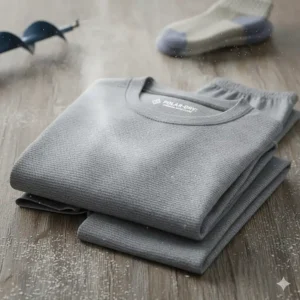
What makes merino wool magical for fishing is its ability to regulate temperature naturally. Unlike synthetic base layers that can leave you sweaty and clammy, merino actively moves moisture away from your skin while maintaining insulation even when damp. This matters enormously when you’re transitioning between active periods (drilling holes, moving between spots) and sedentary fishing.
The 250g weight is perfectly positioned for cold weather—warm enough for winter but not so heavy that you overheat during activity. Anglers who fish multiple days in a row appreciate the natural odor resistance, which means you can wear these for extended trips without offensive smells developing.
✅ Pros:
- Temperature regulation outperforms synthetics
- Retains warmth even when wet
- No-itch comfort for all-day wear
❌ Cons:
- Higher initial cost than synthetic base layers
- Requires gentle washing to maximize lifespan
Price: $70-$110
6. FWG Waterproof Fishing Bibs with Large Pocket
Sometimes you need reliable rain protection without breaking the bank, and that’s exactly where the FWG Waterproof Fishing Bibs shine. These no-frills bibs focus on doing one thing exceptionally well—keeping you dry.
Key Specifications:
- 90% Nylon with 10% PU coating
- Multiple sizes from Small to XXX-Large
- Large chest pocket with Velcro closure
- Versatile for fishing, farming, and outdoor work
The FWG brand specializes in fishing weather gear, and while these bibs lack the technical features of premium options, they deliver solid performance for light to moderate rain conditions. The large chest pocket is surprisingly practical, accommodating a phone, keys, and other essentials with high-quality Velcro that stays secure even when you’re bending and reaching.
These bibs work particularly well as an outer shell over insulated clothing for early spring or late fall fishing when temperatures are cool but not frigid. Many customers report using them for various outdoor activities beyond fishing, appreciating their versatility and easy-clean design.
✅ Pros:
- Budget-friendly entry point for rain protection
- Easy to wipe clean or hand wash
- Practical design for various outdoor activities
❌ Cons:
- Limited insulation requires layering in cold weather
- PU coating may show wear faster than premium materials
Price: $40-$60
7. KastKing HydroSense Waterproof Fishing Gloves
For serious cold-weather anglers who need true waterproof protection with thermal insulation, the KastKing HydroSense Gloves represent a significant upgrade over convertible soft-shell options.
Key Specifications:
- 100% waterproof and breathable membrane
- Fleece lining for thermal insulation
- Extended gauntlet cuff
- Touchscreen compatible fingertips
These gloves employ a waterproof membrane similar to what you’d find in high-end ski gloves, creating a genuine barrier against water while allowing moisture vapor to escape. The extended gauntlet cuff tucks under jacket sleeves to prevent water from running down into the glove—a detail that matters enormously when handling wet fish or working in sleet.
The fleece lining provides substantial warmth without excessive bulk, and the touchscreen compatibility on thumb and index finger lets you use phones or GPS without exposure. KastKing designed these specifically for ice fishing and winter sports, so they understand the unique demands anglers face.
✅ Pros:
- True waterproof protection for wet conditions
- Excellent warmth-to-weight ratio
- Touchscreen function preserves connectivity
❌ Cons:
- Less dexterity than convertible glove options
- May run small—consider sizing up
Price: $35-$50
Understanding Cold Weather Fishing Apparel: The Science Behind Staying Warm
What is Cold Weather Fishing Apparel?
Cold weather fishing apparel encompasses specialized clothing designed to protect anglers from hypothermia, frostbite, and exposure-related injuries while maintaining mobility and function in frigid conditions. Unlike general winter clothing, fishing-specific gear addresses unique challenges: waterproof protection, buoyancy for safety, strategic pocket placement for tackle access, and materials that perform when wet.
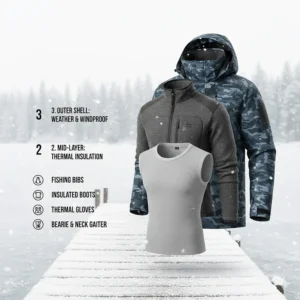
The modern approach to cold weather fishing apparel centers on the three-layer system: base layers that manage moisture, mid-layers that provide insulation, and outer shells that block wind and water. Each layer plays a specific role, and understanding this synergy is crucial for staying comfortable in temperatures ranging from just above freezing down to dangerous sub-zero conditions.
The Three-Layer System Explained
Base Layer (Moisture Management): Your foundation layer sits against your skin and has one primary job—wicking perspiration away before it cools and makes you cold. Merino wool and synthetic fabrics like polyester excel here because they transport moisture through capillary action while maintaining some insulation value even when damp. Cotton is your enemy; it absorbs moisture and holds it against your skin, creating a perfect recipe for hypothermia.
Mid Layer (Insulation): This is where you trap warm air. Fleece, down, and synthetic insulations like PrimaLoft or Thinsulate create dead air space that your body heat warms. The key is maintaining loft—when insulation compresses, it loses effectiveness. Modern fishing-specific mid-layers use strategic placement, putting thicker insulation in areas prone to heat loss (core, thighs) while keeping high-movement zones (arms, shoulders) less bulky.
Outer Layer (Weather Protection): Your shell guards against wind, rain, snow, and spray. Waterproof-breathable membranes like Gore-Tex or Hydrapore prevent water from entering while allowing water vapor from perspiration to escape. This balance is critical—a completely waterproof but non-breathable shell will trap sweat, leaving you wet from the inside out.
Why Traditional Winter Clothing Fails for Fishing
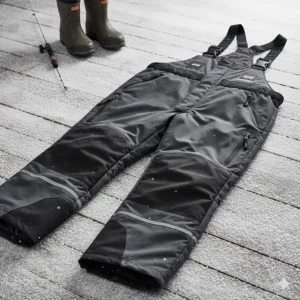
Standard winter coats and snow pants weren’t designed for the aquatic environment. They lack waterproofing in high-wear areas, don’t account for splashing or spray, and often use down insulation that loses all effectiveness when wet. Additionally, regular winter gear rarely incorporates the pocket configurations anglers need for tackle storage or the reinforcements required for kneeling on ice or rocky shores.
Perhaps most critically, traditional winter clothing doesn’t address the safety aspect. If you break through ice or fall overboard, standard winter wear becomes waterlogged dead weight that pulls you down. Modern cold weather fishing apparel increasingly incorporates flotation technology that can save your life.
How to Choose the Right Cold Weather Fishing Apparel
1. Assess Your Fishing Environment
Not all cold-weather fishing is created equal. Ice fishing on a Minnesota lake requires different gear than surf casting on a Pacific Northwest beach in January. Start by honestly evaluating:
Ice Fishing: Prioritize insulation and flotation. You’ll be stationary for extended periods, increasing cold exposure risk. Look for bibs and jackets with Thinsulate or PrimaLoft rated for sub-zero temperatures, and always choose gear with flotation technology.
Boat Fishing: Emphasize waterproof protection and layering flexibility. Temperatures on the water fluctuate dramatically, and you’ll alternate between active and sedentary periods. A shell jacket over versatile mid-layers gives you adjustment options.
Wade Fishing: Focus on breathable waders and layering systems. You’ll be active, generating heat, but standing in cold water creates unique heat-loss challenges from your legs up. Quality breathable waders prevent sweat accumulation while insulated base layers maintain warmth.
2. Match Insulation to Temperature Ranges
Understanding insulation weights helps you choose appropriate gear:
Lightweight (40-60g): Suitable for 30-50°F conditions or high-activity fishing Midweight (80-120g): Ideal for 20-40°F with moderate activity Heavyweight (150g+): Essential for sub-20°F or sedentary ice fishing
Remember that insulation works through trapping air, not through material thickness alone. Modern synthetic insulations like 3M Thinsulate provide remarkable warmth without bulk, while down offers the best warmth-to-weight ratio in dry conditions.
3. Prioritize Waterproof Ratings
Waterproof ratings are measured in millimeters and indicate how much water pressure fabric can withstand before leaking:
5,000mm: Light rain and snow, adequate for most freshwater fishing 10,000mm: Moderate rain and wet conditions, recommended minimum for serious anglers 15,000mm+: Heavy rain and marine environments, professional-grade protection
Equally important is breathability, measured in grams per square meter over 24 hours. A rating of 5,000g/m²/24hrs is functional, while 10,000g+ provides excellent moisture vapor transport.
4. Don’t Overlook Safety Features
According to NOAA, cold water immersion causes rapid incapacitation—you may have as little as 15 minutes before losing the ability to self-rescue. Modern cold weather fishing apparel increasingly incorporates flotation technology that provides buoyancy without bulk. Sureflote, for example, uses perforated foam that breathes yet floats.
Look for reflective elements for visibility in low-light conditions, which are common during winter fishing hours. Features like storm flaps over zippers, adjustable hoods, and neoprene cuffs prevent water entry at critical points.
5. Consider Mobility and Functionality
The best cold weather fishing apparel balances protection with mobility. Look for:
Articulated knees: Pre-bent construction allows comfortable kneeling Gusseted crotch: Prevents restriction when reaching or climbing Pit and leg zips: Ventilation options prevent overheating Accessible pockets: Strategic placement for tackle, tools, and essentials
6. Plan Your Complete System
Don’t focus solely on a jacket or bibs—think about your complete system from head to toe:
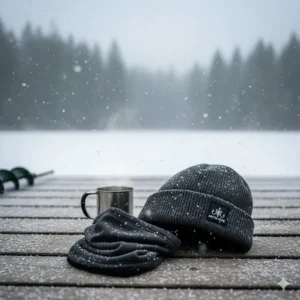
- Head: 40-50% of body heat escapes through your head. Quality balaclavas or insulated hats are non-negotiable.
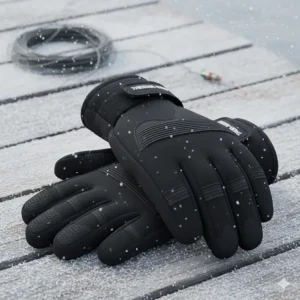
- Hands: Convertible gloves for dexterity, waterproof gloves for wet conditions, and hand warmers for extreme cold.
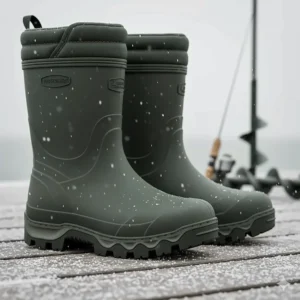
- Feet: Insulated boots rated for your lowest expected temperature, with wool socks (never cotton).
- Base layers: Full coverage from neck to ankles prevents cold spots where layers don’t overlap.
7. Read Reviews from Fellow Anglers
Product specifications tell you what manufacturers claim; user reviews reveal how gear performs in real conditions. Look for reviews from anglers in similar climates fishing similar water. Pay attention to comments about sizing, durability after multiple seasons, and how gear performs when wet.
Essential Features in Cold Weather Fishing Apparel
Waterproofing Technologies
Membrane Systems: Materials like Gore-Tex, Hydrapore, and eVent use microporous membranes that block liquid water while allowing water vapor to pass through. The pores are approximately 20,000 times smaller than a water droplet but 700 times larger than a water vapor molecule.
DWR Coatings: Durable Water Repellent treatments make water bead up and roll off fabric surfaces. However, DWR wears off over time and requires reapplication through wash-in or spray products. A failing DWR doesn’t mean your waterproof membrane has failed—it just means water will wet out the face fabric.
Taped Seams: All the waterproofing in the world won’t matter if water seeps through needle holes where fabric is sewn together. Quality fishing apparel features fully taped seams with waterproof tape bonded over stitching lines.
Insulation Types
Understanding thermal insulation materials helps you make informed choices about cold weather fishing apparel. According to the Department of Energy, different insulation types offer unique benefits:
Down: Offers the best warmth-to-weight ratio and compresses easily for storage. However, down loses all insulation value when wet, making it risky for fishing unless protected by completely waterproof shells.
Synthetic (PrimaLoft, Thinsulate, etc.): Retains insulation properties when wet, dries quickly, and costs less than down. Modern synthetics approach down’s warmth-to-weight ratio while offering better performance in damp conditions—ideal for fishing.
Fleece: Breathable, affordable, and available in various weights. Works excellently as a mid-layer but requires an outer shell for wind and water protection.
Flotation Integration
Traditional foam flotation in fishing suits has evolved. Modern systems like Sureflote use perforated technology that maintains breathability while providing crucial buoyancy. Some manufacturers integrate flotation panels strategically rather than creating full-float suits, reducing bulk while still providing safety margins.
Understanding that flotation helps but doesn’t replace a personal flotation device (PFD) is important. Ice fishing suits with integrated flotation buy you time for self-rescue or for help to arrive, but they’re not Coast Guard-approved PFDs.
Ventilation Systems
One of winter’s paradoxes is that you can simultaneously be cold from the environment and overheated from exertion. Quality cold weather fishing apparel includes ventilation options:
Pit Zips: Underarm zippers allow core heat to escape without removing layers Leg Vents: Full-length side zips on bibs enable adjustment and easy donning/doffing Adjustable Cuffs and Hems: Fine-tune fit to seal out cold or allow airflow
Layering Strategies for Maximum Warmth and Comfort
The Foundation: Base Layer Selection
Your base layer choice can make or break your cold-weather fishing experience. Here’s what works:
Merino Wool: Natural temperature regulation, odor resistance, and comfort even when damp make merino the premium choice. Weights range from 150g/m² (lightweight) through 250g/m² (midweight) to 400g/m² (expedition weight). For most cold-weather fishing, 200-250g offers ideal balance.
Synthetic Base Layers: Polyester and polypropylene wick moisture effectively and dry quickly. They’re more affordable than merino and often more durable, though they can develop odors faster. Brands like Smartwool, Icebreaker, and Minus33 offer excellent options.
What to Avoid: Cotton thermal underwear, despite being comfortable in warm conditions, becomes a liability when you’re active and sweating. The phrase “cotton kills” exists for good reason—wet cotton wicks heat away from your body.
Building Heat: Mid-Layer Options
Your mid-layer’s job is trapping warm air while allowing moisture to pass through:
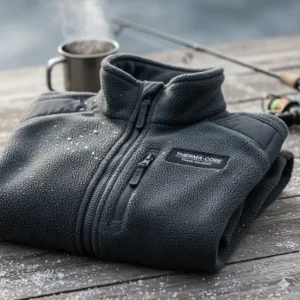
Fleece Jackets: Versatile, affordable, and available in weights from 100 to 400g. A 200-weight fleece works well for most conditions, while 300-weight provides extra warmth for extreme cold or low activity.
Insulated Jackets: Down or synthetic insulated jackets worn under shells provide maximum warmth. The Striker Adapt liner exemplifies this approach—it functions as a standalone jacket or zips into the Climate shell for extreme conditions.
Softshell Jackets: These bridge the gap between fleece and hardshells, offering light weather protection, breathability, and stretch. They work well for active fishing when full waterproof shells would cause overheating.
The Barrier: Outer Shell Strategies
Your outer layer faces wind, water, and abrasion:
Hardshell Jackets and Bibs: Waterproof-breathable membranes provide maximum protection but require careful layering underneath to avoid overheating. Look for features like adjustable hoods, storm flaps, and reinforced wear points.
Insulated Shells: Combine waterproofing with built-in insulation. These simplify your system but offer less flexibility—you can’t remove insulation if you get warm. The BASSDASH Splice bibs exemplify this approach with integrated Thinsulate.
3-in-1 Systems: Maximum versatility through removable liners. Wear the shell alone in milder wet conditions, the liner separately during dry cold spells, or combine both for extreme weather. The Striker Climate series masters this concept.
Extremity Protection
Hands: Start with lightweight liner gloves, add convertible fingerless gloves for dexterity when needed, and carry waterproof insulated gloves for maximum protection. Chemical hand warmers provide emergency heat.
Feet: Merino wool or synthetic blend socks (never cotton), with vapor barrier liners if you expect extremely wet conditions. Boots should be rated 20-30°F colder than your expected low temperature—boot ratings are based on standing still, and fishing involves less movement than hiking.
Head and Neck: Balaclavas provide complete coverage, while neck gaiters paired with insulated hats offer adjustment options. Remember that exposed skin can develop frostbite in minutes at sub-zero temperatures with wind chill.
Cold Weather Fishing Safety: What Every Angler Must Know
Understanding Cold Water Shock and Hypothermia
The National Weather Service warns that cold water drains body heat up to 25 times faster than cold air at the same temperature. Hypothermia, defined as a core body temperature below 95°F (35°C), poses serious risks to anglers. When you’re immersed in cold water, three sequential dangers threaten survival:
Cold Shock (0-3 minutes): Your body’s automatic response to sudden cold immersion causes gasping and hyperventilation. This immediate reaction is responsible for many drowning deaths—victims inhale water during the involuntary gasp. Heart rate and blood pressure spike, potentially triggering cardiac events.
Cold Incapacitation (3-30 minutes): As your extremities cool, you lose fine motor control in your fingers and gross motor control in your arms and legs. Swimming becomes impossible, and self-rescue grows increasingly difficult. This is why flotation devices are critical—they keep you afloat when you can’t.
Hypothermia (30+ minutes): Core body temperature drops below 95°F (35°C), impairing mental function and physical ability. Confusion, drowsiness, and eventually unconsciousness follow if you’re not rescued or able to reach safety.
Ice Safety Essentials
Ice thickness guidelines from state fish and wildlife agencies:
- Less than 4 inches: Stay off entirely
- 4-6 inches: Walking only, proceed with extreme caution
- 6-8 inches: Snowmobiles and ATVs (one at a time)
- 8-12 inches: Small cars or light trucks
- 12-15 inches: Medium trucks
However, ice thickness varies dramatically across the same body of water. Moving water, underwater springs, and dark objects all create thin spots. Always:
- Check ice thickness every 150 feet as you move
- Carry ice picks or awls to pull yourself out if you break through
- Fish with a partner—never go alone
- Wear flotation-equipped cold weather fishing apparel
- Carry rope for assisted rescue
- Tell someone your location and expected return time
Recognizing and Treating Hypothermia
Early hypothermia symptoms include:
- Uncontrollable shivering
- Slurred speech and confusion
- Loss of coordination
- Pale, cold skin
- Fatigue and drowsiness
If you or a fishing partner show these signs:
- Get to shelter immediately and remove wet clothing
- Warm the core first—chest, neck, head, and groin with warm (not hot) compresses
- Provide warm, sweet drinks if the person is fully conscious (never alcohol)
- Seek medical attention—hypothermia can worsen after rescue (the “after-drop effect”)
- Handle gently—rough movement can trigger cardiac complications
Emergency Preparation
Your cold weather fishing safety kit should include:
✅ Fully charged cell phone in waterproof case
✅ Emergency whistle
✅ Ice picks or self-rescue claws
✅ 50 feet of rope
✅ Chemical hand and body warmers
✅ Emergency blanket
✅ First aid kit with hypothermia treatment supplies
✅ Waterproof matches or lighter
✅ Extra dry clothing in waterproof bag
Maintenance and Care for Cold Weather Fishing Apparel
Washing and Cleaning
Waterproof-Breathable Garments:
- Use technical wash specifically designed for outdoor gear (Nikwax, Grangers)
- Avoid regular detergents—they leave residues that impair breathability
- Close all zippers and velcro before washing
- Use warm water on gentle cycle
- Rinse twice to remove all soap residue
- Tumble dry on low heat to reactivate DWR coating
Insulated Items:
- Check manufacturer labels—some insulations require special care
- Down insulation needs careful washing and thorough drying to restore loft
- Synthetic insulation is generally more forgiving but benefits from gentle treatment
- Never store compressed—hang or lay flat to maintain loft
Base Layers:
- Merino wool tolerates machine washing but benefits from hand washing
- Use wool-specific detergent to preserve natural properties
- Lay flat to dry or use low heat tumble drying
- Never use fabric softener—it coats fibers and reduces wicking ability
Restoring Waterproof Performance
DWR coatings wear off with use, causing water to “wet out” fabric rather than beading. When this happens:
- Clean the garment thoroughly—dirt and oils interfere with DWR
- Apply DWR treatment via wash-in or spray-on product
- Heat activate in a dryer on low heat for 20 minutes
- Test by sprinkling water on fabric—it should bead and roll off
Remember that DWR failing doesn’t mean the waterproof membrane has failed. You’re simply seeing the outer fabric saturate, which is normal and fixable.
Storage Best Practices
Off-Season Storage:
- Clean thoroughly before storing
- Store in cool, dry location
- Hang on wide hangers to prevent crease damage
- Never store compressed or in plastic bags
- Ensure completely dry to prevent mildew
In-Season Organization:
- Keep gear accessible for quick trips
- Air out after each use to prevent odor buildup
- Spot clean mud or fish slime immediately
- Check zippers and closures regularly—replace pulls before they fail completely
Repair and Longevity
Quality cold weather fishing apparel represents a significant investment. Proper care extends lifespan:
Repair small tears immediately with fabric repair tape or send to professional repair services
Replace worn zippers rather than retiring entire garments
Reapply seam sealer to high-stress areas annually
Rotate gear rather than wearing the same items repeatedly
Budget Considerations and Value Analysis
| Price Tier | What to Expect | Best For | Example Products |
|---|---|---|---|
| Budget ($50-$150) | Basic waterproofing, lighter insulation, fewer features | Occasional anglers, mild conditions | FWG Bibs, Palmyth Gloves |
| Mid-Range ($150-$300) | Quality waterproof membranes, good insulation, practical features | Regular cold-weather fishing | BASSDASH Bibs, Grundéns Weather Watch |
| Premium ($300-$600) | Advanced materials, safety features, maximum durability | Serious anglers, extreme conditions, professional use | Striker Climate, Simms G3, Grundéns Neptune |
| Elite ($600+) | Top-tier everything, commercial-grade construction, warranty support | Guides, extreme environments, Alaska/Canada fishing | Striker Apex, high-end Simms systems |
Is Premium Gear Worth It?
This depends entirely on your fishing frequency and conditions:
Buy Budget if: You fish cold weather a few times per season, stay in mild conditions, or are just getting started
Buy Mid-Range if: You’re a regular cold-weather angler fishing moderate to severe conditions 10+ days per season
Buy Premium if: You’re on the water in harsh conditions frequently, fish professionally, or prioritize safety features like flotation
Buy Elite if: You guide clients, fish commercially, or regularly face life-threatening conditions where gear failure isn’t acceptable
Cost Per Use Calculation
A $300 jacket worn 20 times per season for 5 seasons costs $3 per use. A $100 jacket that lasts 2 seasons and 15 uses per season costs $3.33 per use. Quality gear that lasts often provides better value than cheap replacements.
Common Mistakes to Avoid
1. Overdressing
Ironically, wearing too many layers causes problems. You overheat during active periods, sweat excessively, and then become dangerously cold when you stop moving with wet base layers. Start slightly cool—you should warm up within 10-15 minutes of activity.
2. Wearing Cotton
Cotton base layers, t-shirts, or jeans under fishing gear is a recipe for hypothermia. Cotton absorbs moisture and holds it against your skin. Once wet from sweat or water exposure, cotton actively chills you.
3. Ignoring Extremities
You can wear the best jacket and bibs available, but if your hands, feet, or head are exposed, you’ll be miserable and potentially in danger. Heat loss through extremities is substantial—budget for quality accessories.
4. Skipping Layers
Wearing a t-shirt under your bibs and jacket leaves you with no adjustment options. You’re either wearing everything or nothing, with no middle ground. Proper layering provides flexibility.
5. Neglecting Waterproofing
Assuming that “water-resistant” means waterproof leads to unpleasant discoveries. Water-resistant fabrics shed light rain but fail in sustained wet conditions. For fishing, waterproof protection is essential.
6. Buying Too Large
Oversized cold weather fishing apparel doesn’t layer properly, allows cold air to circulate inside garments, and restricts movement because excess fabric bunches up. Buy your normal size or one size up if you layer heavily—not two or three sizes larger.
FAQ
❓ How cold is too cold for fishing without specialized cold weather fishing apparel?
❓ Can I use skiing or snowboarding gear for cold weather fishing?
❓ What's the difference between ice fishing suits and regular cold weather fishing apparel?
❓ How do I prevent my cold weather fishing apparel from smelling after multiple uses?
❓ Is it better to buy a complete cold weather fishing apparel system or piece together components?
Conclusion: Invest in Protection, Enjoy the Experience
Cold weather fishing opens access to some of the year’s best fishing opportunities. Reduced angling pressure, active fish feeding before ice-out or during late fall, and the serene beauty of winter landscapes make it worthwhile—but only if you’re comfortable and safe.
The cold weather fishing apparel reviewed in this guide represents the best options available on Amazon right now, from budget-conscious picks like the FWG bibs to premium systems like the Striker Climate. The key is matching gear to your specific needs: fishing frequency, environmental conditions, and activity levels.
Remember that proper cold weather fishing apparel is safety equipment first, comfort second. The few hundred dollars you invest in quality gear pales in comparison to the alternative—hypothermia, frostbite, or worse. Modern materials and designs make it possible to stay warm, dry, and mobile even in brutal conditions that would have kept previous generations off the water.
Start with the foundation—quality merino wool or synthetic base layers. Add appropriate mid-layers for your climate. Choose shells that match your waterproofing and insulation needs. Don’t skimp on extremity protection. And always prioritize safety features, especially flotation technology if you’re ice fishing.
The fishing opportunities are out there waiting, even in winter. With the right cold weather fishing apparel, you’ll be ready to make the most of them.
Recommended for You
- 7 Best Cold Weather Fishing Gear 2025 (Expert Tested)
- 7 Best Cold Weather Running Tights for Winter Running 2025
- 7 Best Cold Weather Running Gear for Winter 2025 | Expert Guide
Disclaimer: This article contains affiliate links. If you purchase products through these links, we may earn a small commission at no additional cost to you.
✨ Found this helpful? Share it with your friends! 💬🤗
