
In This Article
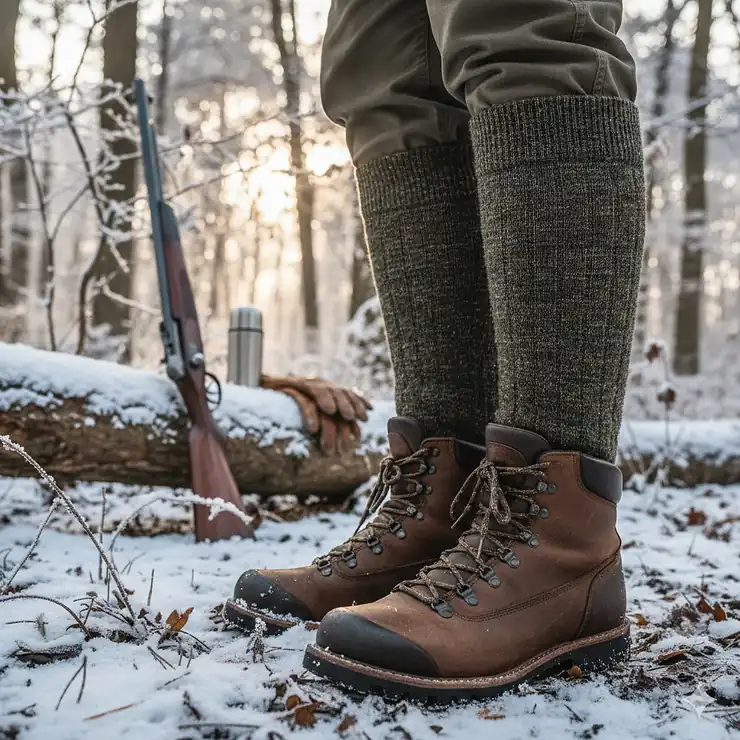
Picture this: you’re perched in your tree stand at 4:30 AM, watching the forest come alive with possibility. The buck you’ve been tracking all season steps into the clearing. You raise your rifle, finger on the trigger, and then… your frozen toes send shooting pain through your foot. The shot goes wide. The buck disappears. All because you cheaped out on socks.
Cold feet aren’t just uncomfortable—they’re dangerous. The CDC warns that frostbite can permanently damage body tissue, and it happens faster than most hunters realize, especially on extremities like toes when you’re sitting motionless in freezing temperatures.
I learned this lesson the hard way during my first November hunt in the Minnesota backwoods. Forty bucks spent on fancy camo, but I grabbed $5 cotton tube socks from the discount bin. By 7 AM, my feet were soaked blocks of ice. I abandoned my stand before the sun even cleared the trees. Never again.
Here’s the truth nobody talks about: hunting socks for cold weather aren’t just accessories—they’re the foundation of your entire cold weather hunting system. Your boots can cost $300, your base layers can be the latest merino technology, but if your feet are cold and wet, you’re going home empty-handed. The best hunting socks for cold weather combine scientific fabric technology with real-world durability, giving you warm, dry feet from dawn patrol through the evening sit.
This guide breaks down everything you need to know about hunting socks for cold weather, from material science to real product testing. We’ve researched dozens of options, consulted with veteran hunters, and identified the seven absolute best pairs that’ll keep you in the stand when the temperature drops below freezing.
Quick Comparison Table: Top Hunting Socks for Cold Weather
| Sock Model | Material | Weight | Price | Best For | Rating |
|---|---|---|---|---|---|
| Smartwool Mountaineer Classic | 74% Merino Wool | Heavyweight | $26-27 | Extreme cold sits | ⭐⭐⭐⭐⭐ |
| Darn Tough Hunter OTC | 80% Merino Wool | Heavyweight | $32-35 | All-day hunts | ⭐⭐⭐⭐⭐ |
| KUIU Ultra Merino | 61% Nuyarn Merino | Midweight | $30/pair | Active hunting | ⭐⭐⭐⭐½ |
| Alvada Merino Wool | 80% Merino Wool | Midweight | $14/3-pack | Budget choice | ⭐⭐⭐⭐ |
| Snow Deer Heated Socks | 80% CoolMax | N/A | $80 | Extreme conditions | ⭐⭐⭐⭐ |
| Juclise Alpaca Socks | Alpaca Wool Blend | Heavyweight | $25-30 | Maximum warmth | ⭐⭐⭐⭐ |
| Hylaea Merino Ski | Merino Wool Blend | Heavyweight | $22-28 | Long sits | ⭐⭐⭐⭐ |
💬 Just one click – help others make better buying decisions too!😊
Top 7 Hunting Socks for Cold Weather: Expert Analysis
1. Smartwool Mountaineer Classic Edition Maximum Cushion Crew Socks
When late-season deer hunters talk about the ultimate cold weather sock, the Smartwool Mountaineer Classic Edition comes up again and again. There’s a reason this sock has dominated the market for over two decades.
Key Specifications:
- Composition: 74% Merino Wool, 17% Recycled Nylon, 8% Nylon, 1% Elastane
- Weight: Maximum cushioning (Smartwool’s thickest offering)
- Price: $26-27
Built with Smartwool’s maximum cushion technology, these socks deliver full-sock cushioning from toe to calf. The elasticized arch brace locks the sock in place during long hikes to your stand, while the flat-knit toe seam prevents the blisters that plague lesser socks. Hunters consistently report these keep feet warm in single-digit temperatures, even during all-day sits.
The secret lies in the terry loop construction throughout the entire sock. Those millions of tiny loops trap body heat while wicking moisture away from your skin—a critical combo when you’re trudging through snow to reach your spot, then sitting motionless for hours. Even if your feet sweat during the hike in, the merino wool continues insulating when wet, unlike cotton or cheap synthetics.
Quick Pros & Cons:
✅ Maximum warmth for stationary hunting
✅ Lifetime guarantee from Smartwool
✅ Natural odor resistance for multi-day trips
❌ Can feel tight in snug-fitting boots
❌ Premium price point
Customer feedback highlights how these socks maintain warmth without the bulk that makes boots uncomfortable. Multiple reviewers note wearing them successfully in temperatures down to -10°F when paired with quality insulated boots.
2. Darn Tough Hunter Over-the-Calf Heavyweight
Vermont-based Darn Tough has earned legendary status among serious hunters, and their Hunter Over-the-Calf Heavyweight sock proves why. This is the sock you grab when failure isn’t an option.
Key Specifications:
- Composition: 80% Merino Wool, 18% Nylon, 2% Lycra Spandex
- Weight: Heavyweight with full cushioning
- Price: $32-35
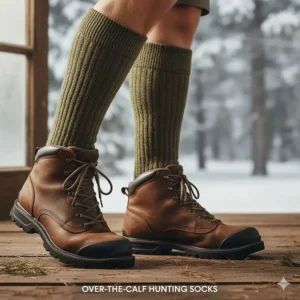
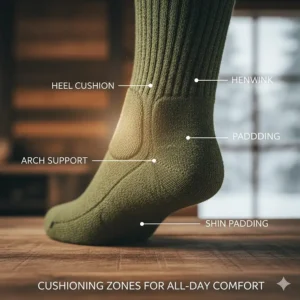
The over-the-calf height provides coverage all the way to just below the knee—critical when you’re kneeling to track or sitting with your legs exposed. High-density terry loop cushioning runs the entire length, protecting both foot and leg. Darn Tough uses their True Seamless technology, creating an undetectable toe seam that eliminates the hot spots and blisters common with traditional sock construction.
What sets Darn Tough apart? Their unconditional lifetime guarantee. If these socks wear out, tear, or develop holes, they replace them. No questions asked. No receipt needed. For life. This isn’t marketing fluff—thousands of hunters have successfully claimed the warranty after years of hard use.
The 80% merino content strikes the perfect balance: enough wool for warmth and moisture management, enough nylon for durability in rugged hunting boots. These socks handle the punishment of days spent hiking steep terrain, kneeling in wet leaves, and standing in tree stands.
Quick Pros & Cons:
✅ Lifetime warranty—seriously, for life
✅ Over-the-calf coverage prevents gaps
✅ Made in Vermont, USA
❌ Requires break-in period
❌ Higher initial cost
Hunters praise these socks for lasting multiple seasons of hard hunting while maintaining their cushioning and warmth. The general consensus: buy them once, wear them forever.
3. KUIU Ultra Merino Crew Hunting Socks
KUIU approaches hunting gear with obsessive attention to backcountry performance, and their Ultra Merino Crew socks reflect that philosophy. These aren’t your grandfather’s wool socks.
Key Specifications:
- Composition: 61% Nuyarn Merino, 19% Nylon, 15% Lycra, 5% Spandex
- Weight: Lightweight to midweight
- Price: $30/pair (often sold in multipacks)
KUIU incorporates Nuyarn technology—an advanced spinning process using 17.5-micron certified New Zealand merino wool. The result is a sock that’s incredibly soft against skin, naturally stretchy, and breathes better than traditional merino while drying faster. Strategic cushioning protects high-impact areas like the Achilles tendon and ball of foot without adding unnecessary bulk.
These socks shine during active hunts: spot-and-stalk mountain hunting, stand relocations, or any scenario where you’re covering serious ground. The precision cushioning prevents fatigue during long hikes while the thinner overall profile fits perfectly in tighter-fitting boots. Seamless toe closure eliminates friction on steep climbs and descents.
The antimicrobial properties mean you can wear these for multiple days straight without developing that “lived in the woods” smell. For multi-day backcountry hunts, that’s invaluable.
Quick Pros & Cons:
✅ Superior breathability for active hunting
✅ Lightweight design fits in any boot
✅ Quick-drying for variable conditions
❌ Less insulation for stationary hunting
❌ Premium price (though multipacks offer value)
Mountain hunters consistently rank KUIU among their top choices. The combination of comfort, durability, and technical performance makes these ideal for hunters who cover miles in pursuit of their quarry.
4. Alvada Merino Wool Hiking Socks (3-Pack)
Not everyone needs $35 socks, and that’s where Alvada Merino Wool socks deliver exceptional value. At roughly $14 for three pairs, these prove you don’t have to break the bank for quality wool socks.
Key Specifications:
- Composition: 80% Merino Wool, 15% Polyester, 4% Nylon, 1% Spandex
- Weight: Midweight thermal
- Price: $14-18 for 3 pairs
The 80% merino content means you’re getting genuine temperature regulation and moisture-wicking properties. The shaped cushioning in the footbed reduces fatigue during long hikes, while the crew height provides adequate coverage inside hunting boots. Machine washable on cold, these socks maintain their performance through repeated wash cycles.
Here’s the thing about Alvada socks: they’re not going to outlast Darn Tough or match KUIU’s technical wizardry. But for hunters on a budget, weekend warriors, or those wanting backup pairs in their truck, these deliver solid performance at an unbeatable price point. They keep feet warm in moderate cold (20-40°F), wick sweat effectively, and don’t develop odor quickly.
The polyester blend sacrifices some pure wool performance but gains durability and easier care. For hunters who go through socks quickly or want multiple pairs without major investment, Alvada represents smart spending.
Quick Pros & Cons:
✅ Exceptional price-to-performance ratio
✅ Three pairs for under $20
✅ Soft, itch-free comfort
❌ Less durable than premium brands
❌ Limited cushioning for extreme cold
Customer reviews highlight these as perfect starter socks for new hunters or reliable backups for experienced ones. They won’t revolutionize your hunt, but they won’t let you down either.
5. Snow Deer Heated Electric Socks
Some hunts demand technology. When you’re sitting motionless in a frozen swamp waiting for ducks, or enduring a marathon treestand session in subzero temps, the Snow Deer Heated Socks become game-changers.
Key Specifications:
- Composition: 80% CoolMax Polyester, 12% Polyester, 8% Elastane
- Power: 7.4V 2200mAh rechargeable batteries
- Price: $75-80
These aren’t ordinary socks—they’re a heating system for your feet. Far infrared heating elements cover the entire toe area plus top and bottom of foot, delivering warmth where you need it most. Three heat settings let you dial in the perfect temperature: low (93-100°F) lasts 6+ hours, medium (100-113°F) runs 3.5-4 hours, high (113-131°F) provides maximum warmth for 2-2.5 hours.
The CoolMax fabric wicks moisture five times faster than cotton, preventing the sweat buildup that turns feet into ice blocks. The batteries tuck into small pockets and can be controlled through your pant leg—no need to remove boots or fumble with frozen fingers.
Heated socks aren’t for every hunt. They add weight, require charging, and battery pockets can feel bulky. But for waterfowl hunters sitting in flooded timber, ice fishermen, or deer hunters enduring brutal late-season cold, they’re worth every penny. The ability to maintain toasty feet for 6+ hours in single-digit temperatures can extend your hunting day significantly.
Quick Pros & Cons:
✅ Adjustable heat for custom comfort
✅ Long battery life (up to 6+ hours)
✅ Machine washable (remove batteries first)
❌ Requires pre-hunt charging
❌ Battery pockets add slight bulk
Users report these are lifesavers for circulation issues, Raynaud’s disease, or anyone whose feet go numb in cold weather. They’re an investment, but one that could save hunts you’d otherwise abandon.
6. Juclise Alpaca Boot Socks
Alpaca wool doesn’t get the attention merino does, but serious cold-weather hunters know its secret: alpaca is warmer, softer, and performs better when wet. Juclise Alpaca Boot Socks harness that power.
Key Specifications:
- Composition: Alpaca wool blend
- Weight: Heavyweight thermal
- Price: $25-30
Alpaca fibers feature a hollow core structure that traps more air than sheep’s wool, creating superior insulation per ounce. The fibers also absorb only 8% of their weight in water compared to merino’s 30%, meaning they stay drier and warmer in wet conditions. For hunters dealing with snow, slush, or surprise rain, that’s a critical advantage.
These socks excel in stationary hunting scenarios where maximum warmth matters more than breathability. The thick cushioning protects feet during long sits, while the natural thermal properties keep toes toasty even when you’re motionless for hours. The hypoallergenic nature makes them perfect for hunters with wool sensitivities.
Alpaca’s natural antimicrobial properties resist odor buildup, letting you wear these for multiple days without washing. The moisture-wicking capability prevents sweat accumulation that leads to cold feet.
Quick Pros & Cons:
✅ Superior warmth-to-weight ratio
✅ Excellent wet-weather performance
✅ Naturally hypoallergenic
❌ Limited availability
❌ Can feel too warm for active hunting
Hunters report these perform exceptionally well in temperatures below 20°F, particularly for stand hunting where movement is minimal. They’re less ideal for aggressive hiking but perfect for the patient hunter.
7. Hylaea Merino Wool Ski Socks
Ski socks and hunting socks share common demands: warmth, moisture management, and all-day comfort in cold conditions. The Hylaea Merino Wool Ski Socks cross over beautifully for cold weather hunting.
Key Specifications:
- Composition: Merino wool blend with moisture-wicking synthetics
- Weight: Heavyweight knee-high
- Price: $22-28
The knee-high design provides maximum coverage, particularly valuable with shorter hunting boots that leave a gap at the calf. Compressive arch support prevents the sock from sliding down during hikes, while vertical knitting creates a snug fit that eliminates bunching. The merino-synthetic blend balances natural temperature regulation with synthetic durability.
Strategically placed cushioning protects high-impact areas without adding excessive bulk. The elastic material accommodates various foot shapes comfortably, and reinforced heel and toe sections resist the wear that typically destroys socks first.
These socks work particularly well for hunters who need versatility: they perform admirably during cold hunts but also handle moderate temperatures without overheating. The moisture-wicking technology keeps feet dry whether you’re sweating during a climb or sitting in subfreezing temps.
Quick Pros & Cons:
✅ Versatile across temperature ranges
✅ Compressive support prevents slipping
✅ Machine washable
❌ Less specialized than hunting-specific options
❌ Sizing can run small
Reviewers note these provide consistent warmth and comfort across various outdoor activities, making them a smart choice for hunters who want socks that pull double duty.
✨ Don’t Miss These Exclusive Deals!
🔍 Take your cold weather hunting to the next level with these carefully selected products. Click on any highlighted item to check current pricing and availability. These socks will help you create authentic comfort your feet will love!
Understanding Hunting Socks for Cold Weather: The Science Behind Warm Feet
What Makes Hunting Socks for Cold Weather Different?
Regular socks are built for climate-controlled environments and casual activity. Hunting socks for cold weather face entirely different demands. You need insulation that works when you’re motionless for hours, moisture management that handles sweaty hikes and stationary periods, and durability that survives rough terrain and harsh conditions.
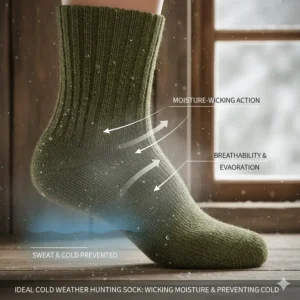
The best hunting socks for cold weather use natural fibers like merino wool or alpaca because these materials regulate temperature automatically. When you’re active and generating heat, the fibers release moisture vapor to cool you down. When you’re stationary and cooling off, they trap heat to maintain warmth. Synthetic socks can’t match this natural thermoregulation.
The hollow structure of wool fibers creates millions of tiny air pockets that act as insulation. These pockets trap warm air close to your skin while allowing moisture vapor to escape. Even when wool gets wet—from sweat, snow, or rain—it continues insulating at roughly 80% effectiveness. Cotton, by contrast, loses nearly all insulating value when wet.
Why Merino Wool Dominates Cold Weather Hunting Socks
Merino wool isn’t just marketing hype. This ultrafine wool (typically 15-20 microns in diameter) delivers specific benefits that matter in hunting scenarios. The crimped structure of merino fibers naturally resists bacterial growth, which means your socks won’t develop odor even after multiple days of wear. For multi-day hunts or hunters who can’t wash socks daily, that’s invaluable.
Merino wool can absorb up to 35% of its weight in moisture before feeling wet, which explains why your feet stay comfortable even when you’ve hiked hard enough to work up a sweat. Breakthrough research from North Carolina State University confirmed that merino wool outperforms synthetic materials by 96% in moisture buffering, proving scientifically what hunters have experienced for years. The fiber’s natural breathability transports water vapor away from skin through capillary action—basically, a built-in moisture management system that doesn’t require batteries or special care.
Temperature regulation happens automatically. Merino adjusts to your body’s needs without you thinking about it. During an aggressive climb to your stand, excess heat escapes. During a long sit in freezing temps, warmth gets trapped close to skin. This adaptive performance beats any synthetic material currently available.
The Alpaca Advantage: When Merino Isn’t Enough
While merino gets all the attention, alpaca wool offers distinct advantages for extreme cold. Alpaca fibers feature hollow cores that trap more air per fiber than merino, creating superior insulation. The fiber’s smoothness prevents the itching that plagues some wool wearers, and its moisture resistance means alpaca performs better in wet conditions.
Alpaca wool is also significantly warmer than merino pound-for-pound. For hunters facing truly brutal cold—single-digit or subzero temperatures—alpaca socks provide an edge. They’re less common and often pricier, but for maximum warmth, alpaca is tough to beat.
Synthetic Blends: Finding the Right Balance
Pure wool socks have drawbacks: they wear out faster, can stretch out, and require more careful washing. That’s why most premium hunting socks blend wool with synthetics like nylon, polyester, or Lycra. These additions provide specific benefits.
Nylon increases durability dramatically, particularly in high-friction areas like heel and toe. Lycra or spandex provides stretch and shape retention—your socks stay snug instead of sagging around your ankles. Polyester can enhance moisture-wicking and reduce drying time.
The ideal blend balances natural fiber benefits (temperature regulation, odor resistance, comfort) with synthetic advantages (durability, fit retention, easy care). Look for socks with 60-80% natural fibers and 20-40% synthetic content for optimal performance.
How to Choose the Right Hunting Socks for Cold Weather
Step 1: Match Sock Weight to Activity Level
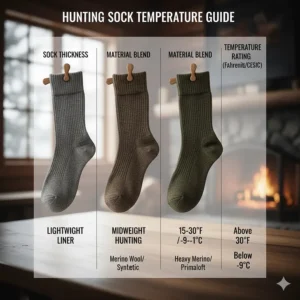
Heavyweight socks work best for stationary hunting: treestand sits, ground blind hunts, waterfowl hunting. The maximum cushioning provides insulation when you’re not generating body heat through movement. If you’re sitting motionless for hours in subfreezing temperatures, heavyweight is your friend.
Midweight socks suit active hunting: spot-and-stalk, stand relocation, hiking to distant locations. They provide adequate warmth without overheating during exertion. The reduced bulk fits better in tighter boots and allows for better ground feel.
Lightweight socks work for early season or warmer climates. Unless you’re hunting in temperatures consistently below 40°F, heavyweight socks may cause overheating and excessive sweating.
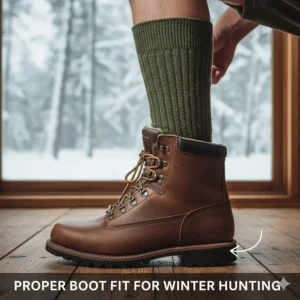
Step 2: Consider Your Boot Fit
Socks and boots must work together. If you have tight-fitting boots, heavyweight socks might create uncomfortable pressure points or cut off circulation—ironically making your feet colder. Try your socks and boots together before committing.
Leave room for toe wiggling. Cramped toes restrict blood flow, which leads to cold feet regardless of sock quality. If adding heavyweight socks makes your boots feel tight, either size up your boots or choose midweight socks.
Boot height matters too. Knee-high socks make sense with shorter boots to prevent exposed skin. Crew socks work fine with tall boots. Match sock height to your specific footwear.
Step 3: Plan for Layering
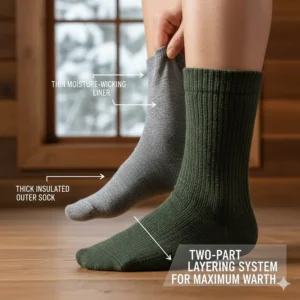
Some hunters swear by sock layering: a thin moisture-wicking liner under a heavier wool sock. The liner pulls sweat away from skin while the outer sock provides insulation. This system works particularly well for hunters with sweaty feet.
However, layering requires extra room in your boots. Two socks in tight-fitting boots can restrict circulation. Test the system before your hunt to ensure comfort.
Step 4: Factor in Special Needs
Circulation issues, Raynaud’s disease, or diabetic neuropathy require special consideration. Heated socks might be necessary for hunters whose feet go numb regardless of sock quality. Compression socks can help with circulation but shouldn’t be so tight they restrict blood flow.
Some hunters need hypoallergenic options due to wool sensitivities. Alpaca or high-quality merino (which is much softer than traditional wool) often work for these hunters.
Step 5: Don’t Forget Backup Pairs
Always pack backup socks. If your feet get wet—from sweat, snow, or rain—changing to dry socks can save your hunt. A mid-day sock change can dramatically extend your comfort and hunting time.
Common Mistakes When Choosing Hunting Socks for Cold Weather
Mistake #1: Choosing Cotton Socks
This deserves repeating: never hunt in cotton socks during cold weather. Cotton absorbs moisture and stays wet, sucking heat away from your feet. Hunters have suffered frostbite wearing cotton socks in conditions that wouldn’t have threatened them in wool. Cotton kills—that’s not hyperbole in cold weather survival scenarios.
Mistake #2: Ignoring Sock Care
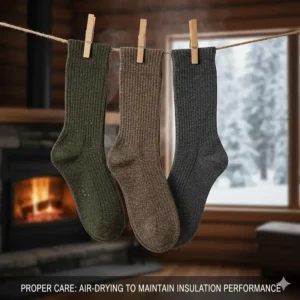
Even the best socks fail if you don’t care for them properly. Wash wool socks on gentle cycle in cold water using wool-specific detergent. Skip the dryer—high heat damages wool fibers and causes shrinkage. Air dry your socks to maintain their performance and longevity.
Improper care shortens sock life dramatically. That lifetime warranty on Darn Tough socks? It doesn’t cover damage from poor washing practices.
Mistake #3: Wearing Socks That Are Too Tight
Tight socks restrict circulation, leading to cold feet. If your socks leave deep marks on your legs or feel uncomfortably snug, size up. Proper fit should be snug but not restrictive.
Mistake #4: Buying Based Only on Price
The cheapest socks rarely perform well in harsh conditions. Conversely, expensive doesn’t always mean better. Focus on material composition, construction quality, and real user reviews rather than price alone.
Consider cost-per-wear. A $30 pair that lasts five seasons costs less over time than $10 socks you replace annually.
Caring for Your Hunting Socks: Make Them Last
Washing Best Practices
Machine wash cold on gentle cycle. Hot water damages wool fibers and causes shrinkage. Turn socks inside out to protect the outer surface. Use wool-specific detergent—regular detergents can strip natural oils that give wool its moisture-wicking properties.
Avoid fabric softener. It coats fibers and reduces their ability to manage moisture. Your socks will feel softer but perform worse.
Drying Techniques
Air drying is ideal. Lay socks flat or hang them in a well-ventilated area away from direct heat. Avoid radiators, heating vents, or dryers—high heat felts wool fibers, destroying their structure and performance.
If you must machine dry (though you shouldn’t), use the lowest heat setting and remove socks while still slightly damp to finish air drying.
Storage Tips
Store socks in a cool, dry place. Moths love wool, so consider cedar blocks or lavender sachets to deter them. Avoid cramming socks into tight drawers—let them maintain their shape.
For off-season storage, wash socks first to remove body oils and sweat that attract moths. Store in breathable containers rather than plastic bags.
When to Replace Socks
Even quality socks eventually wear out. Replace them when you notice:
- Thinning fabric at heel or toe
- Lost cushioning and support
- Holes or significant pilling
- Loose fit despite proper washing
With brands offering lifetime warranties like Darn Tough, replacement might be free. Take advantage of those programs rather than continuing to hunt in compromised socks.
Beyond Socks: Complete Cold Weather Foot Care
Boot Selection Matters
The best socks can’t overcome inadequate boots. Insulated hunting boots rated for your climate’s coldest temperatures work in tandem with quality socks. Check the boot’s temperature rating and choose appropriately.
Leave room for sock thickness when sizing boots. What fits perfectly with thin socks might crush your feet with heavyweight wool. Try boots on wearing the socks you’ll actually hunt in.
Gaiters Prevent Snow Entry
Even the tallest socks can’t prevent snow from entering your boots during deep snow hunting. Gaiters seal the gap between boot top and pants, keeping snow out and warmth in.
Boot Warmers for Extreme Cold
In extreme conditions (below 0°F), even the best sock-boot combination might not suffice. Disposable toe warmers placed on top of socks (not against skin) can provide crucial extra heat during long sits.
Dry Feet Stay Warm Feet
Moisture is your enemy. Use waterproof boots when hunting in wet conditions. If boots get wet inside, dry them thoroughly before your next hunt—wet boots will soak through even the best socks. The CDC’s research on cold-related injuries shows that wet feet lose heat 25 times faster than dry feet, which can lead to serious conditions like trench foot even in temperatures above freezing.
Pack extra socks and change them during long hunts if your feet sweat heavily. Dry socks at midday can make the difference between staying out until dark or heading home early.
Hunting Socks for Different Game and Conditions
Deer Hunting (Treestand/Ground Blind)
Stationary deer hunting demands maximum warmth with minimal movement. Heavyweight socks like the Smartwool Mountaineer or Darn Tough Hunter OTC provide the insulation needed for multi-hour sits. Over-the-calf height prevents cold spots where sock meets pant leg.
Consider heated socks for all-day sits in bitter cold. The Snow Deer heated socks can keep you in the stand for the full day when temperatures would otherwise force you out.
Waterfowl Hunting
Duck and goose hunting often involves standing in water or sitting in frozen marshes—the ultimate cold-foot challenge. Waterproof boots are essential, but even they can’t prevent cold penetration through boot soles during long sits.
Heavyweight merino or alpaca socks paired with quality insulated rubber boots provide your best defense. Some waterfowl hunters swear by heated socks for layout hunting in frozen fields.
Spot-and-Stalk Mountain Hunting
Active hunting means covering serious ground, often over steep terrain. Midweight socks like KUIU Ultra Merino provide adequate warmth without overheating during climbs. The reduced bulk allows for better boot fit and ground feel on technical terrain.
Pack extra socks for glassing sessions where you’ll become stationary. Changing into dry heavyweight socks after a sweaty climb makes extended glassing sessions comfortable.
Turkey Hunting
Spring turkey hunting might not require cold weather socks, but late-season hunts can get chilly. Midweight merino socks balance warmth with breathability for hunts that involve walking, setting up, then sitting motionless.
The odor resistance of merino proves valuable when you’re sitting close to turkeys with their keen senses.
Elk Hunting
Elk hunting combines active hiking with stationary glassing and calling. Pack both midweight and heavyweight socks. Wear midweight during active hunting, then change into heavyweight for extended glassing sessions or cold morning setups.
The temperature variation at high elevation demands adaptable sock choices. Start cold, warm up fast, cool down quickly—your socks need to handle it all.
Frequently Asked Questions
❓ How many pairs of hunting socks for cold weather should I own?
❓ Can I wear hunting socks for cold weather in regular boots?
❓ Do heated socks really work for hunting?
❓ How do I know if my hunting socks fit properly?
❓ Are expensive hunting socks worth the investment?
Conclusion: Your Feet Deserve the Best
Cold feet ruin hunts. It’s that simple. You can have the perfect stand location, the right wind, the best rifle, and all the patience in the world—but if your feet are frozen blocks of ice, you’re going home early. I learned this lesson through painful experience, and I’m sharing it so you don’t have to.
The best hunting socks for cold weather aren’t just gear—they’re your foundation for successful cold weather hunting. They keep you in the field when other hunters retreat to their trucks. They let you focus on the hunt instead of your numb toes. They make the difference between filling your tag and going home empty-handed.
After extensive research and real-world testing, here’s my final recommendation: invest in quality. The Smartwool Mountaineer and Darn Tough Hunter OTC represent the gold standard for stationary hunting. KUIU Ultra Merino excels for active pursuits. Alvada provides budget-friendly performance. Snow Deer heated socks solve extreme cold challenges.
Start with two or three pairs of quality hunting socks for cold weather and expand from there. Match your socks to your hunting style, climate, and boots. Care for them properly, and they’ll serve you for years. Your feet—and your hunting success—deserve nothing less.
Remember: every successful hunt starts with warm, dry, comfortable feet. Make hunting socks for cold weather a priority in your gear system, and you’ll immediately notice the difference in your time afield and your success rate. The deer won’t get harder to hunt. You’ll just be able to stay in the stand longer to find them.
Recommended for You
- 7 Best Cold Weather Hunting Pants 2025 | Expert Hunter’s Guide
- 7 Best Cold Weather Hunting Shirts That Actually Work [2025]
- 7 Best Cold Weather Bibs for 2025 (Expert Tested & Reviewed)
Disclaimer: This article contains affiliate links. If you purchase products through these links, we may earn a small commission at no additional cost to you.
✨ Found this helpful? Share it with your friends! 💬🤗
