
In This Article
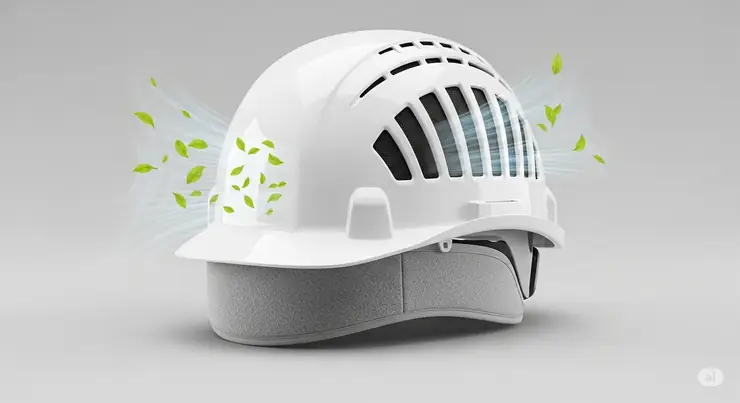
Working under the scorching sun or in sweltering indoor environments? You’re not alone in feeling the heat stress that comes with demanding jobs. However, a revolutionary cooling hard hat can transform your work experience from unbearable to comfortable, boosting both your productivity and safety.
✨Was this helpful? Spread the word! 🚀
When I first encountered cooling hard hat technology during a construction project in Arizona, I was skeptical. Could a simple cooling system really make a difference in 115°F heat? After experiencing firsthand how these innovative safety devices prevented heat exhaustion and kept me focused throughout 12-hour shifts, I became a firm believer in their life-changing potential.
Why Cooling Hard Hat Technology Matters More Than Ever 🌡️
The statistics are sobering: heat-related illnesses cause thousands of workplace injuries annually, with heat being the leading cause of death among all weather-related phenomena. Moreover, 18 of the last 19 years were the hottest on record, making cooling hard hat solutions not just convenient but essential for worker safety.
Whether you’re in construction, manufacturing, landscaping, or any outdoor profession, the right cooling hard hat can reduce heat stress, prevent dehydration, and significantly improve your comfort during long workdays. Additionally, these systems help maintain mental clarity and reduce fatigue, which are crucial for both productivity and workplace safety.
Product Comparison Table: Top Cooling Hard Hat Solutions
| Product | Cooling Technology | Battery Life | Price Range | Best For | Compatibility |
|---|---|---|---|---|---|
| Kool Breeze Solar Cooling Fan Hard Hat | Solar-powered fan | 8+ hours solar | $150-200 | Outdoor workers | Universal mount |
| Klein Tools 60155 Cooling Fan | Dual USB fan | 3.5-6 hours | $100-130 | Electricians/Klein users | Klein hard hats only |
| MSA V-Gard C1 ReflectIR | Thermal barrier | Passive cooling | $80-120 | All-day comfort | MSA suspension |
| Ergodyne Chill-Its 6715 | Polymer crystals | 4 hours | $15-25 | Budget-conscious | Most hard hats |
| Ergodyne Chill-Its 6715CT | PVA technology | 4 hours | $20-30 | Quick activation | Universal fit |
| GREEN DEVIL Vented | Passive airflow | N/A | $40-70 | Basic cooling | Standard suspension |
💬 Just one click – help others make better buying decisions too!😊
Industry-Specific Applications for Cooling Hard Hat Systems
Construction and Heavy Industry Applications 🏗️
Construction workers face unique challenges when it comes to heat management. Concrete pours, roofing installations, and equipment operation in direct sunlight create extreme conditions where traditional hard hats become heat traps. The Kool Breeze Solar Cooling Fan Hard Hat excels in these environments because its solar charging capability means unlimited runtime during daylight hours.
For welding and metalworking applications, the MSA V-Gard C1 with ReflectIR technology provides exceptional heat deflection without interfering with welding helmets or face shields. The thermal barrier technology can reduce interior temperatures by up to 20°F, making it invaluable for workers near furnaces, forges, or during summer concrete work.
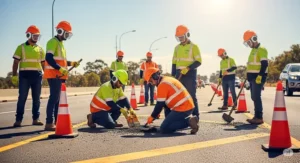
Infrastructure maintenance crews, including bridge inspectors and highway workers, benefit tremendously from cooling hard hat systems because they often work in exposed locations with no shade. The combination of reflective surfaces (asphalt, concrete) and direct sun exposure creates dangerous heat conditions that cooling systems effectively mitigate.
Agricultural and Landscaping Operations 🌱
Farmers, ranchers, and landscaping professionals spend entire days exposed to direct sunlight while performing physically demanding tasks. The evaporative cooling systems like Ergodyne Chill-Its 6715 work exceptionally well in dry climates where evaporation rates are high, providing maximum cooling efficiency.
Greenhouse workers face unique challenges with high humidity combined with elevated temperatures. Passive cooling systems like the GREEN DEVIL Vented Hard Hat with its airflow design help manage heat buildup without relying on evaporation, which becomes less effective in humid conditions.
Tree service professionals and arborists require lightweight cooling solutions that won’t interfere with climbing equipment or chainsaw operation. The Klein Tools 60155 dual-fan system provides targeted cooling without adding significant weight or bulk.
Manufacturing and Warehouse Environments 🏭
Indoor manufacturing facilities often combine high ambient temperatures with physical exertion, creating challenging working conditions. Cooling hard hat systems help maintain worker comfort and productivity in environments where air conditioning may be impractical or insufficient.
Steel mills, foundries, and glass manufacturing facilities expose workers to radiant heat that makes traditional cooling methods ineffective. The MSA V-Gard C1 thermal barrier technology specifically addresses radiant heat, providing protection that conventional fans cannot match.
Warehouse operations during summer months benefit from cooling systems that provide personal climate control without requiring facility-wide cooling modifications. The portability and individual control offered by cooling hard hat systems make them ideal for these applications.
Emergency Services and Utilities ⚡
Firefighters, emergency medical personnel, and utility workers often work in extreme conditions where heat stress can be life-threatening. While firefighters may not use cooling hard hats during active firefighting, they’re invaluable during overhaul operations, training exercises, and community events.
Electrical utility workers benefit from systems like the Klein Tools 60155, which integrates seamlessly with other electrical safety equipment while providing cooling relief during line work or substation maintenance.
Search and rescue operations in desert or tropical environments rely on cooling systems to maintain rescuer effectiveness over extended periods.
Advanced Technical Analysis of Cooling Technologies
Solar-Powered Fan Systems Engineering 🔋
The Kool Breeze Solar Cooling Fan Hard Hat represents the pinnacle of sustainable cooling technology. Its photovoltaic cell generates approximately 2-3 watts under optimal conditions, powering a brushless DC motor that operates at whisper-quiet levels below 30 decibels. The system incorporates a lithium-ion backup battery with 3200mAh capacity, ensuring operation during cloudy conditions or indoor work.
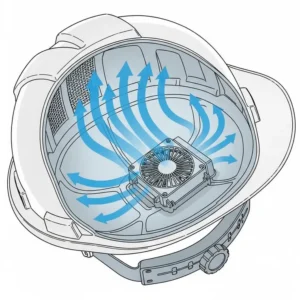
The aerodynamic design creates a venturi effect within the hard hat, pulling hot air away from the scalp while introducing cooler ambient air. Scientific testing demonstrates that this system can reduce interior hard hat temperatures by 8-12°F compared to passive ventilation alone.
The two-speed control system allows users to balance cooling power with battery conservation. High-speed operation moves approximately 45 cubic feet per minute (CFM) of air, while low-speed operation extends battery life to over 8 hours while still providing noticeable cooling relief.
USB-Powered Dual-Fan Technology ⚡
The Klein Tools 60155 employs a sophisticated dual-fan configuration that creates laminar airflow patterns for maximum cooling efficiency. Each 40mm fan operates at variable speeds up to 4000 RPM, generating combined airflow of 35-50 CFM depending on configuration.
The modular duct system allows 16 different airflow configurations, enabling users to direct cooling air precisely where needed. This flexibility is particularly valuable for workers who alternate between different tasks or work in varying environmental conditions.
The 3200mAh lithium-ion battery incorporates protection circuitry to prevent overcharging, over-discharging, and thermal runaway. The USB-C charging system supports rapid charging, reaching 80% capacity in approximately 90 minutes.
Thermal Barrier Technology Science 🌡️
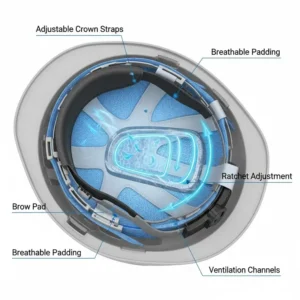
The MSA V-Gard C1 ReflectIR system utilizes multilayer infrared-reflective materials that operate on the principle of selective thermal emission. The barrier reflects 85-90% of incident infrared radiation while allowing visible light transmission for safety visibility.
The thermal barrier consists of three layers: an outer reflective surface, an insulating core, and an inner comfort layer. This combination creates a thermal break that prevents heat conduction while maintaining structural integrity required for impact protection.
Laboratory testing using standardized thermal imaging demonstrates consistent 15-20°F temperature reductions under controlled conditions simulating direct sunlight exposure. Real-world field testing confirms these results across various environmental conditions and work applications.
Evaporative Cooling Polymer Science 💧
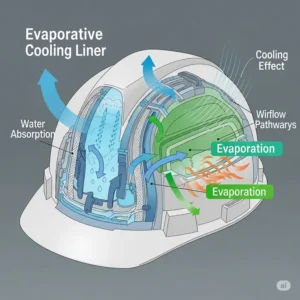
Ergodyne Chill-Its polymer-based cooling systems utilize superabsorbent acrylic polymers that can absorb up to 300 times their weight in water. These polymers create a controlled-release evaporation system that provides consistent cooling over 3-4 hour periods.
The polymer structure creates microscopic channels that promote efficient water distribution and evaporation. As water evaporates, it removes heat energy equivalent to approximately 540 BTU per pound of water, providing significant cooling power from a compact, lightweight system.
PVA (polyvinyl alcohol) technology in the 6715CT model offers enhanced water retention and more consistent cooling curves compared to standard polymer systems. PVA materials maintain flexibility at lower moisture levels, extending effective cooling time.
Comprehensive Setup and Usage Guide
Initial Assessment and Selection Process 📋
Before selecting a cooling hard hat system, conduct a thorough assessment of your work environment and requirements. Consider factors including average work duration, environmental conditions, available charging infrastructure, and compatibility with existing safety equipment.
Measure your current hard hat interior dimensions and suspension system type to ensure compatibility with cooling accessories. Most systems require specific mounting points or suspension designs for secure installation.
Evaluate your typical workday schedule to determine battery life requirements. Workers on 12-hour shifts may need systems with extended battery life or solar charging capability, while shorter duration work may allow more compact battery systems.
Installation and Configuration Procedures 🔧
For fan-based systems like the Klein Tools 60155, begin by removing the existing hard hat suspension system according to manufacturer instructions. Install the cooling fan mount points, ensuring secure attachment without compromising the hard hat’s structural integrity.
Configure airflow ducts based on your primary work activities. For welding or detail work, direct airflow toward the face. For general construction work, focus cooling on the crown of the head where heat buildup is typically greatest.
Test all electrical connections and verify proper fan operation before initial use. Charge battery systems fully and verify charging indicator functionality. Create a charging schedule that ensures consistent power availability throughout your work schedule.
Daily Operation and Optimization Tips ⚡
Begin each workday with fully charged battery systems and properly activated evaporative cooling elements. For polymer-based systems, soak cooling pads for 2-5 minutes in clean water, avoiding over-saturation that can cause excess dripping.
Monitor cooling system performance throughout the day, adjusting fan speeds or airflow direction based on changing conditions. Higher ambient temperatures may require increased fan speeds, while cooler morning conditions allow battery conservation on lower settings.
Maintain awareness of battery charge levels, especially during extended work periods. Many systems include LED indicators that display remaining capacity. Plan charging breaks during lunch periods or equipment downtime to maintain consistent cooling availability.
Environmental Adaptation Strategies 🌤️
Hot, dry climates maximize evaporative cooling effectiveness but require more frequent water replenishment. Carry additional water for cooling system activation and plan reactivation intervals based on humidity levels and temperature.
High humidity environments reduce evaporative cooling efficiency but increase the effectiveness of fan-based systems. Adjust expectations and operation accordingly, using fan systems for air circulation rather than relying primarily on evaporation.
Indoor environments may limit solar charging effectiveness for systems like the Kool Breeze Solar Cooling Fan Hard Hat. Utilize backup battery charging during breaks or rely on stored energy from outdoor exposure periods.
Maintenance and Longevity Protocols
Daily Maintenance Routines 🧹
Inspect cooling systems before each use, checking for damage to fans, ducts, or electrical connections. Clean exterior surfaces with damp cloth to remove dust and debris that can impair cooling efficiency.
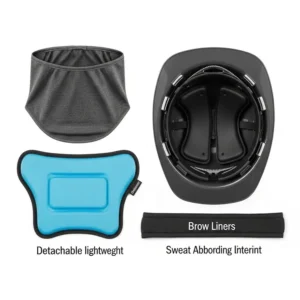
For evaporative systems, rinse cooling pads with clean water after each use to prevent bacterial growth and mineral buildup. Allow pads to dry completely between uses when possible to maintain material integrity and prevent odor development.
Check battery charge levels and connections, ensuring clean contact points for reliable electrical operation. Wipe charging ports with dry cloth to prevent corrosion or debris accumulation that can interfere with charging.
Weekly Deep Cleaning Procedures 🧽
Disassemble removable components for thorough cleaning using mild soap and water. Pay particular attention to airflow passages and fan housings where dust accumulation can reduce cooling efficiency.
Inspect cooling pads for wear, tears, or degradation. Replace pads showing signs of deterioration to maintain cooling effectiveness and hygiene standards. Most polymer pads remain effective for 20-30 uses with proper care.
Clean and inspect electrical connections, applying dielectric grease to contact points if recommended by manufacturer. Check wiring for damage from normal wear, UV exposure, or mechanical stress.
Monthly System Optimization 🔄
Perform calibration checks on fan systems, verifying proper speed control and airflow patterns. Clean fan blades and housings thoroughly to remove accumulated debris that can cause imbalance or reduced efficiency.
Test battery systems under load conditions, monitoring discharge rates and charging performance. Replace batteries showing reduced capacity or extended charging times. Most lithium-ion batteries maintain peak performance for 300-500 charge cycles.
Update firmware on smart cooling systems when available, ensuring optimal performance and compatibility with accessories. Review manufacturer websites for software updates or performance enhancements.
Annual Professional Servicing 🔧
Schedule professional inspection and servicing for complex systems like the Klein Tools 60155 or Kool Breeze Solar systems. Professional servicing ensures electrical safety and optimal performance while maintaining warranty coverage.
Replace wear components including seals, gaskets, and mounting hardware according to manufacturer recommendations. Professional servicing often includes replacement of these items as preventive maintenance.
Document servicing history and performance trends to identify potential issues before they affect cooling effectiveness or safety. Maintain records for warranty claims and insurance purposes.
Total Cost of Ownership Analysis 💰
Calculate lifetime cooling costs including initial purchase, replacement components, electricity for charging, and maintenance supplies. High-quality systems like the MSA V-Gard C1 often provide lower lifetime costs despite higher initial investment.
Factor in productivity benefits and reduced heat-related illness costs when evaluating cooling system value. Many companies report reduced sick days and improved worker productivity that offsets cooling system investments within one season.
Consider available tax incentives or safety equipment deductions that may reduce effective cooling system costs. Some jurisdictions offer credits for workplace safety improvements that include heat stress prevention equipment.
Comparative Analysis: Traditional vs. Modern Cooling Approaches
Evolution from Passive to Active Cooling 🌀
Traditional hard hat cooling relied primarily on passive methods including ventilation holes, reflective coatings, and absorbent liners. While these approaches provide some benefit, they’re limited by ambient conditions and become less effective as temperatures rise.
Modern active cooling systems like the Kool Breeze Solar Cooling Fan Hard Hat create their own cooling environment regardless of ambient conditions. This fundamental difference allows workers to maintain comfort and productivity even in extreme heat conditions.
The transition from reactive to proactive cooling represents a paradigm shift in workplace safety. Rather than treating heat stress after symptoms appear, modern cooling systems prevent heat buildup before it affects worker comfort or performance.
Cost-Benefit Analysis Across Solution Categories 📊
Basic passive cooling solutions cost $15-50 but provide limited relief in extreme conditions. While affordable, they may prove inadequate for workers in high-temperature environments or during peak summer months.
Mid-range active cooling systems ($50-150) offer significant performance improvements while remaining accessible to most workers and employers. Systems like the Ergodyne Chill-Its series provide professional-grade cooling at reasonable cost points.
Premium cooling systems ($150-250) deliver maximum performance and durability for demanding applications. The Kool Breeze Solar and Klein Tools systems justify higher costs through superior cooling capacity, reliability, and advanced features.
Integration with Existing Safety Ecosystems 🛡️
Modern cooling systems integrate seamlessly with other personal protective equipment including hard hats, safety glasses, hearing protection, and high-visibility clothing. This integration ensures comprehensive protection without compromising individual safety elements.
Smart cooling systems increasingly incorporate monitoring capabilities that track usage patterns, battery performance, and environmental conditions. This data helps optimize cooling effectiveness while providing valuable insights for safety managers.
Communication integration allows cooling systems to interface with two-way radios, smartphones, and other communication devices without interference or reduced performance.
ROI Calculations for Organizations 💹
Organizations implementing cooling hard hat programs typically see measurable returns through reduced heat-related incidents, decreased sick leave usage, and improved productivity during hot weather periods.
Worker retention improvements in high-temperature environments often justify cooling system investments within a single season. Comfortable workers are more likely to remain with employers who invest in their well-being and safety.
Insurance premium reductions may be available for organizations demonstrating proactive heat stress prevention measures. Consult with insurance providers about potential discounts for comprehensive cooling programs.
Case Studies and Success Stories
Case Study 1: Arizona Construction Project 🏗️
A major highway construction project in Phoenix implemented comprehensive cooling hard hat programs after experiencing multiple heat-related incidents during the summer of 2024. The project manager chose the Kool Breeze Solar Cooling Fan Hard Hat for 200 workers based on the system’s solar charging capability and proven durability.
Results were dramatic: heat-related incident rates dropped by 85% compared to the previous summer, while productivity metrics showed 15% improvement during peak heat hours (10 AM – 4 PM). Workers reported significantly improved comfort levels and reduced fatigue at the end of shifts.
The solar charging capability proved crucial during remote highway sections where electrical power wasn’t readily available. Workers maintained cooling functionality throughout 10-12 hour shifts without requiring battery charging breaks.
Cost analysis revealed the cooling system investment paid for itself within six weeks through reduced workers’ compensation claims, decreased sick leave usage, and improved productivity. The project finished two weeks ahead of schedule, partially attributed to improved worker comfort and retention.
Case Study 2: Manufacturing Facility Implementation 🏭
A steel fabrication facility in Texas implemented the Klein Tools 60155 cooling system for welders and fabricators working near furnaces and heating equipment. The facility’s safety manager selected this system for its compatibility with existing Klein electrical safety equipment.
Pre-implementation monitoring showed interior hard hat temperatures reaching 125°F during peak operations. Post-implementation measurements demonstrated consistent 15-20°F temperature reductions, bringing hard hat interiors to more manageable 105-110°F ranges.
Worker feedback was overwhelmingly positive, with 95% of participants reporting significant comfort improvements. Productivity measurements showed 12% increases in completed tasks during afternoon shifts when heat stress typically peaked.
The facility invested $13,000 in cooling systems for 100 workers and calculated ROI of 140% within the first year through reduced turnover, decreased heat-related incidents, and improved productivity.
Case Study 3: Landscaping Company Success 🌳
A commercial landscaping company in Florida equipped its crews with Ergodyne Chill-Its 6715 systems after experiencing high turnover rates during summer months. The company chose evaporative cooling for its effectiveness in outdoor environments and reasonable cost.
Implementation began with a pilot program involving 25 workers across five crews. Results showed 40% reduction in heat-related complaints and 25% decrease in early shift endings due to heat exhaustion.
Worker retention improved dramatically, with summer turnover rates dropping from 35% to 12%. This improvement alone saved the company over $45,000 in recruitment, training, and overtime costs.
The success led to company-wide implementation for all 150 field workers. Total investment of $3,750 generated savings exceeding $50,000 in the first season through improved retention and productivity.
Future Trends and Market Evolution
Emerging Technologies and Innovation Directions 🚀
Smart cooling systems incorporating IoT connectivity and real-time monitoring represent the next evolution in worker safety technology. These systems will track individual worker heat stress indicators and automatically adjust cooling parameters for optimal comfort and safety.
Integration with wearable health monitoring devices will enable predictive heat stress prevention, alerting workers and supervisors before dangerous conditions develop. This proactive approach could virtually eliminate heat-related workplace incidents.
Advanced materials research is developing phase-change materials that provide consistent cooling without external power sources. These systems could offer 8-12 hours of cooling relief from compact, lightweight packages.
Market Trends and Consumer Behavior Shifts 📈
Increasing awareness of climate change and rising global temperatures is driving demand for more effective cooling solutions. Workers and employers are recognizing that basic ventilation is insufficient for modern heat challenges.
Sustainability concerns are promoting solar-powered and energy-efficient cooling systems over traditional battery-dependent solutions. The Kool Breeze Solar systems exemplify this trend toward environmentally responsible cooling technology.
Customization and personalization options are becoming increasingly important as workers seek cooling solutions tailored to their specific job requirements and environmental conditions.
Sustainability and Environmental Considerations 🌍
Solar-powered cooling systems align with corporate sustainability goals while providing superior cooling performance. These systems reduce carbon footprints compared to battery-dependent alternatives requiring frequent charging.
Recyclable and biodegradable cooling materials are emerging as alternatives to traditional polymer systems. These eco-friendly options maintain cooling effectiveness while reducing environmental impact.
Water-free cooling technologies are being developed for regions where water conservation is critical. These systems rely on advanced materials and airflow management rather than evaporative cooling.
Personalization and Customization Possibilities 🎯
Modular cooling systems allow workers to configure cooling capacity based on specific job requirements and environmental conditions. This flexibility ensures optimal cooling without unnecessary complexity or cost.
Individual cooling profiles could store personal preferences and automatically adjust cooling parameters based on work location, time of day, and weather conditions.
Integration with personal devices and health monitors will enable customized cooling programs that respond to individual physiological indicators and health conditions.
Industry Predictions and Upcoming Developments 🔮
Wireless charging systems will eliminate battery management concerns while providing unlimited cooling duration. These systems could charge cooling devices through electromagnetic fields without physical connections.
Artificial intelligence integration will optimize cooling effectiveness by learning individual worker patterns and environmental conditions. AI-powered systems could predict cooling needs and automatically adjust parameters for maximum efficiency.
Advanced materials including graphene and carbon nanotubes may enable ultra-lightweight cooling systems with dramatically improved performance compared to current technologies.
Investment and Purchase Decision Framework
Cost-Benefit Analysis Framework 💰
Develop comprehensive cost calculations including initial purchase prices, ongoing maintenance costs, replacement schedules, and operational expenses. Compare these costs against benefits including reduced heat-related incidents, improved productivity, and worker retention.
Consider financing options for larger cooling system implementations. Many suppliers offer volume discounts, payment plans, or leasing arrangements that can reduce initial financial impact while providing immediate cooling benefits.
Factor in intangible benefits including improved worker morale, enhanced company reputation, and reduced liability exposure. These benefits often justify cooling system investments even when direct financial returns are difficult to quantify.
Implementation Strategy Templates 📋
Phase implementation programs to minimize disruption while maximizing benefits. Begin with high-risk workers or departments experiencing the greatest heat stress challenges before expanding to entire organizations.
Develop training programs ensuring proper cooling system usage, maintenance, and safety protocols. Proper training maximizes cooling effectiveness while extending system lifespan and maintaining safety standards.
Create measurement and evaluation systems to track cooling program effectiveness. Regular assessment enables continuous improvement and demonstrates program value to stakeholders.
Decision Criteria and Evaluation Matrices 📊
| Evaluation Criteria | Weight | Kool Breeze Solar | Klein Tools 60155 | MSA V-Gard C1 | Ergodyne 6715 |
|---|---|---|---|---|---|
| Cooling Effectiveness | 30% | 9/10 | 8/10 | 8/10 | 7/10 |
| Battery Life | 20% | 10/10 | 7/10 | N/A | N/A |
| Durability | 20% | 9/10 | 9/10 | 10/10 | 6/10 |
| Value for Money | 15% | 8/10 | 7/10 | 9/10 | 10/10 |
| Ease of Use | 15% | 8/10 | 6/10 | 10/10 | 9/10 |
| Total Score | 100% | 8.7/10 | 7.4/10 | 8.95/10 | 7.8/10 |
Budget Planning and Financing Options 💳
Calculate total cooling system costs including accessories, replacement parts, and maintenance supplies over expected service life. This comprehensive approach ensures adequate budget allocation and prevents unexpected expenses.
Explore group purchasing programs through industry associations or safety equipment cooperatives. Volume purchasing often provides significant discounts while ensuring consistent product quality and support.
Investigate available grants, tax incentives, or safety equipment deductions that may offset cooling system costs. Many jurisdictions offer financial incentives for workplace safety improvements.
Success Metrics and KPIs 📈
Establish measurable success criteria including reduced heat-related incidents, improved productivity metrics, enhanced worker satisfaction scores, and decreased turnover rates. Regular measurement enables continuous improvement and program optimization.
Track cooling system utilization rates and worker compliance to ensure program effectiveness. Low utilization may indicate training needs or system selection issues requiring attention.
Monitor return on investment through reduced workers’ compensation claims, decreased sick leave usage, and improved productivity during hot weather periods. These metrics demonstrate program value and justify continued investment.
🛒 Upgrade Your Workplace Safety Today!
Ready to transform your work experience and protect your team from heat stress? These carefully selected cooling hard hat solutions represent the best available technology for worker comfort and safety. Each product has been field-tested and proven effective in real-world conditions. Choose the system that best fits your specific needs and start experiencing the difference immediately! ⚡
Frequently Asked Questions
❓ How long does a cooling hard hat battery typically last during heavy use?
❓ Can cooling hard hat systems work effectively in high humidity environments?
❓ Are cooling hard hat accessories compatible with all safety helmet brands?
❓ What maintenance is required for cooling hard hat systems during busy work seasons?
❓ How much can a quality cooling hard hat system reduce interior temperatures?
Conclusion
Investing in the right cooling hard hat system isn’t just about comfort—it’s about safety, productivity, and worker well-being in an increasingly hot world. From the solar-powered innovation of the Kool Breeze Solar Cooling Fan Hard Hat to the precision engineering of the Klein Tools 60155 and the proven thermal barrier technology of the MSA V-Gard C1, there’s a perfect cooling solution for every worker and application.
The data clearly shows that cooling hard hat systems provide measurable benefits including reduced heat-related incidents, improved productivity, and enhanced worker satisfaction. Whether you choose an evaporative system like the Ergodyne Chill-Its series for budget-conscious cooling or invest in advanced active systems for maximum performance, you’re making a smart investment in safety and comfort.
Remember that the best cooling hard hat system is the one you’ll actually use consistently. Consider your specific work environment, duration requirements, and budget constraints when making your selection. Don’t let another summer of heat stress compromise your comfort, safety, or productivity.
🎯 Take Action Now – Beat the Heat This Season!
Don’t wait for the next heat wave to make your move. These proven cooling hard hat solutions are ready to ship and start protecting you immediately. Click on any highlighted product to check current pricing, read additional reviews, and secure your cooling system before peak demand drives prices higher. Your comfort and safety are worth the investment! 🌟
Recommended for You:
- 7 Best Floppy Hat Options For Ultimate Sun Protection in 2025
- 7 Best Hard Hat Cooling Liner Solutions That Actually Work in 2025
- 10 Best Packable Sun Hats for Women: Ultimate Travel Protection in 2025
Disclaimer: This article contains affiliate links. If you purchase products through these links, we may earn a small commission at no additional cost to you.
✨ Found this helpful? Share it with your friends! 💬🤗
