
In This Article
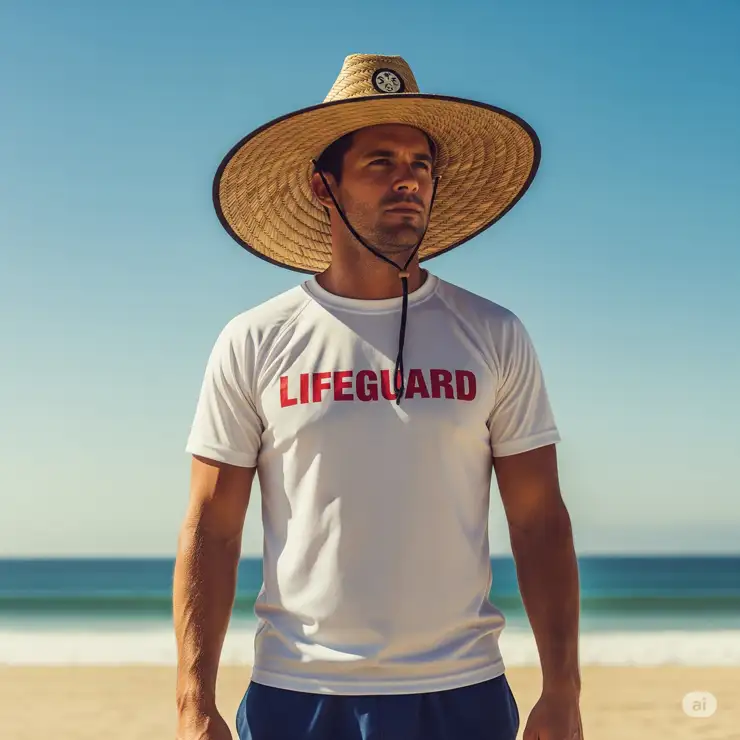
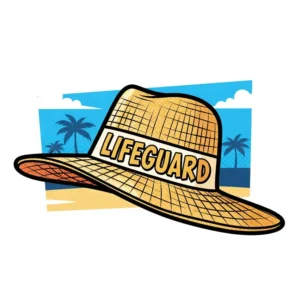
A straw lifeguard hat is one of those rare designs that got it right the first time. Tall, pinched crown for airflow. Wide brim for shade. A chin strap that tells the wind to mind its own business. In 2026 the straw lifeguard hat is back in a big way, on piers, pool decks, fishing boats and, increasingly, in gardens where people have noticed their sunscreen routine skips the ears.
The catch is choice. Market-tracking data from July 2026 counted 143 listings in Amazon’s search results for this very term, and the biggest share sat in the $20-$50 band. Some of those hats are genuinely well built. Others are a hat-shaped suggestion. Brim claims are vague, UPF ratings appear and vanish, and a surprising number can’t survive a suitcase.
This guide cuts through the noise. We compare seven real models, translate every spec into what it means on your head, and summarize the genuine themes that surface in reviews and shopper discussions. One honest note up front: I haven’t worn every hat here, so you won’t find invented “I tested it for six weeks” stories. You’ll get analysis grounded in published specs and aggregated feedback, plus the practical guidance product listings never bother to give.
Straw hats also have a long pedigree. Wikipedia’s overview of the straw hat describes them as wide-brimmed hats woven from straw or straw-like synthetic materials, built to shade the head and face and often adopted as a uniform. That last part explains the lifeguard connection nicely.
Quick Comparison: Top Straw Lifeguard Hats at a Glance
Here’s the short version before we go deep. Brim widths and UPF claims come from manufacturer and retailer listings, and where a listing didn’t state a number, the table says so rather than guessing.
| Hat | Listed Brim | Sun-Protection Claim | Price Range | Best For |
|---|---|---|---|---|
| Quiksilver Pierside | Wide (size not stated) | No UPF listed | Under $25 | Budget beach days |
| Hurley Men’s Straw Hat | “360° shade” (size not stated) | Certified UPF not emphasized | Value tier, check current price | Casual everyday wear |
| Columbia PFG | 4.75 in | Not listed | Roughly $25-$35 | Boating and fishing |
| Panama Jack Lifeguard | Not stated | UPF 50+ | Mid-range, check current price | Classic look with rated protection |
| COR Surf Classic | Not stated | UPF 50+ | Mid-range, check current price | Larger head sizes |
| Hemlock UPF 50+ Lifeguard | 4.5 in | UPF 50+ under-brim liner | Around $40 | Wide coverage with style |
| Tula Lifeguard Hat | 4.5-5 in | UPF 50+ (brand cites Cal Poly testing) | Roughly $45-$65 | Premium all-day use |
Looking at the table, the real dividing line isn’t price, it’s documentation. Only a few hats pair a published brim measurement with a UPF claim, and those are the ones where you know what you’re buying. If you want protection you can verify, Hemlock and Tula give you the most numbers to work with, while Columbia PFG wins on raw published brim width.
💬 Just one click — help others make better buying decisions too!😊
What Is a Straw Lifeguard Hat?
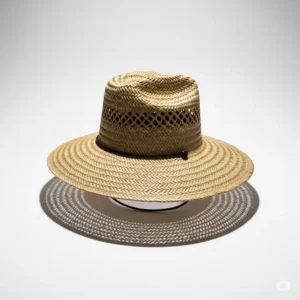
A straw lifeguard hat is a wide-brimmed sun hat woven from straw or straw-like fibers, topped with a tall pinched crown and held in place by a chin strap or drawcord. It’s modeled on the hats worn on beaches and pool decks, and it’s designed to shade the face, ears and neck while staying light and breathable.
Each part earns its place. The crown is tall so hot air can rise above your scalp instead of sitting on it. The brim does the shading, and its width decides how much of your face, ears and neck stay out of direct sun. The underbrim (often lined with fabric or printed in bold colors) cuts the glare that bounces up from sand and water. The chin strap keeps the whole arrangement attached when a gust arrives. And the sweatband, usually elastic, handles fit and comfort.
Materials vary more than most buyers realize. The Quiksilver Pierside uses 100% rafia straw fiber, the Columbia PFG blends paper, polyester and polyethylene, and the Tula uses palm. Real straw feels natural but can be brittle, while paper-and-poly blends trade a little romance for consistency. Neither is automatically better; it depends on whether you value a hand-woven look or a hat that shrugs off a bumpy trip.
Top 7 Straw Lifeguard Hats: Expert Analysis
Seven hats, budget to premium. For each one, we unpack what the specs mean in practice, summarize genuine review themes where they could be verified, and say plainly when they couldn’t. Prices are ranges, so check current pricing before you buy.
1. Quiksilver Pierside Lifeguard Straw Hat — cheapest way into the classic look
The Quiksilver Pierside is the entry ticket: a woven rafia straw hat with a wide brim, a lined headband and an adjustable drawcord chin strap with a toggle. It’s the hat you buy when you want the lifeguard aesthetic without a lifeguard-sized commitment.
What do the specs mean? The lined headband keeps raw straw edges from chafing your forehead, and the toggle lets you cinch the strap against wind. But the manufacturer’s care notes warn against submerging the hat or storing it where the crown can be squashed, so this is a hat for the beach towel, not the wave break.
Here’s the analytical catch. The listing states no brim measurement and no UPF rating, so treat the Quiksilver Pierside as shade, not certified protection, and keep sunscreen close. It suits occasional beachgoers, yard work and anyone prone to losing hats.
Reviewer themes in shopper discussions are consistent: the hat can’t be flattened for packing, the straw cracks if bent, and the crown weave can run sparse, which matters for thin hair. Some buyers also note that padded-mailer shipping can crush it.
Pros:
- ✅ Very low entry price for the look
- ✅ Adjustable drawcord with toggle
- ✅ Lined headband for comfort
Cons:
- ❌ Won’t flatten, bends can crack the straw
- ❌ No UPF rating or brim width listed
Price range: under $25. Verdict: a fine seasonal hat, not a forever hat.
2. Hurley Men’s Straw Hat — easy 360° shade at a value price
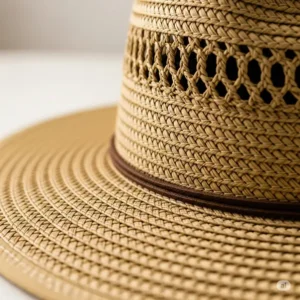
The Hurley Men’s Straw Hat earned the “best overall” slot in one third-party roundup, with a 4.6-star average across 586 ratings at the time of writing. Treat those numbers as a snapshot, since ratings drift.
The headline feature is “360-degree shade,” which in plain English means the brim runs evenly around the crown rather than favoring the front. That protects the back of your neck, an area people forget until it peels. The chin strap keeps it secure, and the lightweight straw means you’ll forget you’re wearing it by lunchtime.
The same roundup frames the Hurley as a pick for casual days when certified UPF isn’t the top concern, and that’s the right framing. Without a published UPF rating, this hat gives you shade but not a number you can verify. It also can’t go in the washing machine, so sweat management is on you.
Who is it for? Someone who wants a decent-looking, lightweight hat for the beach, the lake or the barbecue, and isn’t spending hours outdoors in peak sun.
Reviewers (as summarized in the roundup) praise the coverage-for-the-money angle. I couldn’t verify detailed complaint patterns, so read recent buyer comments for fit notes.
Pros:
- ✅ Brim shades all the way around
- ✅ Lightweight and breathable straw
- ✅ Chin strap included
Cons:
- ❌ Certified UPF rating not emphasized
- ❌ Not machine-washable
Price range: value tier, check current price. Verdict: strong casual-wear value.
3. Columbia PFG Straw Lifeguard Hat — wide 4.75-inch brim at a modest price
Columbia PFG (Performance Fishing Gear) makes a lifeguard-style hat with a published 4.75-inch brim and an adjustable chin strap. That brim is well past the 3-inch floor dermatologists commonly recommend, which gives you real shade on the face, ears and neck.
The material is the interesting part: a blend of roughly 63% paper, 26% polyester and 11% polyethylene. In practice, paper-and-poly weaves tend to be lighter and more uniform than hand-woven palm, and the synthetic content adds some resilience. It won’t have the artisanal feel of natural straw, but it’s built for boats, where wind and spray are the actual enemies.
Based on the spec comparison, this is the best published-brim value in the lineup, and it suits anglers, paddlers and anyone on the water.
Shopper discussions raise one honest flag: the hat is sold as “unisex” in some listings, yet commenters say the styling and fit read as a women’s hat, and another noted the listing text says “Women’s.” Check the sizing and gender labeling on the product page before ordering.
I couldn’t find a verified UPF number for this model, so don’t assume one.
Pros:
- ✅ Published 4.75-inch brim
- ✅ Synthetic blend suits wind and spray
- ✅ Adjustable chin strap
Cons:
- ❌ Gender and fit labeling inconsistent
- ❌ No UPF rating found
Price range: roughly $25-$35. Verdict: excellent shade per dollar if the fit works for you.
4. Panama Jack Lifeguard Straw Hat — classic look with UPF 50+ protection
The Panama Jack Lifeguard Straw Hat is handwoven straw with a UPF 50+ rating and an adjustable chin strap. It averaged 4.4 stars across 605 ratings in the same roundup that crowned the Hurley, where it took the “premium pick” label.
Why does UPF 50+ matter? The Skin Cancer Foundation explains that a fabric with a UPF of 50 allows only 1/50th of UV radiation through, roughly 98 percent blocked. That’s a measurable standard, which is more than “wide brim” can promise on its own.
The Panama Jack is built for anyone who wants the traditional silhouette without giving up a rating, particularly all-day beach wear. The trade-off, per the roundup, is that handwoven straw can’t be machine-washed like cotton, so gentle spot care is the rule.
A fair caution: the sources I found didn’t publish a brim measurement, so verify it on the current listing. If you want the widest possible shade, compare it against the Tula and Columbia PFG numbers above.
Reviewers broadly like the look-to-protection balance, though I couldn’t verify detailed complaint themes beyond the aggregate rating.
Pros:
- ✅ UPF 50+ protection claim
- ✅ Handwoven classic styling
- ✅ Adjustable chin strap
Cons:
- ❌ Brim width not published in sources found
- ❌ Needs gentle straw-specific care
Price range: mid-range, check current price. Verdict: a safe, stylish middle path.
5. COR Surf Classic Lifeguard Sun Hat — rare XXL fit for bigger heads
The COR Surf Classic Lifeguard Sun Hat combines straw with cloth, carries a UPF 50+ rating, and is singled out in roundups for fitting larger heads, something most lifeguard hats quietly fail at.
Fit is the silent killer of hat performance. A hat that’s too small rides high on the skull, tilts its brim upward and quietly shrinks the shade it throws. If your head measures at the top of the adult range, sizing matters more than any spec on this page. The COR Surf Classic exists for exactly that reader.
The cloth component, presumably in the underbrim or lining, is consistent with the UPF 50+ claim, though the sources I found don’t detail exactly where it sits. The chin strap handles wind, and the straw-and-cloth build means the same gentle care any straw hat needs.
Honest limitation: beyond the roundup’s praise for larger sizing, I couldn’t verify review counts or recurring complaints for this model. If you have a big head, that single fit advantage may still outweigh the missing data. Measure your head circumference just above the eyebrows and ears, then compare against the size chart.
Pros:
- ✅ XXL sizing for larger head circumferences
- ✅ UPF 50+ rating listed
- ✅ Chin strap for windy days
Cons:
- ❌ Limited verified review data
- ❌ Brim measurement not published in sources found
Price range: mid-range, check current price. Verdict: the problem-solver for big-headed buyers.
6. Hemlock UPF 50+ Lifeguard Straw Hat — tall cattleman crown, bold underbrim
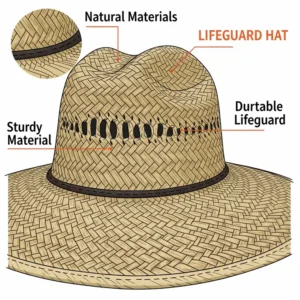
Hemlock leans into the lifeguard look with a tall cattleman crown, a 4.5-inch brim and a UPF 50+ under-brim liner on its rated version. The OG model sits around the $40 mark at one hardware retailer, and a tropical-print underbrim variant exists for people who want their hat to have opinions.
Start with the liner. Light bounces up off sand and water, and a rated underbrim fabric addresses glare and reflected UV that a plain straw underside doesn’t. Darker or bolder underbrim colors also absorb UV rather than letting it through, which is a quiet bonus of the print designs.
The elastic headband fits most adult heads, which is convenient but less secure than a cinch-style strap. The OG listing mentions the headband but not a chin strap, so if you plan to ride a boat or a windy boardwalk, confirm the model includes cord closure. A related Hemlock model, the Lana, uses a 4.1-inch brim and chin strings with a taller fedora crown.
I couldn’t find enough verified buyer reviews for the Hemlock to summarize sentiment responsibly. Check the latest customer feedback on the current listing.
Pros:
- ✅ 4.5-inch brim with tall breathable crown
- ✅ UPF 50+ under-brim liner on rated version
- ✅ Elastic band fits most adult heads
Cons:
- ❌ Chin strap not listed on the OG model
- ❌ Limited verified review data
Price range: around $40. Verdict: smart shade with personality, if you confirm the closure.
7. Tula Lifeguard Hat — premium palm with certified UPF 50+
The Tula Lifeguard Hat is the premium end of this group. It’s made from lightweight palm with a 4.5-5 inch brim, a nylon chin strap and an elastic stretch sweatband. The brand states its hats were tested by California Polytechnic State University and rated UPF 50+, the highest rating for sun-protective gear.
What does that mean day to day? Palm is described as easy to clean, quick to dry, and buoyant, so a Tula that blows into a lake shouldn’t sink. The chin strap can also hang down your back when you’re indoors, a small detail that turns out to be very useful. A brim near 5 inches is enough to shade shoulders, not just face and neck.
Feedback on the brand’s site is generally warm. One owner calls it the best hat they’ve found, while another wearer says the crown opening is shallow and sits high on the head even in a large-extra-large size. That’s useful: try it on, or check return terms. Brand-site reviews are curated by the seller, so weigh them accordingly.
Pros:
- ✅ Brand-cited UPF 50+ lab testing
- ✅ Wide 4.5-5 inch brim
- ✅ Lightweight palm that floats and dries quickly
Cons:
- ❌ Shallow crown reported by at least one buyer
- ❌ Highest price in this guide
Price range: roughly $45-$65. Verdict: the “buy once, wear often” pick for serious sun time.
Top 7 Straw Lifeguard Hats Compared
| Hat | Closure | UPF Claim | Price Tier | Reported Rating | Best For |
|---|---|---|---|---|---|
| Quiksilver Pierside | Drawcord with toggle | None listed | Under $25 | Not verified | Casual beach days |
| Hurley Men’s Straw Hat | Chin strap | Not emphasized | Value | 4.6 stars (586 ratings, roundup) | Everyday wear |
| Columbia PFG | Chin strap | Not listed | $25-$35 | Not verified | Boating and fishing |
| Panama Jack Lifeguard | Chin strap | UPF 50+ | Mid-range | 4.4 stars (605 ratings, roundup) | Rated classic style |
| COR Surf Classic | Chin strap | UPF 50+ | Mid-range | Not verified | Larger heads |
| Hemlock UPF 50+ Lifeguard | Elastic headband (strap varies) | UPF 50+ liner | Around $40 | Not verified | Wide coverage with style |
| Tula Lifeguard Hat | Nylon chin strap | UPF 50+ (brand-cited) | $45-$65 | Mixed brand-site feedback | Long sun exposure |
The pattern here is clear: ratings are thinnest where documentation is thickest, which is a reminder that a UPF number and a star average answer different questions. For wind and water, Columbia PFG and Tula make the most sense. For rated protection on a mid-range budget, Panama Jack and COR Surf Classic are the logical shortlist. And if you only need a seasonal hat for lazy weekends, Quiksilver Pierside and Hurley keep the cost low.
How to Choose a Straw Lifeguard Hat
Seven steps, in the order that matters most:
- Check the brim width. MD Anderson’s cancer experts advise a brim at least 2 to 3 inches wide that extends all the way around the crown; for a deeper explanation, see their guide on what to look for in a sun hat. Aim for 3 inches or more.
- Look for UPF 50+. A rating is a measurement, not a marketing adjective. If a listing doesn’t state one, assume it doesn’t have one.
- Do the light test. If you can hold the hat up to a bright light and see rays through the weave, it isn’t blocking enough. Open weaves can look charming and still leak sun.
- Measure your head. Wrap a tape just above your eyebrows and ears, then compare it against the size chart. Typical adult sizes run roughly 22 to 24 inches.
- Confirm the closure. Drawcords, chin straps and elastic bands behave differently in wind. For boats and boardwalks, choose a cord with a toggle or lock.
- Think about weight and ventilation. A tall pinched crown and a lightweight weave keep your head cooler, and you’ll wear a cooler hat more often.
- Plan for care. Straw doesn’t go in the washing machine. If you sweat heavily or get wet often, a hat with a wipeable surface or removable band saves you trouble.
Features That Actually Matter (And Those That Don’t)
Marketing copy loves adjectives. Here’s how to sort real value from decoration.
What matters: brim width, a measured UPF rating, a secure closure, a comfortable sweatband and a crown that fits. The Skin Cancer Foundation’s guidance on choosing the perfect hat recommends a 3-inch brim all around and fabric rated UPF 50 or higher. It also notes you should be able to see out without pushing the hat back, because a hat you keep shoving off your forehead protects nothing.
What matters less: logo patches, “lifeguard-approved” style language, and trendy underbrim prints on their own. A bold underbrim is fun, but only a rated liner turns it into protection. Color is a smaller factor than people think, though darker tones absorb more UV than pale ones.
What’s a tie-breaker: packability and care. A hat that stays crisp but can’t be folded is perfect for a lake house and miserable for a carry-on.
Put differently, spend your money on the parts that touch your skin’s risk profile, and spend your attention on the parts that touch your daily comfort.
Straw Lifeguard Hat vs Bucket Hat vs Baseball Cap
Which hat belongs on your head? It depends on what you’re doing.
| Hat Type | Shade Coverage | Breathability | Packability | Washability | Best For |
|---|---|---|---|---|---|
| Straw lifeguard hat (e.g., Tula, Columbia PFG) | Face, ears, neck | High | Low to medium | Spot-clean | Beach, boat, pool |
| Cotton bucket hat | Face and neck | Medium | High | Machine-washable | Travel, casual use |
| Baseball cap | Face only | Medium | High | Varies | Sports, errands |
The table points to a trade-off: a straw lifeguard hat wins on coverage and airflow, but gives up washability and packing ease. A cotton bucket hat is the pragmatic runner-up, since it’s soft and machine-washable. A baseball cap is the weakest on sun protection; the MD Anderson guidance says visors don’t help much, and if you must wear a cap you should add sunglasses and sunscreen for neck, ears and face.
Think of it as a division of labor. A Hurley or Quiksilver Pierside handles beach lounging, a bucket hat handles the airport and a cap handles a pickup game. You don’t have to pick one hat for life, only the right hat for the hour.
Straw Lifeguard Hat for Different Buyers: Real-World Scenarios
These are illustrative profiles, not testimonials, but they show how the same specs play out for different people.
The boardwalk regular. A college student walks eight miles of boardwalk on weekends, tends to lose accessories and doesn’t want to cry over a $50 hat. A Quiksilver Pierside or Hurley fits that budget, and the drawcord is the feature that matters most here.
The weekend boater. Wind, spray and a boat deck demand a firm chin strap and a wide brim. The Columbia PFG with its 4.75-inch brim is the logical shortlist, with the Tula as the upgrade if you want certified UPF 50+.
The gardener with a skin-cancer history. Daily exposure over many hours calls for rated protection and a wide brim. A Tula or Hemlock with a rated underbrim suits that, plus sunscreen on the neck and ears. A doctor’s guidance beats any hat guide.
The big-headed buyer. Hats that “fit most” often don’t. The COR Surf Classic is the sensible first stop.
✨ Don’t Miss These Exclusive Deals!
🔍 Take your sun protection to the next level with these carefully selected hats. Click any highlighted product name to check current pricing and availability. The right straw lifeguard hat will keep your face, ears and neck covered all season long!
Practical Usage Guide: Fitting, Wearing and Caring for Your Hat
Buying the hat is half the job. Wearing it well is the other half.
Fit it properly. Place the hat level on your head, brim parallel to the ground. If it tilts back, the crown is too shallow or the size is too small. Adjust the chin strap so it sits snug under the chin without pressing on the throat.
Wear the strap smartly. In wind, keep the strap under your chin. In still air, slide it behind your head so it doesn’t dig in. The Tula‘s strap is designed to rest on your back when indoors.
Care for it by material. The Quiksilver Pierside manufacturer says not to submerge it, so wipe it with a damp cloth instead. Palm hats like the Tula are described as easy to clean and quick to dry. Always let a hat dry fully before storage.
Store it upright. Rest it on its crown or hang it on a hook. Piling bags on a straw brim is how brims warp.
Use a simple maintenance schedule. After each wear, check for loose weave. Monthly, spot-clean the sweatband. At season’s end, store the hat in a cool, dry place. In the first 30 days, the most common mistake is the “stuff it in a bag” habit, so give it a dedicated spot from day one.
Problem → Solution Guide: Common Straw Hat Headaches
Problem: the hat flies off. Use the chin strap, and tighten the toggle on a Quiksilver Pierside or the cord on a Columbia PFG. If your hat has no strap (some Hemlock models), consider adding a clip-on hat leash.
Problem: the crown sits too high. One Tula buyer noted a shallow crown. Size up if possible, and look for a hat with an elastic sweatband you can adjust.
Problem: sun comes through the weave. Do the light test before buying. If a hat leaks light, choose one with a rated liner, like Panama Jack or COR Surf Classic, and put sunscreen on the exposed scalp.
Problem: the hat gets crushed in luggage. Shoppers say the Quiksilver Pierside can’t be flattened, and that it cracks if bent. Wear it onto the plane, or pack it with socks stuffed inside the crown for support.
Problem: sweat and stiffness. An elastic sweatband wicks better than bare straw edges, and wiping the band regularly helps.
Common Mistakes When Buying a Straw Lifeguard Hat
Most regrets come from the same handful of errors.
Buying on looks alone. A great underbrim print can distract from a mediocre brim. Check the numbers first.
Ignoring head size. “One size fits most” really means “most average heads.” If you’re at either extreme, check the size chart or consider the COR Surf Classic.
Trusting unstated UPF. If the listing doesn’t give a rating, don’t assume one. Of the seven hats here, only a few state UPF 50+ clearly.
Overlooking shipping. Shoppers have noted straw hats can arrive crushed when shipped in soft mailers. Check return terms before ordering.
Folding the hat. Real straw cracks when bent. Treat it like a sculpture, not a cap.
Skipping the neck. Even with a wide brim, reflected light reaches your jaw and neck, so sunscreen still belongs in your routine.
Long-Term Cost & Maintenance: What a Hat Really Costs
Price per wear is the honest metric. As a hypothetical, a hat around $20 worn 30 days comes to about 67 cents a day, while a hat around $50 worn 100 days comes to about 50 cents a day. The pricier hat can win simply by lasting.
| Tier | Typical Range | What You Get | Best For |
|---|---|---|---|
| Budget | Under $25 | Basic straw, drawcord (Quiksilver Pierside) | Occasional use |
| Mid-range | $25-$45 | Wider brim or UPF claims (Columbia PFG, Hemlock, Panama Jack) | Regular beach and boat use |
| Premium | $45-$65 | Rated protection, durable palm (Tula) | Daily outdoor exposure |
Market data suggests the busiest price band sits between $20 and $50, which tracks with what most shoppers actually spend. The practical takeaway: budget hats make sense for low-frequency use, and the mid-range is the sweet spot for most people. If you’re outside every day, a premium hat’s cost-per-wear can end up the lowest of the three.
Maintenance costs are small but real. Plan for gentle spot-cleaning, dry storage and a replacement every few seasons for heavily used hats.
Safety and Sun Protection: What the Experts Say
A hat is one layer of defense, not the whole armor. MD Anderson notes that dermatologists most often find basal and squamous cell skin cancers on the head and neck, which is why hats matter. The Skin Cancer Foundation recommends a brim of at least 3 inches all around and UPF 50 or higher fabric.
The CDC’s skin cancer prevention resources treat wearing a hat as part of a broader strategy that includes sunscreen, sunglasses and covering up. If you wear a cap instead of a wide brim, protect your ears and neck with sunscreen.
An honest note on certification: the Skin Cancer Foundation runs a Seal of Recommendation program, but I couldn’t confirm that any of the seven hats above carry that seal. A UPF rating is a good sign, but verify it on the current product page. And if you have a history of skin cancer or are especially sun-sensitive, a dermatologist’s advice outranks any shopping guide.
What to Expect: Real-World Performance
Specs are abstract. Here’s how they feel.
In wind: A chin strap turns a runaway hat into a reliable one. Without it, even a heavy brim can catch a gust.
In heat: A tall pinched crown helps, and lightweight straw keeps weight down. Hats with sparse crown weave breathe well but can let sun through.
Around water: Straw that absorbs water can get heavy and lose shape, which is why the Quiksilver Pierside manufacturer warns against submerging it. Palm, as with the Tula, is described as quick-drying and floating.
On boats: A secure strap and a wide brim matter most, which is why Columbia PFG and Tula make sense here.
Over time: Expect straw to age. Slight color fade and a loosening weave are normal, while cracking is a sign to retire the hat.
Frequently Asked Questions
❓ Is a straw lifeguard hat worth buying over a cotton bucket hat?
❓ What size straw lifeguard hat should I buy?
❓ Can a straw lifeguard hat get wet?
❓ Are men's and women's straw lifeguard hats different?
❓ When is the best time to buy a straw lifeguard hat?
Conclusion: Which Straw Lifeguard Hat Should You Buy?
A good straw lifeguard hat does three things: it shades more skin than you’d cover otherwise, it stays on your head, and it’s comfortable enough that you actually wear it. That’s the whole job.
If your budget is tight, the Quiksilver Pierside gets you the look for under $25, though you give up a published brim width and a UPF rating. For easy everyday shade, the Hurley Men’s Straw Hat earned strong marks in one roundup. If boats and wind are your world, the Columbia PFG and its 4.75-inch brim make a lot of sense. For rated protection in the mid-range, Panama Jack and COR Surf Classic are the logical picks, with the latter solving big-head fit. And if you want the most documented protection, Hemlock and Tula lead the pack.
Whatever you choose, measure your head, confirm the closure, check for UPF 50+, and pair the hat with sunscreen. A hat is a shield, not a force field.
✨ Ready to upgrade your sun routine? 🔍 Click any highlighted hat above to check current pricing and availability, and find the straw lifeguard hat that keeps you covered, comfortable and ready for the next sunny day! ☀️
Recommended for You
- 10 Best Cooling Golf Hat Options for Ultimate Comfort in Summer 2025
- 7 Best Nylon Hat Options For Ultimate Outdoor Protection in 2025
- 10 Best Black Beach Hat Styles That Will Transform Your Summer Look in 2025
Disclaimer: This article contains affiliate links. As an Amazon Associate, I earn from qualifying purchases. If you purchase products through these links, we may earn a small commission at no additional cost to you.
✨ Found this helpful? Share it with your friends! 💬🤗
