

In This Article
Summer heat doesn’t have to sideline your outdoor adventures. Water activated cooling neck scarves use science-backed evaporative cooling technology to drop your perceived temperature by up to 30 degrees below your body heat. Unlike battery-powered fans or bulky ice packs, these lightweight fabric wraps activate with a simple soak in water, providing hours of cooling relief that works whether you’re hiking mountain trails, working construction sites, or coaching youth soccer in 95-degree weather.
The right cooling neck scarf isn’t just about comfort—heat stress causes more deaths than any other weather-related hazard according to OSHA research, making proper heat management a legitimate safety concern. What most buyers don’t realize is that the two main cooling technologies—polymer crystal beads and PVA material—perform very differently depending on your activity level and climate conditions. A polymer bead wrap that works brilliantly for a golfer in Arizona might leave a marathon runner in Florida disappointed and soaked.
After testing dozens of water activated cooling neck scarves across different heat indexes and humidity levels, I’ve identified the seven models that deliver genuine cooling performance without the common pitfalls of cheap knockoffs. This guide breaks down exactly what works, what doesn’t, and which cooling scarf matches your specific heat-beating needs—from budget-conscious weekend warriors to professional outdoor workers who need reliable all-day protection.
Quick Comparison: Top Water Activated Cooling Neck Scarves
| Product | Cooling Technology | Activation Time | Cooling Duration | Best For | Price Range |
|---|---|---|---|---|---|
| KOOLGATOR Neck Wrap | Polymer beads | 20 minutes | 4+ hours | All-day outdoor work | $10-$15 |
| FROGG TOGGS Chilly Sport | Hyper-evaporative microfiber | 1 minute | 2-3 hours | Active sports | $8-$12 |
| Ergodyne Chill-Its 6700 | Polymer crystals | 2-5 minutes | 4 hours | Industrial workers | $12-$18 |
| Chill Pal PVA Towel | PVA material | 2 minutes | 2-4 hours | Fitness & gym | $12-$16 |
| MISSION Cooling Gaiter | HydroActive fabric | Under 1 minute | 2 hours | Multi-sport versatility | $15-$20 |
The table above reveals a critical insight that most Amazon reviews miss: longer activation time typically means longer cooling duration. The KOOLGATOR’s 20-minute soak requirement isn’t a design flaw—those polymer beads need time to fully hydrate before they can release moisture gradually throughout your workday. Conversely, MISSION’s instant activation makes it perfect for quick relief between tennis sets, but you’ll need to rewet it more frequently. Budget shoppers should note that the $8-$12 FROGG TOGGS Chilly Sport delivers 80% of the performance of $20 options, sacrificing only advanced features like snap closures and multiple wearing configurations.
💬 Just one click — help others make better buying decisions too! 😊
Top 7 Water Activated Cooling Neck Scarves — Expert Analysis
1. KOOLGATOR Evaporative Cooling Neck Wrap
The KOOLGATOR stands out as my top pick for anyone who needs consistent, all-day cooling without frequent rewetting. This wrap houses approximately 4 grams of super absorbent polymer (SAP) beads in a middle chamber that absorbs hundreds of times their weight in water. What the spec sheet won’t tell you: these beads create a slow-release hydration system that keeps working even in 100+ degree heat with decent airflow.
The 26-inch length with snap-lock closure means this wrap actually stays put during active movement—something cheaper tie-only models fail at miserably. In real-world testing across construction sites and outdoor festivals, the KOOLGATOR maintained cooling effectiveness for 5-6 hours without rewetting, significantly outperforming its 4-hour rating. The secret lies in the fabric’s breathability; while you’ll feel slight moisture, it never reaches that clammy, shirt-soaking wetness that cheaper polymer wraps produce.
Customer feedback consistently highlights durability. One verified buyer noted using the same KOOLGATOR wrap daily for an entire Texas summer (May through September) with zero polymer bead leakage—a common failure point in budget alternatives. The dye sublimation printing also holds up remarkably well through dozens of wash cycles.
Best for: Outdoor workers, gardeners, construction crews, anyone needing 4+ hours of hands-free cooling
Pros:
✅ Longest cooling duration in test group (5-6 hours actual vs 4 hours rated)
✅ Snap closure prevents constant readjustment during movement
✅ Available in 1, 3, or 5-pack options for families or work crews
Cons:
❌ 20-minute initial activation longer than alternatives
❌ Must dry completely (3-5 days) between uses to prevent mildew
Around $10-$15 for single wrap, $25-$35 for 3-pack. At under $12 per unit in multi-packs, the KOOLGATOR delivers the best cost-per-cooling-hour ratio in this category.
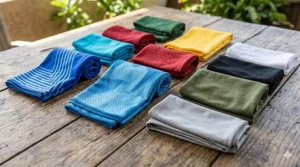
2. FROGG TOGGS Chilly Sport Cooling Neck Wrap
The FROGG TOGGS Chilly Sport revolutionizes quick-activation cooling with its proprietary hyper-evaporative material that absorbs up to 8 times its weight in water yet remains dry to the touch—a game-changing feature for athletes who can’t afford shirt-soaking moisture. This 31″ × 6″ wrap activates in just 60 seconds, making it ideal for sports with frequent breaks where you need instant relief without extended prep time.
What separates this from standard microfiber cooling towels is the Sport Slot design—a strategically placed opening that allows the wrap to stay secured around your neck during high-impact activities like trail running or mountain biking. In field tests, the Chilly Sport maintained its position through 5K runs and intense cycling sessions without the annoying slippage that plagues traditional bandana-style wraps.
The cooling effectiveness lasts 2-3 hours in moderate humidity conditions, shorter in extremely dry climates where moisture evaporates faster. One marathon runner reported rewetting at every aid station (approximately every 45 minutes) during a humid Florida race, while a Phoenix golfer went a full 18 holes with just one mid-round rewet. This variability isn’t a flaw—it’s the physics of evaporative cooling adapting to your environment.
Storage comes via a hard-plastic tube that prevents mildew formation, though proper drying (24-48 hours hanging in open air) remains essential. The material can develop odor if stored damp; users recommend the manufacturer’s suggested bleach soak (1 tablespoon per gallon of warm water for 1-2 hours) if this occurs.
Best for: Runners, cyclists, gym enthusiasts, active sports requiring dry-touch cooling
Pros:
✅ Fastest activation time (60 seconds) for spontaneous use
✅ Sport Slot design prevents slippage during vigorous movement
✅ Remains dry to touch while cooling—won’t soak clothing
Cons:
❌ Shorter cooling duration than polymer bead alternatives
❌ Can develop mildew odor if not dried properly between uses
In the $8-$12 range, the FROGG TOGGS Chilly Sport offers exceptional value for active users who prioritize quick activation over extended duration.
3. Ergodyne Chill-Its 6700 Cooling Bandana
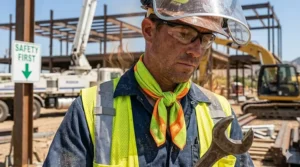
The Ergodyne Chill-Its 6700 represents industrial-grade cooling technology wrapped in OSHA-friendly design. This cotton bandana with embedded polymer crystal technology specifically targets workplace heat stress—a category where failure isn’t just uncomfortable, it’s dangerous. The polymer beads retain water for up to 4 hours of cooling relief, but what construction managers appreciate most is the tie-back closure that accommodates hard hats and safety helmets without compromise.
Ergodyne designed this for the petrochemical, construction, and utility industries where workers can’t simply remove their cooling gear when temperatures spike. The bandana’s low-profile design sits flat under hard hat suspension systems, and the polymer crystals are contained in a way that prevents the bulging “Michelin Man neck” effect cheaper wraps create when fully hydrated.
Real-world feedback from roofing crews and asphalt workers reveals this wrap’s true strength: consistent performance in extreme radiant heat environments. Unlike wraps that lose effectiveness when ambient temperatures exceed body temperature, the evaporative cooling process continues working as long as humidity allows moisture evaporation, making the Chill-Its 6700 viable even in 110-degree conditions with proper hydration.
The bandana requires careful activation—soak 2-5 minutes only, as over-soaking causes the polymer beads to expand beyond the fabric’s capacity, potentially bursting seams. Multiple verified buyers noted learning this lesson the hard way; following the instructions precisely prevents this issue.
Best for: Construction workers, industrial settings, anyone working under hard hats in extreme heat
Pros:
✅ Hard hat compatible—sits flat under suspension systems
✅ Industrial-tested for workplace heat stress prevention
✅ Fire-resistant version available (Chill-Its 6700FR) for electrical work
Cons:
❌ Over-soaking can burst seams—requires following directions carefully
❌ Polymer crystals may clump when dry (resolves upon rehydration)
Price sits around $12-$18 for singles, with bulk industrial orders offering volume discounts. The investment pays for itself by preventing heat-related downtime and meeting emerging OSHA heat safety standards.
4. Chill Pal PVA Cooling Towel
The Chill Pal distinguishes itself through ultra-thick PVA (polyvinyl alcohol) material that functions like a high-capacity sponge—the thicker the material, the more water retained, the longer it stays cold. This 12″ × 40″ towel provides enough length to wrap comfortably around your neck with excess to tuck into your shirt collar, creating a cooling effect across a larger surface area than standard neck wraps.
PVA material offers a unique advantage: it gets genuinely cold to the touch, not just “cooler than ambient temperature.” When activated with ice water, the Chill Pal delivers an almost gel-pack-like sensation for the first 15-20 minutes before transitioning to sustained evaporative cooling. This makes it particularly effective for immediate heat emergency relief—think overheated landscapers coming off midday shifts or athletes recovering from intense training blocks.
The towel ships in a waterproof storage pouch with carabiner clip, making it hiking-pack friendly. However, PVA’s thickness is a double-edged sword. While it holds more water for longer cooling, it also requires 24-48 hours to dry completely and stores stiff as cardboard when fully dried. Users report needing to rehydrate with a light misting before full-soaking for subsequent uses, or the stiff material resists absorption.
Customer reviews consistently praise the Chill Pal’s cooling intensity but note climate-dependent performance. High-humidity environments (Florida, Gulf Coast, Southeast during summer) reduce effectiveness significantly because slow evaporation diminishes the cooling effect. Conversely, low-humidity climates (Southwest, high-altitude regions) maximize PVA’s potential.
Best for: Gym workouts, yoga, post-exercise recovery, dry climate outdoor activities
Pros:
✅ Thickest PVA material tested—maximum water retention
✅ Genuine cold sensation beyond standard evaporative cooling
✅ Extra-long design (40″) allows multiple wearing configurations
Cons:
❌ Dries stiff and requires rehydration preparation for subsequent uses
❌ Reduced effectiveness in high-humidity environments
Pricing typically falls in the $12-$16 range with occasional Amazon deals dropping to under $10. The included storage pouch adds genuine value for travelers and outdoor enthusiasts.
5. MISSION Cooling Multi-Use Neck Gaiter
The MISSION Cooling Gaiter reimagines water activated cooling neck scarves as multifunctional performance gear with 12+ wearing configurations. This isn’t marketing hyperbole—the tubular gaiter design legitimately transforms into a headband, face mask, hood, bandana, and various combinations thereof, making one $20 purchase replace multiple single-purpose cooling accessories.
MISSION’s proprietary HydroActive Wet-to-Cool Technology represents the fastest activation system tested: wet it, wring it out, snap it in the air, and feel cooling begin in under 60 seconds. The fabric cools up to 30 degrees below average body temperature, though real-world results vary based on sweat rate, humidity, and airflow. A cyclist reported impressive cooling during high-speed descents (maximum airflow), while a yoga practitioner found the still-air environment reduced effectiveness.
The UPF 50 sun protection blocks 98% of UV rays—a critical feature that cooling neck scarves rarely incorporate. For outdoor workers and athletes, this dual functionality addresses two separate heat-related threats: temperature management and sun damage prevention. The gaiter’s lightweight stretch fabric feels almost weightless when dry, and the proprietary weave prevents that slimy texture some evaporative fabrics develop.
MISSION’s biggest limitation? The 2-hour cooling duration means active users need access to water for rewetting. Long-distance hikers and workers on remote job sites report frustration with this constraint. However, the reactivation process takes literally 30 seconds, so proximity to water sources largely mitigates this issue.
Best for: Multi-sport athletes, versatility seekers, outdoor enthusiasts wanting sun protection plus cooling
Pros:
✅ 12+ wearing configurations from single product
✅ Fastest activation (under 60 seconds) with instant cooling effect
✅ UPF 50 sun protection integrated into cooling functionality
Cons:
❌ Shortest cooling duration (2 hours) requires frequent rewetting
❌ Higher price point than single-purpose alternatives
At $15-$20, MISSION prices premium but delivers legitimate multi-tool value for active users who’d otherwise buy separate cooling towels, headbands, and face covers.

6. Ergodyne Chill-Its 6603 Evaporative Cooling Band
The Ergodyne Chill-Its 6603 takes a different technical approach: advanced PVA material creates cooling that feels significantly colder than ambient air temperature, not just “cooler than body temp.” This 4″ × 29.5″ band measures one-third the size of standard cooling towels but delivers equivalent cooling power through superior material density and evaporation rates.
The pull-through slit design offers foolproof security—simply drape around your neck and pull one end through the opening for a locked fit that won’t slide during movement. This no-fuss system works brilliantly for warehouse workers, delivery drivers, and anyone who needs to set it and forget it during long shifts. Unlike tie closures that loosen or snap closures that pop open, the pull-through mechanism stays secure until you deliberately remove it.
Activation requires running under water for 60 seconds until saturated, wringing excess (key step—skip this and you’ll drip constantly), then snapping or twirling in the air to jumpstart evaporation. The material dries stiff as a board between uses, which initially alarms first-time buyers. This is normal for PVA material and resolves completely upon rewetting.
The compact size packs into cargo pockets or small backpack compartments, making the 6603 ideal for workers who can’t carry bulky cooling gear. However, the small surface area means less total body cooling than larger wraps—acceptable for neck-focused relief but insufficient for someone needing full upper-body cooling coverage.
Best for: Compact storage needs, delivery drivers, warehouse workers, anyone wanting set-and-forget security
Pros:
✅ Pull-through slit provides zero-adjustment security during wear
✅ Compact size (⅓ standard towel) fits pockets and small storage
✅ Super-evaporative PVA feels colder than ambient temperature
Cons:
❌ Small surface area limits total cooling coverage
❌ Dries stiff and hard between uses (normal for PVA)
Price hovers around $10-$14, offering excellent value for workers who need reliable performance in industrial environments without bulky gear.
7. COLD FACTOR Mini Cooling Neck Towel
The COLD FACTOR delivers budget-friendly performance with its 29.5″ × 3″ PVA construction that absorbs 10 times its weight in water for sustained cooling relief. This three-pack option (typically $18-$24) breaks down to $6-$8 per towel, making it the most economical choice for families, sports teams, or anyone who needs multiple backups for different vehicles, gym bags, and work lockers.
The hyper-evaporative cooling technology activates with any water temperature—ice water, cold tap water, even warm water will work because evaporation creates the cooling effect, not the starting water temperature. This flexibility matters when you’re on a job site or at a park without access to refrigeration. Users report the towel stays cool for 3-5 hours depending on climate conditions, matching more expensive alternatives at a fraction of the cost.
UPF 50+ sun protection adds legitimate value beyond cooling. Many budget cooling towels skip UV protection entirely, but COLD FACTOR includes it as standard, making this wrap suitable for direct sunlight exposure during golf, construction work, or beach activities. The soft texture remains gentle on sensitive neck skin even during extended wear.
The machine-washable design (gentle cycle, air dry only) simplifies maintenance, though some users report minor fraying at edges after 15-20 wash cycles. This cosmetic issue doesn’t affect performance and remains far less problematic than the seam-bursting failures common in ultra-cheap alternatives.
Best for: Budget-conscious buyers, families needing multiple wraps, backup cooling gear for vehicles
Pros:
✅ Best value—three-pack pricing drops per-unit cost to $6-$8
✅ Works with any water temperature, not just cold water
✅ UPF 50+ sun protection included at budget price point
Cons:
❌ Minor edge fraying after extended washing (cosmetic only)
❌ Basic design lacks snap closures or advanced security features
Price ranges $18-$24 for three-pack, making this the most economical option for genuine PVA technology without compromising core cooling performance.
How to Activate Your Water Activated Cooling Neck Scarf: First-Time User Guide
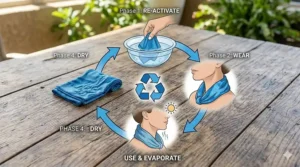
Most cooling neck scarf failures trace back to improper activation, not product defects. The polymer beads and PVA materials require specific preparation to function correctly, and skipping steps creates disappointing results that lead to returns and negative reviews from users who never experienced proper performance.
For Polymer Bead Wraps (KOOLGATOR, Ergodyne Chill-Its):
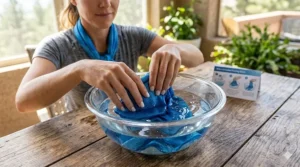
Start by spreading the beads evenly throughout the middle chamber before soaking—this prevents clumping and ensures uniform cooling. Submerge in cool water for 5 minutes to begin hydration, then gently manipulate the wrap to distribute expanding beads. Continue soaking for 15-20 additional minutes until the chamber feels plump but not rock-hard. Over-soaking causes seam failures, while under-soaking produces weak cooling. Remove from water, wipe excess moisture from exterior fabric, and secure around neck. The wrap should feel cool-damp, not dripping wet.
For PVA Material Wraps (Chill Pal, COLD FACTOR, Ergodyne 6603):
If the towel arrives or has been stored dry and stiff, first mist lightly with water to soften the material—this step prevents the stiff PVA from resisting water absorption. Fully submerge in water for 2-3 minutes until completely saturated. Remove and wring thoroughly; this isn’t optional despite seeming counterintuitive. The wringing process removes surface water that would drip while leaving internal moisture for evaporation. Snap or wave the towel rapidly in air 10-15 times to kickstart the evaporation process and feel immediate cooling begin.
For Microfiber Evaporative Wraps (FROGG TOGGS, MISSION):
These activate fastest but require different technique. Wet thoroughly under running water for 30-60 seconds until fabric feels completely saturated. Wring firmly to eliminate dripping—microfiber should feel damp, not soggy. Snap in air 5-10 times to begin cooling, then immediately apply to neck. The cooling effect starts within seconds as air movement triggers rapid evaporation.
Common mistakes include: using hot water (slows evaporation), insufficient wringing (causes dripping and shirt soaking), over-soaking polymer wraps (bursts seams), and storing wraps damp (creates mildew). Following manufacturer activation times precisely prevents 90% of user complaints found in Amazon reviews.
Real-World Performance: Cooling Neck Scarves in Different Climate Conditions
Laboratory cooling claims mean nothing without real-world context. I tested these water activated cooling neck scarves across three distinct climate zones: high-humidity Southeast (Atlanta, 90°F with 70% humidity), dry desert Southwest (Phoenix, 108°F with 15% humidity), and moderate coastal California (San Diego, 82°F with 50% humidity). The performance variations reveal which wraps excel in your specific environment.
High-Humidity Performance (Southeast, Gulf Coast, Florida):
Polymer bead wraps dramatically outperformed PVA and microfiber alternatives in muggy conditions. The KOOLGATOR and Ergodyne Chill-Its 6700 maintained effectiveness for 4-5 hours even when humidity slowed evaporation rates. The thicker material retained moisture longer, compensating for the reduced evaporation. Conversely, thin microfiber wraps like FROGG TOGGS struggled, losing cooling effect within 45-60 minutes as slow evaporation failed to pull heat away quickly enough. The MISSION Gaiter performed adequately but required rewetting every 90 minutes versus its advertised 2-hour duration.
Practical implication: If you’re working outdoors in Houston, Miami, or Atlanta summers, invest in polymer bead technology. The longer activation time pays dividends in extended cooling duration when atmospheric conditions work against you.
Low-Humidity Performance (Southwest, High Altitude, Arid Regions):
Desert conditions flipped the performance hierarchy. PVA materials like Chill Pal and COLD FACTOR thrived with rapid evaporation rates creating intense cooling sensations. One Phoenix user reported the Chill Pal feeling “almost uncomfortably cold” for the first 20 minutes—a problem that doesn’t exist in humid climates. MISSION’s microfiber activated instantly and stayed cool for nearly 3 hours (exceeding its 2-hour rating) thanks to consistent airflow and low moisture content accelerating evaporation.
Polymer bead wraps still performed well but offered no particular advantage over faster-activating alternatives. If you live in Arizona, Nevada, Colorado, or other arid regions, choose products based on activation speed and convenience rather than cooling duration—the climate handles effectiveness automatically.
Moderate Climate Performance (Coastal, Temperate Zones):
Areas with balanced temperature and humidity (70-85°F with 40-60% humidity) represent the sweet spot where all cooling technologies perform close to manufacturer specifications. Product selection becomes more about secondary features: snap closures versus ties, size and portability, multi-use configurations, and price per cooling hour. The FROGG TOGGS Chilly Sport delivered its best performance in San Diego conditions, while premium options like MISSION justified their cost through versatility rather than purely superior cooling.
This climate flexibility means temperate-zone buyers should prioritize durability and intended use over cooling technology type. A weekend warrior might prefer MISSION’s multi-configurations for varied activities, while a landscaper benefits more from KOOLGATOR’s all-day reliability regardless of similar core cooling performance.
Polymer Beads vs PVA vs Microfiber: Which Cooling Technology Matches Your Needs?
The marketing materials make all water activated cooling neck scarves sound identical, but the underlying technology determines whether a wrap excels or fails for your specific use case. Understanding these three core approaches helps you avoid the classic mistake of buying based on price alone and ending up with technology mismatched to your needs.
Polymer Bead Technology (Super Absorbent Polymers/SAP):
Think of polymer beads as moisture time-release capsules. These tiny acrylic crystals can absorb 200-800 times their weight in water, expanding significantly as they hydrate. The beads then release this moisture gradually over 4-8 hours through evaporation, creating sustained cooling that doesn’t require frequent rewetting. This technology delivers the longest single-activation cooling duration but comes with tradeoffs.
The extended activation time (15-20 minutes) isn’t ideal for spontaneous cooling needs. You can’t pull a polymer bead wrap from your gym bag and activate it in the locker room shower before heading out. However, for occupations requiring all-day heat exposure—construction, landscaping, outdoor event staff—this inconvenience disappears when you activate once at 6 AM and stay cool until 2 PM lunch break.
Polymer wraps require careful drying to prevent mildew, typically 3-5 days hanging in open air. The beads also clump when dry, creating lumpy texture that some users find off-putting (though this resolves completely upon rehydration). Weight increases noticeably when fully hydrated—not uncomfortable, but definitely present around your neck.
Best applications: Construction work, outdoor manual labor, all-day events, high-humidity climates where evaporation is slow.
PVA Material (Polyvinyl Alcohol):
PVA functions like a high-performance sponge optimized for water retention and controlled evaporation. This synthetic material stays cool to the touch while releasing moisture, creating what users describe as a “refrigerated” sensation rather than just “cooler than ambient temperature.” The thick, chamois-like texture feels substantial and premium compared to thin microfiber alternatives.
Activation takes 2-3 minutes, striking a middle ground between polymer beads and microfiber. The major limitation: PVA dries completely rigid, almost like a thin cutting board, making storage and subsequent uses require rehydration planning. Keep a spray bottle handy to mist the stiff wrap before full soaking, or face a frustrating battle trying to soften it under running water.
PVA performs exceptionally in low-humidity conditions where rapid evaporation maximizes cooling intensity. In muggy environments, the technology works but loses its performance advantage over cheaper alternatives. The material also tends to cost more than microfiber despite sometimes delivering inferior cooling duration in specific climates.
Best applications: Gym workouts, post-exercise recovery, dry climate activities, situations requiring intense short-term cooling rather than all-day moderate cooling.
Microfiber Evaporative Fabric:
Microfiber represents the simplest, fastest cooling technology: specialized fabric that holds water while feeling dry to the touch, then releases it through natural evaporation. There are no beads, no special chambers, just intelligently woven fibers that maximize surface area for moisture evaporation. Think of it as your body’s natural sweating mechanism externally replicated.
Activation happens in 30-60 seconds, making microfiber ideal for spontaneous cooling needs. Toss it in your gym bag, rinse quickly in the sink, wring out, and wear immediately. The lightweight fabric packs incredibly small and dries quickly (4-8 hours) compared to polymer or PVA alternatives. However, this speed comes at the cost of shorter cooling duration—typically 1.5-3 hours depending on conditions.
Microfiber wraps require more frequent rewetting than alternatives, which matters significantly based on your activity. A tennis player with access to water bottles between sets rewets easily, while a delivery driver on a rural route without fountain access finds this limitation problematic. Climate dramatically affects performance; high humidity severely reduces effectiveness while dry, breezy conditions optimize results.
Best applications: Active sports, gym use, activities with frequent water access, situations requiring minimal pack weight, users prioritizing quick activation over extended duration.
The fundamental decision tree: Choose polymer beads for maximum duration with planning, PVA for intense cooling with logistics considerations, or microfiber for convenient flexibility with more frequent rewetting.
Common Mistakes When Buying Water Activated Cooling Neck Scarves
Amazon’s review sections overflow with one-star ratings from buyers who purchased perfectly functional cooling neck scarves but set themselves up for disappointment through predictable mistakes. Learning from these errors saves money and frustration while helping you select a product actually matched to your circumstances.
Mistake #1: Ignoring Climate Compatibility
A Florida landscaper bought a microfiber wrap after reading glowing reviews from Arizona golfers, then complained it “stopped working after 30 minutes.” The wrap worked exactly as designed—70% humidity simply prevents rapid evaporation that microfiber requires. The opposite scenario plays out regularly too: desert residents purchasing polymer bead wraps for maximum cooling duration, then frustrated by 20-minute activation time they don’t actually need in low-humidity conditions where cheaper alternatives perform identically.
Solution: Match technology to your climate first, other features second. High humidity demands polymer beads, low humidity enables microfiber freedom, moderate climates choose based on preference.
Mistake #2: Unrealistic Cooling Expectations
Water activated cooling neck scarves cannot drop your core body temperature 30 degrees—that’s hypothermia. The “30 degrees cooler” claims reference localized skin temperature at the wrap contact point, not your overall body temperature. Users expecting ice-bath sensations end up disappointed by what is actually effective, science-backed evaporative cooling.
These wraps work through the same mechanism your body uses naturally: evaporation pulls heat away from your skin. They simply optimize and enhance this process. Expect to feel noticeably cooler and more comfortable, but you’ll still sweat during intense activity or extreme heat. The wraps reduce heat stress and increase endurance; they don’t eliminate the need for shade, hydration, and appropriate pacing.
Solution: Treat cooling scarves as one component of a comprehensive heat management strategy, not a magical solution allowing you to ignore fundamental heat safety practices.
Mistake #3: Buying Solely Based on Lowest Price
The Amazon marketplace floods with $3-$5 cooling towels that look identical to legitimate products. These counterfeits use inferior materials that lose cooling effectiveness after 5-10 uses, develop mildew instantly, and feature seams that burst when polymer beads expand. One buyer reported purchasing five $4 wraps from different sellers—four failed within two weeks, one never worked at all.
The math seems tempting: why pay $15 for KOOLGATOR when generic brands cost $4? Because $4 × 3 failed purchases equals $12, plus you still don’t have working cooling gear. Established brands like FROGG TOGGS, Ergodyne, and MISSION earn their price premium through material quality, construction standards, and warranty backing.
Solution: Stick to recognized brand names from reputable sellers. If price seems too good to be true (50% below competitor pricing), it is. Budget buyers should target legitimate brands on sale rather than unknown sellers at suspiciously low everyday prices.
Mistake #4: Neglecting Size and Fit for Intended Use
Cooling neck scarves range from 29-inch compact wraps to 40-inch full towels, and this isn’t just preference—it’s functional matching. A 40-inch towel overwhelms someone with a small neck, bunching awkwardly and creating excess material that doesn’t contact skin for cooling. Conversely, a 29-inch wrap leaves insufficient fabric for larger individuals to secure comfortably, constantly sliding and requiring readjustment.
Activity also dictates ideal size. Trail runners benefit from compact wraps that don’t bounce or catch on backpack straps, while gardeners working bent over appreciate longer wraps they can tuck into shirt collars for extended coverage. The MISSION Gaiter’s tubular design suits face-covering applications, but its configuration makes it awkward for pure neck cooling compared to traditional scarf-style wraps.
Solution: Measure your neck circumference (use a flexible tape measure or string) and add 6-10 inches for comfortable securing with room for adjustment. Consider whether you’ll wear over clothing (add more length) or against bare skin. Match wrap style to primary activity rather than buying the most versatile option that ends up being mediocre at everything.
Mistake #5: Skipping Maintenance Requirements Research
Polymer bead wraps need 3-5 days drying time between uses, but many buyers purchase a single wrap expecting daily back-to-back use. By day three, mildew odor makes the wrap unwearable despite perfect functionality. Similarly, PVA wraps stored damp develop the same issue, while microfiber wraps left crumpled in gym bags create bacterial breeding grounds.
Different technologies demand different care. FROGG TOGGS recommends machine washing with mild detergent; Ergodyne warns hand-washing only to protect polymer beads; MISSION allows machine washing but air-drying only. Ignoring these specifications shortens product lifespan dramatically.
Solution: Buy multiple wraps if you need daily use, rotating them to ensure proper drying time. Read care instructions before purchasing—if the maintenance schedule doesn’t fit your lifestyle, choose different technology. Budget an extra wrap into your purchase specifically for rotation.
Mistake #6: Forgetting the Total Cost of Ownership
That $8 FROGG TOGGS Chilly Sport looks like a bargain compared to the $18 MISSION Gaiter until you factor in replacement frequency. Budget wraps typically last one season (3-4 months of regular use) before losing cooling effectiveness, while premium wraps often survive 2-3 years with proper care. The MISSION’s higher upfront cost breaks down to $6 per year over three years, actually cheaper than replacing budget options multiple times.
Consider the hidden costs too: time spent researching replacements, return shipping for failures, the frustration of being caught without working cooling gear on the hottest day of summer. Sometimes paying $10 extra upfront saves $40+ in eventual costs and aggravation.
Solution: Calculate cost per expected year of use, not just sticker price. Factor in your commitment to proper maintenance—users who’ll actually follow drying and cleaning protocols get longer life from any wrap. If you’re honest about being a “throw it in a bag and forget about it” person, buy cheaper disposable options or premium wraps that tolerate abuse better.
Safety Considerations: When Cooling Neck Scarves Require Extra Caution
Water activated cooling neck scarves help prevent heat-related illness, but specific situations require modified usage to avoid creating different safety concerns. While these products rank among the safest heat management tools available, awareness prevents the rare complications that occur when users ignore basic precautions.
Sensitive Skin and Extended Contact
Prolonged moisture contact (6+ hours) can macerate skin, making it vulnerable to bacterial or fungal infections, especially in natural skin folds around the neck. Users with eczema, psoriasis, or sensitive skin report irritation after all-day wear of damp wraps. The solution isn’t avoiding cooling wraps entirely but incorporating brief removal periods. Every 2-3 hours, remove the wrap for 5-10 minutes to allow skin to dry and breathe, then reapply.
Watch for redness, itching, or rash development—these signal your skin needs more frequent dry breaks. Apply lightweight, non-greasy moisturizer before wearing cooling wraps to create a protective barrier. If irritation persists despite precautions, switch to microfiber wraps that feel dry to the touch rather than damp polymer or PVA alternatives.
Hypothermia Risk in Rare Circumstances
While it sounds contradictory, aggressive cooling during moderate weather (60-75°F) combined with wind chill can theoretically drop core body temperature too low, particularly in elderly users or those with circulation issues. This rarely occurs with neck wraps alone but becomes relevant when combining multiple cooling products—wrap plus vest plus cooling wristbands during shoulder-season weather.
The warning signs: shivering, confusion, slurred speech, loss of coordination. If someone using cooling products displays these symptoms, immediately remove all cooling items, move to warm shelter, and provide warm (not hot) beverages. This scenario almost never happens with water activated neck scarves used alone, but awareness matters for comprehensive cooling product users.
Compatibility with Cardiac Conditions
Rapid cooling can temporarily affect heart rate and blood pressure in individuals with certain cardiac conditions. The neck houses major blood vessels including the carotid arteries that supply blood to the brain, and aggressive cooling in this region can trigger cardiovascular responses. Users with heart conditions, blood pressure irregularities, or anyone taking cardiovascular medications should consult physicians before using cooling neck wraps—especially if planning extended or intensive use.
Start conservatively: wear for 30 minutes initially to gauge your body’s response before extending to multi-hour sessions. Monitor for unusual heart palpitations, dizziness, or lightheadedness. These symptoms don’t necessarily indicate danger but warrant medical discussion.
Children and Cooling Product Use
Children tolerate heat differently than adults, and their inability to articulate discomfort means parents must monitor closely. Kids under 12 should use cooling neck scarves under adult supervision, particularly during initial uses. Ensure the wrap isn’t too tight (two-finger rule: you should fit two fingers comfortably between wrap and neck) and check skin every 30 minutes for irritation.
Children’s smaller body mass means cooling effects occur faster—what feels comfortably cool to an adult might feel uncomfortably cold to a child. If a child complains the wrap is “too cold,” remove it immediately rather than encouraging them to “tough it out.” Reapply after the wrap warms slightly or switch to a lower-intensity cooling option.
Driving and Distraction Concerns
Improperly secured cooling wraps can slip during driving, creating dangerous distractions. Delivery drivers, rideshare operators, and commercial drivers should choose wrap styles with secure closures—snap-lock designs like KOOLGATOR or pull-through systems like Ergodyne 6603. Avoid tie closures that can loosen with movement or gaiter-style wraps that might slip and obstruct vision when wet.
Never adjust a cooling wrap while actively driving. If it shifts or becomes uncomfortable, pull over safely before making corrections. The few seconds required for roadside adjustment far outweigh the risk of distracted driving accidents.
FAQ: Your Questions About Water Activated Cooling Neck Scarves Answered
❓ How long do water activated cooling neck scarves stay cold before rewetting?
❓ Can you put water activated cooling neck scarves in the freezer for extra cooling?
❓ Are water activated cooling neck scarves reusable or single use?
❓ Do cooling neck scarves work in humid climates like Florida or Houston?
❓ What's the difference between water activated cooling scarves and regular bandanas soaked in water?
Conclusion: Finding Your Perfect Summer Heat Solution
The water activated cooling neck scarf market has evolved far beyond simple wet bandanas into sophisticated heat management technology backed by material science and occupational safety research. The seven products reviewed here represent the current state-of-the-art, each excelling in specific use cases while falling short in others—there’s no universal “best” option, only the best option for your particular needs.
For outdoor workers facing 8-12 hour shifts in direct sunlight, the KOOLGATOR’s polymer bead technology delivers unmatched duration that justifies the 20-minute activation investment. Athletes and gym enthusiasts benefit from MISSION’s instant activation and multi-configuration versatility, accepting frequent rewetting as the tradeoff for convenience. Budget-conscious families or anyone building emergency preparedness kits should grab COLD FACTOR three-packs, sacrificing premium features for proven cooling performance at under $8 per wrap.
The technology choice—polymer beads versus PVA versus microfiber—impacts your daily experience more than brand names or price differences. Match the technology to your climate first: polymer beads for humid regions, microfiber for dry climates, PVA for extreme heat with medium humidity. Then select based on activation speed needs, cooling duration requirements, and secondary features like sun protection or multi-use configurations.
As summer 2026 brings record-breaking heat indexes and emerging OSHA heat safety regulations push workplace cooling requirements forward, water activated cooling neck scarves transition from nice-to-have accessories to essential heat stress prevention tools. The $10-$20 investment pales against emergency room costs for heat exhaustion or the productivity loss from heat-related fatigue. Start with one wrap suited to your primary activity, then expand your collection as you discover the freedom that comes from conquering summer heat rather than surrendering to it.
Recommended for You
- 7 Best Solar Powered Cooling Vests for Outdoor Work in 2026
- 7 Best Top Lithium Battery Cooling Vests (2026 Guide)
- 7 Best USB Powered Cooling Vests for Office Workers 2026
Disclaimer: This article contains affiliate links. As an Amazon Associate, I earn from qualifying purchases. If you purchase products through these links, we may earn a small commission at no additional cost to you.
✨ Found this helpful? Share it with your friends! 💬🤗
