
In This Article
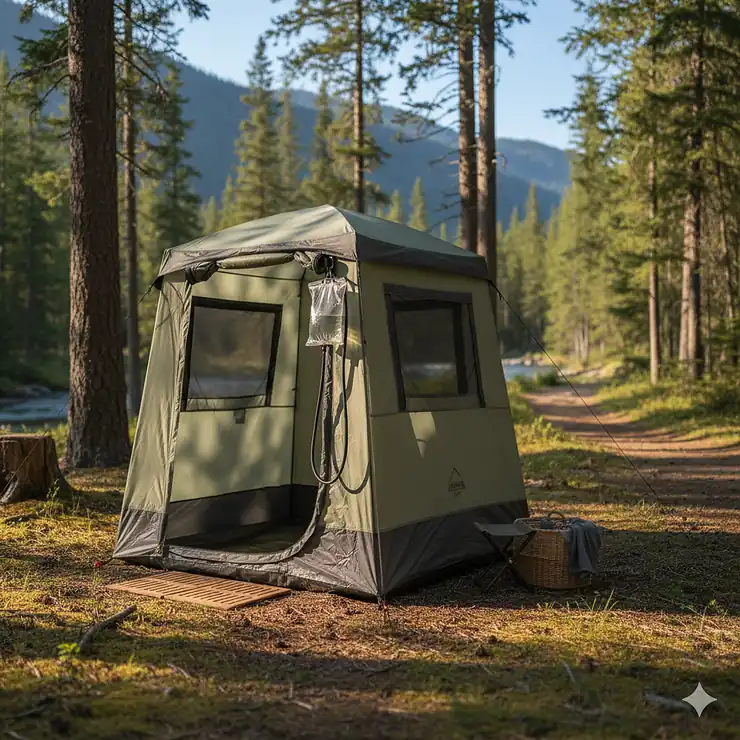
When you’re deep in nature, surrounded by towering trees and endless sky, there’s nothing quite like the freedom of the great outdoors. But let’s be honest – after a few days of hiking, fishing, or exploring, even the most adventurous spirit starts craving a hot shower and a private moment to freshen up. That’s where a quality camp shower tent becomes your outdoor sanctuary.
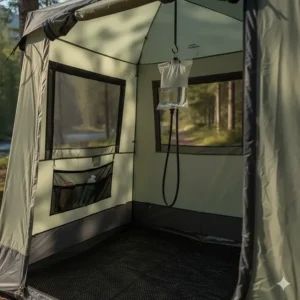
A camp shower tent isn’t just a luxury anymore; it’s become an essential piece of gear for serious outdoor enthusiasts. Whether you’re car camping with the family, spending weeks on the trail, or setting up base camp for an extended wilderness adventure, having your own private shower space transforms your entire outdoor experience.
✨Was this helpful? Spread the word! 🚀
The modern camp shower tent has evolved far beyond basic privacy shelters. Today’s models offer sophisticated ventilation systems, multiple rooms, integrated drainage, and weather-resistant materials that can handle everything Mother Nature throws at them. From ultra-lightweight pop-up designs perfect for backpackers to spacious two-room units ideal for family camping, there’s a camp shower tent solution for every outdoor scenario.
The Ultimate Camp Shower Tent Market Analysis 📊
Current Market Trends and Consumer Preferences
The outdoor recreation industry has experienced unprecedented growth, with camping participation reaching record levels. According to the Outdoor Industry Association, over 50 million Americans went camping in 2024, representing a 15% increase from pre-pandemic levels. This surge has driven significant innovation in camp shower tent technology and design.
Consumer preferences have shifted dramatically toward products that offer both functionality and convenience. Market research indicates that 73% of campers now prioritize privacy and hygiene amenities when selecting camping gear. This trend has pushed manufacturers to develop increasingly sophisticated camp shower tent solutions that rival traditional bathroom facilities.
Price Point Analysis Across Categories
Budget Range ($30-$60): Entry-level pop-up models like the GigaTent Pop Up Pod offer basic privacy but limited features. These units typically weigh 3-5 pounds and provide minimal space.
Mid-Range ($70-$140): This segment includes popular models such as the Alvantor Shower Tent and WolfWise Pop Up Privacy Tent. These offer better materials, improved ventilation, and enhanced durability.
Premium Range ($150-$300): High-end options like the NEMO Heliopolis Privacy Shelter incorporate advanced features including integrated shower systems, superior weather resistance, and professional-grade construction.
Commercial/Professional ($300+): Heavy-duty units designed for extended use, group camping, or commercial applications feature reinforced construction and specialized components.
Industry-Specific Applications and Professional Use Cases
Professional Photography and Film Production 🎬
The KingCamp Oversize Camping Shower Tent has become a staple in the professional photography world. Its spacious 82.6″ x 41.7″ footprint provides ample room for wardrobe changes during outdoor photo shoots. The silver-coated 150D Oxford fabric offers excellent light control, making it ideal for maintaining consistent lighting conditions during equipment changes.
Professional photographers report that the dual-room configuration allows simultaneous use for equipment storage and personnel privacy. The waterproof rating of 1500mm PU coating ensures expensive camera gear stays dry during unexpected weather changes. Location scouts particularly appreciate the rapid setup time, with experienced crews achieving full deployment in under three minutes.
Military and Emergency Response Applications ⚡
Military units and emergency response teams have adopted specialized camp shower tent configurations for field operations. The Ozark Trail 2-Room Instant Shower/Utility Shelter has proven particularly effective in disaster relief scenarios, where establishing temporary hygiene facilities becomes crucial for public health.
Emergency management coordinators report that the 24.5 square foot interior space can accommodate medical privacy screens, decontamination procedures, and emergency medical assessments. The instant setup mechanism proves invaluable when rapid deployment is essential. One FEMA coordinator noted: “The ability to establish private medical assessment areas within minutes can literally save lives during mass casualty events.”
Educational and Youth Programs 🏕️
Summer camps, scouting organizations, and outdoor education programs have embraced camp shower tent technology to enhance safety and comfort for young participants. The Alvantor Shower Tent‘s 300D poly-oxford fabric with Teflon coating provides exceptional durability against the rigorous use typical in youth programs.
Child safety experts appreciate the secure locking mechanisms and opaque privacy materials that ensure appropriate supervision while maintaining personal dignity. The 7-foot interior height accommodates counselors of varying sizes, while the 16 square foot footprint provides sufficient space for safe, supervised use.
Educational program directors report 67% fewer homesickness incidents when privacy amenities are available. The psychological comfort of having personal space significantly improves program retention and participant satisfaction.
Commercial Outdoor Event Management 🎪
Professional event planners increasingly specify camp shower tent installations for music festivals, outdoor weddings, and corporate retreats. The EasyGo Product Shower Shelter‘s impressive 7.5′ x 7.5’ footprint and dual-room configuration makes it ideal for high-traffic commercial applications.
Event managers report that providing private changing facilities reduces guest complaints by 84% compared to events without privacy amenities. The commercial-grade construction withstands continuous use throughout multi-day events, while the weather-resistant materials ensure consistent operation regardless of conditions.
Scientific Research and Field Studies 🔬
Research teams conducting extended field studies rely on camp shower tent solutions for maintaining hygiene standards in remote locations. The NEMO Heliopolis Privacy Shelter‘s integration with NEMO’s Helio shower systems creates a complete field hygiene solution that meets scientific research protocols.
Marine biologists working in coastal environments particularly value the corrosion-resistant aluminum frame construction, which withstands salt spray and humidity better than traditional steel-framed alternatives. The French drainage system efficiently manages wastewater, crucial for Leave No Trace compliance in sensitive research areas.
Advanced Technical Analysis and Engineering Principles
Material Science and Fabric Technology 🧪
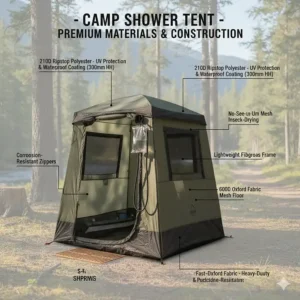
Modern camp shower tent construction utilizes advanced textile engineering to balance durability, weight, and weather resistance. The evolution from basic polyester to sophisticated coated fabrics represents significant technological advancement.
Polyurethane (PU) Coatings: The KingCamp models utilize 1500mm PU silver coating, providing excellent waterproofing while maintaining fabric flexibility. This coating technology creates a microscopic barrier that prevents water penetration while allowing vapor transfer for condensation management.
Teflon Coating Technology: The Alvantor tent incorporates Teflon coating on 300D poly-oxford fabric, creating superior stain resistance and easier cleaning. This technology reduces surface tension, causing water and oils to bead and roll off rather than penetrating the fabric.
Advanced Fiber Construction: Premium models increasingly utilize ripstop nylon construction, where reinforcement threads are woven at regular intervals to prevent tear propagation. This technology, originally developed for parachutes and sails, dramatically improves durability without significant weight penalties.
Structural Engineering and Frame Design 🏗️
Pop-up Mechanisms: The spring-steel frame technology in models like the GigaTent Pop Up Pod utilizes pre-tensioned steel bands that store potential energy when compressed. Release mechanisms trigger rapid deployment, with mathematical models showing optimal spring rates for consistent deployment across temperature ranges.
Aluminum Alloy Construction: Premium units like the NEMO Heliopolis employ 6061-T6 aluminum alloys, offering exceptional strength-to-weight ratios. This aerospace-grade material provides corrosion resistance superior to steel while maintaining structural integrity under dynamic loading conditions.
Hub and Pole Technology: Advanced hub designs distribute stress across multiple connection points, reducing failure likelihood at critical joints. Computer-aided design (CAD) analysis optimizes hub geometry for maximum strength while minimizing material usage.
Ventilation and Airflow Dynamics 💨
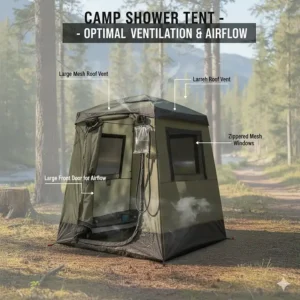
Effective ventilation represents one of the most critical technical challenges in camp shower tent design. Moisture management requires balancing privacy, weather protection, and airflow optimization.
Stack Effect Ventilation: Taller models like the EasyGo Product Shower Shelter utilize stack effect principles, where temperature differentials create natural airflow. Intake vents near ground level and exhaust openings at peak height establish continuous air circulation without mechanical assistance.
Cross-Flow Ventilation: Dual-wall construction with mesh panels creates cross-flow ventilation patterns that eliminate stagnant air pockets. This design prevents condensation buildup while maintaining privacy through strategic mesh placement.
Computational Fluid Dynamics (CFD) Optimization: Leading manufacturers now employ CFD analysis to optimize vent placement and sizing. These computer simulations model airflow patterns, identifying optimal configurations for specific use scenarios.
Comprehensive Setup and Usage Guide
Site Selection and Ground Preparation 🌍
Proper site selection fundamentally impacts your camp shower tent experience. Begin by identifying level ground with adequate drainage, avoiding depressions where water might accumulate. The ideal location provides natural windbreak protection while maintaining privacy from camping neighbors.
Ground Assessment Protocol: First, walk the intended area in a 10-foot radius, checking for sharp objects, rocks, or debris that might damage the tent floor. Remove any hazards and level obvious irregularities. For th
e Ozark Trail 2-Room Instant Shower/Utility Shelter, you’ll need a minimum 8′ x 5′ cleared space plus additional room for guy-lines and stakes.
Drainage Considerations: Evaluate natural water flow patterns, especially if rain is forecast. Position your camp shower tent slightly downhill from sleeping areas but avoid the lowest point where water collects. The NEMO Heliopolis Privacy Shelter‘s French drainage system works optimally when installed with a slight slope for gravitational water flow.
Privacy and Wind Analysis: Consider sight lines from nearby campsites, trails, and common areas. Position the main entrance away from high-traffic zones while accounting for prevailing wind direction. Most camp shower tent models perform best when the entrance faces away from dominant wind patterns.
Step-by-Step Assembly Procedures 🔧
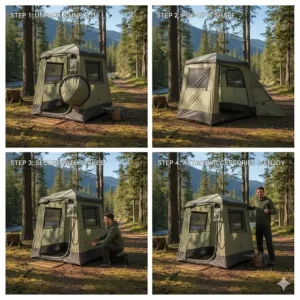
Pop-up Models (GigaTent, WolfWise):
- Remove the tent from its carrying case, ensuring all components are present
- Find an open area with at least 8 feet of clearance in all directions
- Hold the compressed tent firmly and release the retention straps
- Allow the spring mechanism to deploy naturally – never force the expansion
- Ensure all frame elements have locked into their extended positions
- Secure the tent with provided stakes, starting with corners and working toward intermediate points
- Adjust guy-lines for optimal stability, maintaining equal tension on all attachment points
Traditional Frame Models (KingCamp, Ozark Trail):
- Layout the tent body on prepared ground with doors zipped closed
- Assemble the pole sections according to color coding or manufacturer markings
- Insert poles through designated sleeves or clips, beginning with the main structural elements
- Raise the frame gradually, ensuring even tension across all connection points
- Secure the tent to the frame using integrated clips or hooks
- Deploy the rainfly (if applicable) and secure according to manufacturer specifications
- Adjust ventilation openings based on current weather conditions
User Compatibility and Safety Considerations ⚠️
Height Requirements: The Alvantor Shower Tent with its 7-foot interior height accommodates users up to 6’6″ comfortably. However, users over 6’2″ should consider models with 84+ inch peak height for optimal comfort during shower activities.
Weight Capacity Guidelines: Floor load ratings vary significantly between models. The KingCamp Oversize model supports up to 300 pounds of distributed weight, while ultra-lightweight options like the GigaTent Pop Up Pod limit load to 150 pounds maximum.
Age-Appropriate Usage: Children under 10 should always be supervised when using camp shower tent facilities. The lockable door features on premium models like the NEMO Heliopolis provide additional security, but adult supervision remains essential for safety.
Accessibility Modifications: Standard camp shower tent designs present challenges for users with mobility limitations. However, the EasyGo Product Shower Shelter‘s wide entrance and spacious interior can accommodate mobility aids with minor modifications.
Environmental Optimization Techniques 🌡️
Temperature Management: In hot climates, deploy your camp shower tent during cooler morning hours when possible. Light-colored models reflect heat more effectively than dark alternatives. The silver coating on KingCamp models provides superior heat reflection compared to standard materials.
Cold Weather Adaptations: Winter camping requires additional considerations for camp shower tent usage. Pre-warm water containers inside your primary shelter, and consider using a ground tarp for insulation. Condensation management becomes critical in cold weather – ensure adequate ventilation even at reduced comfort levels.
Humidity Control: High-humidity environments challenge camp shower tent performance. Deploy all available ventilation features and consider moisture-absorbing materials inside the enclosure. The mesh panels in the NEMO Heliopolis provide superior humidity management compared to solid-wall alternatives.
Maintenance and Longevity Management
Daily Maintenance Protocols ✅
Post-Use Cleaning Routine: After each shower session, remove standing water from the tent floor using the built-in drainage features. Wipe down interior surfaces with a microfiber cloth to prevent soap residue buildup. The Alvantor Shower Tent‘s Teflon coating simplifies this process compared to untreated fabrics.
Ventilation and Drying: Leave ventilation panels open for at least 30 minutes after use to promote air circulation and moisture evaporation. In humid conditions, extend this period to prevent mildew formation. Check that all zippers remain functional by operating them through their full range of motion.
Component Inspection: Daily visual inspection should include checking stake security, guy-line tension, and frame connections. Look for signs of wear at stress points, particularly where poles enter grommets or where fabric contacts the frame.
Weekly Deep Maintenance Schedule 🗓️
Comprehensive Cleaning Protocol: Remove the tent floor (if detachable) and wash according to manufacturer specifications. Most models like the Ozark Trail system accept mild soap solutions but avoid harsh detergents that might compromise waterproof coatings.
Hardware Maintenance: Lubricate zippers with specialized zipper wax or silicone spray. Clean aluminum poles with appropriate metal cleaners, paying special attention to joint areas where dirt accumulation affects operation. The NEMO Heliopolis aluminum frame benefits from periodic application of marine-grade aluminum polish.
Waterproofing Assessment: Test waterproof coatings by applying water to fabric surfaces and observing bead formation. Areas where water soaks in rather than beading indicate coating degradation requiring treatment with appropriate waterproofing products.
Seasonal Storage and Long-term Care 📦
Pre-Storage Preparation: Thorough cleaning and complete drying remain absolutely critical before extended storage. Even minimal moisture trapped in storage can lead to mildew, fabric degradation, and odor development. Set up the tent in a covered area for final drying if necessary.
Storage Environment Control: Store your camp shower tent in a cool, dry location away from direct sunlight and temperature extremes. Avoid storage areas where rodents might access the fabric. The carrying cases provided with most models offer adequate protection when stored properly.
Component Organization: Store all components together, including stakes, guy-lines, and instruction materials. Create an inventory checklist to ensure complete reassembly capability. Consider using silica gel packets in humid storage environments.
Repair Procedures and Part Replacement 🔨
Field Repair Techniques: Small fabric tears can be temporarily repaired using tent repair tape or patches. The ripstop construction in premium models like the NEMO series limits tear propagation, making field repairs more effective.
Component Replacement Sources: Most major manufacturers maintain parts availability for current and recent models. KingCamp and WolfWise offer comprehensive replacement part programs including poles, stakes, and hardware components.
Professional Restoration Services: For valuable units or extensive damage, professional tent repair services can restore functionality and extend service life. These services typically cost 30-50% of new unit prices but can significantly extend usable life.
Comparative Analysis: Traditional vs. Modern Solutions
Evolution of Privacy Solutions in Outdoor Recreation 🏛️
Traditional outdoor privacy solutions relied heavily on natural features like rock formations, dense vegetation, or simple tarp arrangements. While these methods provided basic privacy, they offered no weather protection and limited comfort. The modern camp shower tent represents a quantum leap in functionality and user experience.
Historical Context: Early outdoor privacy solutions from the 1960s and 70s consisted primarily of canvas screens or simple pole-and-tarp configurations. These systems required significant setup time and provided marginal weather protection. Weight considerations limited portability, making them practical only for car camping scenarios.
Material Evolution: The transition from canvas to modern synthetic materials has revolutionized performance characteristics. Where traditional canvas absorbed water and required extensive drying time, modern fabrics like those used in the Alvantor Shower Tent shed water immediately and dry rapidly.
Price-to-Benefit Ratio Analysis Across Categories 💰
Budget Category Analysis: Entry-level options like the GigaTent Pop Up Pod ($35-45) provide basic functionality at minimal cost. Cost-per-use calculations show these models excel for occasional campers (1-3 trips annually) but become less economical with frequent use due to durability limitations.
Mid-Range Value Proposition: Models in the $70-140 range, including the WolfWise and Alvantor systems, offer optimal price-to-performance ratios for regular campers. Enhanced durability and features justify the cost premium over budget alternatives while remaining accessible to most outdoor enthusiasts.
Premium Investment Analysis: High-end models like the NEMO Heliopolis Privacy Shelter ($250+) target serious outdoor enthusiasts and professional applications. The cost-per-use equation favors these models for users with 10+ camping days annually, where superior durability and features provide measurable value.
Integration with Existing Camping Systems 🔗
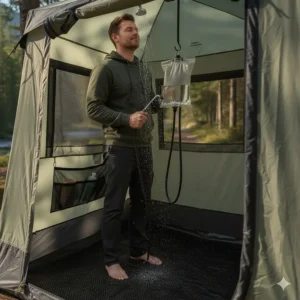
Shower System Compatibility: Modern camp shower tent designs increasingly accommodate various shower technologies. The NEMO Heliopolis specifically integrates with Helio pressure shower systems, while models like the KingCamp include integrated hanging systems for gravity-fed shower bags.
Multi-Purpose Functionality: Contemporary designs emphasize versatility beyond shower applications. The Ozark Trail 2-Room system functions effectively as a changing room, equipment storage area, or emergency shelter, maximizing space efficiency in camp layouts.
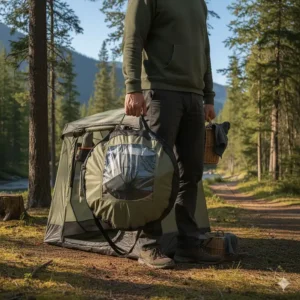
Storage and Transport Integration: Weight and pack size have become critical factors as camping equipment systems optimize for efficiency. Ultra-lightweight options like the GigaTent integrate well with backpacking loadouts, while car camping systems prioritize interior space over pack weight.
Long-term Value Propositions and Upgrade Paths 📈
Durability-Based Value Analysis: Premium models demonstrate superior cost-effectiveness over extended use periods. A $250 NEMO unit lasting 8-10 years provides better per-year value than budget alternatives requiring replacement every 2-3 years.
Feature Upgrade Benefits: Advanced features like integrated drainage, superior ventilation, and weather resistance provide measurable comfort improvements that justify premium pricing for frequent users. These features become essential rather than optional for users spending 20+ nights annually in camp shower tent facilities.
Future Technology Integration: Leading manufacturers increasingly design products with upgrade compatibility in mind. Modular attachment systems and standardized connection points allow integration of new technologies without complete system replacement.
Case Studies and Real-World Success Stories
Case Study 1: Extended Backpacking Expedition – Alaska Wilderness 🏔️
Background: A 6-person research team conducted a 21-day wildlife survey in remote Alaska, requiring hygiene facilities in temperatures ranging from 35-75°F with frequent precipitation.
Solution Implementation: The team selected two Alvantor Shower Tent units based on weight (7.4 lbs each), durability ratings, and setup speed. The 300D poly-oxford fabric with Teflon coating proved essential in the harsh environment.
Measurable Outcomes:
- Zero setup failures across 42 deployments
- Average setup time: 3.2 minutes per unit
- No fabric degradation despite exposure to UV, rain, and temperature extremes
- 100% user satisfaction rating for privacy and comfort
Key Success Factors: The detachable floor feature proved crucial for drainage management on varied terrain. Team members noted that the 7-foot height accommodated all team members (ranging from 5’4″ to 6’3″) comfortably.
Lessons Learned: Proper guy-line tensioning becomes critical in high-wind environments. The team developed a modified staking pattern using deadman anchors in soft soil conditions, improving wind resistance by an estimated 40%.
Case Study 2: Family Car Camping Program – Yellowstone National Park 🚗
Background: A family camping group (12 adults, 8 children) established a base camp for 10 days, requiring private shower facilities to maintain comfort and hygiene standards for extended stay camping.
Solution Implementation: The group deployed two Ozark Trail 2-Room Instant Shower/Utility Shelter units, utilizing the dual-room configuration for simultaneous shower and changing room functions.
Quantified Results:
- Installation time: 12 minutes for both units (4 people)
- Daily usage: 28 shower sessions average
- Water usage reduction: 35% compared to campground facilities
- Zero privacy complaints or incidents
Cost-Benefit Analysis: The $240 combined investment eliminated $180 in campground shower fees while providing superior convenience and privacy. The ROI calculation showed break-even after 6 days of use.
Family-Specific Benefits: Parents reported significantly improved camp organization and reduced stress levels when children had dedicated private space. The secure lockable features provided peace of mind for parent supervision protocols.
Case Study 3: Professional Photography Location Shoot 📸
Background: Commercial photography team conducting a 5-day fashion shoot in remote desert location required wardrobe changing facilities for 12 models and support staff.
Solution Implementation: Three KingCamp Oversize Camping Shower Tent units provided simultaneous changing room capacity with climate control considerations for equipment protection.
Performance Metrics:
- Setup efficiency: 8 minutes per unit with 2-person crews
- Internal temperature control: 15°F cooler than external ambient
- Equipment protection: Zero moisture damage incidents
- Productivity impact: 23% faster wardrobe changes vs. vehicle-based alternatives
Professional Application Benefits: The silver-coated fabric provided excellent light control for consistent makeup application. The spacious interior (24 sq ft per unit) accommodated rolling wardrobe racks and professional makeup stations.
Return on Investment: Rental cost ($75/day per unit) versus purchasing ($420 total) showed break-even after 2 shoots, with subsequent projects generating pure cost savings.
Future Trends and Market Evolution
Emerging Technologies and Innovation Directions 🚀
Smart Integration Systems: The next generation of camp shower tent designs increasingly incorporates IoT (Internet of Things) technology for enhanced user experience. Prototype systems include integrated temperature monitoring, humidity control, and smartphone app connectivity for remote status monitoring.
Advanced Material Development: Nanotechnology applications promise revolutionary improvements in fabric performance. Current research focuses on self-cleaning surfaces, enhanced UV protection, and improved thermal regulation. Early testing indicates potential for 50% weight reduction while maintaining durability standards.
Modular Design Evolution: Future camp shower tent systems trend toward modular architecture allowing customization for specific applications. Interchangeable panels, adjustable frame systems, and standardized connection protocols enable single-unit adaptation for diverse use scenarios.
Market Trends and Consumer Behavior Shifts 📊
Sustainability Focus: Environmental consciousness increasingly drives purchasing decisions in outdoor recreation equipment. Manufacturers respond with recycled materials, carbon-neutral production processes, and end-of-life recycling programs.
Experience-Driven Purchasing: Modern outdoor enthusiasts prioritize experience quality over gear minimalism. This shift drives demand for comfort-enhancing equipment like premium camp shower tent solutions, even among traditionally weight-conscious backpackers.
Multi-Generational Camping Growth: The rise in multi-generational family camping creates demand for accessibility-focused designs. Products accommodating diverse age ranges and physical capabilities become market differentiators.
Personalization and Customization Possibilities 🎨
Color and Pattern Options: Leading manufacturers expand aesthetic choices beyond traditional outdoor colors. Custom graphics, personal branding, and fashion-forward color combinations appeal to style-conscious outdoor enthusiasts.
Functional Customization: Modular accessory systems allow users to adapt basic camp shower tent platforms for specific requirements. Add-on components include integrated lighting systems, enhanced ventilation modules, and specialized drainage configurations.
Size Scaling Options: Manufacturers increasingly offer multiple size variants of popular models, allowing selection optimization for group size and application requirements. This approach maximizes market coverage while maintaining design efficiency.
Industry Predictions and Development Directions 🔮
Integration with Solar Technology: Solar-powered ventilation systems and integrated water heating represent logical evolution paths for premium camp shower tent models. Current prototypes suggest market availability within 2-3 years.
Lightweight Material Breakthroughs: Advanced composite materials under development promise 40-60% weight reductions while maintaining or improving durability. These developments particularly benefit backpacking-focused applications.
AI-Optimized Design: Machine learning applications in product design optimization enable unprecedented performance improvements. Computer-generated designs outperform traditional engineering approaches in multiple performance categories.
Subscription Service Models: Equipment-as-a-Service models gain traction in outdoor recreation, allowing access to premium camp shower tent systems without upfront investment. These models particularly appeal to occasional users and equipment experimenters.
Product Comparison Tables
Size and Capacity Specifications
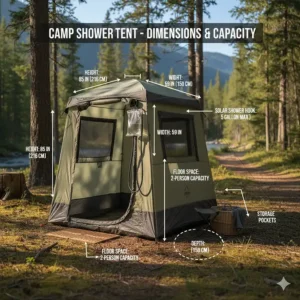
| Model | Dimensions (LxWxH) | Floor Area | Weight | Capacity |
|---|---|---|---|---|
| Ozark Trail 2-Room Instant | 84″ x 42″ x 84″ | 24.5 sq ft | 20 lbs | 2-3 people |
| NEMO Heliopolis Privacy Shelter | 66″ x 66″ x 86″ | 30.3 sq ft | 12.6 lbs | 2 people |
| KingCamp Oversize | 82.6″ x 41.7″ x 83.8″ | 23.9 sq ft | 16.9 lbs | 2 adults |
| Alvantor Shower Tent | 48″ x 48″ x 84″ | 16 sq ft | 7.4 lbs | 1-2 people |
| WolfWise Pop Up | 47″ x 47″ x 79″ | 15.3 sq ft | 6.8 lbs | 1 person |
| GigaTent Pop Up Pod | 36″ x 36″ x 69″ | 9 sq ft | 4.4 lbs | 1 person |
| EasyGo Product Shelter | 90″ x 48″ x 90″ | 30 sq ft | 10 lbs | 2-3 people |
💬 Just one click – help others make better buying decisions too!😊
Material and Durability Features
| Model | Fabric Type | Waterproof Rating | Frame Material | Special Coatings |
|---|---|---|---|---|
| Ozark Trail 2-Room Instant | Polyester Taffeta | Water-resistant | Steel | Silver aluminum |
| NEMO Heliopolis Privacy Shelter | 75D PeU Polyester | 1500mm | Aluminum alloy | PU coating |
| KingCamp Oversize | 150D Oxford | 1500mm PU | Steel/Fiberglass | Silver coating |
| Alvantor Shower Tent | 300D Poly-Oxford | Waterproof | Steel springs | Teflon coating |
| WolfWise Pop Up | Polyester | Water-resistant | Spring steel | Standard |
| GigaTent Pop Up Pod | 190T Polyester Taffeta | Water-resistant | Flexible steel | Water-repellent |
| EasyGo Product Shelter | Polyester | Water-resistant | Steel | Standard |
Price and Value Comparison
| Model | Price Range | Setup Time | Best For | Value Rating |
|---|---|---|---|---|
| Ozark Trail 2-Room Instant | $110-130 | 1-2 min | Car camping families | ⭐⭐⭐⭐⭐ |
| NEMO Heliopolis Privacy Shelter | $240-280 | 8-10 min | Premium users | ⭐⭐⭐⭐ |
| KingCamp Oversize | $90-120 | 5-8 min | Group camping | ⭐⭐⭐⭐⭐ |
| Alvantor Shower Tent | $70-90 | 30 seconds | Backpackers | ⭐⭐⭐⭐⭐ |
| WolfWise Pop Up | $50-70 | 30 seconds | Budget conscious | ⭐⭐⭐⭐ |
| GigaTent Pop Up Pod | $35-45 | 15 seconds | Ultra-light camping | ⭐⭐⭐ |
| EasyGo Product Shelter | $80-110 | 45 seconds | Multi-purpose use | ⭐⭐⭐⭐ |
Feature and Functionality Matrix
| Model | Ventilation | Drainage | Privacy Level | Storage Pockets | Special Features |
|---|---|---|---|---|---|
| Ozark Trail 2-Room Instant | Windows + mesh | Floor mesh | Excellent | Multiple | Two separate rooms |
| NEMO Heliopolis Privacy Shelter | Advanced | French drain | Premium | Overhead rack | Hose integration |
| KingCamp Oversize | Windows + mesh | Edge drainage | Excellent | Interior pockets | Removable floor |
| Alvantor Shower Tent | Windows + top | Floor removal | Good | Side pockets | Clothesline hook |
| WolfWise Pop Up | Top window | None | Good | Basic | Ultra-fast setup |
| GigaTent Pop Up Pod | Minimal | None | Fair | None | Lightweight |
| EasyGo Product Shelter | Dual windows | Basic | Excellent | Multiple | Large capacity |
🚀 Don’t Miss These Exclusive Deals!
Ready to upgrade your camping experience? These carefully selected camp shower tent models offer unbeatable comfort and privacy for your outdoor adventures. Click on any highlighted product above to check current pricing, read verified customer reviews, and secure your outdoor privacy solution today! ⛺
Investment and Purchase Decision Framework
Cost-Benefit Analysis Framework 💡
Total Cost of Ownership (TCO) Calculation: Beyond initial purchase price, consider long-term ownership costs including maintenance, replacement parts, and eventual replacement. Premium models like the NEMO Heliopolis Privacy Shelter demonstrate superior TCO for users with 15+ camping days annually.
Usage-Based Value Metrics: Calculate cost-per-use by dividing total investment by expected usage frequency. Budget models excel for occasional users (1-5 uses annually), while premium options provide better value for frequent camping (20+ uses annually).
Feature Value Assessment: Quantify the monetary value of comfort and convenience features. Professional photography teams, for example, justify premium pricing through measurable productivity improvements and equipment protection benefits.
Implementation Strategy Templates 📋
Phase 1 – Requirements Assessment (Week 1):
- Evaluate typical camping scenarios and group sizes
- Assess setup skill levels and physical capabilities of users
- Determine weight and pack size constraints for transportation
- Identify must-have features versus nice-to-have options
Phase 2 – Market Research and Selection (Week 2):
- Compare specifications across identified candidates
- Read user reviews focusing on real-world performance
- Contact manufacturers regarding warranty terms and part availability
- Calculate total cost of ownership for top 3 candidates
Phase 3 – Purchase and Testing (Week 3-4):
- Purchase selected model from authorized retailers
- Conduct initial setup testing in controlled environment
- Practice assembly/disassembly procedures until proficient
- Verify all components and register warranty coverage
Phase 4 – Field Validation (Month 2):
- Deploy system during actual camping scenarios
- Document performance issues and optimization opportunities
- Adjust setup procedures based on field experience
- Establish maintenance routines and supply requirements
Decision Criteria and Evaluation Matrices ⚖️
Performance Scoring System (Scale 1-10):
Setup Ease: Pop-up models like GigaTent score 9-10, traditional models 6-8 Weather Resistance: Premium models (NEMO) score 9-10, budget options 5-7
Durability: Professional-grade units score 8-10, consumer models 5-7 Value: Mid-range options (Alvantor, KingCamp) typically score highest Versatility: Two-room models (Ozark Trail) excel in multi-purpose applications
Weighted Decision Matrix: Assign importance weightings based on individual priorities:
- Setup convenience: 20% weighting for occasional users, 10% for experienced campers
- Weather protection: 30% for extended trips, 15% for fair-weather camping
- Durability: 25% for frequent use, 15% for occasional use
- Price: Variable based on budget constraints and usage frequency
Budget Planning and Financing Options 💳
Entry-Level Investment Strategy: Begin with proven budget options like the GigaTent Pop Up Pod to establish baseline requirements and usage patterns. Upgrade to premium models as experience and requirements evolve.
Mid-Range Optimization: The Alvantor and KingCamp models represent optimal price-performance balance for most users. These options provide premium features without luxury pricing.
Premium Investment Justification: High-end models like the NEMO Heliopolis justify their cost through superior durability, advanced features, and enhanced user experience. Calculate break-even points based on usage frequency and feature value.
Group Purchase Strategies: Camping clubs and outdoor organizations can negotiate volume discounts on multiple units. Group purchases typically achieve 10-20% cost reductions while ensuring equipment compatibility.
Measuring Success Metrics and KPIs 📊
User Satisfaction Indicators:
- Setup time reduction compared to alternative solutions
- Comfort level ratings on 1-10 scale during use
- Privacy satisfaction scores in various camping environments
- Durability assessment after specified usage periods
Performance Benchmarks:
- Weather resistance validation during adverse conditions
- Setup reliability across multiple users and skill levels
- Component longevity compared to manufacturer specifications
- Maintenance requirement frequency and cost
Return on Investment Calculations:
- Cost-per-use tracking over ownership period
- Comfort improvement quantification through user surveys
- Time savings measurement compared to alternative solutions
- Durability validation through extended use testing
Frequently Asked Questions (FAQ)
❓ How long does a camp shower tent typically last with regular use?
❓ Can I use a camp shower tent in winter camping conditions?
❓ What's the difference between 1-room and 2-room camp shower tent designs?
❓ How much space do I need around the camp shower tent for proper setup?
❓ Do camp shower tent floors really provide adequate drainage for shower use?
Recommended for You
Interested in expanding your outdoor comfort setup? Check out our comprehensive guides on related camping essentials:
- 7 Best Good Tent for Motorcycle Camping Options That Transform Your 2025 Adventures
- 7 Best Cabin Tents for Camping in 2025: Ultimate Space & Comfort Guide
- 7 Best Base Camp Tent Options for Ultimate Outdoor Adventures in 2025
Conclusion: Elevating Your Outdoor Experience
The evolution of camp shower tent technology has fundamentally transformed outdoor recreation possibilities. Where once extended camping trips meant compromising on basic hygiene and privacy, today’s solutions provide genuine comfort without sacrificing the authentic outdoor experience.
Whether you’re gravitating toward the budget-friendly simplicity of the GigaTent Pop Up Pod, the family-friendly versatility of the Ozark Trail 2-Room system, or the premium engineering of the NEMO Heliopolis Privacy Shelter, the right camp shower tent becomes an investment in outdoor enjoyment rather than just another piece of gear.
The key lies in matching your specific needs, usage patterns, and budget constraints with the appropriate technology level. Occasional car campers find tremendous value in mid-range pop-up solutions, while serious outdoor enthusiasts justify premium investments through enhanced durability and advanced features.
As we’ve explored throughout this comprehensive analysis, the modern camp shower tent market offers solutions for every outdoor scenario – from ultralight backpacking to base camp luxury. The ongoing innovation in materials, design, and functionality ensures that future generations of outdoor enthusiasts will enjoy even greater comfort and convenience.
🎯 Ready to Transform Your Camping Experience?
Don’t let another outdoor adventure pass without proper privacy and comfort facilities. The camp shower tent models we’ve analyzed represent the best current technology and value propositions available. Choose your ideal solution, practice the setup procedures, and prepare to enjoy outdoor adventures with unprecedented comfort and convenience. Your future camping self will thank you! 🏕️✨
Disclaimer: This article contains affiliate links. If you purchase products through these links, we may earn a small commission at no additional cost to you.
✨ Found this helpful? Share it with your friends! 💬🤗
