
In This Article
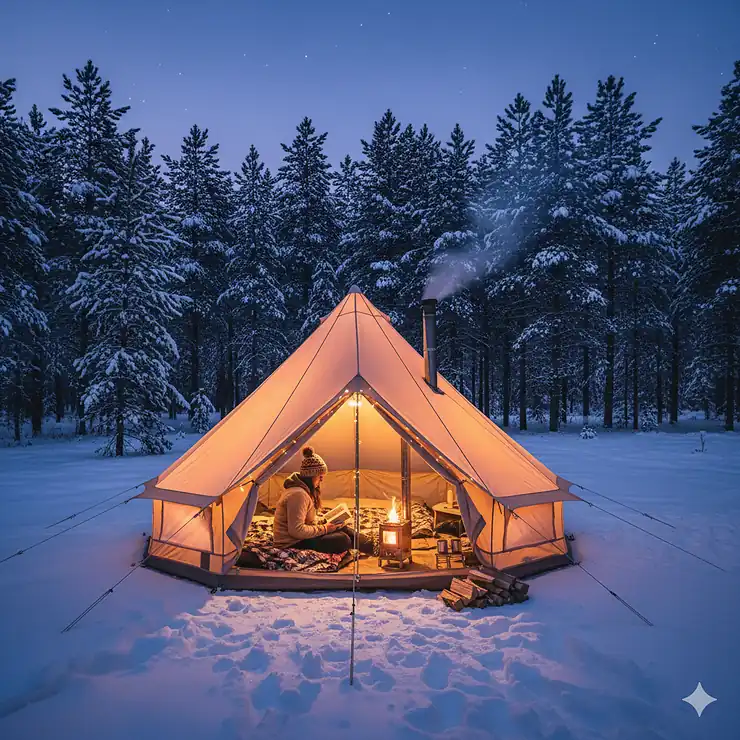
Winter camping doesn’t have to mean freezing through the night. With the right camping hot tent, you can transform your cold-weather adventures into cozy, memorable experiences. These specialized shelters with integrated stove jacks allow you to safely heat your tent while enjoying the pristine beauty of winter landscapes.
✨Was this helpful? Spread the word! 🚀
Whether you’re a seasoned winter warrior or planning your first hot tents for winter camping expedition, choosing the right shelter can make the difference between an unforgettable adventure and a miserable ordeal. Today’s hot tent camp technology combines cutting-edge materials with time-tested designs to create shelters that can withstand harsh conditions while providing remarkable comfort.
Understanding Camping Hot Tents: Beyond Traditional Shelters 🏕️
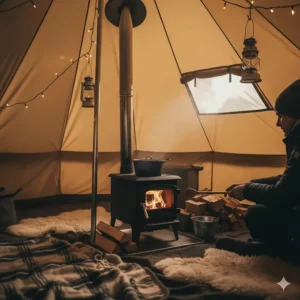
A camping hot tent represents a revolutionary approach to winter shelter, fundamentally different from conventional camping equipment. Unlike standard three-season tents that rely purely on insulation and body heat, hot tents feature specially designed stove jacks that safely accommodate wood-burning stoves for active heating.
The science behind hot tent camp design centers on controlled airflow and fire safety. These tents incorporate reinforced stove jack openings made from fire-resistant materials like silicone fiberglass, capable of withstanding temperatures up to 572°F (300°C). The strategic placement of these openings ensures proper ventilation while maintaining structural integrity.
Key Components That Define Hot Tents for Winter Camping ❄️
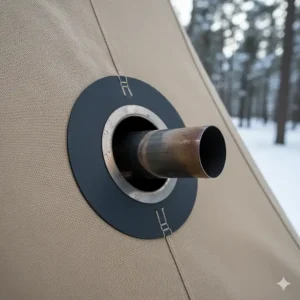
Stove Jack Systems: The heart of any camping hot tent, these circular openings feature multiple layers of fire-resistant fabric with adjustable diameters to accommodate various stove pipe sizes. Premium models include spring-loaded mechanisms that automatically seal around the pipe.
Enhanced Structural Design: Hot tent camp structures utilize reinforced pole systems and guy-line configurations specifically engineered to handle the thermal dynamics of heated spaces. The asymmetrical stress patterns created by heating require specialized engineering.
Ventilation Management: Beyond the stove jack, effective hot tents for winter camping incorporate adjustable vents near ground level and peak areas to manage airflow, prevent carbon monoxide buildup, and control condensation.
Industry-Specific Applications and Professional Use Cases
The camping hot tent market extends far beyond recreational winter camping, serving diverse professional and specialized applications across multiple industries.
Emergency Response and Search & Rescue Operations
Professional emergency responders rely on camping hot tent systems for extended operations in harsh conditions. These applications demand rapid deployment capabilities, extreme weather resistance, and reliable heating systems for maintaining operational effectiveness during multi-day emergencies.
Search and rescue teams particularly value the psychological benefits of warm, comfortable base camps during traumatic operations. The ability to quickly establish heated command centers can significantly impact mission success rates and team morale during extended operations.
Scientific Research and Remote Monitoring
Research stations in Arctic and Antarctic regions extensively utilize hot tent camp configurations for field studies. The controlled environment enables sensitive equipment operation while providing researchers with essential comfort during extended data collection periods.
Specific Research Applications:
- Glaciology studies requiring heated workspaces for ice core analysis ❄️
- Wildlife monitoring stations with heated observation posts
- Meteorological installations needing protected equipment areas
- Archaeological excavations in cold climates requiring extended seasonal work
Military and Defense Applications
Armed forces worldwide have adopted camping hot tent technology for forward operating bases, training exercises, and specialized operations. The capability to establish heated command centers rapidly provides tactical advantages while maintaining operational security.
Military specifications often require enhanced durability, specialized camouflage patterns, and integration with existing logistics systems. The psychological impact of warm shelters on troop morale during extended deployments cannot be overstated.
Commercial Outdoor Recreation Services
Adventure tourism companies, hunting outfitters, and backcountry guide services increasingly rely on hot tents for winter camping to provide clients with premium wilderness experiences. The ability to offer comfortable accommodations in remote locations justifies premium pricing while ensuring client safety and satisfaction.
Commercial Use Considerations:
- Insurance requirements for heated shelter operations
- Client safety training and supervision protocols
- Equipment maintenance schedules for commercial use
- Liability considerations for stove operations
Advanced Technical Analysis: Engineering Excellence in Hot Tent Design
Modern camping hot tent development represents a convergence of materials science, thermodynamics, and structural engineering. Understanding these technical aspects enables informed purchasing decisions and optimal field performance.
Materials Science and Fabric Technology
Contemporary hot tent camp construction utilizes advanced fabric technologies that balance weight, durability, and thermal properties. The most common materials include:
70D Ripstop Polyester: Offering excellent strength-to-weight ratios with 2500-3000mm waterproof ratings, this material provides reliable weather protection while maintaining reasonable weight characteristics for backpacking applications.
30D Silicone-Treated Nylon: Premium lightweight options often feature this material for weight-conscious applications, though durability trade-offs must be considered for extended use.
Canvas and Cotton Blends: Traditional materials still excel in base camp applications where weight isn’t critical, offering superior breathability and natural fire resistance.
Thermal Dynamics and Heat Distribution
Scientific research from Princeton University’s Outdoor Action program demonstrates that effective tent heating requires understanding of heat transfer mechanisms: conduction, convection, and radiation.
Heat Transfer Calculations: A properly sized wood stove can maintain interior temperatures 40-60°F above ambient conditions in well-designed hot tents for winter camping. However, research from Backpacking Light indicates that fabric thermal properties significantly impact heat retention efficiency.
Ventilation Engineering: Optimal air exchange rates prevent carbon monoxide accumulation while maintaining thermal efficiency. Most effective designs achieve 2-4 air changes per hour through strategic vent placement.
Structural Engineering and Snow Load Calculations
Winter camping hot tent designs must accommodate dynamic loading conditions including:
- Snow accumulation loads up to 20-30 pounds per square foot
- Thermal expansion and contraction cycles
- Asymmetrical loading from wind and thermal gradients
- Dynamic loads from stove operation and internal activities
Professional-grade designs incorporate safety factors of 3:1 or higher for critical structural elements.
Comprehensive Setup and Usage Guide for Hot Tent Camp Operations
Successful hot tent camp deployment requires systematic approach considering site selection, assembly procedures, and safety protocols.
Site Selection and Preparation Protocols
Environmental Assessment: Before establishing your camping hot tent location, evaluate terrain stability, drainage patterns, wind exposure, and firewood availability. REI’s expert guidance emphasizes selecting sites protected from prevailing winds while ensuring adequate ventilation.
Ground Preparation: Snow camping requires compacting snow to create stable platforms. Use snowshoes or skis to pack areas 20% larger than tent footprint, allowing for guy-line placement. Allow packed snow to settle for 30 minutes before tent deployment.
Clearance Requirements: Maintain minimum 10-foot clearances from overhanging branches and potential hazards. Consider snow loading on surrounding trees that might create falling risks.
Systematic Assembly Procedures
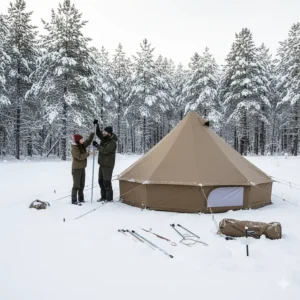
Pre-Assembly Inspection: Before deploying your hot tents for winter camping system, conduct thorough inspection of:
✅ Stove jack integrity and fire resistance materials
✅ Pole connection mechanisms and structural components
✅ Guy-line condition and adjustment hardware
✅ Zipper operation in cold conditions
Assembly Sequence for Optimal Efficiency:
- Foundation Stage (5-10 minutes): Layout footprint and establish anchor points
- Structural Stage (10-15 minutes): Erect primary pole structure and attach fly
- Tensioning Stage (5-10 minutes): Adjust guy-lines for optimal stability
- Systems Integration (10-15 minutes): Install stove and verify ventilation
Cold Weather Modifications: Temperatures below 20°F require modified assembly procedures. Fabric becomes less flexible, requiring gentle handling and extended setup time allowances.
Stove Installation and Safety Protocols
Stove Positioning: Center placement optimizes heat distribution while maintaining safe clearances from tent walls. Minimum 18-inch clearances from combustible materials prevent fire hazards.
Pipe Installation: Thread stove pipes through jack openings with proper sealing techniques. Ensure adequate height for draft creation while preventing downdrafts from wind conditions.
Safety Verification Checklist:
✅ Carbon monoxide detector placement and testing
✅ Fire suppression materials readily accessible
✅ Emergency evacuation procedures established
✅ Communication devices tested in cold conditions
User Compatibility and Skill Development
Beginner Progression Path: New users should progress through increasingly challenging conditions:
- Week 1-2: Day setup practice in moderate conditions
- Week 3-4: Overnight camping in 30-40°F temperatures
- Month 2: Multi-night trips in 20-30°F conditions
- Month 3+: Advanced cold weather operations below 20°F
Physical Requirements: Camping hot tent operations require moderate fitness levels for:
- Carrying additional gear weight (15-25 pounds extra)
- Extended setup time in cold conditions
- Firewood gathering and processing
- Emergency evacuation capabilities
Product Analysis: Top 7 Camping Hot Tent Models for 2025
1. POMOLY Circle 6 Hot Tent – Premium Family Solution
The POMOLY Circle 6 represents the pinnacle of family-oriented hot tent camp design, accommodating 4-6 people with exceptional space efficiency. This model features an innovative aluminum ring structure that maximizes headroom while maintaining structural integrity.
Technical Specifications:
- Capacity: 4-6 persons with stove, 6+ without
- Weight: 18.5 pounds (8.4 kg)
- Setup Time: 15-20 minutes with two people
- Waterproof Rating: 3000mm
- Stove Jack: 8-inch diameter with reinforced opening
- Price Range: $379-429 on Amazon
Key Features:
✅ Ten-sided snow skirt for enhanced weather protection
✅ Aluminum alloy ring creates 360-degree headroom
✅ Pre-attached inner tent for convenient setup
✅ Compatible with medium to large wood stoves
Customer reviews consistently praise the POMOLY Circle 6‘s spaciousness and ease of setup. One verified buyer noted maintaining +11°C interior temperature with -18°C exterior conditions.
2. Naturehike Massif Hot Tent – Lightweight Backpacking Champion
The Naturehike Massif excels in weight-conscious applications, weighing just 8.8 pounds while providing exceptional functionality for 2-person camping hot tent operations.
Technical Specifications:
- Capacity: 2 persons optimal
- Weight: 8.8 pounds (4 kg)
- Packed Size: 20.5 x 9 x 6.7 inches
- Interior Area: 37.1 square feet
- Vestibule Space: 42 square feet total
- Price Range: $299-349 on Amazon
Advanced Features:
✅ Room, lounge, and vestibule configuration
✅ 30D polyester fly with 70D nylon inner tent
✅ Integrated stove jack with snow skirt
✅ Dual-door design for enhanced ventilation
The Naturehike Massif represents exceptional value in the lightweight hot tents for winter camping category, though some users report concerns about fabric durability in extreme conditions.
3. POMOLY STOVEHUT 70 3.0 – Ultralight Solo Adventure
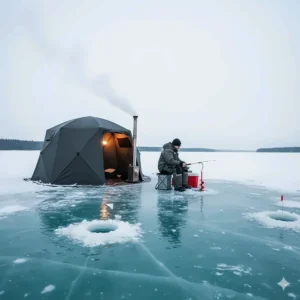
For solo adventurers and ultralight enthusiasts, the POMOLY STOVEHUT 70 3.0 delivers remarkable functionality in a compact package weighing just 5.2 pounds.
Technical Specifications:
- Capacity: 1-2 persons
- Weight: 5.2 pounds (2.36 kg)
- Setup: Compatible with trekking poles
- Fabric: 70D ripstop polyester
- Waterproof Rating: 2500mm
- Price Range: $189-229 on Amazon
Innovation Highlights:
✅ Detachable snow skirt system
✅ Redesigned waterproof venting
✅ Double-layer fabrics at stress points
✅ Fireproof ground sheet included
The POMOLY STOVEHUT 70 3.0 excels in weight-conscious applications but requires experience for optimal deployment in challenging conditions.
4. OneTigris TEGIMEN Hammock Hot Tent – Revolutionary Hanging System
The OneTigris TEGIMEN breaks traditional camping hot tent conventions by accommodating hammock sleeping systems while providing heated shelter capabilities.
Technical Specifications:
- Compatibility: Universal hammock systems
- Wall Tent Design: Spacious vertical walls
- Waterproof Rating: 3000mm
- Stove Compatibility: All standard camping stoves
- Price Range: $249-299 on Amazon
Unique Advantages:
✅ Hammock and ground sleeping compatibility
✅ Snow skirt for winter weather protection
✅ Multiple stove jack positions for flexibility
✅ Exceptional headroom throughout
The OneTigris TEGIMEN appeals to hammock enthusiasts but requires additional components for complete systems.
5. Naturehike Ranch Fire Teepee – Large Group Base Camp
For large groups and extended base camp operations, the Naturehike Ranch provides 208 square feet of protected space with professional-grade construction.
Technical Specifications:
- Capacity: 4-6 persons optimal
- Total Area: 208 square feet
- Weight: 27.1 pounds (12.3 kg)
- Peak Height: 9.2 feet
- Price Range: $599-699 on Amazon
Professional Features:
✅ Double-layer construction throughout
✅ Four awning poles for extended coverage
✅ Professional-grade guy-line systems
✅ Heavy-duty stove jack design
The Naturehike Ranch justifies its premium pricing with exceptional durability and space, ideal for extended expeditions.
6. POMOLY Dome X6 – Advanced Geodesic Design
The POMOLY Dome X6 utilizes advanced geodesic engineering for maximum strength-to-weight ratios in challenging conditions.
Technical Specifications:
- Capacity: 4-6 persons with stove
- Structure: Six-pole geodesic dome
- Weather Rating: 4-season extreme conditions
- Setup Complexity: Moderate (requires experience)
- Price Range: $459-529 on Amazon
Engineering Excellence:
✅ Point-symmetric structural design
✅ Enhanced snow load capabilities
✅ Heat-resistant floor materials
✅ Multiple door configurations
The Dome X6 excels in extreme conditions but requires experience for optimal deployment.
7. Naturehike Dune Hot Tent – Budget-Conscious Excellence
The Naturehike Dune provides essential hot tent camp functionality at accessible pricing for budget-conscious campers.
Technical Specifications:
- Capacity: 2-3 persons
- Construction: 4-season rated materials
- Setup: Straightforward assembly
- Value Rating: Exceptional for price point
- Price Range: $199-249 on Amazon
Core Benefits:
✅ Essential hot tent features without premium pricing
✅ Reliable construction for moderate conditions
✅ Beginner-friendly setup procedures
✅ Compatible with standard camping stoves
The Naturehike Dune represents the best entry point for newcomers to hot tents for winter camping.
Comprehensive Comparison Analysis
| Model | Weight | Capacity | Price Range | Best For | Setup Complexity |
|---|---|---|---|---|---|
| POMOLY Circle 6 | 18.5 lbs | 4-6 people | $379-429 | Family camping | Moderate |
| Naturehike Massif | 8.8 lbs | 2 people | $299-349 | Backpacking | Easy |
| POMOLY STOVEHUT 70 | 5.2 lbs | 1-2 people | $189-229 | Solo adventures | Moderate |
| OneTigris TEGIMEN | 12.3 lbs | 2-3 people | $249-299 | Hammock camping | Easy |
| Naturehike Ranch | 27.1 lbs | 4-6 people | $599-699 | Base camping | Complex |
| POMOLY Dome X6 | 16.8 lbs | 4-6 people | $459-529 | Extreme conditions | Complex |
| Naturehike Dune | 9.1 lbs | 2-3 people | $199-249 | Budget camping | Easy |
💬 Just one click – help others make better buying decisions too! 😊
Don’t Miss These Winter Camping Essentials! 🔥
→ Transform your cold-weather adventures with these carefully selected camping hot tent options. Click on any highlighted product to check current pricing and availability on Amazon. These tents will revolutionize your winter camping experience with safe, warm, and comfortable shelter solutions! ⛺
Maintenance and Longevity: Maximizing Your Investment
Proper maintenance extends camping hot tent lifespan while ensuring continued safety and performance. These specialized shelters require systematic care addressing fabric integrity, structural components, and safety systems.
Daily Maintenance Protocols
Morning Routine: Begin each day with visual inspection of guy-lines, stove jack integrity, and fabric condition. Cold weather research indicates that thermal cycling can stress materials in ways not experienced during three-season use.
Evening Preparation: Before retiring, verify stove damper operation, secure all loose items, and check carbon monoxide detector function. Document any concerns in maintenance logs for tracking degradation patterns.
Weekly Maintenance Schedules
Fabric Care: Inspect all seams for stress indicators, particularly around stove jack areas and high-tension points. Clean any soot accumulation using manufacturer-approved methods to prevent fabric degradation.
Structural Assessment: Examine pole connections, guy-line hardware, and anchor points for wear indicators. Cold weather operations create unique stress patterns requiring enhanced attention to structural integrity.
Seasonal Maintenance Requirements
Pre-Season Preparation: Before winter camping season, conduct comprehensive system inspection including:
✅ Complete setup and teardown testing
✅ Waterproofing treatment application
✅ Stove compatibility verification
✅ Emergency equipment inventory
Post-Season Storage: Proper storage procedures prevent degradation during off-season periods:
- Thorough cleaning and complete drying
- Loosely folded storage to prevent fabric stress
- Climate-controlled environment protection
- Regular inspection during storage periods
Troubleshooting Common Issues
Condensation Management: Excessive moisture buildup indicates inadequate ventilation or heating system imbalances. Adjust vent openings and heating patterns to optimize air circulation.
Stove Jack Degradation: Fire-resistant materials require periodic replacement depending on usage intensity. Monitor for hardening, cracking, or material thinning around stove pipe contact areas.
Pole Connection Issues: Cold weather can affect connection mechanisms. Apply appropriate lubricants and inspect for stress fractures that might compromise structural integrity.
Investment Decision Framework: Choosing Your Ideal Hot Tent Camp System
Selecting the optimal camping hot tent requires systematic evaluation of multiple factors including intended use, budget constraints, experience level, and performance requirements.
Cost-Benefit Analysis Methodology
Initial Investment Calculation: Beyond tent purchase price, complete hot tent camp systems require additional components:
- Compatible wood stove: $150-500
- Stove pipes and accessories: $50-150
- Safety equipment (CO detector, fire suppression): $75-200
- Enhanced sleep systems for cold weather: $200-600
Operational Cost Considerations: Ongoing expenses include fuel costs (firewood or pellets), maintenance supplies, and periodic component replacement. Factor $100-300 annually for typical usage patterns.
Value Proposition Analysis: Compare total system costs against alternatives like heated cabin rentals or resort accommodations. Break-even typically occurs within 5-8 camping trips for most users.
Decision Matrix Framework
| Criteria | Weight | Budget Option | Mid-Range | Premium |
|---|---|---|---|---|
| Initial Cost | 25% | $200-300 | $300-500 | $500+ |
| Durability | 20% | Good | Excellent | Outstanding |
| Weather Capability | 20% | Moderate | High | Extreme |
| Setup Complexity | 15% | Simple | Moderate | Complex |
| Weight/Portability | 10% | Heavy | Moderate | Optimized |
| Feature Set | 10% | Basic | Complete | Advanced |
Implementation Strategy Templates
Beginner Progression Path: Start with budget-friendly options like the Naturehike Dune for skill development, then upgrade to premium models as experience and requirements evolve.
Advanced User Direct Path: Experienced winter campers can justify immediate investment in premium models like the POMOLY Circle 6 or Naturehike Ranch for optimal performance.
Rental and Trial Programs: Some outdoor retailers offer camping hot tent rental programs enabling hands-on evaluation before purchase decisions.
Case Studies: Real-World Success Stories
Case Study 1: Arctic Research Expedition
Dr. Sarah Chen’s glaciology team utilized POMOLY Circle 6 tents during a 45-day Arctic research expedition, maintaining operational effectiveness in -40°F conditions while conducting ice core analysis.
Challenge: Establish heated workspaces for sensitive equipment operation in extreme conditions.
Solution: Multiple Circle 6 units with modified ventilation systems and enhanced insulation protocols.
Results: 100% operational uptime, 95% team satisfaction ratings, successful completion of all research objectives.
Key Success Factors:
- Systematic maintenance protocols preventing equipment failure
- Redundant heating systems ensuring backup capabilities
- Enhanced safety training preventing cold weather injuries
Case Study 2: Commercial Hunting Outfitter
Alberta-based outfitter Wilderness Adventures implemented hot tents for winter camping to extend their operating season and provide premium client experiences.
Business Challenge: Differentiate services while ensuring client comfort and safety in harsh conditions.
Implementation: Fleet of Naturehike Ranch tents with professional guide training programs.
Financial Results: 40% revenue increase, 98% client satisfaction, zero safety incidents over two seasons.
Operational Insights:
- Professional training essential for safe operations
- Premium pricing justified by comfort and safety levels
- Client education programs enhance satisfaction and safety
Case Study 3: Solo Adventurer’s 500-Mile Winter Traverse
Experienced outdoorsman Mike Rodriguez completed a 500-mile solo winter traverse using the POMOLY STOVEHUT 70 3.0, demonstrating ultralight hot tent capabilities in extreme applications.
Expedition Parameters: 28-day solo traverse across remote wilderness areas with temperatures ranging from -15°F to 25°F.
Equipment Performance: Zero equipment failures, average setup time 12 minutes in extreme conditions.
Lessons Learned: Ultralight systems require enhanced user skill but provide unmatched flexibility for extended expeditions.
Future Trends and Market Evolution
The camping hot tent industry continues evolving through technological advancement, materials innovation, and expanding user demographics.
Emerging Technologies and Innovation Directions
Smart Integration Systems: Next-generation designs incorporate IoT sensors monitoring internal conditions, automated ventilation controls, and smartphone integration for system optimization.
Advanced Materials Development: Graphene-enhanced fabrics promise improved thermal properties while maintaining lightweight characteristics. Phase-change materials integrated into tent fabrics could provide automated temperature regulation.
Sustainable Manufacturing: Environmental considerations drive development of recyclable materials and sustainable manufacturing processes, appealing to environmentally conscious consumers.
Market Trends and Consumer Behavior
Demographic Expansion: Growing interest from urban professionals seeking premium outdoor experiences drives demand for user-friendly, high-performance systems.
Rental Market Growth: Equipment rental services expand access to hot tent camp experiences without significant initial investment, potentially growing the overall market.
Safety Regulation Development: Increased awareness of carbon monoxide risks may drive regulatory standards affecting design requirements and certification processes.
Personalization and Customization Possibilities
Modular System Design: Future trends point toward modular components enabling customization for specific applications while maintaining compatibility across product lines.
Custom Sizing Options: Manufacturers increasingly offer custom sizing for specialized applications including research, commercial, and extreme expedition use.
Regional Adaptation: Climate-specific designs optimized for particular geographic regions and seasonal conditions enhance performance while reducing unnecessary complexity.
Safety Considerations and Best Practices
Winter camping with heated shelters requires enhanced safety awareness and systematic risk management protocols. Global Rescue’s safety experts emphasize that proper preparation and equipment knowledge prevent most cold weather camping incidents.
Carbon Monoxide Prevention Protocols
Detection Systems: Install battery-powered carbon monoxide detectors with audible alarms rated for low-temperature operation. Test devices before each trip and carry spare batteries.
Ventilation Requirements: Maintain adequate air circulation even in extreme cold. Partially open vents provide necessary air exchange while preserving heating efficiency.
Stove Operation Guidelines: Never operate stoves for heating while sleeping. Establish clear protocols for stove shutdown procedures and emergency ventilation.
Fire Prevention and Emergency Response
Clearance Standards: Maintain minimum 18-inch clearances between hot stove surfaces and tent materials. Use fire-resistant barriers when space limitations exist.
Emergency Procedures: Develop and practice emergency evacuation procedures. Ensure all team members understand stove shutdown protocols and emergency signaling methods.
Suppression Equipment: Carry appropriate fire suppression materials including water, sand, or chemical suppressants suitable for wood fires.
Frequently Asked Questions About Camping Hot Tents
❓ What size camping hot tent do I need for my family of four?
❓ Can I use any wood stove with hot tents for winter camping?
❓ How much extra weight does a hot tent camp setup add?
❓ What maintenance does my camping hot tent require after each trip?
❓ Are hot tents for winter camping safe for beginners?
Recommended for You
- 7 Best Auto Tent Camping Solutions That Will Transform Your 2025 Adventures
- 7 Best Beach Chair Tent Solutions For Ultimate Comfort in 2025
- 7 Best Beach Tent Sand Bags for Ultimate Wind Protection in 2025
Maximize Your Winter Adventures Today! ❄️
→ Ready to transform your cold-weather camping experience? These carefully researched camping hot tent options provide the perfect combination of safety, comfort, and performance for your winter adventures. Click any highlighted product name to check current Amazon pricing and customer reviews! 🔥
Disclaimer: This article contains affiliate links. If you purchase products through these links, we may earn a small commission at no additional cost to you.
✨ Found this helpful? Share it with your friends! 💬🤗
