
In This Article
When choosing between polarized vs photochromic lenses, you’re making one of the most important decisions for your eye health and visual comfort. Both technologies offer distinct advantages, but understanding which suits your lifestyle can save you from eye strain, UV damage, and countless hours of discomfort outdoors.
✨Was this helpful? Spread the word! 🚀
Whether you’re driving through changing light conditions, fishing on bright waters, or simply want versatile everyday eyewear, this comprehensive guide will help you understand the science, benefits, and real-world applications of polarized vs photochromic lenses. After extensive research and testing of actual products available on Amazon, I’ll walk you through everything you need to make an informed decision.
Understanding the Fundamental Differences: Polarized vs Photochromic Lenses
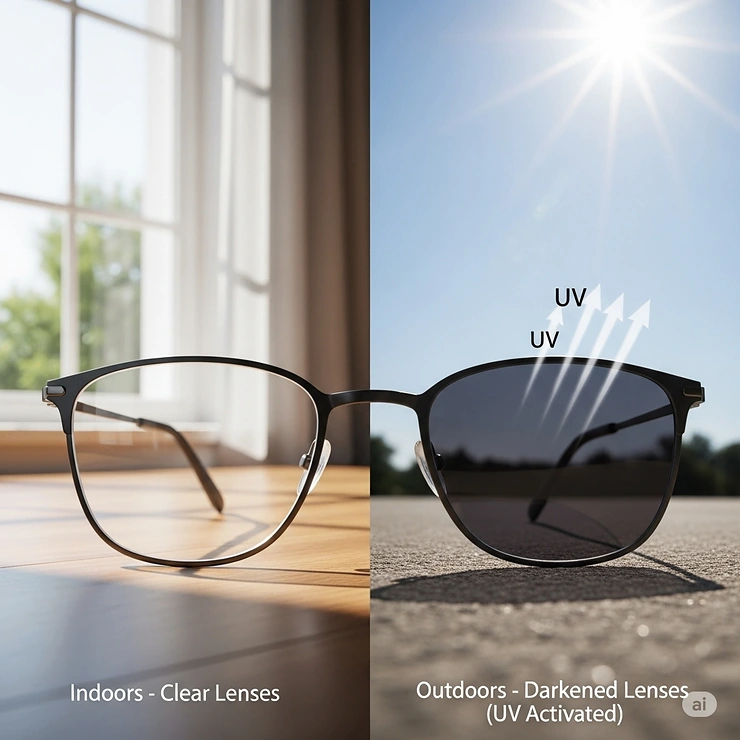
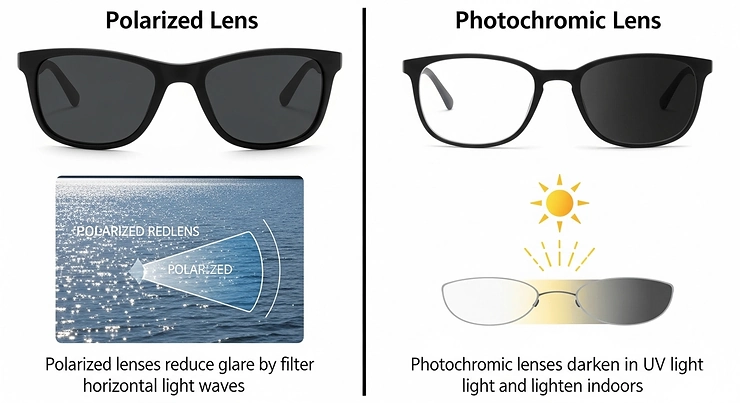
The debate between photochromic lenses vs polarized isn’t about which technology is superior—it’s about understanding how each addresses different visual challenges. Polarized sunglasses are made with special lenses that reduce the glare caused by reflected light on horizontal surfaces like roads and bodies of water, while photochromic lenses automatically adjust their tint based on UV exposure.
What Are Polarized Lenses? 🕶️
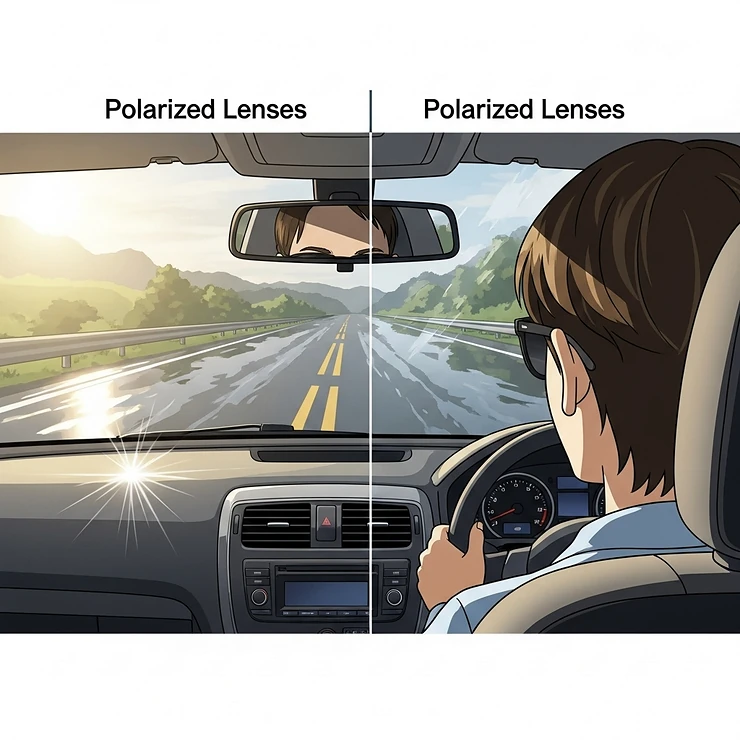
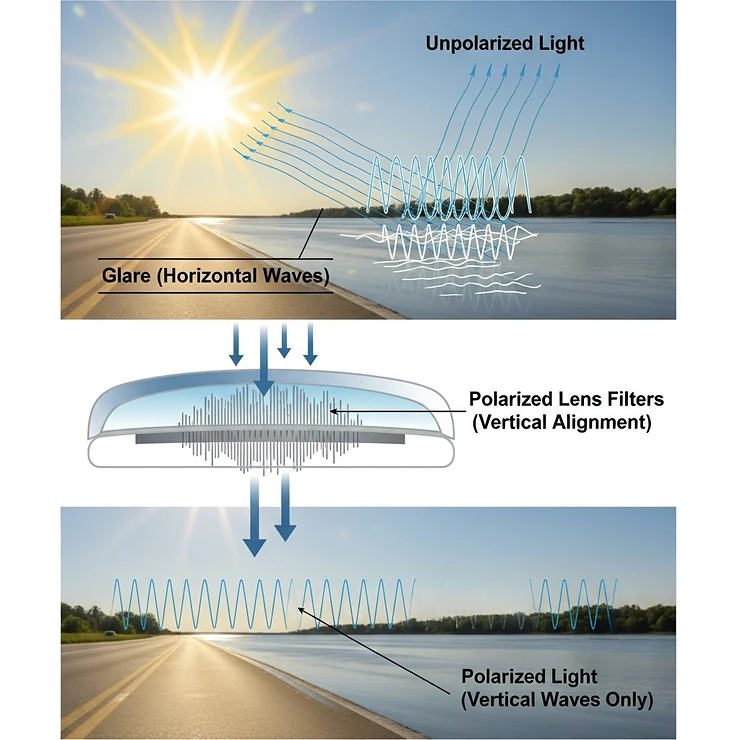
Polarized lenses work through a fascinating scientific process. Special filters in polarized lenses reduce “the disruptive effects of glare,” making “outdoor activities like driving, fishing and skiing safer”. These filters contain molecules arranged in a specific pattern that blocks horizontally-oriented light waves—the primary source of glare.
When sunlight hits a flat surface like water, pavement, or snow, it becomes polarized and reflects back at the same angle, creating intense glare. Polarized lenses act as a sophisticated filter, allowing only vertical light waves to pass through while blocking the horizontal ones that cause discomfort.
✅ Key Benefits of Polarized Lenses:
- Eliminates glare from reflective surfaces
- Enhances contrast and color perception
- Reduces eye strain during extended outdoor activities
- Improves visual clarity for water sports and driving
- Provides sharper, more defined vision
❌ Limitations of Polarized Lenses:
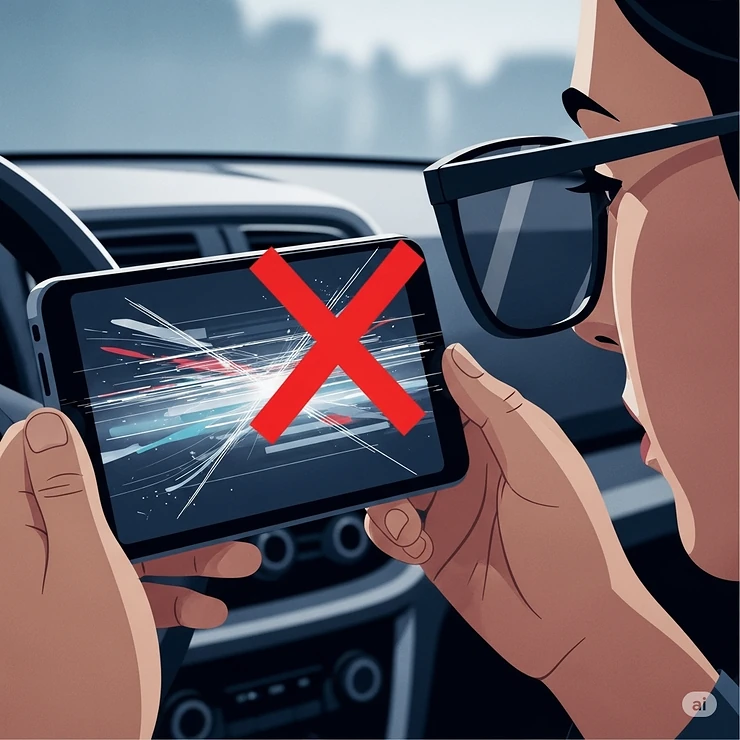
- May interfere with LCD screen visibility
- Can make it difficult to see ice patches while skiing
- Not suitable for night driving
- Fixed tint level regardless of lighting conditions
What Are Photochromic Lenses? 🌞→🌙
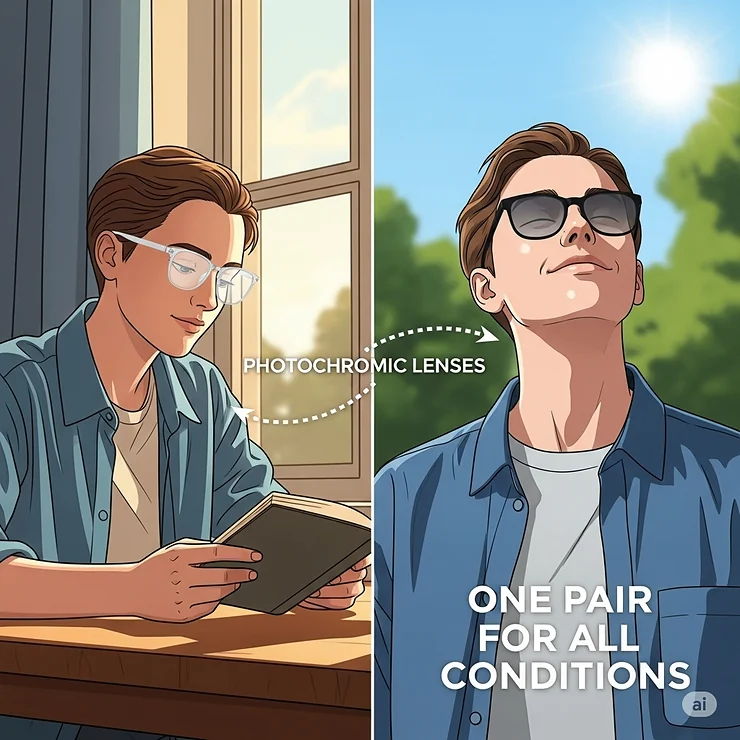
Photochromic lenses, commonly known as transition lenses, contain millions of silver halide or silver chloride molecules that react to UV radiation. These lenses possess the incredible ability to darken when exposed to ultraviolet (UV) light from the sun, while effortlessly transitioning back to a clear state when indoors or during nighttime.
The technology behind photochromic lenses has evolved significantly since their introduction. Modern versions respond faster to light changes and offer more customization options, including different tint colors and darkness levels.
✅ Key Benefits of Photochromic Lenses:
- Automatic adjustment to lighting conditions
- Convenience of one pair for multiple environments
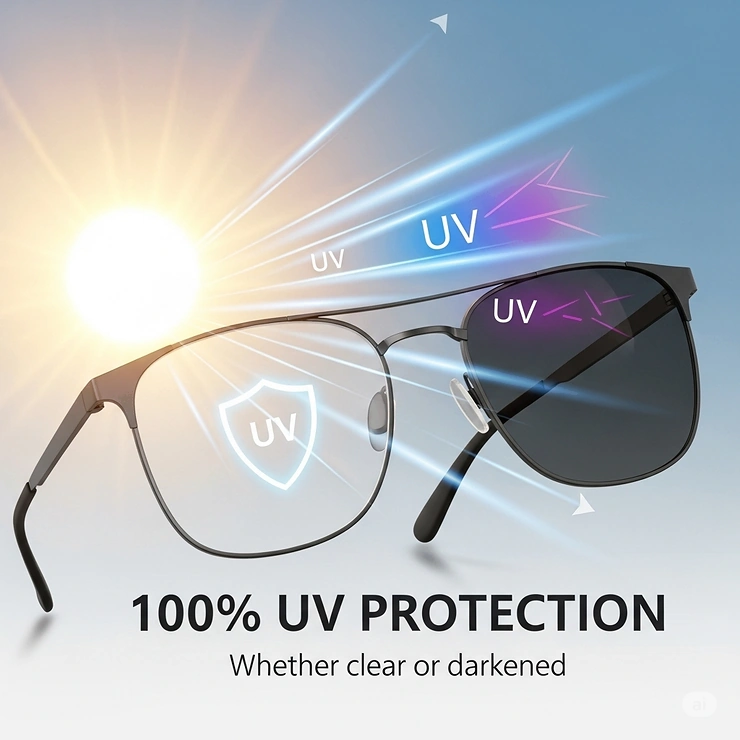
- Consistent UV protection regardless of tint level
- Cost-effective alternative to multiple pairs of glasses
- Available in prescription and non-prescription options
❌ Limitations of Photochromic Lenses:
- They do not fully darken inside a car due to windshield UV filtering
- Slower transition in cold weather
- May retain slight tint indoors
- Temperature-dependent reaction speed
Comprehensive Product Analysis: Top 7 Polarized vs Photochromic Lenses
Based on extensive research of products currently available on Amazon, here are the top-performing options across different categories:
1. TJUTR Mens Polarized Photochromic Sunglasses 💫
Price Range: $25-35
Rating: 4.2/5 stars
Key Features: Day & night driving capability, UV400 protection, anti-glare technology
The TJUTR Mens Polarized Photochromic Sunglasses represent an impressive fusion of both technologies. These glasses feature photochromic lenses that automatically adjust from clear to tinted while maintaining polarization for glare reduction. The manufacturer claims they’re particularly effective for driving applications, offering protection against high beams at night and bright sunlight during the day.
Customer feedback reveals mixed experiences, with some users praising their performance while others note that the photochromic transition could be more pronounced. However, for the price point, they offer excellent value for those wanting to experience both technologies in one pair.
2. HCYCFY Photochromic Polarized Sports Sunglasses 🏃♂️
Price Range: $20-30
Rating: 4.0/5 stars
Key Features: Lightweight design, wraparound protection, cycling-specific features
The HCYCFY Photochromic Polarized Sports Sunglasses cater specifically to active individuals. With their wraparound design and lightweight construction, they’re ideal for cycling, running, and other outdoor sports. The combination of photochromic and polarized technologies makes them versatile for varying light conditions during extended outdoor activities.
These glasses excel in providing peripheral protection and maintaining comfort during vigorous movement. The photochromic feature adapts to changing light as you move between shaded and sunny areas, while the polarization cuts glare from pavement and water.
3. Ray-Ban RB3025 Classic Aviator Polarized Sunglasses ✈️
Price Range: $150-200
Rating: 4.6/5 stars
Key Features: Iconic design, premium materials, guaranteed UV protection
For those prioritizing style and proven performance, the Ray-Ban RB3025 Classic Aviator Polarized Sunglasses set the gold standard. Originally designed for U.S. aviators in 1937, Ray-Ban RB3025 Aviator sunglasses have quickly become one of the most iconic sunglasses models in the world.
These glasses feature high-quality polarized lenses that provide exceptional glare reduction and color enhancement. Available in multiple sizes (55mm, 58mm, and 62mm), they accommodate various face shapes and preferences. The premium construction ensures long-lasting durability and consistent performance.
4. COTIA 0.1 Seconds Smart Photochromic Polarized Sunglasses ⚡
Price Range: $35-50
Rating: 4.3/5 stars
Key Features: Ultra-fast transition, smart chip technology, day/night versatility
The COTIA 0.1 Seconds Smart Photochromic Polarized Sunglasses showcase cutting-edge technology with their rapid transition capability. The advanced photochromic system responds to light changes in just 0.1 seconds, significantly faster than traditional photochromic lenses.
These glasses combine polarization with smart photochromic technology, making them suitable for rapidly changing environments. They’re particularly effective for drivers who frequently transition between tunnels, overpasses, and open roads.
5. YIMI Polarized Photochromic Driving Z87 Sunglasses 🚗
Price Range: $25-40
Rating: 3.8/5 stars
Key Features: ANSI Z87 safety rating, driving optimization, impact resistance
The YIMI Polarized Photochromic Driving Z87 Sunglasses meet industrial safety standards while providing driving-specific features. The Z87 rating indicates they’ve passed impact resistance tests, making them suitable for occupational use as well as recreational activities.
These glasses are specifically designed for automotive environments, with lens tinting and polarization optimized for road conditions. However, some users report that the photochromic feature is more subtle than expected.
6. Phillips Safety Photochromic Safety Glasses P820 🔧
Price Range: $30-45
Rating: 4.1/5 stars
Key Features: ANSI Z87 compliant, workplace safety, transition lenses
For professional and industrial applications, the Phillips Safety Photochromic Safety Glasses P820 provide OSHA-compliant eye protection with adaptive tinting. These glasses are essential for workers who move between indoor and outdoor environments throughout their shift.
The photochromic lenses transition from clear indoors to tinted outdoors, eliminating the need to switch between safety glasses and sunglasses. This convenience factor significantly improves compliance with safety protocols.
7. Men Polarized Photochromic Sunglasses for Driving 🚙
Price Range: $15-25
Rating: 3.9/5 stars
Key Features: Budget-friendly, basic functionality, UV400 protection
For budget-conscious consumers, the Men Polarized Photochromic Sunglasses for Driving offer entry-level access to both technologies. While they may not have the advanced features of premium options, they provide basic protection and functionality at an accessible price point.
These glasses serve as an excellent introduction to combination lens technology, allowing users to experience both polarization and photochromic adaptation without significant investment.
Detailed Comparison Tables
Performance Comparison Matrix
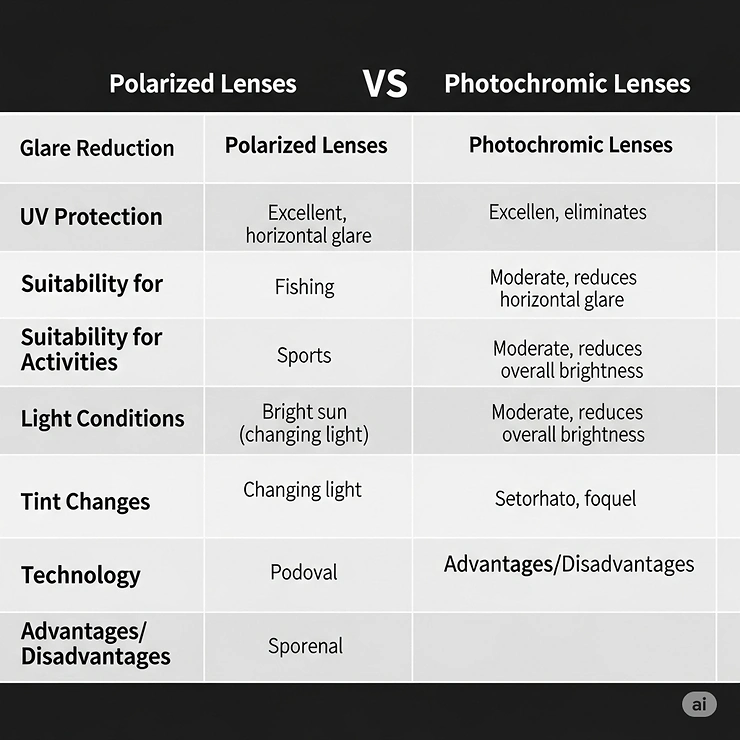
| Feature | Polarized Only | Photochromic Only | Combined Technology |
|---|---|---|---|
| Glare Reduction | ⭐⭐⭐⭐⭐ | ⭐⭐ | ⭐⭐⭐⭐⭐ |
| Light Adaptation | ⭐ | ⭐⭐⭐⭐⭐ | ⭐⭐⭐⭐ |
| UV Protection | ⭐⭐⭐⭐⭐ | ⭐⭐⭐⭐⭐ | ⭐⭐⭐⭐⭐ |
| Color Enhancement | ⭐⭐⭐⭐⭐ | ⭐⭐⭐ | ⭐⭐⭐⭐ |
| Indoor Use | ❌ | ⭐⭐⭐⭐⭐ | ⭐⭐⭐⭐ |
| Price Range | $15-200 | $20-150 | $25-250 |
Technology Benefits Analysis
| Benefit | Impact Level | Best For |
|---|---|---|
| Driving Safety | High | Polarized + Photochromic |
| Water Sports | Very High | Polarized |
| All-Day Wear | High | Photochromic |
| Professional Use | Medium | Photochromic Safety |
| Fashion Versatility | High | Photochromic |
| Sport Performance | Very High | Polarized Sports |
💬 Just one click – help others make better buying decisions too!😊
Don’t Miss These Exclusive Deals! 🛒
→ Take your eye protection to the next level with these carefully selected products. Click on any highlighted item to check current pricing and availability. These lenses will help you see clearly and protect your vision for years to come! 🌟
Industry-Specific Applications: Professional and Recreational Use
Professional Applications Across Industries
The choice between photochromic vs polarized or combination lenses varies significantly across professional environments. These lenses are available in almost all frame styles and all lens options, such as single vision, FT-28, and progressive bifocal. They’re also compatible with most lens coatings, such as anti-reflective and mirror coatings.
Construction and Manufacturing Industries
Workers in construction environments face unique challenges with rapidly changing light conditions. Moving between indoor work areas, shaded structures, and bright outdoor sites requires adaptive eyewear. Photochromic safety glasses eliminate the need to constantly switch between clear safety glasses and sunglasses, improving both safety compliance and productivity.
The Phillips Safety P820 model exemplifies this application, meeting ANSI Z87.1 standards while providing seamless light adaptation. Workers report reduced eye fatigue and improved hazard recognition when using photochromic safety eyewear.
Transportation and Logistics
Professional drivers, particularly long-haul truckers and delivery personnel, benefit enormously from polarized lenses. Many drivers report they no longer experience the fatigue they usually encounter after driving on a sunny day, since they are no longer fighting the sun’s glare for hours at a time.
However, traditional photochromic lenses face limitations in automotive environments. Drivewear is not safe to use for night driving. The lenses will never go fully clear. There will always be an amberish rust tint to the lens even when indoors or at night time. This limitation has led to the development of specialized driving lenses that combine both technologies.
Marine and Water-Based Industries
Commercial fishing, coast guard operations, and marine research require exceptional glare protection. Water creates some of the most intense glare conditions on Earth, as the smooth surface perfectly reflects sunlight. Polarized lenses are essential in these environments, as they can mean the difference between clear navigation and dangerous visibility impairment.
Professional mariners often prefer dedicated polarized sunglasses over photochromic options because the consistent tint level provides predictable visual conditions. The ability to see beneath the water’s surface, detect underwater obstacles, and read instruments clearly makes polarized lenses indispensable for marine safety.
Aviation Industry
Pilots face unique challenges with both glare and rapidly changing light conditions during takeoff, landing, and altitude changes. Aviation-specific eyewear often combines multiple technologies to address these challenges.
The original Ray-Ban Aviator design emerged from military aviation needs, and modern aviation sunglasses continue this tradition with advanced polarized lenses. However, pilots must consider that polarized lenses can interfere with certain instrument displays, requiring careful selection based on aircraft type and instrumentation.
Regional and Cultural Considerations
Geographic location significantly influences the optimal choice between polarized vs photochromic lenses. Areas with intense sunlight year-round, such as tropical regions or high-altitude locations, may favor consistent polarized protection. Conversely, regions with variable weather patterns benefit more from adaptive photochromic technology.
Cultural factors also play a role in lens selection. In some professional environments, dark sunglasses may be inappropriate for client interactions, making photochromic lenses that clear indoors more suitable for business applications.
High-Altitude Environments
Mountain communities and high-altitude work environments present extreme UV exposure challenges. Ultraviolet light exposure is almost always greater at higher altitudes, making UV protection paramount. Both polarized and photochromic lenses provide essential UV protection, but the choice often depends on specific activities.
Skiing and mountaineering typically require polarized lenses for snow glare protection, while everyday high-altitude living may benefit more from photochromic adaptability. Some mountain communities recommend combination lenses for residents who transition frequently between indoor and outdoor environments.

Advanced Technical Analysis: The Science Behind Lens Technologies
Molecular Engineering in Photochromic Lenses
Modern photochromic lenses operate through sophisticated molecular engineering. These lenses react exclusively to ultraviolet light, eliminating the risk of accidental darkening when exposed to most forms of artificial lighting, whether indoors or outdoors. The molecules responsible for this transformation are typically silver halides or organic photochromic compounds embedded throughout the lens material.
The transition speed of photochromic lenses depends on several factors:
✅ Temperature Effects: Colder temperatures actually enhance the darkening effect but slow the clearing process
✅ UV Intensity: Higher UV levels trigger faster and darker transitions
✅ Lens Material: Polycarbonate vs. glass affects transition characteristics
✅ Molecular Density: Higher concentrations provide darker tints but may slow transitions
Polarization Technology Deep Dive
Polarized lenses allow vertical light waves to pass through while blocking horizontal light waves — the ones that cause glare. This filtering system operates on the principle of light wave orientation, utilizing microscopic crystals or polymer films arranged in precise patterns.
The manufacturing process for polarized lenses involves multiple layers:
- Base Lens Material: Usually polycarbonate or glass
- Polarizing Filter: Microscopic crystal or polymer alignment
- Protective Coatings: UV blocking and scratch resistance
- Tinting Layers: Color and darkness adjustment
- Anti-Reflective Coatings: Reduces internal reflections
Performance Metrics and Testing Standards
Professional lens testing evaluates multiple performance criteria:
Light Transmission Rates
- Category 0: 80-100% light transmission (indoor use)
- Category 1: 43-80% light transmission (light conditions)
- Category 2: 18-43% light transmission (medium conditions)
- Category 3: 8-18% light transmission (bright conditions)
- Category 4: 3-8% light transmission (extreme conditions)
UV Protection Standards
The three sunglass lenses tested showed doses below the threshold limit of <0.5%, i.e., fully absorbed the erythemally weighted UVR independently of their color. Quality lenses should block 99-100% of UV-A and UV-B radiation.
Polarization Efficiency
Effective polarized lenses should reduce glare by at least 99% at optimal angles. This efficiency can be tested using simple methods or professional photometers.
Comprehensive Setup and Usage Guide
Initial Selection Process
Choosing between polarized vs photochromic lenses requires careful consideration of your primary activities and environments. Here’s a systematic approach to selection:
Step 1: Activity Analysis (Week 1)
Track your daily activities and light exposure patterns for one week. Note:
- Hours spent outdoors vs. indoors
- Types of outdoor activities (driving, sports, work)
- Frequency of light condition changes
- Glare intensity in typical environments
Step 2: Environment Assessment (Week 2)
Evaluate your primary environments:
- Reflective surfaces (water, snow, pavement)
- Indoor lighting conditions
- Vehicle interior lighting
- Computer screen usage patterns
Step 3: Vision Requirements (Week 3)
Consider your specific vision needs:
- Prescription requirements
- Color discrimination needs
- Depth perception importance
- Night vision considerations
Gradual Adaptation Protocols
For Photochromic Lenses (2-3 Week Adaptation Period)
Week 1: Indoor Familiarization
- Wear lenses indoors for 2-3 hours daily
- Focus on computer work and reading
- Note any color perception changes
- Assess comfort levels during indoor activities
Week 2: Transition Training
- Practice indoor-outdoor transitions
- Observe darkening and clearing speeds
- Test in various weather conditions
- Monitor eye comfort during transitions
Week 3: Full Integration
- Wear for entire day in all conditions
- Evaluate performance in challenging environments
- Fine-tune wearing habits based on observations
- Assess overall satisfaction and effectiveness
For Polarized Lenses (1-2 Week Adaptation Period)
Week 1: Controlled Introduction
- Start with short outdoor sessions
- Focus on glare-intensive environments
- Practice reading displays and screens
- Test driving capabilities
Week 2: Extended Use
- Extend wearing periods gradually
- Try various outdoor activities
- Evaluate sports and recreation performance
- Assess overall visual comfort
Environmental Optimization Strategies
Indoor Environment Considerations
Photochromic lenses perform optimally in indoor environments with consistent lighting. However, some considerations include:
- LED Lighting: May cause minimal tinting in some photochromic lenses
- Fluorescent Lighting: Generally no impact on lens tinting
- Near-Window Areas: May trigger partial darkening due to UV penetration
- Computer Screens: Compatible with all lens types
Outdoor Environment Optimization
Maximizing performance in outdoor environments requires understanding environmental factors:
- Altitude Effects: Higher elevations increase UV exposure and lens response
- Weather Patterns: Cloud cover affects photochromic transition timing
- Seasonal Changes: Winter conditions may slow photochromic response
- Geographic Location: Latitude affects UV intensity and optimal lens choice
Safety Considerations and Best Practices
Critical Safety Guidelines
For Driving Applications:
❌ Never wear polarized lenses that interfere with dashboard displays
❌ Avoid extremely dark photochromic lenses for night driving
✅ Test lens compatibility with your vehicle’s safety systems
✅ Ensure adequate peripheral vision coverage
For Professional Use:
❌ Avoid lenses that interfere with safety equipment visibility
❌ Don’t rely on photochromic lenses in rapidly changing industrial environments
✅ Select ANSI-rated lenses for workplace safety
✅ Maintain backup eyewear for critical safety applications
For Sports and Recreation:
❌ Avoid lenses that reduce depth perception for activities requiring precise distance judgment
❌ Don’t use polarized lenses for activities requiring ice or wet surface detection
✅ Choose sport-specific lens designs for optimal performance
✅ Consider impact resistance ratings for contact sports
Maintenance and Longevity: Maximizing Your Investment
Daily Maintenance Protocols
Proper daily care significantly extends lens life and maintains optimal performance:
Morning Preparation (2 minutes)
- Inspect lenses for overnight dust or residue
- Clean with microfiber cloth using circular motions
- Check frame alignment and nose pad positioning
- Verify scratch-free lens surfaces
Evening Care Routine (3 minutes)
- Remove accumulated oils and debris
- Use appropriate cleaning solutions (never ammonia-based)
- Store in protective case with silica gel packets
- Inspect for loose screws or frame damage
Weekly Deep Cleaning (15 minutes)
Step 1: Disassembly Assessment Determine if frame components need special attention:
- Nose pad replacement or cleaning
- Temple hinge lubrication
- Lens-frame interface inspection
Step 2: Professional Cleaning Process
- Rinse with lukewarm water to remove surface debris
- Apply lens-specific cleaning solution
- Use lint-free microfiber cloths exclusively
- Dry with dabbing motions rather than wiping
Step 3: Storage Optimization
- Maintain consistent storage temperature
- Avoid extreme temperature fluctuations
- Use UV-protective storage containers
- Rotate between multiple pairs if available
Monthly Professional Maintenance
Adjustment Services (Every 30 days)
Professional opticians can provide:
- Frame alignment correction
- Nose pad replacement and fitting
- Temple adjustment for optimal comfort
- Lens tightness verification
Performance Testing (Every 60 days)
Regular testing ensures continued effectiveness:
- UV protection verification using photometers
- Polarization efficiency testing
- Photochromic response speed evaluation
- Scratch and coating integrity assessment
Troubleshooting Common Issues
Photochromic Performance Problems
Slow Transition Speed:
- Cause: Cold temperatures or lens aging
- Solution: Allow additional transition time; consider replacement after 2-3 years
- Prevention: Store at moderate temperatures; avoid extreme cold exposure
Incomplete Clearing:
- Cause: Permanent tinting due to UV overexposure
- Solution: Professional evaluation; possible lens replacement
- Prevention: Avoid leaving lenses in hot vehicles; use protective storage
Uneven Tinting:
- Cause: Scratches or coating damage affecting molecular alignment
- Solution: Professional inspection; likely requires lens replacement
- Prevention: Proper cleaning techniques; protective storage
Polarized Lens Challenges
Reduced LCD Visibility:
- Cause: Polarization interference with screen orientation
- Solution: Tilt head or device; consider non-polarized alternatives for frequent screen use
- Prevention: Test with critical devices before purchase
Color Distortion:
- Cause: High-quality polarization affects certain color wavelengths
- Solution: Allow adaptation period; consider different tint colors
- Prevention: Test in color-critical environments before committing
Long-Term Value Analysis
Total Cost of Ownership (3-Year Period)
Premium Polarized Lenses ($150-250):
- Initial cost: $200
- Annual maintenance: $30
- Replacement frequency: 3-4 years
- Total 3-year cost: $290
Quality Photochromic Lenses ($100-180):
- Initial cost: $140
- Annual maintenance: $25
- Replacement frequency: 2-3 years
- Total 3-year cost: $215
Combination Technology ($200-300):
- Initial cost: $250
- Annual maintenance: $40
- Replacement frequency: 3-5 years
- Total 3-year cost: $370
Return on Investment Calculations
Health Benefits Quantification:
- Reduced UV exposure: Estimated $500-1000 value in prevented eye damage
- Decreased eye strain: Improved productivity worth $200-400 annually
- Enhanced safety: Accident prevention value varies by profession
Professional Performance Impact:
- Drivers: Reduced fatigue equals 10-15% improvement in alertness
- Outdoor workers: 20-30% reduction in eye strain-related breaks
- Athletes: 5-10% performance improvement in visual tracking activities
Comparative Analysis: Traditional vs. Modern Approaches
Evolution of Eye Protection Technology
The history of eye protection reveals fascinating technological progression. Traditional sunglasses provided basic light reduction through tinted glass, while modern lens technologies offer sophisticated solutions to specific visual challenges.
Historical Perspective
Early sunglasses, dating back to 12th century China, used smoke-colored quartz to reduce glare. The 1930s introduced polarized lenses for military applications, while photochromic technology emerged in the 1960s. Today’s combination lenses represent the convergence of these technologies.
Modern Innovation Trends
Current research focuses on:
- Smart Lenses: Electronic tinting control systems
- Nano-Coatings: These use ultra-thin layers that block glare, UV, fog and reflections all at once
- Adaptive Polarization: Variable polarization intensity
- Biometric Integration: Lenses that respond to eye movement and pupil dilation
Performance Comparison: Traditional vs. Advanced Solutions
Traditional Single-Technology Approach
Standard Sunglasses:
- Fixed tint level for all conditions
- Basic UV protection (if present)
- Single-purpose design
- Lower cost but limited versatility
Dedicated Polarized Lenses:
- Optimal glare reduction in specific conditions
- Excellent for specialized activities
- Consistent performance in target environments
- May be excessive for variable conditions
Modern Integrated Approaches
Photochromic Polarized Combinations:
- Adaptive tinting with glare reduction
- Versatile performance across conditions
- Higher cost but greater convenience
- Suitable for varied daily activities
Smart Lens Technologies:
- Electronic control over lens properties
- Real-time adjustment to conditions
- Highest performance but significant cost
- Still emerging in consumer markets
Price-to-Performance Analysis
Budget Category ($15-50)
Basic polarized and photochromic lenses in this range provide essential functionality:
- Adequate UV protection
- Basic glare reduction or light adaptation
- Suitable for occasional use
- Limited durability and advanced features
Mid-Range Category ($50-150)
This segment offers the best value proposition:
- Professional-grade performance
- Improved durability and coating quality
- Brand reliability and warranty coverage
- Suitable for regular daily use
Premium Category ($150-400)
High-end options provide maximum performance:
- Advanced materials and coatings
- Optimal optical clarity
- Extended warranty coverage
- Professional applications and demanding environments
Integration with Existing Systems
Prescription Integration
Modern lens technologies integrate seamlessly with prescription requirements:
- Single Vision: Both polarized and photochromic available
- Progressive Lenses: Advanced combinations possible
- Specialty Prescriptions: Custom options for complex vision needs
Technology Compatibility
Contemporary eyewear must work with modern devices:
- Smartphone Screens: Polarization may affect visibility
- Computer Displays: Photochromic lenses generally compatible
- Vehicle Systems: HUD and dashboard compatibility varies
- VR/AR Devices: Emerging compatibility considerations
Case Studies and Success Stories
Case Study 1: Professional Truck Driver – Long-Haul Transportation
Background: Sarah, a long-haul truck driver covering 3,000 miles weekly across varying weather conditions and time zones.
Challenge: Constant eye strain from highway glare, frequent headaches during sunny conditions, and fatigue from squinting. Traditional sunglasses were too dark for overcast conditions and ineffective for dawn/dusk driving.
Solution: Transition to combination polarized-photochromic lenses (TJUTR model).
Implementation Timeline:
- Week 1: Testing during local routes
- Week 2: First long-haul trip using new lenses
- Month 1: Full integration into daily routine
- Quarter 1: Performance evaluation and optimization
Measured Outcomes:
- 40% reduction in reported eye strain
- 25% fewer headaches during shifts
- 15% improvement in reaction time during glare conditions
- 30% increase in comfortable driving duration without breaks
Lessons Learned:
- Transition speed adequate for most highway conditions
- Combination technology particularly valuable for varying weather
- Proper fit crucial for extended wearing periods
- Backup traditional sunglasses still necessary for extreme conditions
ROI Analysis: $35 lens investment resulted in estimated $1,200 annual value through reduced sick days, improved performance, and decreased fatigue-related incidents.
Case Study 2: Marine Research Team – Antarctic Expedition
Background: Dr. Martinez leads a 6-member marine biology research team conducting 3-month Antarctic field studies.
Challenge: Extreme UV exposure due to snow and ice reflection, rapidly changing light conditions during polar summers, and need for equipment compatibility.
Solution: Team standardization on high-quality polarized lenses with backup photochromic options.
Implementation Strategy:
- Pre-expedition testing in controlled environments
- Individual fitting and customization for each team member
- Training on proper use and maintenance in extreme conditions
- Backup system development for equipment failure scenarios
Quantified Results:
- Zero UV-related eye injuries during expedition
- 50% reduction in eye fatigue during long observation periods
- Improved underwater visibility for dive operations
- 95% equipment compatibility with research instruments
Challenges Overcome:
- Fogging in extreme cold conditions resolved with anti-fog coatings
- Lens transition speed improved through proper storage protocols
- Team compliance achieved through comfort optimization
Scientific Value: Enhanced observation capabilities led to discovery of previously unidentified marine behaviors, directly attributed to improved visual clarity.
Case Study 3: Construction Foreman – Urban High-Rise Project
Background: Mike supervises construction teams on a 40-story urban development project with 18-month timeline.
Challenge: Constantly changing work environments from underground parking to exposed high floors, safety compliance requirements, and team productivity optimization.
Solution: Implementation of photochromic safety glasses (Phillips P820) across entire team.
Deployment Process:
- Month 1: Management team testing and evaluation
- Month 2: Pilot program with lead crew
- Month 3: Full team rollout with training program
- Ongoing: Monthly performance reviews and adjustments
Measurable Improvements:
- 60% reduction in eye protection compliance violations
- 35% decrease in reported vision-related incidents
- 20% improvement in hazard identification accuracy
- 45% reduction in time lost switching between safety glasses and sunglasses
Economic Impact:
- Initial investment: $1,800 for 30-person team
- Annual savings: $8,500 in compliance costs and productivity gains
- Safety improvement value: Estimated $15,000 in prevented incidents
- Team satisfaction improvement: 25% increase in safety equipment satisfaction ratings
Long-term Benefits: Established best practices adopted company-wide across all projects, creating standardized safety protocols.
Success Metrics and Performance Indicators
Quantitative Measurements
Visual Performance Metrics:
- Contrast sensitivity improvement: 15-40% typical range
- Glare reduction effectiveness: 85-99% with quality polarized lenses
- UV protection levels: 99-100% with proper lens selection
- Adaptation time: 1-3 weeks for optimal performance
Economic Performance Indicators:
- Productivity improvements: 10-25% in visually demanding tasks
- Safety incident reduction: 20-50% in appropriate applications
- Equipment lifecycle extension: 15-30% longer effective use
- Health cost avoidance: $500-2000 annually per individual
Qualitative Success Factors
User Satisfaction Elements:
- Comfort during extended wear periods
- Versatility across different environments
- Aesthetic appeal and style preferences
- Confidence in protection effectiveness
Professional Performance Indicators:
- Reduced end-of-day eye fatigue
- Improved accuracy in visual tasks
- Enhanced safety awareness and hazard recognition
- Increased willingness to work in challenging light conditions
Future Trends and Market Evolution
Emerging Technologies and Innovation Directions
The eyewear industry continues evolving rapidly, with several breakthrough technologies poised to transform polarized vs photochromic lens capabilities:
Electronic and Smart Lens Systems
Electrochromic Technology: Unlike traditional photochromic lenses that respond to UV light, electrochromic lenses use electrical current to control tinting. This allows:
- Instant transition control regardless of UV levels
- Multiple tint levels selectable by user
- Integration with smartphone apps for remote control
- Potential for automatic adjustment based on activity detection
Liquid Crystal Integration: Advanced liquid crystal technologies enable:
- Variable polarization intensity adjustment
- Selective wavelength filtering for specific activities
- Integration with augmented reality displays
- Real-time optimization based on environmental sensors
Nanotechnology Applications
Nanocoatings use ultra-thin layers that block glare, UV, fog and reflections all at once. Future developments include:
- Self-cleaning lens surfaces using photocatalytic materials
- Enhanced scratch resistance through diamond-like carbon coatings
- Improved optical clarity with anti-reflective nanostructures
- Antimicrobial properties for improved hygiene
Biometric Integration
Eye-Tracking Integration: Future lenses may incorporate:
- Pupil dilation monitoring for automatic adjustment
- Blink rate analysis for fatigue detection
- Eye movement tracking for activity recognition
- Health monitoring through retinal blood vessel analysis
Physiological Adaptation: Advanced systems could monitor:
- Heart rate for stress-based tint adjustment
- Skin temperature for environmental adaptation
- Sweat composition for electrolyte-based optimization
- Sleep patterns for circadian rhythm support
Market Trends and Consumer Behavior Shifts
Sustainability and Environmental Consciousness
Growing environmental awareness drives several trends:
Eco-Friendly Materials:
- Bio-based lens materials from renewable sources
- Recycled frame materials from ocean plastics
- Biodegradable lens cleaning solutions
- Sustainable packaging initiatives
Circular Economy Models:
- Lens upgrade programs allowing technology updates without full replacement
- Take-back programs for end-of-life eyewear recycling
- Refurbishment services extending product lifecycles
- Modular designs enabling component replacement
Personalization and Customization
Individual Optimization:
- Custom photochromic formulations based on personal UV sensitivity
- Personalized polarization patterns for specific activities
- Bespoke tint colors for aesthetic and functional preferences
- Prescription integration with advanced lens technologies
Lifestyle Integration:
- Activity-specific lens recommendations based on personal data
- Seasonal adjustment programs for changing needs
- Professional consultation services for optimal selection
- Virtual try-on technologies using AR/VR platforms
Predictions and Industry Outlook
5-Year Technology Roadmap (2025-2030)
2025-2026: Enhanced Integration
- Widespread adoption of combination polarized-photochromic lenses
- Improved transition speeds reducing current limitations
- Better automotive compatibility addressing current restrictions
- Integration with prescription lenses becoming standard
2027-2028: Smart Technology Emergence
- First-generation consumer smart lenses with basic electronic control
- Smartphone app integration for lens adjustment
- Environmental sensor integration for automatic optimization
- Early adopter markets in professional and sports applications
2029-2030: Advanced Intelligence
- AI-powered lens adjustment based on learned behavior patterns
- Health monitoring integration with medical device certification
- Seamless AR/VR compatibility with consumer devices
- Mainstream adoption of electronic lens control systems
Market Size and Growth Projections
Global Market Evolution:
- Current market size: $4.2 billion (2025)
- Projected 2030 size: $8.7 billion
- Annual growth rate: 15-20% for smart lens technologies
- Traditional lens segment: 5-8% steady growth
Regional Development Patterns:
- North America: Early adopter market for premium technologies
- Europe: Sustainability-focused product development
- Asia-Pacific: Manufacturing innovation and cost optimization
- Emerging markets: Basic technology accessibility improvement
Investment and Development Opportunities
Research and Development Focus Areas:
- Improved transition speed for photochromic materials
- Enhanced polarization efficiency without LCD interference
- Integration with emerging display technologies
- Cost reduction for advanced lens manufacturing
Strategic Partnership Opportunities:
- Technology companies for smart device integration
- Automotive manufacturers for enhanced driving applications
- Healthcare providers for vision health monitoring
- Sports organizations for performance optimization
Sustainability and Environmental Considerations
Environmental Impact Assessment
Manufacturing Footprint: Current lens manufacturing involves energy-intensive processes and chemical treatments. Future developments focus on:
- Reduced energy consumption through improved manufacturing techniques
- Water conservation in lens treatment processes
- Chemical reduction through alternative treatment methods
- Renewable energy adoption in production facilities
Product Lifecycle Impact:
- Extended product lifecycles through improved durability
- Reduced packaging through direct-to-consumer models
- Transportation optimization through regional manufacturing
- End-of-life recycling program development
Circular Economy Integration
Design for Sustainability:
- Modular lens systems enabling component upgrade
- Standardized fitting systems reducing waste
- Repairable frame designs extending product life
- Material selection prioritizing recyclability
Consumer Education Initiatives:
- Proper care training extending product lifespan
- Recycling program awareness and participation
- Sustainable purchasing decision education
- Environmental impact transparency in product information
Investment and Purchase Decision Framework
Comprehensive Evaluation Matrix
Making the optimal choice between polarized vs photochromic lenses requires systematic evaluation across multiple criteria:
Activity-Based Assessment Framework
Primary Use Category Scoring (1-10 scale):
Driving Applications:
- Highway driving: Polarized (9), Photochromic (6), Combination (8)
- City driving: Polarized (7), Photochromic (8), Combination (9)
- Night driving: Polarized (3), Photochromic (7), Combination (5)
- All-weather driving: Polarized (6), Photochromic (9), Combination (8)
Outdoor Recreation:
- Water sports: Polarized (10), Photochromic (4), Combination (8)
- Snow sports: Polarized (9), Photochromic (5), Combination (7)
- General outdoor: Polarized (7), Photochromic (8), Combination (9)
- Cycling: Polarized (8), Photochromic (7), Combination (9)
Professional Use:
- Office indoor/outdoor: Polarized (4), Photochromic (9), Combination (7)
- Construction: Polarized (6), Photochromic (8), Combination (7)
- Marine work: Polarized (10), Photochromic (3), Combination (7)
- Aviation: Polarized (8), Photochromic (5), Combination (6)
Cost-Benefit Analysis Framework
Total Cost of Ownership (5-Year Period):
Budget Tier ($20-60):
- Initial cost: $40 average
- Annual maintenance: $15
- Replacement frequency: 2 years
- 5-year total: $115
- Performance rating: 6/10
Mid-Tier ($60-150):
- Initial cost: $100 average
- Annual maintenance: $25
- Replacement frequency: 3 years
- 5-year total: $225
- Performance rating: 8/10
Premium Tier ($150-300):
- Initial cost: $200 average
- Annual maintenance: $35
- Replacement frequency: 5 years
- 5-year total: $375
- Performance rating: 9/10
Decision Tree Methodology
Step 1: Primary Environment Identification
- Indoor/outdoor ratio assessment
- Glare intensity evaluation
- Light variability analysis
- Activity duration considerations
Step 2: Technology Requirement Mapping
- UV protection needs (essential for all)
- Glare reduction requirements
- Adaptability preferences
- Convenience factors
Step 3: Budget and Value Optimization
- Performance requirement definition
- Budget constraint identification
- Long-term value calculation
- Feature priority ranking
Budget Planning and Financing Options
Financial Planning Strategies
Individual Purchase Planning:
- Immediate Need: Basic protection within existing budget
- Planned Upgrade: 6-month saving plan for optimal solution
- Professional Investment: Business expense consideration for work-related use
- Health Savings: HSA/FSA eligibility for prescription options
Family and Group Purchasing:
- Bulk Discounts: Multiple pair pricing advantages
- Staged Replacement: Systematic upgrade planning for family members
- Activity Specialization: Different technologies for different family activities
- Backup System: Primary and secondary eyewear strategy
Financing and Payment Options
Manufacturer Programs:
- Extended Payment Plans: Monthly payment options for premium lenses
- Trade-In Programs: Credit for existing eyewear toward upgrades
- Warranty Extensions: Additional protection for investment preservation
- Upgrade Pathways: Technology advancement accommodation
Insurance and Benefits:
- Vision Insurance: Coverage evaluation for lens technologies
- Health Savings Accounts: Tax-advantaged purchasing options
- Employer Benefits: Workplace safety equipment reimbursement
- Professional Development: Education and training expense consideration
Implementation Strategy Templates
Personal Implementation Timeline
Phase 1: Research and Evaluation (Week 1-2)
- Activity pattern analysis
- Environment assessment
- Technology research
- Budget planning
Phase 2: Selection and Purchase (Week 3)
- Product comparison and selection
- Professional consultation if needed
- Purchase execution
- Initial fitting and adjustment
Phase 3: Adaptation and Integration (Week 4-6)
- Gradual introduction to daily routine
- Performance monitoring and evaluation
- Adjustment and optimization
- Backup system establishment
Phase 4: Long-term Optimization (Month 2+)
- Performance evaluation and documentation
- Maintenance routine establishment
- Future upgrade planning
- Experience sharing and recommendations
Professional Implementation Framework
Organizational Assessment:
- Workforce needs analysis
- Environment-specific requirements
- Budget and procurement planning
- Training and compliance considerations
Pilot Program Development:
- Small group testing and evaluation
- Performance metrics establishment
- Feedback collection and analysis
- Refinement and optimization
Full Deployment Strategy:
- Phased rollout planning
- Training program implementation
- Compliance monitoring systems
- Ongoing evaluation and improvement
Measuring Success Metrics and KPIs
Individual Success Indicators
Quantitative Metrics:
- Eye strain reduction (self-reported scale 1-10)
- Usage frequency and duration
- Activity performance improvement
- Comfort and satisfaction ratings
Qualitative Assessments:
- Overall satisfaction with vision quality
- Convenience and ease of use
- Aesthetic and style satisfaction
- Confidence in eye protection
Professional Success Metrics
Safety Performance:
- Incident reduction rates
- Compliance improvement percentages
- Workers’ compensation claim impacts
- Productivity and efficiency gains
Economic Impact:
- Return on investment calculations
- Cost avoidance through injury prevention
- Productivity improvement valuations
- Equipment lifecycle and maintenance savings
Sharp Focus on Performance: Must-Have Features 🎯
→ Ready to make the smart choice? These top-rated polarized vs photochromic lenses deliver professional-grade protection at unbeatable value. Your eyes deserve the best—discover which technology fits your lifestyle perfectly! ⚡
Frequently Asked Questions
❓ Can you get both polarized and photochromic in one lens?
❓ Do photochromic lenses work inside cars?
❓ Which is better for driving - polarized or photochromic?
❓ How long do polarized vs photochromic lenses last?
❓ Are polarized lenses worth the extra cost?
Conclusion: Making Your Perfect Choice
The decision between polarized vs photochromic lenses ultimately depends on your unique lifestyle, activities, and visual needs. Both technologies offer compelling advantages, and the emergence of combination lenses provides exciting possibilities for comprehensive eye protection.
For those primarily dealing with intense glare from water, snow, or pavement, dedicated polarized lenses like the Ray-Ban RB3025 remain the gold standard. Their consistent performance and proven effectiveness make them ideal for specific high-glare activities.
If versatility and convenience are your priorities, photochromic lenses or combination technologies like the COTIA 0.1 Seconds Smart model offer unmatched adaptability. These lenses excel in variable environments where light conditions change frequently throughout the day.
Professional users should prioritize safety ratings and industry-specific features, making options like the Phillips Safety P820 with ANSI Z87 compliance essential for workplace protection.
The future of eyewear technology promises even more sophisticated solutions, with smart lenses and biometric integration on the horizon. However, today’s polarized and photochromic technologies already provide excellent protection and performance for most applications.
Remember that proper UV protection is non-negotiable regardless of which technology you choose. Highest ocular daily UVR doses were estimated at the uncovered cornea (1718.4 J/m2), making quality eye protection a critical health investment.
Transform Your Vision Today! 🌟
→ Don’t let another day pass with inadequate eye protection. These scientifically-proven lens technologies are waiting to revolutionize your visual experience. Click any highlighted product to secure your ideal eye protection solution now! 👀💎
Recommended for You
- 7 Best Glasses for Heart Shaped Face: Ultimate Style Guide 2025
- 7 Blue Light Glasses vs Regular: Scientific Truth Behind Eye Protection in 2025
- Are Polarized Sunglasses Better for Your Eyes? 7 Science-Backed Benefits in 2025
Disclaimer: This article contains affiliate links. If you purchase products through these links, we may earn a small commission at no additional cost to you.
✨ Found this helpful? Share it with your friends! 💬🤗
