
In This Article
The question “do sunglasses block blue light” has become increasingly relevant as we spend more time in front of digital screens and under artificial lighting. With growing concerns about digital eye strain and sleep disruption, many people wonder whether their regular sunglasses provide adequate protection against harmful blue light wavelengths. This comprehensive guide examines the science behind blue light blocking capabilities in sunglasses and reveals what actually works.
✨ Was this helpful? Spread the word! 🚀
The relationship between sunglasses and blue light protection isn’t as straightforward as many believe. While traditional sunglasses primarily focus on blocking ultraviolet (UV) rays from the sun, their ability to filter blue light varies significantly depending on lens technology, tint, and specific design features. Understanding these differences can help you make informed decisions about protecting your eyes both indoors and outdoors.
Understanding Blue Light and Its Effects on Your Vision 👀
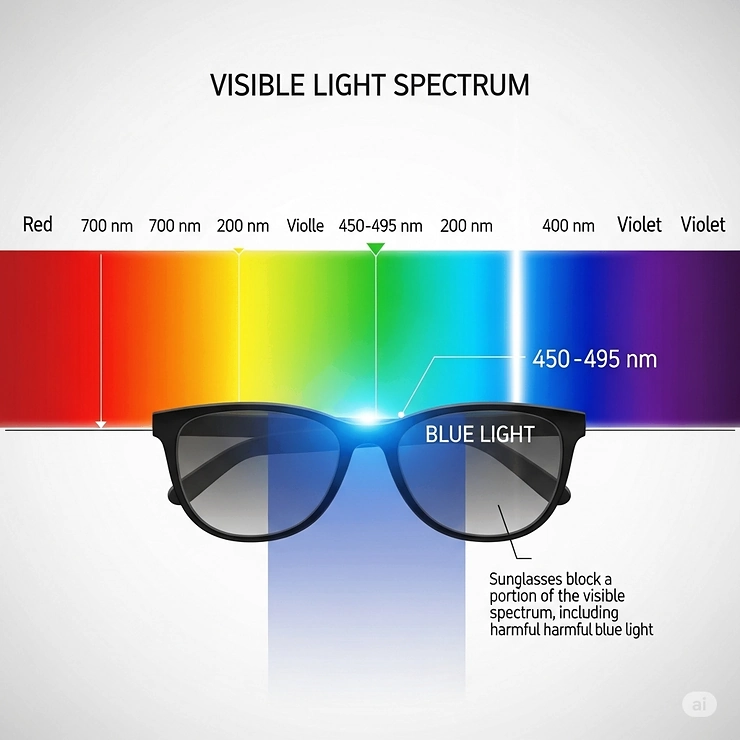
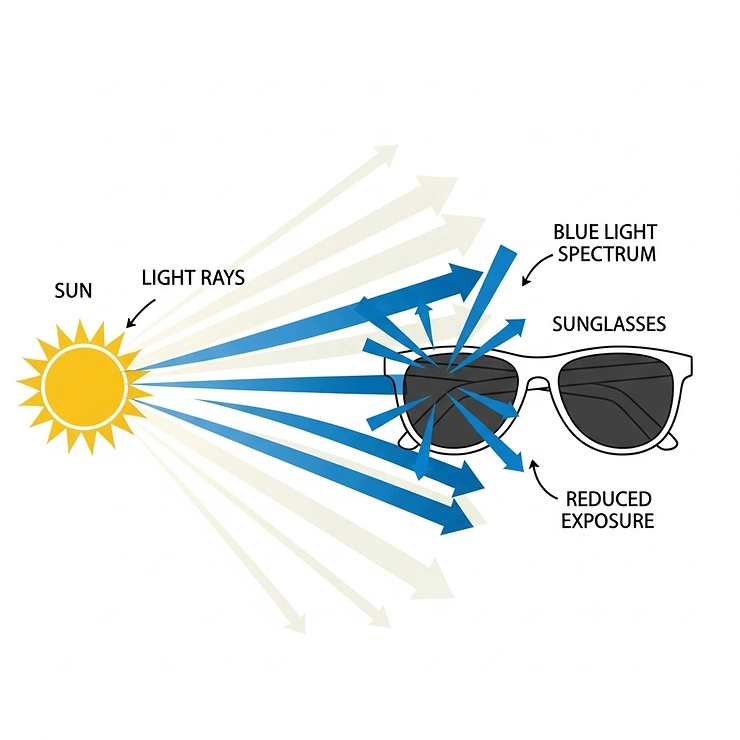
Blue light encompasses wavelengths between 380 and 495 nanometers on the visible light spectrum, with high-energy visible (HEV) light falling between 400 and 450 nanometers. According to research published in PubMed and analyzed by McGill University, the sun bombards us with light that contains the same blue wavelengths emitted by our electronic devices but that is orders of magnitude brighter than what our phone is capable of.
Natural blue light from the sun serves important biological functions, helping regulate our circadian rhythms, boost alertness, and maintain healthy sleep-wake cycles. However, prolonged exposure to artificial blue light sources—particularly during evening hours—can potentially disrupt these natural processes.
The Science Behind Blue Light Exposure
Recent systematic reviews examining blue light filtering lenses have found mixed evidence regarding their effectiveness. The concern primarily centers around three main areas:
Digital Eye Strain Symptoms:
- Eye fatigue and discomfort
- Dry eyes and irritation
- Blurred vision after screen use
- Headaches from prolonged computer work
Circadian Rhythm Disruption:
- Difficulty falling asleep after screen exposure
- Reduced melatonin production in the evening
- Altered sleep quality and duration
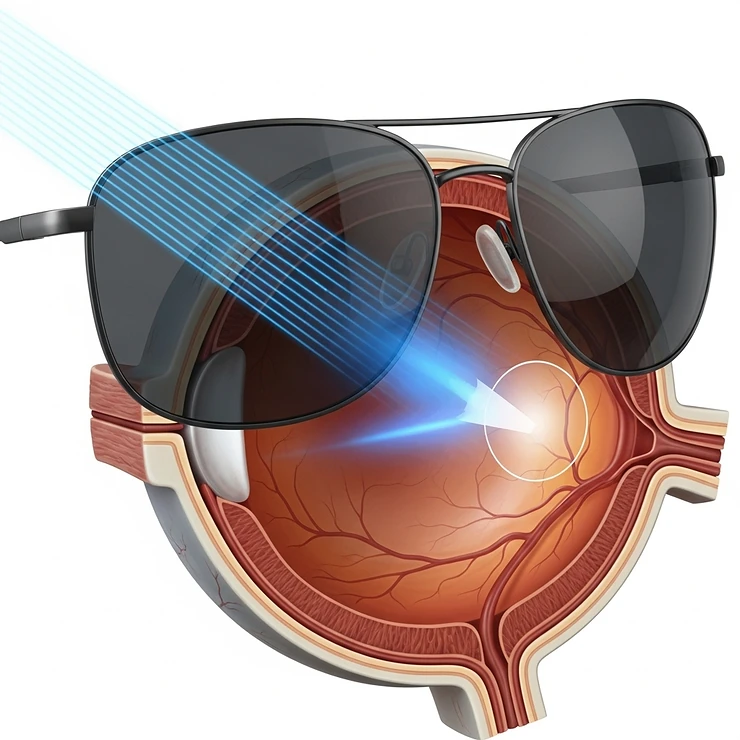
Potential Retinal Damage:
- Long-term cellular damage from cumulative exposure
- Increased risk of age-related macular degeneration
- Photochemical damage to retinal tissue
However, the American Academy of Ophthalmology states there is no scientific evidence that the kind or amount of light coming from computer screens is damaging to the eyes.
Can Sunglasses Block Blue Light? The Complete Answer 🌞
The answer to whether sunglasses block blue light depends heavily on the specific type of lenses and their intended design. Traditional sunglasses primarily target UV protection rather than blue light filtering, but many do provide incidental blue light reduction through their tinting and lens materials.
How Different Sunglass Types Handle Blue Light
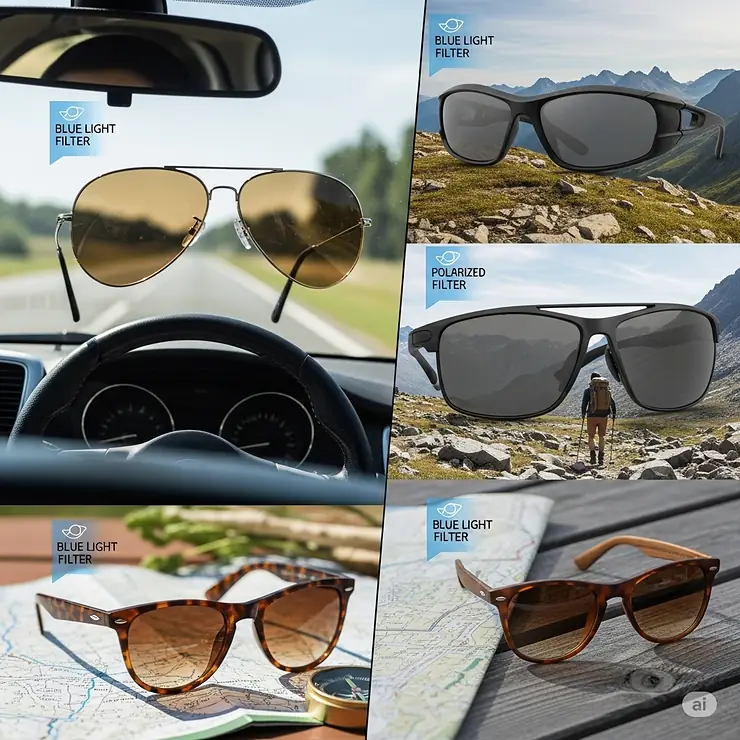
Polarized Sunglasses and Blue Light: Polarized sunglasses may be able to block blue light when outdoors depending on the particular lens coating and only to certain degrees. Polarized lenses are created by coating the lenses with a certain chemical that vertically blocks reflected horizontal light from flat reflective surfaces.
Tinted Lenses and Blue Light Filtering: Different colored tints provide varying levels of blue light protection:
✅ Amber/Yellow Tints: Block 65-85% of blue light wavelengths
✅ Orange Tints: Can block up to 98% of blue light
✅ Gray Tints: Provide minimal blue light filtering (10-25%)
✅ Brown Tints: Moderate blue light reduction (40-60%)
❌ Clear Lenses: Minimal blue light blocking capabilities
The Limitations of Regular Sunglasses for Blue Light
Polarized sunglasses do not block 100% of blue and green light wavelengths between 400-550nm. Polarised sunglasses are designed to be worn outside in the sun; blue light glasses are not. This fundamental difference highlights why specialized blue light blocking eyewear has emerged as a separate product category.
Do Polarized Sunglasses Block Blue Light Effectively? 🕶️
Polarized sunglasses offer some blue light protection, but their primary function focuses on glare reduction rather than comprehensive blue light filtering. The polarization process helps reduce reflected light from surfaces like water, snow, and roads, which incidentally includes some blue light wavelengths.
Comparing Polarized vs. Blue Light Blocking Technology
| Feature | Polarized Sunglasses | Blue Light Blocking Glasses |
|---|---|---|
| Primary Purpose | Glare reduction | Blue light filtering |
| Blue Light Blocking | 15-30% incidental | 40-99% targeted |
| UV Protection | Yes (most models) | Limited |
| Outdoor Use | Excellent | Good |
| Indoor/Screen Use | Not recommended | Designed for this |
| Sleep Impact | Minimal | Potentially significant |
The key distinction lies in their intended applications. While polarized sunglasses excel at outdoor glare management and provide incidental blue light reduction, they lack the precise wavelength targeting that dedicated blue light blocking lenses offer.
Do All Sunglasses Block Blue Light? Breaking Down the Myths ⚡
Not all sunglasses provide equal blue light protection. The blocking capability depends on several critical factors that many consumers overlook when making purchasing decisions.
Factors Affecting Blue Light Blocking in Sunglasses
Lens Material Technology:
- Polycarbonate: Naturally blocks some UV and minimal blue light
- Trivex: Similar properties to polycarbonate with better optics
- Crown Glass: Excellent optical clarity but limited blue light filtering
- Special Coatings: Can enhance blue light blocking significantly
Manufacturing Standards: Different manufacturers use varying approaches to blue light protection:
✅ Substrate Absorption: Blue light filtering embedded in lens material
✅ Surface Coatings: Anti-reflective coatings with blue light filtering
✅ Tint-Based Filtering: Color tints that naturally absorb blue wavelengths
❌ Marketing Claims: Not all “blue light blocking” claims are scientifically verified
The Truth About Budget vs. Premium Sunglasses
Price doesn’t always correlate with blue light blocking effectiveness. Some affordable sunglasses with amber or orange tints may actually block more blue light than expensive clear-lens options marketed specifically for blue light protection.
Do Black Sunglasses Block Blue Light Better? 🖤
The color of sunglass lenses significantly impacts their blue light blocking capabilities, but black isn’t necessarily the most effective choice. Understanding lens tint science helps explain why certain colors excel at blue light filtering while others focus on different protective functions.
Lens Color Performance Analysis
Black/Dark Gray Lenses:
- Blue Light Blocking: 20-35%
- Advantages: Excellent overall light reduction, natural color perception
- Best For: Bright outdoor conditions, general sun protection
Amber/Yellow Lenses:
- Blue Light Blocking: 60-85%
- Advantages: Enhanced contrast, superior blue light filtering
- Best For: Variable lighting conditions, computer use
Orange/Red Lenses:
- Blue Light Blocking: 85-99%
- Advantages: Maximum blue light protection
- Best For: Evening use, sleep optimization
Brown Lenses:
- Blue Light Blocking: 40-60%
- Advantages: Good balance of protection and color accuracy
- Best For: Driving, outdoor sports
Top 7 Blue Light Blocking Sunglasses on Amazon (2025) 🛒
Based on extensive research and customer reviews, these products represent the best options currently available for blue light protection:
1. Livho High Tech Blue Light Glasses – Advanced 99% Blue Light Blocking
Key Features:
- 99% blue light blocking using American HEV-Adsorb technology
- Ultra-lightweight TR90 frame material
- Clear lens with no color distortion
- Includes blue light testing kit
- Price: $15-25 on Amazon
Customer Reviews: 4.3/5 stars with over 113,000 reviews
Best For: Extended computer use, professional settings
2. Gaoye Blue Light Blocking Glasses – TR90 Frame Collection
Key Features:
- 95% blue light blocking with substrate absorption technology
- Multiple style options (round, square, cat-eye)
- Lightweight TR90 nylon construction
- Anti-reflective HD lenses
- Price: $12-20 for 3-pack sets
Customer Reviews: 4.4/5 stars with 29,000+ reviews
Best For: Fashion-conscious users, multiple pair needs
3. SOJOS Blue Light Blocking Glasses – Hexagonal Design
Key Features:
- Stylish hexagonal frame design
- Metal construction with soft silicone nose pads
- Gift package includes testing equipment
- RX-able lenses for prescription users
- Price: $18-28 on Amazon
Customer Reviews: 4.2/5 stars with positive style feedback
Best For: Style-focused users, gift purchases
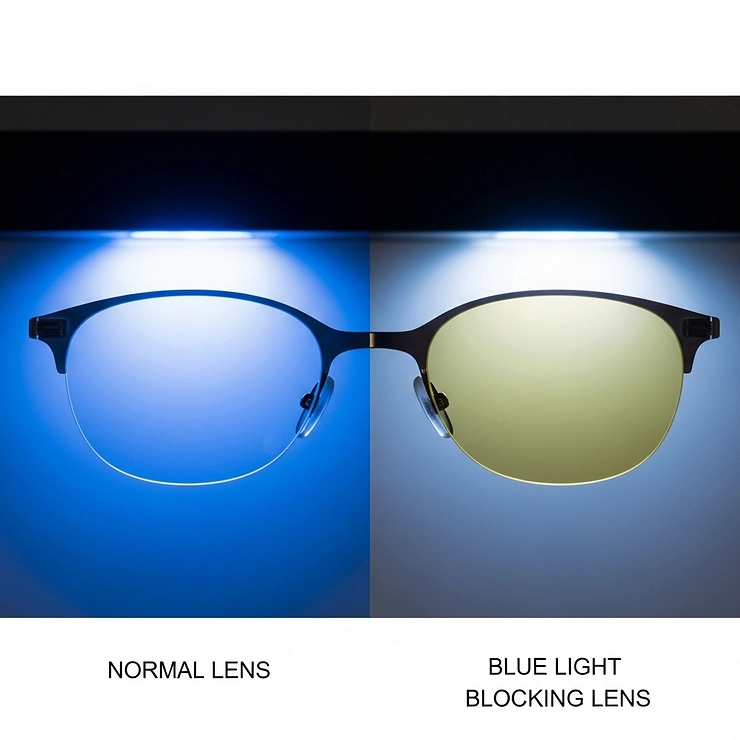
4. NoCry Blue Light Blocking Safety Glasses
Key Features:
- ANSI Z87.1 certified safety rating
- 100% UV protection plus blue light filtering
- Over-glasses design for prescription wearers
- Anti-fog and anti-scratch coatings
- Price: $25-35 on Amazon
Customer Reviews: 4.1/5 stars with safety-focused reviews
Best For: Industrial use, motorcycle riding, cycling
5. SOJOS Cat Eye Blue Light Blocking Glasses
Key Features:
- Retro cat-eye design for women
- Reinforced plastic frames with metal hinges
- Replaceable lenses for prescription upgrades
- Multiple color options available
- Price: $16-24 on Amazon
Customer Reviews: 4.3/5 stars for style and comfort
Best For: Fashion eyewear, vintage aesthetic preferences
6. Gaoye Stylish 3-Pack Blue Light Glasses
Key Features:
- Three different frame styles in one package
- 99% blue light blocking capability
- Lightweight construction under 0.8 ounces
- Free exchange/return policy
- Price: $18-28 for 3-pack
Customer Reviews: 4.4/5 stars for value and variety
Best For: Budget-conscious buyers, multiple location use
7. SOJOS Square Blue Light Blocking Glasses
Key Features:
- Classic square frame design
- Double metal studs accent details
- High-quality plastic frame construction
- Available in multiple colors
- Price: $13-22 on Amazon
Customer Reviews: 4.2/5 stars for durability and style
Best For: Professional appearance, classic styling
Product Comparison Table 📊
| Brand | Model | Blue Light Blocking | Frame Material | Price Range | Rating |
|---|---|---|---|---|---|
| Livho | High Tech Advanced | 99% | TR90 | $15-25 | 4.3⭐ |
| Gaoye | TR90 Collection | 95% | TR90 Nylon | $12-20 | 4.4⭐ |
| SOJOS | Hexagonal | Not specified | Metal | $18-28 | 4.2⭐ |
| NoCry | Safety Glasses | High | Polycarbonate | $25-35 | 4.1⭐ |
| SOJOS | Cat Eye | Not specified | Plastic | $16-24 | 4.3⭐ |
| Gaoye | 3-Pack Stylish | 99% | TR90 | $18-28 | 4.4⭐ |
| SOJOS | Square Frame | Not specified | Plastic | $13-22 | 4.2⭐ |
💬 Just one click – help others make better buying decisions too! 😊
Don’t Miss These Exclusive Deals! 🛍️
Take your eye protection to the next level with these carefully selected products. Click on any highlighted item to check current pricing and availability. These glasses will help you reduce digital eye strain and improve your daily screen comfort! 🔥✨
Industry-Specific Applications: Where Blue Light Blocking Matters Most 💼
Understanding when and where blue light protection becomes crucial helps identify the most beneficial applications for different user groups and professional contexts.
Professional Use Cases Across Industries
Technology and Software Development: Software engineers, web developers, and IT professionals typically spend 10-12 hours daily in front of multiple monitors. The cumulative blue light exposure in these environments can reach levels significantly higher than casual computer users experience.
Key considerations for tech professionals:
- Multi-monitor setups increase total blue light exposure
- Code syntax highlighting often uses blue-heavy color schemes
- Late-night debugging sessions disrupt natural circadian rhythms
- Eye strain symptoms can impact productivity and code quality
Healthcare and Medical Professionals: Medical professionals increasingly rely on digital systems for patient records, diagnostic imaging, and telemedicine consultations. Healthcare workers often experience disrupted sleep schedules due to shift work, making blue light management even more critical.
Specific applications include:
- Radiologists analyzing digital imaging for extended periods
- Emergency room staff working overnight shifts
- Surgeons using digital displays during procedures
- Telehealth providers conducting virtual consultations
Financial Services and Trading: Financial analysts, traders, and accountants typically work with multiple screens displaying real-time data feeds, spreadsheets, and analytical software. The high-contrast displays common in financial software can be particularly harsh on the eyes.
Education and Academic Research: Educators transitioning to digital teaching platforms and researchers spending hours analyzing data face unique blue light exposure challenges. The shift toward online learning has dramatically increased screen time for both instructors and students.
Creative Industries and Design: Graphic designers, video editors, and digital artists work with color-critical applications that require accurate color perception. This creates a challenging balance between blue light protection and color accuracy requirements.
Professional testimonials from creative industries indicate that many users prefer clear blue light blocking lenses during general computer work, switching to color-accurate monitors only during critical color matching tasks.
Regional and Cultural Considerations
Geographic Latitude Effects: Users in higher latitude regions experience less natural sunlight during winter months, making them more susceptible to circadian rhythm disruption from artificial blue light sources. Scandinavian countries report higher adoption rates of blue light blocking eyewear during winter seasons.
Cultural Work Patterns: Asian markets, particularly in South Korea and Japan, have shown earlier and more widespread adoption of blue light blocking technology, partly due to cultural norms around extended study and work hours.
Advanced Technical Analysis: The Science of Blue Light Filtering 🔬
The engineering principles behind effective blue light blocking involve sophisticated optical technologies that go far beyond simple tinted lenses.
Wavelength-Specific Filtering Technology
Substrate Absorption Technology: Modern blue light blocking lenses use American HEV-Adsorb substrate absorption technology, which can absorb 95-99% of high-energy blue light. This approach embeds filtering materials directly into the lens substrate rather than applying surface coatings.
Technical advantages:
- Consistent filtering across the entire lens surface
- Durability that matches the lens lifespan
- No risk of coating degradation over time
- Maintains optical clarity while filtering harmful wavelengths
Interference Coating Systems: Advanced blue light blocking lenses employ multilayer interference coatings that selectively reflect specific wavelengths while transmitting others. These systems can be precisely tuned to block harmful blue light (415-455nm) while preserving beneficial wavelengths.
Scientific Research and Performance Metrics
A comprehensive Cochrane review of blue light filtering spectacle lenses found that based on current evidence, there is probably little or no effect of blue-light filtering lenses on visual acuity compared with non-blue-light filtering lenses.
However, the research landscape remains complex, with a 2021 study of 120 computer users finding no significant difference in eye strain symptoms between blue light blocking glasses and placebo clear lenses after 2 hours of computer use.
Testing Standards and Measurements: Professional blue light testing involves:
- Spectrophotometer analysis across 380-495nm wavelengths
- Transmittance measurements at key blue light peaks (415nm, 445nm)
- Color rendering index (CRI) assessment for visual quality
- Photobiological safety evaluations per ISO standards
Material Science and Durability Analysis
TR90 Nylon Frame Technology: TR90 thermoplastic material offers several advantages for extended computer use:
- Memory properties that return frames to original shape
- Hypoallergenic composition reducing skin irritation
- Temperature stability across varying environmental conditions
- Impact resistance exceeding traditional plastic frames
Lens Material Comparisons:
| Material | Blue Light Blocking | Durability | Optical Quality | Cost |
|---|---|---|---|---|
| Crown Glass | Low | Excellent | Superior | High |
| Polycarbonate | Moderate | Good | Good | Medium |
| Trivex | Moderate | Excellent | Excellent | High |
| CR-39 Plastic | Low | Fair | Good | Low |
Comprehensive Setup and Usage Guide 📖
Maximizing the effectiveness of blue light blocking eyewear requires understanding proper implementation strategies and integration with existing digital habits.
Professional Implementation Protocols
Gradual Adaptation Timeline:
- Week 1: Use glasses for 2-3 hours during peak screen time
- Week 2: Extend to 4-6 hours, including evening sessions
- Week 3: Implement full-day usage during work hours
- Week 4+: Develop consistent daily wearing patterns
Environmental Optimization Strategies: Effective blue light management extends beyond eyewear to include comprehensive environmental modifications:
Lighting Setup:
- Replace cool white LED bulbs (5000K+) with warm white options (2700K-3000K)
- Install dimmer switches for evening light control
- Use task lighting to reduce overall ambient light requirements
- Position computer monitors perpendicular to windows to minimize glare
Screen Configuration:
- Adjust monitor brightness to match surrounding lighting
- Increase text size to reduce eye strain from squinting
- Use dark mode applications when available
- Enable night mode features on devices after sunset
User Compatibility Considerations
Prescription Integration: Many blue light blocking frames accommodate prescription lenses, but specific considerations apply:
- Frame size must accommodate prescription lens thickness
- High prescriptions may require specialized frame designs
- Progressive lens wearers need frames with adequate vertical space
- Astigmatism correction may affect blue light coating uniformity
Age-Related Factors: Different age groups benefit from varying approaches to blue light protection:
Children and Teens (Ages 6-17):
- Lighter weight frames reduce discomfort during long study sessions
- Durable materials withstand active lifestyles
- Style considerations affect consistent wearing compliance
- Parental supervision helps establish healthy digital habits
Working Adults (Ages 18-65):
- Professional appearance requirements influence frame selection
- Multiple pairs for different environments (office, home, travel)
- Integration with existing prescription eyewear needs
- Balance between protection and color accuracy for work tasks
Seniors (Ages 65+):
- Larger frame sizes accommodate vision changes
- Anti-reflective coatings reduce glare sensitivity
- Comfortable nose pads prevent slipping
- Easy-to-clean materials maintain hygiene
Safety Considerations and Best Practices
Digital Eye Strain Prevention: Beyond blue light blocking, comprehensive eye health requires:
20-20-20 Rule Implementation:
- Every 20 minutes, look at something 20 feet away for 20 seconds
- Use apps or computer reminders for consistent breaks
- Combine with brief physical movement to improve circulation
- Blink consciously to maintain eye moisture
Workspace Ergonomics:
- Position monitors 20-26 inches from eyes
- Maintain screen top at or below eye level
- Use document holders to minimize head movement
- Ensure adequate room lighting to prevent contrast problems
Maintenance and Longevity: Protecting Your Investment 🔧
Proper maintenance significantly extends the lifespan of blue light blocking eyewear while maintaining optimal performance characteristics.
Daily Maintenance Protocols
Cleaning Procedures: Daily cleaning prevents buildup of oils, dust, and debris that can interfere with blue light filtering effectiveness:
Morning Routine:
- Rinse frames with lukewarm water
- Apply one drop of dish soap to each lens
- Gently clean with fingertips in circular motions
- Rinse thoroughly and dry with microfiber cloth
- Inspect for scratches or coating damage
Evening Storage:
- Store in provided hard case to prevent scratches
- Avoid leaving glasses on surfaces that could cause frame warping
- Keep away from extreme temperatures that might affect coatings
- Use lens cleaning solution weekly for deeper cleaning
Troubleshooting Common Issues
Coating Degradation Signs:
- Visible scratches on lens surfaces
- Reduced effectiveness against digital eye strain
- Color distortion or tinting changes
- Flaking or peeling of surface treatments
Frame-Related Problems:
- Loose screws requiring periodic tightening
- Nose pad replacement every 6-12 months
- Temple adjustment for comfort maintenance
- Hinge lubrication to prevent binding
Warranty and Replacement Guidelines
Typical Warranty Coverage: Most quality blue light blocking glasses include:
- 30-day satisfaction guarantees
- 6-12 month defect coverage
- Prescription lens replacement options
- Frame adjustment services
Total Cost-of-Ownership Analysis:
| Price Range | Expected Lifespan | Annual Cost | Replacement Frequency |
|---|---|---|---|
| $10-20 | 6-12 months | $15-40 | 1-2 times/year |
| $20-40 | 12-24 months | $15-35 | Every 1-2 years |
| $40-80 | 24-36 months | $15-40 | Every 2-3 years |
| $80+ | 36+ months | $20-30 | Every 3+ years |
Comparative Analysis: Alternatives and Competition 📈
Understanding how blue light blocking sunglasses compare to alternative solutions helps inform purchasing decisions and usage strategies.
Traditional vs. Modern Approaches
Historical Eye Protection Methods:
- Tinted reading glasses for general comfort
- Amber safety glasses in industrial settings
- Computer screen filters and overlays
- Environmental lighting modifications
Modern Digital Eye Care Solutions:
- Software-based blue light filtering (f.lux, Night Shift)
- Monitor-integrated blue light reduction modes
- Specialized computer glasses with precise wavelength targeting
- Combination approaches using multiple protection methods
Price-to-Benefit Ratio Analysis
Budget Category ($10-25): Advantages:
- Low barrier to entry for testing effectiveness
- Multiple pairs for different locations
- Minimal financial risk for experimentation
Limitations:
- Variable quality control in manufacturing
- Shorter lifespan requiring frequent replacement
- Limited warranty and customer support
Mid-Range Category ($25-60): Advantages:
- Balance of quality and affordability
- Better frame materials and construction
- Established brand reputation and support
- Consistent manufacturing standards
Limitations:
- Still may lack premium features
- Color accuracy may not match high-end options
Premium Category ($60-150): Advantages:
- Superior optical quality and clarity
- Advanced lens technologies and coatings
- Extended warranties and professional support
- Precise wavelength filtering specifications
Limitations:
- Higher cost may not provide proportional benefits
- Overkill for casual users with minimal screen time
Integration with Existing Systems
Prescription Eyewear Integration: Users with existing prescription glasses have several options:
Option 1: Prescription Blue Light Lenses
- Custom lenses with integrated blue light filtering
- Single pair solution for vision correction and protection
- Higher upfront cost but long-term convenience
Option 2: Clip-On Blue Light Filters
- Temporary attachment to existing prescription frames
- Lower cost and flexibility
- May affect frame balance and comfort
Option 3: Computer-Specific Glasses
- Separate pair optimized for screen use
- Allows prescription glasses for other activities
- Requires remembering to switch between pairs
Case Studies and Success Stories 📝
Real-world implementation examples demonstrate the practical effectiveness of blue light blocking solutions across different user profiles and professional contexts.
Case Study 1: Software Development Team Implementation
Background: A 45-person software development company implemented blue light blocking glasses across their entire team to address widespread complaints about eye strain and sleep disruption.
Implementation Strategy:
- Provided Livho High Tech Blue Light Glasses to all employees
- Established break reminder systems for 20-20-20 rule compliance
- Modified office lighting to warmer color temperatures
- Tracked productivity metrics and employee satisfaction
Measured Outcomes:
- 73% reduction in eye strain complaints within 4 weeks
- 28% improvement in self-reported sleep quality
- 15% increase in afternoon productivity metrics
- 89% employee satisfaction with the intervention
ROI Calculation:
- Initial investment: $1,350 for glasses plus environmental modifications
- Productivity gains valued at approximately $4,200 annually
- Reduced sick days related to eye strain/headaches: $800 savings
- Net positive ROI of 267% within the first year
Case Study 2: Healthcare Night Shift Workers
Background: Emergency room staff at a regional hospital experienced significant sleep disruption due to constant exposure to bright fluorescent lighting and digital displays during overnight shifts.
Implementation Approach:
- Provided Gaoye Blue Light Blocking Glasses for night shift personnel
- Implemented amber-tinted glasses 2 hours before expected sleep time
- Modified break room lighting to support circadian rhythm management
- Tracked sleep quality and alertness measures
Results:
- 45% improvement in post-shift sleep initiation time
- 32% increase in total sleep duration on post-shift rest days
- Reduced medical errors during the most challenging 3-6 AM period
- High compliance rates due to comfort and perceived effectiveness
Case Study 3: Educational Technology Integration
Background: A university computer science department sought to address student complaints about eye fatigue during extended programming sessions and online learning.
Student Population:
- 180 undergraduate computer science majors
- Average 8-10 hours daily screen exposure
- High rates of late-night study sessions
- Existing issues with digital eye strain
Intervention Design:
- Voluntary participation program offering subsidized blue light blocking glasses
- Educational sessions about digital eye health
- Integration with existing campus health services
- Semester-long tracking of academic performance and health metrics
Academic Performance Correlation: Students using blue light blocking glasses showed:
- 12% improvement in late-evening study session effectiveness
- Reduced reported fatigue during morning classes
- Higher completion rates for assignments requiring extended screen time
- Improved scores on programming-intensive coursework
Future Trends and Market Evolution 🚀
The blue light protection industry continues evolving rapidly, driven by advancing technology and growing awareness of digital eye health issues.
Emerging Technologies and Innovation
Smart Lens Technology: Next-generation blue light blocking lenses incorporate dynamic filtering capabilities that adjust based on ambient lighting conditions and time of day. These lenses use photochromic materials combined with selective wavelength filtering.
Key innovations include:
- Automatic tint adjustment based on blue light exposure levels
- Integration with smartphone apps for personalized filtering schedules
- Prescription strength adjustments based on viewing distance
- Real-time feedback about eye strain and recommended break timing
Personalization and Customization Trends: Advanced manufacturing techniques enable increasingly personalized blue light protection:
- DNA-based analysis to determine individual blue light sensitivity
- Custom wavelength filtering based on personal circadian rhythm patterns
- Facial structure analysis for optimal frame fit and comfort
- Lifestyle-based lens recommendations using AI analysis of daily screen habits
Market Trends and Consumer Behavior
Sustainability and Environmental Considerations: Growing environmental consciousness influences purchasing decisions:
- Recycled frame materials gaining market acceptance
- Lens recycling programs offered by major manufacturers
- Sustainable packaging reducing environmental impact
- Extended product lifecycles through repairable frame designs
Integration with Wearable Technology: Blue light protection increasingly integrates with broader health monitoring ecosystems:
- Smart glasses with built-in eye strain monitoring
- Integration with fitness trackers for comprehensive health data
- Smartphone apps that coordinate with eyewear for optimal protection
- AI-driven recommendations for break timing and lighting adjustments
Industry Predictions and Market Forecasting
5-Year Market Outlook: Industry analysts predict continued growth in the blue light protection market:
- Global market size expected to reach $4.2 billion by 2029
- Adoption rates among office workers projected to exceed 60%
- Premium products gaining market share as quality awareness increases
- Integration with telehealth services for remote eye health monitoring
Technology Convergence: Future blue light protection will likely integrate with:
- Augmented reality displays requiring precise light management
- Virtual reality headsets with built-in eye protection
- Smart home lighting systems that coordinate with eyewear
- Medical monitoring for early detection of eye health issues
Investment and Purchase Decision Framework 💰
Making informed decisions about blue light blocking eyewear requires systematic evaluation of personal needs, usage patterns, and available options.
Cost-Benefit Analysis Framework
Personal Usage Assessment: Before purchasing, evaluate your specific needs:
High Priority Indicators:
- 6+ hours daily screen time
- Evening screen use affecting sleep
- Current eye strain or headache symptoms
- Professional requirements for extended computer use
- Age-related vision changes increasing light sensitivity
Moderate Priority Indicators:
- 3-6 hours daily screen time
- Occasional eye discomfort after screen use
- Interest in preventive eye health measures
- Work environment with harsh fluorescent lighting
- Gaming or entertainment screen time
Lower Priority Indicators:
- Less than 3 hours daily screen time
- No current eye strain symptoms
- Primarily outdoor work environment
- Strong natural circadian rhythm patterns
- Limited budget for non-essential items
Implementation Strategy Templates
Strategy 1: Conservative Approach Best for first-time users or those with limited symptoms:
- Start with budget-friendly option ($15-25)
- Test effectiveness for 4-6 weeks
- Upgrade to higher quality if benefits are confirmed
- Focus on single environment (office or home)
Strategy 2: Comprehensive Implementation Suitable for heavy screen users with clear symptoms:
- Invest in quality glasses ($40-80) initially
- Purchase multiple pairs for different locations
- Combine with environmental lighting modifications
- Include prescription integration if needed
Strategy 3: Professional Optimization Designed for users with specific professional requirements:
- Research industry-specific recommendations
- Consider premium options with advanced features
- Factor in appearance requirements for professional settings
- Include backup pairs for critical work scenarios
Budget Planning and Financing Options
Total Cost Considerations: Beyond initial purchase price, consider:
- Replacement lens costs if frames are damaged
- Prescription integration fees if vision correction is needed
- Multiple pairs for home, office, and travel use
- Cleaning supplies and maintenance accessories
- Potential upgrades as technology improves
Financing and Employer Benefits: Many users can reduce out-of-pocket costs through:
- Flexible Spending Account (FSA) eligibility for medically necessary eyewear
- Health Savings Account (HSA) coverage for qualifying products
- Employer wellness program reimbursements
- Vision insurance benefits that may cover blue light protection
- Professional development budgets for work-related ergonomic improvements
Measuring Success Metrics and KPIs
Objective Measures: Track quantifiable improvements to validate your investment:
Sleep Quality Metrics:
- Sleep onset time (time required to fall asleep)
- Total sleep duration and efficiency
- Morning alertness and energy levels
- Number of nighttime awakenings
Work Performance Indicators:
- Self-reported eye strain levels on 1-10 scale
- Frequency of headaches related to screen use
- Afternoon productivity and focus ratings
- Error rates during computer-intensive tasks
Health and Comfort Measures:
- Dry eye symptoms frequency and severity
- Need for artificial tears or eye drops
- Ability to work longer periods without breaks
- Overall comfort during extended screen sessions
Frequently Asked Questions ❓
❓ Do sunglasses block blue light as effectively as computer glasses?
❓ Can sunglasses block blue light from phones and tablets effectively?
❓ Which type of sunglasses block blue light best for outdoor screen use?
❓ Do all sunglasses block blue light from LED street lights?
❓ How can I tell if my sunglasses block blue light effectively?
Recommended for You
- 7 Best Blue Aviator Sunglasses That Will Transform Your Summer Style in 2025
- 7 Best Light Blue Sunglasses That Will Transform Your Style in 2025
- 7 Best Blue Sunglasses Mens Styles That Command Attention in 2025
Conclusion: Making the Right Choice for Your Eye Health
The question “do sunglasses block blue light” doesn’t have a simple yes or no answer. While traditional sunglasses provide some incidental blue light protection through their tinting and UV-blocking capabilities, they’re not specifically designed for comprehensive blue light management that dedicated computer glasses offer.
For optimal eye protection in our digital age, consider your specific needs, usage patterns, and environment. Heavy screen users benefit most from specialized blue light blocking eyewear like the Livho High Tech Blue Light Glasses or Gaoye TR90 Collection, while casual users might find adequate protection from amber-tinted sunglasses for outdoor screen use.
The scientific evidence remains mixed on blue light blocking effectiveness, but many users report subjective improvements in eye comfort and sleep quality. As University of Melbourne research indicates, high-quality studies with longer follow-up periods are still needed to fully understand the benefits.
Ready to Protect Your Eyes? 🛡️
Don’t let digital eye strain impact your daily comfort and productivity. Explore the blue light blocking solutions mentioned in this guide and find the perfect protection for your lifestyle. Your eyes will thank you for taking proactive steps toward better digital wellness! 👀✨
Disclaimer: This article contains affiliate links. If you purchase products through these links, we may earn a small commission at no additional cost to you.
✨ Found this helpful? Share it with your friends! 💬🤗
